

Care Requirements
Adult Size
3.1" (8cm)
Min Tank
55 gal
Temperature
75-82°F
pH Range
7.5-8.8
Lifespan
8-10 years
Min Group
12+ fish
Diet
Herbivore
Swim Level
Middle
Bioload
3/10
Hardness
10-20 dGH
About Demasoni
The Demasoni is one of the most visually striking mbuna cichlids — bold dark blue and light blue vertical stripes create a pattern that's instantly recognizable and endlessly attractive. However, this small cichlid packs aggression that far exceeds its 3-inch adult size. Demasoni are notorious for their intense intraspecific aggression, meaning they're most aggressive toward their own kind and similar-looking fish.
This aggression presents a paradox: keeping too few Demasoni results in dominant individuals killing subordinates, but keeping them successfully requires large groups of 12 or more to spread aggression so no single fish is targeted. This 'safety in numbers' approach is essential — a group of 3-4 Demasoni will quickly become a group of 1.
Native to a tiny area around Pombo Rocks in Lake Malawi, wild populations are vulnerable due to their extremely limited range. Fortunately, they breed readily in captivity, so aquarium populations are self-sustaining. Their restricted wild habitat also means they've evolved in very specific conditions that must be replicated in aquariums.
Despite their challenging temperament, Demasoni are rewarding fish for keepers who understand their requirements. Their vivid coloration, active behavior, and bold personalities make them centerpieces of any mbuna tank — provided you're prepared for their intensity.
Natural Habitat & Origin
Demasoni are endemic to a single location in Lake Malawi — Pombo Rocks along the Tanzanian coastline. This extremely restricted range makes them one of the most geographically limited cichlid species. At Pombo Rocks, they inhabit the rocky shallows, grazing on algae-covered surfaces in areas with strong wave action.
The rocky, turbulent habitat shapes their aquarium needs: they require extensive rockwork with countless hiding spots, excellent water movement, and high oxygenation. The restricted range also explains their aggression — in such a small habitat, competition for territory and resources is intense.
Lake Malawi's water chemistry is hard and alkaline with exceptional stability. Demasoni have zero tolerance for soft, acidic water or fluctuating parameters. The wild population's vulnerable status makes captive breeding important for species preservation.
Native Region
Lake Malawi, Pombo Rocks, Tanzania (extremely restricted endemic range)
Habitat Type
Rocky shallows with strong wave action, algae-covered surfaces
Wild Water Conditions
Hard, alkaline water (pH 7.8-8.6), high oxygen content, stable parameters
Appearance & Varieties
Demasoni display striking vertical stripes alternating between dark blue (almost black) and light blue (sometimes appearing powder blue or white). This bold striping runs from head to tail and continues onto the fins. Both males and females display this coloration, making sexing by color essentially impossible.
Adults are small for mbuna — reaching only about 3 inches (7-8 cm). This small size deceives many beginners into underestimating their aggression. Males may show slightly more intense coloration and have longer pelvic fins, but these differences are subtle. The most reliable sexing method is venting.
Popular Varieties
| Variety | Description | Rarity |
|---|---|---|
| Standard/Wild-Type | The classic dark blue and light blue vertical striping. The only naturally occurring form. Dark bands are nearly black; light bands range from powder blue to almost white depending on mood and conditions. | Common |
Tank Setup & Requirements
Quick Requirements Summary
Tank Size
Minimum Tank Size
55 gallons
Recommended Tank Size
75 gallons
Demasoni tanks require extensive rockwork and careful stocking to manage their intense aggression. The goal is creating an environment where no single fish can establish overwhelming dominance — dozens of territories and hiding spots combined with group dynamics that prevent bullying.
Water Parameters
Standard Lake Malawi chemistry is essential. Temperature 24-28°C (75-82°F), pH 7.5-8.8, hardness 10-20 dGH. Use aragonite substrate, limestone, or crushed coral to buffer pH and hardness naturally. Stability matters more than hitting exact numbers — consistent parameters reduce stress and aggression. Zero ammonia and nitrite; nitrates below 20 ppm. High oxygen levels are important; consider additional airstones or powerheads.
Substrate
Sand or aragonite sand allows natural foraging behavior and is safer during the frequent territorial chases. Aragonite sand buffers water chemistry while looking natural. Avoid sharp substrates that could injure fish during disputes — and disputes will happen constantly with Demasoni.
Plants & Decorations
Extensive rockwork is critical for Demasoni survival. Build piles from substrate to near surface with dozens of caves, crevices, and hiding spots. Every fish needs multiple escape routes. Texas holey rock, limestone, and lava rock work well. Secure all structures — Demasoni dig aggressively. Plants are not recommended — Demasoni are herbivores that will destroy most vegetation.
Filtration & Water Flow
Aim for 10x tank volume turnover per hour. Demasoni tanks are heavily stocked to manage aggression, creating substantial bioload. Canister filters or sumps are standard. Multiple filters provide redundancy and better flow distribution. Good oxygenation is essential — powerheads and airstones recommended.
Lighting
Higher lighting promotes algae growth on rocks, providing supplemental grazing opportunities. Standard aquarium lighting works well. Avoid extremely dim conditions that might reduce activity and worsen territorial behavior.
Diet & Feeding Guide
Diet Type
herbivore
Feeding Frequency
2-3 small meals daily
Portion Size
What can be consumed in 1-2 minutes per feeding. Multiple small feedings mimic natural grazing and reduce feeding-time aggression.
Demasoni are strict herbivores — their digestive systems are adapted for plant matter, not protein. This dietary requirement is non-negotiable. Feeding high-protein foods triggers Malawi bloat, a deadly condition that kills more herbivorous mbuna than any other cause. Their natural diet consists of aufwuchs — the algae, biofilm, and microorganisms coating rocks.
Best Foods for Demasoni
- Spirulina flakes/pellets — Should form 80%+ of the diet. Spirulina closely matches their natural aufwuchs diet.
- Algae wafers — Excellent supplement that encourages natural grazing behavior.
- Blanched vegetables — Zucchini, cucumber, shelled peas, and romaine lettuce. Provides enrichment and variety.
- Nori/seaweed sheets — Dried seaweed provides excellent nutrition similar to their natural diet. Feed 2-3 times weekly.
Foods to Avoid
- Bloodworms — Extremely dangerous for herbivorous mbuna. High protein triggers fatal Malawi bloat. Never feed under any circumstances.
- Brine shrimp — Too high in protein for herbivores. Avoid entirely to eliminate bloat risk.
- Beef heart and mammalian proteins — Completely inappropriate. Fish cannot digest mammalian fats, causing organ damage.
- High-protein cichlid pellets — Many cichlid foods are formulated for carnivores. Plant matter (spirulina) should be the primary ingredient.
Multiple small feedings mimic natural grazing and reduce feeding-time aggression. Overfeeding contributes to both bloat and water quality problems.
Behavior & Temperament
Demasoni are among the most aggressive mbuna species, and their aggression is primarily directed at their own kind and similar-looking fish. This intraspecific aggression is intense enough to kill tankmates in poorly planned setups. A dominant male will relentlessly pursue subordinate males, often resulting in death if escape routes are inadequate.
The solution to Demasoni aggression is counterintuitive: keep more of them, not fewer. In groups of 12 or more, aggression spreads across so many targets that no single fish bears the brunt. This 'mob' approach is essential for success. Groups of 3-6 almost always result in deaths as dominant fish eliminate competition one by one.
Despite their aggression toward conspecifics, Demasoni can coexist with other mbuna species — particularly those with different coloration that won't be confused with rival Demasoni. They're constantly active, patrolling territories, sparring, and grazing.
Tank Mates: Compatibility Guide
Compatible Tank Mates
Different coloration eliminates confusion with Demasoni, reducing aggression. Classic pairing.
Orange-brown coloration is completely different from Demasoni's blue striping. Peaceful temperament.
Orange coloration is distinct. Aggressive enough to not be bullied but not similar enough to trigger aggression.
Hardy African catfish that stays out of mbuna disputes. Perfect utility fish.
Schools in midwater rather than defending rock territories. Different behavior minimizes conflict.
Tank Mates to Avoid
Other Demasoni (in small numbers)
Keeping 3-6 is a death sentence for subordinates. Either keep 12+ or none.
Similar-looking blue-striped fish
Any fish with blue striping will be attacked as a rival Demasoni.
Peaceful community fish
Tetras, rasboras, livebearers will be terrorized and killed.
Peacock Cichlids
Peacocks are too peaceful for aggressive mbuna like Demasoni.
Slow-moving or long-finned fish
Cannot escape Demasoni aggression. Long fins become nipping targets.
Common Pairing Questions
Can Demasoni live with Yellow Labs?
Yes — one of the best pairings. Different coloration prevents confusion, and Yellow Labs are hardy enough for mbuna dynamics.
Can Demasoni live with Peacocks?
Generally not recommended. Demasoni are too aggressive for peaceful Peacocks, causing chronic stress.
Demasoni are maternal mouthbrooders that breed readily in aquarium conditions. Males court females aggressively, displaying vivid colors. Females pick up 5-15 eggs and incubate for approximately 3 weeks without eating. The small clutch size is compensated by frequent spawning every 6-8 weeks. Raising fry requires separating holding females. Fry are tiny but fully formed, accepting crushed flake and baby brine shrimp. Demasoni will hybridize with similar-looking species — keep species separate if breeding purity matters.
Health Issues & Disease Prevention
Demasoni are hardy fish when their specific requirements are met, but like all herbivorous mbuna, they're susceptible to Malawi bloat when fed inappropriate diets. Aggression-related injuries are also common and must be monitored.
Common Diseases
| Disease | Symptoms | Treatment |
|---|---|---|
| Malawi Bloat | Swollen abdomen, loss of appetite, white stringy feces, lethargy, rapid breathing. Often fatal within 24-72 hours. | Isolate immediately. Metronidazole is standard treatment. Epsom salt baths may help. Prevention through strictly herbivorous diet is essential. |
| Ich (White Spot Disease) | Small white spots covering body and fins. Flashing against rocks, clamped fins. | Raise temperature to 30°C for 10-14 days. Add aquarium salt. Commercial ich medication for severe cases. |
| Aggression Injuries | Torn fins, missing scales, wounds, split lips from fighting. | Minor injuries heal in clean water. Serious wounds require isolation and antibacterial treatment. Address root cause. |
| Fin Rot | Progressive deterioration of fin edges, ragged appearance, possible reddening. | Improve water quality and address aggression issues. Antibacterial medication for severe cases. |
Signs of a Healthy Demasoni
- Vivid blue striping with strong contrast
- Active territorial and grazing behavior
- Strong appetite for vegetable foods
- Clear eyes without cloudiness
- Intact fins without severe damage
- Normal body shape — no bloating
Prevention Tips
- Strictly herbivorous diet — never feed bloodworms
- Keep in groups of 12+ to diffuse aggression
- Provide extensive rockwork with many hiding spots
- Maintain pristine water quality
- Keep nitrates below 20 ppm
- Ensure hard, alkaline water with stable parameters
Frequently Asked Questions
Minimum of 12, preferably 15-20. This is non-negotiable for their survival. In small groups, dominant fish kill subordinates one by one until only one remains. Large groups spread aggression so no single fish is targeted. One male to multiple females is ideal, but sexing is difficult, so start with a larger group.
Almost certainly too few fish. Demasoni aggression is intense and focused — dominant fish will eliminate rivals systematically in small groups. The solution is counterintuitive: add more Demasoni to spread aggression. Also ensure extensive rockwork provides escape routes.
No. Their aggression management requirements and strict dietary needs make them intermediate-level fish. Beginners should start with more forgiving mbuna like Yellow Labs or Rusty Cichlids.
Strictly plant-based foods. Spirulina flakes and pellets should be the staple, supplemented with algae wafers and blanched vegetables. Never feed bloodworms, brine shrimp, or high-protein foods — these trigger fatal Malawi bloat.
Technically possible but defeats the purpose. Single specimens often become reclusive and stressed. They're most impressive in large groups. If you can't keep 12+, choose a different species.
Only about 3 inches (7-8 cm) — small for mbuna. This small size deceives beginners into underestimating their aggression and tank requirements.
Generally not recommended. Demasoni are too aggressive for the more peaceful Peacocks, which will be harassed constantly and fail to develop proper coloration.
Almost certainly Malawi bloat from inappropriate diet — usually high-protein foods like bloodworms. Isolate immediately, stop feeding, and treat with Metronidazole. Prevention through herbivorous diet is essential.
Tips for Keeping Demasoni
Pro Tips
- ✓Start with 15-20 juveniles rather than a few adults — juveniles establish hierarchies gradually
- ✓Rearrange rockwork when adding new fish to reset territories
- ✓Keep with dissimilar-looking mbuna only — yellow, orange, or red species work best
- ✓More rock is always better — you cannot over-rock a Demasoni tank
Common Mistakes to Avoid
- ✗Keeping in small groups (3-6 fish) — dominant fish kill subordinates
- ✗Feeding high-protein foods — triggers fatal Malawi bloat
- ✗Keeping with similar-looking species — blue-striped fish are attacked
- ✗Insufficient rockwork — subordinate fish have nowhere to escape
- ✗Underestimating aggression due to small size
Sources
- FishBase — Accepted scientific name, maximum size and native range for Demasoni.
Related Species You Might Like
View All Fish →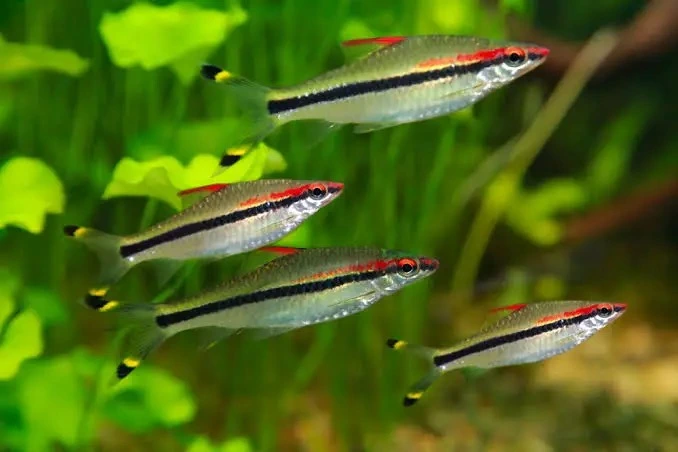
Denison Barb
Sahyadria denisonii

Bumblebee Cichlid
Pseudotropheus crabro

Acei Cichlid
Pseudotropheus acei

Auratus Cichlid
Melanochromis auratus

Cobalt Blue Zebra
Maylandia callainos

Convict Cichlid
Amatitlania nigrofasciata

Jewel Cichlid
Hemichromis bimaculatus

Red Zebra
Maylandia estherae
Ready to Add Demasoni to Your Tank?
Use our free stocking calculator to check compatibility, bioload, and get personalized recommendations.