

Care Requirements
Adult Size
4.7" (12cm)
Min Tank
40 gal
Temperature
72-82°F
pH Range
6.5-8
Lifespan
8-10 years
Min Group
Can be kept alone
Diet
Omnivore
Swim Level
Middle
Bioload
5/10
Hardness
9-20 dGH
About Convict Cichlid
The Convict Cichlid is one of the most recognizable and readily available cichlids in the aquarium hobby, named for the bold black vertical bars that stripe its body like prison stripes. These Central American natives have earned a reputation as the ultimate 'starter cichlid' due to their extreme hardiness, willingness to breed, and fascinating parental behaviors.
What makes Convict Cichlids particularly compelling is their bold personality and intelligence. They quickly learn to recognize their owners, interact with their environment in obvious ways, and display complex breeding behaviors that rival any cichlid species. Watching a bonded pair raise their fry is one of the hobby's most rewarding experiences.
However, their aggressive nature—especially during breeding—is legendary. A breeding pair of Convicts will fearlessly attack fish several times their size, making them challenging community tank residents. Understanding and respecting their aggressive tendencies is key to successfully keeping these charismatic fish.
Natural Habitat & Origin
Convict Cichlids originate from the rocky streams and rivers of Central America, with a natural range spanning Honduras, Guatemala, El Salvador, Nicaragua, Costa Rica, and Panama. They've since been introduced to waters worldwide due to aquarium releases and have established invasive populations in several regions.
Their natural habitat features moderate to strong currents, rocky substrates, and abundant cover in the form of rocks, submerged wood, and debris. They establish territories among these structures and spawn in crevices and caves. This preference for rocky environments with plenty of hiding spots should inform aquarium setup decisions.
Native Region
Central America (Honduras, Guatemala, El Salvador, Nicaragua, Costa Rica, Panama)
Habitat Type
Rocky streams and rivers with moderate to strong current
Wild Water Conditions
Variable conditions, moderate current, rocky substrate with crevices for spawning
Appearance & Varieties
Convict Cichlids are medium-sized fish reaching 5-6 inches (12-15 cm) in length, with males typically larger than females. Their most distinctive feature is the series of 8-9 bold black vertical bars that run down a silvery-grey base color—the 'convict stripes' that give them their name.
Males are larger with longer, more pointed dorsal and anal fins, and may develop a nuchal hump (forehead protuberance) as they mature. Females are smaller and stockier, and develop striking orange or red coloration on their belly, which intensifies dramatically during breeding. This belly coloration is the easiest way to distinguish the sexes.
Popular Varieties
| Variety | Description | Rarity |
|---|---|---|
| Wild Type | Classic black and white striped pattern | Very Common |
| Pink/Leucistic | White to pink body lacking normal pigmentation, often slightly calmer temperament | Common |
| Black Convict | Darker overall coloration with less distinct stripes | Uncommon |
Tank Setup & Requirements
Quick Requirements Summary
Tank Size
Minimum Tank Size
40 gallons
Recommended Tank Size
55 gallons
Convict Cichlids require a minimum of 30 gallons for a single fish, with 40+ gallons strongly recommended, especially for a breeding pair. Standard rectangular tanks with ample floor space for territories work best. A secure lid is important as they may jump when startled or during aggressive encounters.
Water Parameters
Convicts are extremely adaptable, tolerating temperatures from 68-82°F (20-28°C), pH from 6.5-8.0, and hardness from 9-20 dGH. This adaptability is one of their greatest assets. Stable conditions are more important than hitting exact numbers.
Substrate
Sand or fine gravel is preferred, as Convicts love to dig. They will constantly rearrange the substrate, creating pits and mounds. Large smooth river rocks can be incorporated into the substrate. Avoid sharp gravel that could injure them during their excavation projects.
Plants & Decorations
Live plants are generally not recommended—Convicts will uproot and destroy them. If you want plants, stick to hardy species like Anubias and Java fern attached to rocks or driftwood where they can't be dug up. Focus instead on rocks, caves, clay pots, PVC pipes, and driftwood to create territories and spawning sites.
Filtration & Water Flow
Strong filtration is required due to their significant bioload and substrate-stirring habits. They tolerate moderate to strong current. Use a canister filter or HOB rated for your tank size or larger. Ensure intake tubes are protected as they may try to rearrange them.
Lighting
Moderate lighting is sufficient and not critical for Convicts. They're not particular about lighting conditions.
Diet & Feeding Guide
Diet Type
omnivore
Feeding Frequency
1-2 times daily
Portion Size
What they consume in 2-3 minutes
Convict Cichlids are true omnivores with hearty appetites. In the wild, they consume algae, plant matter, small invertebrates, insect larvae, worms, and crustaceans. A balanced diet including both protein and vegetable matter is essential for optimal health.
Best Foods for Convict Cichlid
- High-quality cichlid pellets — Should form the staple diet
- Spirulina-based foods — Important plant matter component
- Frozen bloodworms — Excellent protein supplement, 2-3 times weekly
- Blanched vegetables — Peas, zucchini, cucumber—essential for digestion
- Algae wafers — Good supplemental food, especially for plant matter
- Live earthworms — Occasional treat, excellent conditioning food for breeding
Foods to Avoid
- Mammal meat — Difficult to digest, can cause health issues
- Feeder fish — Risk of disease transmission, poor nutrition
- Excessive protein-only diet — Leads to bloat and digestive issues—must include plant matter
Include vegetable matter in their diet for optimal health and to prevent bloat. When breeding, parents will chew food and spit it out for their fry—this is normal and fascinating to observe. Be aware they may uproot plants to eat the roots.
Behavior & Temperament
Convict Cichlids are highly intelligent, interactive fish with big personalities. They're constantly active—patrolling their territory, rearranging the substrate, and interacting with their environment. They quickly learn to recognize their owners and will often follow movements outside the tank.
Their aggressive nature is their defining behavioral trait. While single specimens in spacious tanks can be manageable, a breeding pair becomes extraordinarily territorial. They will attack any fish that approaches their territory, regardless of size—including fish three times larger than themselves. This aggression is not bluffing; they can and do injure or kill tankmates.
Pair bonds are strong and can last for life. Both parents actively participate in raising fry, which is one of the most fascinating aspects of keeping them. Watching parents herd their fry around the tank and defend them from threats is truly remarkable.
Tank Mates: Compatibility Guide
Compatible Tank Mates
Firemouths, with caution and adequate space
Tiger Barbs in large groups can hold their own
Giant Danios
Fast enough to avoid aggression
Armored and different territory
Larger Catfish
Synodontis and similar sized catfish
Jack Dempseys
With caution in very large tanks only
Tank Mates to Avoid
Small Peaceful Fish
Will be killed or constantly terrorized
Slow-moving Fish
Easy targets for aggression
Long-finned Fish
Fins will be destroyed
Shrimp
Will be eaten immediately
Snails
Will be eaten as snacks
African Cichlids
Different water chemistry and incompatible aggression styles
Delicate Species
Cannot handle the stress of living with Convicts
Common Pairing Questions
Can Convict Cichlids live in a community tank?
A single Convict in a large, well-structured tank with robust tankmates can work. However, a breeding pair will terrorize any community—they must be housed alone or only with fish tough enough to handle constant aggression.
Can I keep just one Convict Cichlid?
Yes, and it's often the best option for community tanks. Single specimens are significantly less aggressive than pairs while still displaying their interactive, intelligent personality.
Can Convict Cichlids live with African cichlids?
Not recommended. African cichlids prefer higher pH and harder water. The aggression styles differ, leading to constant stress. They come from different continents with different requirements.
Breeding Convict Cichlids is remarkably easy—so easy that the challenge often becomes what to do with hundreds of babies rather than how to get them to spawn. Any tank with caves will likely result in breeding if you have a male and female.
Convicts are cave spawners that lay eggs on the ceiling or walls of enclosed spaces. Clay pots, PVC pipes, or rock caves all work as spawning sites. Slightly warmer water (79-82°F/26-28°C) encourages spawning. The female lays 100-300 eggs, which the male fertilizes. Both parents then guard the eggs aggressively.
Eggs hatch in 3-4 days, and fry become free-swimming in another 4-5 days. Parents continue protecting the free-swimming fry, herding them around the tank and attacking anything that comes near. Fry can be fed crushed flakes, baby brine shrimp, or commercial fry food.
The challenge isn't breeding—it's managing the aggression and the fry. A breeding pair will terrorize the entire tank, and spawns can occur every 2-3 weeks. Have a plan for the fry before keeping a pair. Local fish stores and aquarium clubs often accept them.
Health Issues & Disease Prevention
Convict Cichlids are exceptionally hardy fish, which contributes to their reputation as excellent beginner cichlids. They rarely fall ill when kept in proper conditions and can tolerate parameter fluctuations that would stress more sensitive species.
Common Diseases
| Disease | Symptoms | Treatment |
|---|---|---|
| Ich (White Spot Disease) | White spots on body and fins, flashing, lethargy | Raise temperature to 86°F (30°C), add aquarium salt, use commercial ich medication |
| Hole in the Head (HITH) | Pitting and erosion around head and lateral line | Improve water quality, vary diet with more vegetables, treat with metronidazole if severe |
| Bloat | Swollen abdomen, loss of appetite, lethargy | Fast for 2-3 days, feed blanched peas, ensure diet includes adequate plant matter |
Signs of a Healthy Convict Cichlid
- Bold, active behavior
- Vibrant, clearly defined stripes
- Constant digging and territory patrolling
- Good appetite at feeding time
- Bright, clear eyes
- Intact fins without tears
Prevention Tips
- Feed balanced diet with plenty of vegetable matter
- Maintain excellent water quality with regular changes
- Avoid overcrowding
- Quarantine new fish for 2 weeks minimum
- Provide adequate caves and territories
- Keep temperature stable
Frequently Asked Questions
Yes, they're one of the most aggressive commonly-available aquarium fish, especially during breeding. A breeding pair will attack any fish that approaches their territory, regardless of size. Single specimens in large tanks are more manageable.
Yes, and it's often the best option for community tanks. Single specimens are significantly less aggressive than pairs. They're still interactive and personable fish even without a mate.
Extremely fast. A healthy pair can spawn every 2-3 weeks. With 100-300 eggs per spawn and excellent parental care, you can quickly become overrun with hundreds of fish. Have a plan for fry before keeping a pair.
Minimum 30 gallons for a single fish or pair. However, a breeding pair needs a species-only tank or a much larger tank (75+ gallons) with robust tankmates, as they'll terrorize anything else.
Not recommended. While both are aggressive, they come from different continents with different water chemistry preferences. African cichlids prefer higher pH and harder water. The aggression styles also differ, leading to constant stress.
They're likely breeding or preparing to breed. Even if you can't see eggs, the female may have already spawned in a hidden cave. Breeding convicts become extremely territorial and will attack any perceived threat.
Tips for Keeping Convict Cichlid
Pro Tips
- ✓Keep a single convict if you want the personality without the breeding aggression
- ✓Pink/leucistic convicts are often slightly less aggressive than wild-type
- ✓Overcrowding with similar-sized cichlids can actually reduce aggression by spreading it out
- ✓Clay flower pots make perfect spawning caves—cheap and easy to add or remove
- ✓Local fish stores and aquarium clubs often accept fry—establish this relationship before breeding
- ✓They'll eat pest snails, making them useful for population control
- ✓Extremely hardy—often recommended as 'starter cichlids' for learning cichlid behavior
Common Mistakes to Avoid
- ✗Keeping a pair in community tank—breeding pair will terrorize everything
- ✗Not having a plan for fry—can produce hundreds of babies quickly
- ✗Underestimating aggression—they'll attack fish 3x their size when breeding
- ✗Tank too small—leads to constant aggression with nowhere for targets to escape
- ✗Keeping with small peaceful fish—will be bullied relentlessly or killed
- ✗Expensive aquascaping—they'll dig up plants and rearrange everything
- ✗Mixing with African cichlids—different requirements and aggression incompatibility
Sources
- FishBase — Accepted scientific name, maximum size and native range for Convict Cichlid.
Related Species You Might Like
View All Fish →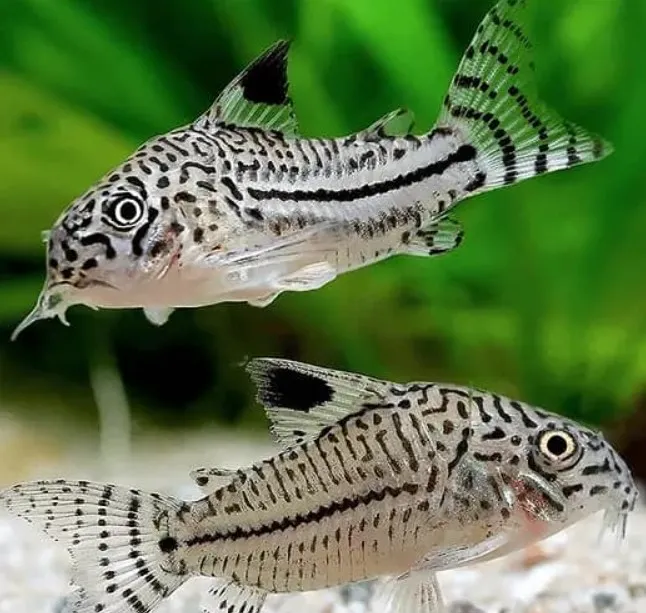
Corydoras Julii
Corydoras julii

Auratus Cichlid
Melanochromis auratus

Cobalt Blue Zebra
Maylandia callainos

Demasoni
Pseudotropheus demasoni

Jewel Cichlid
Hemichromis bimaculatus

Red Zebra
Maylandia estherae

Chinese Algae Eater
Gyrinocheilus aymonieri

Green Spotted Puffer
Dichotomyctere nigroviridis
Ready to Add Convict Cichlid to Your Tank?
Use our free stocking calculator to check compatibility, bioload, and get personalized recommendations.