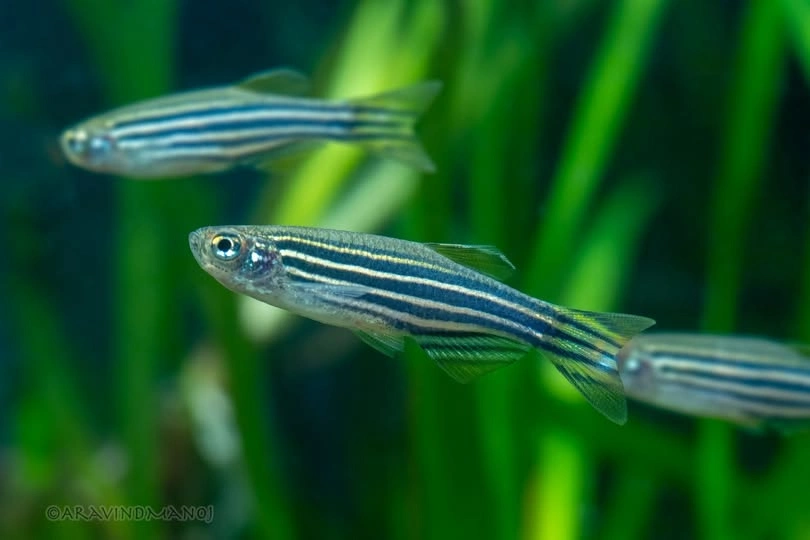
Zebra Danio
The closest thing to a barb-proof fish: permanently in motion, impossible to corner, and hardy across the same 22–26 °C band.
Adult Size
2.8" (7cm)
Min Tank
20 gal
Temperature
72-79°F
pH Range
6-7.5
Lifespan
5-7 years
Min Group
8+ fish
Diet
Omnivore
Swim Level
Middle
Bioload
3/10
Hardness
4-15 dGH
The Tiger Barb is one of the most iconic—and infamous—freshwater aquarium fish. With their striking orange bodies crossed by bold black vertical stripes, they're undeniably attractive. They're also one of the most active, entertaining fish you can keep, constantly in motion and full of personality.
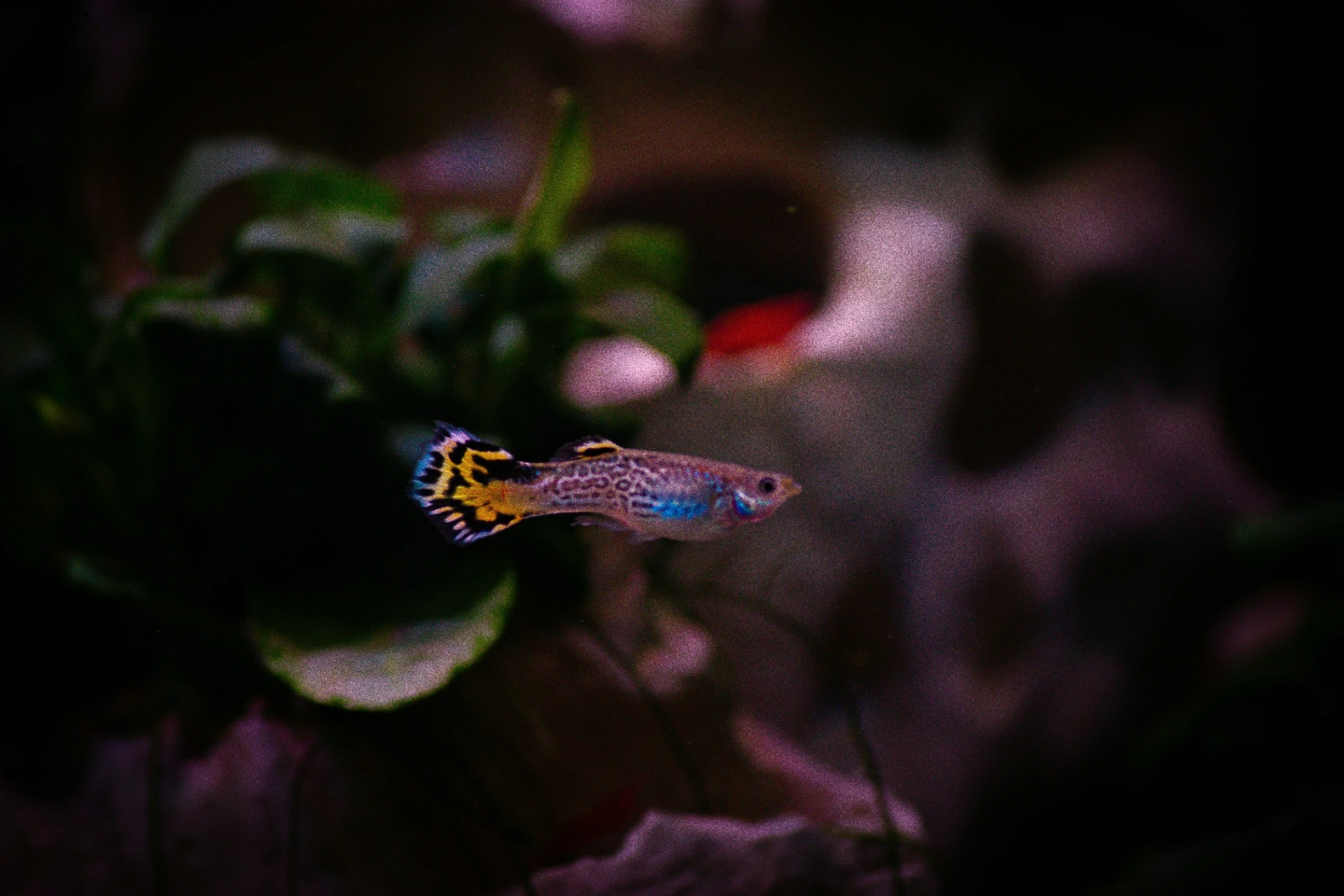
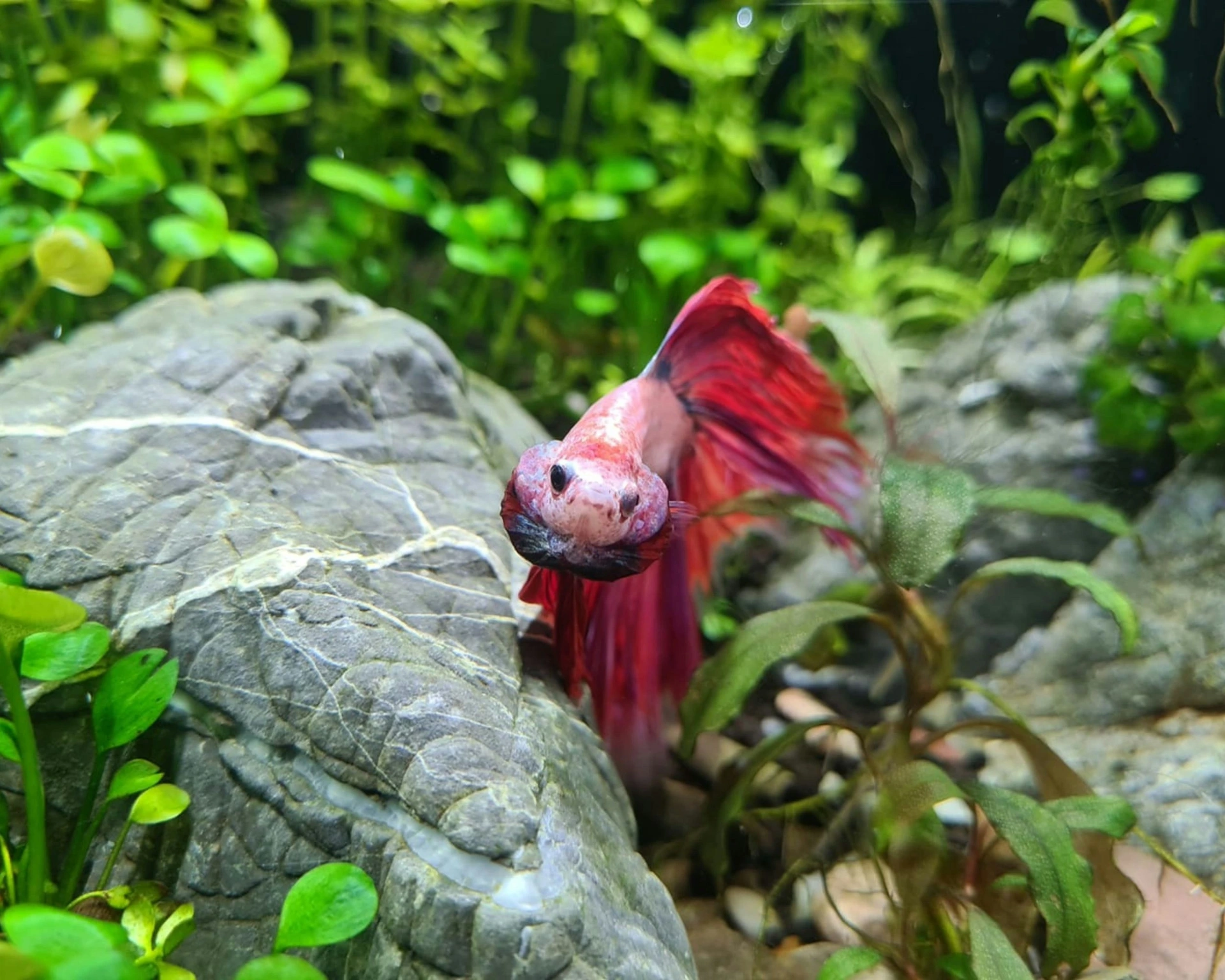
However, Tiger Barbs have earned a notorious reputation as fin nippers. This isn't exaggeration—they will relentlessly attack slow-moving fish with flowing fins. Bettas, angelfish, and fancy guppies kept with tiger barbs typically end up stressed, injured, or dead. This behavior isn't aggression in the typical sense—it's compulsive hierarchy behavior that they can't resist.
The key to keeping Tiger Barbs successfully is understanding their needs: large groups (8-10+) keep them focused on their own social hierarchy rather than tankmates. Choosing robust, fast-moving companions that don't trigger their nipping instinct is essential. With proper setup, they're hardy, beautiful, and among the most entertaining fish in the hobby. With improper setup, they're a menace.
Tiger Barbs are native to Southeast Asia, primarily Sumatra and Borneo, with possible populations on the Malay Peninsula. They inhabit clear to turbid shallow streams and tributaries with sandy or rocky substrates, often in forested areas.
Their natural habitat features moderate current and plenty of structure. They're schooling fish in the wild, forming groups for protection and social interaction—behavior that translates directly to aquarium keeping, where larger groups lead to better-adjusted fish.
Native Region
Southeast Asia—Sumatra, Borneo, possibly Malay Peninsula
Habitat Type
Clear or turbid shallow streams and tributaries with sandy/rocky substrate
Wild Water Conditions
Moderate current, forested areas, slightly acidic to neutral water
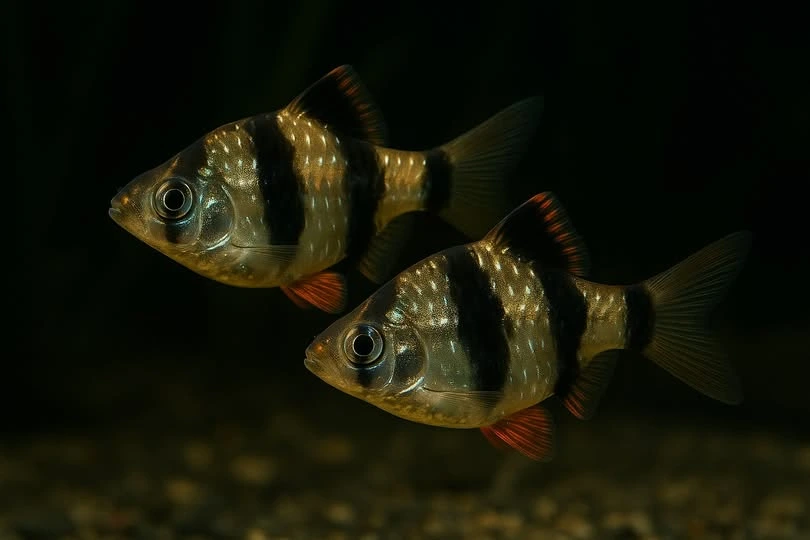
Tiger Barbs are immediately recognizable with their golden-orange bodies crossed by four bold black vertical bands—one through the eye, two on the body, and one at the base of the tail. The dorsal fin is edged in red/orange, and healthy males display red-tipped noses.
They reach about 2.75 inches (7 cm) in aquariums. Males are slimmer with more intense coloration and a distinctly red nose, especially during breeding or display. Females are rounder and slightly larger with less vivid colors. Both sexes display the characteristic black stripes that give them their name.
| Variety | Description | Rarity |
|---|---|---|
| Wild Type | Orange body with bold black stripes—the classic look | Very Common |
| Green Tiger Barb | Dark greenish-black base with pale green highlights | Common |
| Albino Tiger Barb | Cream/gold body with pale bands | Common |
| GloFish Tiger Barb | Genetically modified to fluoresce under blue/UV light | Common |
Minimum Tank Size
20 gallons
Recommended Tank Size
30 gallons
Tiger Barbs need at least 20 gallons (75 liters) for a proper school, with 30 gallons (115 liters) being preferable. Long tanks are better than tall ones to provide horizontal swimming space for these active fish.
Temperature 73-81°F (23-27°C), pH 6.0-7.5, GH 5-15. They're adaptable but prefer slightly acidic to neutral water. Maintain good water quality—they're hardy but appreciate clean water.
Any substrate works. Dark substrates enhance their orange and black coloration, making the stripes really pop.
Plants are beneficial for creating visual barriers that help distribute territorial behavior. Create a layout with planted perimeters but leave open swimming areas—they're very active swimmers.
Good filtration with moderate to strong flow is appreciated. They come from streams with current and enjoy swimming against the filter output.
Moderate lighting works well. Not particularly sensitive to lighting levels.
Diet Type
omnivore
Feeding Frequency
2x daily
Portion Size
What they consume in 2-3 minutes
Tiger Barbs are greedy omnivores that accept virtually any food offered. They're enthusiastic feeders that will rush to the surface at feeding time. Varied diet keeps them healthy and maintains their vibrant coloration.
They're greedy eaters—ensure all fish get food if keeping with other species. Color-enhancing foods maintain vibrant orange and black stripes. Well-fed tiger barbs are slightly less aggressive, though diet alone won't solve nipping behavior.
Tiger Barbs are constantly active, boisterous fish that establish strict hierarchies within their school. They chase each other relentlessly, determining and maintaining pecking order through physical displays and nipping. This is normal behavior—not a sign of problems.
The issue arises when this nipping behavior extends to tankmates. Fish with flowing fins, slow movement, or vulnerable appearance trigger the same nipping response. Once targeted, a fish will be harassed relentlessly—tiger barbs don't give up.
Large groups (8-10+) are essential because they keep the tiger barbs focused on each other. In proper schools, most of the chasing and nipping happens within the group, largely sparing tankmates. Small groups concentrate this behavior on fewer individuals and increase targeting of other species.
With tiger barbs the host is the problem. In small groups they redirect their pecking order onto whatever else is in the tank; in a group of twelve or more they mostly keep it among themselves. Choose fast fish with short fins, and fix the group size before choosing anything at all.
The closest thing to a barb-proof fish: permanently in motion, impossible to corner, and hardy across the same 22–26 °C band.
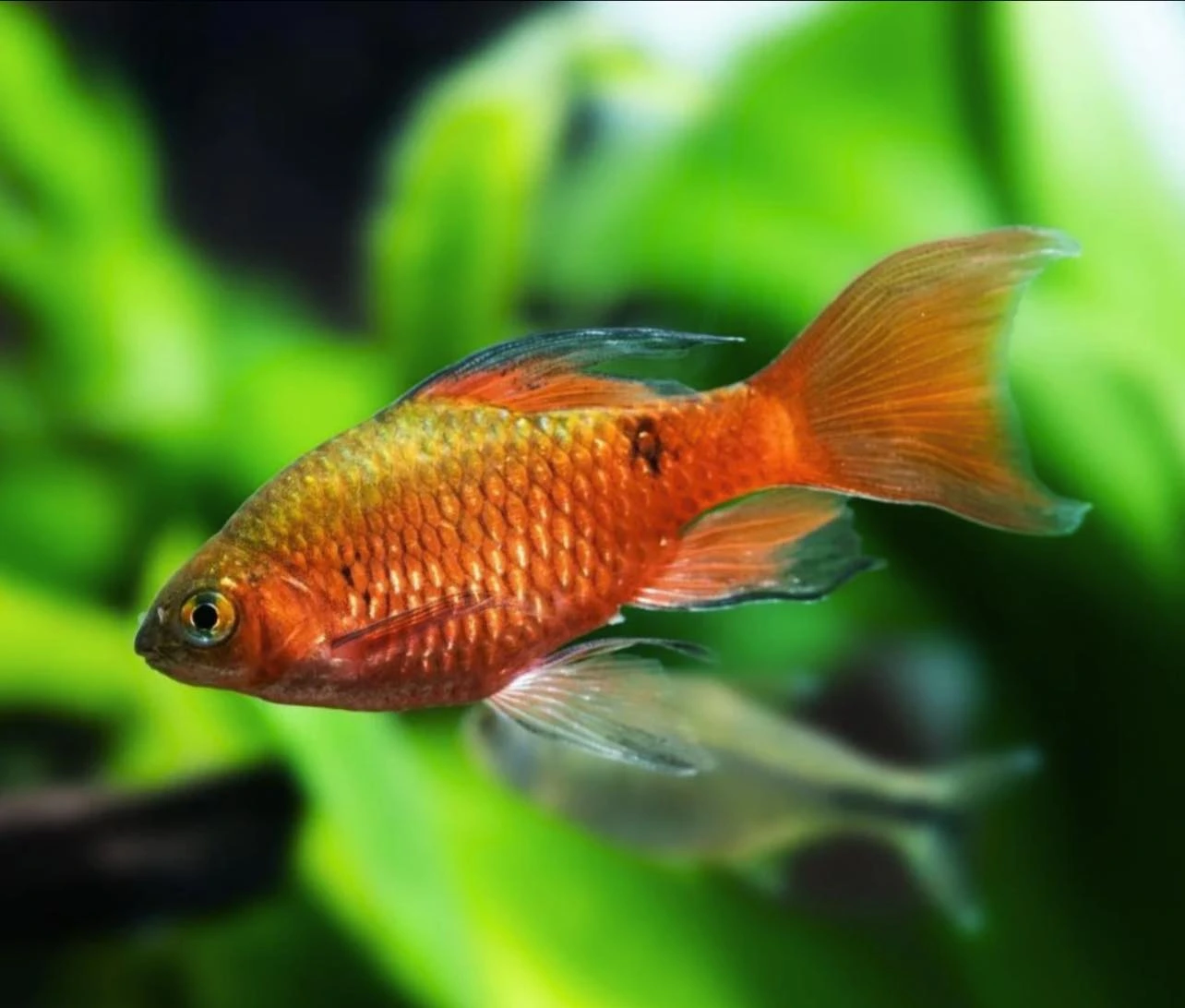
A larger barb from the same behavioural family, which means it reads tiger barb signalling correctly and neither party escalates.
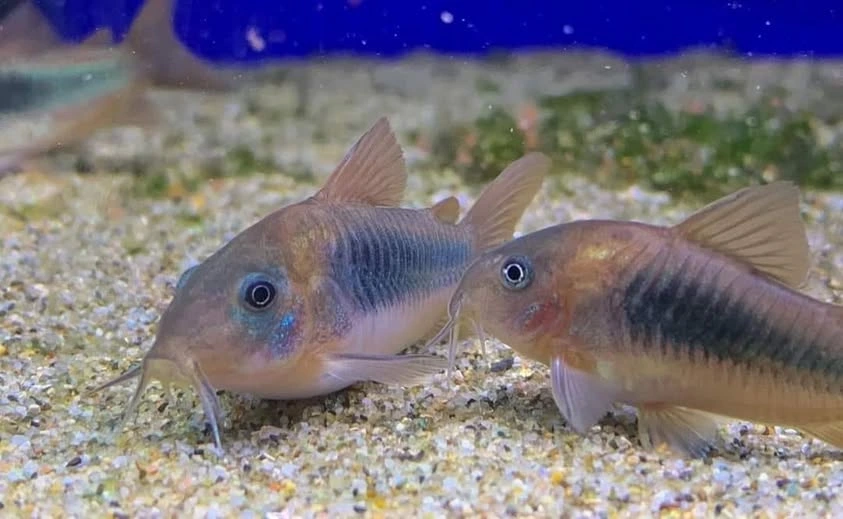
Armoured, bottom-dwelling and completely uninterested in what happens above them, which describes the ideal tiger barb tank mate.
Also compatible: Bristlenose Pleco, Congo Tetra, Yoyo Loach, Siamese Algae Eater
Also avoid: Dwarf Gourami, Pearl Gourami, Threadfin Rainbowfish, Cherry Shrimp
Full Tiger Barb tank mates guideTiger Barbs are easy to breed in home aquariums. They're egg scatterers that spawn readily with minimal encouragement.
Set up a breeding tank with marbles or mesh bottom to protect eggs from being eaten, fine-leaved plants, and slightly warmer water (78-80°F). Condition breeders with high-quality foods. Males chase females vigorously during spawning, and 200-500 eggs are scattered.
Remove parents immediately after spawning—they will eat eggs without hesitation. Eggs hatch in 24-48 hours and fry become free-swimming shortly after. Feed infusoria initially, then baby brine shrimp. Fry grow quickly.
Tiger Barbs are hardy fish that tolerate a range of conditions. They're among the easier barbs to keep healthy, provided basic care requirements are met.
| Disease | Symptoms | Treatment |
|---|---|---|
| Ich | White spots, scratching on objects | Raise temperature, standard ich medication |
| Fin rot | Frayed fins from nipping damage | Larger groups reduce damage, improve water quality |
| Velvet | Gold dust appearance | Copper-based treatment, dim lighting |
| Swim bladder issues | Buoyancy problems | Fast 2-3 days, feed peas, improve diet variety |
It's instinctive hierarchy behavior. In small groups, they redirect this toward tankmates. Large groups (8+) keep them busy with each other. Tempting targets like flowing fins make it worse.
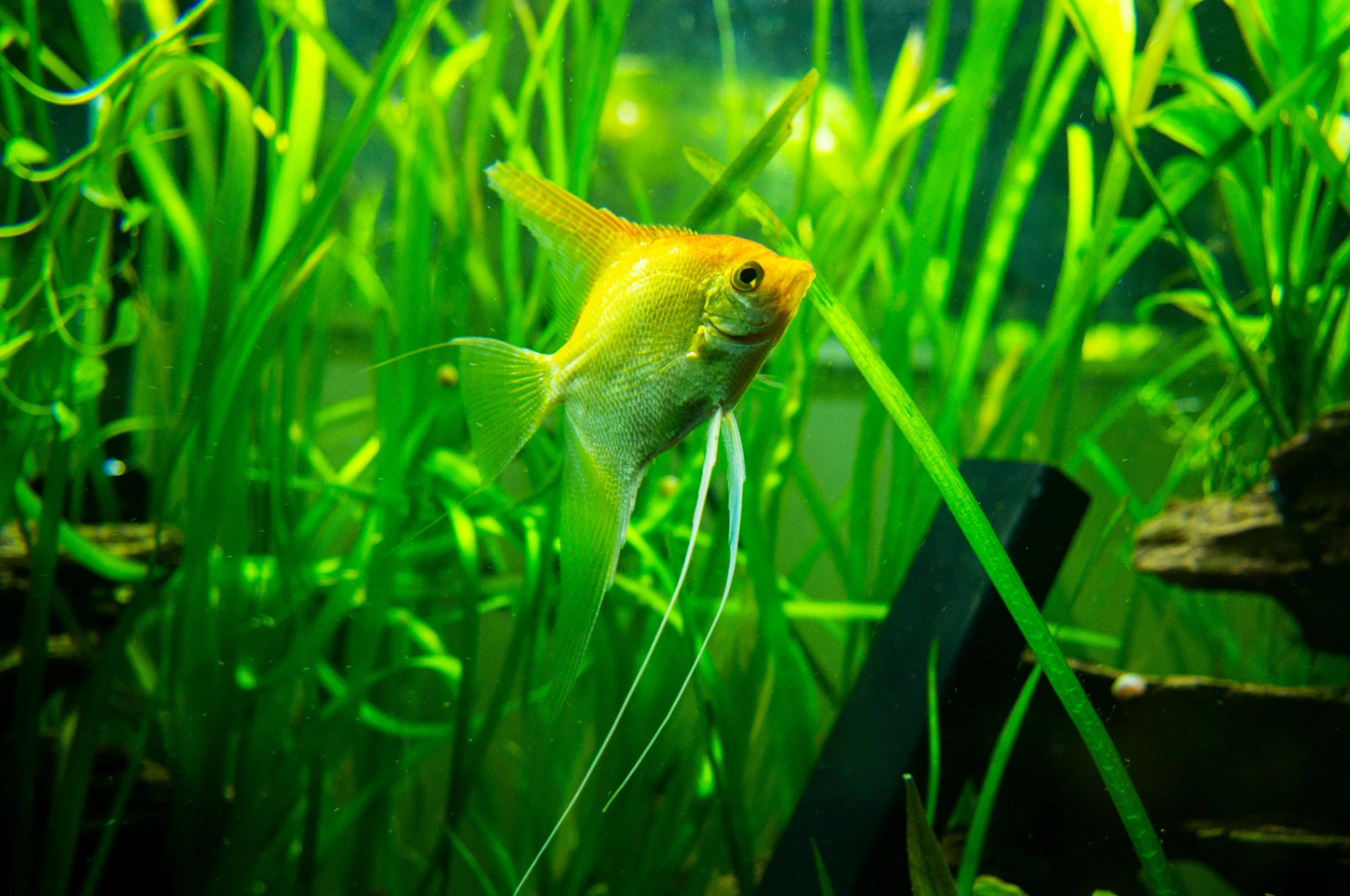
Absolutely not. Tiger barbs will relentlessly attack angelfish fins until the angel is stressed, injured, or dead. This is one of the worst possible combinations.
Minimum 8, ideally 10-12+. Larger groups dramatically reduce fin nipping of tankmates by keeping them focused on their own social hierarchy.
GloFish barbs are genetically modified tiger barbs with fluorescent genes. They have identical care requirements and behavior but glow under blue/UV lighting.

Tropheus duboisi

Xenopus laevis

Apistogramma cacatuoides

Gymnocorymbus ternetzi

Hyphessobrycon anisitsi

Brachygobius xanthozonus
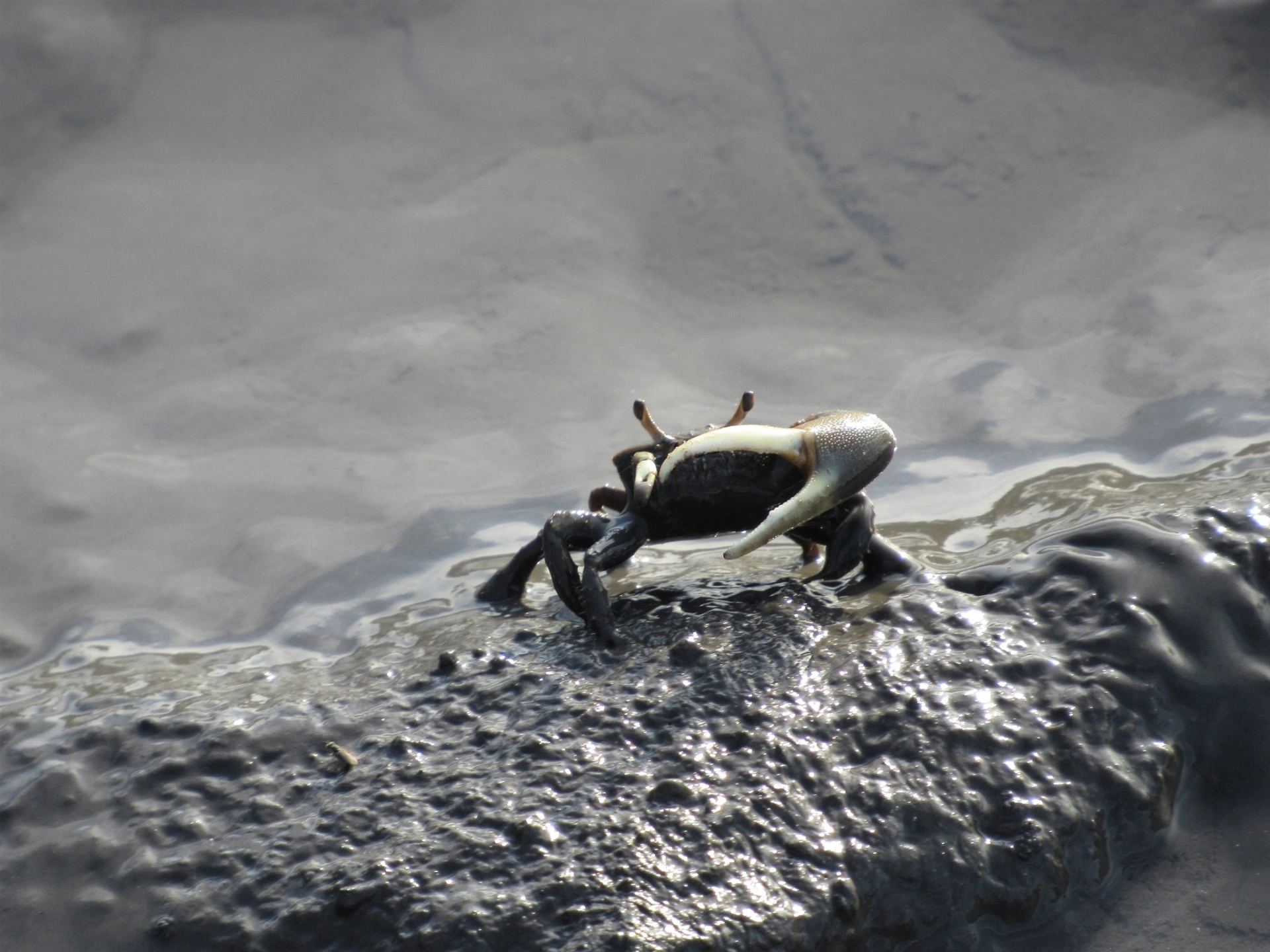
Uca spp.

Aplocheilus lineatus
Use our free stocking calculator to check compatibility, bioload, and get personalized recommendations.