
Care Requirements
Adult Size
2.8" (7cm)
Min Tank
20 gal
Temperature
72-79°F
pH Range
6-7.5
Lifespan
10-15 years
Min Group
6+ fish
Diet
Omnivore
Swim Level
Bottom
Bioload
2/10
Hardness
2-15 dGH
About Bronze Corydoras
The Bronze Corydoras is the quintessential bottom-dwelling community fish and one of the most popular catfish in the aquarium hobby. Native to South America, these armored catfish have been captivating aquarists since the 1800s with their endearing behavior, hardiness, and tireless substrate-sifting antics.
What makes bronze cories so beloved isn't just their peaceful nature—it's their personality. These social catfish are constantly on the move, rooting through substrate with their sensitive barbels, darting to the surface for gulps of air, and resting together in adorable piles. Watching a group of cories is genuinely entertaining, and they quickly become favorites in any community tank.
Despite being labeled a 'cleaner fish,' bronze corydoras are not just scavengers waiting for scraps. They're active foragers that deserve proper feeding and care. With lifespans exceeding a decade when properly kept, these little catfish are a long-term commitment that rewards patient aquarists with years of companionship.
Natural Habitat & Origin
Bronze corydoras are found throughout South America, with populations spanning from Trinidad and Venezuela down through Argentina. They inhabit slow-moving rivers, streams, tributaries, and flooded forest areas where soft, sandy substrates accumulate fallen leaves and organic debris.
In the wild, cories live in enormous groups—sometimes numbering in the thousands during dry season when they congregate in shrinking pools. The water is typically warm, soft, and slightly acidic, shaded by overhanging vegetation. This explains their preference for subdued lighting and their absolute need for social companionship in captivity.
Native Region
South America (Trinidad to Argentina)
Habitat Type
Slow-moving rivers, streams, flooded forests
Wild Water Conditions
Warm (72-79°F), soft to moderate hardness, slightly acidic to neutral pH, sandy bottoms with leaf litter
Appearance & Varieties
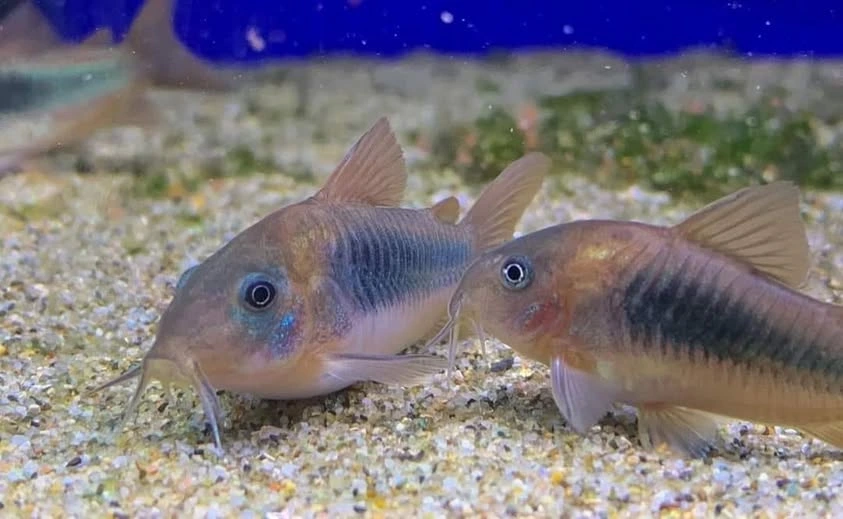
Bronze corydoras have the classic cory body shape: a compact, armored form with a flat underside and rounded back. Their bodies are covered in two rows of overlapping bony plates (scutes) rather than scales, giving them their armored appearance. The head features a downturned mouth flanked by sensitive barbels used for locating food.
The 'bronze' coloration varies considerably—from pale gold to deep greenish-bronze with iridescent highlights. A dark stripe runs from the gill plate through the eye. Fins are clear to pale yellow. Males are generally slimmer and smaller than females, who become noticeably rounder when full of eggs. An albino variant with pink-white coloration and red eyes is equally popular.
Popular Varieties
| Variety | Description | Rarity |
|---|---|---|
| Wild-type Bronze | Classic greenish-bronze coloration with iridescent sheen | Common |
| Albino Corydoras | Pink-white body with red eyes; same species, just lacking pigment | Common |
| Green/Laser Cory | Bright metallic green stripe variant; sometimes sold as separate species | Uncommon |
Tank Setup & Requirements
Quick Requirements Summary
Tank Size
Minimum Tank Size
20 gallons
Recommended Tank Size
20 gallons
Bronze corydoras are adaptable fish, but their substrate requirements are non-negotiable. These catfish spend their lives with their faces in the substrate, and sharp or rough materials will damage their delicate barbels, leading to infections and inability to find food.
Water Parameters
Temperature between 72-79°F (22-26°C) suits bronze cories well. They tolerate a fairly wide pH range of 6.0-7.5 and aren't particularly demanding about hardness. Like most fish, stability matters more than hitting exact numbers. They're sensitive to ammonia and nitrite—keep levels at zero.
Substrate
THIS IS CRITICAL: Use sand or very fine, smooth gravel only. Bronze cories constantly sift substrate through their gills searching for food. Sharp gravel, rough sand, or jagged materials will erode their barbels over time, eventually wearing them down to nubs. Once barbels are damaged, they cannot locate food effectively. Play sand, pool filter sand, or aquarium sand are all excellent choices.
Plants & Decorations
Bronze cories appreciate planted tanks with plenty of cover. They'll rest under broad-leaved plants like Amazon swords or cryptocorynes during the day. Driftwood, caves, and rock formations provide additional security. Leave open sandy areas for foraging—watching cories sift through sand is half the fun.
Filtration & Water Flow
Standard filtration works well. Bronze cories produce moderate waste for their size and appreciate clean water. Avoid extremely strong currents at the bottom of the tank, though some flow is beneficial. Sponge filters are excellent as cories often graze on the biofilm.
Lighting
Subdued to moderate lighting suits cories best. They're more active under dimmer conditions and may hide excessively under bright lights. Floating plants help diffuse strong lighting while providing the shaded areas cories prefer.
Diet & Feeding Guide
Diet Type
omnivore
Feeding Frequency
1-2x daily
Portion Size
What they consume in 2-3 minutes
Bronze corydoras are true omnivores that eat virtually anything that reaches the bottom. In the wild, they consume worms, insect larvae, small crustaceans, plant matter, and detritus. Despite their reputation as 'cleanup crew,' they need dedicated feeding—not just leftovers from other fish.
Best Foods for Bronze Corydoras
- Sinking pellets/wafers — Should be primary diet—Hikari Sinking Wafers, Repashy Bottom Scratcher
- Frozen bloodworms — Excellent protein source, cories go crazy for these
- Frozen brine shrimp — Good variety, sinks readily
- Hikari Vibra Bites — Sinking sticks that mimic bloodworms
- Blanched vegetables — Zucchini, cucumber, spinach—weight down to sink
- Live blackworms — Ultimate treat, triggers intense foraging behavior
- Bug Bites (bottom feeder formula) — Excellent nutrition, appropriately sized
Foods to Avoid
- Floating foods only — Cories are bottom feeders—food must sink to them
- Large pellets — Cories have small mouths; food should be bite-sized or breakable
- Relying on 'leftovers' — Cories need dedicated feeding, not just scraps from surface feeders
Feed after lights dim when cories are most active. Drop sinking foods directly to the substrate rather than letting them drift. In community tanks, fast surface feeders may intercept food before it sinks—consider using a feeding dish or tube to deliver food directly to the bottom. Watch that all cories are getting food; dominant individuals may monopolize feeding areas.
Behavior & Temperament
Bronze corydoras are social, active fish with fascinating behaviors. They spend most of their time foraging across the substrate, methodically working through sand with their barbels in search of food. This constant activity makes them entertaining to watch and genuinely useful for keeping substrate clean.
One distinctive behavior is their habit of darting to the surface to gulp air. This is completely normal—cories can absorb oxygen through their intestines, supplementing gill respiration. Increased surface dashing may indicate low oxygen levels, but occasional trips are nothing to worry about.
Cories rest in groups, often piling on top of each other in favored spots. They're most active during dawn, dusk, and night, though they'll emerge for food anytime. When stressed or kept in too-small groups, they hide constantly and lose their playful demeanor.
Tank Mates: Compatibility Guide
Compatible Tank Mates
Classic combination, similar water preferences
Beautiful pairing, overlapping parameters
Peaceful community, though guppies prefer harder water
Excellent match, both peaceful schoolers
Peaceful surface dweller, won't compete for space
Peaceful barb that won't bother bottom dwellers
Tiny and peaceful, different tank zone
Both bottom dwellers but usually coexist peacefully
Peaceful cleanup crew companions
Often works well—cories stay at bottom, betta at top
Tank Mates to Avoid
Cichlids (most)
Most cichlids are too aggressive and may attack or eat cories
Oscar
Will eat corydoras—extreme size difference
Jack Dempsey
Aggressive cichlid that will harm peaceful bottom dwellers
Red Tail Shark
Territorial bottom dweller that harasses cories
Rainbow Shark
Same issue—territorial aggression toward bottom fish
Chinese Algae Eater
Becomes aggressive and may attack cories
Crayfish
Will catch and eat corydoras, especially at night
Common Pairing Questions
Can corydoras live with bettas?
Yes, this is often a successful pairing. Corydoras occupy the bottom while bettas prefer the top and middle, minimizing territorial conflict. Cories are too fast and armored for most bettas to harm. Ensure the tank is at least 10 gallons with hiding spots. Some aggressive bettas may still harass cories, so monitor initially.
Can I keep just one corydoras?
You can, but you shouldn't. Corydoras are highly social fish that become stressed, hide constantly, and often die prematurely when kept alone. In the wild, they live in groups of hundreds to thousands. The absolute minimum is 6 of the same species, with 8-10+ being much better for their wellbeing.
Can different corydoras species be kept together?
Yes, but each species should have at least 6 of their own kind. Different cory species will loosely associate but primarily school with their own species. A tank with 3 bronze and 3 pandas isn't ideal—better to have 6 of one species than small mixed groups.
Bronze corydoras are among the easiest egg-laying fish to breed in home aquariums. They're prolific spawners that will often breed without any special effort once mature and well-fed.
Breeding is typically triggered by water changes with slightly cooler water, simulating the rainy season. Males actively pursue females, and the classic 'T-position' is adopted during fertilization—the male clasps the female's barbels while she holds eggs in her pelvic fins. Females deposit sticky eggs on glass, plants, and decorations, laying 10-20 at a time over several hours.
Eggs hatch in 3-5 days depending on temperature. Parents will eat eggs and fry, so remove either the eggs or the adults. Fry are relatively large and can eat baby brine shrimp and microworms immediately. They grow quickly with good feeding.
Health Issues & Disease Prevention
Bronze corydoras are generally hardy fish when their basic needs are met—particularly substrate and group size requirements. Most health issues stem from improper substrate causing barbel erosion or poor water quality.
Common Diseases
| Disease | Symptoms | Treatment |
|---|---|---|
| Barbel Erosion | Shortened, worn, or missing barbels; difficulty finding food; secondary infections around mouth | Not reversible once severe. Caused by rough substrate—switch to sand immediately. Barbels may partially regenerate in young fish. Keep water pristine to prevent infection. |
| Red Blotch Disease | Red, bloody patches on belly; lethargy; loss of appetite; rapid progression | Bacterial infection requiring immediate antibiotic treatment (Kanaplex, Maracyn 2). Often fatal if not caught early. Improve water quality. May be contagious—consider quarantine. |
| Ich (White Spot) | White salt-like spots on body and fins, flashing against objects, clamped fins | Raise temperature to 82-84°F gradually. Use half-dose ich medication—cories are sensitive to many treatments, especially those containing copper. Salt can be used cautiously at 1 tsp per 5 gallons. |
| Fin Rot | Fraying fins, white or red edges, fins deteriorating over time | Improve water quality immediately—this is usually the root cause. Antibacterial medication if severe. Fins typically regenerate once conditions improve. |
| Columnaris | White or gray patches, cottony growths, frayed fins, rapid breathing | Kanaplex or Furan-2. Lower temperature slightly. Highly contagious—quarantine affected fish. Improve oxygenation. |
Signs of a Healthy Bronze Corydoras
- Active foraging behavior across the substrate
- Full, intact barbels (not worn or missing)
- Clear eyes without cloudiness
- Round belly (not sunken or bloated)
- Resting together with other cories
- Regular trips to surface for air (occasional, not frantic)
- Responds eagerly to feeding
Prevention Tips
- Use sand substrate—this single factor prevents the most common cory health issue
- Keep in groups of 6+ to reduce stress
- Maintain pristine water quality—cories are sensitive to ammonia/nitrite
- Avoid copper-based medications whenever possible
- Feed sinking foods specifically for them, not just leftovers
- Quarantine new cories for 2-3 weeks before adding to main tank
- Don't keep with aggressive fish that may injure them
Frequently Asked Questions
Bronze corydoras can live 10-15 years with proper care, making them one of the longest-lived small community fish. Many die prematurely from poor substrate choices, inadequate group sizes, or water quality issues. Healthy cories in good conditions often surprise owners with their longevity.
Minimum 6 of the same species, though 8-10+ is ideal. Corydoras are extremely social and become stressed, hide constantly, and often die prematurely in small groups. In the wild, they live in groups of hundreds. More cories means more natural behavior and happier fish.
Strongly recommended. While cories can survive on smooth, fine gravel, sand is far superior. They constantly sift substrate through their gills and barbels to find food. Sharp or rough substrates damage barbels over time, eventually eroding them completely and leaving fish unable to locate food.
This is normal behavior called intestinal breathing. Corydoras can absorb oxygen through their intestines and regularly gulp air at the surface. Occasional surface trips are nothing to worry about. Frequent, frantic surface dashing may indicate low oxygen levels—increase surface agitation or add an airstone.
Partially. Corydoras are excellent at finding and eating food that falls to the substrate, preventing waste buildup. However, they're not 'cleaner fish' that survive on scraps—they need dedicated feeding with sinking foods. They won't eat fish waste, algae, or replace regular tank maintenance.
Usually yes. This is a popular and often successful combination. Cories stay at the bottom while bettas occupy upper levels, reducing conflict. Cories are too fast and armored for most bettas to harm. Use a 10+ gallon tank and monitor for any aggression initially.
Common causes: too few cories (need 6+), aggressive tankmates, insufficient hiding spots, too much light, or new tank stress. Cories are also more active at dawn/dusk and night. If they never emerge, evaluate group size and tankmate compatibility first.
No. Despite being sold as 'algae eaters' in some stores, corydoras do not eat algae. They're omnivorous scavengers that eat meaty foods, sinking pellets, and organic debris—but not algae. For algae control, look at otocinclus, nerite snails, or bristlenose plecos instead.
Minimum 15-20 gallons (60-75 liters) for a group of 6 bronze corydoras. Larger tanks allow for bigger groups and more stable water parameters. Footprint matters more than height—cories need floor space to forage, so long tanks are preferable to tall ones.
Different species will loosely associate but primarily school with their own kind. For best results, keep at least 6 of each species rather than mixing small numbers. A tank with 3 bronze and 3 pandas is less ideal than 6 of either species.
Tips for Keeping Bronze Corydoras
Pro Tips
- ✓Feed after lights go out when cories are most active—drop sinking pellets directly to substrate
- ✓Use a terracotta pot or cave as a dedicated 'cory corner'—they'll adopt it as their resting spot
- ✓Play sand from hardware stores works great and costs far less than aquarium sand—just rinse thoroughly
- ✓Cories love frozen bloodworms—watching them hunt through sand for worms is peak fishkeeping entertainment
- ✓If breeding, a bare-bottom quarantine tank makes collecting eggs much easier
- ✓The 'armored' plates mean cories can be kept with fish that might nip other species—they're well-protected
Common Mistakes to Avoid
- ✗Using sharp or rough gravel—destroys barbels over time, eventually fatal
- ✗Keeping alone or in pairs—cories need groups of 6+ minimum
- ✗Relying on 'leftover' food—cories need dedicated sinking foods
- ✗Mixing tiny numbers of different species instead of proper schools
- ✗Keeping with aggressive fish that stress or attack them
- ✗Using full-strength medications—cories are sensitive to many treatments, especially copper
- ✗Ignoring worn barbels—early sign of substrate problems that must be addressed immediately
Sources
- FishBase — Accepted scientific name, maximum size and native range for Bronze Corydoras.
Featured in Biotope Presets
Related Species You Might Like
View All Fish →
Buenos Aires Tetra
Hyphessobrycon anisitsi
Adolfo's Corydoras
Corydoras adolfoi
Corydoras Julii
Corydoras julii
Corydoras Sterbai
Corydoras sterbai
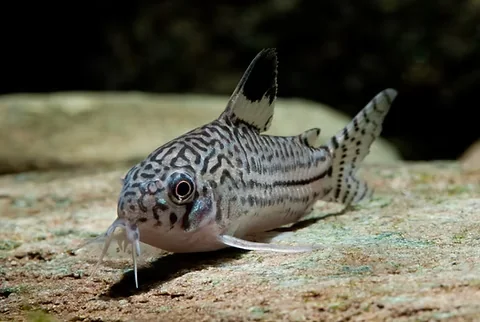
False Julii Corydoras
Corydoras trilineatus
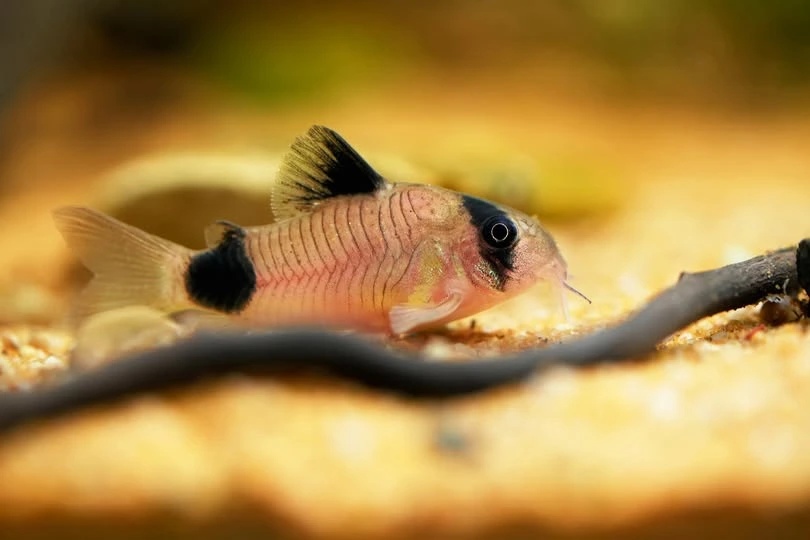
Panda Corydoras
Corydoras panda
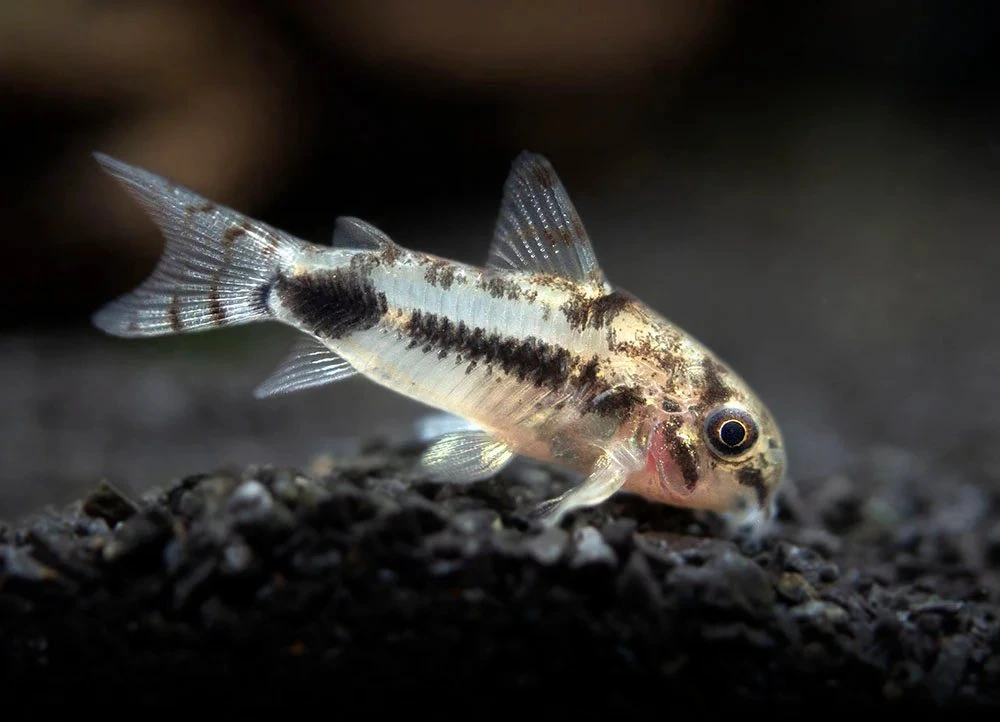
Peppered Corydoras
Corydoras paleatus
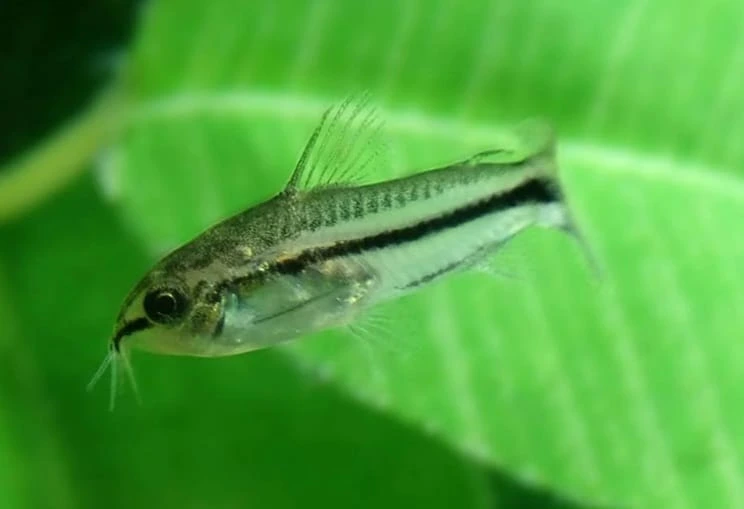
Pygmy Corydoras
Corydoras pygmaeus
Ready to Add Bronze Corydoras to Your Tank?
Use our free stocking calculator to check compatibility, bioload, and get personalized recommendations.