
Amazon Sword Care Guide
Echinodorus grisebachii (syn. Echinodorus bleheri, Echinodorus amazonicus)
Reviewed by the AquariumStocking team · Updated August 2026
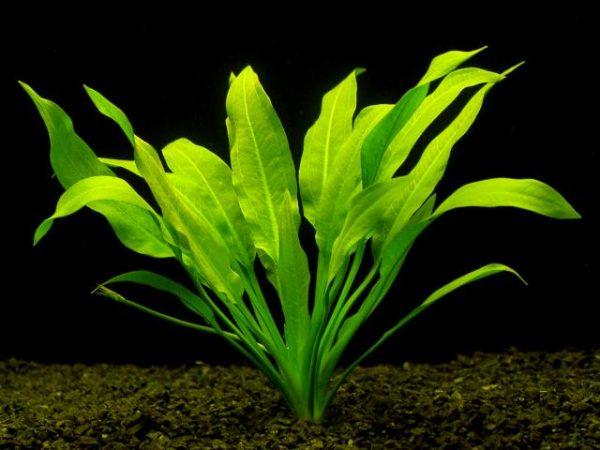
A big substrate-rooted rosette that feeds through its roots, not the water column — root tabs are the whole game. Buy it knowing it will drop most of its leaves first and that it outgrows small tanks.
Amazon Sword quick facts
- Light demand
- Medium
- CO2 requirement
- Not needed
- Difficulty
- Beginner
- Growth rate
- Medium
- Placement
- Background
- Growth habit
- Rooted
- Substrate need
- Nutrient substrate or root tabs
- Max size
- 50 cm (19.7 in) tall, ~30 cm wide
- pH
- 6.5–7.5
- Hardness
- 3–15 dGH
- Propagation
- Adventitious plantlets on arching flower stalks (runners)
- Temperature
- 22–28 °C (72–82 °F)
Plant deep enough to bury the roots but keep the crown above the substrate. A buried crown rots.
Overview
Amazon sword (Echinodorus grisebachii) is a large rooted rosette from South America and the standard background plant for community tanks that have substrate to spare. A mature specimen is roughly 40–50 cm tall and 30 cm across, which is a whole corner of a 55-gallon tank and simply too much plant for anything under about 20 gallons.
It is a root feeder, and that single fact drives everything else on this page. Where an epiphyte like java fern ignores root tabs entirely and lives off the water column, a sword does the reverse: liquid fertiliser alone will not keep it healthy, and a sword planted in inert gravel with no root nutrition slowly shrinks, pales and stalls no matter how much you dose the water.
It is still a beginner plant. It needs no CO2, tolerates ordinary community water, and grows steadily under medium light. The two things that catch people out are the dramatic melt after purchase and the assumption that it can be fed like everything else in the tank.
What you're buying
Retail swords are almost always emersed-grown, and the conversion to submersed growth is far more severe than it is with java fern. A newly planted sword can shed most of its leaves in the first few weeks. It looks like the plant is dying and it usually is not.
Emersed vs submersed leaves
Emersed nursery leaves are shorter, broader and more rounded, on stiff upright stalks. Submersed leaves are longer, narrower and softer. The first set is going to be replaced.
What melt looks like
Yellowing, then translucent patches, then leaves collapsing at the base — typically over two to six weeks, with new growth appearing from the centre before the old leaves are gone.
Picking a healthy plant
Judge the crown and roots, not the leaves. A firm, pale crown with white or cream roots recovers; a soft brown crown does not.
The instinct to pull the plant out and check on it is the thing to resist. A sword re-establishing its root system needs several weeks of being left alone; repeated uprooting is what actually kills the ones that die during conversion.
Push two root tabs under it at planting rather than waiting for the melt to finish. The new submersed leaves are grown on root nutrition, and a plant that has nothing to draw on produces a smaller, weaker second set.
Light, CO2 & nutrients
Light
Medium
CO2
Not needed
Fertilisation
Root tabs
Light
Medium light suits it. Under a low-output LED a sword survives but stays small and grows slowly; under strong light it grows fast enough to need dividing and, without matching root nutrition, develops deficiency symptoms rather than more leaves.
Eight hours of moderate light is a sensible default. Because it is a background plant, watch for taller stems or floaters shading it out — a sword pushed into permanent shade thins from the outside in.
CO2
Not required. Amazon sword grows well in low-tech tanks and this is one of the reasons it is so widely sold.
Injected CO2 does help — leaves come in larger and the plant fills out faster — but it also increases nutrient demand, so a CO2 tank with no root tabs produces a hungrier, worse-looking sword than a low-tech tank with them.
Work out your CO2 injection rate →
Nutrients
This is a root feeder. Root tabs pushed into the substrate near the base are the primary feeding method, replaced roughly every two to three months, or a nutrient-rich substrate from the start. Liquid all-in-one fertiliser is a supplement here, not the main course — the exact inversion of the java fern rule, where tabs do nothing and liquid is everything.
The deficiency signals are specific enough to diagnose on sight. Holes appearing in older leaves point to potassium. Pale or yellowing new growth with the veins still green is iron chlorosis, and swords are notably iron-hungry. New leaves emerging small and stunted while the plant otherwise looks fine means it has run out of root nutrition — add tabs.
A sword in plain inert gravel with liquid dosing only is the single most common version of an unhappy amazon sword. It does not die; it just gets smaller every year.
Water & temperature
pH
6.5–7.5
Hardness
3–15 dGH
Temperature
22–28 °C (72–82 °F)
Ordinary community water suits it: pH around 6.5–7.5, 3–15 dGH, and 22–28 °C. It is genuinely tolerant across that range and adapts to harder water than its Amazon origins suggest.
Temperature is not a limiting factor within the tropical band. Unlike java moss, there is no cool-water preference here — a sword is fine at discus temperatures and equally fine at 22 °C.
Planting
- 1Remove the plant from the pot and rinse the roots clean of rock wool or gel.
- 2Trim long roots back to roughly 3–5 cm so they anchor instead of coiling on the surface.
- 3Open a hole in the substrate with tweezers or your fingers and set the roots in at an angle.
- 4Bury the roots but keep the crown — the point where the leaves meet the roots — above the substrate.
- 5Push a root tab under the plant; rosette plants feed mainly through their roots.
- 6Expect older leaves to melt back after planting while the root system establishes.
Bury the roots, not the crown. The crown is the pale collar where the leaves emerge from the root mass; packed under substrate it rots, and the plant collapses weeks later for no visible reason.
Placement & aquascaping role
This is a background plant and a specimen plant, not something you buy three of. At 40–50 cm tall and up to 30 cm wide, one mature sword fills the back corner of a 4-foot tank and dominates anything smaller. In a standard 20-gallon it will reach the surface and shade most of the tank; below that, it is the wrong plant entirely.
It needs substrate depth as much as floor space — 6–8 cm at the planting site so the roots have somewhere to go. A sword in 2 cm of decorative gravel never anchors properly and gets pushed out by its own root growth.
Used well, the arching leaves are useful cover: angelfish and discus use the leaf mass as territory markers, and the shade under a mature rosette is a natural home for shade-tolerant plants like java fern and anubias.
Growth, trimming & maintenance
Growth is moderate and steady — a new leaf every week or two once established, with the plant reaching full size over six to twelve months. Most of the maintenance is removing old leaves rather than shaping the plant.
Cut spent leaves at the base of the stalk, not partway up the blade. Older outer leaves yellow and are shed naturally; if you are removing several a week while new growth is also small, that is a root nutrition problem rather than normal turnover.
When the rosette starts crowding its neighbours, lift and divide the root mass rather than trimming leaves back — a sword cut short simply regrows to the same size and looks butchered in the meantime.
Propagation
Amazon sword propagates through adventitious plantlets carried on flower stalks, which is a different mechanism from java fern’s leaf plantlets and from java moss’s fragmentation. A mature, well-fed plant throws a long arching stalk that travels across the tank and produces daughter plants along its length.
You cannot force it. Runners are a sign the plant has surplus energy, which in practice means good light and a well-stocked substrate. A sword that never sends out a stalk is usually a sword that is short of root nutrition.
- 1Wait for the arching flower stalk to develop plantlets along its length.
- 2Leave each plantlet attached until it has four or five leaves and its own visible roots — usually several weeks.
- 3Cut the plantlet free of the stalk with clean scissors, leaving a short stub on the daughter plant.
- 4Plant it in the substrate with the roots buried and the crown exposed, exactly as you would a bought plant.
- 5Push a root tab underneath it; a detached plantlet has no reserves and stalls without root nutrition.
- 6Remove the spent stalk once the last plantlet is off it.
Troubleshooting & diagnosis
Sword problems split cleanly in two: the dramatic melt of the first month, which is normal, and the specific deficiency signals of an underfed root system, which are not. The leaf that is affected tells you which one you are looking at.
| Symptom | Likely cause | Fix |
|---|---|---|
| Most leaves yellow and collapse in the weeks after purchase | Emersed-to-submersed conversion | Normal. Trim collapsed leaves, add root tabs, leave the plant undisturbed. |
| Holes appearing in older leaves | Potassium deficiency | Dose potassium or a complete liquid fertiliser alongside the root tabs. |
| Pale or yellow new leaves with green veins | Iron chlorosis — swords are iron-hungry | Add an iron-containing root tab or dose chelated iron. |
| New leaves emerging small and stunted | Root nutrition exhausted | Push fresh root tabs in near the base; replace every two to three months. |
| Sudden total collapse of an established plant; soft crown | Crown buried in substrate and rotting | Lift, trim rot, replant with the crown above the substrate line. |
| Plant repeatedly uprooted or leaves shredded | Diggers or herbivores in the tank | Weigh the base with stones while it roots, or rehome the plant to a tank without cichlids or goldfish. |
| Long arching stalk growing across the tank | Flower stalk carrying plantlets — normal propagation | Nothing. Detach plantlets once they have their own roots. |
Varieties & cultivars
| Variety | Appearance | Mature size | Availability |
|---|---|---|---|
| Amazon Sword (standard) | Long, narrow, gently arching green leaves in a broad rosette | ~40–50 cm | Very common |
| Ozelot Sword | Broad leaves with red-brown spotting; a cultivated hybrid, not a wild form | ~40–50 cm | Common |
| Red Flame Sword | Heavily red-mottled new growth that darkens as leaves age | ~35–45 cm | Common |
| Kleiner Bar | Compact, narrow-leaved hybrid with deep red new leaves | ~20–30 cm | Uncommon |
Only the standard form is Echinodorus grisebachii; the rest are cultivated hybrids sold under trade names and their parentage is often unrecorded. Care is the same across all of them — every one is a root feeder. Melon sword (E. osiris) and E. uruguayensis are separate species frequently shelved as "amazon sword", so check the label against the leaf shape.
Natural habitat & origin
Native range
South America — Amazon basin and adjacent river systems
Habitat type
River margins, floodplains and seasonally flooded ground
Wild growing conditions
Soft to moderately hard water over silt; emersed through the dry season, submersed when the river rises
Echinodorus grisebachii grows on the margins of Amazon rivers and in seasonally flooded ground, rooted in soft sediment that is rich in decaying organic matter. It spends part of the year emersed and part submersed, and it grows a different set of leaves for each state.
That is why the melt happens. A nursery grows it emersed because it is faster and cheaper, so the plant you buy is wearing the wrong leaves for the tank it is going into; the collapse you see in week two is the seasonal switch it makes every year in the wild, compressed and out of context.
Rooting in river sediment is also why root tabs matter so much. The plant evolved to draw nutrition from the ground it stands in, and an aquarium of washed inert gravel is a substrate with nothing in it — closer to a gravel bar than a floodplain.
Fish & invert compatibility
A mature sword is too tough to be eaten outright; the damage comes from below. Substrate-movers expose the crown and diggers cut the feeder roots, which is what actually kills these plants. Read the two lists as "leaves the roots alone" versus "does not".
Safe with Amazon Sword
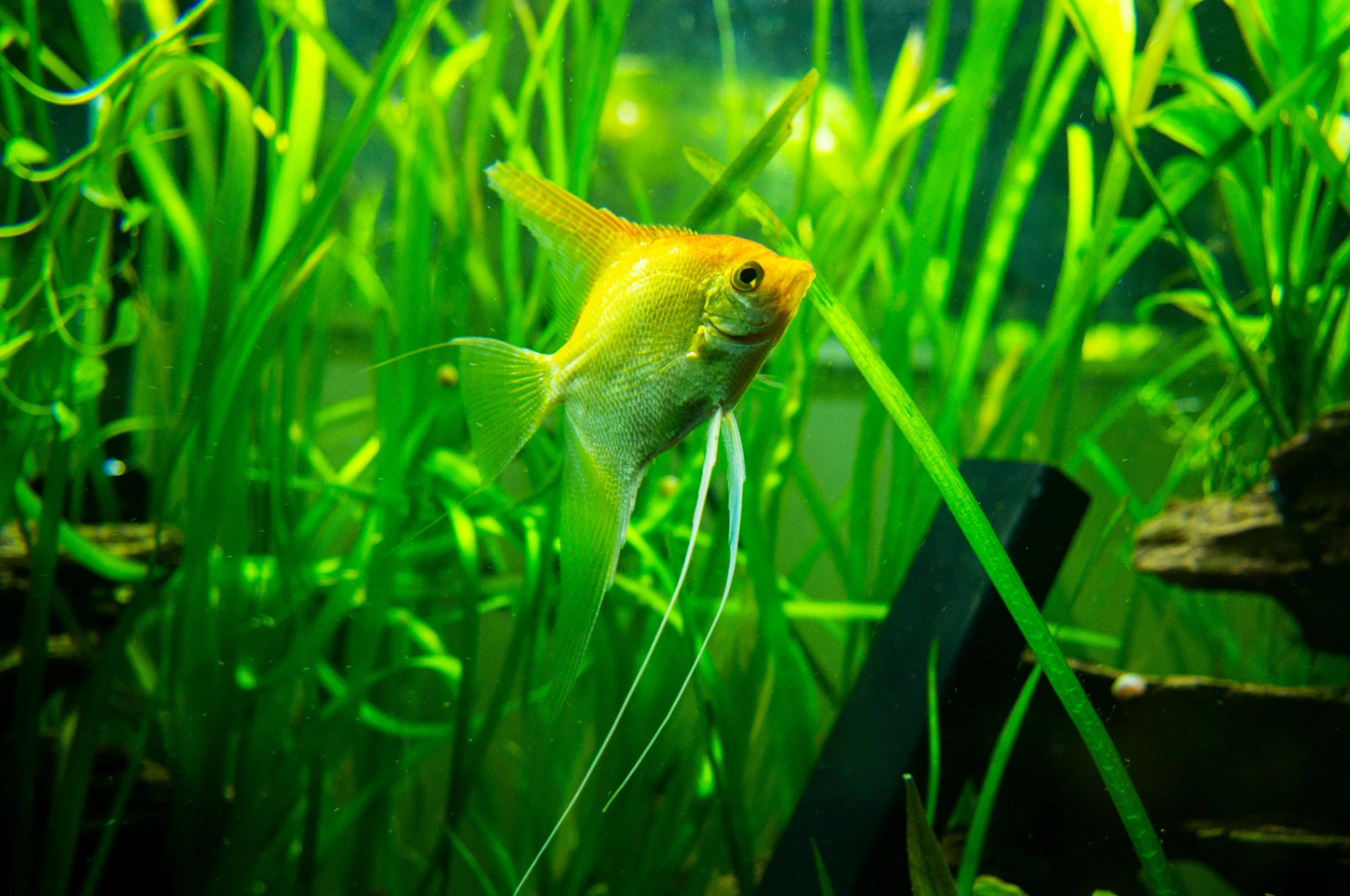 AngelfishPterophyllum scalare
 DiscusSymphysodon aequifasciatus
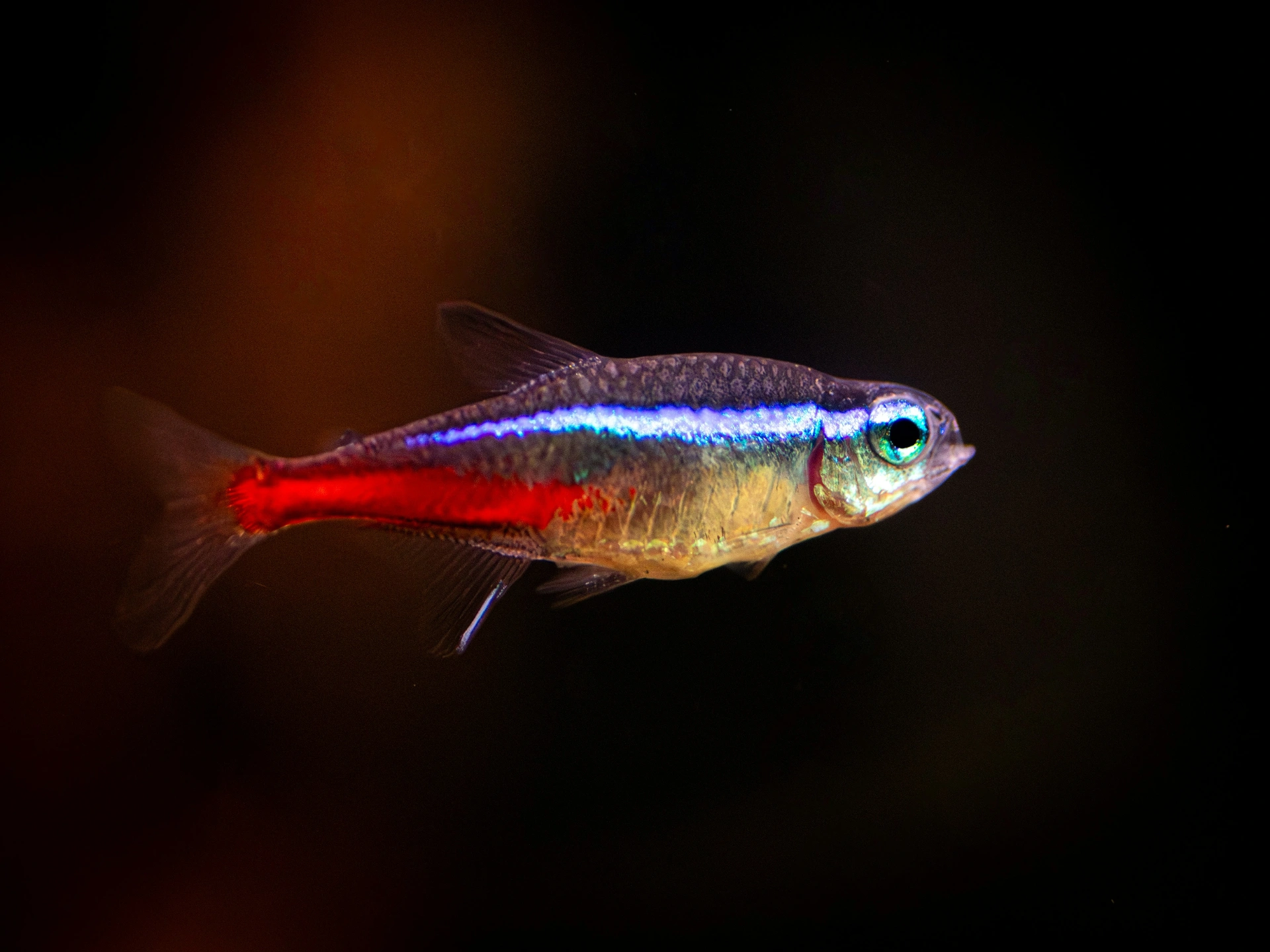 Neon TetraParacheirodon innesi
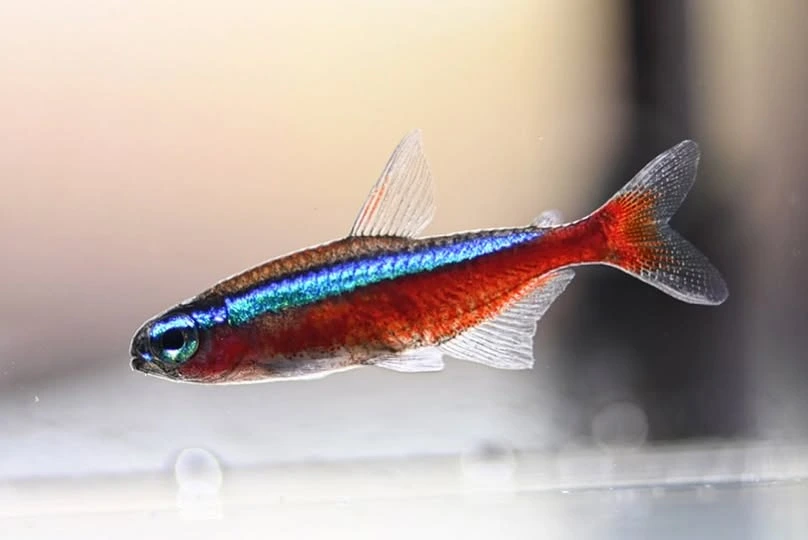 Cardinal TetraParacheirodon axelrodi
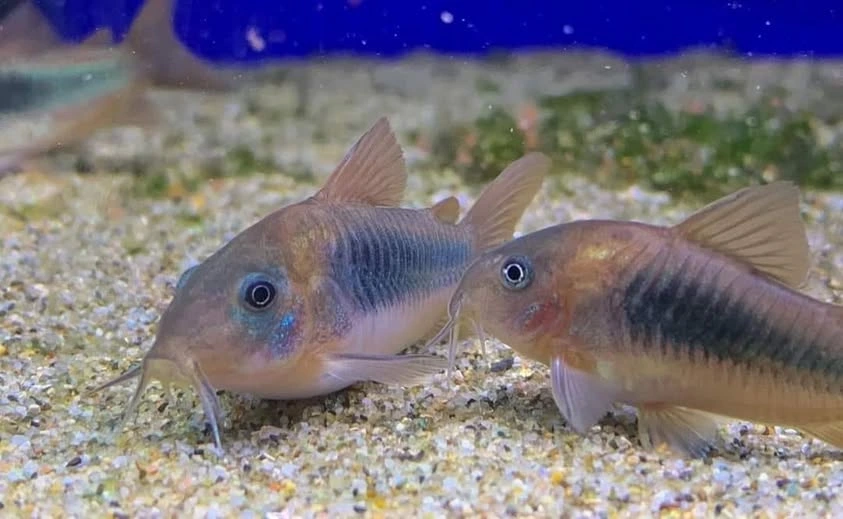 Bronze CorydorasCorydoras aeneus
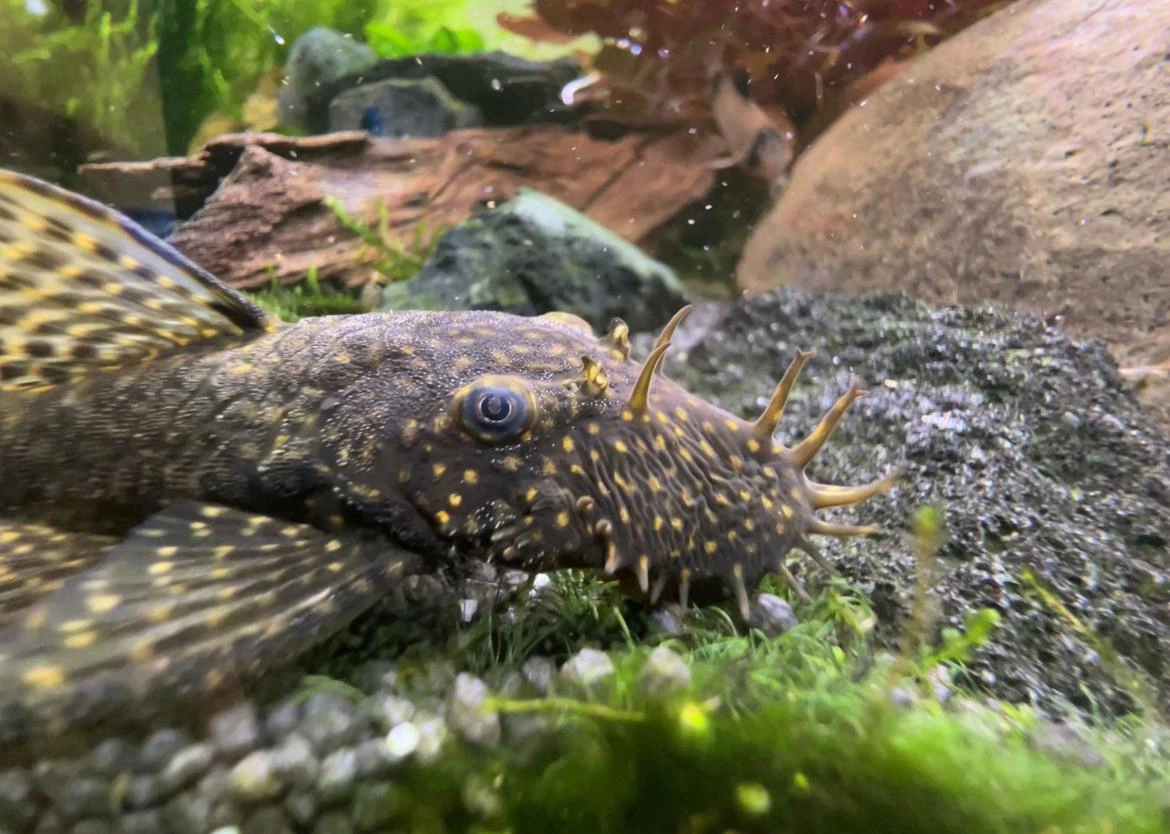 Bristlenose PlecoAncistrus sp.
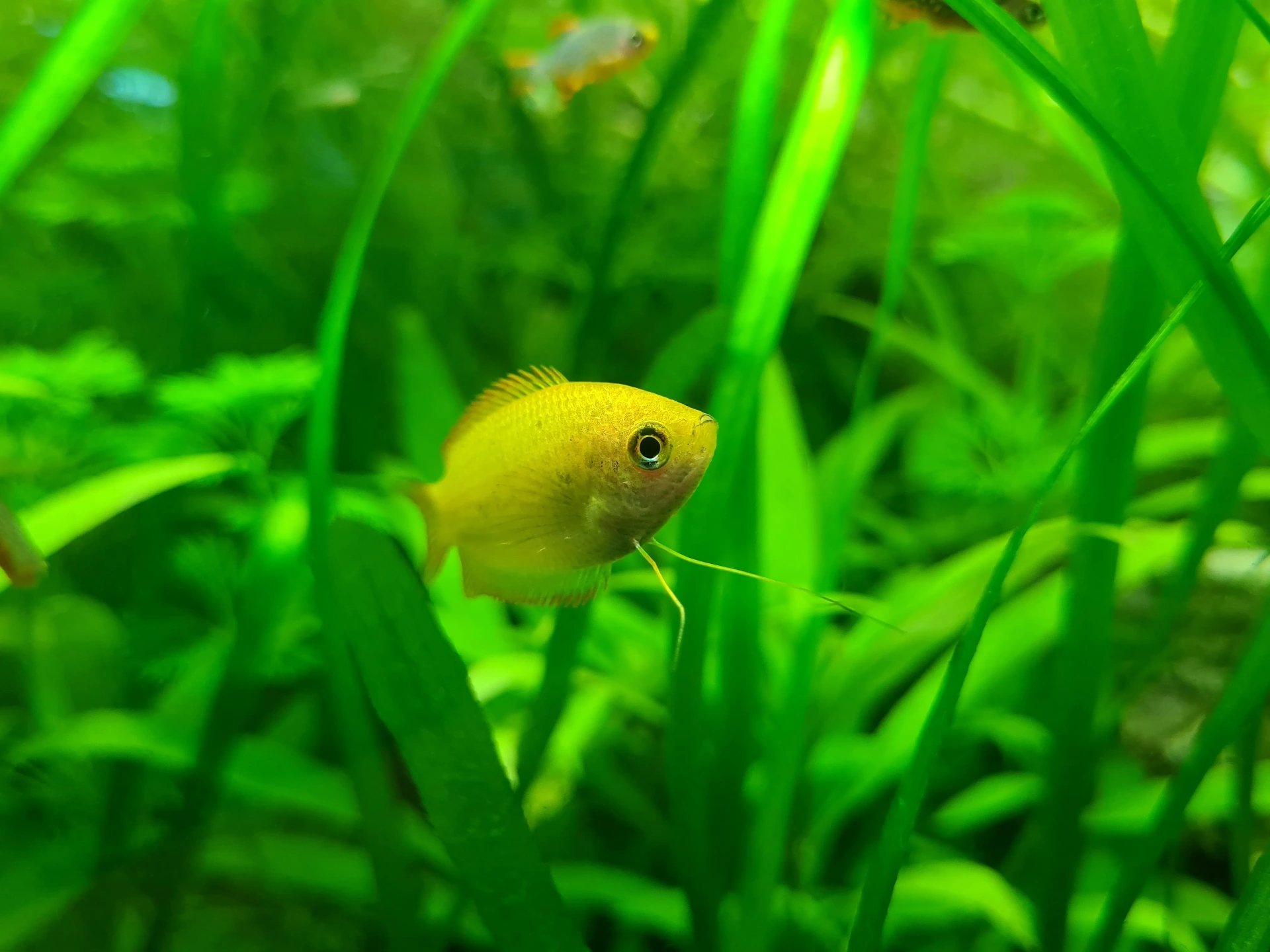 Honey GouramiTrichogaster chuna
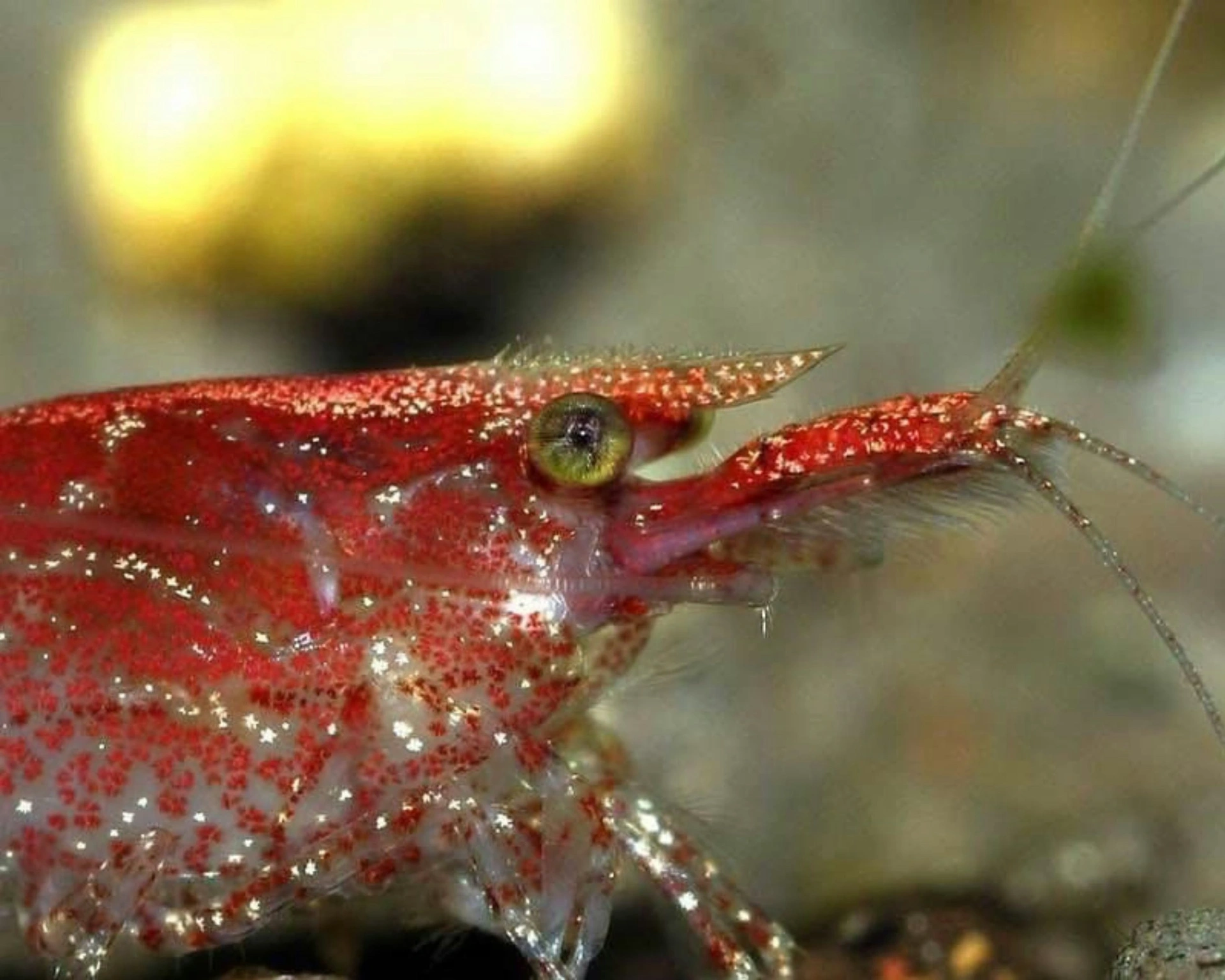 Cherry ShrimpNeocaridina davidi
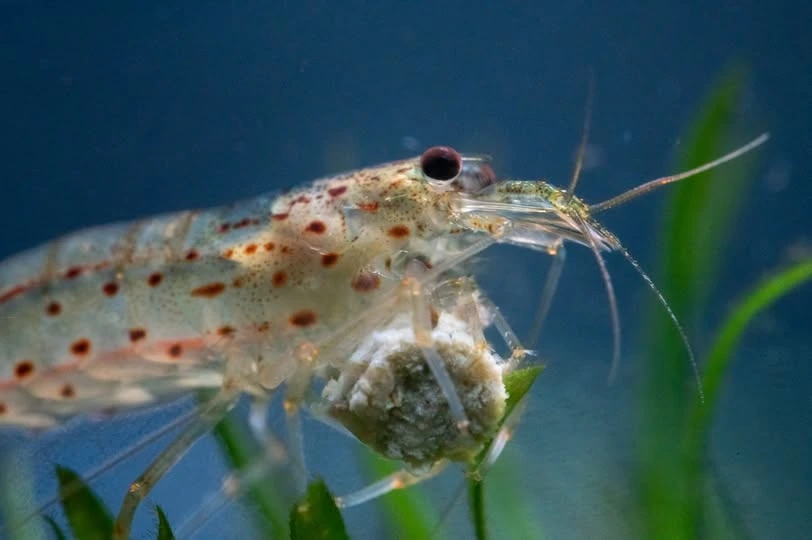 Amano ShrimpCaridina multidentata
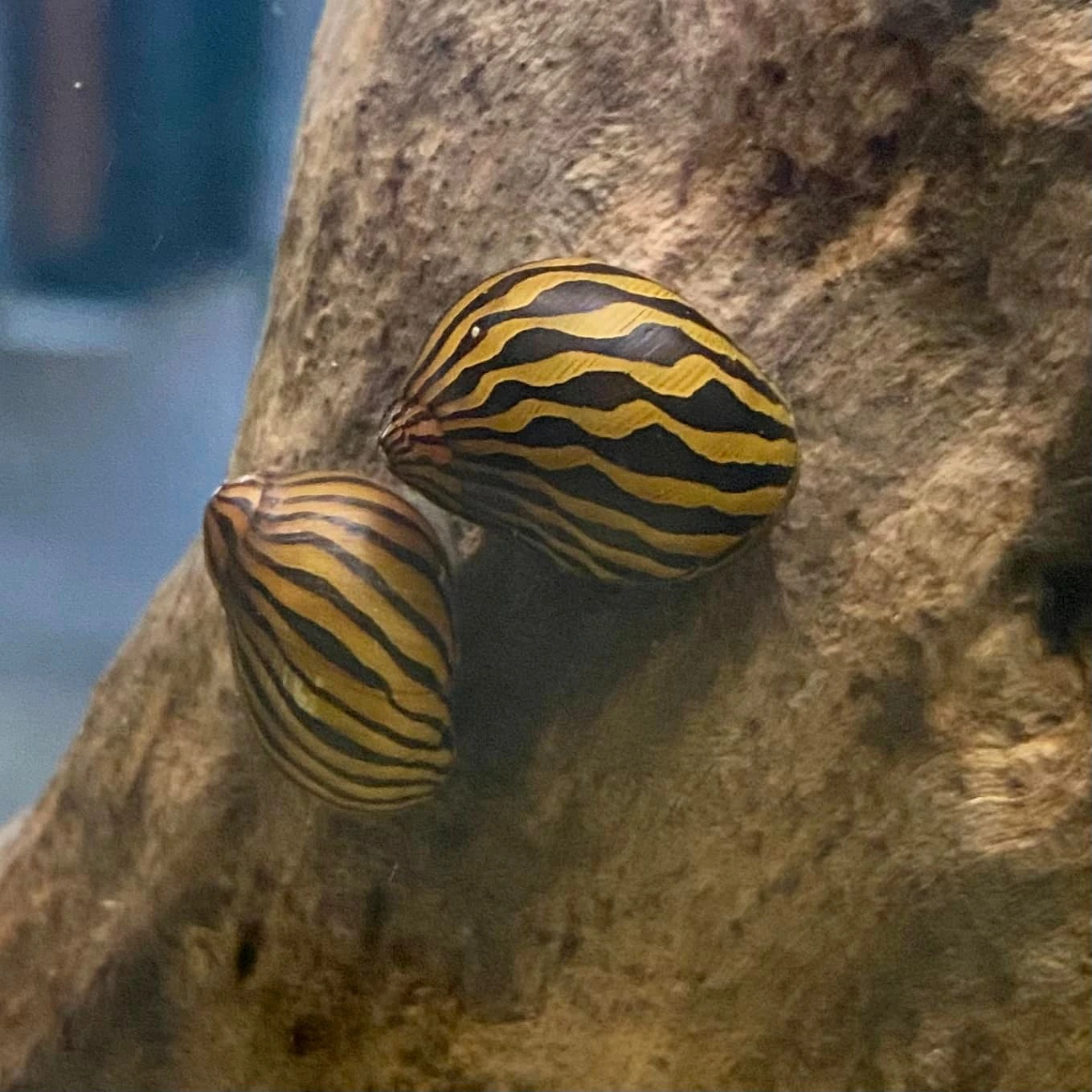 Nerite SnailNeritina sp.
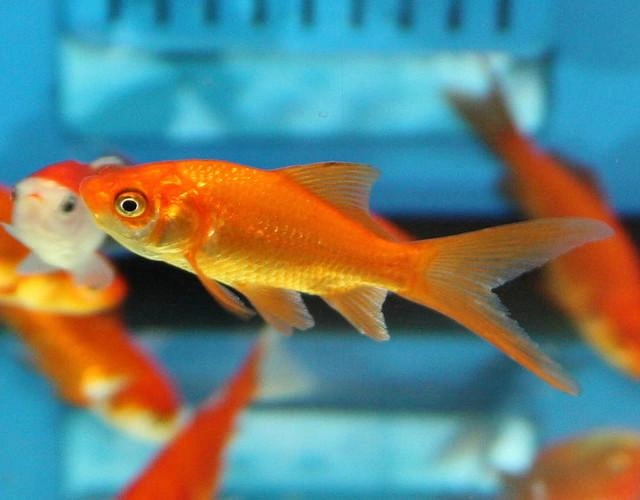
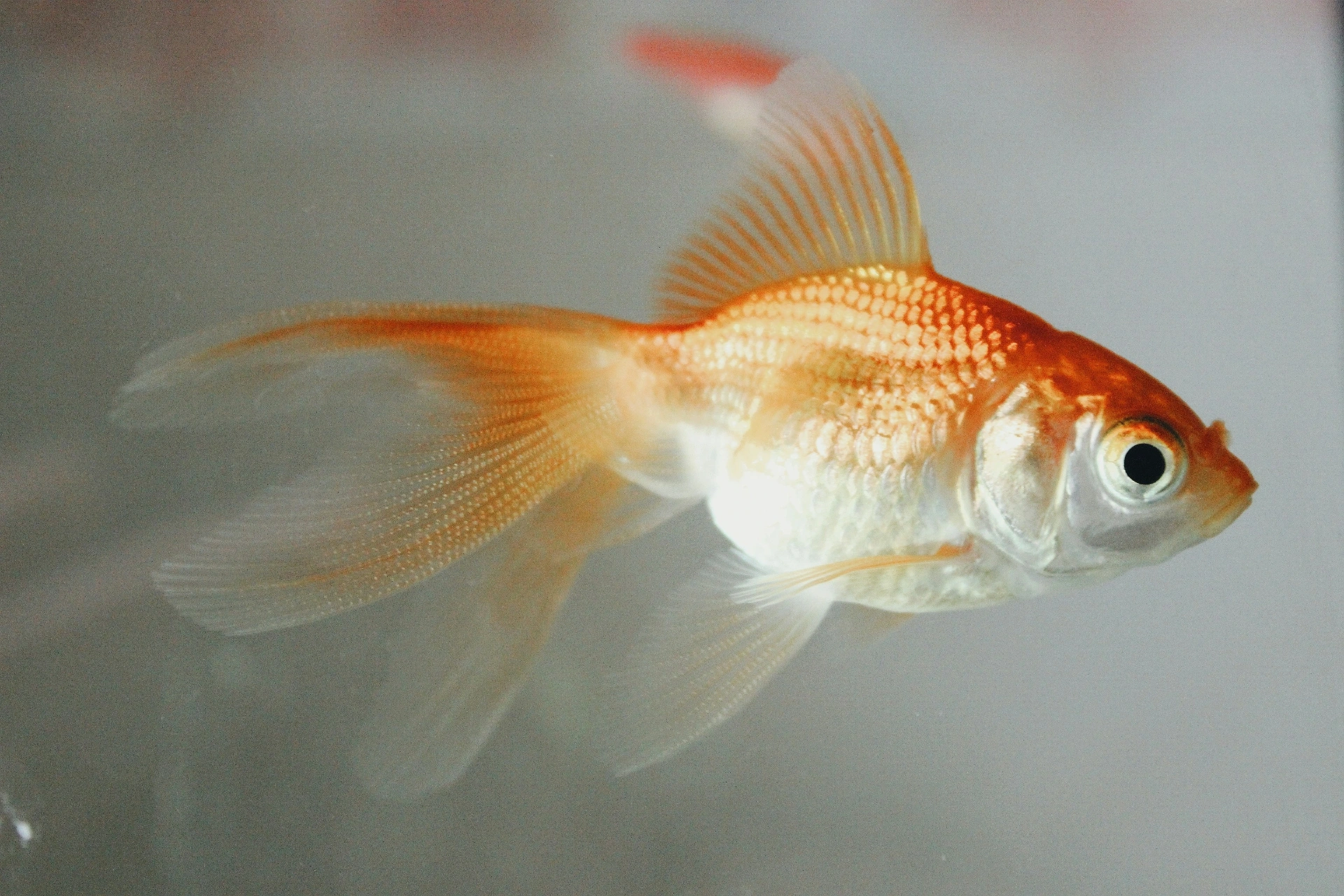
Will eat or uproot it


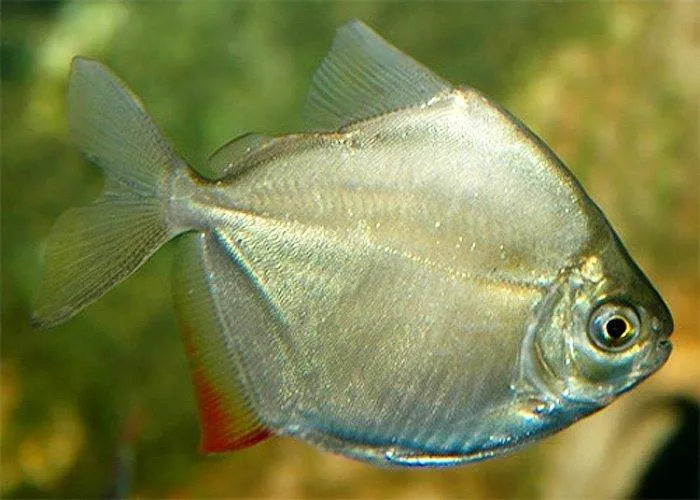
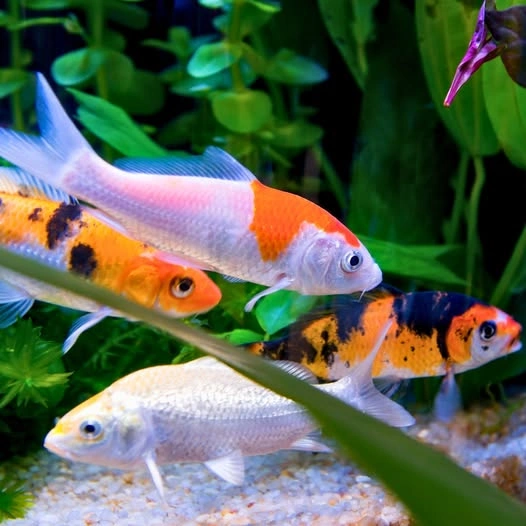
Companion plants
A sword is a nutrient hog and a light-blocker once it fills out. The plants below either tolerate its shade or root far enough away to avoid competing for the same root tabs.
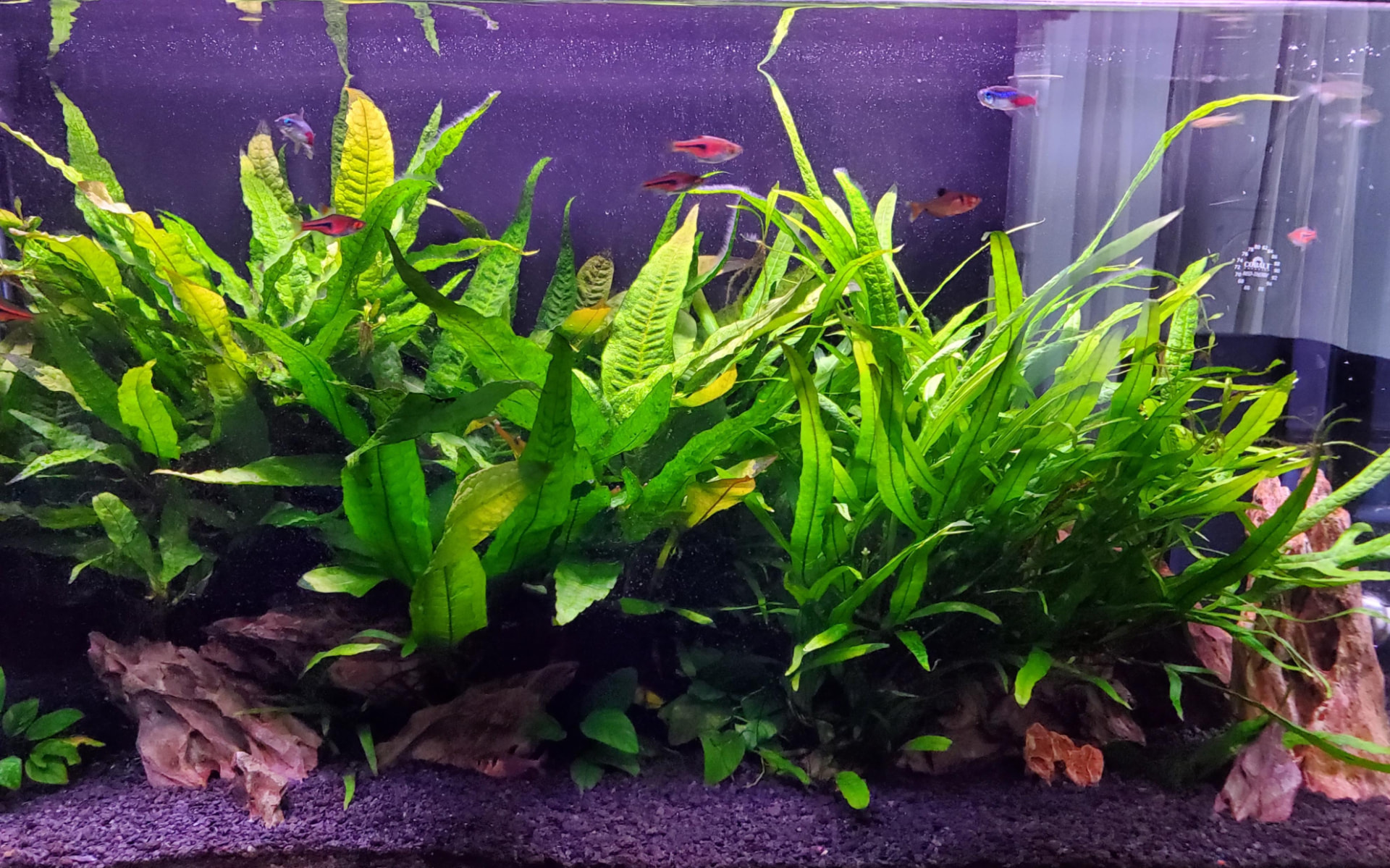
Java Fern
Microsorum pteropus
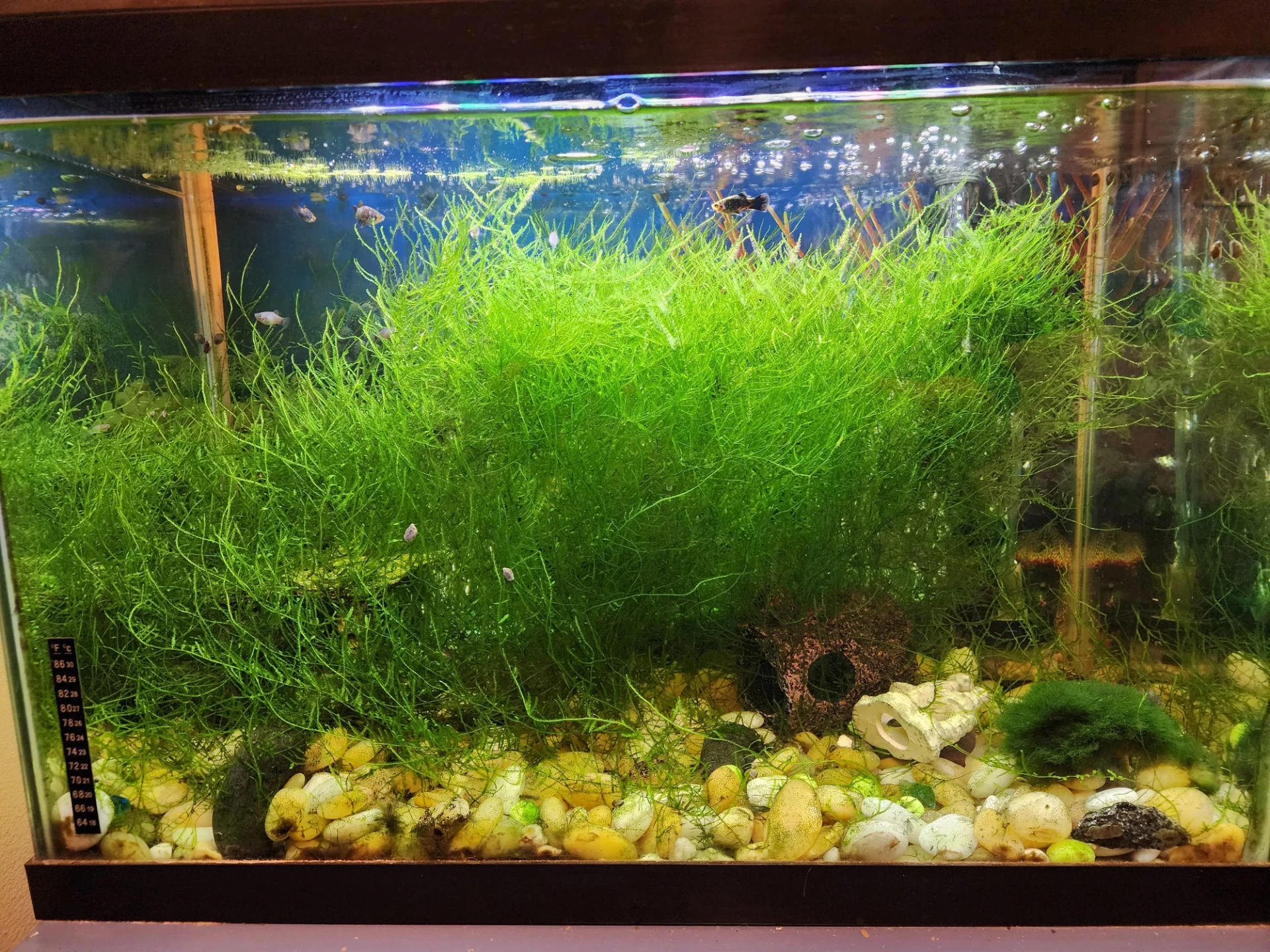
Java Moss
Taxiphyllum barbieri
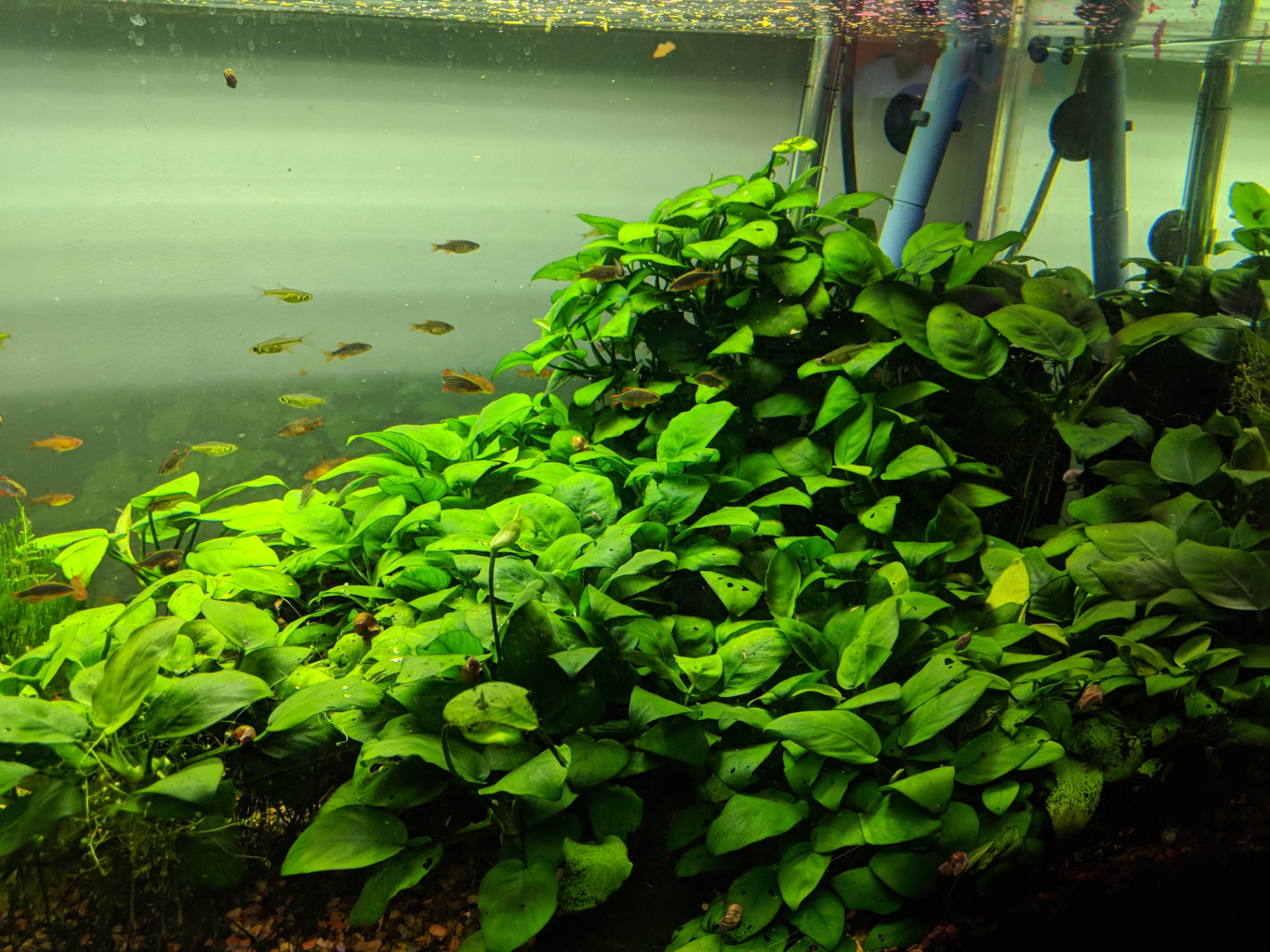
Anubias
Anubias barteri
Pro tips & common mistakes
Pro tips
- Two root tabs at planting, then every two to three months — swords are heavy feeders and a single tab runs out fast.
- Plant it where you can leave it: swords hate being moved and lose weeks of growth every time they are lifted.
- Give the root zone 6–8 cm of substrate depth; shallow gravel produces a permanently undersized plant.
- Do not buy one for a tank under 20 gallons — use a compact hybrid like Kleiner Bar instead.
- If the melt is severe, cut the dead leaves off completely rather than leaving them to rot around the crown.
Common mistakes
- Feeding it only liquid fertiliser and wondering why it shrinks — it is a root feeder.
- Burying the crown along with the roots, which rots the plant weeks later.
- Throwing it out during the emersed-to-submersed melt.
- Planting one in a nano tank, where it either takes over or stays permanently stunted.
- Keeping it with oscars, convicts or goldfish and blaming the plant when it gets uprooted.
Frequently asked questions
Sources
- Plants of the World Online — Accepted name Echinodorus grisebachii and its South American distribution.
Related plants
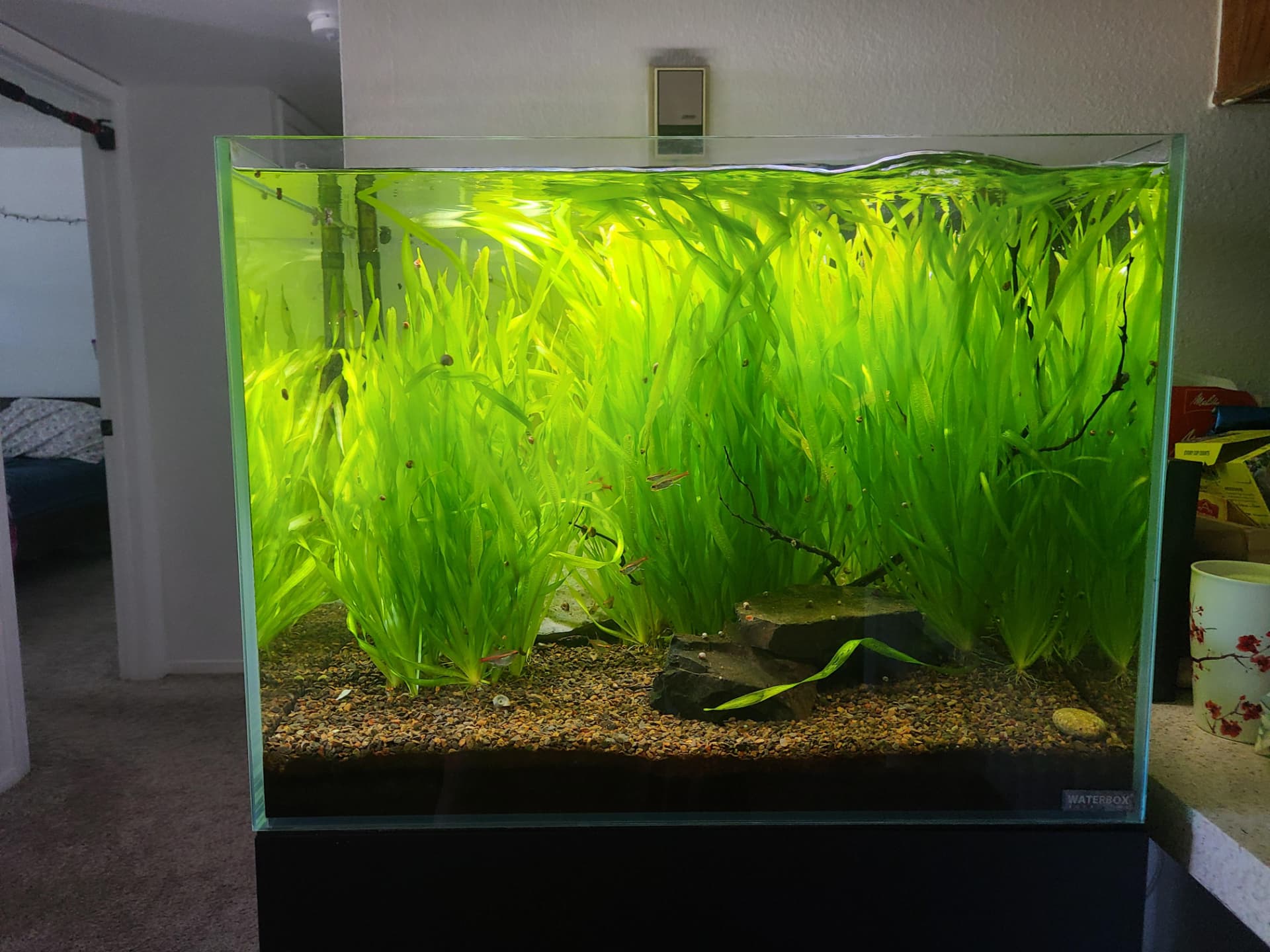
Vallisneria
Vallisneria spiralis
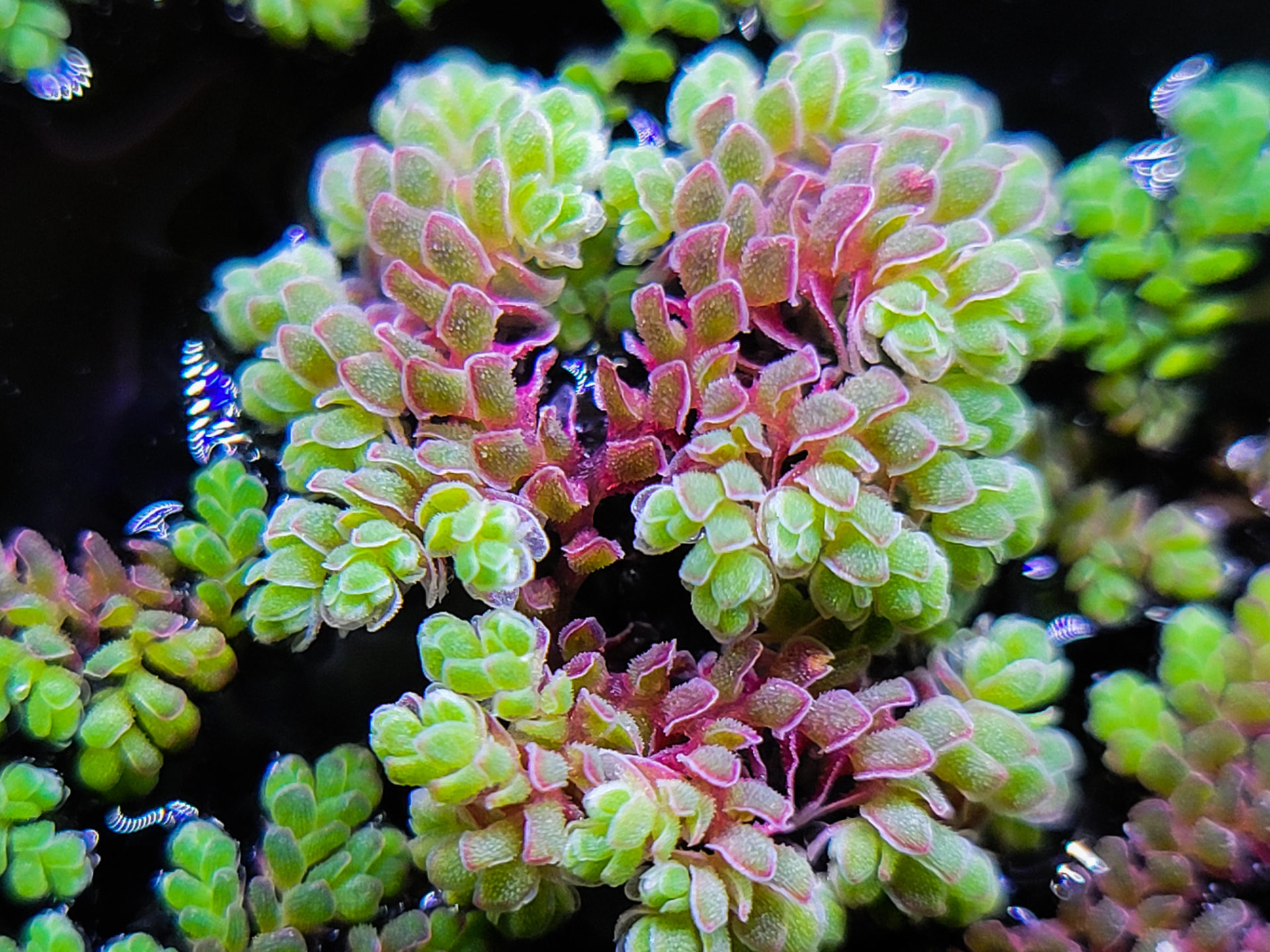
Azolla
Azolla filiculoides
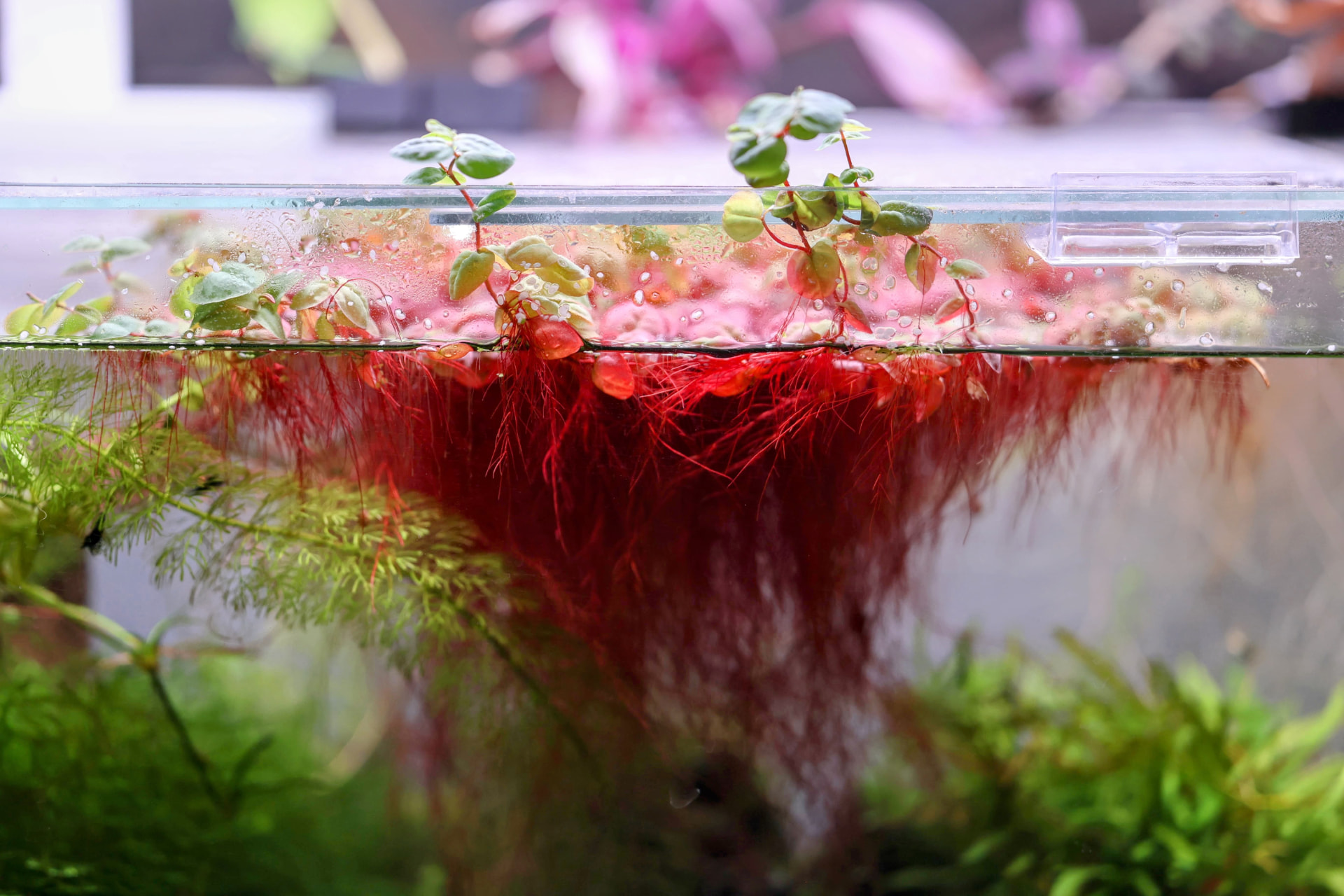
Red Root Floater
Phyllanthus fluitans
Water Lettuce
Pistia stratiotes
Guppy Grass
Najas guadalupensis
Hornwort
Ceratophyllum demersum
Planning a tank around a full-size sword
One mature sword can occupy a third of a 55-gallon footprint, which changes both your swimming space and your substrate volume. Get those two numbers straight before you buy fish.
Reviewed by the AquariumStocking team · Updated August 2026