
Care Requirements
Adult Size
1.6" (4cm)
Min Tank
15 gal
Temperature
73-81°F
pH Range
4.5-6.5
Lifespan
4-5 years
Min Group
6+ fish
Diet
Omnivore
Swim Level
Middle
Bioload
1/10
Hardness
1-8 dGH
About Cardinal Tetra
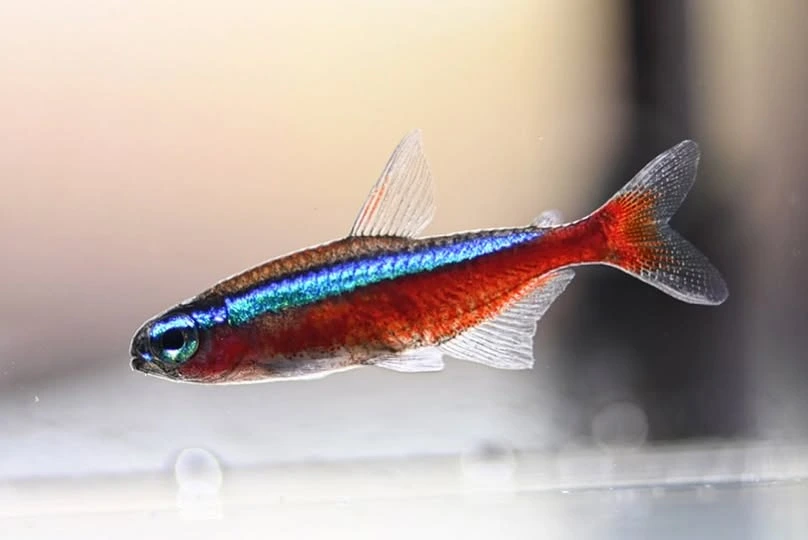
The Cardinal Tetra is often considered the more spectacular cousin of the neon tetra, and for good reason. While similar in pattern, the cardinal's red stripe runs the full length of its body—from nose to tail—creating an even more striking visual display. First described in 1956, cardinals have become one of the most sought-after tetras in the hobby.
Cardinal tetras are primarily wild-caught from the Rio Negro and Orinoco basins in South America, where millions are harvested annually for the aquarium trade. This wild collection is actually considered sustainable and provides crucial income for local communities while incentivizing habitat preservation. Captive-bred cardinals exist but are less common and typically more expensive.
This wild-caught origin means cardinal tetras often arrive stressed and require careful acclimation. They're slightly more demanding than neons, preferring warmer, softer, and more acidic water. However, once established in appropriate conditions, they're stunning fish that reward patient aquarists with years of beauty.
Natural Habitat & Origin
Cardinal tetras inhabit the famous blackwater rivers of the Amazon basin, particularly the Rio Negro and its tributaries. These waters are among the most acidic natural environments on Earth, with pH values sometimes dropping below 4.0. The tea-colored water, stained dark brown by tannins from decomposing vegetation, filters almost all light.
In this extreme environment, the water is incredibly soft—essentially devoid of minerals—and surprisingly nutrient-poor. Cardinals have evolved to thrive in these challenging conditions, where their brilliant colors serve for species recognition in the dim, tannin-stained water. They inhabit slow-moving areas among submerged roots and fallen branches, feeding on tiny invertebrates and organic matter.
Native Region
Rio Negro and Orinoco basins (Brazil, Colombia, Venezuela)
Habitat Type
Blackwater rivers and flooded forests
Wild Water Conditions
Very warm (77-84°F), extremely soft (near 0 dGH), very acidic (pH 4.0-6.0), tannin-rich
Appearance & Varieties
Cardinal tetras are slightly larger than neons, reaching about 1.6 inches (4 cm). Their most distinctive feature is the brilliant red stripe that extends the entire length of the body, from behind the eye to the caudal fin base. Above this runs the iconic iridescent blue-green stripe, identical to the neon tetra's.
The key identification point: in cardinals, the red extends fully forward to meet the gill plate; in neons, red only covers the rear half of the body. Cardinals also tend to have slightly more vivid coloration overall. Males are slimmer with a straight blue line, while females are rounder-bodied, particularly when full of eggs. Both sexes are equally colorful.
Tank Setup & Requirements
Quick Requirements Summary
Tank Size
Minimum Tank Size
15 gallons
Recommended Tank Size
20 gallons
Cardinal tetras require more specific conditions than neons but reward proper setup with stunning displays. They do best in mature, well-planted aquariums that replicate their blackwater origins—though exact parameters aren't mandatory for captive-bred specimens.
Water Parameters
Temperature should be warmer than for neons: 75-82°F (24-28°C). Cardinals strongly prefer soft, acidic water—pH 5.0-6.5 and hardness under 8 dGH is ideal. Wild-caught specimens are particularly sensitive and may struggle in hard, alkaline water. Stability remains crucial.
Substrate
Dark substrates are essential for showing off cardinal colors. Black sand, dark gravel, or aquasoil all work well. The contrast between their brilliant colors and a dark substrate is truly spectacular.
Plants & Decorations
Heavily planted tanks suit cardinals perfectly. Include plenty of stem plants, floating plants to diffuse light, and leaf litter on the substrate. Driftwood releases tannins that replicate their natural habitat. Create shaded areas and open swimming spaces.
Filtration & Water Flow
Gentle filtration is important—cardinals are not strong swimmers. Sponge filters are ideal, or baffle the output of power filters. Some blackwater enthusiasts use minimal filtration and rely on heavy planting and frequent water changes.
Lighting
Subdued lighting best showcases cardinal colors and matches their natural dim habitat. Floating plants help achieve this even with bright lights for plant growth. Their iridescent stripe actually appears more brilliant under low light.
Diet & Feeding Guide
Diet Type
omnivore
Feeding Frequency
2x daily
Portion Size
What they consume in 2 minutes
Cardinals are omnivores with small mouths requiring appropriately sized foods. Their wild diet consists primarily of small invertebrates, algae, and detritus. In captivity, variety is key to maintaining health and color.
Best Foods for Cardinal Tetra
- High-quality micro pellets — Primary staple—choose color-enhancing formulas
- Frozen bloodworms (chopped) — Excellent protein source, enhances red coloration
- Frozen daphnia — Natural food, promotes digestive health
- Frozen baby brine shrimp — High protein, great for conditioning
- Live foods — Baby brine shrimp, daphnia, microworms—the gold standard
- Crushed quality flakes — Acceptable variety, choose brands with whole ingredients
Foods to Avoid
- Large foods — Cardinals have small mouths—oversized food goes uneaten and fouls water
- Low-quality flakes — Fillers don't provide nutrition; cardinals need protein-rich diet
- Overfeeding — Small stomachs, sensitive water quality requirements
Cardinals benefit greatly from live and frozen foods—these enhance their red coloration noticeably. Feed small portions twice daily. In blackwater setups with leaf litter, they'll supplement their diet by grazing on biofilm and microorganisms.
Behavior & Temperament
Cardinal tetras are peaceful, active schoolers that spend most of their time in the middle water column. They school more tightly than neons, creating breathtaking coordinated movements in groups of 15 or more. This schooling behavior is most pronounced when they feel secure—stressed cardinals scatter and hide.
They're somewhat shy, especially when newly introduced, and may hide among plants for several days before venturing out. Once settled, they become bolder and develop routines, often gathering at the front of the tank during feeding times. Cardinals are strictly diurnal—they rest among plants at night and may look pale until lights have been on for a while.
Tank Mates: Compatibility Guide
Compatible Tank Mates
Classic combination, similar care requirements
Another tight schooler that prefers soft water
Tolerates warmer water cardinals prefer
Peaceful algae eater, similar water preferences
Peaceful schooler, overlapping parameters
Similar size, beautiful color contrast
Cardinals are classic discus tankmates—same water needs
Shares preference for warm, soft, acidic water
Safe with adults, useful algae control
Tank Mates to Avoid
Angelfish
Will eat cardinals—they're natural prey
African Cichlids
Completely wrong water parameters and aggressive
Livebearers (Guppies, Mollies)
Prefer hard, alkaline water—opposite of cardinals
Tiger Barbs
Notorious fin nippers that stress peaceful fish
Bettas
Risk of aggression; different optimal water parameters
Goldfish
Cold water fish, wrong parameters entirely
Large Cichlids
Will eat or kill cardinals
Common Pairing Questions
Can cardinal tetras live with discus?
Yes—this is actually a classic combination. Cardinals and discus share nearly identical water requirements: warm (82-86°F), soft, acidic water. Cardinals are too large for adult discus to eat and provide movement and color in the middle of the tank while discus cruise more slowly. Keep cardinals in groups of 12+ with discus.
Can cardinal tetras live with neon tetras?
Yes, though they have slightly different optimal conditions. Cardinals prefer warmer, softer, more acidic water than neons. In a compromise range (75-78°F, pH 6.5, moderate softness), both can thrive. They may school together loosely but typically form separate groups.
Breeding cardinal tetras is significantly more challenging than neons and rarely accomplished by hobbyists. They require extremely soft, acidic water (pH below 5.5, near-zero hardness) for eggs to develop properly.
The breeding setup needs to be virtually sterile with aged, acidified water. Eggs are light-sensitive and fungus-prone in anything but perfect conditions. Even commercial breeders struggle with cardinals, which is why most available specimens are wild-caught.
If attempting breeding, condition pairs with live foods for weeks. Use a small, dark tank with spawning mops. Spawning occurs at night. Remove adults immediately. Eggs hatch in about 24 hours in very warm water (80-82°F). Fry are tiny and require infusoria for several days before accepting baby brine shrimp.
Health Issues & Disease Prevention
Cardinal tetras share many health concerns with neons, including susceptibility to Neon Tetra Disease. Wild-caught specimens may carry parasites and require careful quarantine. Good water quality is paramount—they're less tolerant of pollution than many fish.
Common Diseases
| Disease | Symptoms | Treatment |
|---|---|---|
| Neon Tetra Disease (NTD) | Fading color, restlessness, lumpy body, swimming away from school, curved spine | No cure. Euthanize affected fish to prevent spread. Disease is caused by parasitic microsporidian. |
| Ich (White Spot) | White spots like salt grains, flashing, clamped fins, rapid breathing | Raise temperature to 82-86°F, use ich medication. Cardinals tolerate heat well, which helps treatment. |
| Velvet Disease | Gold or rust-colored dust on body, scratching, clamped fins, lethargy | Dim lights (parasite is photosynthetic), copper medication, raise temperature slightly. |
| Internal Parasites | Weight loss despite eating, white stringy feces, sunken belly | Common in wild-caught fish. Treat with anti-parasitic food (containing metronidazole or praziquantel). |
Signs of a Healthy Cardinal Tetra
- Brilliant, intense red and blue coloration
- Tight schooling behavior
- Active swimming during daylight
- Clear eyes and intact fins
- Round belly (not sunken or bloated)
- Eager feeding response
Prevention Tips
- Quarantine all new cardinals for 3-4 weeks—especially wild-caught
- Treat new wild-caught fish prophylactically for parasites
- Maintain soft, acidic water within their preferred range
- Keep temperature stable with a reliable heater
- Perform weekly 25% water changes with properly conditioned water
- Avoid overstocking—cardinals need pristine water
- Buy from reputable sources that quarantine their fish
Frequently Asked Questions
Cardinal tetras typically live 4-5 years in captivity, with some reaching 6+ years in optimal conditions. This is slightly shorter than neons, though wild cardinals may live longer in their natural habitat.
The red stripe is the key difference: cardinals have red running the full body length, while neons only have red on the rear half. Cardinals are also slightly larger, prefer warmer and more acidic water, and are typically wild-caught rather than captive-bred.
Most cardinals are wild-caught from the Amazon, requiring collection, export, and long-distance shipping. Neons are mass-produced in Asian fish farms. Wild-caught cardinals also have higher mortality during shipping and acclimation, affecting pricing.
They can survive but won't thrive. Cardinals evolved in extremely soft, acidic water. In hard, alkaline water, their colors fade, they become more susceptible to disease, and lifespan shortens. Aim for hardness under 8 dGH.
They're intermediate difficulty. Cardinals are more sensitive than neons, requiring warmer and softer water. Wild-caught specimens need careful acclimation. However, once established in appropriate conditions, they're quite hardy.
Minimum 6, but 12-20+ is ideal. Cardinals are even more dependent on schooling than neons. Large groups display tighter schooling behavior and show dramatically better coloration. In a 20-gallon tank, aim for 15-20.
Tips for Keeping Cardinal Tetra
Pro Tips
- ✓Drip acclimate over 2+ hours—cardinal mortality often stems from shock during introduction
- ✓Add Indian almond leaves or alder cones to replicate blackwater conditions naturally
- ✓Keep with discus if you want to justify the warm, soft water both species need
- ✓Wild-caught cardinals often have more vibrant color than the rare captive-bred specimens
- ✓Feed color-enhancing foods with astaxanthin to maintain brilliant red coloration
- ✓A large school (20+) of cardinals in a blackwater setup is one of the hobby's most spectacular sights
Common Mistakes to Avoid
- ✗Keeping in hard, alkaline water—cardinals need soft, acidic conditions to thrive
- ✗Adding to new tanks—they're even more sensitive to new tank syndrome than neons
- ✗Insufficient school size—small groups are stressed and lose color
- ✗Skipping quarantine for wild-caught fish—parasites are common
- ✗Housing with angelfish—cardinals are angel prey despite their slightly larger size
- ✗Assuming they're identical to neons—cardinals need warmer, softer water
Sources
- FishBase — Accepted scientific name, maximum size and native range for Cardinal Tetra.
Featured in Biotope Presets
Related Species You Might Like
View All Fish →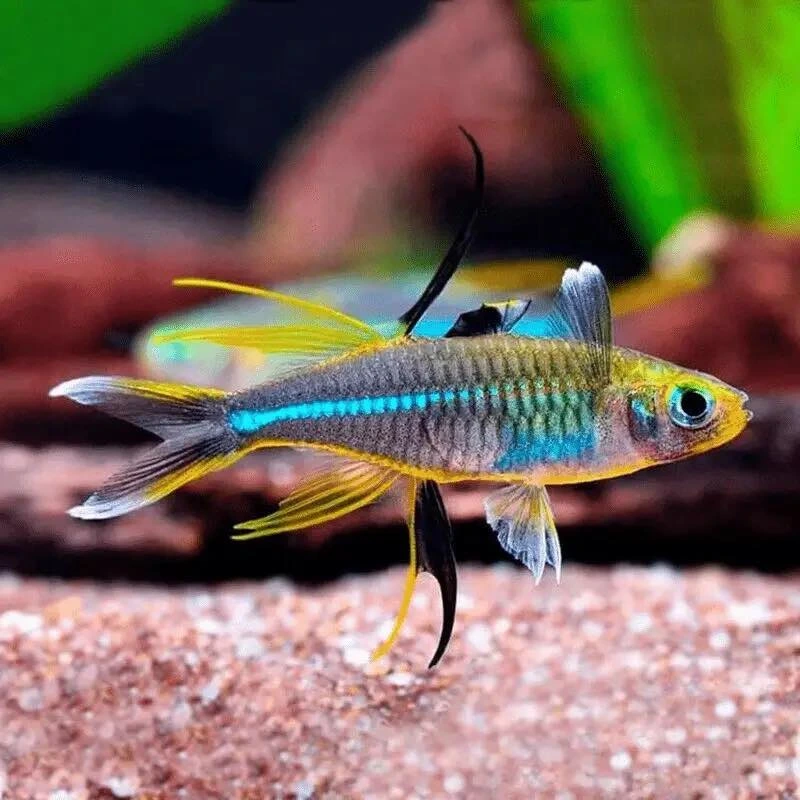
Celebes Rainbowfish
Marosatherina ladigesi
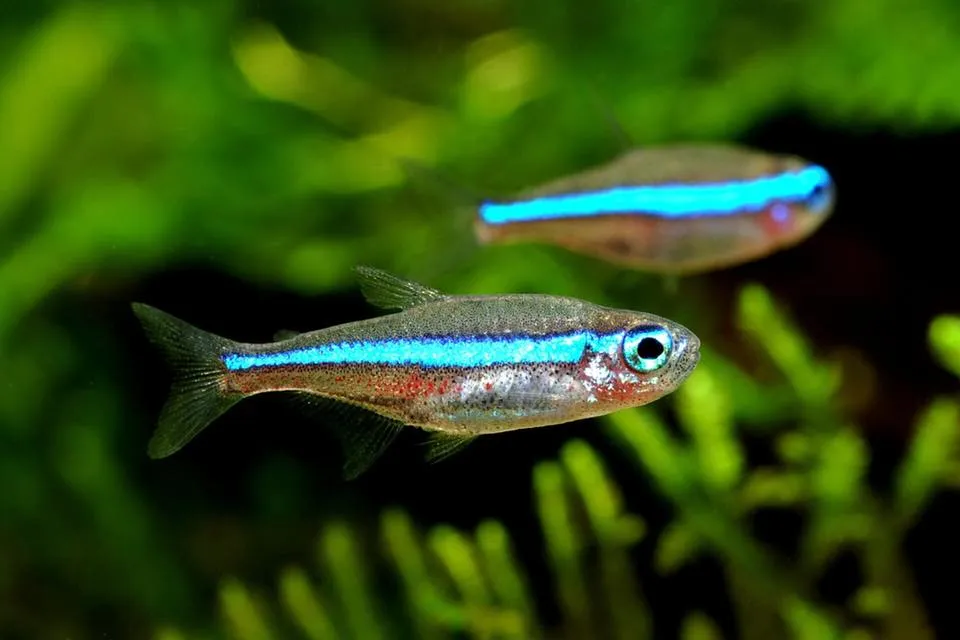
Green Neon Tetra
Paracheirodon simulans
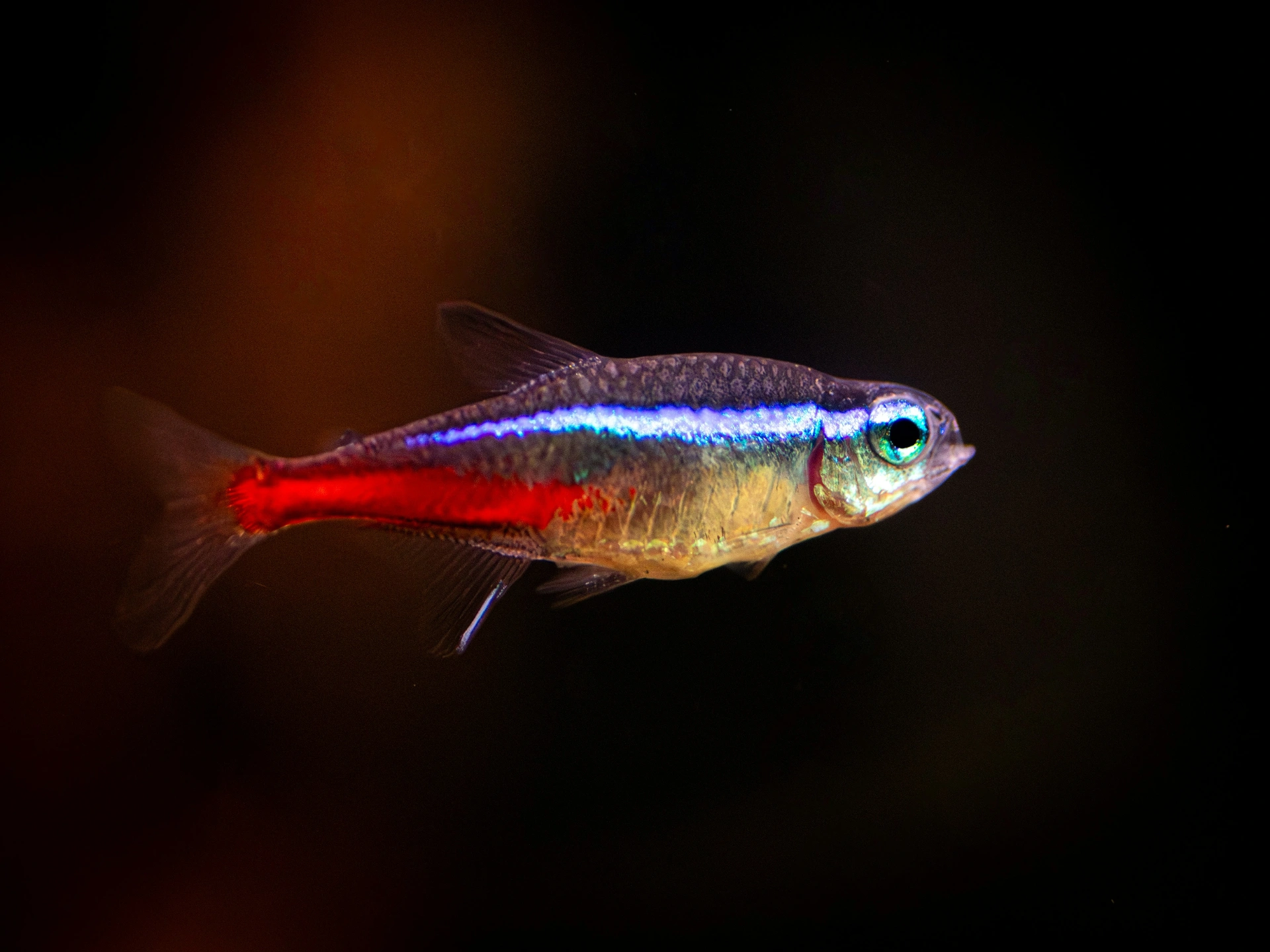
Neon Tetra
Paracheirodon innesi
Black Neon Tetra
Hyphessobrycon herbertaxelrodi
Black Phantom Tetra
Hyphessobrycon megalopterus
Bleeding Heart Tetra
Hyphessobrycon erythrostigma
Bloodfin Tetra
Aphyocharax anisitsi

Colombian Tetra
Hyphessobrycon columbianus
Ready to Add Cardinal Tetra to Your Tank?
Use our free stocking calculator to check compatibility, bioload, and get personalized recommendations.