
Care Requirements
Adult Size
1.8" (4.5cm)
Min Tank
20 gal
Temperature
72-82°F
pH Range
6-7.5
Lifespan
5-6 years
Min Group
6+ fish
Diet
Omnivore
Swim Level
Middle
Bioload
1/10
Hardness
2-18 dGH
About Black Phantom Tetra
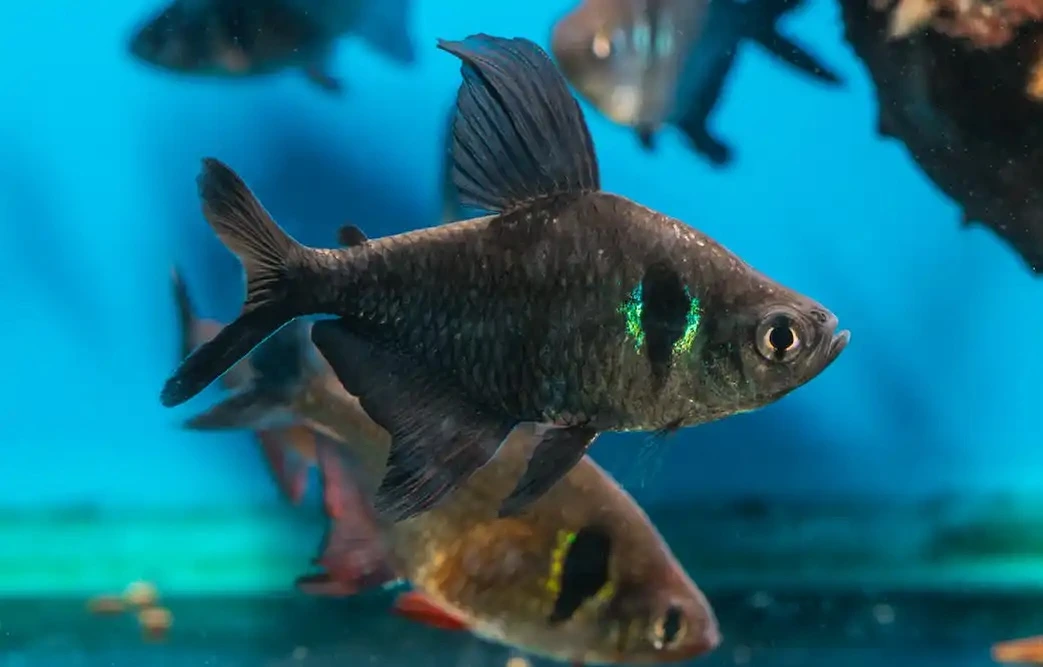
The Black Phantom Tetra is an elegant, understated beauty that reveals its true character over time. At first glance, they appear as simple grayish fish with a black shoulder spot. But watch a group settle in, and you'll witness one of the most impressive displays in the tetra world — males facing off with fully erected dorsal fins, circling each other like tiny matadors.
Males develop dramatically elongated dorsal and anal fins that they spread wide during displays. The overall coloration is smoky gray-black with a distinctive black shoulder patch edged in iridescent blue. Females are subtler but show attractive reddish coloration in their fins — the two sexes complement each other beautifully in mixed groups.
These are genuinely easy fish. They tolerate a wide range of water parameters, accept all common foods, and rarely develop health problems. Their peaceful nature makes them compatible with virtually any community setup. They're not nippy despite being characins, and their moderate activity level means they won't stress calmer tankmates.
For aquarists wanting something more interesting than Neon Tetras but equally easy to keep, Black Phantoms deliver. Their male sparring displays alone justify keeping them — it's dramatic behavior you don't expect from such affordable, common fish.
Natural Habitat & Origin
Black Phantom Tetras originate from slow-moving tributaries, streams, and flooded areas in the upper Paraguay and Guaporé river basins of Brazil and Bolivia. These are typically clear to slightly tannin-stained waters with sandy substrates and abundant vegetation.
The waters tend to be soft and slightly acidic, though the species shows remarkable adaptability to different conditions. Dense plant growth provides cover and defines territories for displaying males. The slow current allows their elaborate finnage to develop without damage.
Their habitat overlaps with many popular aquarium species, making them natural choices for South American biotope setups alongside Corydoras, other tetras, and dwarf cichlids.
Native Region
Brazil and Bolivia — upper Paraguay and Guaporé river basins
Habitat Type
Slow-moving tributaries, streams, and flooded areas with vegetation
Wild Water Conditions
Soft, slightly acidic (pH 6.0-7.0), moderate temperature
Appearance & Varieties
Black Phantom Tetras display elegant coloration that intensifies with maturity and good conditions. The body is compressed laterally with a smoky gray-black base color. A prominent black humeral spot (shoulder patch) is edged with iridescent blue-green, creating their most distinctive marking.
Sexual dimorphism is pronounced. Males develop dramatically elongated dorsal and anal fins — the dorsal especially can become sail-like. Male coloration deepens to near-black during displays. Females are smaller with shorter fins but show attractive reddish-pink coloration in fins, particularly the adipose, anal, and pelvic fins.
Adults reach about 1.75 inches (4.5cm). Their modest size and elegant finnage make them attractive without being showy — they're sophisticated rather than flashy.
Popular Varieties
| Variety | Description | Rarity |
|---|---|---|
| Standard/Wild-Type | Smoky gray-black body with black shoulder spot, elongated fins on males, reddish fins on females. The only commonly available form. Color intensity varies with mood and conditions. | Common |
Tank Setup & Requirements
Quick Requirements Summary
Tank Size
Minimum Tank Size
20 gallons
Recommended Tank Size
30 gallons
Black Phantom Tetras are undemanding regarding tank setup. They appreciate planted tanks with swimming space but adapt to various arrangements.
Water Parameters
Temperature 22-28°C (72-82°F), pH 6.0-7.5, hardness 2-18 dGH. Remarkably adaptable — one of their beginner-friendly traits. They thrive across a wide parameter range. Soft, acidic water brings out best coloration, but they do well in harder water too. Stability matters more than hitting exact values.
Substrate
Any substrate works — dark substrates enhance coloration. Dark sand or gravel shows off their subtle coloration better than light substrates. Choose based on overall tank aesthetics and other inhabitants.
Plants & Decorations
Appreciate planted tanks with some open swimming space. Dense plants around perimeter with open center works well. Driftwood adds natural aesthetics. They use plants for security but need room for displaying. Planted tanks bring out best behavior and coloration — they won't damage plants.
Filtration & Water Flow
Standard community filtration. Not demanding — moderate flow is fine since they're from slow-moving waters but adapt to typical aquarium conditions. Standard HOB or canister filtration works well.
Lighting
Moderate lighting suits them. Not light-sensitive, but subdued lighting may encourage more displaying behavior. Floating plants creating dappled light are appreciated.
Diet & Feeding Guide
Diet Type
omnivore
Feeding Frequency
1-2 times daily
Portion Size
What they consume in 2-3 minutes. They're not gluttons and won't typically overeat, but don't let excess food decay.
Black Phantom Tetras are unfussy omnivores accepting virtually any aquarium food. This easy feeding is part of what makes them excellent beginner fish.
Best Foods for Black Phantom Tetra
- Quality flake food — Readily accepted staple. Choose high-quality flakes with good protein content.
- Micro pellets — Small sinking or floating pellets eagerly consumed. Good for ensuring all fish get food when kept with faster feeders.
- Frozen bloodworms — Excellent treat that enhances color and conditioning. Feed 2-3 times weekly for variety.
- Frozen brine shrimp — Readily accepted. Good variety food. Enriched brine shrimp adds nutritional value.
- Frozen daphnia — Natural food that promotes good digestion. Excellent variety option.
- Live foods — Triggers natural hunting behavior. Baby brine shrimp, daphnia, and similar are greedily consumed. Great for conditioning.
Foods to Avoid
- Large foods — Their mouths are small — crush or choose appropriately sized foods.
- Low-quality foods — While they'll eat almost anything, poor nutrition affects color and health long-term.
Black Phantom Tetras are unfussy eaters. Feed a varied diet of flakes, pellets, and frozen foods for optimal health and coloration. Multiple small feedings are better than one large one.
Behavior & Temperament
Black Phantom Tetras are peaceful schooling fish with one notable behavior: male sparring displays. Males face off, erect their impressive dorsal fins, and circle each other in ritualized confrontations. This displaying is harmless — no actual fighting occurs — and is one of the most entertaining behaviors in common aquarium fish.
They school loosely rather than tightly, maintaining group cohesion while allowing individuals space. The school provides security, and individuals kept alone or in pairs often hide and show poor coloration. Groups of 6+ allow natural social hierarchy and displaying.
Despite being characins (the family containing some notorious nippers), Black Phantoms are genuinely peaceful. They don't nip fins and coexist well with long-finned tankmates, slow fish, and even shrimp. Their moderate activity level means they won't stress calmer species.
Males display most intensely when competing for female attention or establishing hierarchy. Having more females than males reduces display intensity if you prefer calmer tanks, though the displays are arguably the species' best feature.
Tank Mates: Compatibility Guide
Compatible Tank Mates
Similar requirements and temperament. Cardinal Tetras, Rummy Nose, Ember Tetras, and others mix well.
Classic combination. Different feeding zones, similar water preferences, no competition or conflict.
Rams, Apistos, and similar appreciate the same conditions. Black Phantoms are too large to be prey and too peaceful to cause problems.
Similar size and temperament. Mix well in community setups.
Shrimp-safe — they don't hunt or harass shrimp. Adult shrimp are completely safe; shrimplets may occasionally be eaten but populations typically thrive.
Honey and Pearl Gouramis coexist well. Different swimming levels, no aggression.
Tank Mates to Avoid
Large predatory fish
Will be eaten. Avoid anything that views them as food.
Aggressive cichlids
Aggression stresses them and may cause injury. Their peaceful nature means they don't defend themselves well.
Very active or boisterous fish
May outcompete them for food and stress them with constant activity. They prefer calmer environments.
Common Pairing Questions
Can Black Phantom Tetras live with Bettas?
Yes — they're one of the better tetra choices for betta tanks. They're not fin nippers and their dark coloration doesn't trigger betta aggression like brightly colored fish might.
Can Black Phantom Tetras live with shrimp?
Yes — they're shrimp-safe. Adult shrimp are completely safe, and shrimp populations typically thrive alongside them.
Black Phantom Tetras are egg scatterers that can be bred in aquariums with some preparation. They're not the easiest tetras to breed but are manageable for intermediate hobbyists.
Condition breeding pairs with high-quality live and frozen foods. Set up a separate breeding tank with soft, acidic water (pH 6.0-6.5), dim lighting, and fine-leaved plants or spawning mops. Temperature around 26-27°C triggers spawning.
Males display intensively to females before spawning occurs, typically in morning light. Eggs are scattered among plants. Remove parents immediately after spawning — they eat eggs readily. Eggs hatch in 24-36 hours, and fry become free-swimming after another 3-4 days.
Fry are tiny and require infusoria or commercial fry food initially, graduating to baby brine shrimp as they grow. Raising fry requires dedication to water quality and appropriate foods.
Health Issues & Disease Prevention
Black Phantom Tetras are hardy fish rarely developing health problems when basic requirements are met. Their disease resistance is another beginner-friendly trait.
Common Diseases
| Disease | Symptoms | Treatment |
|---|---|---|
| Ich (White Spot Disease) | Small white spots on body and fins, flashing against objects, lethargy. | Raise temperature to 30°C gradually. Use commercial ich medication. They tolerate treatment well. |
| Neon Tetra Disease | Fading color, curved spine, erratic swimming, white patches under skin. Despite the name, affects many tetras. | No cure — remove affected fish immediately to prevent spread. This disease is relatively rare but serious. |
| Fin Rot | Frayed or deteriorating fins, often with white or red edges. | Usually indicates water quality problems. Improve conditions; treat with antibacterial medication if severe. |
| General Stress-Related Issues | Faded color, hiding, susceptibility to other diseases. | Address stressors — small group size, aggressive tankmates, poor water quality. They're hardy when comfortable. |
Signs of a Healthy Black Phantom Tetra
- Active schooling behavior
- Strong coloration
- Males displaying regularly
- Eager feeding
- Clear eyes
- Intact, flowing fins
Prevention Tips
- Keep in groups of 6+ for security and natural behavior
- Maintain stable water quality
- Provide varied diet for optimal health
- Avoid aggressive tankmates
- Quarantine new additions
- Don't overcrowd — give them swimming space
Frequently Asked Questions
No — despite being characins (a family with some nippy species), Black Phantoms are genuinely peaceful. They coexist well with long-finned fish, bettas, and other species often targeted by nippers.
Males perform ritualized sparring displays — erecting fins and circling each other. This looks like fighting but is harmless display behavior. No actual damage occurs. It's normal and entertaining to watch.
Minimum 6, preferably more. They're schooling fish that feel secure and display natural behavior in groups. Larger groups show more interesting social dynamics and male displaying.
Excellent beginner fish. Hardy, adaptable to various water conditions, accepting of all common foods, peaceful, and disease-resistant. They're forgiving of mistakes while offering interesting behavior.
Males have dramatically longer dorsal and anal fins and darker coloration, especially when displaying. Females are smaller with shorter fins but show attractive reddish coloration in fins. The difference is obvious in mature fish.
Yes — they don't hunt shrimp and coexist peacefully with Cherry Shrimp and similar species. Adult shrimp are completely safe. Some shrimplets may be eaten opportunistically, but shrimp populations typically thrive alongside them.
72-82°F (22-28°C) — a wide range that overlaps with most tropical community fish. They're adaptable and don't require precise temperature control.
Not required, but recommended. Planted tanks bring out their best coloration and behavior. They use plants for security and territory definition. They won't damage plants.
Tips for Keeping Black Phantom Tetra
Pro Tips
- ✓Keep more males to see displays — male sparring displays are the species' best feature. Groups with multiple males show more frequent and intense displaying.
- ✓Mix sexes for full color range — males and females have different coloration. Mixed groups showcase both color forms and stimulate natural behavior.
- ✓Dark substrate intensifies coloration — their subtle smoky coloration shows best against dark backgrounds.
- ✓Great 'dither fish' for dwarf cichlids — their calm presence helps shy dwarf cichlids feel secure.
Common Mistakes to Avoid
- ✗Keeping too few — stressed, hiding fish that never show natural behavior. Groups under 6 don't thrive.
- ✗Mistaking male displays for fighting — the sparring is normal, harmless behavior. Enjoy it.
- ✗Keeping with aggressive fish — stressed fish that hide, lose color, and become susceptible to disease.
- ✗Light substrate washing out colors — dark substrate makes a significant difference in their appearance.
Sources
- FishBase — Accepted scientific name, maximum size and native range for Black Phantom Tetra.
Related Species You Might Like
View All Fish →
Black Skirt Tetra
Gymnocorymbus ternetzi
Black Neon Tetra
Hyphessobrycon herbertaxelrodi
Bleeding Heart Tetra
Hyphessobrycon erythrostigma

Colombian Tetra
Hyphessobrycon columbianus
Ember Tetra
Hyphessobrycon amandae
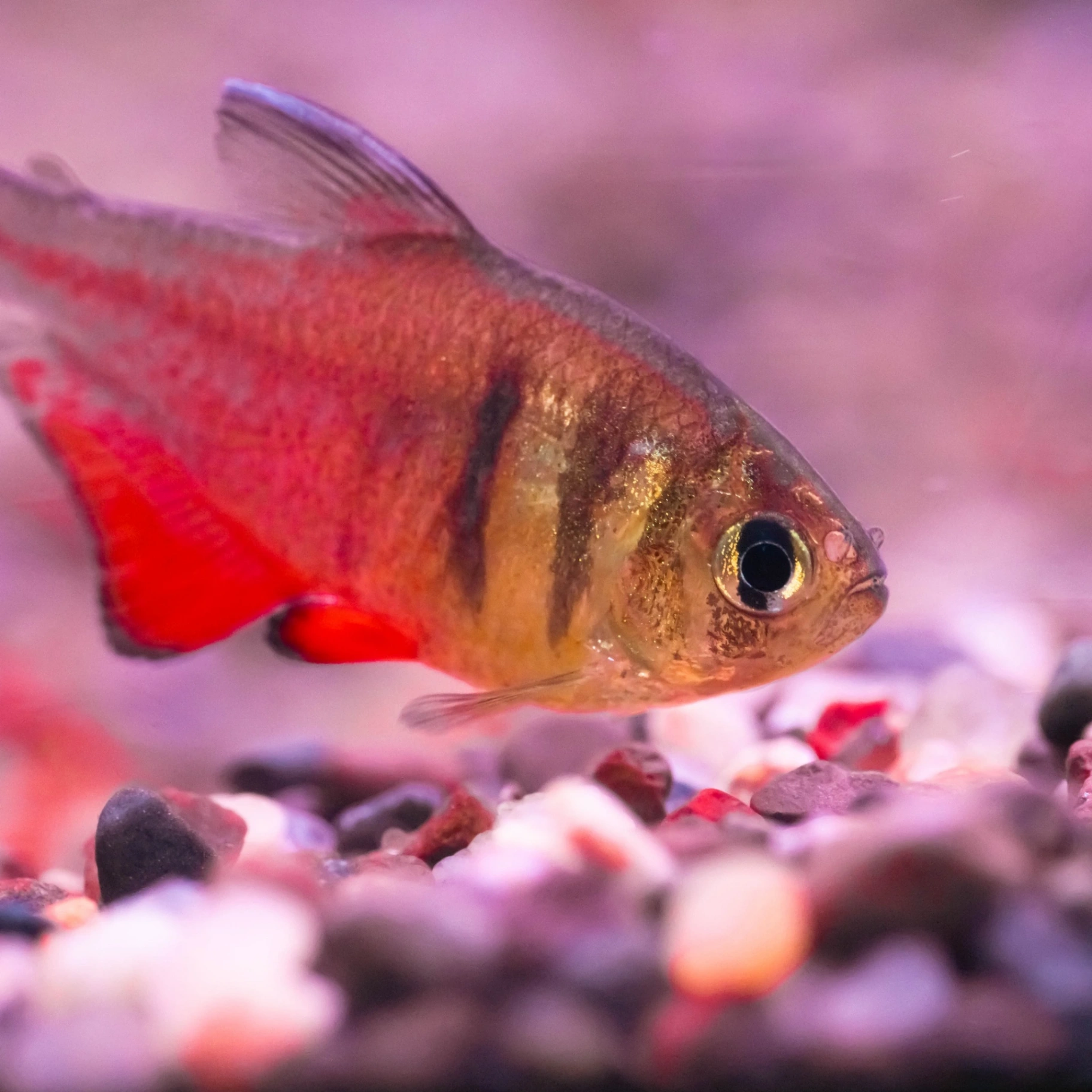
Flame Tetra
Hyphessobrycon flammeus
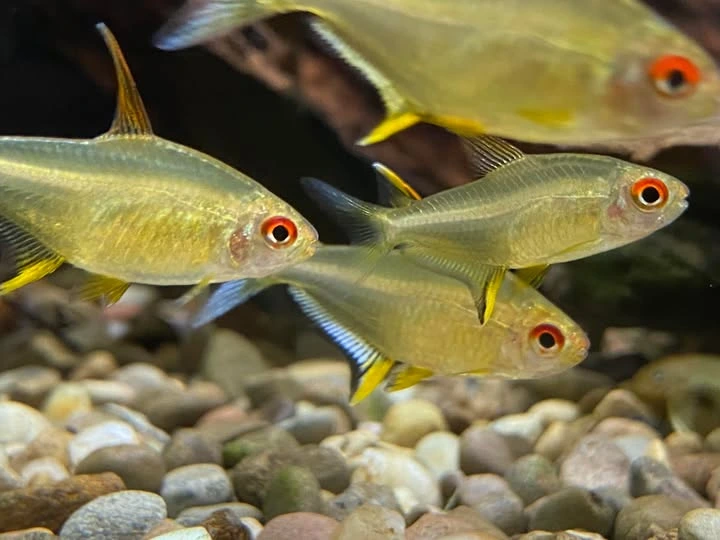
Lemon Tetra
Hyphessobrycon pulchripinnis
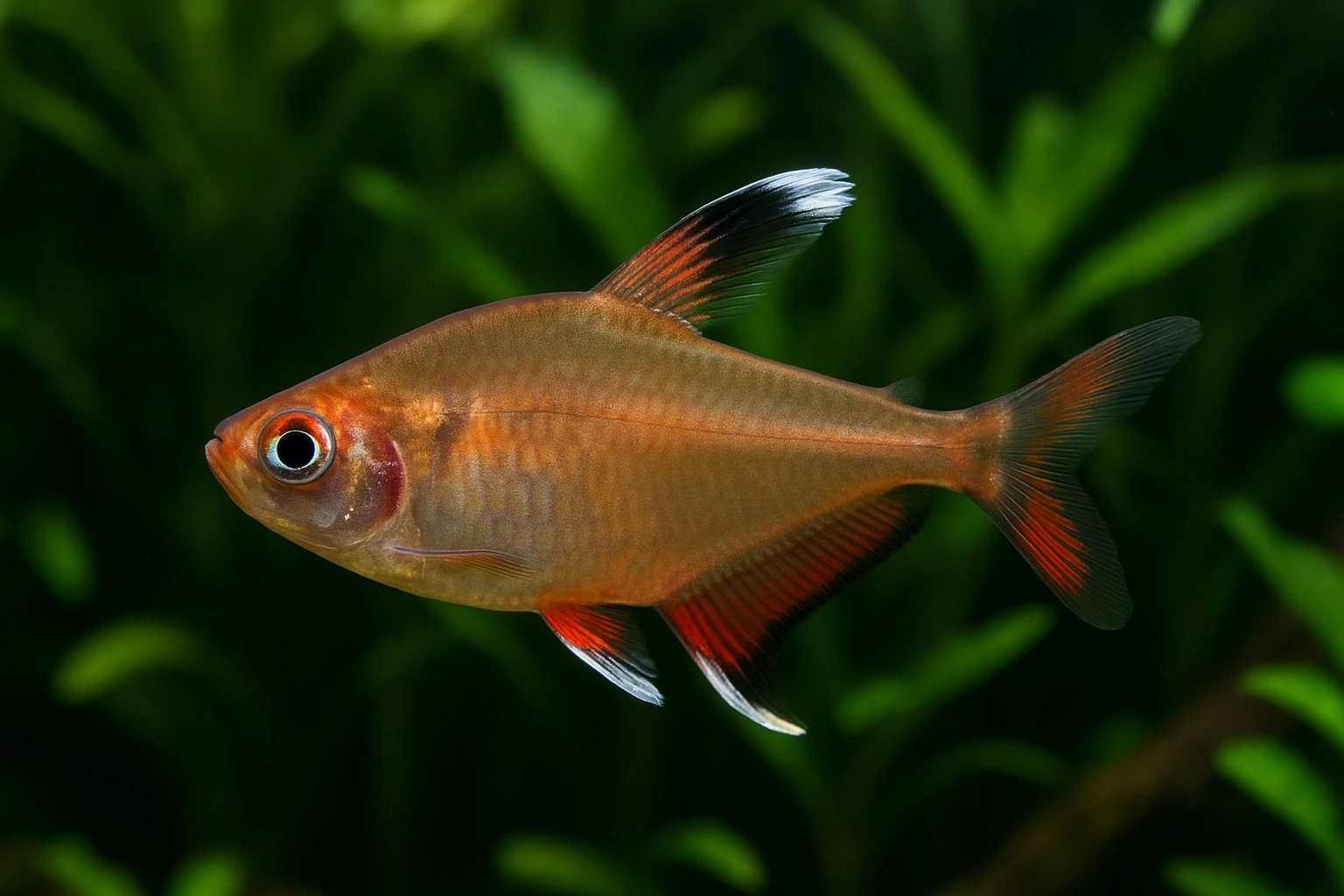
Rosy Tetra
Hyphessobrycon rosaceus
Ready to Add Black Phantom Tetra to Your Tank?
Use our free stocking calculator to check compatibility, bioload, and get personalized recommendations.