
Care Requirements
Adult Size
1.2" (3cm)
Min Tank
5 gal
Temperature
64-82°F
pH Range
6.5-8
Lifespan
1-2 years
Min Group
6+ fish
Diet
Omnivore
Swim Level
Bottom
Bioload
1/10
Hardness
4-15 dGH
About Cherry Shrimp
Cherry Shrimp are the most popular freshwater shrimp in the aquarium hobby, and for good reason. These tiny, brilliantly colored invertebrates are hardy, easy to breed, and endlessly entertaining to watch. Originally selectively bred from wild brown/clear Neocaridina davidi in Taiwan, the vibrant red coloration has made them a staple in planted tanks worldwide.
What makes cherry shrimp so appealing is their constant activity—they're always grazing, always exploring. Unlike fish that rest periodically, shrimp never stop moving, creating perpetual motion in your aquarium. They form the foundation of countless nano tanks and shrimp-only setups, though they also serve as excellent cleanup crew members in community aquariums.
Beyond their aesthetic value, cherry shrimp are prolific breeders. A healthy colony can grow exponentially, turning 10 shrimp into hundreds within months. This makes them sustainable, self-replenishing tank inhabitants—and the sight of berried females and tiny shrimplets is incredibly rewarding for hobbyists.
Natural Habitat & Origin
In the wild, the ancestor of cherry shrimp (Neocaridina davidi) inhabits freshwater streams, ponds, and vegetated waterways throughout Taiwan. These environments feature moderate water flow, abundant biofilm and algae growth, and plenty of surface area for grazing.
The wild-type coloration is typically brown or clear—the red coloration we see in cherry shrimp is entirely the result of selective breeding. This doesn't mean they're fragile; captive-bred cherry shrimp have been in the hobby for decades and are well-adapted to aquarium conditions. Their natural habitat helps explain why they thrive in planted tanks: lots of surfaces, biofilm, and hiding spots mirror their ancestral environment.
Native Region
Taiwan (selectively bred variety)
Habitat Type
Freshwater streams, ponds, vegetated waterways
Wild Water Conditions
Moderate flow, warm temperatures, abundant biofilm and algae
Appearance & Varieties
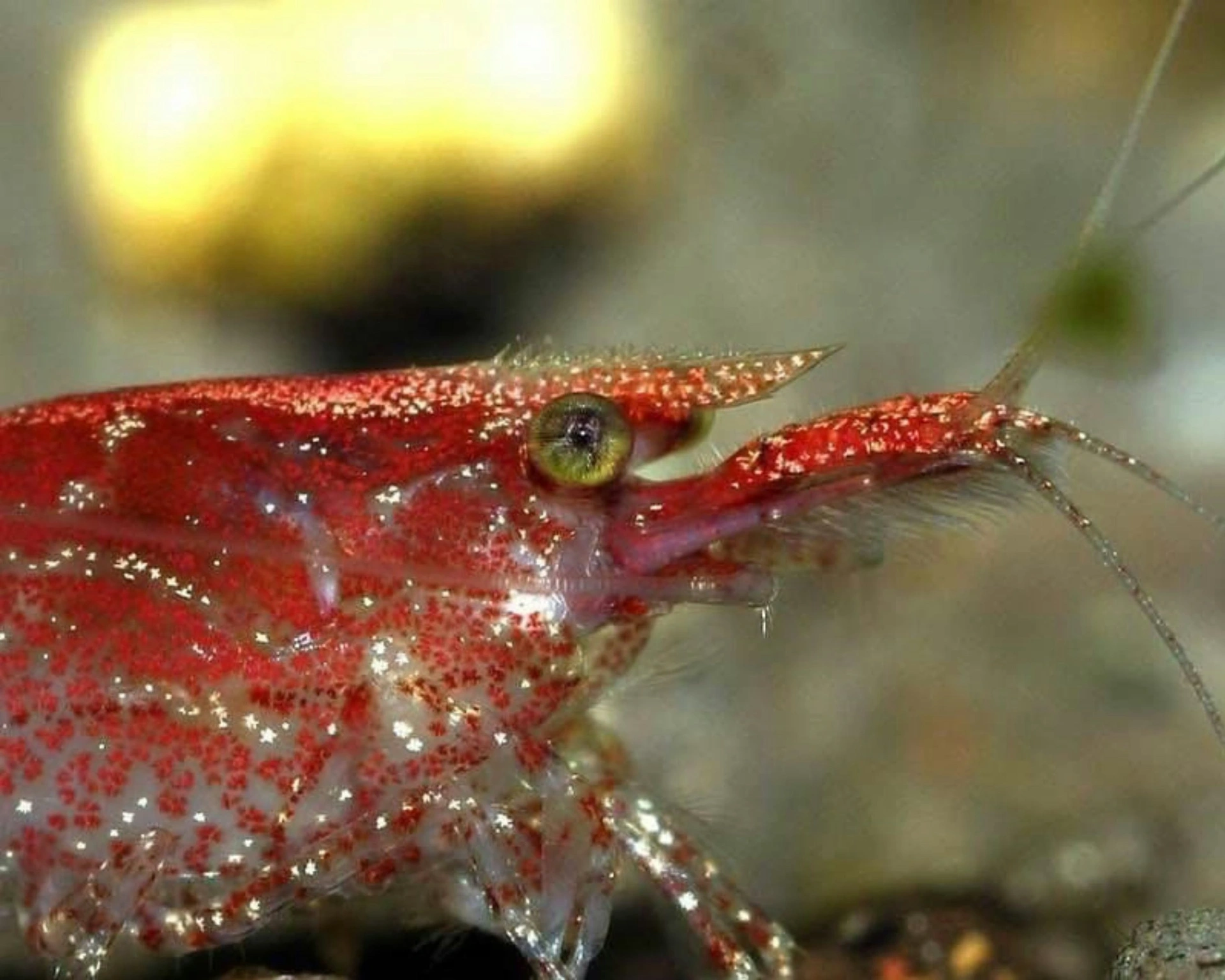
Cherry shrimp are small, reaching only about 1.2 inches (3 cm) with females being slightly larger than males. Their most striking feature is their red coloration, which varies dramatically based on grade. Lower grades show some transparency with scattered red patches, while the highest grades display solid, opaque red coloring throughout the entire body.
Males and females are easy to distinguish. Females are larger, more intensely colored, and have a curved underbelly to carry eggs. You can often see the 'saddle'—eggs developing in the ovaries—as a yellow patch behind the head. Males are smaller, slimmer, and somewhat less colorful with a straighter body shape.
Popular Varieties
| Variety | Description | Rarity |
|---|---|---|
| Cherry Grade | Entry level—some transparency, scattered red coloring | Very Common |
| Sakura Grade | More solid red but some transparency may remain | Common |
| Fire Red | Solid red coloring throughout body | Common |
| Painted Fire Red | Solid opaque red including legs | Uncommon |
| Bloody Mary | Highest grade—translucent red with vivid internal coloring | Uncommon |
Tank Setup & Requirements
Quick Requirements Summary
Tank Size
Minimum Tank Size
5 gallons
Recommended Tank Size
10 gallons
Cherry shrimp are adaptable and thrive in a variety of setups, but they truly flourish in planted aquariums. A minimum tank size of 5 gallons (20 liters) works for a starting colony, though 10 gallons (40 liters) provides more stability and room for population growth.
Water Parameters
Cherry shrimp tolerate a wide range: temperature 64-82°F (18-28°C), pH 6.5-8.0, and GH 6-20 dGH. Stability matters more than hitting specific numbers—avoid sudden swings. They're sensitive to ammonia and nitrite (must be 0 ppm) and prefer nitrates below 20 ppm.
Substrate
Any substrate works. Inert gravel, sand, or active substrates are all suitable. Dark substrates tend to make shrimp colors pop more dramatically. Avoid sharp gravel that could injure their delicate bodies.
Plants & Decorations
Plants are essential for cherry shrimp. Mosses (Java moss, Christmas moss) are especially valuable—they provide enormous surface area for biofilm, hiding spots for shrimplets, and grazing territory. Driftwood, cholla wood, and leaf litter (Indian almond leaves) also provide food sources and shelter.
Filtration & Water Flow
Gentle filtration is crucial. Sponge filters are ideal—they provide biological filtration while their surface grows biofilm for shrimp to graze. If using HOB or canister filters, cover intakes with sponge pre-filters to prevent shrimplets from being sucked in.
Lighting
Low to moderate lighting encourages biofilm and algae growth—the shrimp's natural food source. Intense lighting isn't necessary and may stress them slightly, though it's generally tolerated if hiding spots are available.
Diet & Feeding Guide
Diet Type
omnivore
Feeding Frequency
Daily supplementation (if tank lacks biofilm)
Portion Size
What they consume in 2-3 hours, then remove excess
Cherry shrimp are detritivores—in established planted tanks with biofilm, they need minimal supplementation. They spend their lives grazing on surfaces, eating biofilm, algae, and microorganisms. Don't mistake their constant grazing for hunger; they're programmed to eat constantly.
Best Foods for Cherry Shrimp
- Biofilm and algae — Primary natural food—let it grow on surfaces
- Shrimp pellets — Specialty shrimp foods like Shrimp King, GlasGarten
- Algae wafers — Sinking wafers they can graze on
- Blanched vegetables — Spinach, zucchini—remove after a few hours
- Indian almond leaves — Food, tannins, and hiding spots in one
- Bee pollen and snowflake food — Specialty treats that promote biofilm
Foods to Avoid
- Copper-containing foods — Copper is lethal to shrimp
- Heavy protein foods — They're primarily detritivores, not carnivores
- Overfeeding anything — Pollutes water—they have tiny stomachs
In established planted tanks with visible biofilm on surfaces, cherry shrimp need minimal supplementation. Remove uneaten food after 2-3 hours to prevent water quality issues. Their constant grazing is normal behavior, not a sign of starvation.
What a Cherry Shrimp will actually graze depends entirely on which algae you have — soft film comes off easily, while black beard and blue-green growth are ignored by almost everything. Identify the algae in your tank before deciding whether livestock is the right fix.
Behavior & Temperament
Cherry shrimp are highly social and thrive in colonies. They're constantly active—grazing, exploring, and interacting with each other. Unlike fish, they never really rest; there's always movement somewhere in the tank.
Watch for berried females (carrying eggs under their tail), which is a sign of a healthy breeding colony. You'll also regularly find empty shells—don't panic, these are molts, not deaths. Shrimp shed their exoskeleton as they grow. After molting, females release pheromones that drive males into a 'swimming frenzy' searching for her to mate.
Healthy shrimp display bright colors, active grazing behavior, and responsiveness to food. Pale coloration, lethargy, or hiding constantly can indicate stress or illness.
Tank Mates: Compatibility Guide
Compatible Tank Mates
Peaceful, won't bother shrimp at all
Tiny and completely shrimp-safe
Small and generally leaves adults alone
May eat some shrimplets but adults safe
Perfect tankmates—no competition
Peaceful coexistence
Other Neocaridina shrimp
Can mix colors but may interbreed
Tank Mates to Avoid
Most fish
Will eat babies, many will eat adults too
Bettas
Often hunt and kill shrimp
Angelfish
Will eat any shrimp they can catch
Gouramis (most)
Natural shrimp predators
Cichlids
Almost all will eat shrimp
Loaches
Hunt and eat invertebrates
Crayfish
Will catch and eat shrimp
Common Pairing Questions
Can cherry shrimp live with fish?
With caution. Most fish will eat shrimplets, and many will eat adults. Shrimp-only tanks have the best survival rates. If keeping with fish, heavily plant the tank (especially with moss), expect lower shrimplet survival, and choose only the smallest, most peaceful fish like otos or ember tetras.
Can I mix different colored Neocaridina shrimp?
Yes, but they'll interbreed and offspring typically revert to wild brown/clear coloring over generations. To maintain color purity, keep only one color variety. Different species (like Caridina) won't interbreed with Neocaridina.
Can cherry shrimp live with bettas?
Generally not recommended. Many bettas actively hunt and eat shrimp. Some hobbyists report success with heavily planted tanks and docile bettas, but it's risky. Have a backup plan if the betta shows aggression.
Cherry shrimp breed effortlessly in proper conditions—no special setup required. They're so prolific that many hobbyists struggle to control population growth rather than encourage it.
Females carry 20-30 eggs under their tail for 3-4 weeks. The eggs are visible as a cluster on 'berried' females. Baby shrimp are born as tiny but fully-formed miniatures of adults, requiring no special care or food—they eat the same biofilm as adults.
Breeding success depends on stable water conditions, plenty of hiding spots (moss is invaluable), and avoiding predators. Starting with 10+ shrimp ensures genetic diversity and good gender ratios. In optimal conditions, a colony can grow from 10 to 100+ within 3-6 months.
Health Issues & Disease Prevention
Cherry shrimp are susceptible to several issues, with failed molts and bacterial infections being most common. Good water quality and stable parameters are the best preventive measures.
Common Diseases
| Disease | Symptoms | Treatment |
|---|---|---|
| Bacterial infection | Pink/white coloration, lethargy | Improve water quality, salt baths for external infections |
| Vorticella | White fuzzy growths on body | Salt dip treatment, improve water quality |
| Scutariella | White worms on head/rostrum | Salt dip treatment, quarantine affected shrimp |
| Muscular necrosis | White opaque muscle tissue | Often fatal—prevent with stable parameters |
| Failed molts | Death during molt, stuck in shell | Ensure proper GH/KH, minerals, stable conditions |
Signs of a Healthy Cherry Shrimp
- Bright red coloration
- Active grazing behavior
- Regular molting
- Berried females in colony
- Responsive to food
Prevention Tips
- Drip acclimate new shrimp for 1-2+ hours
- Never use copper-based medications—lethal to shrimp
- Maintain stable parameters—avoid sudden changes
- Provide adequate minerals (GH 6+) for healthy molting
- Keep biofilm available as primary food source
- Do small, frequent water changes rather than large ones
Frequently Asked Questions
With caution. Most fish will eat shrimplets, many will eat adults. Shrimp-only tanks have best survival. If keeping with fish, heavily plant the tank and expect lower shrimplet survival.
Very fast. One female can produce 20-30 shrimplets every 5-6 weeks. Starting with 10 shrimp, you can have 100+ within 3-6 months in good conditions.
Grades range from Cherry (lowest, some transparency) to Sakura, Fire Red, Painted Fire Red, and Bloody Mary (highest, solid opaque red). Higher grades are more expensive and may be slightly less hardy.
Shrimp are sensitive to sudden parameter changes. Always match temperature and do smaller, more frequent water changes (10-15%) rather than large ones. Drip new water in slowly.
Tips for Keeping Cherry Shrimp
Pro Tips
- ✓Start with 10+ shrimp for a self-sustaining colony
- ✓Java moss is the single best addition for shrimplet survival
- ✓Stability is more important than perfection—avoid sudden changes
- ✓Let biofilm build up—it's their primary food source
- ✓Indian almond leaves provide food, tannins, and hiding spots
- ✓Shrimp-only tanks have exponentially better breeding success than fish tanks
- ✓Don't panic when you see empty shells—it's just a molt, not death
Common Mistakes to Avoid
- ✗Using copper-based medications—lethal to shrimp
- ✗Large water changes with different parameters
- ✗Not drip acclimating new shrimp
- ✗Keeping with fish that eat them
- ✗Overfeeding and crashing water quality
- ✗Not providing enough hiding spots for shrimplets
- ✗Adding to brand new uncycled tanks
Related Species You Might Like
View All Fish →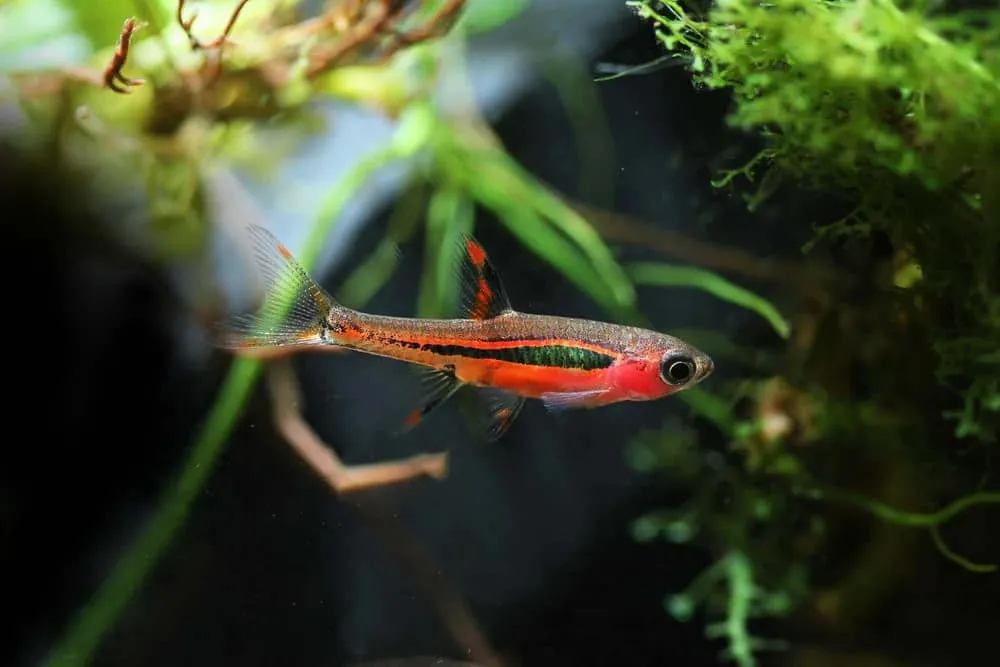
Chili Rasbora
Boraras brigittae
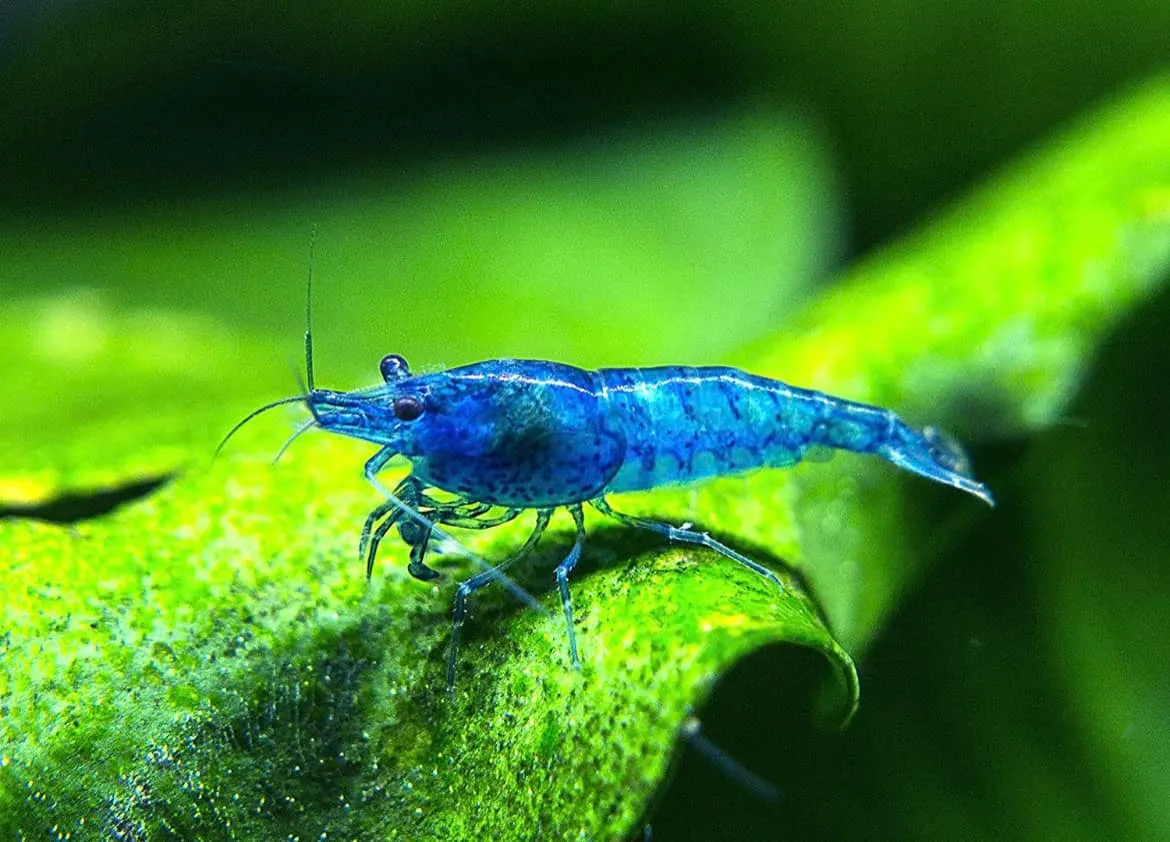
Blue Velvet Shrimp
Neocaridina davidi var. blue
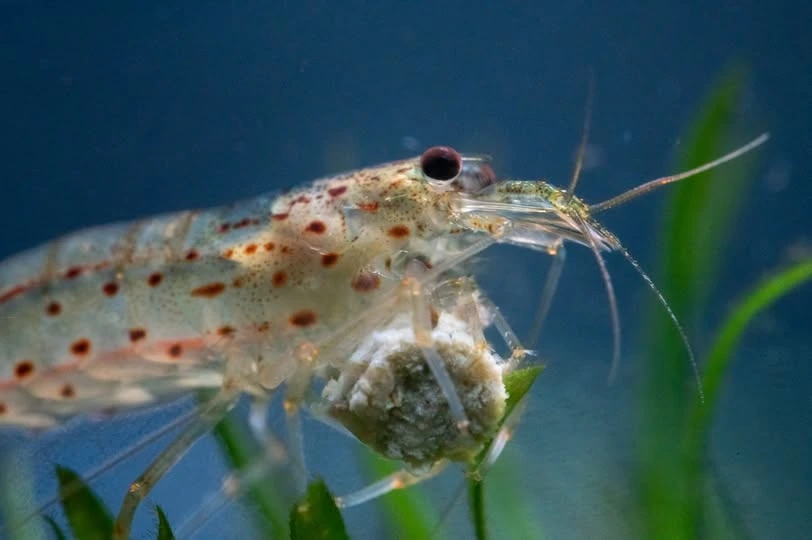
Amano Shrimp
Caridina multidentata
Bladder Snail
Physella acuta
Crystal Shrimp
Caridina cantonensis
Ghost Shrimp
Palaemonetes paludosus
Malaysian Trumpet Snail
Melanoides tuberculata
Mexican Dwarf Crayfish
Cambarellus patzcuarensis
Ready to Add Cherry Shrimp to Your Tank?
Use our free stocking calculator to check compatibility, bioload, and get personalized recommendations.