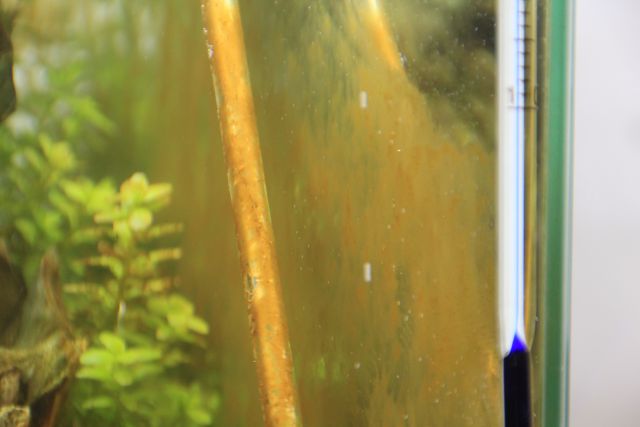
Brown algae
Diatoms (Bacillariophyceae)
These are diatoms, not true brown algae — Phaeophyceae are marine seaweeds and do not occur in a freshwater aquarium.
How to recognise it
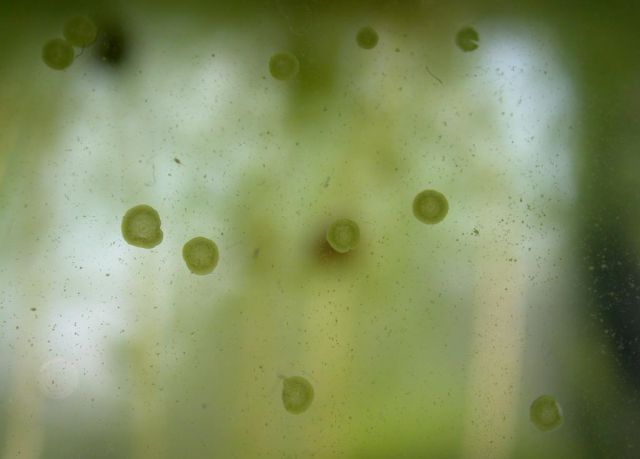
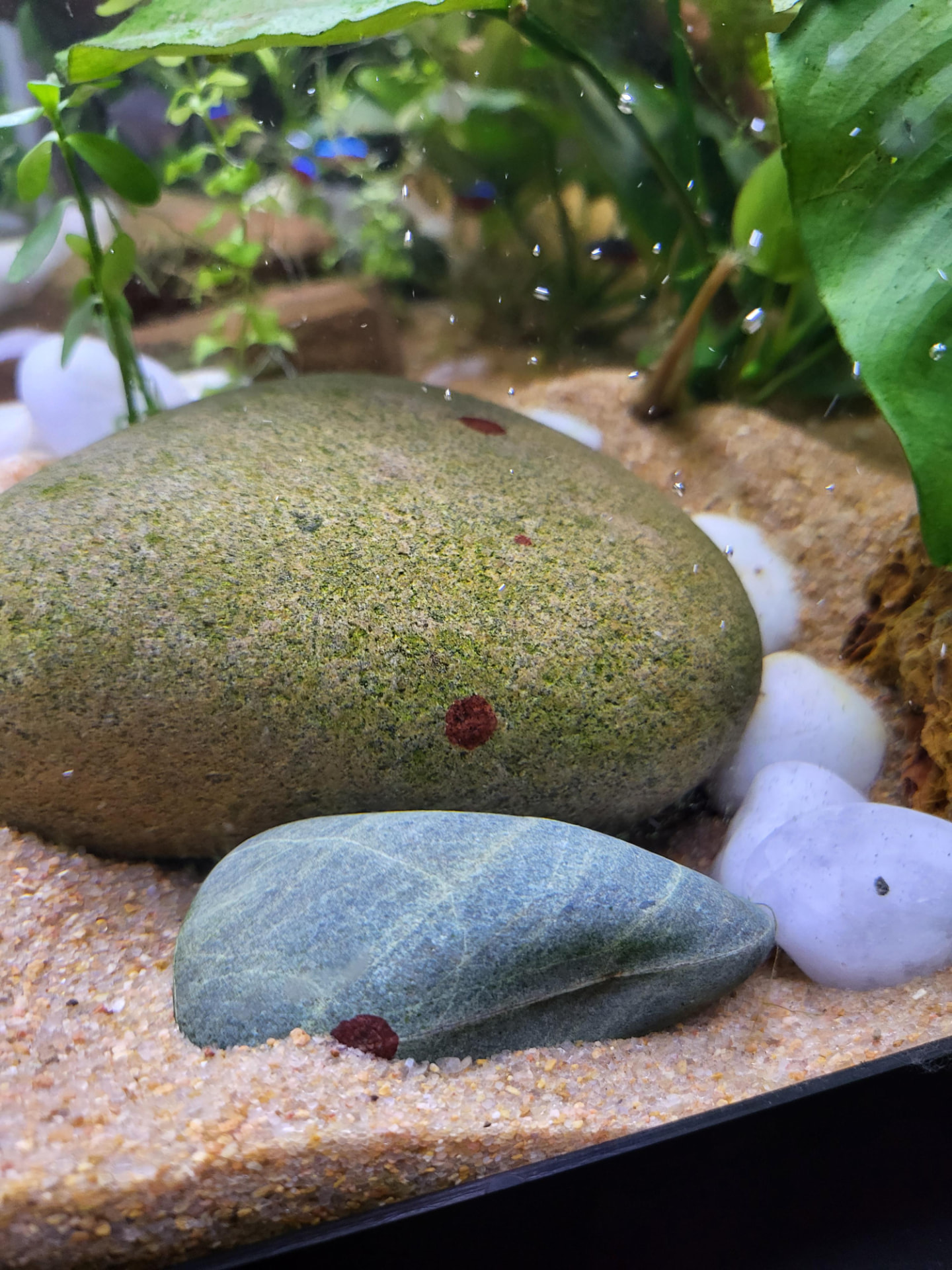
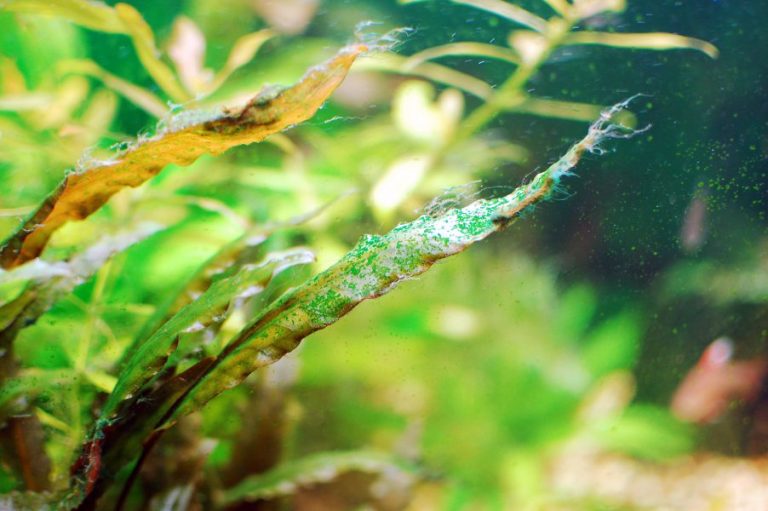
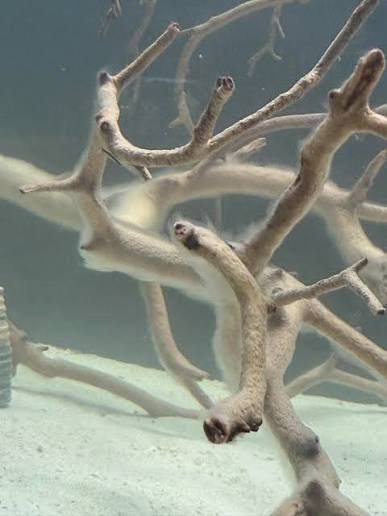
A dull tan or rust-coloured dust that settles evenly over glass, sand and older leaves within the first weeks of a new setup. It wipes off with a finger and clouds the water as it lifts, leaving clean glass behind with almost no pressure — that easy removal is the single best identifier. It appears first on the shaded side of the tank and on the substrate, not in the brightest spot.
What causes it
Silicates leaching from new sand, new substrate and tap water, combined with an immature filter that has not yet stabilised ammonia and nitrite. It is a new-tank phenomenon, not a lighting problem — dimming the light does very little.
What eats it
- Otocinclus — strips diatoms off glass and leaves faster than anything else, but needs a tank mature enough to feed it once the diatoms are gone.
- Twig catfish — grazes the same film from leaves and wood without damaging plants, though it needs stable water and supplemental veg.
How to remove it
- Manual:
- Wipe the glass with a melamine sponge and siphon the top layer of substrate during water changes — it lifts immediately.
- Husbandry:
- Finish cycling the tank and keep water changes weekly. Silicate depletes on its own as the substrate ages; adding fast-growing stem plants speeds it up by consuming the remaining nutrients.
- Chemical:
- None needed, and none worth using. Silicate-removing resin exists for reef tanks but is pointless expense in freshwater, where the outbreak ends by itself.
How long it takes to clear: Clears in 2–6 weeks as the tank matures, and usually never returns in the same setup.