
Care Requirements
Adult Size
3.5" (9cm)
Min Tank
20 gal
Temperature
75-86°F
pH Range
6-7.5
Lifespan
10-12 years
Min Group
Can be kept alone
Diet
Herbivore
Swim Level
Bottom
Bioload
2/10
Hardness
2-12 dGH
About Clown Pleco
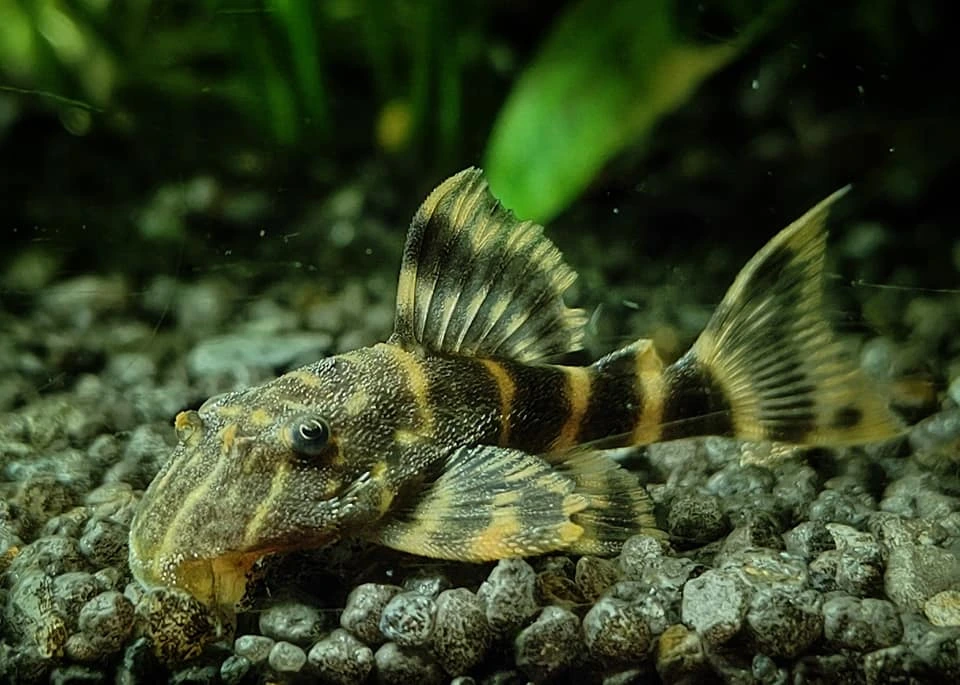
The Clown Pleco is one of the smallest commonly available plecos, reaching just 3-3.5 inches at maturity. Their compact size combined with striking orange and black striped patterns makes them perfect for smaller aquariums where larger plecos wouldn't fit. Despite their small stature, they're hardy fish that thrive with basic care.
What sets Clown Plecos apart from most algae-eating plecos is their diet — they're primarily wood eaters (xylivores) rather than algae grazers. In the wild, they rasp on submerged driftwood, consuming the wood itself and the biofilm growing on it. This dietary specialization means driftwood isn't optional in their tanks — it's essential food.
Their name comes from the bold wavy stripes of orange, brown, and black that cover their bodies. Each individual has unique patterning, making them visually interesting even in groups. The coloration can vary from bright orange to muted brown depending on diet, stress levels, and individual genetics.
Clown Plecos are extremely shy and nocturnal, often remaining hidden throughout the day. Many keepers go weeks without seeing their Clown Pleco, leading to concerns the fish has died — only to spot it during a late-night tank check. This secretive nature is normal and doesn't indicate problems. Patient keepers who observe their tanks after dark are rewarded with views of these beautiful fish actively foraging.
Natural Habitat & Origin
Clown Plecos originate from the Orinoco River basin in Venezuela and Colombia, as well as the Caroni River system. These rivers flow through tropical lowland forests, carrying substantial driftwood and organic debris. The fish inhabit areas with accumulated wood, spending their time hidden in crevices and rasping on submerged logs.
The water in their native habitat is soft and slightly acidic, often stained brown from tannins released by decaying vegetation. Temperatures are consistently warm, typically 24-28°C year-round. Flow rates vary from gentle to moderate depending on specific location.
This wood-dominated environment shapes their dietary needs — unlike plecos from rocky habitats that evolved to graze algae, Clown Plecos evolved to extract nutrition from wood fiber and associated microorganisms. This xylivorous specialization must be accommodated in aquariums.
Native Region
Orinoco and Caroni River basins, Venezuela and Colombia
Habitat Type
Tropical rivers with abundant driftwood and submerged vegetation
Wild Water Conditions
Soft, acidic water (pH 5.5-7.0), warm temperatures, moderate flow
Appearance & Varieties
Clown Plecos display distinctive wavy bands of orange, brown, and black running across their body and fins. The base color is typically dark brown to black, with lighter orange or tan bands creating the 'clown' pattern. Individual variation is substantial — some specimens are boldly marked while others appear more muted.
At full size, they reach only 3-3.5 inches (8-9 cm), making them among the smallest plecos commonly available. Their compact size and attractive patterning make them popular choices for nano and small community tanks.
Body shape is typical pleco — flattened ventrally with a large sucker mouth adapted for rasping. They lack the bristles seen in Ancistrus species. Sexing is difficult; males may have slightly broader heads and more pronounced odontodes (small tooth-like structures) on the pectoral fin spines.
Popular Varieties
| Variety | Description | Rarity |
|---|---|---|
| Standard/Wild-Type | Wavy bands of orange and black/brown. The only naturally occurring form. Pattern intensity varies between individuals — some are boldly marked, others more subtle. | Common |
Tank Setup & Requirements
Quick Requirements Summary
Tank Size
Minimum Tank Size
20 gallons
Recommended Tank Size
30 gallons
Clown Pleco tanks must include driftwood — this isn't optional decoration but essential food. Beyond this requirement, they're undemanding fish that adapt to various setups as long as hiding spots and appropriate water conditions are provided.
Water Parameters
Prefer soft, slightly acidic water similar to their native habitat. Tannins from driftwood help create appropriate conditions and are beneficial rather than problematic. They're adaptable to moderately hard water but do best in softer conditions. Temperature range 24-30°C (75-86°F), pH 6.0-7.5, hardness 2-12 dGH.
Substrate
Soft substrate protects their undersides during their bottom-dwelling lifestyle. Sand is ideal and natural. Avoid sharp substrates that could damage their flat undersides.
Plants & Decorations
Clown Plecos don't eat or damage plants, making them excellent choices for planted aquariums. Plants provide additional cover for these shy fish. Multiple pieces of driftwood are mandatory — they eat wood. Include various types and sizes for dietary variety and hiding options. Malaysian driftwood, mopani, and spiderwood all work.
Filtration & Water Flow
Standard community tank filtration works well. They don't require strong flow. Ensure good water quality with regular maintenance. Their wood-heavy diet produces characteristic stringy waste that needs adequate filtration.
Lighting
Bright lighting keeps them hidden. Dimmer conditions may encourage more visibility during waking hours. Floating plants can help reduce light reaching the bottom. Standard lighting is fine but don't expect to see them often.
Diet & Feeding Guide
Diet Type
herbivore
Feeding Frequency
Driftwood always available; supplements 2-3 times weekly
Portion Size
Small amounts of prepared foods since driftwood is the primary diet. One algae wafer can be shared by multiple Clown Plecos. Vegetables can be left overnight for grazing.
Clown Plecos are xylivores — wood eaters. Unlike most plecos that primarily consume algae, Clown Plecos derive significant nutrition from driftwood itself. They rasp on wood surfaces, consuming both the wood fiber and the biofilm/microorganisms growing on it. This specialized diet makes driftwood absolutely essential in their tanks. While driftwood is their primary food, supplemental feeding ensures adequate nutrition. They also accept vegetable matter and sinking prepared foods.
Best Foods for Clown Pleco
- Driftwood — Not optional — this is their primary food source. Include multiple pieces of various types. They rasp constantly on wood, consuming both fiber and associated biofilm.
- Algae wafers — Supplement the wood-based diet with quality sinking wafers. Feed several times weekly.
- Blanched vegetables — Zucchini, cucumber, shelled peas. Weight down and leave overnight for these nocturnal feeders.
- Repashy gel foods — Morning Wood formula is designed specifically for wood-eating plecos. Excellent supplemental food.
- Sinking pellets/wafers — Quality sinking foods with high plant content supplement their diet. Feed after lights-out.
Foods to Avoid
- High-protein foods as staples — They're herbivores/xylivores, not carnivores. Protein-heavy diets aren't appropriate.
- Relying on algae alone — Unlike algae-eating plecos, Clown Plecos aren't efficient algae consumers. They need driftwood as their primary food source.
- Tanks without driftwood — Clown Plecos cannot thrive without wood to eat. A tank without driftwood is starving them regardless of other foods offered.
Driftwood must always be available as their primary food. Supplemental feeding with algae wafers and vegetables ensures complete nutrition.
What a Clown Pleco will actually graze depends entirely on which algae you have — soft film comes off easily, while black beard and blue-green growth are ignored by almost everything. Identify the algae in your tank before deciding whether livestock is the right fix.
Behavior & Temperament
Clown Plecos are among the shyest aquarium fish. They're strictly nocturnal, spending virtually all daylight hours hidden in driftwood crevices, caves, or under decorations. Many keepers rarely see their Clown Pleco despite the fish being perfectly healthy — this is normal behavior, not cause for concern.
After lights-out, they emerge to rasp on driftwood throughout the night. The rasping action is sometimes audible in quiet rooms — a gentle scraping sound as they work on wood surfaces. They'll also investigate algae wafers and vegetables left for them.
Toward tankmates, they're completely peaceful and mostly oblivious. They don't interact with other fish and pose no threat to anything. Multiple Clown Plecos can coexist if adequate driftwood provides separate hiding and grazing areas.
Their extreme shyness means stressed specimens or new arrivals may not eat visibly for weeks. As long as driftwood shows rasp marks and the fish maintains body condition, they're eating — just not while you're watching.
Tank Mates: Compatibility Guide
Compatible Tank Mates
Small community fish
Tetras, rasboras, and similar peaceful species are perfect companions. They occupy different tank zones and ignore each other completely.
Fellow peaceful bottom-dwellers. Different activity patterns and dietary needs prevent competition.
Dwarf Cichlids
Rams, Apistogramma, and similar peaceful dwarf cichlids coexist well.
Shrimp
Completely shrimp-safe. Clown Plecos show zero interest in shrimp.
Other small plecos
Can coexist with Bristlenose and similar peaceful species if tank is large enough.
Works well in larger Betta tanks (20+ gallons). Different zones and schedules prevent conflict.
Tank Mates to Avoid
Large aggressive fish
While their armor provides protection, constant harassment causes chronic stress.
Very active aggressive feeders
Fish that consume food before shy Clown Plecos emerge can lead to malnutrition.
Common Pairing Questions
Can Clown Plecos live with Bettas?
Yes — works well in tanks 20+ gallons. Different activity schedules and tank zones prevent conflict. The Clown Pleco's armor makes Betta aggression irrelevant.
Can I keep multiple Clown Plecos together?
Yes, with adequate space and driftwood providing separate territories. They're not aggressive toward each other.
Clown Plecos can breed in aquariums but do so infrequently compared to Bristlenose. They're cave spawners — males select and defend small enclosed spaces in driftwood or provided caves. Males guard the eggs and fry with dedication. Eggs hatch in approximately 10 days, with fry remaining attached to yolk sacs for several more days. Breeding triggers include aged, well-seasoned driftwood with natural cavities, soft acidic water, and quality nutrition.
Health Issues & Disease Prevention
Clown Plecos are hardy fish when their basic requirements are met — primarily adequate driftwood and appropriate water quality. Most health issues stem from nutritional problems or poor water conditions.
Common Diseases
| Disease | Symptoms | Treatment |
|---|---|---|
| Malnutrition/Starvation | Sunken belly, faded coloration, lethargy, visible head and body bones through skin. | Ensure abundant driftwood is available and showing rasp marks. Supplement with algae wafers and vegetables. Recovery is possible if caught early. |
| Ich (White Spot Disease) | Small white spots on body and fins, flashing against objects. | Raise temperature to 30°C gradually. Use half-dose salt treatment if needed (plecos are sensitive to salt). |
| Oxygen Deprivation | Gasping at surface, lethargy, staying near water surface uncharacteristically. | Increase aeration immediately. Check for overstocking or poor surface agitation. |
| Bacterial/Fungal Infections | White fuzzy growth, red streaks, deteriorating fins. | Usually secondary to poor water quality or injury. Improve water conditions and treat with appropriate medication. |
Signs of a Healthy Clown Pleco
- Rounded belly — not sunken
- Good coloration with visible pattern
- Active nocturnal rasping on driftwood
- Visible rasp marks on driftwood surfaces
- Clear eyes
- Intact fins
Prevention Tips
- Always include adequate driftwood — this is non-negotiable
- Supplement with algae wafers and vegetables
- Maintain soft, slightly acidic water when possible
- Provide hiding spots for daytime security
- Regular water changes and good filtration
Frequently Asked Questions
Unlike most plecos, Clown Plecos are primarily wood eaters (xylivores), not algae eaters. They'll consume some biofilm and may pick at algae incidentally, but they won't control algae like Bristlenose or Otocinclus. If you need algae control, choose a different species.
Absolutely yes — driftwood is mandatory, not optional. Clown Plecos eat wood as their primary food source. A tank without driftwood cannot properly support this species regardless of other foods offered.
Completely normal — they're extremely shy and strictly nocturnal. They hide all day and only emerge after lights-out. Check the tank late at night with dim lighting to observe them. If the fish maintains body condition and rasp marks appear on driftwood, it's healthy despite invisibility.
Adults reach only 3-3.5 inches (8-9 cm), making them among the smallest commonly available plecos. This compact size suits tanks as small as 20 gallons.
Yes — they're hardy and undemanding as long as their basic requirement (driftwood) is met. Their small size makes them suitable for beginning aquarists with appropriately sized tanks.
Yes, with adequate space and driftwood providing separate territories. They're not aggressive toward each other. Multiple specimens can coexist in 30+ gallon tanks with ample wood.
Probably not. Check at night with a dim flashlight, or look for rasp marks on driftwood and characteristic stringy feces. These fish are masters of hiding and may go unseen for extended periods while being perfectly healthy.
Wood fiber feces — completely normal. Their wood-based diet produces characteristic long, stringy waste. This is actually a good sign indicating they're eating properly.
Tips for Keeping Clown Pleco
Pro Tips
- ✓Multiple driftwood types provide dietary variety — Malaysian, mopani, and cholla give them options
- ✓Observe at night with red light — red light doesn't disturb nocturnal fish
- ✓Rasp marks on driftwood indicate healthy eating even if you never see the fish
- ✓Aged driftwood is easier for them to process than new, hard pieces
Common Mistakes to Avoid
- ✗Keeping without driftwood — starvation, as driftwood is their primary food source
- ✗Expecting them to eat algae — they're wood eaters, not algae grazers
- ✗Assuming they're dead because you never see them — their extreme shyness is normal
- ✗Not providing hiding spots — chronic stress without secure daytime cover
Sources
- FishBase — Accepted scientific name, maximum size and native range for Clown Pleco.
Related Species You Might Like
View All Fish →
Cobalt Blue Zebra
Maylandia callainos
Adolfo's Corydoras
Corydoras adolfoi
Banjo Catfish
Bunocephalus coracoideus
Bronze Corydoras
Corydoras aeneus
Corydoras Julii
Corydoras julii
Corydoras Sterbai
Corydoras sterbai
False Julii Corydoras
Corydoras trilineatus
Otocinclus
Otocinclus vittatus
Ready to Add Clown Pleco to Your Tank?
Use our free stocking calculator to check compatibility, bioload, and get personalized recommendations.