
Care Requirements
Adult Size
2.8" (7cm)
Min Tank
20 gal
Temperature
75-82°F
pH Range
6-7.5
Lifespan
10-15 years
Min Group
6+ fish
Diet
Omnivore
Swim Level
Bottom
Bioload
2/10
Hardness
2-15 dGH
About Corydoras Sterbai
Corydoras Sterbai is one of the most sought-after and attractive members of the Corydoras family. With their striking spotted pattern and distinctive orange-yellow pectoral fins, they've become a staple in the hobby. What truly sets them apart, however, is their tolerance for warmer water—making them one of the few Corydoras suitable for discus and other warm-water community tanks.
Like all Corydoras, Sterbai are highly social fish that must be kept in groups. They spend their time constantly foraging across the substrate, 'vacuuming' up food particles with their sensitive barbels. Watching a group of Sterbai sift through sand is endlessly entertaining, and their peaceful nature makes them ideal community tank residents.
Despite their popularity, Sterbai require proper care to thrive. Their barbels are sensitive to rough substrates, and they need dedicated sinking foods rather than relying on leftover scraps. With proper care, they can live 10-15 years, rewarding their keepers with years of activity and personality.
Natural Habitat & Origin
Corydoras Sterbai originate from central Brazil, specifically the upper Guaporé River in the Mato Grosso region. This area features warm, slow-moving tributaries and streams with sandy substrates covered in leaf litter and organic debris.
The waters they inhabit are warmer than many other Corydoras habitats, which explains their unique tolerance for higher temperatures. This adaptation makes them compatible with tropical fish that prefer temperatures above 78°F (26°C), where other Corydoras species would struggle.
Native Region
Central Brazil (Upper Guaporé River, Mato Grosso region)
Habitat Type
Slow-moving tributaries and streams with sandy substrates
Wild Water Conditions
Warm (75-82°F), soft, slightly acidic water with organic debris
Appearance & Varieties
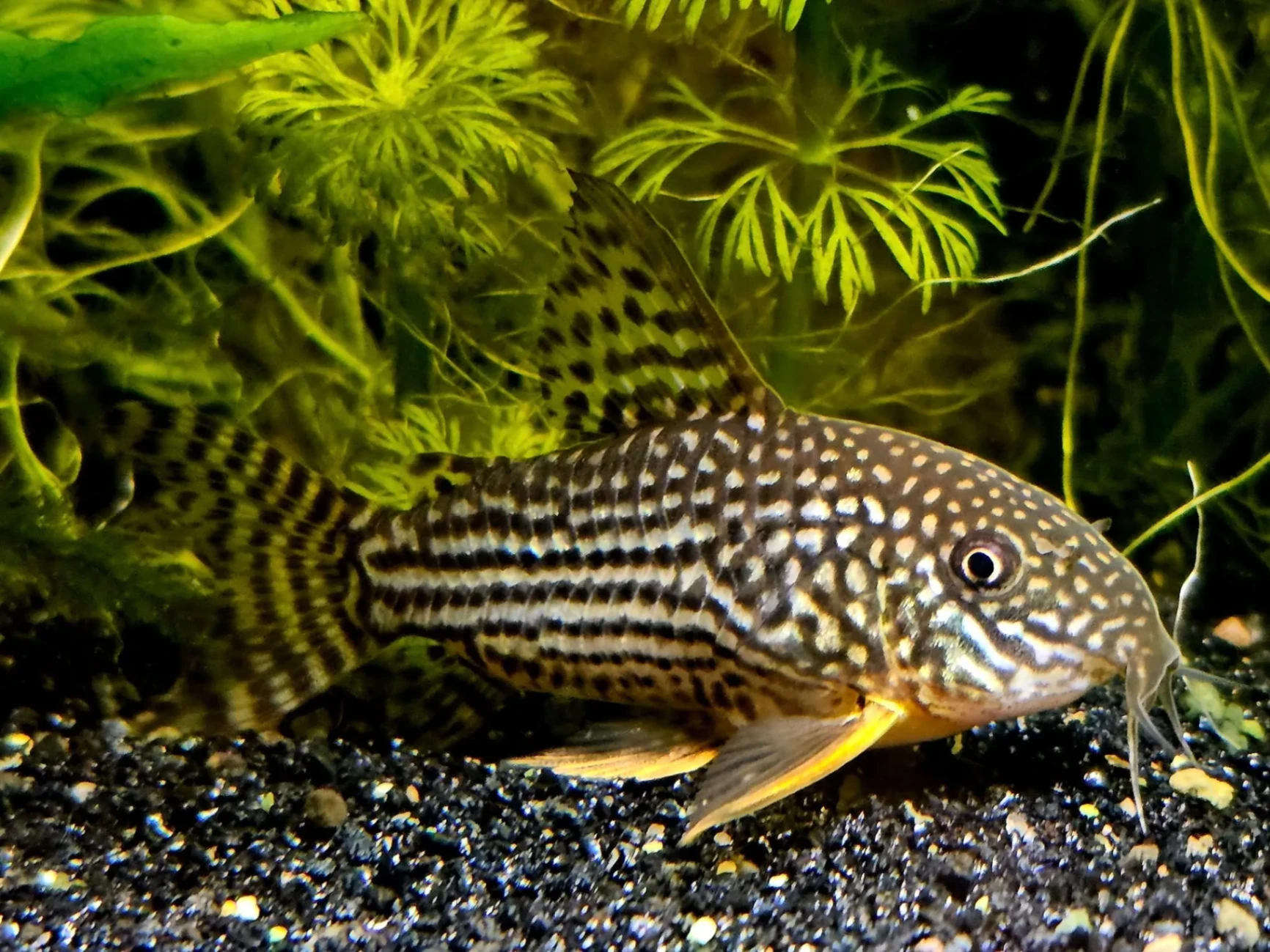
Corydoras Sterbai display a striking pattern of white spots on a dark brown to black base, creating a reticulated appearance. Their most distinctive feature is their bright orange-yellow pectoral fins and leading fin rays, which provide beautiful contrast against their dark bodies.
Adults reach approximately 2.75 inches (7cm). Females are larger and rounder when viewed from above, especially when full of eggs. Males are slimmer. Their bodies are compact and armored with bony plates, and they possess two rows of overlapping scutes along their flanks.
Tank Setup & Requirements
Quick Requirements Summary
Tank Size
Minimum Tank Size
20 gallons
Recommended Tank Size
20 gallons
Corydoras Sterbai require a minimum of 20 gallons for a small group, with 30+ gallons recommended for a comfortable school of 8 or more. Long tanks with large footprints are preferred over tall tanks, as they're bottom dwellers that need floor space.
Water Parameters
Temperature should be maintained between 75-82°F (24-28°C)—warmer than most Corydoras tolerate. They prefer soft to moderately hard water (2-15 dGH) and slightly acidic to neutral pH (6.0-7.5).
Substrate
Sand is essential for their welfare. Corydoras constantly sift through substrate with their sensitive barbels, and sharp gravel can cause damage leading to infections. Fine, smooth sand allows natural foraging behavior.
Plants & Decorations
Live plants are appreciated and provide shade for resting. Amazon swords, cryptocoryne, java fern, and floating plants all work well. Include driftwood and smooth rocks for variety. Provide some open sandy areas for foraging.
Filtration & Water Flow
Moderate filtration is sufficient. Avoid strong currents at substrate level that would disturb their foraging. Good water quality is important for barbel health.
Lighting
Moderate lighting with shaded areas. They appreciate cover from bright lights but are not strictly nocturnal and remain active throughout the day.
Diet & Feeding Guide
Diet Type
omnivore
Feeding Frequency
1-2 times daily
Portion Size
What they consume in 3-5 minutes
Corydoras Sterbai are omnivores that naturally feed on insect larvae, worms, small crustaceans, and organic detritus sifted from the substrate. In captivity, they need dedicated sinking foods—don't rely on them eating leftovers from other fish.
Best Foods for Corydoras Sterbai
- Sinking pellets — Catfish tablets and bottom feeder wafers should be staples
- Frozen bloodworms — Excellent protein source, highly relished
- Frozen brine shrimp — Good variety, readily accepted
- Live blackworms — Natural prey, promotes foraging behavior
- Repashy gel foods — Excellent nutrition, sits on substrate
- Blanched vegetables — Zucchini, cucumber for variety
Foods to Avoid
- Floating foods only — They can't access them—food must sink
- Sharp-edged foods — Could damage sensitive barbels
- Relying on leftovers — They need dedicated feeding, not scraps
Watch to ensure food reaches the bottom before faster mid-water fish consume everything. Feed when tank lights are on, as they're diurnal feeders. They'll constantly sift through sand between meals looking for food particles.
Behavior & Temperament
Corydoras Sterbai are highly social schooling fish that must be kept in groups of 6 or more. They're constantly active, foraging across the substrate, interacting with group members, and displaying their characteristic 'winking' behavior (retracting eyes into sockets).
They occasionally dash to the surface to gulp air—this is called intestinal breathing and is completely normal behavior, not a sign of oxygen problems. Groups often rest together in 'cory piles,' stacked on top of each other in favorite spots. This social behavior is essential to their wellbeing.
Tank Mates: Compatibility Guide
Compatible Tank Mates
Sterbai tolerate discus temperatures—perfect pairing
Similar water requirements, peaceful
Good community members, similar temperature range
Peaceful mid-dweller, won't compete for bottom space
Excellent warm-water schooling fish
Both prefer warm water, peaceful
Tank Mates to Avoid
Large aggressive fish
May harass or eat the peaceful corydoras
Fish competing for bottom food
May outcompete corydoras for sinking foods
Coldwater species
Temperature incompatibility—Sterbai need warm water
Common Pairing Questions
Can Corydoras Sterbai live with discus?
Yes! Unlike most Corydoras that prefer cooler water, Sterbai tolerate temperatures up to 82°F (28°C), making them one of the few Corydoras suitable for discus tanks. This is one of their key selling points.
Can I mix Corydoras Sterbai with other Corydoras species?
Yes, but they prefer their own kind. Different Corydoras species coexist peacefully but typically school with their own species. For best display, keep larger groups of fewer species rather than mixing many types.
Corydoras Sterbai are moderately easy to breed for those familiar with Corydoras spawning. They use the classic 'T-position' mating posture where the female positions her head against the male's belly to receive sperm.
Triggering spawning typically involves a large (30-50%) water change with cooler water, simulating the rainy season. Spawning usually occurs within hours of the cool water change. The female holds 2-4 eggs in a pouch formed by her pelvic fins, fertilizes them, then deposits them on plants, glass, or decorations. This process repeats many times.
Eggs hatch in 4-5 days at 79°F (26°C). Remove eggs to a separate container to prevent predation, and treat with antifungal medication to prevent fungal growth. Fry accept baby brine shrimp and microworms.
Health Issues & Disease Prevention
Corydoras Sterbai are hardy when kept in appropriate conditions. The main health concern is barbel damage from inappropriate substrates or poor water quality. Healthy barbels are long and intact; shortened or eroded barbels indicate environmental problems.
Common Diseases
| Disease | Symptoms | Treatment |
|---|---|---|
| Barbel erosion | Shortened, damaged, or missing barbels | Switch to sand substrate immediately, improve water quality. Barbels may partially regrow |
| Ich (White Spot Disease) | White spots, flashing, clamped fins | Raise temperature to 86°F (30°C), use half-dose medication (scaleless fish) |
| Red blotch disease | Red/bloody patches on belly or fins | Pristine water quality, antibacterial treatment. Often stress-related |
Signs of a Healthy Corydoras Sterbai
- Long intact barbels
- Active foraging
- Bright orange pectoral fins
- Full belly
- Schooling with group
- Clear eyes
Prevention Tips
- Sand substrate is essential
- Maintain excellent water quality
- Keep in groups of 6+
- Provide dedicated sinking foods
- Avoid sharp decorations
Frequently Asked Questions
They're gulping air for 'intestinal breathing'—absorbing oxygen through their gut lining. This is completely normal and not a sign of oxygen problems. All Corydoras do this occasionally.
Yes! Unlike most Corydoras that prefer cooler water, Sterbai tolerate temperatures up to 82°F (28°C), making them one of the few Corydoras suitable for discus tanks. This is one of their key selling points.
Almost always caused by rough substrate (sharp gravel) or poor water quality. Switch to sand immediately and improve water conditions. Barbels may partially regrow but severe damage can be permanent.
Minimum 6, ideally 8-12 or more. They're highly social and only display natural behavior in groups. Keeping fewer than 6 leads to stressed, hiding fish that don't show their best behavior.
Yes, but they prefer their own kind. Different Corydoras species coexist peacefully but typically school with their own species. For best display, keep larger groups of fewer species rather than mixing many types.
They can retract their eyes into their sockets—it looks like winking. This is normal and may help protect their eyes while burrowing in substrate. It's one of their quirky, endearing behaviors.
Tips for Keeping Corydoras Sterbai
Pro Tips
- ✓The best Corydoras for warm water tanks and discus communities
- ✓Sand substrate transforms their behavior—constant natural foraging
- ✓Orange pectoral fins make them one of the most attractive Corydoras species
- ✓Large water change with cooler water triggers breeding
- ✓They'll sift through sand for hours—incredibly entertaining
- ✓One of the longer-lived Corydoras—10-15 years with proper care
- ✓Captive-bred specimens are common and hardy
- ✓Groups of 10+ create constant activity on the tank bottom
Common Mistakes to Avoid
- ✗Gravel substrate—sand is essential for barbel health
- ✗Keeping fewer than 6—they need schools for natural behavior
- ✗Relying on leftovers—provide dedicated sinking food
- ✗Mixing with incompatible cool-water Corydoras—Sterbai prefer warmer
- ✗Ignoring barbel damage—it's a sign of substrate or water problems
- ✗Small tanks—they're active and need footprint space
- ✗Not noticing air-gulping is normal—it's not a sign of problems
- ✗Treating them as 'cleanup crew' only—they deserve dedicated care
Sources
- FishBase — Accepted scientific name, maximum size and native range for Corydoras Sterbai.
Featured in Biotope Presets
Related Species You Might Like
View All Fish →
Crystal Shrimp
Caridina cantonensis
Adolfo's Corydoras
Corydoras adolfoi
Bronze Corydoras
Corydoras aeneus
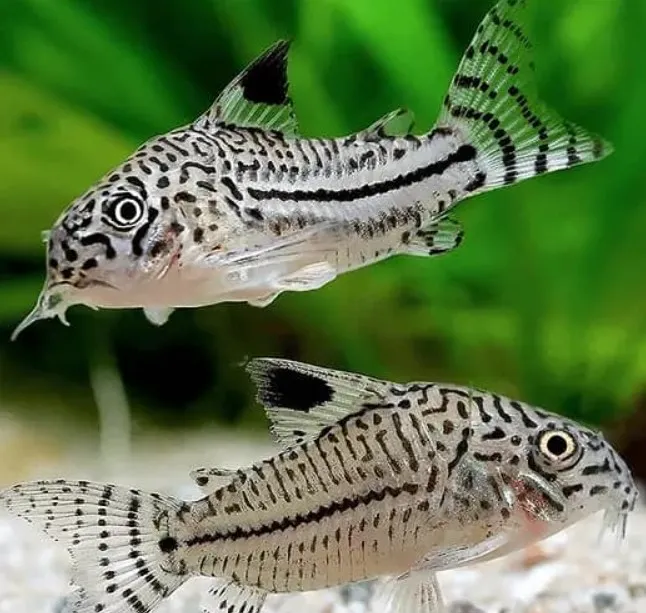
Corydoras Julii
Corydoras julii
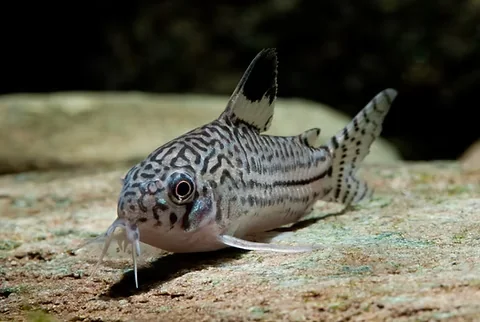
False Julii Corydoras
Corydoras trilineatus
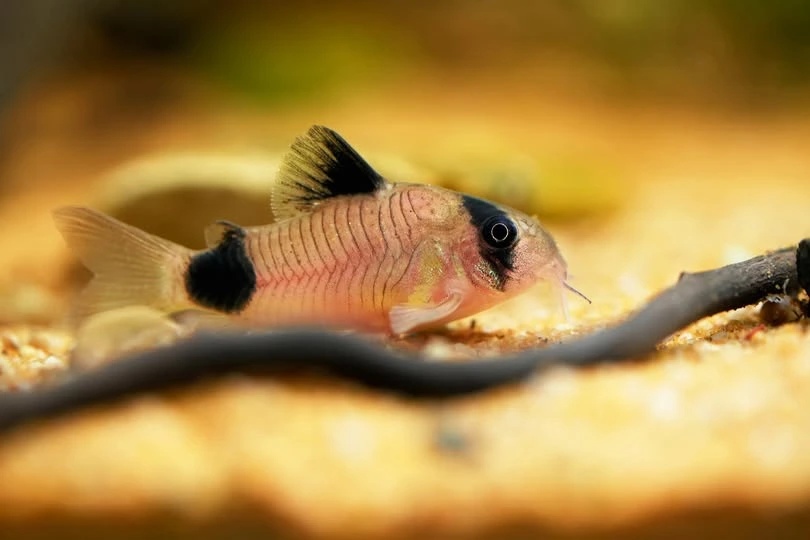
Panda Corydoras
Corydoras panda
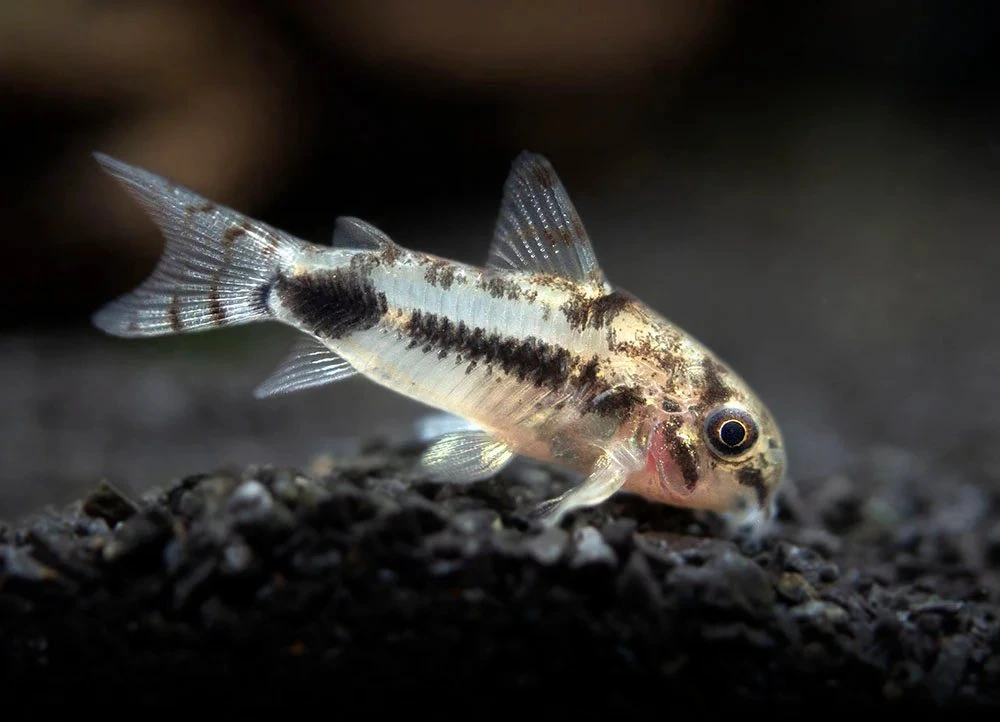
Peppered Corydoras
Corydoras paleatus
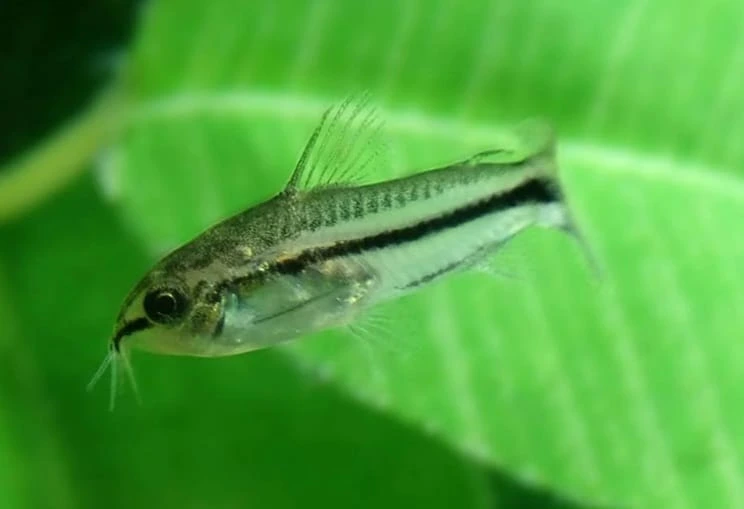
Pygmy Corydoras
Corydoras pygmaeus
Ready to Add Corydoras Sterbai to Your Tank?
Use our free stocking calculator to check compatibility, bioload, and get personalized recommendations.