
Care Requirements
Adult Size
2.0" (5cm)
Min Tank
20 gal
Temperature
75-82°F
pH Range
5.5-7
Lifespan
5-8 years
Min Group
8+ fish
Diet
Omnivore
Swim Level
Middle
Bioload
2/10
Hardness
2-10 dGH
About Rummy Nose Tetra
The Rummy Nose Tetra is legendary among aquarists as the best schooling fish in the hobby. While many tetras 'school,' rummy noses take it to another level—moving as a single organism, changing direction simultaneously, and creating mesmerizing displays that no other commonly available fish can match.
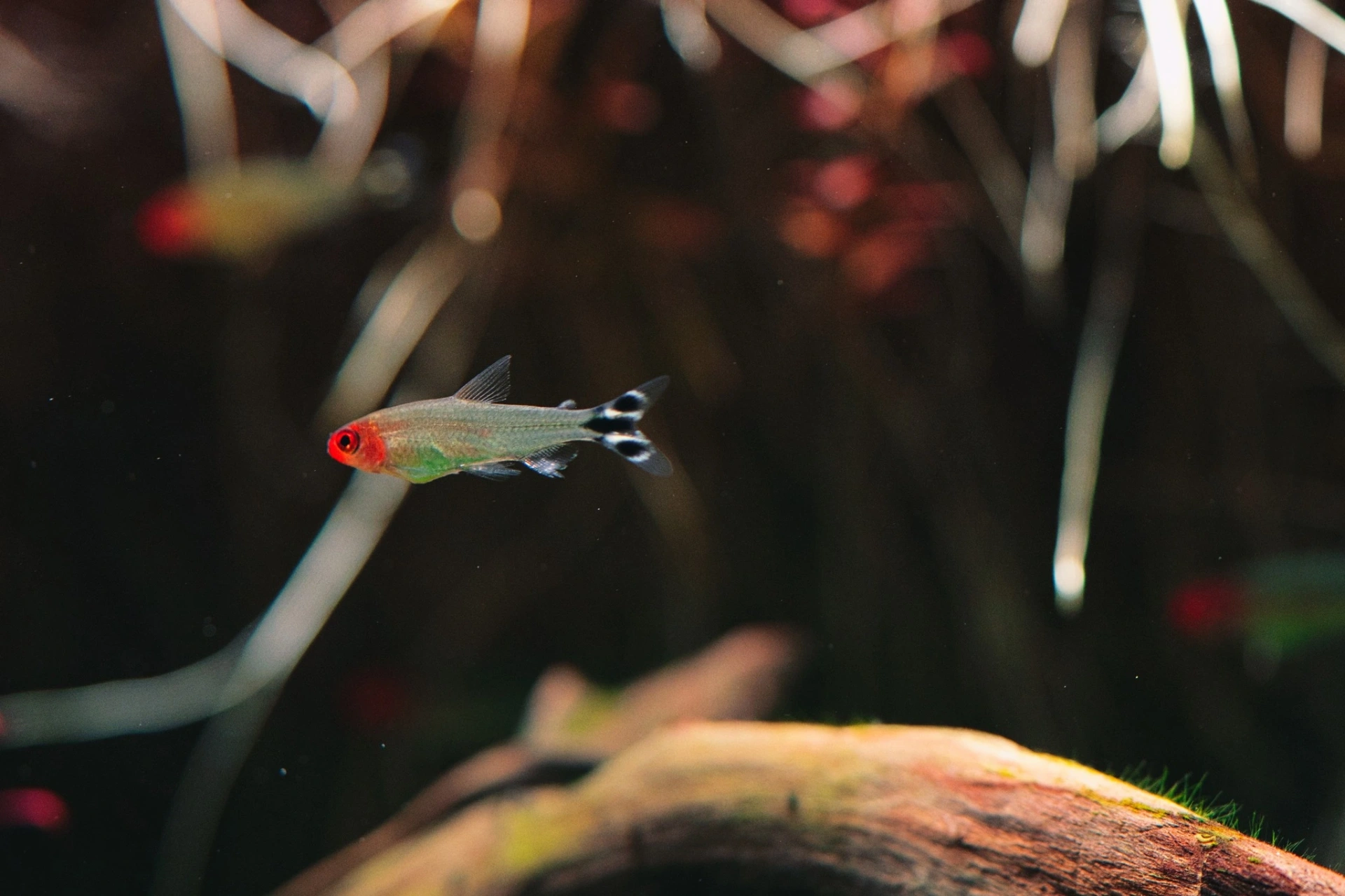
Their name comes from the distinctive bright red coloration on their nose and face, which extends from the snout past the gill covers. This red nose isn't just beautiful—it's a built-in water quality indicator. Healthy rummy noses in optimal conditions display deep, intense red coloration. When stressed or in poor water conditions, the red fades to pale pink or disappears entirely.
Rummy nose tetras are more demanding than neon tetras and not suitable for beginners or new tanks. They need mature, stable aquariums with excellent water quality. But for experienced aquarists who provide proper conditions, they're among the most rewarding tetras to keep.
Natural Habitat & Origin
Rummy nose tetras originate from the lower Amazon basin, the Rio Negro, and the Rio Vaupés in South America. They inhabit blackwater streams and tributaries with extremely soft, acidic water stained dark with tannins from decomposing vegetation. These environments feature dense plant growth and leaf litter substrates.
The water in their native habitat is warm, very soft, and acidic—conditions that can be challenging to replicate exactly but should be approximated for best results. Wild rummy noses are used to stable, pristine conditions, which explains their sensitivity to water quality fluctuations in aquariums.
Native Region
South America (Lower Amazon basin, Rio Negro, Rio Vaupés)
Habitat Type
Blackwater streams and tributaries with dense vegetation and leaf litter
Wild Water Conditions
Warm (75-82°F), very soft (2-12 dGH), acidic (pH 5.5-7.0), heavily tannin-stained
Appearance & Varieties
Rummy nose tetras are slender, torpedo-shaped fish reaching about 2 inches (5 cm). Their most distinctive feature is the bright red coloration covering the nose, face, and often extending past the gill covers—the intensity of this red is your water quality indicator.
The body is silvery with a subtle olive sheen. The tail fin features bold black and white horizontal stripes that flash as they swim. Males and females look very similar; females may be slightly rounder when full of eggs, and males slightly slimmer, but these differences are subtle.
Popular Varieties
| Variety | Description | Rarity |
|---|---|---|
| True Rummy Nose (H. rhodostomus) | The original species; red coloring stays close to head | Common |
| False Rummy Nose (H. bleheri) | Red extends further onto body; often more intensely colored | Common |
| True False Rummy Nose (Petitella georgiae) | Red extends less; often sold interchangeably | Common |
Tank Setup & Requirements
Quick Requirements Summary
Tank Size
Minimum Tank Size
20 gallons
Recommended Tank Size
30 gallons
Rummy nose tetras need established, stable aquariums with excellent water quality. They're active horizontal swimmers that need open space to display their spectacular schooling behavior. Plant the back and sides, leaving the center open for swimming.
Water Parameters
Temperature 75-82°F (24-28°C). Soft to moderately soft water (2-12 dGH) and slightly acidic to neutral pH (5.5-7.0) is preferred. They're sensitive to ammonia and nitrite (must be zero) and prefer nitrates below 20 ppm. Stability is crucial—avoid sudden parameter changes.
Substrate
Dark substrate enhances their coloration and creates a more natural appearance. Sand or fine gravel works well. They don't interact with substrate much, focusing on mid-water swimming.
Plants & Decorations
Plant the background and sides with open swimming space in the center—they need room to school. Good choices include Amazon swords, vallisneria, java fern, and stem plants along the back. Driftwood and leaf litter add natural appeal and beneficial tannins.
Filtration & Water Flow
Good filtration essential—they need pristine water—but avoid strong currents in the main swimming area. They're mid-level swimmers and need calm water to school effectively. Use spray bars to diffuse flow.
Lighting
Moderate lighting preferred—not too bright. Subdued lighting or tannin-stained water brings out their colors and reduces stress.
Diet & Feeding Guide
Diet Type
omnivore
Feeding Frequency
2x daily
Portion Size
What they consume in 2-3 minutes
Rummy nose tetras are omnivores with small mouths, requiring appropriately sized foods. In the wild, they eat small invertebrates, insect larvae, worms, and plant matter. A varied diet maintains their health and the intensity of their red nose coloration.
Best Foods for Rummy Nose Tetra
- High-quality micro pellets — Good staple diet—small size is important
- Crushed flakes — Appropriate size for their small mouths
- Frozen bloodworms — Readily accepted, excellent nutrition
- Frozen brine shrimp — Great variety, good for conditioning
- Frozen daphnia — Natural food, promotes health
- Frozen cyclops — Perfect size for their mouths
- Live baby brine shrimp — Outstanding for conditioning and color enhancement
Foods to Avoid
- Large pellets — Mouths are small—food must be appropriately sized
- Low-quality foods with fillers — Good nutrition is essential for maintaining red nose color
Feed small amounts they can consume in 2-3 minutes. They feed mid-water and will chase sinking food throughout the column. A varied diet with frozen foods maintains the intensity of their red coloration. Poor diet leads to faded colors.
Behavior & Temperament
Rummy nose tetras display the tightest, most coordinated schooling behavior of any commonly available aquarium fish. A large school of rummy noses moving in perfect synchronization is genuinely mesmerizing—they turn simultaneously, accelerate together, and act as a single organism.
They're highly social fish that must be kept in groups. Small groups (under 6) are shy, stressed, and don't display proper schooling behavior. Groups of 10-15+ are ideal and create the most impressive displays. The larger the group, the more confident and active they become.
Importantly, the intensity of their red nose coloration is a real-time health indicator. In healthy fish with optimal conditions, the red is deep and extends past the gills. When stressed, ill, or in poor water conditions, the red fades to pale pink or disappears. If your rummy noses' noses fade, test your water immediately.
Tank Mates: Compatibility Guide
Compatible Tank Mates
Similar requirements, classic pairing
Good tankmates, though rummies prefer slightly warmer water
Peaceful, similar water preferences
Peaceful bottom dwellers, no competition
Excellent match—classic combination
Peaceful algae eaters, similar soft water needs
Generally peaceful, different tank zones
Different zone, no conflicts
Tank Mates to Avoid
Large cichlids
Will eat or stress small tetras
Aggressive fish
Stress causes nose color to fade and schooling to break down
Fin nippers
Will harass peaceful rummy noses
Large predatory fish
Obvious predation risk
Very boisterous fish
Constant activity stresses sensitive rummy noses
Common Pairing Questions
Why did my rummy nose tetra's red nose fade?
Nose color is a direct indicator of stress and water quality. Fading indicates poor water parameters (check ammonia, nitrite, nitrate), stress from tankmates, disease, or recent transport. In healthy, stable conditions, the red should be intense and extend past the gills.
How many rummy nose tetras should I keep together?
Minimum 6, but 10-15+ is ideal. Larger schools display more natural, impressive schooling behavior. In small groups, they're shy and stressed, and the famous schooling effect is lost. The more you keep, the better the display.
Are rummy nose tetras hardy?
They're less hardy than neon tetras and need mature, stable tanks. They're sensitive to ammonia, nitrite, and water quality swings. Not ideal for new aquariums or beginners. Once established in proper conditions, they're reasonably robust.
What's the best tetra for schooling behavior?
Rummy nose tetras are universally considered the best schooling tetra. Their tight, coordinated movement is unmatched. Cardinals and neons school loosely by comparison. For the classic schooling fish experience, rummy noses are the gold standard.
Breeding rummy nose tetras is challenging and requires specific conditions. They're egg scatterers with no parental care—parents will eat eggs if given the chance.
Successful breeding requires a separate breeding tank with very soft, acidic water (pH 6.0-6.5, hardness under 4 dGH), dim lighting, and fine-leaved plants or spawning mops. Keep the tank nearly dark—eggs and fry are light-sensitive.
Condition breeders with live and frozen foods for 2 weeks before breeding attempts. Spawning usually occurs at dawn, with eggs scattered among plants. Remove adults immediately after spawning to prevent egg predation.
Eggs hatch in 24-36 hours. Fry are tiny and require infusoria for the first week, then baby brine shrimp. They grow slowly compared to some tetras. Success rate is lower than with easier species—breeding rummy noses is considered an achievement.
Health Issues & Disease Prevention
Rummy nose tetras are more sensitive than many common fish and need excellent water quality to thrive. Their built-in 'warning system'—the red nose—makes health assessment easy: vibrant red means healthy fish and good conditions; faded nose means something is wrong.
Common Diseases
| Disease | Symptoms | Treatment |
|---|---|---|
| Ich (White Spot) | White spots like salt grains on body and fins, scratching against objects, clamped fins | Raise temperature to 82-86°F gradually, add aquarium salt cautiously, use ich medication. They're sensitive—treat promptly. |
| Neon Tetra Disease | Fading color, pale areas under skin, curved spine, erratic swimming, loss of schooling behavior | NO CURE EXISTS. Caused by a parasite. Euthanize affected fish to prevent spread. Buy from healthy stock and quarantine new fish. |
| Fin Rot | Ragged, deteriorating fins, white or red edges | Improve water quality immediately—usually the primary cause. Antibacterial medication if severe. |
| Bacterial Infections | Red streaks, bloating, lethargy, loss of appetite | Antibacterial medication (Kanaplex, Maracyn 2). Usually responds to treatment if caught early. Pristine water essential for recovery. |
Signs of a Healthy Rummy Nose Tetra
- Bright, deep red nose extending past gill covers
- Tight schooling behavior
- Active, coordinated swimming
- Clear eyes
- Intact fins
- Full body shape (not sunken belly)
- Eager feeding response
Prevention Tips
- The red nose is your water quality indicator—if it fades, test water immediately
- Maintain stable water parameters—they're sensitive to fluctuations
- Keep in proper schools (10+) to reduce stress
- Don't add to new, uncycled tanks—they need mature setups
- Quarantine new fish for 2-4 weeks
- Provide varied diet to maintain color intensity
- Avoid sudden temperature or pH changes
Frequently Asked Questions
Nose color directly indicates stress and water quality. Fading means poor water parameters, stress, disease, or recent transport. In healthy, stable conditions, the red should be intense and extend past the gills. Test your water immediately if color fades.
Minimum 6, but 10-15+ is ideal. Larger schools display more impressive, natural schooling behavior. Small groups are shy and don't school properly. More is definitely better with this species.
Less hardy than neon tetras—they need mature, stable tanks with excellent water quality. Not suitable for new aquariums or beginners. Once established in proper conditions, they're reasonably robust.
Rummy nose tetras, hands down. Their tight, coordinated schooling is unmatched by any other commonly available aquarium fish. Cardinals and neons school loosely by comparison.
5-6 years with proper care. Lifespan is shortened by poor water quality, stress from inadequate school size, or unstable conditions. In optimal setups, they're reasonably long-lived.
Minimum 20 gallons for a small school, 30+ gallons is much better. They're active horizontal swimmers—long tanks are preferable to tall ones. Open swimming space is essential for proper schooling display.
Adult shrimp are generally safe, but rummy noses may eat shrimplets. In heavily planted tanks with lots of hiding spots, some shrimplets will survive. They're not aggressive hunters, but opportunistic.
No—they're more demanding than neon tetras and need stable, mature tanks with excellent water quality. Beginners should start with hardier fish and work up to rummy noses once they have experience maintaining stable aquariums.
Tips for Keeping Rummy Nose Tetra
Pro Tips
- ✓The red nose is your water quality indicator—if it fades, test your water immediately
- ✓They school tighter and look more impressive in groups of 12+
- ✓Provide long tanks with open swimming lanes for best schooling display
- ✓Blackwater extract or Indian almond leaves enhance color and reduce stress
- ✓Acclimate slowly—drip acclimation over 1-2 hours is strongly recommended
- ✓They're often used as 'indicator fish' in discus tanks due to their sensitivity
- ✓Don't buy fish with pale noses—they're already stressed or sick
Common Mistakes to Avoid
- ✗Keeping in groups smaller than 6—they need proper schools to thrive and display natural behavior
- ✗Adding to new, uncycled tanks—they're too sensitive for immature setups
- ✗Ignoring faded nose color—it's a warning that something is wrong
- ✗Keeping in hard, alkaline water—they prefer soft, acidic conditions
- ✗Not providing open swimming space—they need room to school properly
- ✗Expecting the hardiness of neon tetras—rummy noses are more demanding
- ✗Buying from tanks with scattered, non-schooling fish—indicates stressed or sick stock
Sources
- FishBase — Accepted scientific name, maximum size and native range for Rummy Nose Tetra.
Featured in Biotope Presets
Related Species You Might Like
View All Fish →
Rusty Cichlid
Iodotropheus sprengerae
Glowlight Tetra
Hemigrammus erythrozonus
Black Neon Tetra
Hyphessobrycon herbertaxelrodi
Black Phantom Tetra
Hyphessobrycon megalopterus
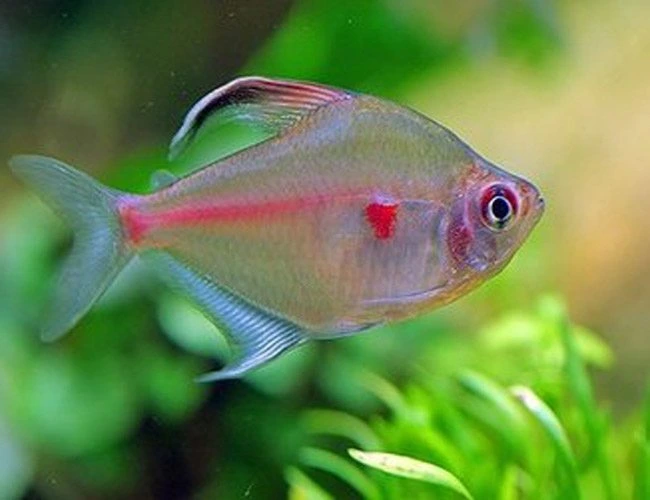
Bleeding Heart Tetra
Hyphessobrycon erythrostigma
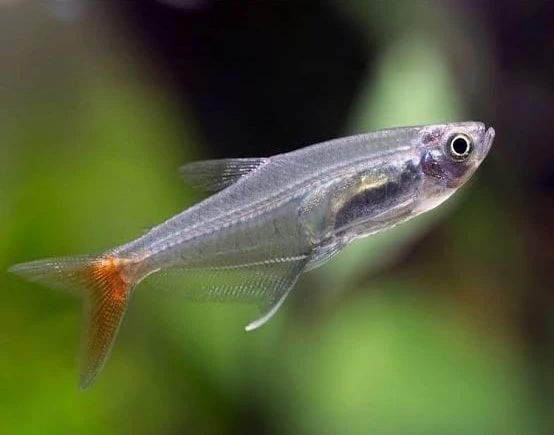
Bloodfin Tetra
Aphyocharax anisitsi
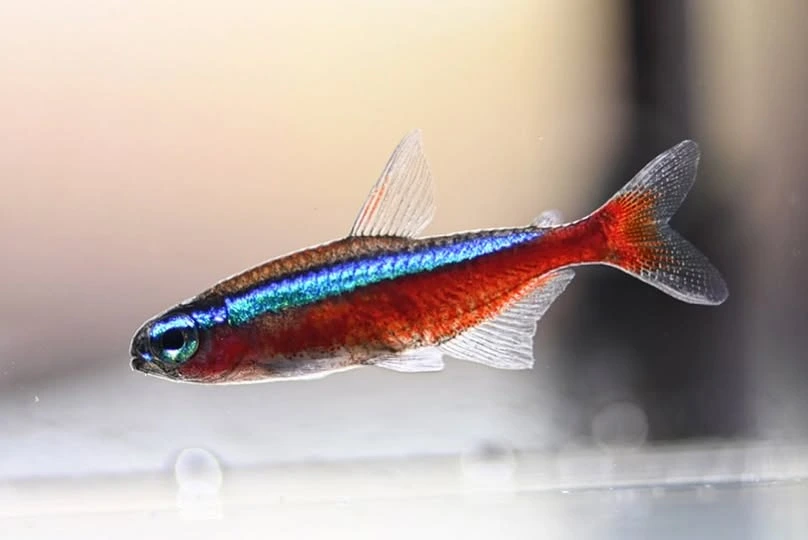
Cardinal Tetra
Paracheirodon axelrodi

Colombian Tetra
Hyphessobrycon columbianus
Ready to Add Rummy Nose Tetra to Your Tank?
Use our free stocking calculator to check compatibility, bioload, and get personalized recommendations.