
Care Requirements
Adult Size
2.0" (5cm)
Min Tank
15 gal
Temperature
64-82°F
pH Range
6-8
Lifespan
5-8 years
Min Group
6+ fish
Diet
Omnivore
Swim Level
Top
Bioload
1/10
Hardness
5-20 dGH
About Bloodfin Tetra
The Bloodfin Tetra is among the hardiest tropical fish available, capable of surviving conditions that would stress or kill most aquarium species. Their tolerance extends from cool subtropical temperatures down to 64°F (18°C) up through typical tropical ranges, making them suitable for unheated tanks in most climates.
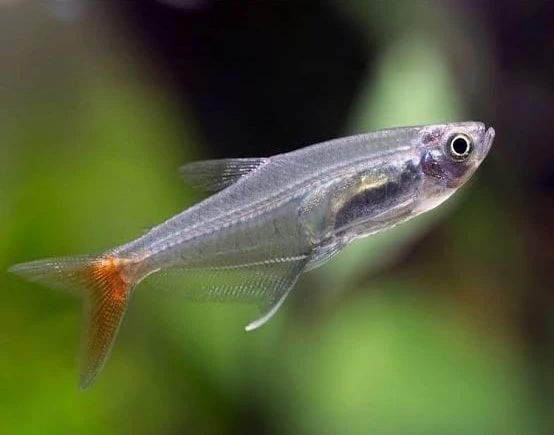
Their appearance is elegantly simple — sleek silver bodies contrast with blood-red fins that give the species its name. The red coloration is most intense in the anal, caudal, and pelvic fins.
Bloodfin Tetras occupy the upper water column more than most tetras, often swimming just below the surface. This top-dwelling tendency makes them excellent companions for mid-water and bottom species.
Their combination of beauty, hardiness, and peaceful nature makes them excellent beginner fish. They tolerate water chemistry variations, temperature fluctuations, and common beginner mistakes.
Natural Habitat & Origin
Bloodfin Tetras originate from the Paraná River basin in Argentina and Paraguay — subtropical South America rather than the tropical Amazon. This geographic origin is key to understanding their cold tolerance.
Fish surviving these subtropical conditions evolved tolerance for temperature extremes that Amazon species lack. They experience temperatures from the mid-60s°F in winter to the mid-80s°F in summer.
In their native habitat, they occupy vegetated areas of streams, rivers, and flooded regions. They're surface-oriented fish in the wild as in aquariums.
Their extensive native range and adaptability mean wild populations remain healthy. Captive breeding supplies the aquarium trade.
Native Region
Argentina and Paraguay — Paraná River basin
Habitat Type
Streams, rivers, and flooded areas with vegetation; subtropical climate
Wild Water Conditions
Highly variable — subtropical temperatures (18-28°C seasonally), soft to moderately hard
Appearance & Varieties
Sleek, elongated silver bodies with blood-red fin coloration. The red is most intense in the anal, caudal, and pelvic fins. Males show more intense red coloration.
Adults reach approximately 2 inches (5 cm), with slender, streamlined bodies. Coloration intensifies with quality diet and good conditions.
Popular Varieties
| Variety | Description | Rarity |
|---|---|---|
| Standard/Wild-Type | Silver body with blood-red fins. The only form commonly available. Coloration intensity varies with condition and diet. | Common |
| Glass Bloodfin | Specimens with more transparent bodies showing internal structures. Same species, slight variation. | Uncommon |
Tank Setup & Requirements
Quick Requirements Summary
Tank Size
Minimum Tank Size
15 gallons
Recommended Tank Size
20 gallons
Bloodfin Tetras are undemanding regarding setup but benefit from surface swimming space matching their top-dwelling nature.
Water Parameters
Exceptionally adaptable. Temperature 18-28°C (64-82°F), pH 6.0-8.0, hardness 5-20 dGH. Thrive in unheated tanks.
Substrate
Not particular since they're top-dwellers. Any standard aquarium substrate works.
Plants & Decorations
Filtration & Water Flow
Standard community filtration with some surface agitation works well.
Lighting
Not sensitive to lighting. Standard lighting shows their silver-and-red coloration well.
Diet & Feeding Guide
Diet Type
omnivore
Feeding Frequency
Once or twice daily
Portion Size
Amount consumed within 2-3 minutes
Bloodfin Tetras are eager, unfussy eaters. As surface-oriented fish, they prefer foods that float or sink slowly.
Best Foods for Bloodfin Tetra
- Quality flake food — Ideal staple — flakes float matching their feeding zone.
- Small floating pellets — Floating foods match their surface-dwelling nature.
- Frozen bloodworms — Eagerly consumed. Enhances red fin coloration.
- Frozen brine shrimp — Readily accepted. Provides variety.
- Live foods — Daphnia, baby brine shrimp, and mosquito larvae are eagerly consumed.
- Color-enhancing foods — Foods with carotenoids intensify their red fin coloration.
Foods to Avoid
- Fast-sinking foods only — As surface feeders, they may miss foods that sink quickly.
- Very large foods — Moderate-sized mouths. Appropriately sized foods work best.
Include floating food options to match their top-dwelling nature.
Behavior & Temperament
Bloodfin Tetras are active, fast-swimming fish that primarily occupy the upper water column. This top-dwelling tendency distinguishes them from many tetras.
They're true schooling fish that move in coordinated groups. Larger groups (8+) display the best schooling behavior.
Despite their active nature, they're peaceful fish that ignore other species. They're not nippy or aggressive — just energetic.
Their hardiness extends to behavior — they handle transport, tank changes, and environmental variations without stress.
Tank Mates: Compatibility Guide
Compatible Tank Mates
Coexist well with other tetras.
Excellent combination — Bloodfins top, Corys bottom. Peppered Corys share cold tolerance.
Similarly active surface fish that appreciate cooler temperatures.
Perfect for cooler tanks — both thrive at subtropical temperatures.
Peaceful coexistence. Bloodfins' flexibility accommodates livebearer preferences.
Different zones entirely.
Generally shrimp-safe — surface orientation keeps them away from bottom-dwelling shrimp.
Tank Mates to Avoid
Large aggressive fish
Any fish large enough to eat them or aggressive enough to harass them.
Very warm-water species
Don't combine with fish requiring 80°F+ if using Bloodfins for their cool tolerance.
Slow surface feeders
Bloodfins' aggressive surface feeding may outcompete slow eaters.
Common Pairing Questions
Can Bloodfin Tetras live with goldfish?
Potentially — their cold tolerance overlaps goldfish temperature preferences. Consider goldfish's heavy bioload and large tank needs.
Do Bloodfin Tetras need a heater?
Not necessarily — they thrive at room temperature in most climates (64-75°F).
Bloodfin Tetras breed readily and are among the easier tetras to spawn. Breeding can be triggered by simulating seasonal changes. Females can produce several hundred eggs. Eggs hatch in 24-36 hours, fry free-swimming in 3-4 days. Their hardiness extends to fry.
Health Issues & Disease Prevention
Exceptionally hardy fish that rarely develop health problems.
Common Diseases
| Disease | Symptoms | Treatment |
|---|---|---|
| Ich (White Spot Disease) | White spots on body and fins, flashing, clamped fins. | Raise temperature to 28-30°C for 10-14 days. |
| Fin Rot | Deteriorating fin edges, loss of red coloration in fins. | Improve water quality. Antibacterial treatment for severe cases. |
| Faded Coloration | Red fins appearing orange or washed-out. | Improve diet (add color-enhancing foods), optimize water quality, reduce stressors. |
| General Illness | Any sign of illness indicates significant problems given their hardiness. | Review all environmental factors — something is seriously wrong if Bloodfins are sick. |
Signs of a Healthy Bloodfin Tetra
- Active surface swimming
- Vibrant red fins
- Sleek silver body
- Enthusiastic feeding
- Schooling behavior
Prevention Tips
- Maintain reasonable water quality
- Keep in schools of 6+
- Feed varied diet including color-enhancing foods
- Provide surface swimming space
- Quarantine new additions
Frequently Asked Questions
Yes — they thrive at temperatures down to 64°F (18°C), making them suitable for unheated tanks. Their subtropical South American origin means they naturally experience cooler temperatures.
Excellent choice — among the best beginner tetras. Their hardiness forgives common mistakes.
Red fin coloration depends on diet, condition, and water quality. Include carotenoid-rich foods and ensure good water quality.
They primarily occupy the upper water column, making them excellent for filling tank zones many fish ignore.
Potentially — their cold tolerance overlaps goldfish preferences. Consider goldfish's heavy bioload.
Typically 5-8 years with good care. Some specimens have reportedly lived even longer.
Not necessarily — they thrive at room temperature in most climates (64-75°F). Only add a heater if your room gets below 64°F consistently.
Tips for Keeping Bloodfin Tetra
Pro Tips
- ✓Perfect for subtropical community tanks with White Cloud Minnows and Peppered Corydoras.
- ✓Color-enhancing foods visibly intensify red fin coloration.
- ✓Use their surface orientation strategically — pair with bottom and mid-water species.
- ✓They're emergency-proof fish — handle heater failures and missed water changes better than most.
Common Mistakes to Avoid
- ✗Overlooking them for flashier species.
- ✗Blocking surface swimming space with dense floating plants.
- ✗Using only sinking foods — include floating options.
- ✗Keeping groups too small.
- ✗Assuming hardiness means no care needed.
Sources
- FishBase — Accepted scientific name, maximum size and native range for Bloodfin Tetra.
Related Species You Might Like
View All Fish →
Blue Phantom Pleco
Hemiancistrus sp.
Black Neon Tetra
Hyphessobrycon herbertaxelrodi
Black Phantom Tetra
Hyphessobrycon megalopterus
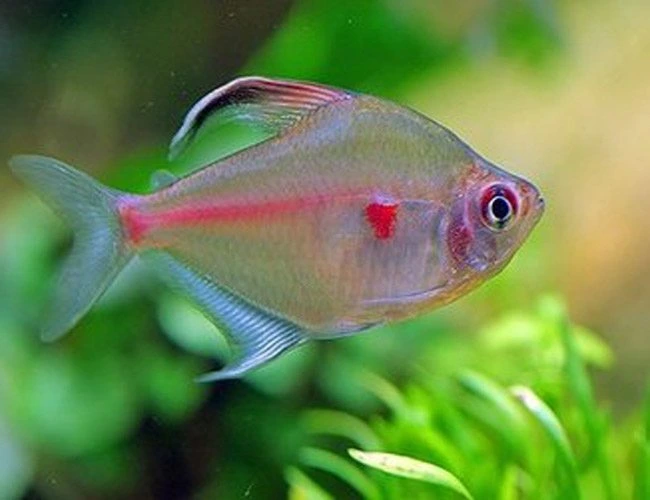
Bleeding Heart Tetra
Hyphessobrycon erythrostigma
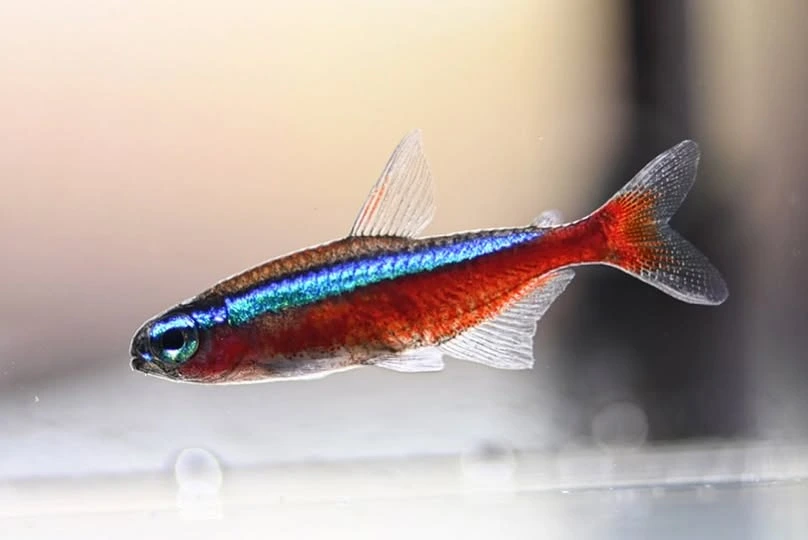
Cardinal Tetra
Paracheirodon axelrodi

Colombian Tetra
Hyphessobrycon columbianus
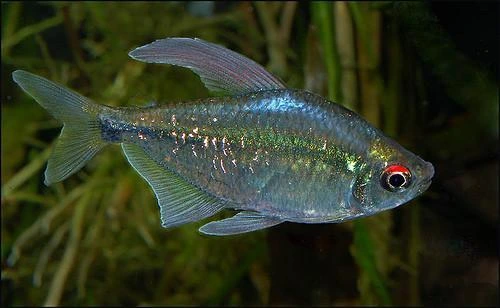
Diamond Tetra
Moenkhausia pittieri
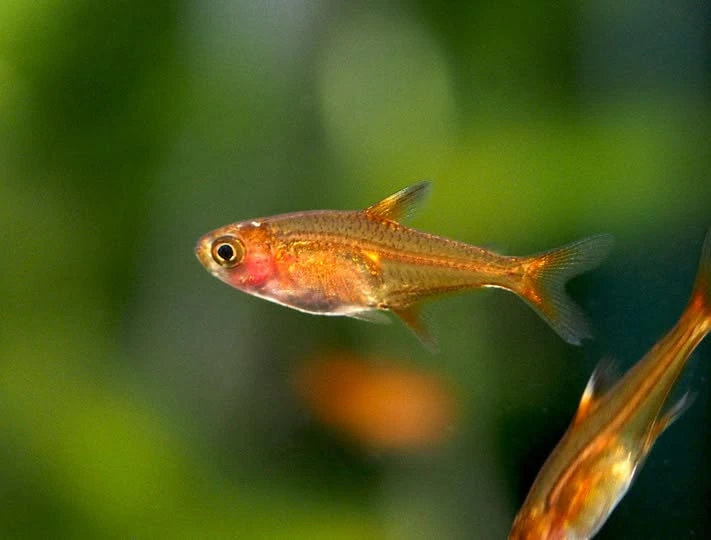
Ember Tetra
Hyphessobrycon amandae
Ready to Add Bloodfin Tetra to Your Tank?
Use our free stocking calculator to check compatibility, bioload, and get personalized recommendations.