
Care Requirements
Adult Size
2.8" (7cm)
Min Tank
20 gal
Temperature
64-77°F
pH Range
6-7.5
Lifespan
5-8 years
Min Group
6+ fish
Diet
Omnivore
Swim Level
Bottom
Bioload
2/10
Hardness
2-15 dGH
About Peppered Corydoras
The Peppered Corydoras holds a special place in aquarium history as one of the first tropical fish species kept in home aquariums, with records dating back to the 1870s. This longevity in the hobby speaks to their exceptional hardiness and adaptability. For over 150 years, they've been introducing fishkeepers to the charm of Corydoras catfish, and they remain one of the best choices for beginners today.
What sets Peppered Corys apart from most tropical fish is their tolerance for cooler temperatures. Originating from the subtropical La Plata basin in South America, they naturally experience seasonal temperature variations and thrive in conditions that would stress true tropical species. This makes them perfect for unheated tanks, temperate community setups, or even outdoor summer tubs in moderate climates.
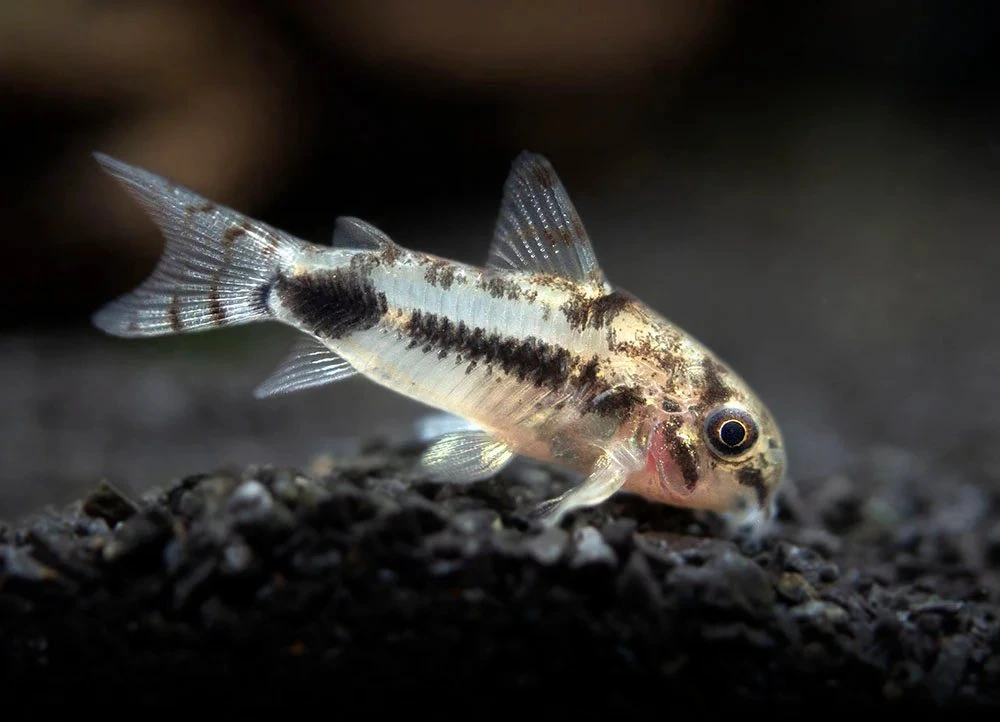
Their common name comes from the scattered dark spots and patches over a pale olive-gray body — a pattern resembling ground pepper. Each fish displays unique markings, making individuals distinguishable once you become familiar with your group. Males tend to be smaller and more streamlined, while females grow larger with noticeably rounder bodies when full of eggs.
Like all Corydoras, Peppered Corys are social fish that must be kept in groups. A solitary Cory is a stressed Cory — they rely on group behavior for security and exhibit their most natural behaviors only when among their own kind. A group of six or more Peppered Corys constantly foraging, resting together, and occasionally darting to the surface for air is one of the most entertaining bottom-dweller displays in the hobby.
Natural Habitat & Origin
Peppered Corydoras originate from the La Plata River basin, encompassing parts of Argentina, Uruguay, Paraguay, and southern Brazil. This subtropical region experiences cooler temperatures than the Amazon basin, with seasonal variations ranging from the mid-60s°F in winter to the upper 70s°F in summer. This temperature range explains their remarkable cold tolerance in aquariums.
In the wild, they inhabit slow-moving rivers, streams, and flooded areas with soft, sandy or muddy substrates. They're typically found in relatively shallow water with moderate vegetation, often congregating in shaded areas beneath overhanging plants or submerged roots. The water tends to be slightly soft and acidic to neutral.
Their widespread distribution and adaptability have made them extremely successful in the wild. Unlike many aquarium species with restricted ranges, Peppered Corys occupy a large geographic area and maintain healthy wild populations. They've even established introduced populations in some regions outside their native range, demonstrating their hardiness.
The La Plata basin's cooler, more variable conditions produced a fish capable of handling temperature fluctuations that would stress Amazon species. This environmental background is why Peppered Corys succeed in setups that would be unsuitable for most Corydoras.
Native Region
La Plata River basin — Argentina, Uruguay, Paraguay, Southern Brazil
Habitat Type
Slow-moving rivers, streams, and flooded areas with soft substrates
Wild Water Conditions
Cool to moderate temperatures (18-24°C), soft to moderately hard, slightly acidic to neutral
Appearance & Varieties
Peppered Corydoras display the classic Corydoras body plan — armored with bony plates rather than scales, with a flattened ventral surface for bottom-dwelling and a distinctive downturned mouth equipped with sensitive barbels. Their base coloration is pale olive-gray to silver-green, overlaid with irregular dark spots and blotches that create the 'peppered' appearance.
The dorsal fin features a prominent dark blotch, and the pattern extends onto all fins to varying degrees. The intensity of markings varies between individuals — some appear heavily peppered while others show lighter speckling. This variation makes individuals recognizable within a group.
Adults reach approximately 2.5-3 inches (6-7 cm), with females growing slightly larger and noticeably rounder than males. Males are slimmer with more pointed pectoral fins. When viewed from above, gravid females appear significantly wider than males.
Several selectively bred varieties exist, including albino (lacking dark pigmentation, appearing pale pink with red eyes) and long-finned forms. These morphs have identical care requirements to wild-type specimens.
Popular Varieties
| Variety | Description | Rarity |
|---|---|---|
| Wild-Type | Olive-gray base with irregular dark spots and blotches creating the characteristic 'peppered' pattern. The original and most common form. Pattern intensity varies between individuals. | Very Common |
| Albino | Lacks dark pigmentation, appearing pale pink to cream with red eyes. Same hardiness as wild-type. Very commonly available as captive breeding is widespread. | Common |
| Longfin | Extended, flowing fins on wild-type or albino base. More delicate finnage requires careful tankmate selection to prevent nipping. Equally hardy otherwise. | Uncommon |
Tank Setup & Requirements
Quick Requirements Summary
Tank Size
Minimum Tank Size
20 gallons
Recommended Tank Size
30 gallons
Peppered Corydoras are undemanding fish that adapt to most setups, but providing appropriate conditions brings out their best behaviors and ensures long-term health. Their cooler temperature preference is the main consideration that distinguishes their setup from typical tropical community tanks.
Water Parameters
Temperature 18-25°C (64-77°F), ideal 20-23°C (68-73°F). pH 6.0-7.5. Hardness 2-15 dGH. The key advantage of Peppered Corys — they thrive at cooler temperatures than most tropical fish. They can handle brief dips into the low 60s°F and don't require heating in most homes. Ideal for subtropical setups or tanks where heaters aren't practical.
Substrate
Sand strongly preferred. Corydoras constantly sift substrate through their barbels searching for food, and sand allows this natural behavior safely. Sharp gravel can damage their sensitive barbels, leading to erosion and infection. Many longtime Cory keepers consider sand mandatory.
Plants & Decorations
Provide shaded resting areas — Corydoras appreciate cover during inactive periods. Driftwood, broad-leafed plants, and caves all work. Leave open sandy areas for foraging. They'll explore every surface but congregate in favorite resting spots, often piling together in groups. Plants are beneficial but optional — Corydoras don't eat or damage plants.
Filtration & Water Flow
Standard community tank filtration works well. Avoid strong currents at substrate level — Corydoras aren't flow-loving species. Gentle to moderate flow is appropriate. Good water quality is important; maintain regular water changes.
Lighting
Corydoras prefer dimmer conditions and are more active under reduced lighting. Bright light may keep them hidden. Floating plants or moderate intensity promotes natural behavior and daytime activity.
Diet & Feeding Guide
Diet Type
omnivore
Feeding Frequency
Once or twice daily
Portion Size
Amount consumed within a few minutes. One sinking tablet or small pinch of pellets per 3-4 fish.
Peppered Corydoras are omnivorous scavengers that naturally consume insect larvae, worms, small crustaceans, and organic detritus. In aquariums, they're unfussy eaters that accept virtually any sinking food. However, 'scavenger' doesn't mean 'garbage disposal' — they need intentional feeding, not just leftovers from other fish.
Best Foods for Peppered Corydoras
- Sinking pellets/wafers — Should form the staple diet. Quality sinking foods from Hikari, Northfin, or similar brands provide complete nutrition. Ensure food actually reaches the bottom.
- Frozen bloodworms — Excellent protein source eagerly accepted by all Corydoras. Feed 2-3 times weekly. Bloodworms trigger enthusiastic feeding responses.
- Frozen brine shrimp — Another readily accepted frozen food providing variety. Enriched brine shrimp add nutritional value.
- Sinking catfish tablets — Dense tablets designed for bottom feeders. One tablet feeds multiple fish and allows group feeding behavior.
- Live foods — Blackworms, daphnia, and baby brine shrimp are eagerly consumed. Excellent for conditioning breeders and providing enrichment.
- Blanched vegetables — Zucchini, cucumber, and shelled peas are often accepted. Weight down and remove uneaten portions.
Foods to Avoid
- Floating foods only — Corydoras can't effectively eat from the surface. Any food that doesn't sink is wasted on them. Always use sinking foods.
- Relying on 'leftovers' — Common mistake — assuming Corydoras survive on scraps. They need intentional feeding with appropriate foods reaching the bottom.
- Sharp or large foods — Avoid anything that could damage their barbels or be difficult to consume. Appropriately sized sinking foods are best.
Feed after lights-out in community tanks to give slower-eating Corydoras time to eat without competition from daytime-active species.
Behavior & Temperament
Peppered Corydoras are social, active fish that display fascinating group behaviors. They spend much of their time foraging across the substrate, using their sensitive barbels to detect buried food particles. This constant searching is normal and entertaining to watch — a group of Corys methodically working across sand is one of the most engaging bottom-dweller displays.
Periodically, Corydoras dart to the surface to gulp air. This behavior is normal — they possess a modified intestine that allows them to absorb atmospheric oxygen. Occasional surface trips (a few times per hour) are healthy. Constant gasping indicates low oxygen levels requiring attention.
They're gregarious fish that rest together in groups, often piling on top of each other in favored spots. This 'Cory pile' behavior indicates comfort and security. Solitary Corydoras that avoid the group may be stressed or unwell.
Toward tankmates, Peppered Corys are completely peaceful and essentially ignore other fish. They're not territorial and pose no threat to anything. Their armor provides protection from minor aggression, but they shouldn't be kept with genuinely aggressive fish.
Tank Mates: Compatibility Guide
Compatible Tank Mates
Different Cory species can be mixed and often school together loosely. Same-species groups of 6+ are still recommended.
Their temperature tolerance aligns with subtropical species. White Clouds, Rosy Barbs, and similar fish make ideal companions.
Classic community combination. Tetras occupy mid-water while Corys stay on the bottom.
Peaceful schooling fish that complement Corydoras perfectly. Different tank zones, no aggression.
Platies, Endlers, and similar peaceful livebearers coexist well. Different zones and no conflict.
Different feeding strategies prevent competition. Both are peaceful bottom-dwellers.
Corydoras are invertebrate-safe. They won't hunt shrimp or bother snails.
Tank Mates to Avoid
Aggressive cichlids
Large or aggressive cichlids may harass Corydoras. While their armor provides some protection, constant aggression causes stress.
Fin-nipping species
Long-finned varieties especially vulnerable. Tiger Barbs and similar nippers can damage Cory finnage.
Very warm-water species
Fish requiring 80°F+ temperatures are poor matches for Peppered Corys that prefer cooler conditions.
Large predatory fish
Any fish large enough to eat them is obviously incompatible.
Common Pairing Questions
Can Peppered Corydoras live with goldfish?
Potentially, with caveats. Their temperature tolerance overlaps with fancy goldfish preferences. However, ensure the Corydoras receive adequate food — goldfish are aggressive eaters.
Can Peppered Corys live with Bettas?
Yes in many cases — Corydoras occupy the bottom while Bettas stay higher. However, Peppered Corys prefer cooler water than Bettas ideally need.
Peppered Corydoras are among the easiest Corydoras to breed. The classic breeding trigger is a large, cooler water change — replacing 25-50% of tank water with water 5-10°F cooler simulates the rainy season. Spawning involves the characteristic 'T-position' where the female deposits 2-4 adhesive eggs on surfaces. 50-200 eggs per spawn. Eggs hatch in 4-6 days. Fry accept infusoria and baby brine shrimp.
Health Issues & Disease Prevention
Peppered Corydoras are hardy fish that rarely develop problems when basic care requirements are met. Most issues stem from environmental problems rather than disease — particularly substrate-related barbel damage and temperature stress.
Common Diseases
| Disease | Symptoms | Treatment |
|---|---|---|
| Barbel Erosion | Shortened, eroded, or missing barbels. Often accompanied by redness around the mouth. | Usually caused by sharp substrate or poor water quality. Switch to sand substrate and improve water conditions. Barbels can regenerate partially if damage isn't severe. |
| Red Blotch Disease | Red patches on the belly, lethargy, loss of appetite. Bacterial infection affecting the ventral area. | Improve water quality immediately. Treat with antibacterial medication. Maintain pristine substrate conditions. |
| Ich (White Spot Disease) | Small white spots on body and fins, flashing against objects, clamped fins. | Raise temperature to 26-28°C for 10-14 days. Corydoras tolerate salt poorly — use half-doses if salt treatment is chosen. |
| Oxygen Deprivation | Constant surface gasping (not occasional normal air-gulping), lethargy, loss of appetite. | Increase aeration immediately. Check for overstocking or inadequate surface agitation. |
| Malnutrition | Sunken belly, lethargy, faded coloration. Common in fish expected to survive on 'leftovers.' | Feed intentionally with sinking foods. Ensure food reaches the bottom and isn't consumed by other fish first. |
Signs of a Healthy Peppered Corydoras
- Active foraging
- Clear, full-length barbels
- Rounded belly
- Good coloration
- Resting with group
- Normal occasional surface air-gulping
Prevention Tips
- Use sand substrate — protects barbels from damage
- Feed sinking foods directly — don't rely on leftovers
- Maintain cooler temperatures within their range
- Keep in groups of 6+ for social security
- Regular water changes and good filtration
- Avoid overly aggressive tankmates
Frequently Asked Questions
Yes — they're one of the most cold-tolerant Corydoras species. They thrive at 64-77°F and can handle brief dips into the low 60s°F. This makes them suitable for unheated tanks in most homes, outdoor summer tubs in moderate climates, and subtropical community setups.
Minimum of 6, preferably more. Corydoras are social fish that rely on group behavior for security. A solitary Cory will be stressed and may hide constantly. Groups of 6+ display natural behaviors — foraging together, resting in piles, and actively exploring. Larger groups of 10+ are even better if space allows.
Usually sharp substrate damage. Corydoras constantly sift substrate through their barbels searching for food. Sharp gravel erodes barbels over time, causing shortening, redness, and secondary infections. Switch to sand substrate immediately.
Occasional surface trips are completely normal — Corydoras can gulp atmospheric air and absorb oxygen through modified intestinal tissue. A few trips per hour is typical healthy behavior. However, constant gasping at the surface indicates low dissolved oxygen levels.
Potentially, with caveats. Their temperature tolerance overlaps with fancy goldfish preferences. However, ensure the Corydoras receive adequate food — goldfish are aggressive eaters and may consume sinking foods before Corys can reach them.
Both are hardy beginner species, but Peppered Corys tolerate cooler temperatures (down to 64°F vs Bronze's 72°F minimum). Peppered have a spotted 'peppered' pattern while Bronze display solid greenish-bronze coloration. Both have similar care requirements otherwise.
Among the easiest Corydoras to breed. The classic trigger is a large, cool water change — replace 25-50% of tank water with water 5-10°F cooler to simulate rainy season. Well-conditioned fish often spawn within hours.
Normal and healthy social behavior called 'Cory piling.' Corydoras feel secure in groups and often rest touching each other. A pile of Corys in a favored spot indicates comfort and social bonding.
Tips for Keeping Peppered Corydoras
Pro Tips
- ✓Sand substrate is non-negotiable for long-term health — the difference in behavior between Corys on sand versus gravel is immediately visible.
- ✓Feed after lights-out in community tanks — Corydoras are slower eaters than many tankmates.
- ✓Temperature drops trigger breeding — even unintentional cool water changes can result in surprise spawns.
- ✓Count barbels regularly as a health check — healthy Corydoras have four prominent barbels around their mouths.
Common Mistakes to Avoid
- ✗Using sharp gravel substrate — causes barbel erosion leading to difficulty feeding, infection, and chronic health issues.
- ✗Keeping in groups smaller than 6 — causes stress, hiding, and failure to display natural behaviors.
- ✗Expecting them to survive on leftovers — malnutrition and starvation. 'Scavenger' doesn't mean 'doesn't need feeding.'
- ✗Keeping at high tropical temperatures — shortened lifespan and stress. They prefer cooler water than most tropical fish.
- ✗Ignoring constant surface gasping — oxygen deprivation can be fatal. Occasional air-gulping is normal; constant gasping indicates problems.
Sources
- FishBase — Accepted scientific name, maximum size and native range for Peppered Corydoras.
Related Species You Might Like
View All Fish →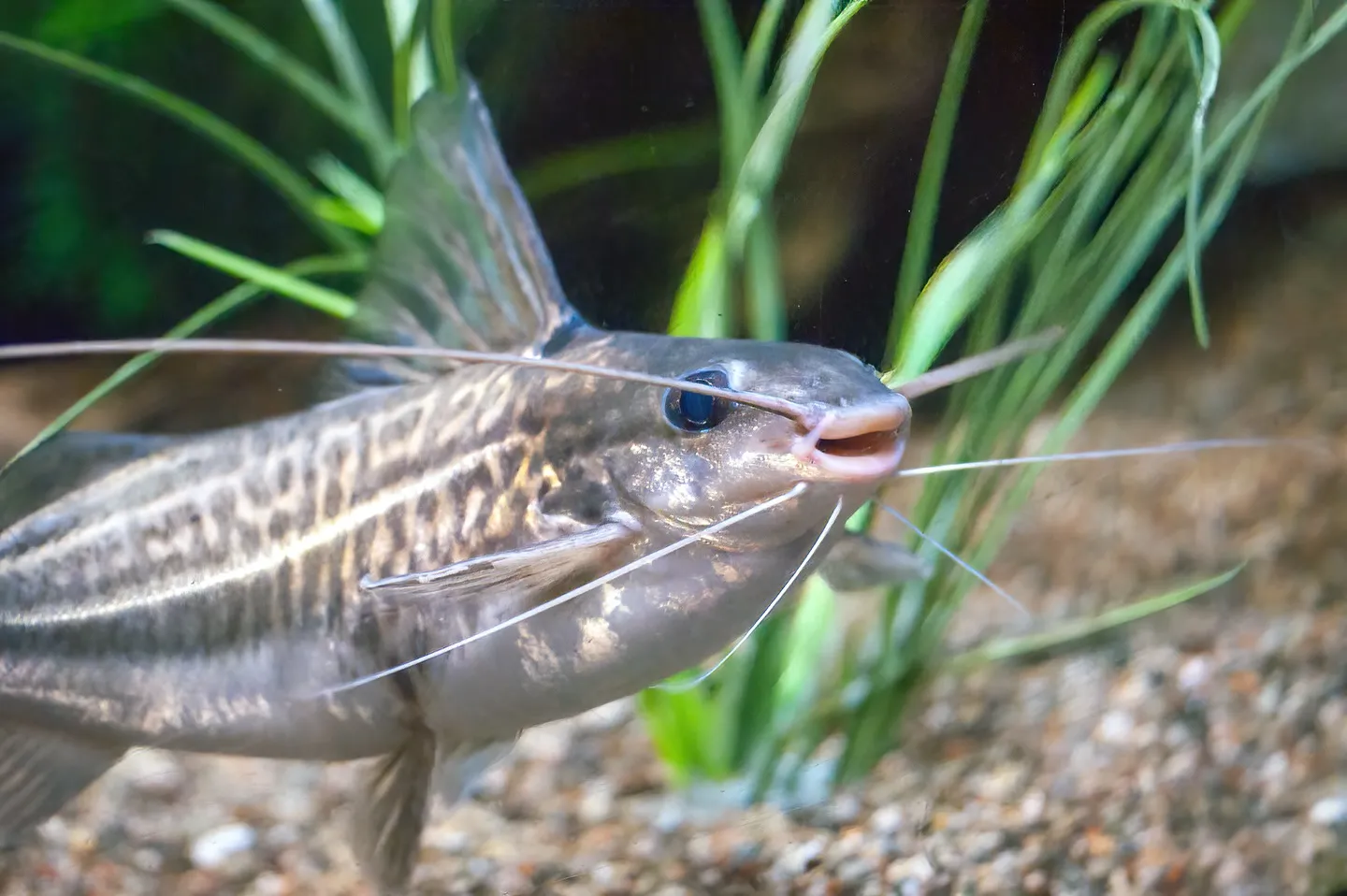
Pictus Catfish
Pimelodus pictus
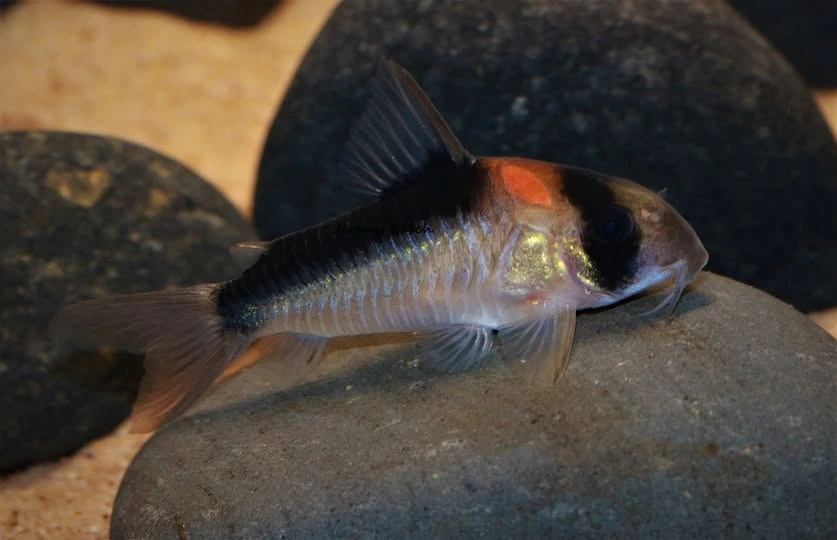
Adolfo's Corydoras
Corydoras adolfoi
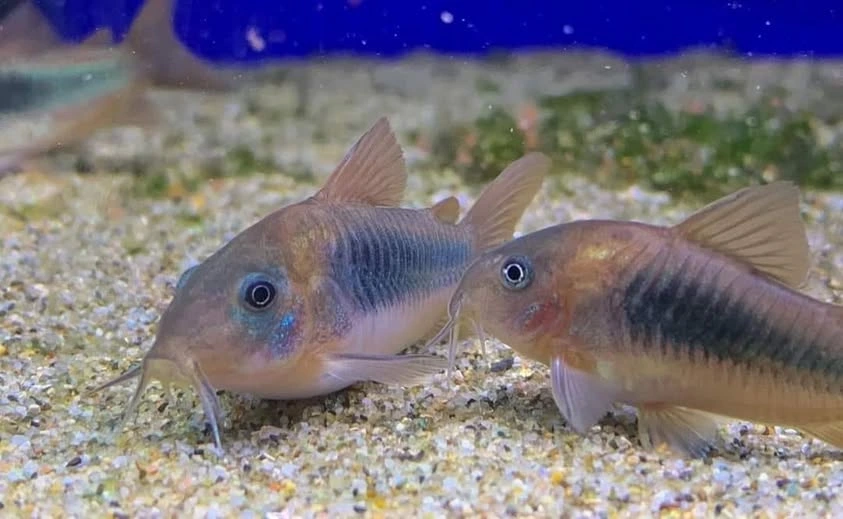
Bronze Corydoras
Corydoras aeneus
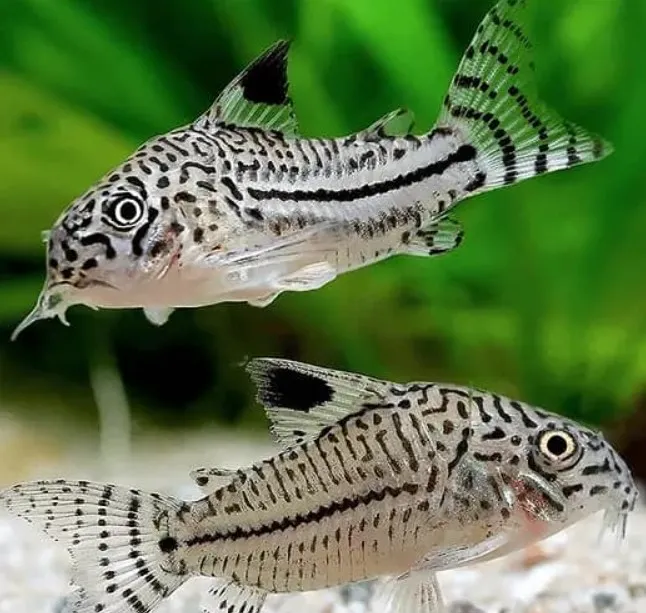
Corydoras Julii
Corydoras julii
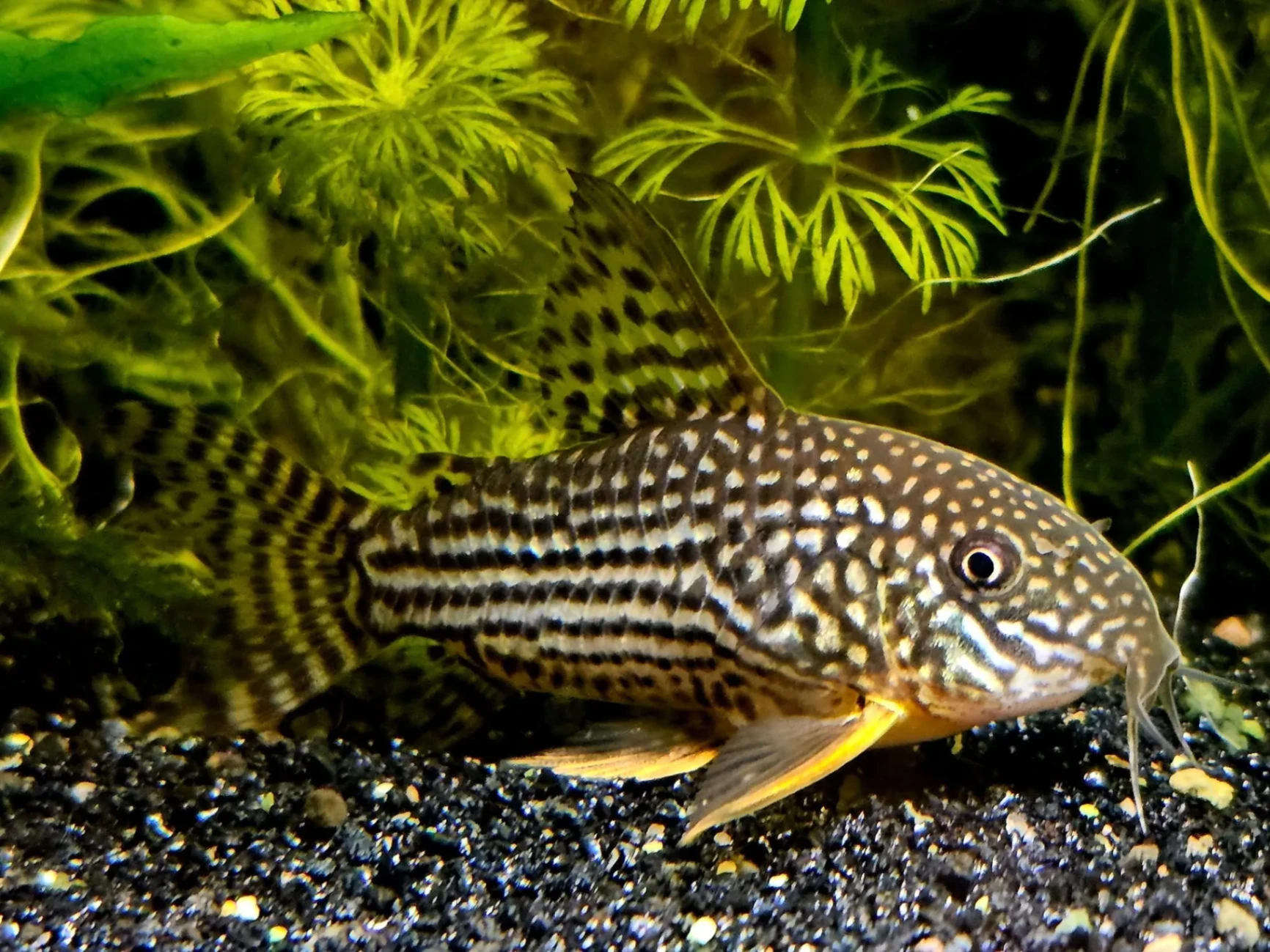
Corydoras Sterbai
Corydoras sterbai
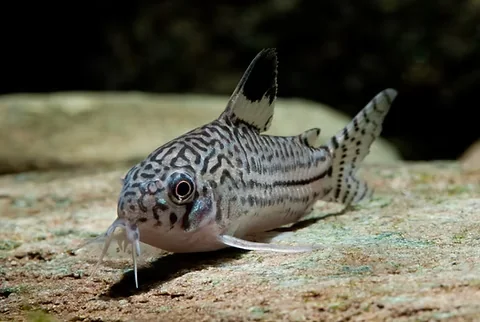
False Julii Corydoras
Corydoras trilineatus
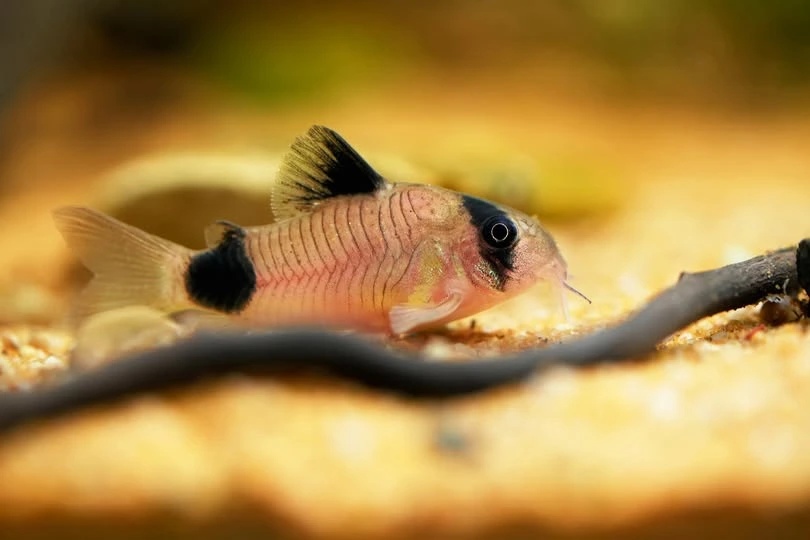
Panda Corydoras
Corydoras panda
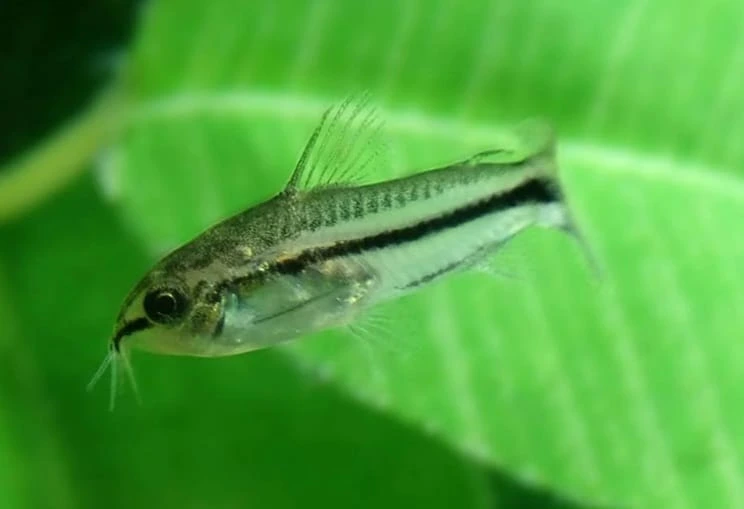
Pygmy Corydoras
Corydoras pygmaeus
Ready to Add Peppered Corydoras to Your Tank?
Use our free stocking calculator to check compatibility, bioload, and get personalized recommendations.