
Care Requirements
Adult Size
1.2" (3cm)
Min Tank
10 gal
Temperature
68-79°F
pH Range
5-7
Lifespan
5-8 years
Min Group
6+ fish
Diet
Omnivore
Swim Level
Middle
Bioload
1/10
Hardness
1-10 dGH
About Neon Tetra
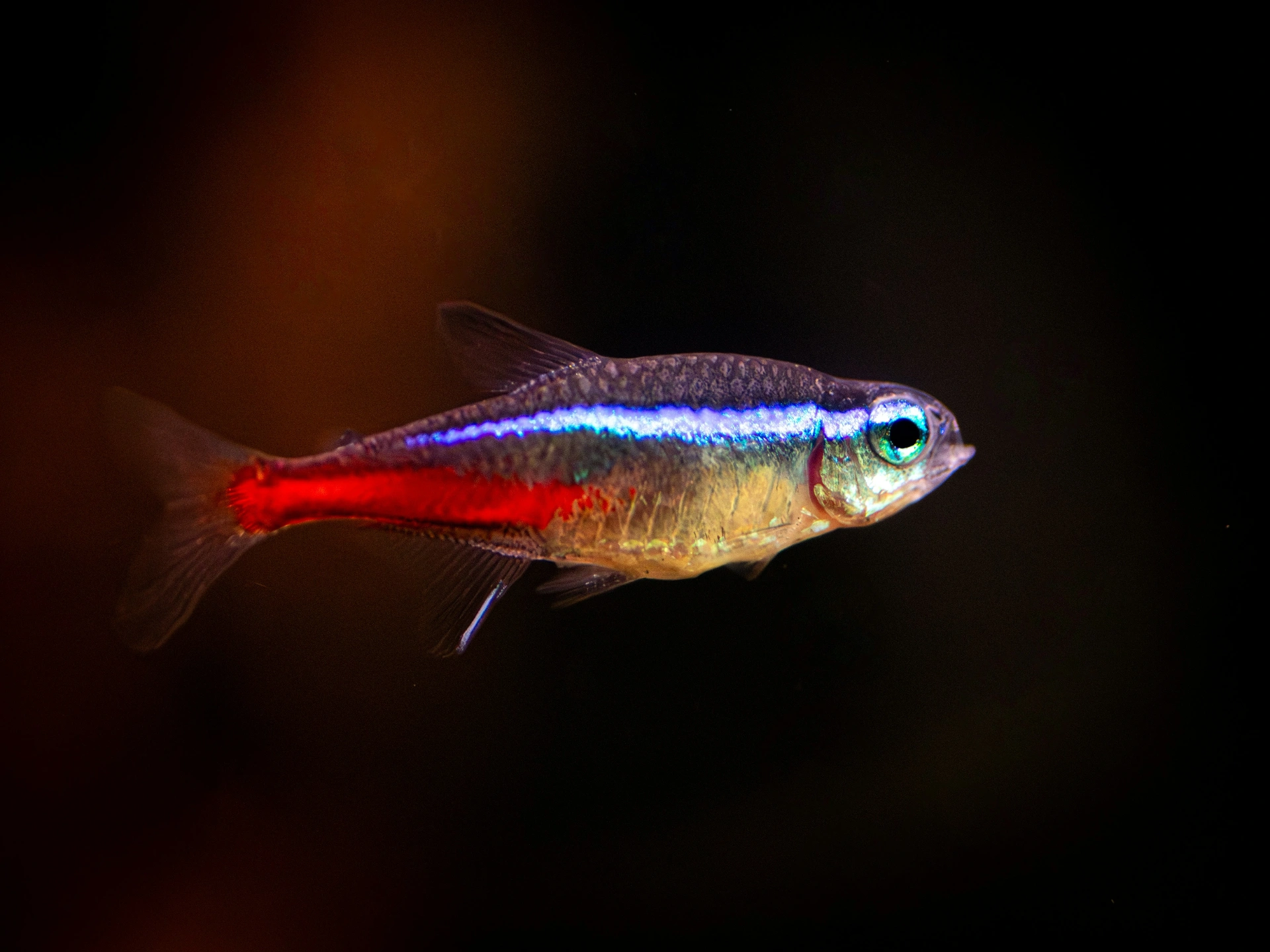
The Neon Tetra is arguably the most iconic freshwater aquarium fish in the world. First discovered in the Amazon basin in 1934, these tiny jewels quickly captured the hearts of aquarists with their brilliant iridescent blue stripe and vivid red tail. Their popularity hasn't waned in nearly a century, and they remain the best-selling tropical fish globally.
What makes neon tetras so appealing goes beyond their stunning appearance. They're peaceful, active schoolers that bring constant movement and color to any aquarium. Watching a large school of neons move in unison through a planted tank is one of the hobby's simple pleasures. Their small size makes them suitable for modest tank sizes, though they truly shine in larger groups of 15 or more.
Despite their popularity with beginners, neon tetras have a reputation for being somewhat delicate, particularly in newly established tanks. This sensitivity stems from their wild origins in soft, acidic blackwater streams. However, most commercially available neons are now captive-bred and considerably hardier than their wild counterparts, though they still appreciate stable, mature aquariums.
Natural Habitat & Origin
In the wild, neon tetras inhabit the clearwater and blackwater streams of the western Amazon basin, primarily in Peru, Colombia, and Brazil. These waters flow through dense rainforest, picking up tannins from decomposing leaves that stain the water tea-colored and create the acidic conditions neons evolved in.
Their natural habitat features soft, sandy substrates covered in leaf litter, with dappled sunlight filtering through the forest canopy above. The water is warm, extremely soft, and acidic—conditions that can be challenging to replicate exactly but aren't strictly necessary for captive-bred specimens. Understanding their origins helps explain why neons look their best in planted tanks with subdued lighting and dark substrates that mimic their forest stream homes.
Native Region
Western Amazon Basin (Peru, Colombia, Brazil)
Habitat Type
Clearwater and blackwater forest streams, tributaries
Wild Water Conditions
Warm (68-82°F), very soft, acidic (pH 4.0-6.0), tannin-stained water
Appearance & Varieties
Neon tetras are small, torpedo-shaped fish reaching only about 1.2 inches (3 cm) in length. Their most distinctive feature is the brilliant iridescent blue-green stripe that runs horizontally from the nose to the adipose fin. Below this, a vivid red stripe extends from the middle of the body to the tail—but notably not all the way to the head, which distinguishes them from the similar cardinal tetra.
The body above the blue stripe is a subtle olive-green, while the belly is silvery-white. Their finnage is transparent and delicate. Males tend to be slightly slimmer with a straighter blue stripe, while females are rounder-bodied, causing their stripe to appear slightly bent. These differences are subtle and most reliable when comparing fish side by side.
Tank Setup & Requirements
Quick Requirements Summary
Tank Size
Minimum Tank Size
10 gallons
Recommended Tank Size
15 gallons
Neon tetras thrive in well-established aquariums with stable water parameters. A newly cycled tank can work, but mature tanks with established biological filtration are ideal. The minimum recommended tank size is 10 gallons (40 liters) for a small school, though 15-20 gallons allows for a more impressive group and stable water conditions.
Water Parameters
Temperature is flexible between 68-79°F (20-26°C), with the middle range around 72-76°F being ideal. While wild neons require soft, acidic water, captive-bred specimens adapt well to moderate hardness (up to 10 dGH) and pH values up to 7.0. Stability matters more than hitting exact numbers—avoid sudden parameter swings.
Substrate
Dark substrates like black sand or fine gravel are ideal, as they make neon colors pop dramatically compared to light-colored substrates. Avoid sharp or coarse gravel that could injure their delicate bodies if they dart to the bottom when startled.
Plants & Decorations
Live plants are highly recommended—they provide security, improve water quality, and create the dappled lighting neons prefer. Amazon swords, java fern, anubias, and stem plants like cabomba or hornwort all work well. Include some floating plants to diffuse lighting. Driftwood and leaf litter add tannins that neons appreciate.
Filtration & Water Flow
Gentle filtration is key. Neons are not strong swimmers and struggle in high-flow environments. Sponge filters are ideal for smaller tanks; for hang-on-back or canister filters, baffle the output or use a spray bar to reduce current. Aim for 4-6x tank volume turnover per hour maximum.
Lighting
Moderate to subdued lighting suits neons best. Their iridescent stripe actually appears more vibrant under lower light conditions. If keeping live plants that need stronger light, provide plenty of shaded areas with floating plants or tall stem plants.
Diet & Feeding Guide
Diet Type
omnivore
Feeding Frequency
2x daily
Portion Size
What they consume in 2-3 minutes
Neon tetras are omnivores with small mouths, requiring appropriately sized foods. In the wild, they feed on tiny invertebrates, algae, and fallen fruit. In captivity, they accept a wide variety of foods but do best with a varied diet.
Best Foods for Neon Tetra
- High-quality micro pellets — Hikari Micro Pellets, Fluval Bug Bites (small)—should be staple diet
- Crushed flake food — Standard tropical flakes crushed to appropriate size
- Frozen daphnia — Excellent nutrition, promotes natural foraging behavior
- Frozen baby brine shrimp — High protein treat, great for conditioning
- Frozen cyclops — Perfect size for their small mouths
- Live foods — Baby brine shrimp, microworms, vinegar eels for optimal health
Foods to Avoid
- Large pellets or flakes — Cannot fit in their small mouths, leads to starvation
- Freeze-dried foods (unsoaked) — Can cause bloating and digestive issues
- Overfeeding any food — Neons have tiny stomachs—excess food pollutes water
Feed small amounts twice daily rather than one large feeding. Neons are mid-water feeders and may miss food that sinks quickly to the bottom. Their stomachs are roughly the size of their eye—a useful visual guide for portion control.
Behavior & Temperament
Neon tetras are quintessential schooling fish, and their behavior is best observed in groups of 10 or more. In proper schools, they move in coordinated formations, changing direction simultaneously in a mesmerizing display. Smaller groups often result in stressed, skittish fish that hide constantly.
They're peaceful and timid, occupying the middle water column and rarely bothering other fish. Neons are most active during daylight hours and may retreat to plants or cover at night. When stressed or ill, they often lose color intensity—a useful health indicator. Healthy neons display vibrant colors, swim actively with the school, and eagerly approach at feeding time.
Tank Mates: Compatibility Guide
Compatible Tank Mates
Nearly identical care requirements, schools may mix
Peaceful mid-dweller, similar water preferences
Peaceful bottom dwellers that won't compete for space
Gentle algae eaters, similar soft water preference
Adult shrimp generally safe, though fry may be eaten
Peaceful top-dweller, good community companion
Similar size and temperament, lovely color contrast
Tiny and peaceful, occupy different level
Generally peaceful, though monitor for aggression
Tank Mates to Avoid
Angelfish
Will eat adult neons—neons are natural prey for angels
Bettas
May attack neons; neons may nip betta fins in return
Oscar
Will eat neons immediately—extreme size difference
Tiger Barbs
Known fin nippers that stress peaceful fish
Convict Cichlid
Aggressive cichlid that will attack small fish
Red Tail Shark
Territorial and may chase small schooling fish
African Cichlids
Wrong water parameters and too aggressive
Goldfish
Different temperature requirements, may eat small neons
Common Pairing Questions
Can neon tetras live with betta fish?
It's risky and generally not recommended. Some bettas ignore neons entirely, while others relentlessly attack them. Neons can also nip at flowing betta fins. If attempting this combination, use a 20+ gallon heavily planted tank, add neons first, have a backup plan, and watch carefully for aggression. Success depends entirely on individual betta temperament.
Can neon tetras live with shrimp?
Adult cherry shrimp, amano shrimp, and other dwarf shrimp are generally safe with neon tetras. However, neons will eat shrimplets (baby shrimp) if they can catch them. For breeding shrimp colonies alongside neons, provide dense moss and hiding spots for shrimplets to survive. Larger shrimp like amanos are completely safe.
Can neon tetras live with guppies?
Yes, with caveats. Both are peaceful community fish, but they prefer different water parameters—guppies like harder, more alkaline water while neons prefer soft and acidic. They can coexist in neutral conditions (pH 7.0, moderate hardness), though neither species will be in their ideal environment. Both are also small enough to avoid predation issues.
Breeding neon tetras is challenging but achievable for dedicated hobbyists. They're egg scatterers that show no parental care and will readily eat their own eggs.
Successful breeding requires a separate breeding tank (5-10 gallons) with extremely soft, acidic water (pH 5.0-6.0, hardness below 4 dGH). Keep the tank dimly lit or dark, as eggs and fry are light-sensitive. Use spawning mops or fine-leaved plants like java moss for egg deposition.
Condition a pair with live foods for 1-2 weeks before breeding attempts. Spawning typically occurs in early morning. Remove adults immediately after spawning to prevent egg predation. Eggs hatch in about 24 hours, and fry become free-swimming in 3-4 days. Feed infusoria initially, graduating to baby brine shrimp as they grow.
Health Issues & Disease Prevention
Neon tetras are susceptible to several diseases, with Neon Tetra Disease (NTD) being the most notorious. Good water quality and quarantining new fish are the best preventive measures.
Common Diseases
| Disease | Symptoms | Treatment |
|---|---|---|
| Neon Tetra Disease (NTD) | Fading colors, white patches under skin, curved spine, erratic swimming, isolation from school | No cure exists. Caused by Pleistophora parasite. Euthanize affected fish immediately to prevent spread. Highly contagious. |
| False Neon Tetra Disease | Similar to NTD but caused by bacteria rather than parasite | Antibiotics may help if caught early. Improve water quality. Quarantine affected fish. |
| Ich (White Spot) | White salt-like spots on body and fins, flashing against objects, clamped fins | Raise temperature to 82-86°F gradually, add aquarium salt (if no scaleless tankmates), use ich medication. Treat entire tank. |
| Fin Rot | Ragged, deteriorating fins, white or red edges, fins shortening over time | Improve water quality immediately, antibacterial medication (Kanaplex, API Fin & Body Cure), add Indian almond leaves. |
| Columnaris | White or gray patches (often around mouth), frayed fins, rapid breathing, lethargy | Kanaplex or Furan-2, lower temperature slightly (columnaris thrives in warmth), improve water quality. |
Signs of a Healthy Neon Tetra
- Vibrant, intense blue and red coloration
- Active schooling behavior with the group
- Clear eyes without cloudiness
- Intact, spread fins (not clamped)
- Eager response to feeding
- Smooth, unblemished body
Prevention Tips
- Quarantine all new fish for 2-4 weeks before adding to main tank
- Maintain stable water parameters—avoid sudden changes
- Perform regular 25-30% weekly water changes
- Don't overstock—neons are sensitive to poor water quality
- Avoid purchasing from tanks with sick or dead fish
- Feed a varied, high-quality diet
- Keep them in proper schools (6+) to reduce stress
Frequently Asked Questions
With proper care, neon tetras live 5-8 years, though 10 years is possible. Many die prematurely due to poor water quality, disease (especially NTD), or inadequate acclimation. Buying healthy stock and maintaining stable conditions are key to longevity.
Minimum 10 gallons (40 liters) for a small school of 6. However, 20 gallons or larger is recommended for a more impressive school of 15-20 and more stable water parameters. Longer tanks are preferable to tall ones for swimming space.
No. Neon tetras are obligate schooling fish that become stressed, hide constantly, and often die prematurely when kept alone or in small groups. Always keep at least 6, with 10-15+ being ideal for natural behavior.
Color loss indicates stress or illness. Common causes: poor water quality, wrong temperature, inadequate school size, aggressive tankmates, disease (especially NTD), or insufficient hiding places. Test water parameters and observe for other symptoms.
Neon tetras are omnivores that accept most small foods: micro pellets, crushed flakes, frozen daphnia, baby brine shrimp, and cyclops. Feed small amounts twice daily. Variety promotes health and color.
Minimum 6, but 10-15+ is highly recommended. Larger schools display more natural behavior, are less stressed, and create a more impressive visual display. In a 20-gallon tank, 15-20 neons is a good target.
Moderately. While peaceful and beautiful, neons are sensitive to water quality fluctuations and disease. They're not ideal for brand-new tanks. Beginners should establish their tank for 2-3 months before adding neons, or consider hardier fish like zebra danios first.
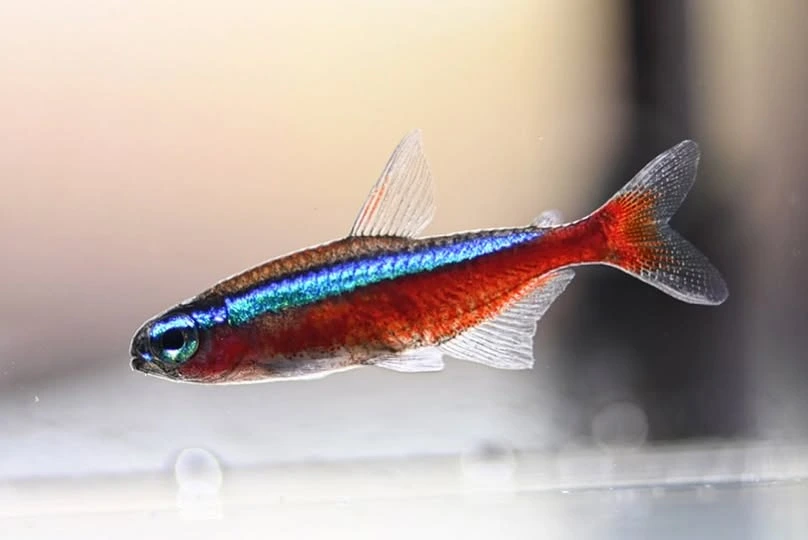
The red stripe is the key difference: on neon tetras, it extends from mid-body to tail; on cardinal tetras, it runs the entire length from head to tail. Cardinals are also slightly larger, more expensive, and prefer warmer, softer water.
Common causes: Neon Tetra Disease (incurable), poor water quality (ammonia/nitrite spikes), temperature fluctuations, adding to uncycled tanks, stress from inadequate school size, or disease from unhealthy stock. Test water immediately and observe for symptoms.
Usually yes, unless your room temperature stays consistently between 72-76°F. Neons need stable temperatures in the 72-78°F range. A reliable heater with thermostat prevents dangerous temperature swings that stress and sicken them.
Tips for Keeping Neon Tetra
Pro Tips
- ✓Buy neons in larger groups (10+) at once—they acclimate better together and you'll have a proper school immediately
- ✓Add neons to mature tanks (3+ months old) whenever possible—they're sensitive to new tank syndrome
- ✓Use drip acclimation over 1-2 hours when introducing them—sudden parameter changes are a major killer
- ✓Indian almond leaves or alder cones add beneficial tannins that mimic their natural blackwater habitat
- ✓Keep the tank covered—neons can jump when startled
- ✓Dim lighting or tannin-stained water makes their colors appear more vibrant, not less
Common Mistakes to Avoid
- ✗Adding to brand new, uncycled tanks—ammonia and nitrite kill neons quickly
- ✗Keeping in groups of fewer than 6—causes chronic stress and early death
- ✗Housing with angelfish—adult angels will eat neons; it's not a matter of if, but when
- ✗Buying from tanks with sick fish—diseases like NTD spread rapidly before symptoms show
- ✗Temperature swings from unreliable heaters—invest in a quality adjustable heater
- ✗Overfeeding—their tiny stomachs can't handle large meals; excess food fouls water
- ✗Ignoring faded colors—it's an early warning sign that something is wrong
Sources
- FishBase — Accepted scientific name, maximum size and native range for Neon Tetra.
Featured in Biotope Presets
Related Species You Might Like
View All Fish →
Nerite Snail
Neritina sp.
Cardinal Tetra
Paracheirodon axelrodi
Green Neon Tetra
Paracheirodon simulans
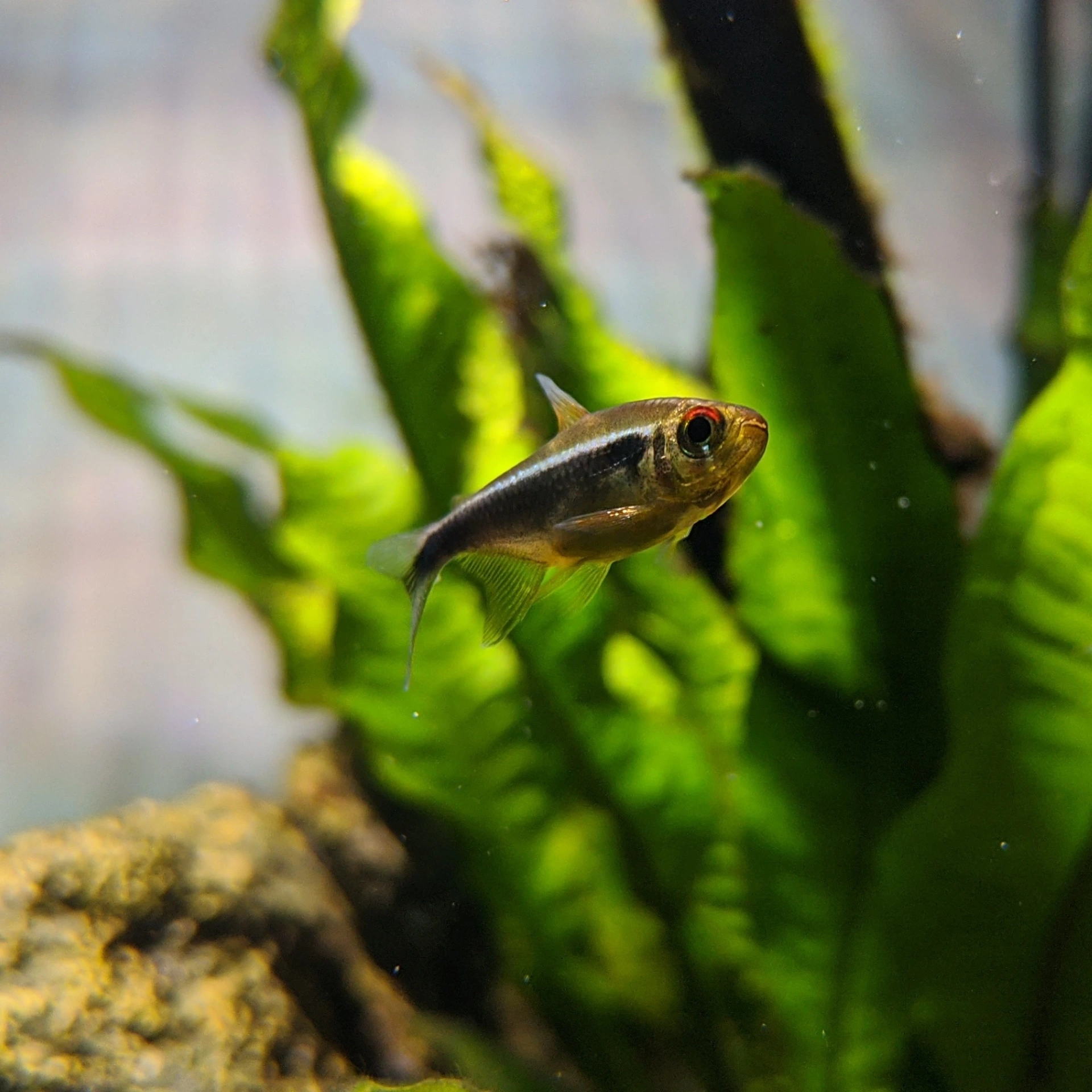
Black Neon Tetra
Hyphessobrycon herbertaxelrodi
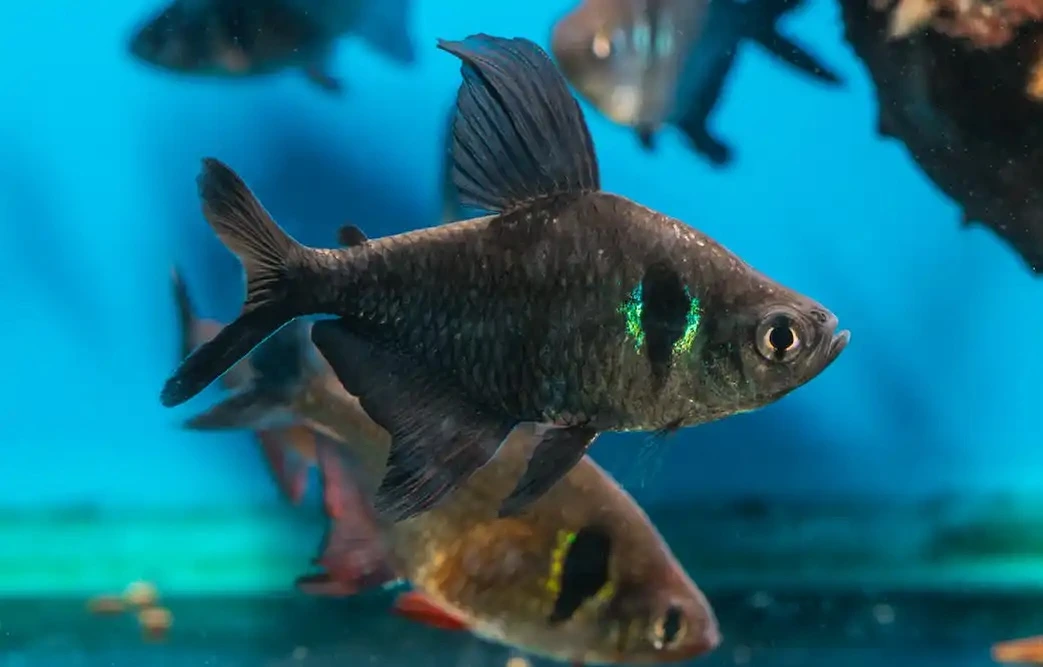
Black Phantom Tetra
Hyphessobrycon megalopterus
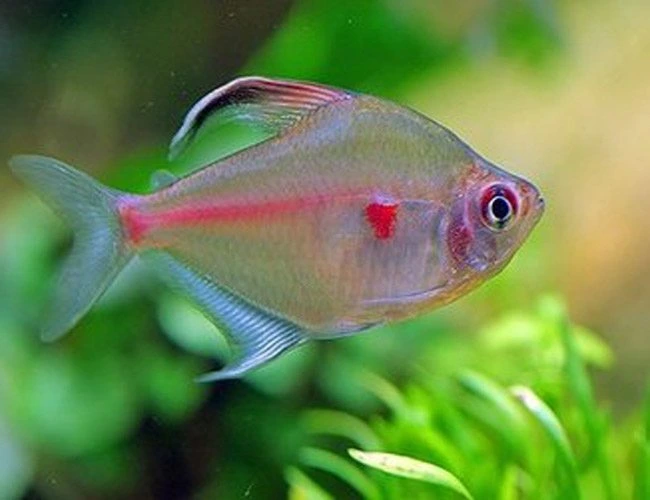
Bleeding Heart Tetra
Hyphessobrycon erythrostigma
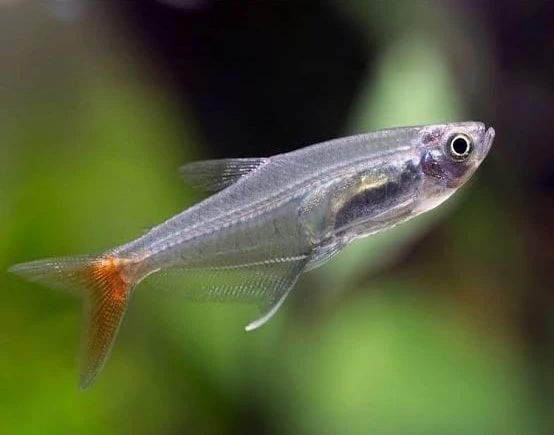
Bloodfin Tetra
Aphyocharax anisitsi

Colombian Tetra
Hyphessobrycon columbianus
Ready to Add Neon Tetra to Your Tank?
Use our free stocking calculator to check compatibility, bioload, and get personalized recommendations.