
Care Requirements
Adult Size
2.8" (7cm)
Min Tank
20 gal
Temperature
73-82°F
pH Range
6-7.5
Lifespan
5 years
Min Group
6+ fish
Diet
Omnivore
Swim Level
Middle
Bioload
2/10
Hardness
4-12 dGH
About Bleeding Heart Tetra
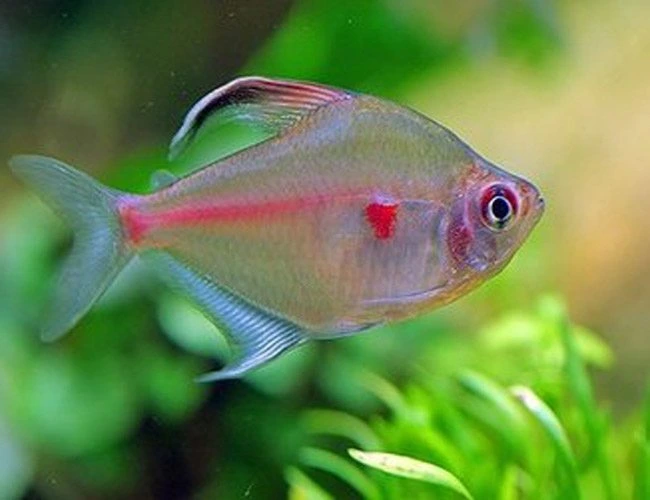
The Bleeding Heart Tetra is one of the most elegant and distinctive tetras available in the aquarium hobby. Named for the striking red or pink spot on their sides—located roughly where a heart would be—these fish combine beauty, personality, and manageable care requirements.
What truly sets mature males apart are their dramatically elongated, sickle-shaped dorsal fins that flow gracefully as they swim. These fins develop over time, and fully mature male Bleeding Hearts are among the most visually impressive small fish available. The combination of the distinctive 'heart' marking and elegant finnage makes them standouts in any community tank.
Bleeding Heart Tetras are generally peaceful but have more personality than many tetras. Males establish hierarchies and occasionally spar with each other, spreading their impressive fins in display. These contests are mostly show and rarely result in injury, but they make for fascinating observation.
Natural Habitat & Origin
Bleeding Heart Tetras originate from the upper Amazon basin in Peru and Colombia. They inhabit slow-moving blackwater streams and tributaries where the water is stained dark with tannins from decomposing leaves and organic matter.
Their natural environment features soft, acidic water, dense vegetation, submerged roots, and accumulated leaf litter. The forest canopy above creates subdued lighting conditions. This habitat explains their preference for planted tanks with driftwood and their best coloration appearing in soft, slightly acidic water conditions.
Native Region
Upper Amazon basin, Peru and Colombia
Habitat Type
Slow-moving blackwater streams and tributaries
Wild Water Conditions
Soft, acidic (pH 5.5-6.5), warm (73-82°F), tannin-stained water
Appearance & Varieties
Bleeding Heart Tetras are among the larger common tetras, reaching about 2.75 inches (7 cm) with deep, compressed bodies that make them appear even larger. Their most distinctive feature is the prominent red or pink spot on their side, resembling a bleeding heart and giving them their common name.
The most striking sexual dimorphism is in the dorsal fin. Males develop dramatically elongated, sickle-shaped dorsal fins that sweep back elegantly—these take time to fully develop but are stunning in mature specimens. Females have shorter, standard dorsal fins and rounder bodies, especially when full of eggs. Males also display more intense overall coloration.
Tank Setup & Requirements
Quick Requirements Summary
Tank Size
Minimum Tank Size
20 gallons
Recommended Tank Size
30 gallons
Bleeding Heart Tetras thrive in well-planted tanks that replicate their blackwater origins. Their deep bodies and flowing fins benefit from taller tanks with gentle water movement.
Water Parameters
Temperature 73-82°F (23-28°C), with 75-78°F ideal. They prefer soft, slightly acidic water (pH 5.5-7.0, 2-12 dGH) which brings out their best coloration. Can adapt to harder water but colors may be less vibrant.
Substrate
Dark substrate dramatically enhances their coloration, making the red heart spot pop against their silver-pink body.
Plants & Decorations
Heavily planted tanks with a mix of stem plants, broad-leaved species, and floating plants. Dense planting provides territories and breaks line of sight between sparring males. Driftwood is essential for aesthetics and beneficial tannins.
Filtration & Water Flow
Gentle to moderate filtration—they prefer calmer water and strong currents stress them. Their flowing fins also display better without fighting current.
Lighting
Subdued to moderate lighting ideal. Floating plants help diffuse bright light naturally. Harsh lighting stresses them and can wash out coloration.
Diet & Feeding Guide
Diet Type
omnivore
Feeding Frequency
1-2x daily
Portion Size
What they consume in 2-3 minutes
Bleeding Heart Tetras are unfussy omnivores that accept a wide variety of foods. A varied diet including protein-rich options helps develop the impressive finnage in males and intensifies their coloration.
Best Foods for Bleeding Heart Tetra
- High-quality flakes — Good staple—look for color-enhancing formulas
- Small pellets/granules — Appropriate for their somewhat larger mouths
- Frozen bloodworms — Excellent for conditioning and fin development
- Frozen brine shrimp — Great variety and color enhancement
- Frozen mysis shrimp — Protein-rich for health and finnage
- Live foods — Blackworms, brine shrimp—ideal for conditioning
Foods to Avoid
- Large pellets — Though larger than many tetras, appropriately sized food still important
- Low-quality foods — Won't develop best finnage and coloration
Color-enhancing foods improve the intensity of their red 'bleeding heart' spot. Protein-rich diet, especially when conditioning for breeding, helps develop the impressive dorsal finnage in males.
Behavior & Temperament
Bleeding Heart Tetras are generally peaceful community fish with more personality than many tetras. They school in the middle of the tank, using both horizontal and vertical space thanks to their deep bodies.
Males are the more interesting sex behaviorally—they establish hierarchies and occasionally spar with each other. These confrontations involve spreading their impressive dorsal fins, intensifying their colors, and parallel swimming or circling. Actual contact is rare, and these displays are fascinating to watch. Keeping more females than males (2-3 females per male) reduces competition.
Tank Mates: Compatibility Guide
Compatible Tank Mates
Similar water preferences, peaceful coexistence
Excellent companions with similar requirements
Peaceful bottom dwellers
Bolivian Ram
Peaceful dwarf cichlid, similar water preferences
Peaceful, different tank level
Possible in larger tanks—monitor for fin nipping
Peaceful schooling companion
Tank Mates to Avoid
Very small fish
May be intimidated or occasionally nipped
Long-finned slow fish
Males may nip similar-looking fins
Aggressive species
Will damage their flowing finnage
Tiny shrimp
May eat small shrimp—larger Amanos usually safe
Common Pairing Questions
Can Bleeding Heart Tetras live with angelfish?
It can work with caution. Both prefer similar soft, acidic conditions. However, Bleeding Hearts may nip at slow-moving angelfish fins. Keep a large school (8+) of tetras, provide plenty of space, and monitor for fin damage.
Are Bleeding Heart Tetras aggressive?
They're generally peaceful but males can be territorial and spar with each other. In small groups or with too many males, fin nipping may occur. Keep in groups of 8+ with more females than males to minimize aggression.
Bleeding Heart Tetras are more challenging to breed than many tetras, primarily due to their need for very specific water conditions. They're egg scatterers with no parental care.
Breeding requires soft, acidic water (pH 5.5-6.5, 1-4 dGH)—harder to achieve than for more adaptable species. Set up a breeding tank with dim lighting, fine-leaved plants or spawning mops, and temperature around 78-82°F (26-28°C). Peat-filtered water helps achieve proper conditions.
Condition pairs separately with live foods for 2 weeks. Male displays with spread fins. Spawning occurs among plants in early morning. Remove adults immediately—they eat eggs. Eggs hatch in 24-36 hours. Eggs and fry are light-sensitive, so keep the tank dark.
Health Issues & Disease Prevention
Bleeding Heart Tetras are reasonably hardy when provided appropriate conditions. Soft, slightly acidic water is important for long-term health and coloration.
Common Diseases
| Disease | Symptoms | Treatment |
|---|---|---|
| Ich (White Spot Disease) | White spots, flashing, clamped fins, lethargy | Raise temperature to 82-86°F, treat with ich medication |
| Fin Rot | Deteriorating fins, especially the extended dorsal | Improve water quality, antibacterial medication—protect those flowing fins |
| Neon Tetra Disease | Loss of color, cysts, curved spine, difficulty swimming | No cure—remove affected fish immediately to prevent spread |
Signs of a Healthy Bleeding Heart Tetra
- Vibrant red heart spot
- Extended flowing finnage (males)
- Active swimming
- Good appetite
- Confident behavior
- Intact fins
Prevention Tips
- Maintain soft, slightly acidic water
- Quarantine new fish 2-3 weeks
- Keep appropriate male-to-female ratio
- Provide hiding spots and territories
- Avoid fin-nipping tankmates
Frequently Asked Questions
Named for the distinctive red/pink spot on their side, roughly where a heart would be, that resembles a 'bleeding heart.' This spot is a key identifying feature and indicator of health—brighter spot means healthier fish.
Males have dramatically elongated, sickle-shaped dorsal fins that sweep back elegantly. Females have shorter, standard dorsal fins and are rounder-bodied. Males are also more intensely colored.
They're generally peaceful but males can be territorial and spar with each other. In small groups or with too many males, fin nipping may occur. Keep in groups of 8+ with more females than males to minimize aggression.
It can work with caution. Both prefer similar soft, acidic conditions. However, Bleeding Hearts may nip at slow-moving angelfish fins. Keep a large school (8+) of tetras, provide plenty of space, and monitor for fin damage.
Faded coloration usually indicates stress from poor water quality, wrong parameters (too hard/alkaline), inadequate group size, aggressive tankmates, or illness. Check water, increase group size, and ensure soft, slightly acidic conditions.
They reach about 2.75 inches (7cm), making them one of the larger common tetras. They also have deep bodies and flowing fins, so they appear larger than their length suggests. Plan tank size accordingly.
Tips for Keeping Bleeding Heart Tetra
Pro Tips
- ✓Males with fully developed dorsal fins are stunning—one of the most elegant tetras
- ✓Soft, acidic water dramatically improves coloration and health
- ✓Female-heavy ratio (2-3 females per male) reduces male sparring
- ✓Indian almond leaves create ideal blackwater conditions they thrive in
- ✓One of the larger tetras—impressive presence in community tanks
- ✓Tannin-stained water makes their red spot pop dramatically
- ✓They intensify in color with age—mature specimens are much more impressive than juveniles
- ✓Great mid-tank presence in Amazon biotope setups
Common Mistakes to Avoid
- ✗Hard, alkaline water—they need soft, acidic conditions for best health and color
- ✗Too few fish—groups under 6 lead to excessive male aggression
- ✗Too many males—creates constant sparring and fin damage
- ✗Bright lighting without cover—stresses them and washes out color
- ✗Small tanks—they need space for their size and finnage
- ✗Keeping with very small fish—may be intimidated or nipped
- ✗Judging by juvenile appearance—adults are much more impressive
- ✗Strong current—they prefer calmer water
Sources
- FishBase — Accepted scientific name, maximum size and native range for Bleeding Heart Tetra.
Related Species You Might Like
View All Fish →
Blood Parrot Cichlid
Amphilophus hybrid
Black Neon Tetra
Hyphessobrycon herbertaxelrodi
Black Phantom Tetra
Hyphessobrycon megalopterus

Colombian Tetra
Hyphessobrycon columbianus
Ember Tetra
Hyphessobrycon amandae
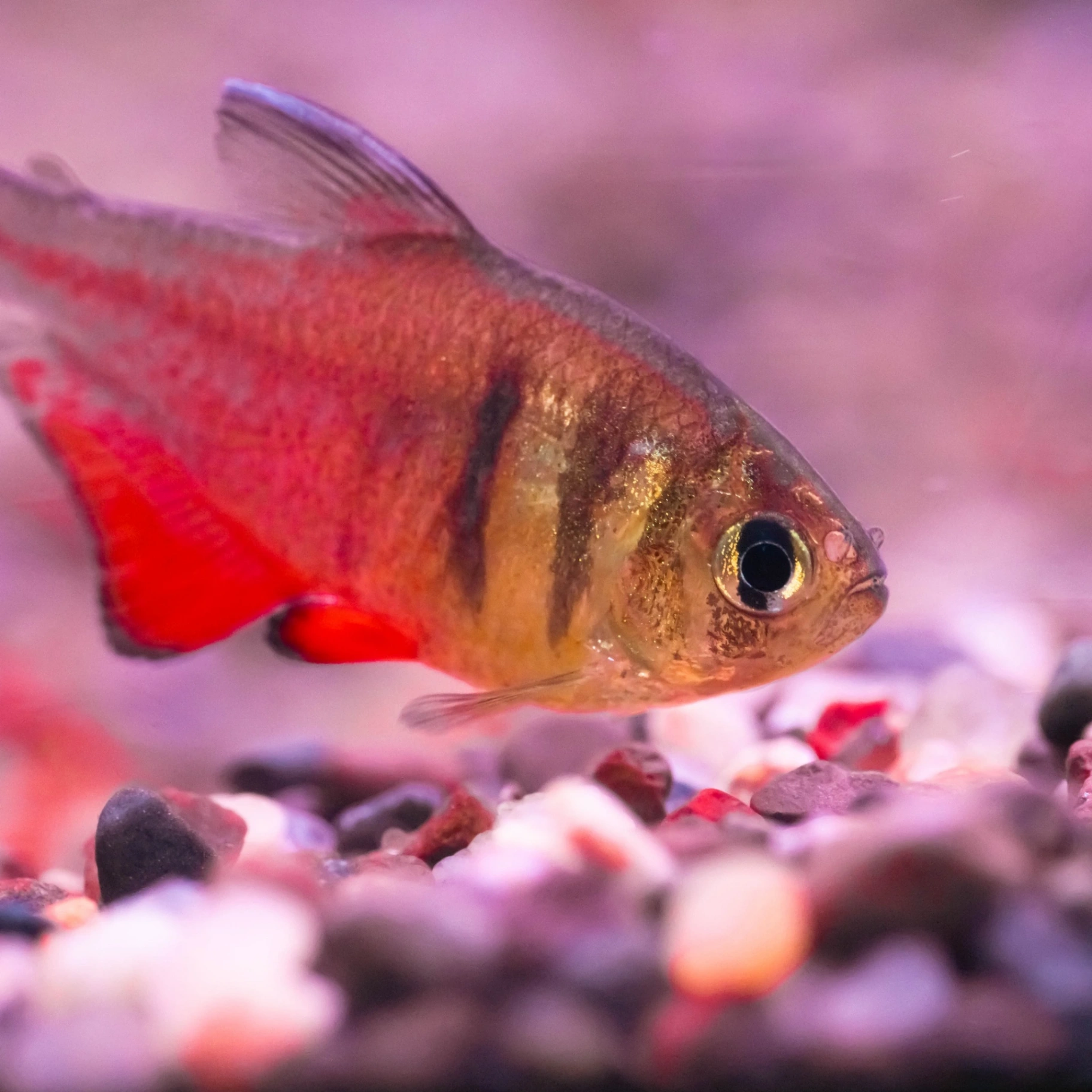
Flame Tetra
Hyphessobrycon flammeus
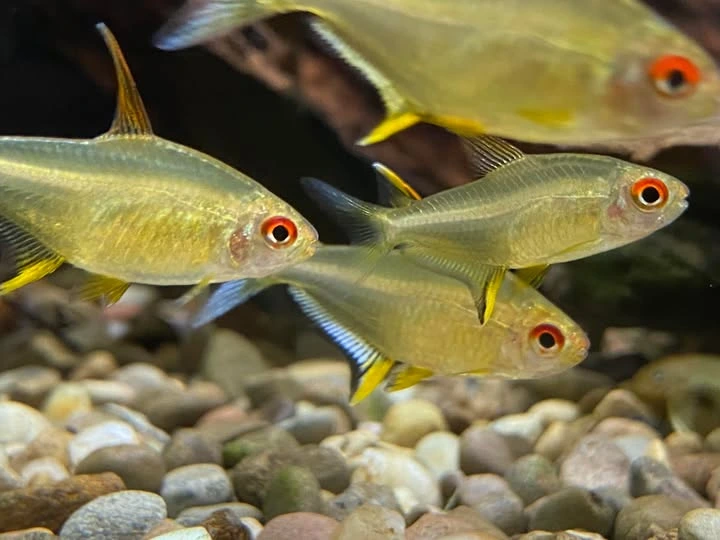
Lemon Tetra
Hyphessobrycon pulchripinnis
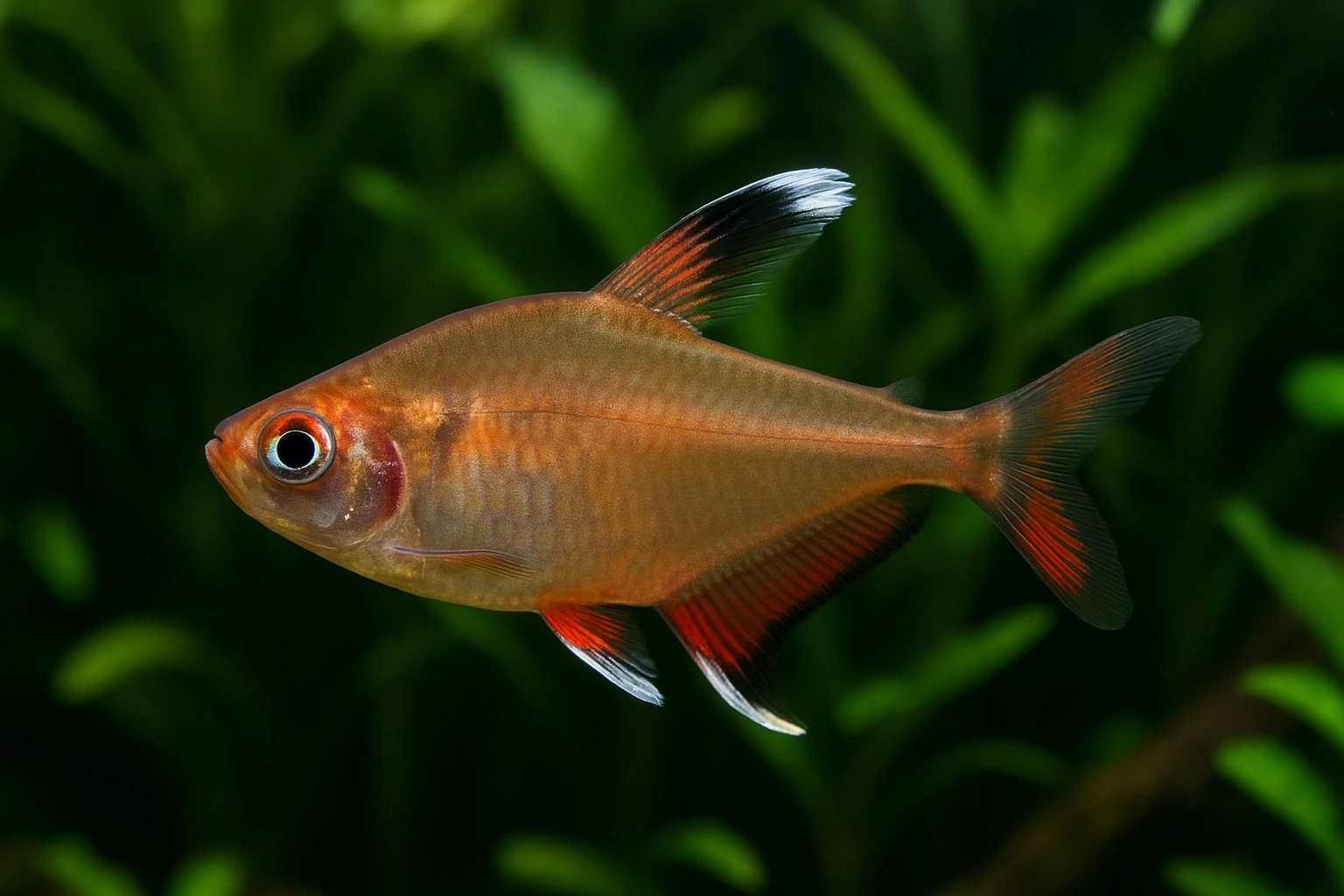
Rosy Tetra
Hyphessobrycon rosaceus
Ready to Add Bleeding Heart Tetra to Your Tank?
Use our free stocking calculator to check compatibility, bioload, and get personalized recommendations.