
Care Requirements
Adult Size
1.8" (4.5cm)
Min Tank
15 gal
Temperature
75-82°F
pH Range
5.5-7.5
Lifespan
3-5 years
Min Group
6+ fish
Diet
Omnivore
Swim Level
Middle
Bioload
1/10
Hardness
2-15 dGH
About Rosy Tetra
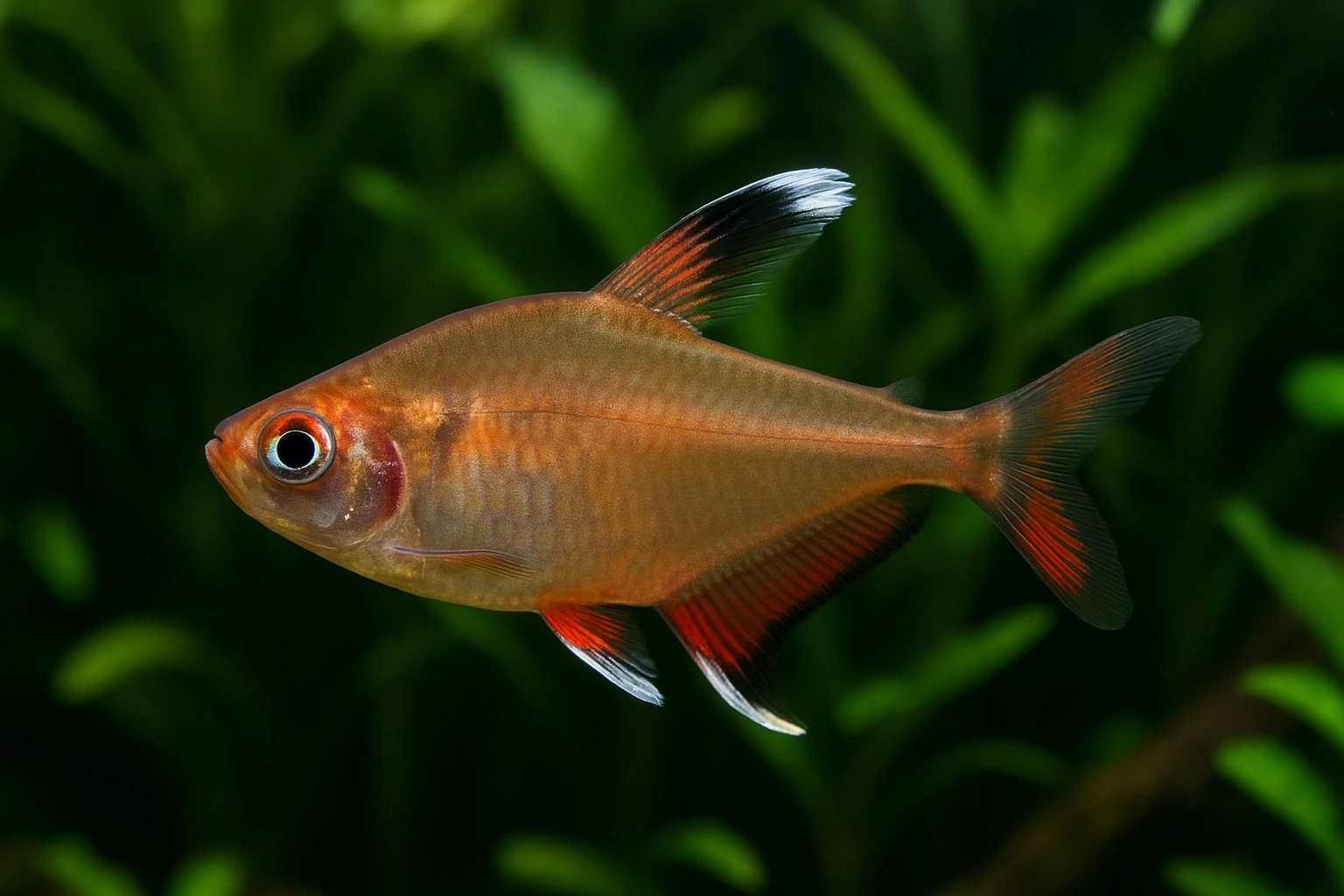
The Rosy Tetra brings delicate elegance to community tanks with its subtle pink-salmon coloration and gracefully extended finnage. While less dramatically colored than some tetras, their refined beauty creates a sophisticated appearance that flashier fish can't replicate. They're the gentle pastel alternative to bold primary colors.
The species is closely related to the popular Bleeding Heart Tetra and shares similar care requirements and body shape. Their characteristic feature is the black-tipped dorsal fin — a flag-like marking that becomes more pronounced in mature males. Combined with their rosy body color and flowing fins, it creates distinctively attractive fish.
Rosy Tetras occupy a sweet spot for community tanks — large enough to be visible at around 1.75 inches, yet peaceful enough for any community and small enough for moderate-sized aquariums. Their calm demeanor and graceful swimming make them soothing to watch.
Care requirements are straightforward, though they prefer softer, warmer water than some tetras. Given appropriate conditions, they're hardy and long-lived. Their peaceful nature makes them ideal companions for similarly calm species in planted community setups.
Natural Habitat & Origin
Rosy Tetras originate from the Essequibo River basin in Guyana and portions of the Amazon basin in Brazil. These blackwater and clearwater habitats feature soft, acidic conditions with abundant vegetation.
Their native waters are warm, soft, and slightly acidic, often tinted by tannins from decaying vegetation. They inhabit vegetated areas where plants, submerged roots, and overhanging vegetation provide cover.
The warm temperatures of their native habitat (typically 24-28°C) reflect their preference for the warmer end of tropical conditions.
Wild populations remain stable throughout their range. The aquarium trade relies on commercially bred stock.
Native Region
South America — Guyana, Brazil (Essequibo and Amazon basins)
Habitat Type
Vegetated blackwater and clearwater streams and rivers
Wild Water Conditions
Soft (2-10 dGH), acidic to neutral (pH 5.5-7.0), warm (24-28°C)
Appearance & Varieties
The Rosy Tetra's most striking feature is its delicate pink-salmon base coloration that gives the species its name. This rosy hue covers the body with subtle variation — slightly deeper near the dorsal area and paler on the belly.
The dorsal fin provides the species' signature marking — a black tip creating a flag-like appearance, particularly pronounced in males. Males develop extended, flowing dorsal fin rays. Red coloration appears in the fins, particularly the tail and anal fin.
Adults reach approximately 1.75 inches (4.5 cm). Males display more intense coloration and longer finnage than females.
Popular Varieties
| Variety | Description | Rarity |
|---|---|---|
| Standard/Wild-Type | Rosy-pink body with black-tipped dorsal fin and red in fins. The classic form. Males more colorful with longer fins. | Common |
| White Fin Rosy Tetra | Variant with more white coloration in fins, particularly the dorsal. Sometimes sold as separate variety. | Uncommon |
Tank Setup & Requirements
Quick Requirements Summary
Tank Size
Minimum Tank Size
15 gallons
Recommended Tank Size
20 gallons
Rosy Tetras thrive in well-maintained planted tanks with stable conditions. They prefer softer, warmer water than some more adaptable tetras but aren't demanding once appropriate conditions are provided.
Water Parameters
Prefer warmer, softer water than many tetras (pH 5.5-7.5, 2-15 dGH, ideal under 10 dGH, 75-82°F). Best coloration appears in soft, slightly acidic conditions. Hard, alkaline water is tolerated but not ideal.
Substrate
Dark substrates enhance their delicate pink coloration — the soft rosy hues show best against contrasting backgrounds. Black sand, dark gravel, or nutrient-rich planted tank soils all work. Light substrates won't harm them but don't showcase their subtle beauty as effectively.
Plants & Decorations
Plants significantly improve their wellbeing by creating the natural, sheltered environment they prefer. They're completely plant-safe. Driftwood is particularly valuable as it releases tannins that soften and acidify water naturally. Avoid sharp decorations that could damage their delicate flowing fins.
Filtration & Water Flow
They prefer calmer water without strong current — their natural habitat features slow-moving vegetated streams. Sponge filters are excellent choices. HOB filters can be baffled. Prioritize biological filtration for pristine water quality.
Lighting
Their delicate coloration shows best under moderate to subdued lighting — bright lights tend to wash out their subtle pink hues. Floating plants naturally create ideal conditions. Warm-spectrum lights complement their rosy coloration.
Diet & Feeding Guide
Diet Type
omnivore
Feeding Frequency
Once or twice daily
Portion Size
Small amounts consumed within 1-2 minutes
Rosy Tetras are omnivores accepting a variety of foods. A varied diet maintains health and enhances their rosy coloration.
Best Foods for Rosy Tetra
- Quality micro flakes — Staple diet readily accepted. They feed at surface and mid-water levels.
- Small pellets — Appropriately sized slow-sinking pellets provide varied nutrition.
- Frozen bloodworms — Chopped or small bloodworms eagerly consumed. Excellent protein source.
- Frozen brine shrimp — Readily accepted. Natural food source.
- Frozen daphnia — Appropriate size for their mouths. Good fiber content.
- Color-enhancing foods — Foods with carotenoids help maintain and enhance their rosy coloration.
- Live foods — Baby brine shrimp, daphnia, micro worms trigger enthusiastic feeding.
Foods to Avoid
- Oversized foods — Their mouths are relatively small. Ensure food is appropriately sized.
- Single food type only — Variety maintains health and coloration. Rotate foods regularly.
Rosy Tetras benefit from color-enhancing foods containing carotenoids to maintain their delicate pink coloration. Feed small portions suited to their moderate size.
Behavior & Temperament
Rosy Tetras display calm, graceful schooling behavior that creates a soothing presence in the aquarium. They swim in relaxed formations through mid-water zones, their flowing fins creating elegant movement.
They're genuinely peaceful fish with no aggression toward tankmates. Within the school, males display their extended dorsal fins to rivals in harmless competitive posturing.
Activity level is moderate — always gently moving but never frantic. They explore their environment with calm curiosity.
Schooling behavior is most natural in groups of 6+. Larger groups display more confidently and show better coloration.
Tank Mates: Compatibility Guide
Compatible Tank Mates
Small peaceful tetras create harmonious communities.
Share preference for warm, soft water. Classic Amazon biotope combination.
Peaceful bottom dwellers that complement mid-water tetras.
Rosy Tetras are shrimp-safe — peaceful enough to ignore adult shrimp.
Share calm temperament. Different zones minimize interaction.
Tiny peaceful algae eaters. Perfect planted tank companions.
Peaceful dwarf cichlids share soft water preference.
Tank Mates to Avoid
Large or predatory fish
Their small size makes them prey for larger fish.
Aggressive species
Their calm nature makes them easy targets.
Fin nippers
Their flowing fins can attract nippers. Avoid known fin-nipping species.
Very boisterous fish
Highly active, assertive tankmates may stress these calm fish.
Rosy Tetras breed following typical egg-scattering methodology. Condition adults with varied, protein-rich foods. Set up a breeding tank with fine-leaved plants, very soft acidic water (pH 6.0-6.5, hardness under 5 dGH), and temperature around 26-28°C. Spawning occurs in early morning. Remove adults immediately as they consume eggs. Eggs hatch in 24-48 hours.
Health Issues & Disease Prevention
Rosy Tetras are reasonably hardy when their preference for warm, soft water is respected. Most health issues relate to water conditions rather than disease susceptibility.
Common Diseases
| Disease | Symptoms | Treatment |
|---|---|---|
| Ich (White Spot Disease) | White spots, flashing, clamped fins. | Raise temperature to 28-30°C. Commercial medications. |
| Fin Rot | Frayed or deteriorating fins, especially the delicate dorsal. | Improve water quality. Their flowing fins are vulnerable — clean water is essential. |
| Velvet Disease | Gold-dust appearance, clamped fins, rubbing on objects. | Copper-based medications. Raise temperature. Darken tank. |
| General Stress/Decline | Pale coloration, hiding, poor appetite. | Review water parameters — often related to hard/alkaline or cold water. |
Signs of a Healthy Rosy Tetra
- Clear rosy-pink coloration
- Flowing, intact fins
- Active but calm swimming
- Good appetite
- Schooling behavior
Prevention Tips
- Maintain soft, warm water
- Keep in groups of 6+
- Provide varied diet
- Avoid sudden parameter changes
- Keep water clean — their fins are vulnerable
- Quarantine new additions
Frequently Asked Questions
They're closely related species in the same genus (Hyphessobrycon). Rosy Tetras (H. rosaceus) and Bleeding Heart Tetras (H. erythrostigma) share similar body shape, care requirements, and gentle temperament. They can be kept together successfully.
Several factors cause pale coloration: stress, inappropriate water conditions (they prefer soft, warm water), poor diet, or illness. Newly purchased fish need time to settle — color develops over weeks in stable conditions.
No — they're genuinely peaceful with no fin-nipping tendencies. They're actually potential victims of fin nippers due to their flowing fins.
They prefer warm water — 75-82°F (24-28°C). This is warmer than some more cold-tolerant tetras. Don't keep them below 75°F for extended periods.
Yes — they're peaceful enough to coexist with adult dwarf shrimp. Their calm nature and moderate size make them better shrimp tank companions than many tetras.
Minimum 6, ideally 8-10+. Larger groups show better coloration and more interesting male displaying.
Tips for Keeping Rosy Tetra
Pro Tips
- ✓Soft water brings out their best delicate pink coloration — consider mixing with RO water or using Indian Almond leaves.
- ✓Their flowing fins need pristine water — keep the tank especially clean.
- ✓Include multiple males for competitive fin displays bringing out their best finnage.
- ✓They're perfect for peaceful planted Amazon biotope tanks.
Common Mistakes to Avoid
- ✗Water too hard or cold — poor coloration and increased stress.
- ✗Keeping with boisterous tankmates — easily stressed or outcompeted.
- ✗Too few fish — hiding, stress, poor coloration. Need 6+.
- ✗Poor water quality — flowing fins deteriorate quickly.
- ✗Mixing with fin nippers — extended finnage attracts nippers.
Sources
- FishBase — Accepted scientific name, maximum size and native range for Rosy Tetra.
Related Species You Might Like
View All Fish →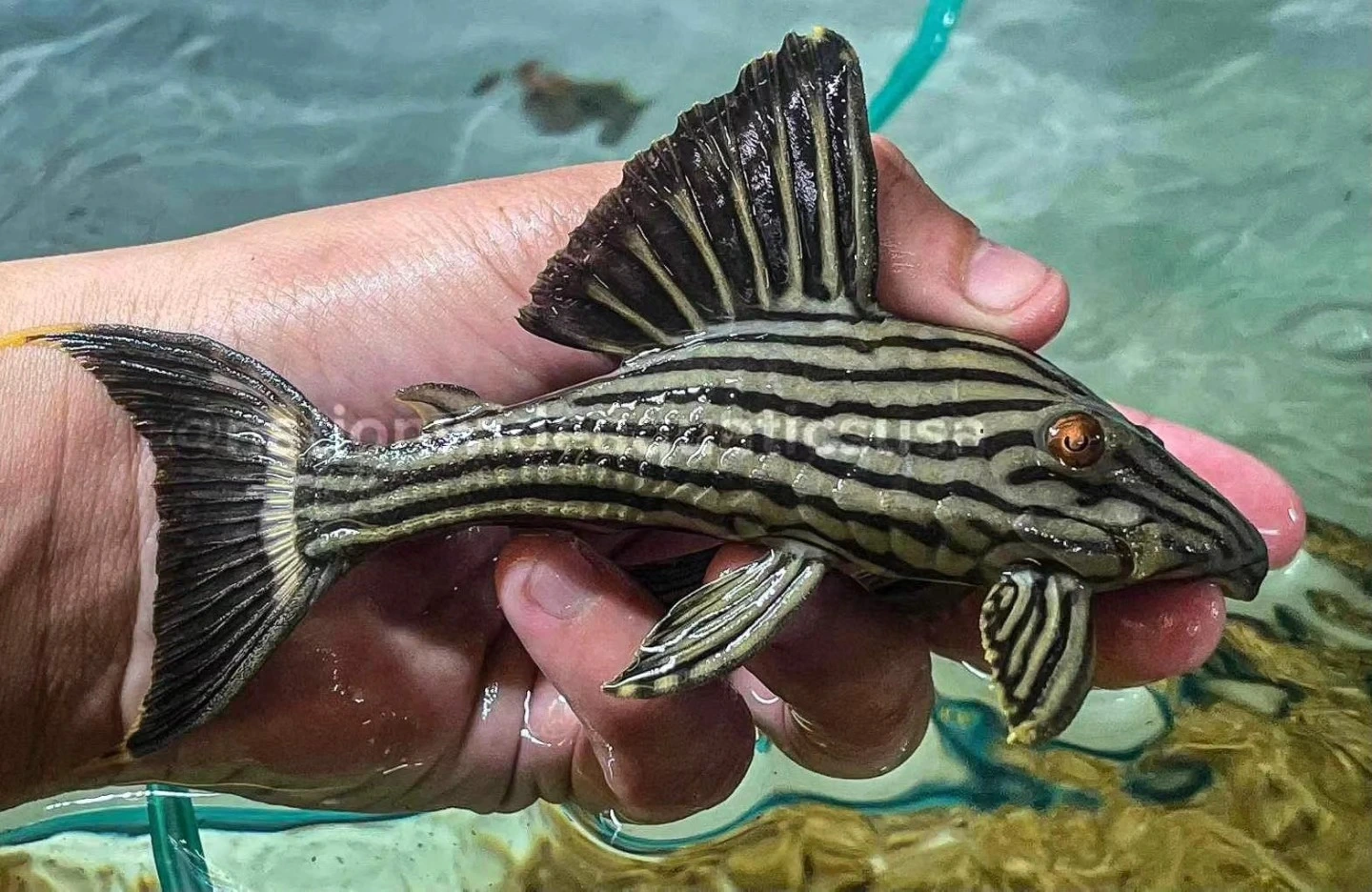
Royal Pleco
Panaque nigrolineatus
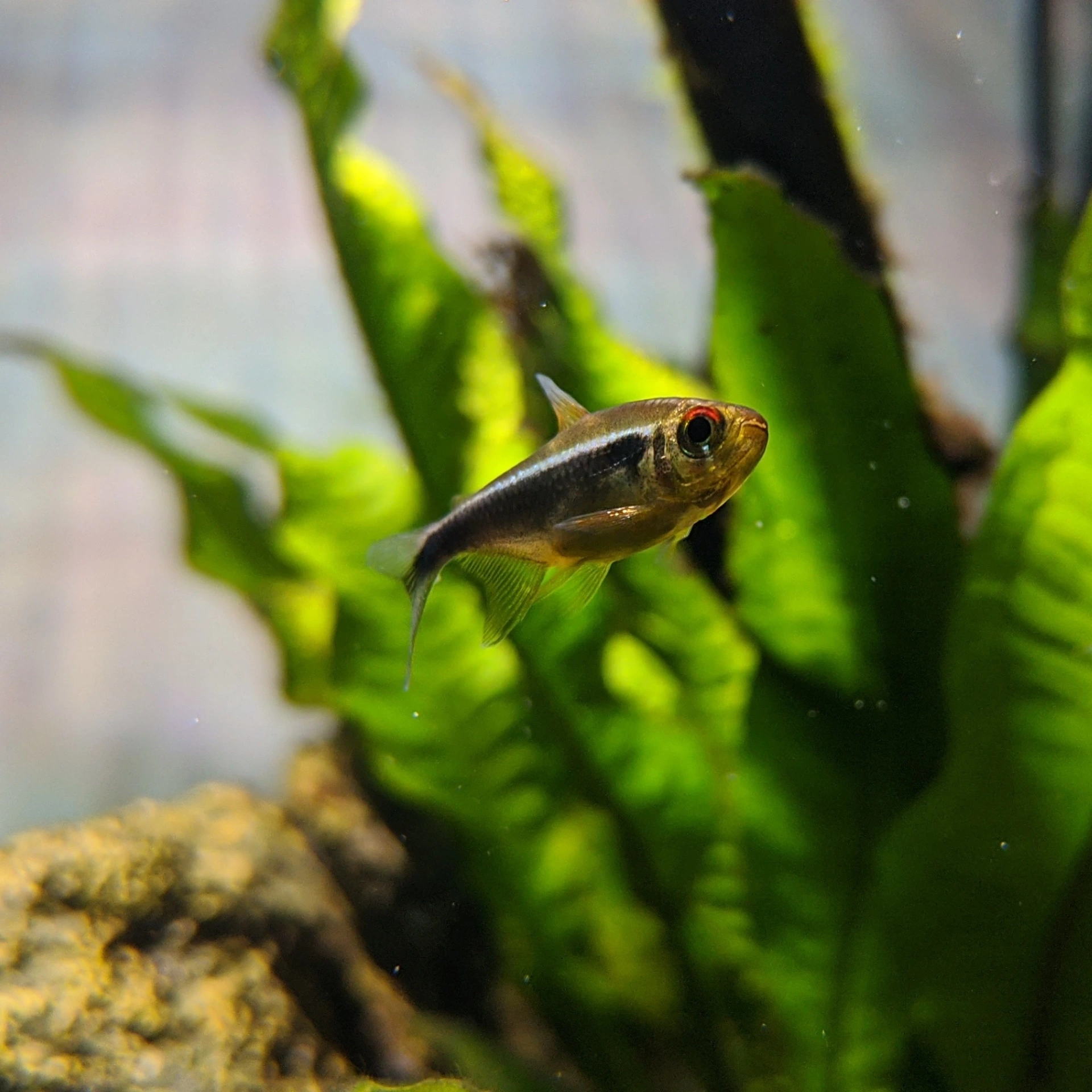
Black Neon Tetra
Hyphessobrycon herbertaxelrodi
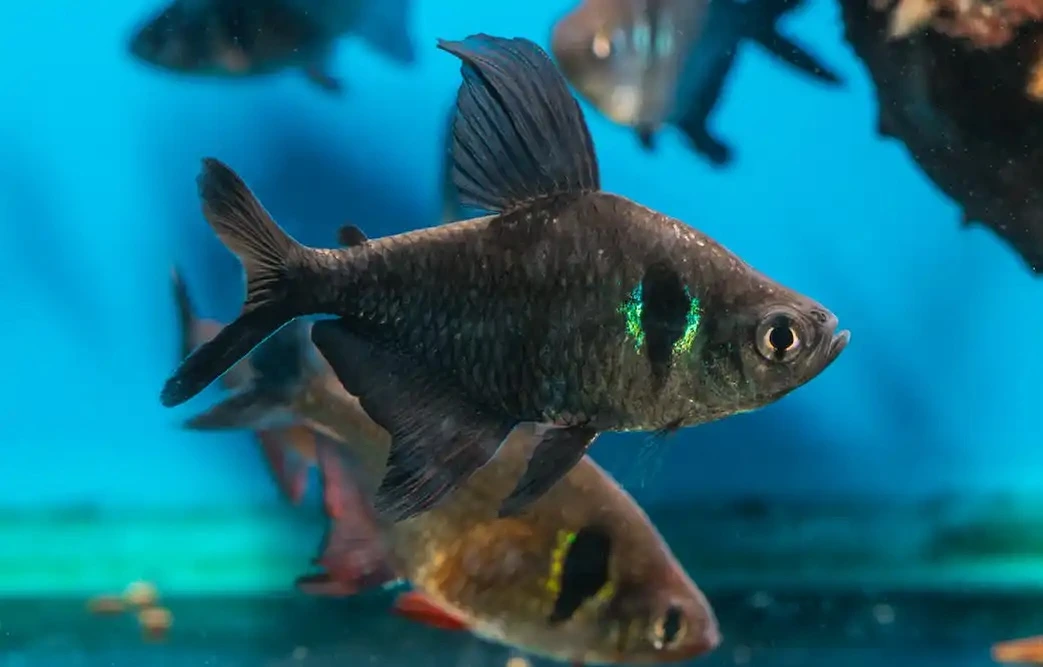
Black Phantom Tetra
Hyphessobrycon megalopterus
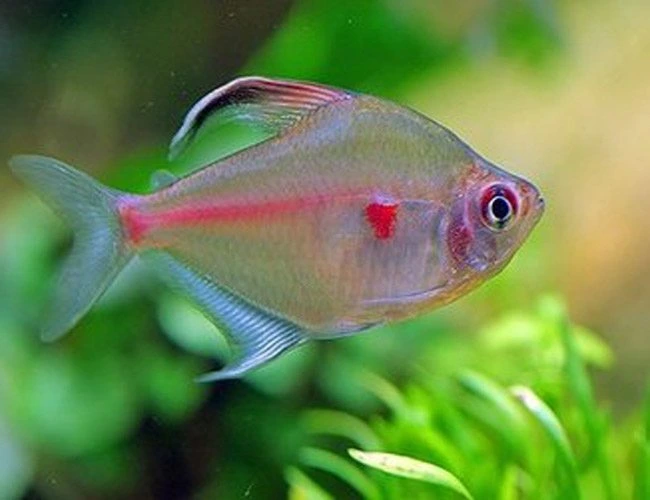
Bleeding Heart Tetra
Hyphessobrycon erythrostigma

Colombian Tetra
Hyphessobrycon columbianus
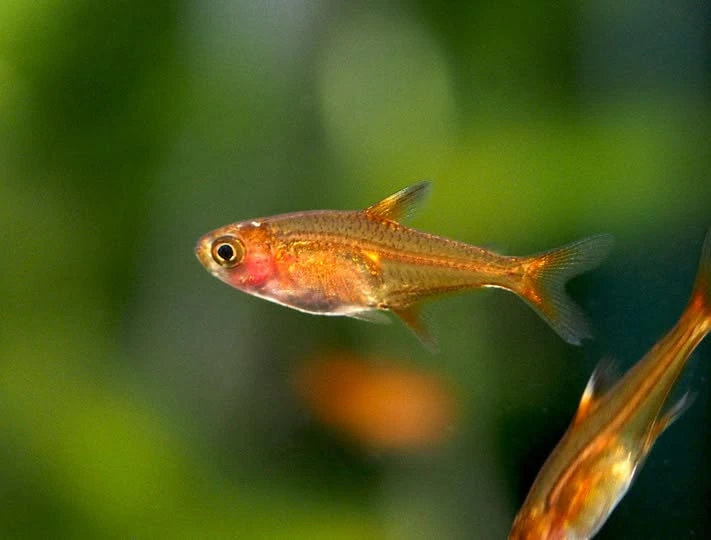
Ember Tetra
Hyphessobrycon amandae
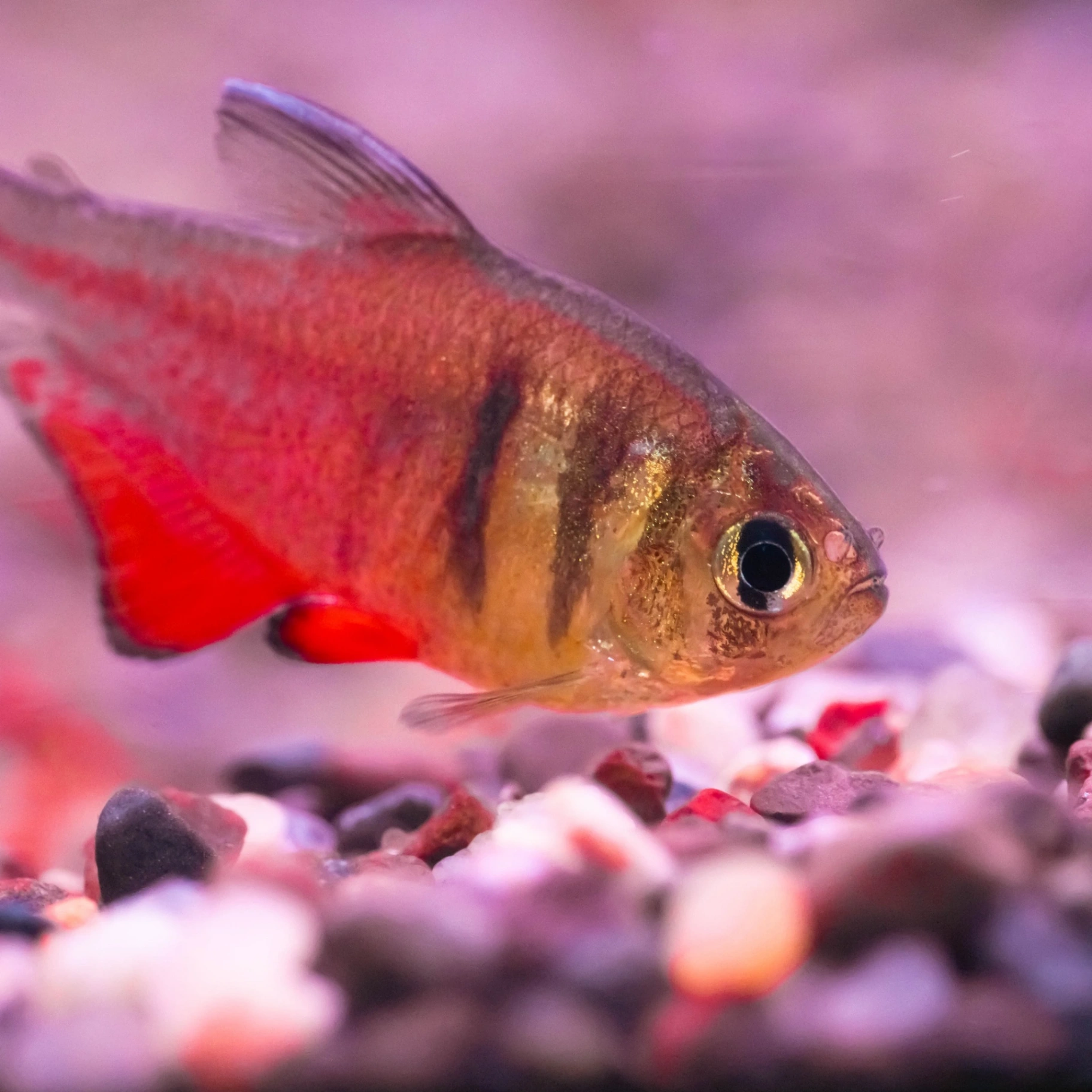
Flame Tetra
Hyphessobrycon flammeus
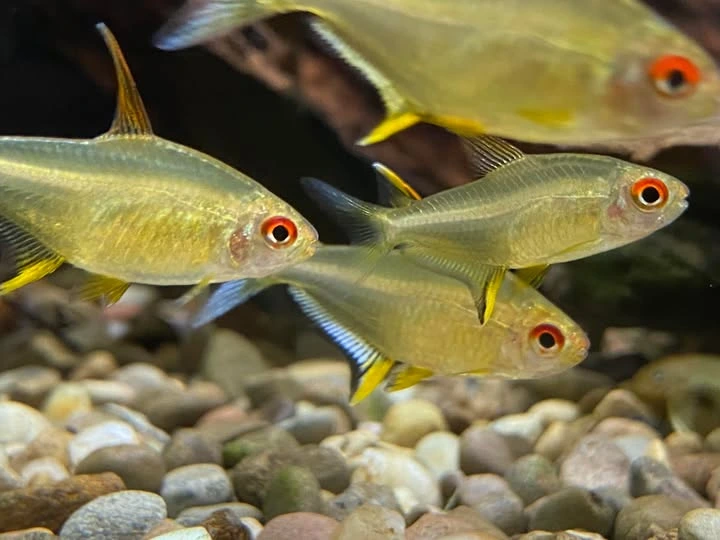
Lemon Tetra
Hyphessobrycon pulchripinnis
Ready to Add Rosy Tetra to Your Tank?
Use our free stocking calculator to check compatibility, bioload, and get personalized recommendations.