
Hornwort Care Guide
Reviewed by the AquariumStocking team · Updated August 2026
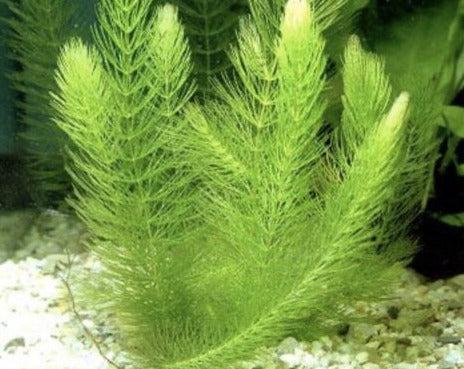
A rootless stem plant that floats, grows fast enough to strip ammonia out of a new tank, and suppresses algae chemically — then drops every needle it has the week after you move it.
Hornwort quick facts
- Light demand
- Low
- CO2 requirement
- Not needed
- Difficulty
- Beginner
- Growth rate
- Fast
- Placement
- Background / Floating
- Growth habit
- Stem
- Substrate need
- None — rootless, floats or is weighted down
- Max size
- 100 cm (39.4 in) tall, ~10 cm wide
- pH
- 6.0–7.5
- Hardness
- 5–15 dGH
- Propagation
- Side shoots and cuttings — any severed piece keeps growing
- Temperature
- 15–30 °C (59–86 °F)
It has no true roots at all. A buried stem base does not anchor the plant and usually rots; weights and plant clips are holding it, not roots.
Overview
Hornwort (Ceratophyllum demersum) has no roots. Not roots that prefer to stay out of substrate, not roots that only anchor — the species has no true root system at all, anywhere in its life cycle. It takes water, carbon and nutrients directly across the surface of its stems and needles, and the pale filaments people sometimes call roots are modified leaves doing the gripping.
That single fact drives everything else on this page. It can be weighted down, tucked behind hardscape or clipped in place, and the buried section will often rot within weeks, but the plant itself carries on regardless because the buried part was never feeding it. Most keepers eventually stop fighting it and let it float, which is how it grows in the wild.
It is also the fastest grower on this site by a wide margin, cold-tolerant to the point of surviving outdoor ponds, and mildly allelopathic — it chemically suppresses algae, and to a lesser extent its neighbours. Almost nothing else in a planted tank behaves like this.
What you're buying
Hornwort is sold as loose bunches of cut stems, usually banded with a lead or rubber strip, and it is not nursery-grown emersed — it cannot be, as it has no structure for life out of water. What you are buying is cuttings, and cuttings travel badly.
What arrives
A bag of bare or half-bare stems, often already shedding needles from the trip. Bare stems are not dead; check whether the stem itself is green and firm.
Cut the band off first
The lead weight or rubber band crushes the stems it holds and rots them from the middle of the bunch outward. Remove it before the plant goes in.
Buy more than you think
Expect to lose the weakest third of a bunch to the move. The survivors double quickly, so a large portion recovers to full mass within a month.
Judge a hornwort stem the way you would judge a cutting, not a plant: a firm green stem with growth tips regrows a full set of needles in a couple of weeks, while a stem that is brown, hollow or slimy at the core is finished and should be pulled out before it fouls the water.
It is a well-known snail and pest carrier because it is grown in outdoor ponds and open systems, so a rinse and a short quarantine is worth the delay if the destination tank is shrimp-only or carefully pest-free.
Light, CO2 & nutrients
Light
Low
CO2
Not needed
Fertilisation
Water column (liquid)
Light
Low light is enough to keep it alive, and it will grow at a fair pace under a basic LED. The variable it actually responds to is not intensity but position: floating at the surface it sits directly under the fixture and grows explosively, while the same plant weighted at the bottom of a deep tank grows leggy and thin.
Under strong light hornwort does not suffer the way a slow plant does — it simply grows faster and needs thinning more often. Its problem is never too much light. If the needles are dropping under a bright fixture, look at nutrients, not the lamp.
CO2
Not needed, and floating specimens partly bypass the question altogether by taking carbon at the surface. Injected CO2 makes an already fast plant faster, which is rarely what anyone wants from hornwort.
In a CO2 tank it becomes a genuine competitor: it grows quickly enough to shade and outstrip slower plants below it, so keep the mass under control rather than letting it fill the top third of the tank.
Work out your CO2 injection rate →
Nutrients
This is the point of the plant for a lot of keepers. Hornwort has a very high uptake rate and pulls ammonia, nitrate and phosphate out of the water column faster than anything else covered here, which is why it turns up in fry tanks, quarantine tanks, hospital tanks and new setups that are still finding their feet.
The flip side is that it is the first plant in the tank to run out of food. In a lean, lightly stocked tank it strips the water column bare and then starts shedding needles from the oldest growth downward. If a fast-growing hornwort suddenly goes bare, the tank is nutrient-limited, not sick.
Root tabs do nothing for it — there are no roots to feed. Everything reaches it through the water, so a liquid all-in-one is the only fertiliser that matters.
Water & temperature
pH
6.0–7.5
Hardness
5–15 dGH
Temperature
15–30 °C (59–86 °F)
Hornwort is close to indifferent to chemistry: roughly 6.0–7.5 pH and 5–15 dGH suit it, and it grows well outside both ranges. Hard water is fine and it does not object to the alkalinity that troubles softwater stem plants.
Temperature is where it breaks the pattern used everywhere else on this site. It grows at anything from about 15 °C to 30 °C, which means it works in unheated room-temperature tanks, goldfish setups and outdoor ponds — the tropical assumption behind most plant care advice simply does not apply to it.
What it does dislike is sudden change. A large water change with noticeably different temperature or hardness is one of the reliable triggers for needle drop.
Adding it to the tank
- 1Cut the lead weight or rubber band off the bunch and separate the stems by hand.
- 2Discard any stem that is brown, hollow or slimy at the core; keep the ones with firm green growth tips.
- 3Rinse the bunch under tank-temperature water to shift loose needles and hitchhiking snails before it goes in.
- 4Decide floating or weighted. Floating is the default and the more reliable one — simply lay the stems on the surface.
- 5To hold it down, use a plant clip, a suction anchor or a stone rather than burying the base. A buried stem does not anchor and usually rots.
- 6Acclimate slowly: float the bag or match the temperature closely, and avoid a big water change in the first fortnight. Abrupt shifts are the main needle-drop trigger.
- 7Thin it weekly once it starts growing, pulling whole stems out rather than topping every one, and keep the trimmings out of the tank unless you want more plants.
Expect it to shed. Hornwort drops needles after being moved, after a sharp parameter change, or when nutrients run out — sometimes stripping to bare stems within days and scattering needles through the tank and filter. The stems almost always regrow. The mess is the real cost, and retail listings never mention it.
Placement & aquascaping role
The honest default is floating. Left on the surface it forms a thick raft that shades the tank, spreads sideways rather than upward, and gets the light and surface carbon it grows best on. This is what it does in the wild and what most tanks end up doing with it.
Weighted down it works as a background screen — a dense green wall that hides equipment and gives fry somewhere to disappear into. Use a plant clip, a suction anchor or a stone rather than burying the stem base, and accept that the bottom few centimetres will eventually rot and need re-cutting.
Whichever you choose, plan for the shade. A hornwort raft is the single biggest light blocker you can add to a tank, and anything low-growing beneath it — a carpet in particular — will not get what it needs. Give it a third of the surface, corral it if you have to, and thin it every week.
Growth, trimming & maintenance
The plant people weigh hornwort against is guppy grass, and the two overlap almost completely on paper: both are fast, rootless nutrient sponges that float and grow in anything. The differences decide it. Hornwort is coarser and stiffer, survives water down to near freezing, and is allelopathic — it releases compounds that suppress algae, which guppy grass does not do. Guppy grass is far finer and denser and is the better fry refuge, but it is brittle enough to shatter when handled. Unheated tank or an algae problem: hornwort. Livebearer nursery: guppy grass.
Growth is measured in centimetres per week, not leaves per month. In a stocked, lit tank hornwort adds visible length constantly and a modest starting portion becomes a management problem inside two months. Thinning is the maintenance routine; there is no version of this plant that you leave alone.
Trim by pulling out whole stems rather than shortening every one — a tank of uniformly topped stems looks wrong and the cut ends brown before branching. Remove the oldest, barest stems from the bottom of the mass and keep the young growth tips.
Every cutting is a plant, so trimmings are either replanted, given away or binned. Do not let them float loose in the tank unless you want the population to double again.
Clean the filter more often than you would otherwise. Shed needles are small, buoyant and numerous, and they end up in the intake, the impeller housing and every crevice of the hardscape.
Propagation
There is no technique to learn. Hornwort branches into side shoots as it grows, and any fragment with a growth tip carries on as an independent plant. Cutting it is propagation, and so is knocking a piece loose with a net.
The practical question is not how to make more but how to stop making more. A tank left alone for a month produces far more hornwort than the keeper wanted.
- 1Choose a stem with healthy green growth at the tip.
- 2Cut it anywhere along its length with clean scissors — there is no node to find and no correct place to cut.
- 3Float the cutting or clip it where you want it; it needs no rooting period because it never roots.
- 4Discard the older, barer lower section rather than replanting it — new growth comes from the tip end.
- 5Thin the parent regularly so the cuttings you keep are not immediately shaded by the mass they came from.
Troubleshooting & diagnosis
Nearly every hornwort complaint is one symptom — needle drop — with four or five different causes behind it. The pattern of the shedding tells you which one you have.
| Symptom | Likely cause | Fix |
|---|---|---|
| Sheds most or all needles within days of being added | Transition shock — new parameters, temperature or lighting | Leave it in place. Stems that stay green regrow needles in two to three weeks. |
| Sheds after a large water change | Sudden shift in temperature, hardness or CO2 level | Change less water more often and match temperature more closely. |
| Gradual bareness starting on the oldest growth | Nutrient exhaustion — it has stripped the water column | Dose an all-in-one liquid fertiliser; hornwort starves before slower plants do. |
| Stem base brown, soft or hollow | Buried section rotting in substrate | Cut above the rot and re-anchor with a clip or weight instead of burying it. |
| Whole plant thinning and pale with no obvious trigger | Shaded out by floating plants above it | Thin the floaters, or move hornwort to the surface itself. |
| Neighbouring plants stalling while hornwort thrives | Allelopathy plus nutrient competition | Reduce the hornwort mass and increase dosing; keep sensitive plants at a distance. |
Algae relationship
Hornwort is not an algae victim — it is an algae suppressant, and that reverses the usual story. It releases allelopathic compounds that inhibit algal growth, and it combines that with an uptake rate high enough to strip the nitrate and phosphate algae depends on. Keepers fighting green water or a persistent algae bloom often add a mass of hornwort precisely for this effect, and it frequently works.
The chemistry does not distinguish between algae and plants. The same compounds slow neighbouring species — soft stem plants and anything already struggling take it worst — and the nutrient stripping compounds the problem for a slower plant sharing the same water. A tank where everything except hornwort has stalled is a common and under-diagnosed outcome.
Algae does still settle on hornwort itself, but rarely as a persistent problem: needles are shed and replaced constantly, so nothing colonises a surface long enough to establish. Green fuzz on hornwort usually clears itself within a growth cycle. This is the exact inverse of a slow epiphyte, where every leaf sits exposed for months.
Use it deliberately if you want the effect: a large mass while a tank cycles or a bloom clears, then thin it back once the water is stable and the other plants need the nutrients returned to them.
Commonly confused with
Hornwort has no cultivars — what it has instead is three other feathery green stem plants sold beside it, often with the labels swapped. The differences are visible in the hand before you buy.
| Plant | Species | How to tell it apart |
|---|---|---|
| Anacharis / Elodea | Egeria densa | Flat, broad, blade-shaped leaves in tight whorls around a thick stem. Hornwort leaves are needle-thin and forked. Anacharis also grows real roots; hornwort never does. |
| Cabomba | Cabomba caroliniana | Leaves are fan-shaped and split into a flat plane, and the stems are brittle and snap under their own weight. Hornwort needles are stiff and arranged in a three-dimensional whorl. |
| Coontail | Ceratophyllum demersum | Not a different plant — the common regional name for hornwort in North America. If a tag says coontail, it is the same species. |
| Foxtail | Myriophyllum spp. | Much softer and finer, feathery rather than needled, and it roots readily. It collapses in the conditions hornwort shrugs off. |
Natural habitat & origin
Native range
Cosmopolitan — native or naturalised on every continent except Antarctica
Habitat type
Still and slow lakes, ponds, ditches and backwaters; drifting free below the surface
Wild growing conditions
Nutrient-rich water, wide temperature range including near-freezing winters
Ceratophyllum demersum is one of the most widely distributed aquatic plants on earth, found in still and slow water across nearly every continent. It drifts free below the surface in nutrient-loaded ponds, ditches and lake margins, tangling in whatever it touches rather than anchoring to it.
A free-drifting life explains the missing roots. There is no sediment to exploit when the plant never stays in one place, so the whole surface of the plant became the feeding organ — which is why it absorbs so fast, why it starves so visibly, and why burying part of it achieves nothing.
The temperature range comes from the same distribution. Populations overwinter under ice by dropping to the bottom as dormant shoots and rising again in spring, which is why a plant sold in tropical fish shops is entirely comfortable in an unheated tank or an outdoor pond.
Its allelopathy is not an aquarium curiosity either — it is well documented in the wild, where dense hornwort stands suppress phytoplankton and hold lake water clear. The aquarium effect is the same mechanism on a smaller scale.
Fish & invert compatibility
Hornwort is soft, edible and completely unanchored, so the risk here is not uprooting — it is grazing and shredding. The twist is that grazing does not necessarily mean incompatible: this plant grows fast enough to survive being eaten, which is why some of the fish that chew on it still appear in the safe column with a caveat rather than the danger list.
Safe with Hornwort
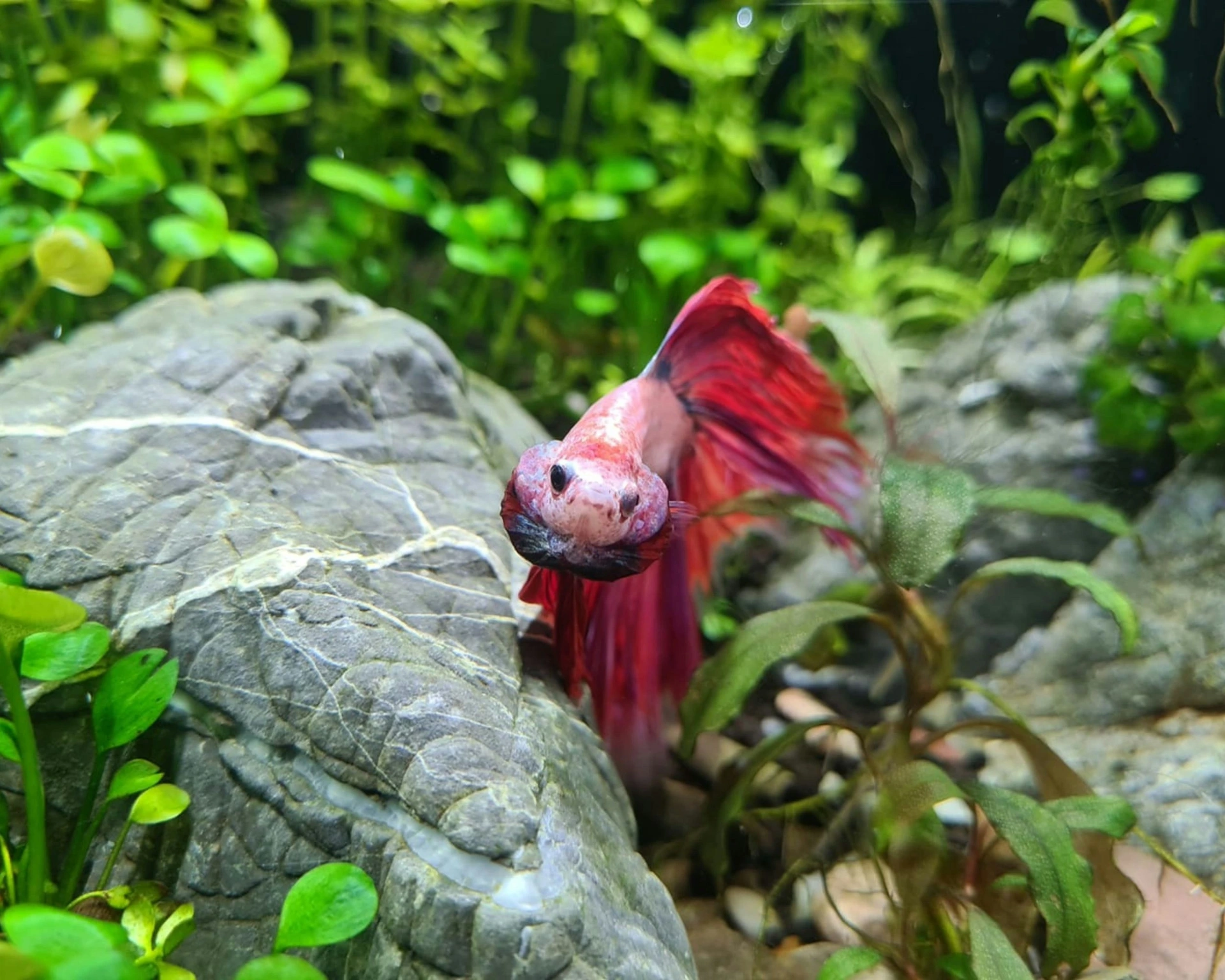 BettaBetta splendens
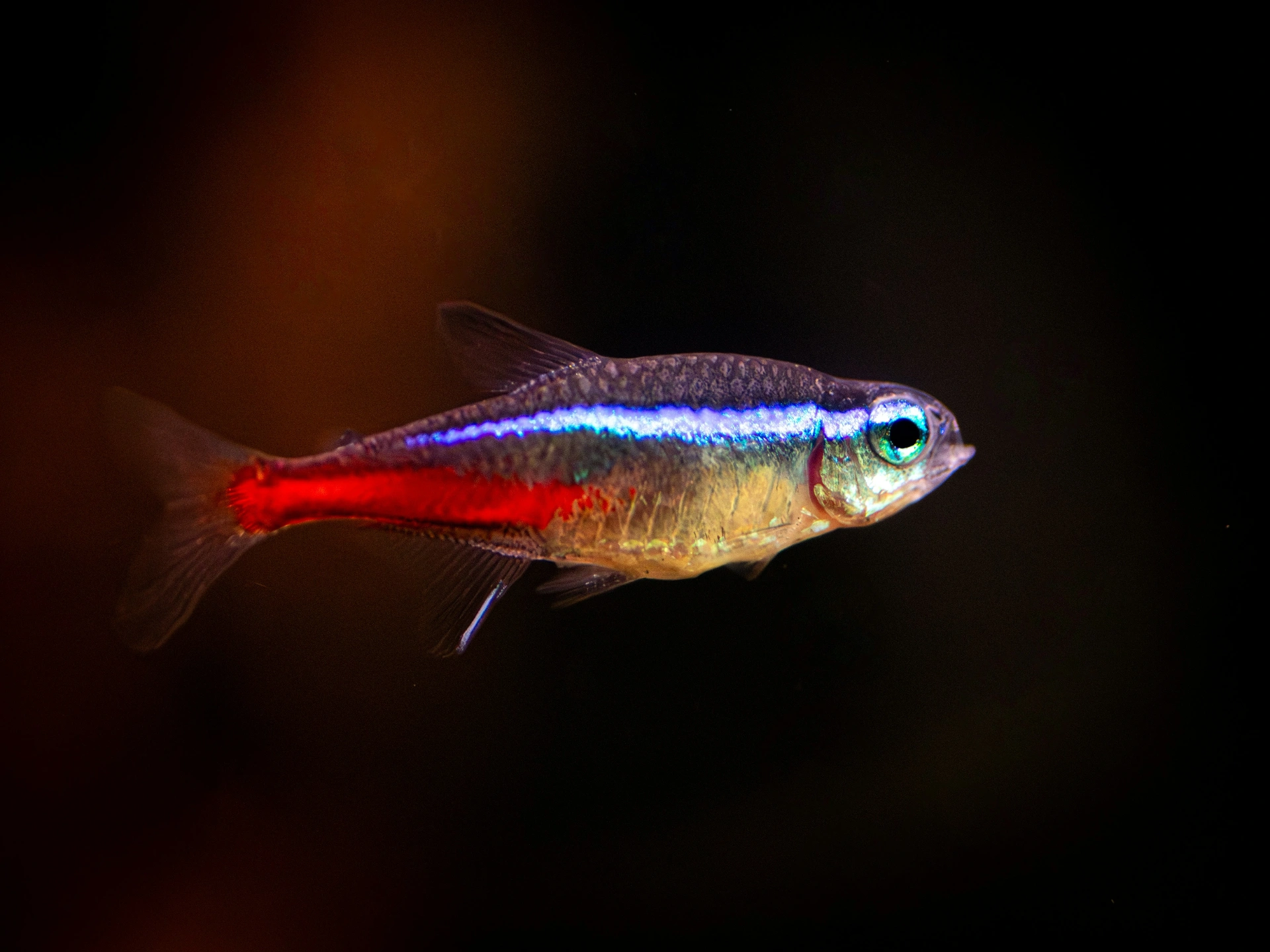 Neon TetraParacheirodon innesi
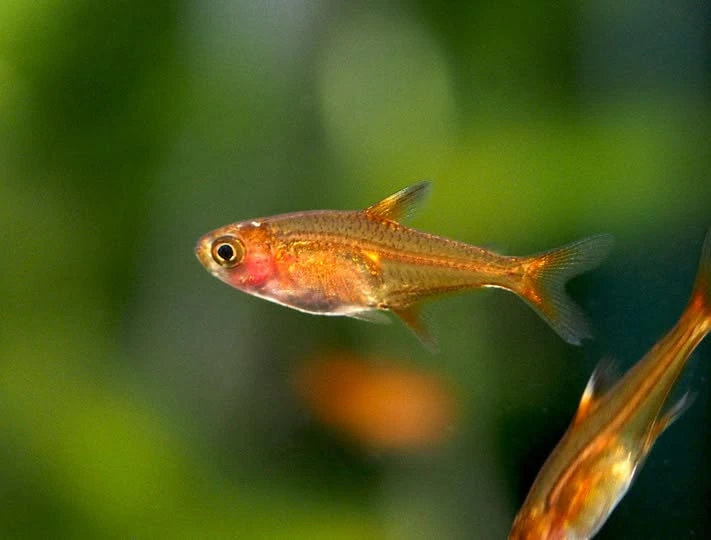 Ember TetraHyphessobrycon amandae
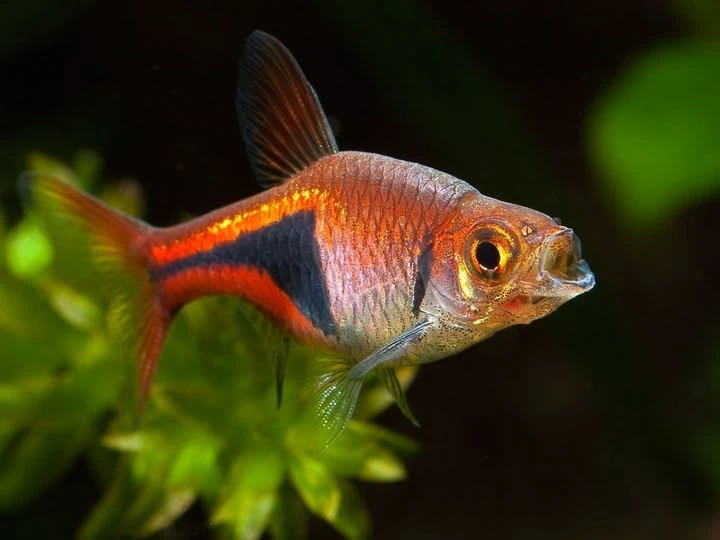 Harlequin RasboraTrigonostigma heteromorpha
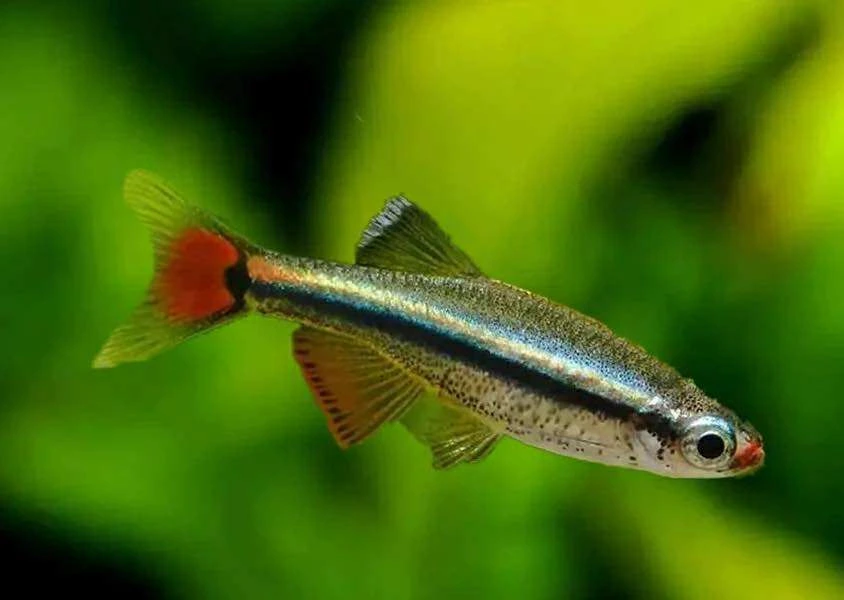 White Cloud Mountain MinnowTanichthys albonubes
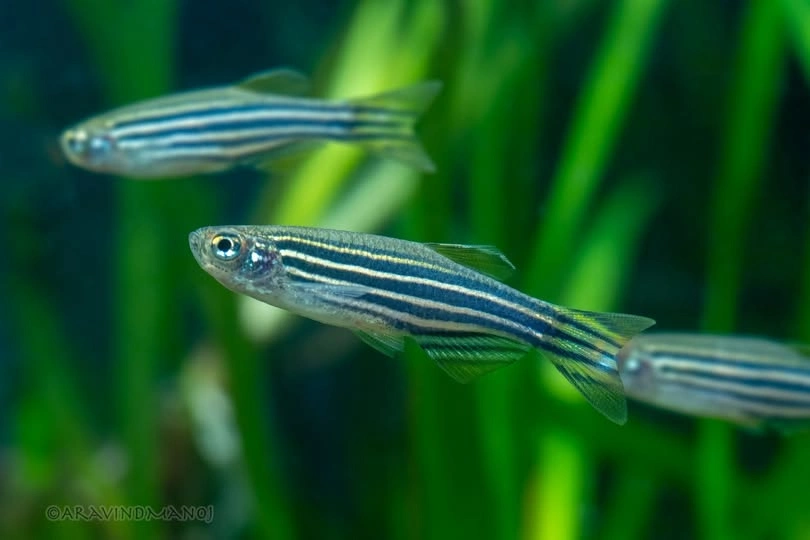 Zebra DanioDanio rerio
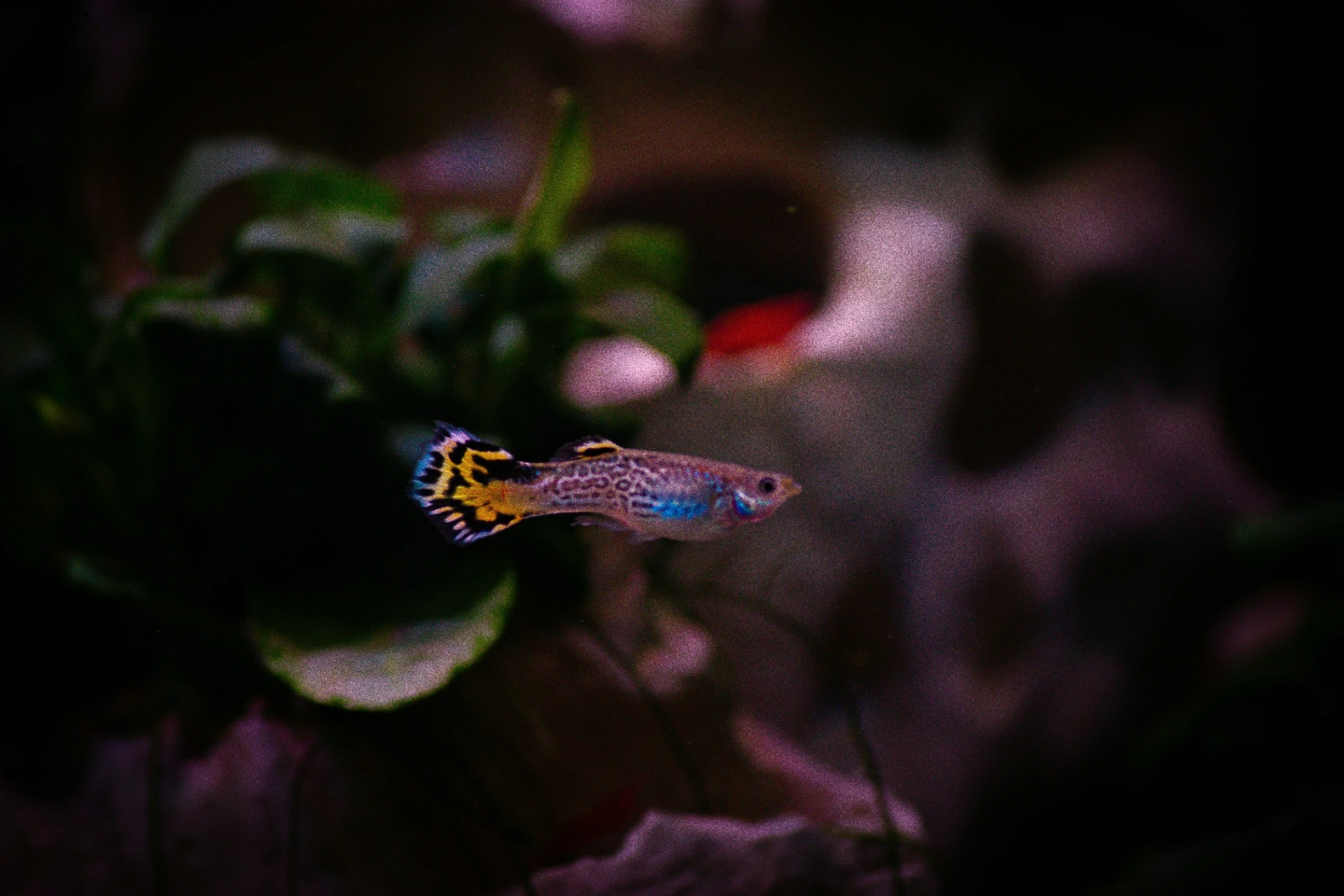 GuppyPoecilia reticulata
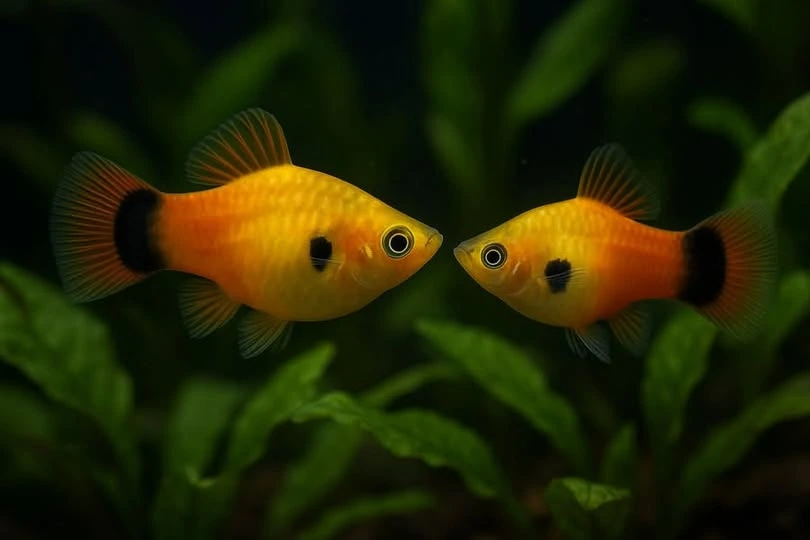 PlatyXiphophorus maculatus
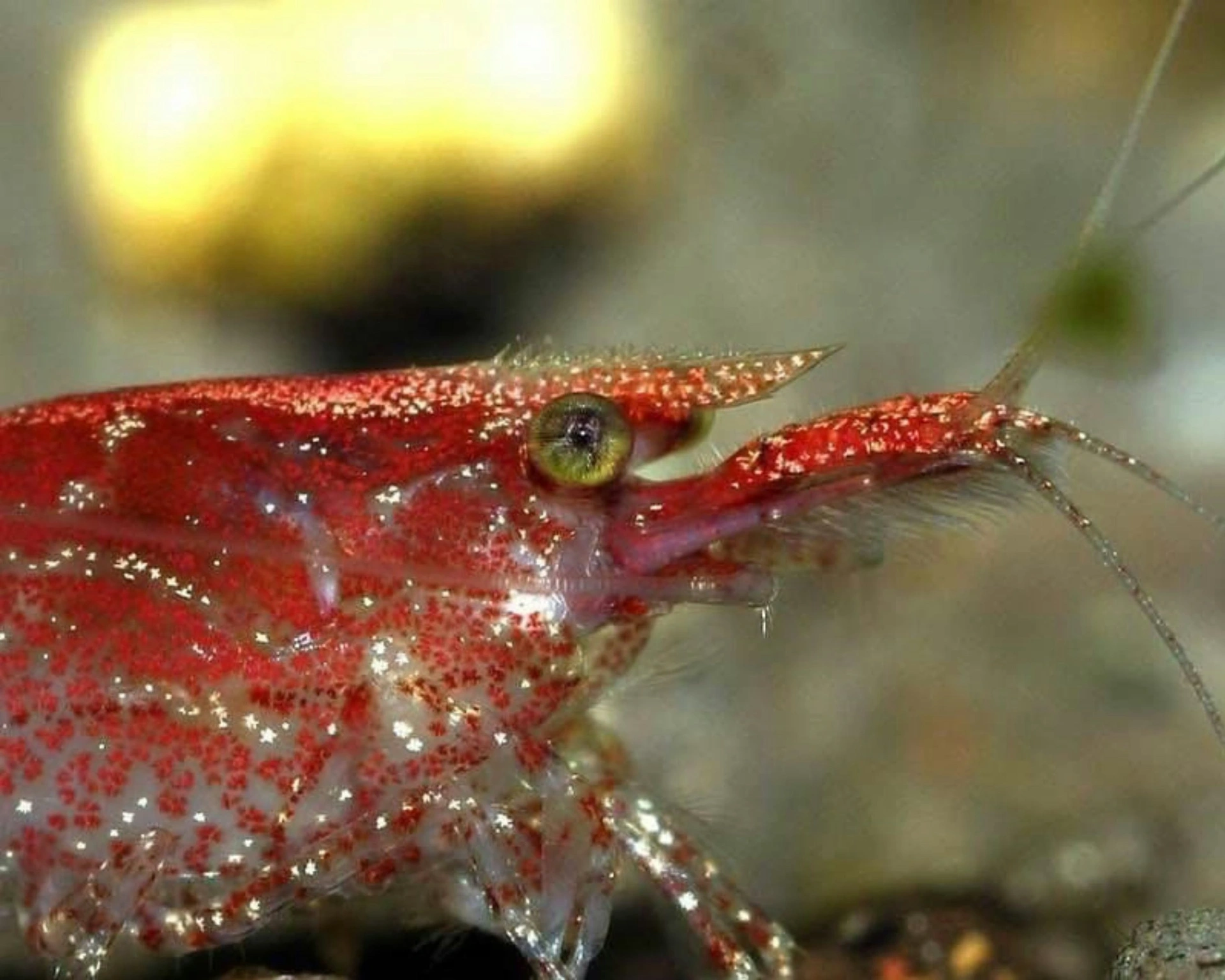 Cherry ShrimpNeocaridina davidi
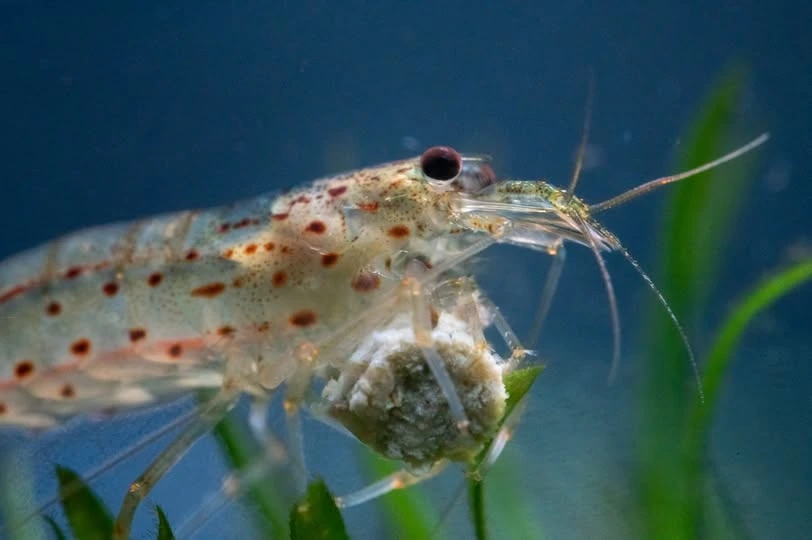 Amano ShrimpCaridina multidentata
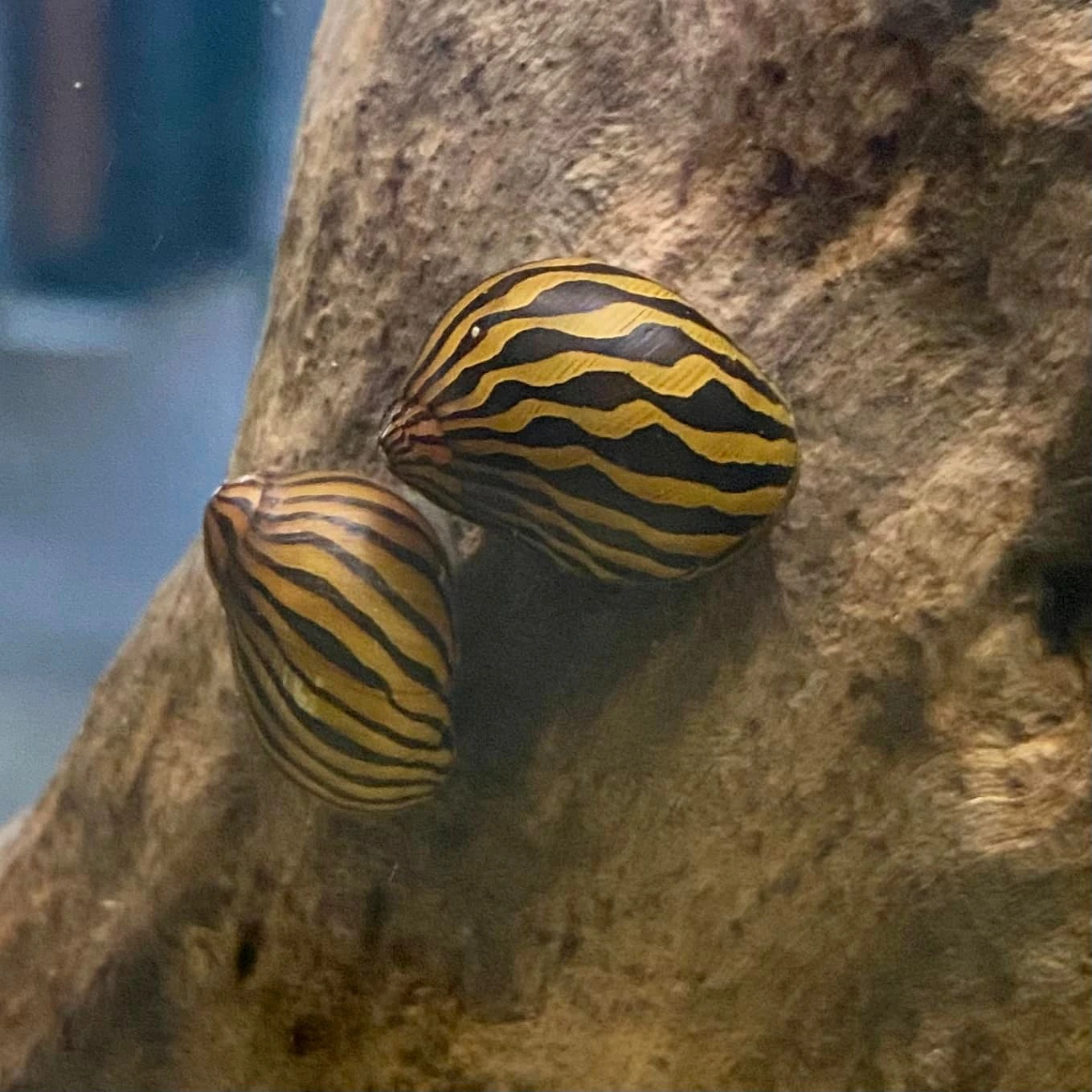 Nerite SnailNeritina sp.
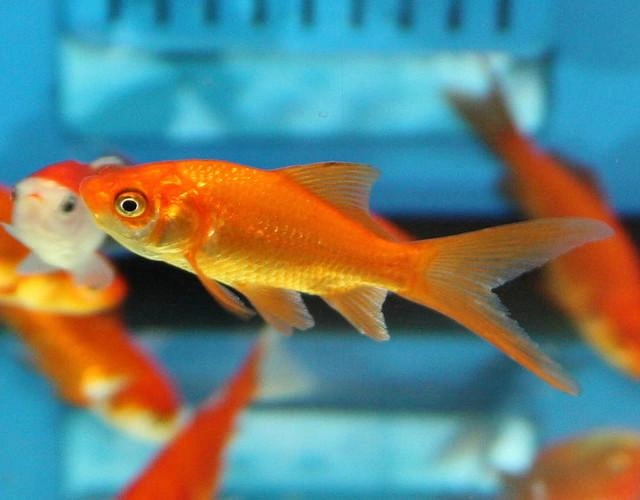 Common GoldfishCarassius auratusWill eat it — and hornwort is still a standard goldfish plant because it regrows faster than a goldfish can strip it.
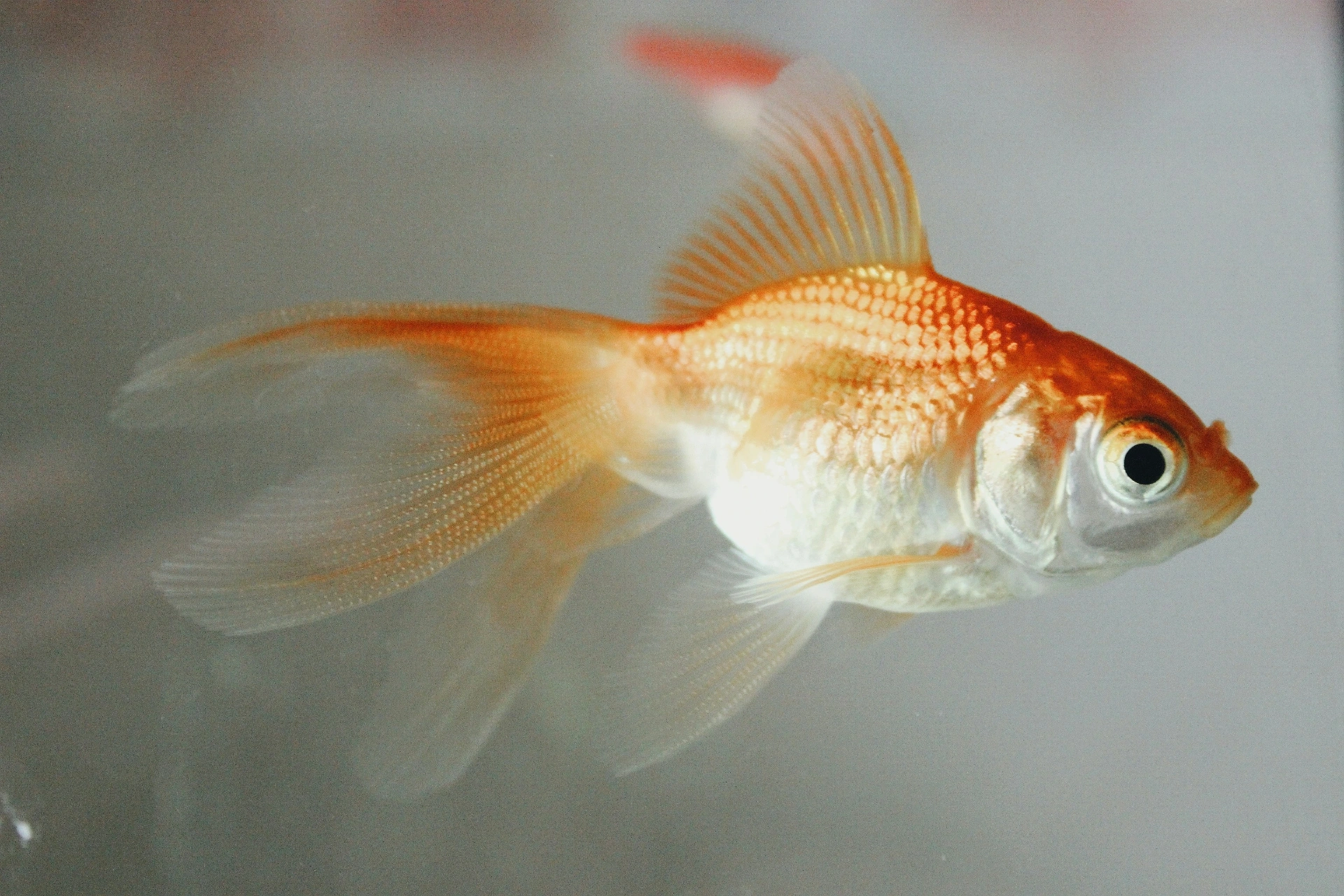 Fancy GoldfishCarassius auratusGrazes it constantly. Buy a large portion and top it up rather than expecting a fixed clump.
Will eat or uproot it
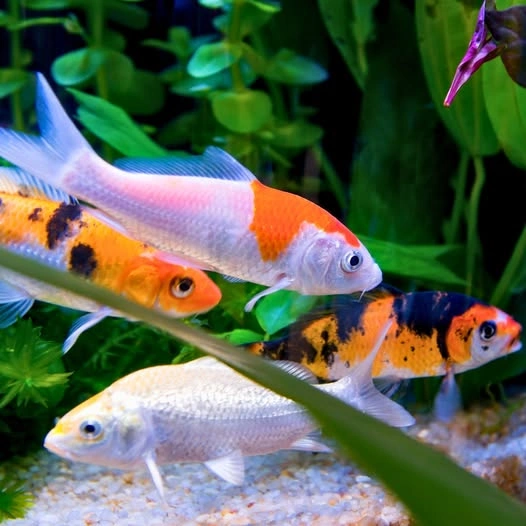
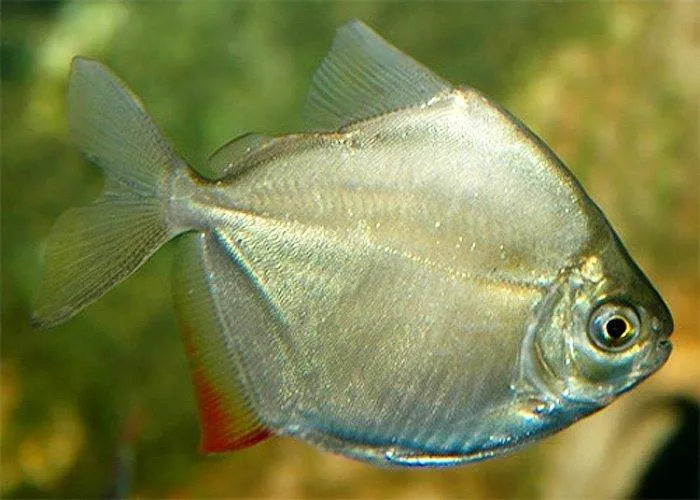


Companion plants
Two things decide what pairs with hornwort, and neither is light. It floats, so it shades whatever sits under it; and it releases compounds that slow other plants down. The plants below are shade-tolerant and slow enough that neither effect matters to them.
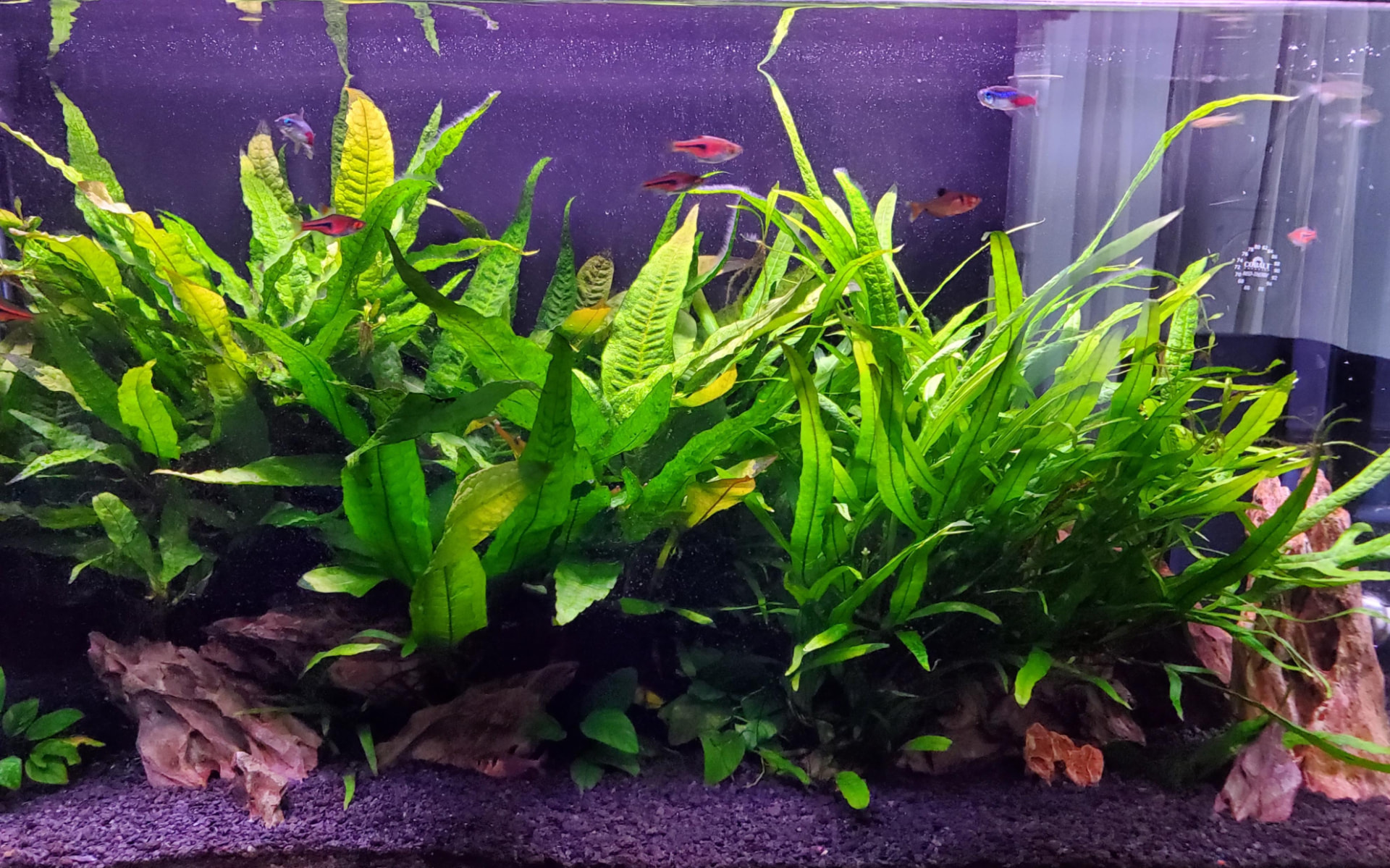
Java Fern
Microsorum pteropus
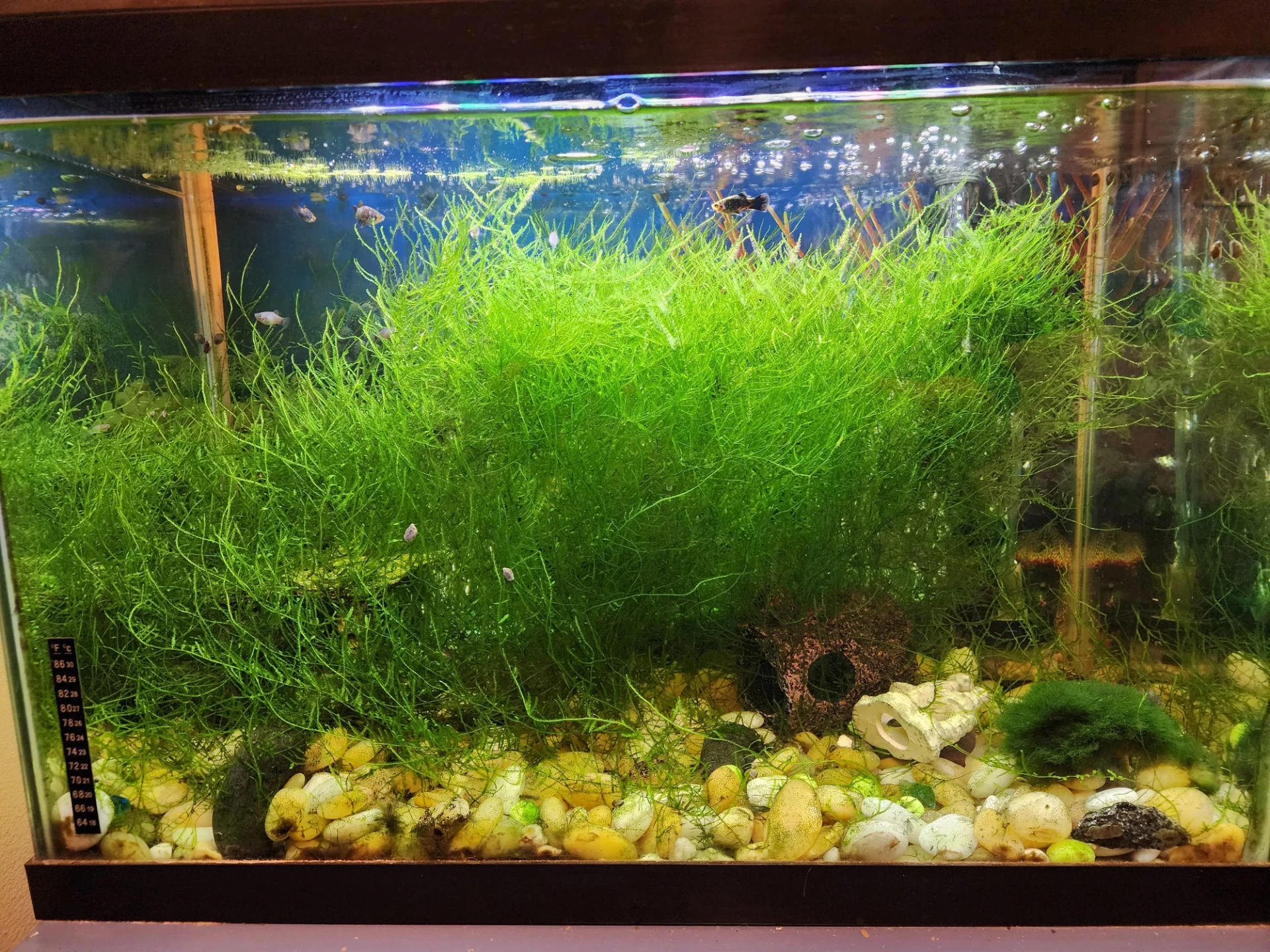
Java Moss
Taxiphyllum barbieri
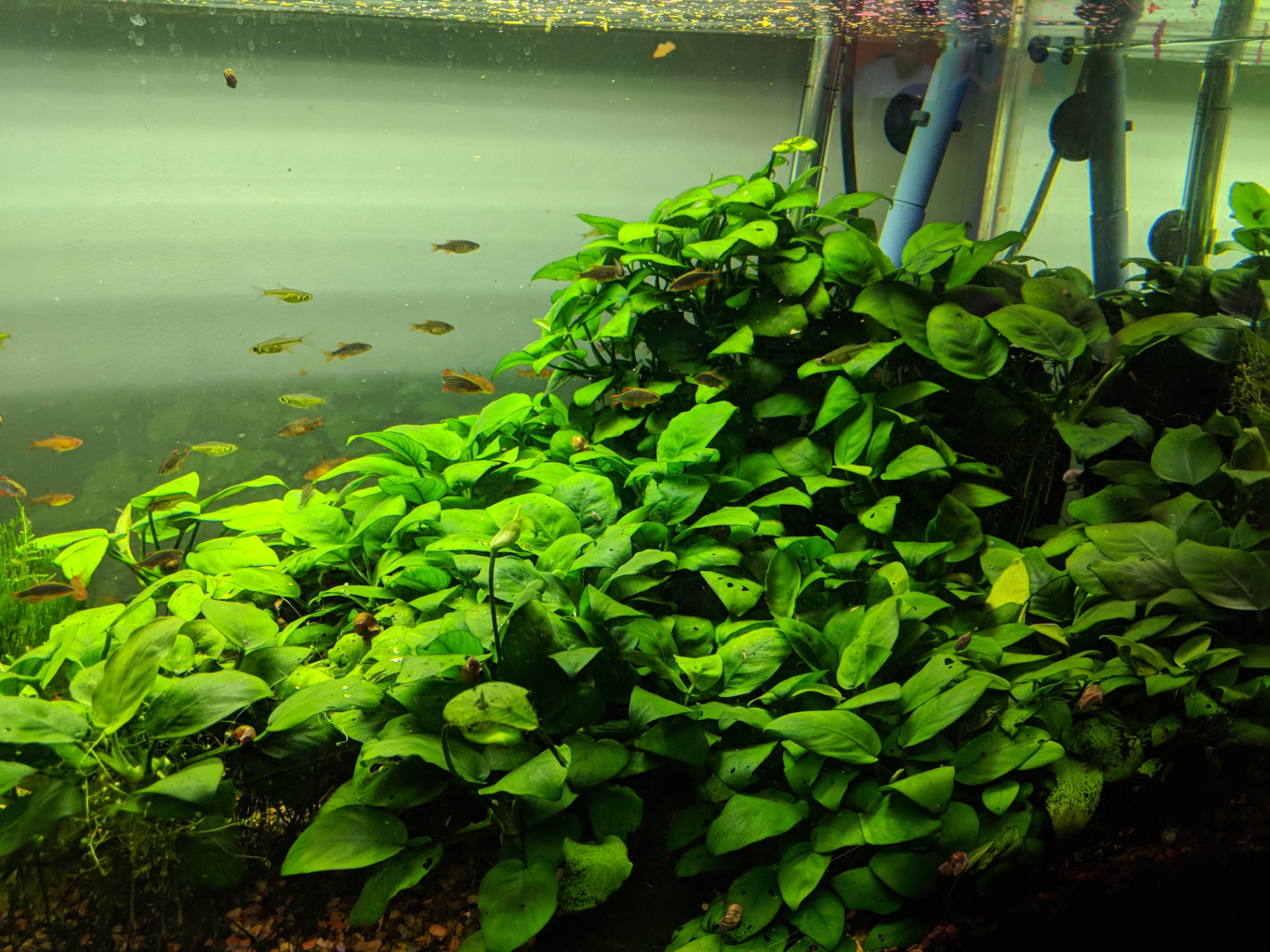
Anubias
Anubias barteri
Pro tips & common mistakes
Pro tips
- Cut the lead band or rubber strip off before the plant goes in the tank; it crushes and rots the stems it grips.
- Float it during a fishless cycle or a fry grow-out — the ammonia and nitrate uptake is the fastest of any plant here.
- Acclimate slowly and change less water at a time in the first fortnight; abrupt shifts are the main needle-drop trigger.
- If it strips bare, do not throw it out. Green stems regrow a full set of needles within two to three weeks.
- Keep it away from carpets and low-growing plants — the shade from a floating raft is heavier than most people expect.
- Check the filter intake weekly. Shed needles clog strainers and impellers faster than any other plant debris.
Common mistakes
- Planting the stem base in substrate and expecting it to anchor — it has no roots, and the buried section rots.
- Binning a stripped plant as dead when the bare stems would have regrown.
- Adding it to a lean tank with no fertiliser and blaming the plant when it starves and sheds.
- Letting the raft cover the whole surface and shading out everything beneath it.
- Pairing it with delicate stem plants and not connecting their stall to hornwort's chemistry.
- Leaving the trimmings floating — every fragment becomes another plant.
Frequently asked questions
Sources
- Plants of the World Online — Accepted name Ceratophyllum demersum and its near-global distribution.
- IUCN Red List — Least Concern assessment for Ceratophyllum demersum.
Related plants
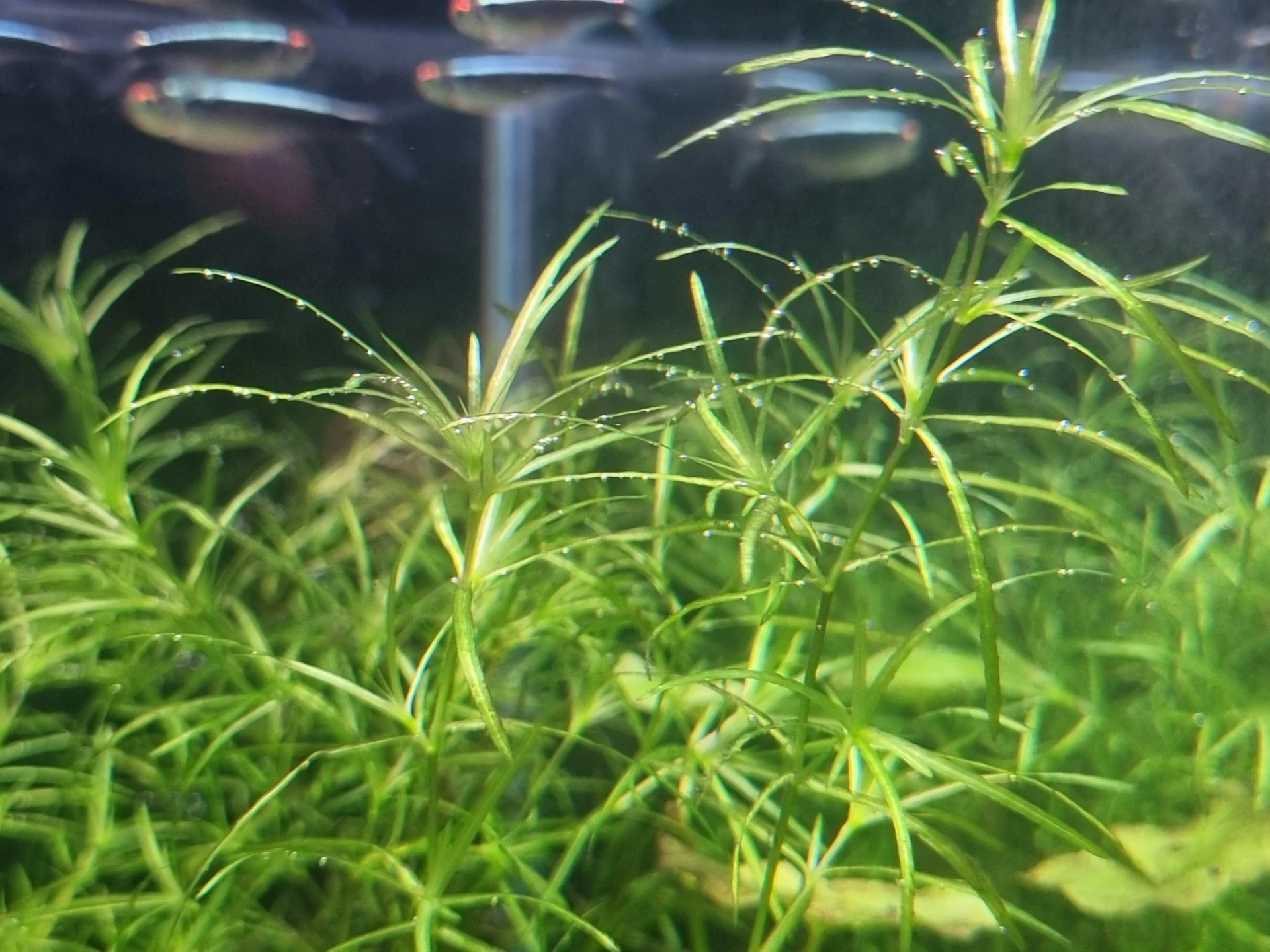
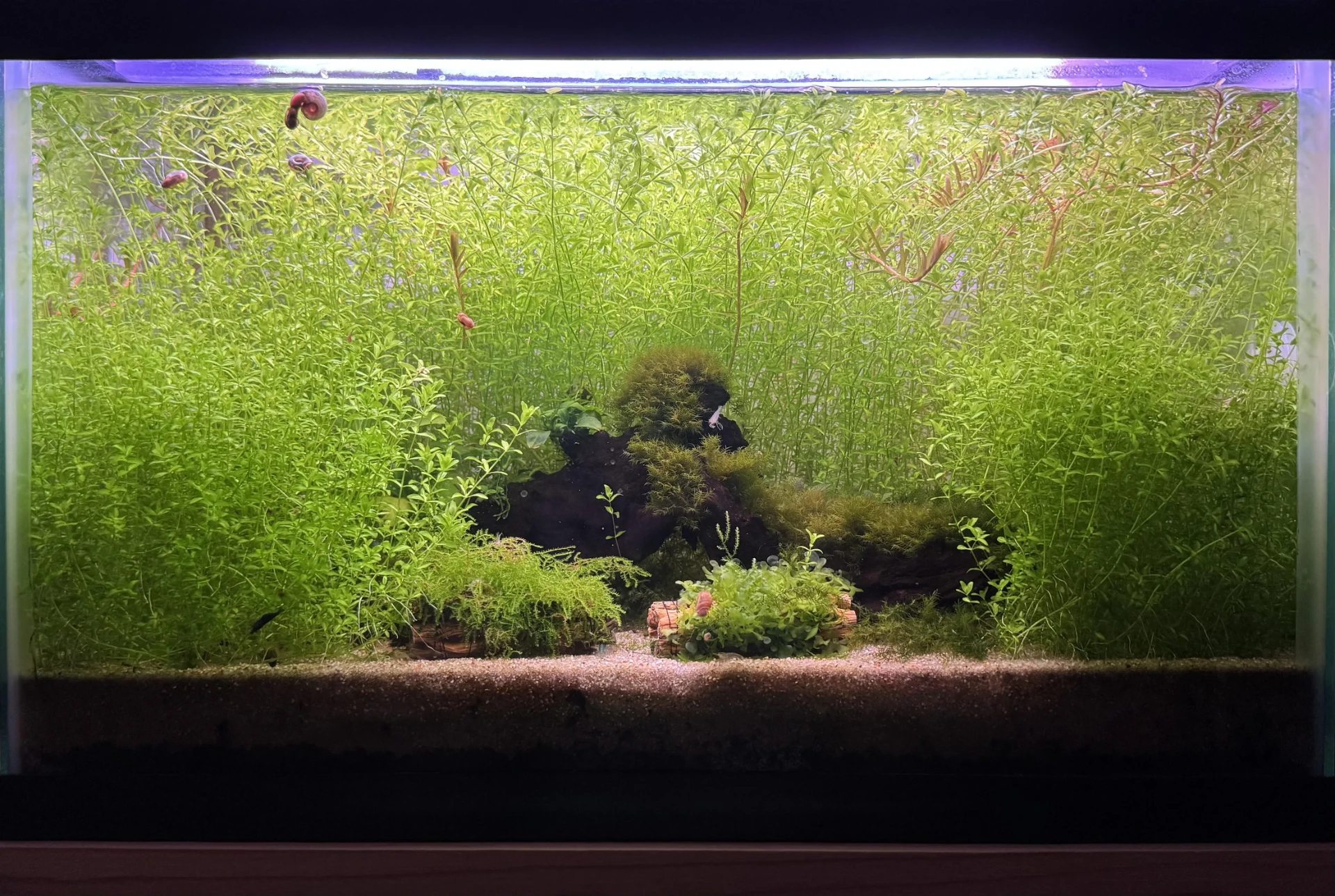
Guppy Grass
Najas guadalupensis
Pearl Weed
Micranthemum micranthemoides
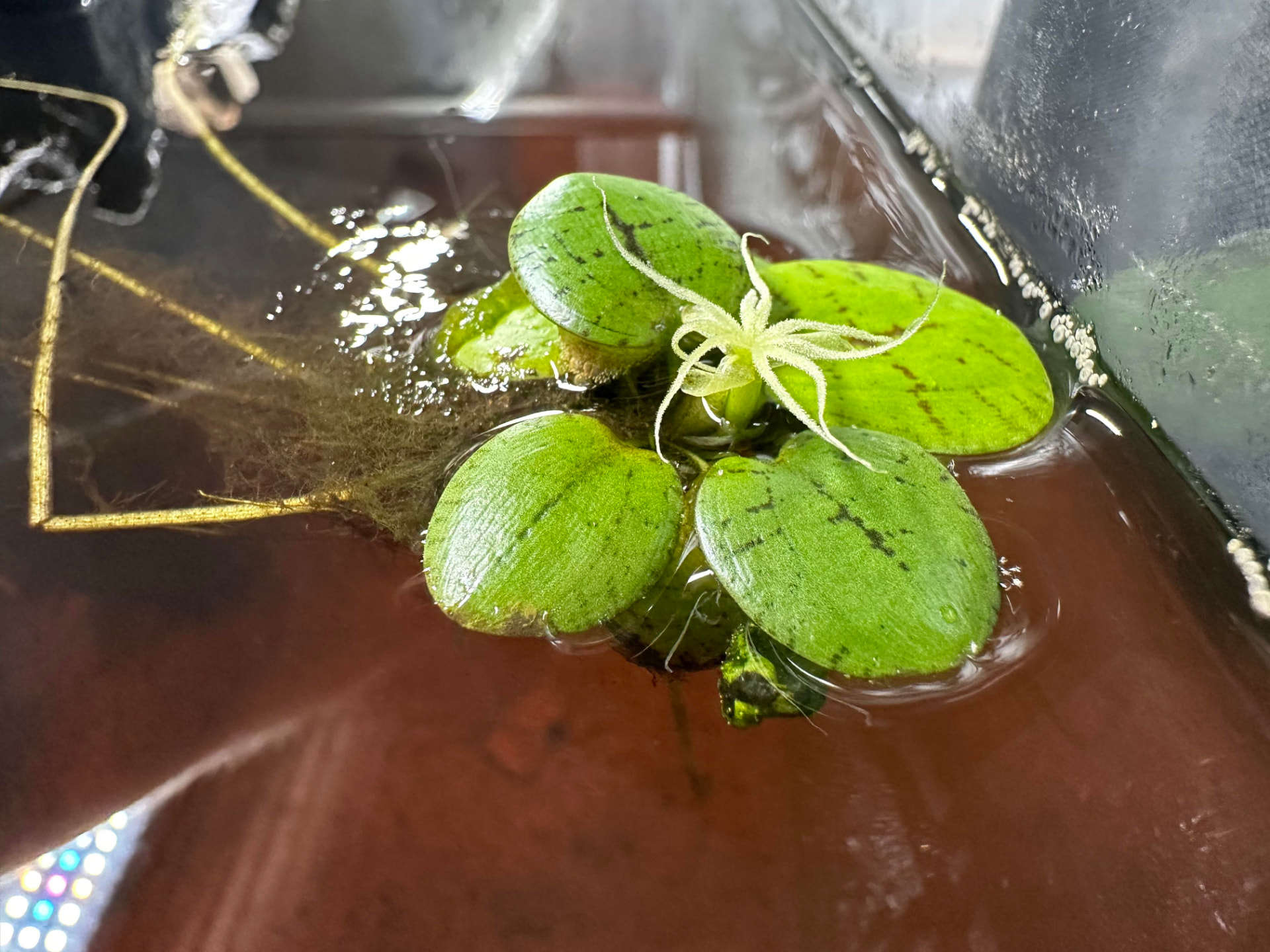
Amazon Frogbit
Limnobium laevigatum
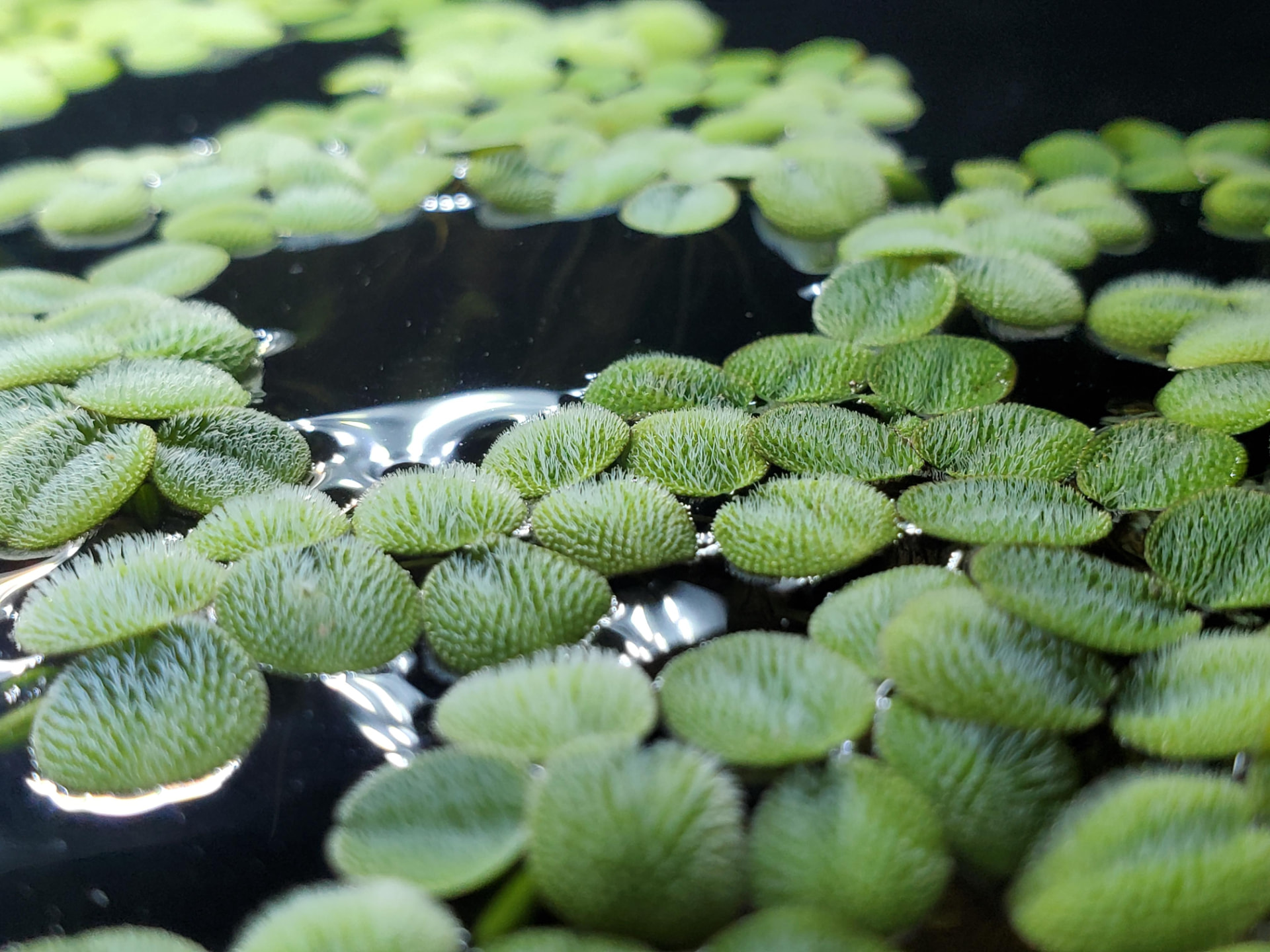
Salvinia
Salvinia minima
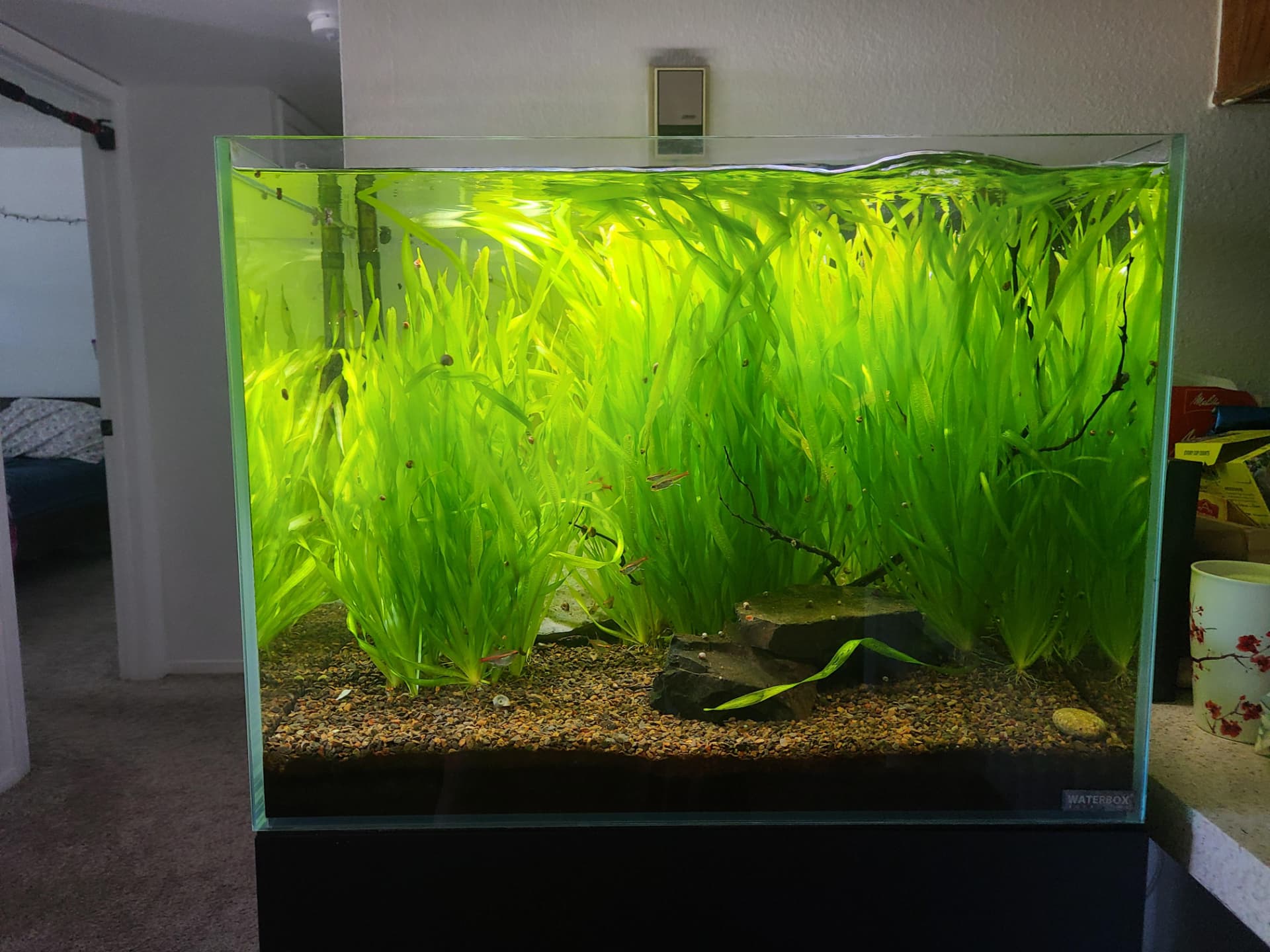
Vallisneria
Vallisneria spiralis
Marimo Moss Ball
Aegagropila linnaei
Hornwort buys you stocking headroom
A fast-growing nutrient sponge genuinely changes how much waste a tank absorbs between water changes. Work out where your stocking sits now, then decide how much of that headroom you want to spend.
Reviewed by the AquariumStocking team · Updated August 2026