
Care Requirements
Adult Size
2.0" (5cm)
Min Tank
5 gal
Temperature
68-79°F
pH Range
6.5-7.5
Lifespan
2-3 years
Min Group
3+ fish
Diet
Omnivore
Swim Level
Bottom
Bioload
1/10
Hardness
4-14 dGH
About Amano Shrimp
The Amano Shrimp is the undisputed champion of algae control in the aquarium hobby—particularly for the dreaded hair algae that few other creatures will touch. Named after the legendary aquascaper Takashi Amano who popularized their use, these large shrimp have become essential team members in planted aquariums worldwide.
What makes Amano Shrimp special is their combination of size, hardiness, and appetite. At up to 2 inches long, they're much larger and bolder than dwarf shrimp, able to coexist with most community fish. They work tirelessly, grazing on algae and biofilm throughout the day and night.
Unlike cherry shrimp and other dwarf species, Amano Shrimp cannot be bred in freshwater—their larvae require saltwater to develop. This means all aquarium Amanos are wild-caught, and you won't face population explosions. For pure algae control without breeding concerns, they're the top choice.
They are also long-lived for an invertebrate. Two to three years is the usual span in a stable planted tank, and individuals in cool, clean water are regularly reported past that, so a group bought together tends to thin out gradually over years rather than all at once. Because every Amano in the trade is wild-caught and arrives as a young adult, the shrimp you buy has already used part of that time — a batch that starts dying within weeks is an acclimation or water quality problem, not old age.
Natural Habitat & Origin
Amano Shrimp are native to Japan, Taiwan, and Korea, where they inhabit rivers that flow to the sea. Adults live upstream in freshwater, but their life cycle is catadromous—larvae must drift downstream to brackish or marine water to develop, then migrate back upstream as juveniles.
This unique reproductive requirement explains why they can't breed in freshwater aquariums. In the wild, females release larvae that drift to estuaries or the ocean, go through multiple planktonic stages in saltwater, then return upstream as tiny shrimp. Replicating this in captivity is extremely challenging.
Native Region
Japan, Taiwan, and Korea
Habitat Type
Freshwater rivers flowing to the sea
Wild Water Conditions
Variable—cool to warm (64-82°F), moderate hardness, adults in freshwater, larvae require brackish/marine water
Appearance & Varieties
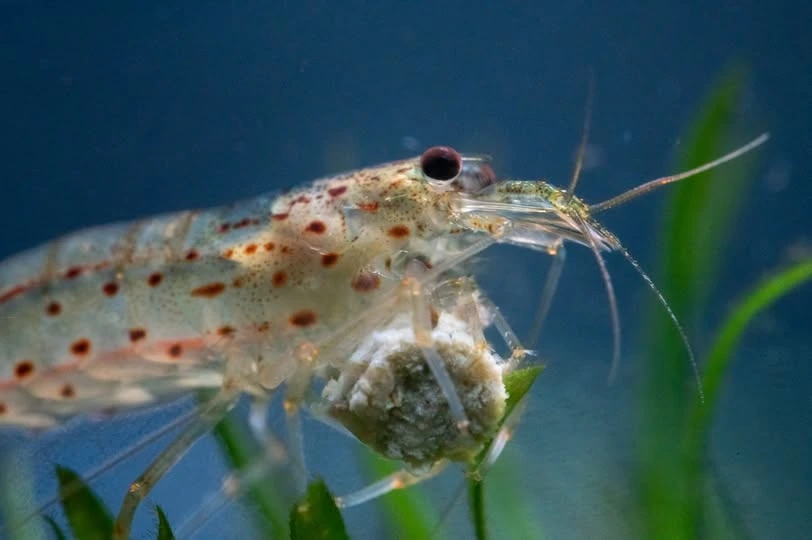
Amano Shrimp are the largest of the commonly kept freshwater shrimp, reaching about 5 cm (2 inches), with females noticeably bulkier than males. The body is translucent grey-green over a pale gut line, marked along each side with a row of broken dashes and dots and topped by a single thin cream stripe running from the head to the tail. That translucency is part of the appeal — you can watch food travel through the digestive tract, and a well-fed shrimp shows a solid dark line the whole length of its back.
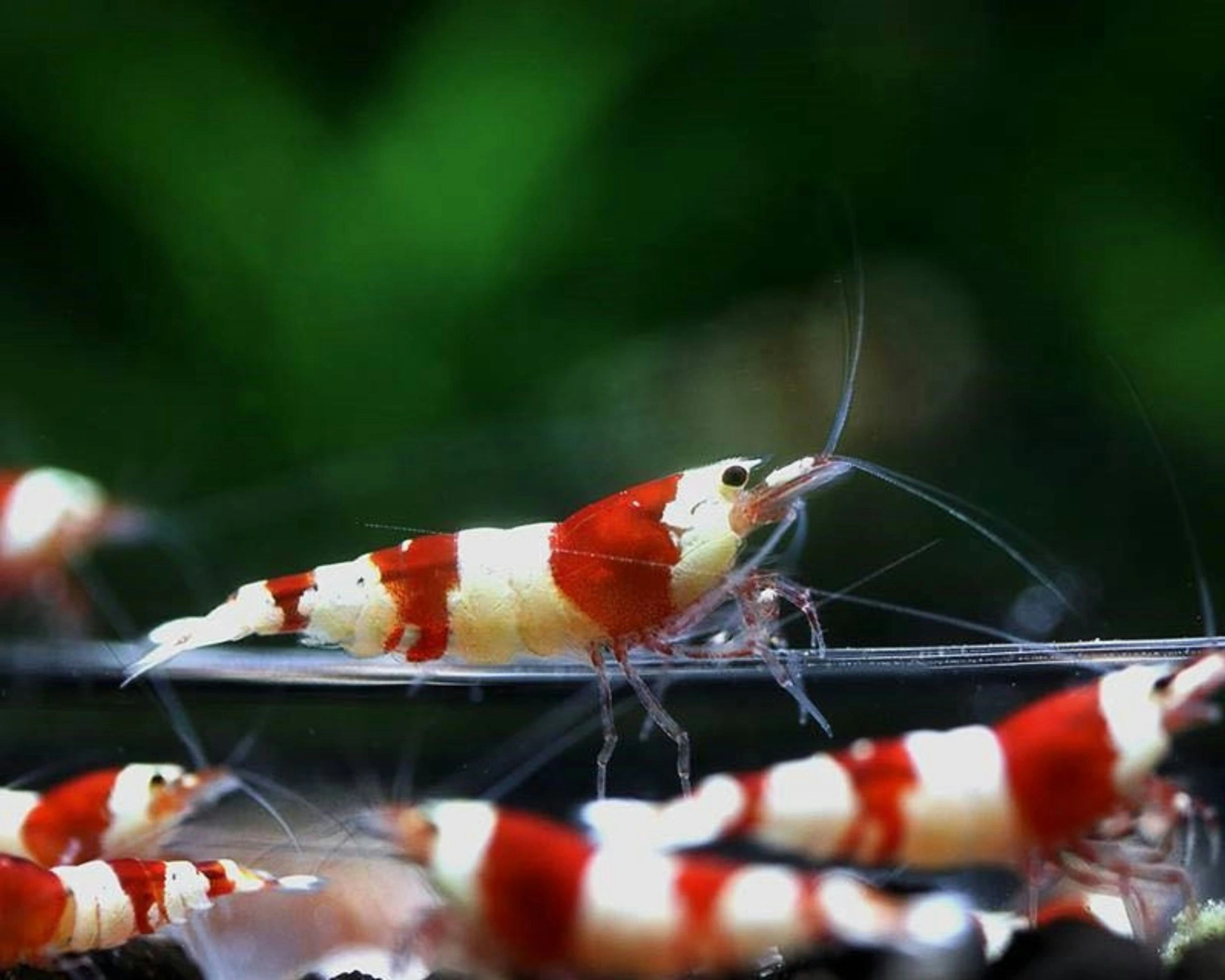
Telling them apart from other Caridina is mostly a matter of size and markings. Crystal red and crystal black shrimp are half the length and carry solid opaque banding rather than a dotted pattern; tiger shrimp show vertical bars rather than horizontal rows; cherry shrimp are Neocaridina and read as flat solid colour with no gut visible through the shell. Amanos also have visibly longer walking legs and a more upright, purposeful posture than dwarf shrimp, which stay low and tucked. Anything sold as an Amano at 1 cm with strong colour is a different species entirely.
Sexing them takes a side view of an adult. Females are larger, deeper through the abdomen, and their side markings are elongated dashes; the swimmerets under the tail are longer and curve inwards to hold eggs, and a mature female often carries a visible green saddle. Males are slimmer and slightly smaller, their markings closer to round dots arranged in even rows, and their undercarriage is flat. In a group of six or more the difference becomes obvious as soon as one female fills with eggs.
Colour is not fixed. Diet drives it more than anything else — a shrimp grazing green algae and blanched vegetables goes greener, one eating mostly prepared food and biofilm turns browner or almost amber, and shrimp on dark substrate under strong light generally darken to match. Age adds a further shift, with older individuals losing translucency and taking on a duller, mottled shell that can look reddish-brown. A shrimp that turns opaque white all over is not changing colour; that is a dying shrimp, and it is covered under health below.
Tank Setup & Requirements
Quick Requirements Summary
Tank Size
Minimum Tank Size
5 gallons
Recommended Tank Size
10 gallons
Amano Shrimp are highly adaptable and can thrive in a wide variety of aquarium conditions. They're excellent additions to planted tanks, community tanks, and dedicated shrimp tanks.
Water Parameters
Very adaptable—temperature 64-82°F (18-28°C), pH 6.5-8.0, and moderate to hard water (6-20 dGH). They're extremely sensitive to ammonia and nitrite (must be zero) and prefer nitrates under 20 ppm. They tolerate a wide range of conditions but are sensitive to sudden changes.
Substrate
Any substrate works—they graze on all surfaces rather than being substrate-dependent. They'll pick through gravel, sand, and bare-bottom tanks equally effectively.
Plants & Decorations
Live plants are beneficial as they provide grazing surfaces and hiding spots for molting. Any plants work, but those with surface area for algae growth are especially useful. Provide hiding spots where shrimp can retreat during vulnerable post-molt periods.
Filtration & Water Flow
Good filtration is appreciated. Cover intakes with sponge to prevent any shrimplets from being sucked in (though Amano larvae don't survive in freshwater anyway).
Lighting
Any lighting works—moderate light encourages algae growth for them to graze on.
Diet & Feeding Guide
Diet Type
omnivore
Feeding Frequency
Daily (if algae is limited)
Portion Size
Supplement based on available algae
Amano Shrimp are primarily herbivorous detritivores, feeding on algae, biofilm, decaying plant matter, and dead organisms. They're incredibly efficient algae eaters—the best in the hobby for hair algae specifically.
Best Foods for Amano Shrimp
- Tank algae and biofilm — Their primary food source in established tanks
- Algae wafers — Supplement when natural algae is insufficient
- Blanched zucchini — Excellent vegetable supplement, readily accepted
- Blanched spinach — Nutritious green supplement
- Shrimp pellets — Good supplemental food for shrimp
- Indian almond leaves — Provides biofilm and tannins they appreciate
Foods to Avoid
- Copper-containing foods/medications — Copper is lethal to shrimp
- Exclusively protein-based foods — They're primarily herbivores
They're incredibly efficient algae eaters. In established tanks with algae, supplementation may be minimal. If algae runs out, they'll need regular feeding. Avoid overfeeding—if too well-fed on prepared foods, they may reduce their algae-eating efforts.
What a Amano Shrimp will actually graze depends entirely on which algae you have — soft film comes off easily, while black beard and blue-green growth are ignored by almost everything. Identify the algae in your tank before deciding whether livestock is the right fix.
Behavior & Temperament
Amano Shrimp are bold, active and constantly foraging, and that confidence is the main behavioural difference between them and dwarf shrimp. Where cherry shrimp scatter, an Amano walks up to a sinking pellet, takes it in both front legs and carries it away, sometimes wrestling it out of the mouth of a fish several times its size. They graze every surface in the tank — glass, wood, rock, leaves, filter intakes, substrate — and they do it in the open rather than under cover.
They are most active in the first and last hours of the light period and again after lights out, so a tank that looks like it holds three shrimp at midday often holds ten. Flow interests them: adults hold position in the outflow of a filter, picking particles out of the current, and they climb plant stems to reach the strongest water movement. Within a group there is competition for food but no real aggression, only pushing and stealing, and there is no hierarchy to manage.
Nothing about their behaviour is territorial, so they can be kept in any number the tank's biological load supports — five or six is enough to see natural behaviour, and more is better for algae control. They ignore fish, plants and each other, which is why they slot into almost any peaceful community. They will not, however, compete for food indefinitely; in a tank of fast eaters they slowly lose condition unless something sinks for them after lights out.
Two behaviours are worth reading as signals rather than quirks. A shrimp that climbs above the waterline or sits on the rim is telling you the water is wrong — check ammonia, nitrite and nitrate before anything else, because healthy Amanos stay submerged. A shrimp that hides for a day or two and then reappears beside a hollow, perfect copy of itself has simply moulted, and that copy should be left in the tank for the group to eat.
Tank Mates: Compatibility Guide
Compatible Tank Mates
Peaceful, won't bother large Amanos
Peaceful community fish
Peaceful bottom dwellers
Fellow algae eaters, no competition issues
Peaceful, shrimp-safe
Peaceful with other shrimp
Peaceful nano fish
Tank Mates to Avoid
Large cichlids
Will hunt and eat shrimp
Pufferfish
Shrimp are natural prey
Large catfish
May eat shrimp
Crayfish
Will attack and eat shrimp
Assassin snails
May attack molting shrimp
Common Pairing Questions
Do Amano Shrimp eat all types of algae?
They eat most soft algae including hair algae, which few other creatures touch. They won't eat black beard algae, green spot algae, or blue-green algae (cyanobacteria). They're the best option for hair algae specifically.
Will fish eat my Amano Shrimp?
Adult Amanos are relatively large (2 inches) and safe with most community fish. Only large predatory fish like cichlids or large catfish pose a threat. They're much safer than small dwarf shrimp.
Can Amano Shrimp live with Cherry Shrimp?
Yes—they're completely peaceful with other shrimp. They may compete for food, but they don't harm each other. They can coexist happily in the same tank.
Breeding Amano Shrimp in home aquariums is extremely challenging—virtually impossible for most hobbyists. Their larvae require saltwater to develop.
Females readily carry eggs in freshwater (1000-3000 greenish eggs carried under the tail for 4-6 weeks). However, when larvae hatch, they require brackish to full marine water to survive. The larvae go through multiple planktonic stages, feeding on marine phytoplankton and zooplankton, before metamorphosing into tiny shrimp that can return to freshwater.
Successfully raising Amano larvae requires a separate marine tank, precise salinity transitions, live planktonic foods, and weeks of careful management. All aquarium Amano Shrimp are wild-caught because commercial and home breeding is so difficult.
Health Issues & Disease Prevention
Amano Shrimp are generally hardy once properly acclimated. Their main vulnerabilities are copper exposure (lethal), sudden parameter changes, and failed molts.
Common Diseases
| Disease | Symptoms | Treatment |
|---|---|---|
| Bacterial infections | Pink/white discoloration, lethargy | Improve water quality, salt dips for external infections |
| Vorticella | White fuzzy growths on body | Salt dips, improve water quality |
| Muscular necrosis | White/opaque muscle tissue | Often fatal—prevent with stable parameters |
| Failed molts | Death during or after molting, stuck in old shell | Ensure proper GH, iodine supplementation |
Signs of a Healthy Amano Shrimp
- Active grazing behavior
- Clear body with visible organs
- Regular molting (every 3-4 weeks)
- Good appetite
- Quick movement when startled
- Full antennae
Prevention Tips
- Drip acclimate for 1-2 hours minimum—they're sensitive to parameter changes
- Never use copper-based medications in their tank
- Provide adequate minerals (GH 6+) for healthy molting
- Consider iodine supplementation for molting success
- Provide hiding spots for vulnerable post-molt periods
- If shrimp are climbing out, check water parameters immediately
Frequently Asked Questions
They eat most soft algae including hair algae, which few other creatures touch. They won't eat black beard algae, green spot algae, or blue-green algae (cyanobacteria). They're the best option for hair algae specifically.
Amano larvae require saltwater to develop—they're catadromous like salmon in reverse. The larvae go through complex marine stages that are nearly impossible to replicate at home. All aquarium Amanos are wild-caught.
A common guideline is 1 Amano per 2-3 gallons for effective algae control, so 5-10 for a 20 gallon tank. In heavily planted or algae-prone tanks, more may be needed.
Adult Amanos are relatively large (2 inches) and safe with most community fish. Only large predatory fish like cichlids or large catfish pose a threat. They're much safer than small dwarf shrimp.
This is a warning sign about water quality. Check ammonia, nitrite, and nitrate immediately. Healthy Amanos in good conditions stay submerged. Escape attempts indicate something is wrong.
Give them a cycled, stable tank of 20 litres or more at 20-27 °C, pH 6.5-7.5 and moderate hardness, with plants or wood to graze and no copper-based medication ever. Keep nitrate low with regular water changes, drip-acclimate them slowly on arrival because they are wild-caught and sensitive to sudden change, and make sure something sinks for them once the algae runs short. Beyond that they are undemanding: no special diet, no breeding to manage and no territorial behaviour to plan around.
Two to three years is normal, and cooler, very stable tanks often push individuals beyond that. Since all Amanos are wild-caught adults, the clock is already running when you buy them. Losses in the first few weeks almost always trace back to acclimation, copper or an incomplete cycle rather than age.
They split the old shell behind the head, back out of it in seconds and then hide for a day or two while the new shell hardens. The discarded shell is a hollow, transparent, perfectly shaped copy of the shrimp and is frequently mistaken for a dead one — a moult is see-through and empty, while a dead shrimp is opaque and turns pink. Leave the moult in the tank; the group eats it back for the calcium. Shrimp that get stuck half out of the shell point to unstable hardness or a large swing in parameters.
A shrimp that goes uniformly opaque or milky, especially through the tail muscle, is dying or already dead, and a dead Amano turns pink-orange within hours as if cooked. Cloudiness confined to one patch usually means a bacterial or fungal infection secondary to poor water quality. Test ammonia, nitrite and nitrate immediately, check that nothing containing copper has entered the tank, and change water — once the whole body is opaque there is no treatment.
No. They graze algae and biofilm off leaves and will pick at soft, decaying tissue on a dying leaf, which is how they get blamed for damage they did not cause. Healthy plants are safe, including delicate carpets and moss. If leaves are being eaten in your tank, look at your fish or your snails rather than the shrimp.
This is the most common way keepers lose them: the shrimp clear the tank and then slowly starve while looking fine. Feed blanched courgette, spinach or carrot, sinking shrimp pellets or algae wafers, and mineral-rich leaf litter such as Indian almond or oak, which grows the biofilm they graze between feeds. Two or three small feeds a week suits a group of six, dropped after lights out so the fish do not intercept them, and remove uneaten vegetables after a day.
Tips for Keeping Amano Shrimp
Pro Tips
- ✓They're the undisputed champions for hair algae—nothing else comes close
- ✓Drip acclimate for 1-2 hours minimum—they're sensitive to parameter changes
- ✓Never use copper medications in their tank—it's lethal to shrimp
- ✓Watching them steal food from fish is endlessly entertaining
- ✓They're transparent—you can watch food moving through their digestive system
- ✓Provide iodine supplementation for healthy molting
- ✓If they're trying to climb out, check your water parameters immediately
Common Mistakes to Avoid
- ✗Not drip acclimating—sudden parameter changes kill them
- ✗Using copper-based medications
- ✗Expecting them to breed in freshwater
- ✗Overstocking relative to available algae—then not supplementing food
- ✗Not providing hiding spots for molting
- ✗Keeping with large predatory fish
- ✗Ignoring escape attempts—it's a warning sign about water quality
Sources
- SeaLifeBase — Accepted scientific name, maximum size and native range for the Amano Shrimp.
- IUCN Red List — Conservation status assessment for Caridina multidentata.
Related Species You Might Like
View All Fish →
Amazon Puffer
Colomesus asellus
Crystal Shrimp
Caridina cantonensis
Bladder Snail
Physella acuta
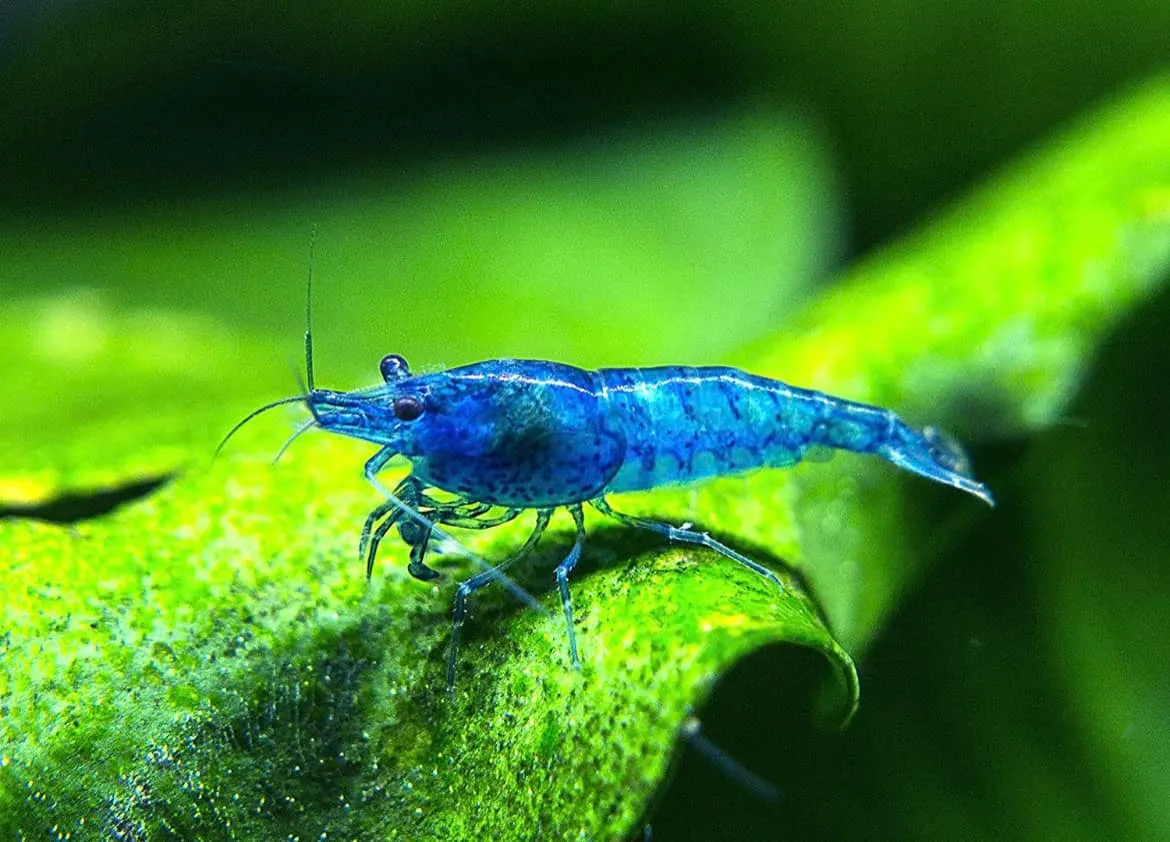
Blue Velvet Shrimp
Neocaridina davidi var. blue
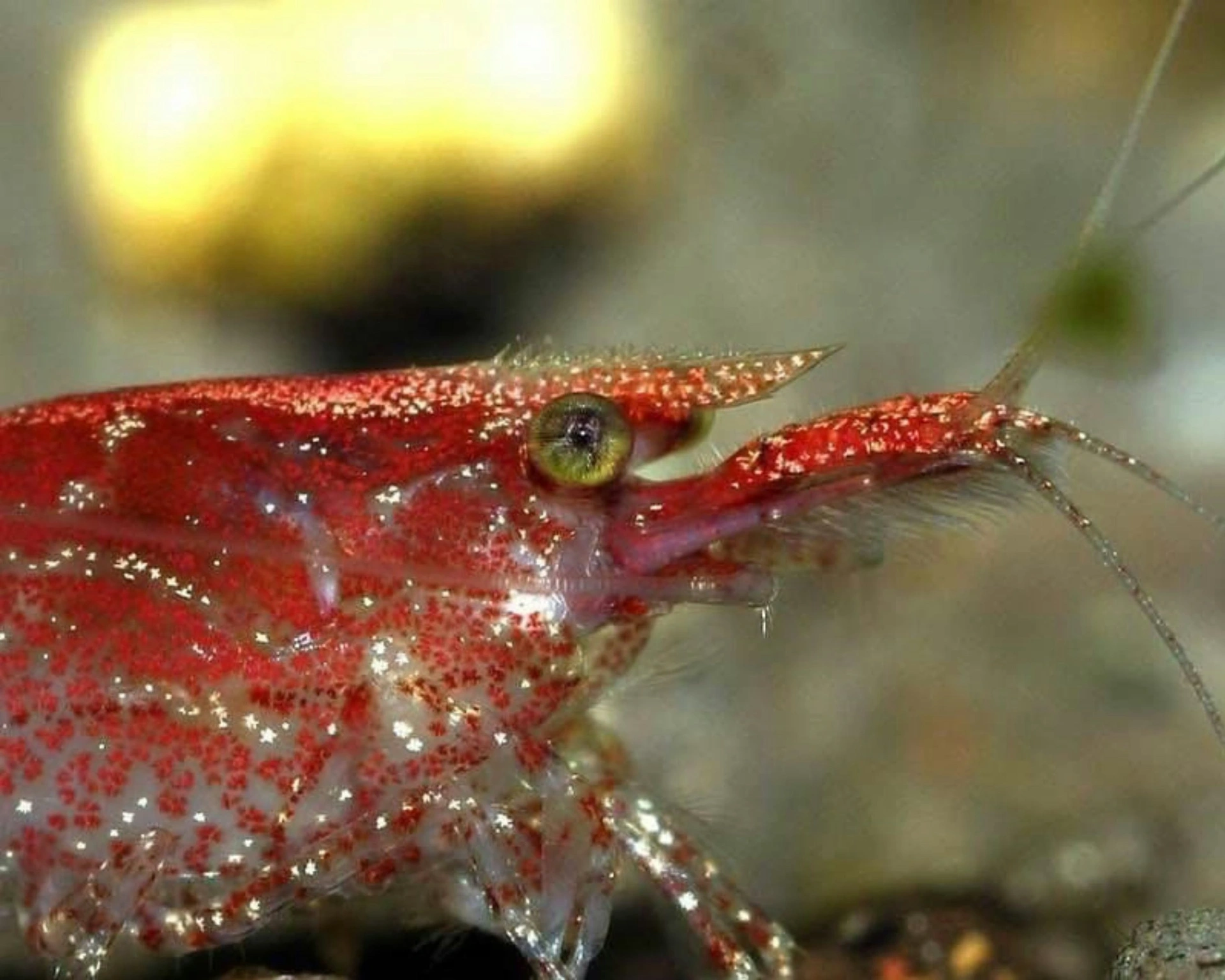
Cherry Shrimp
Neocaridina davidi
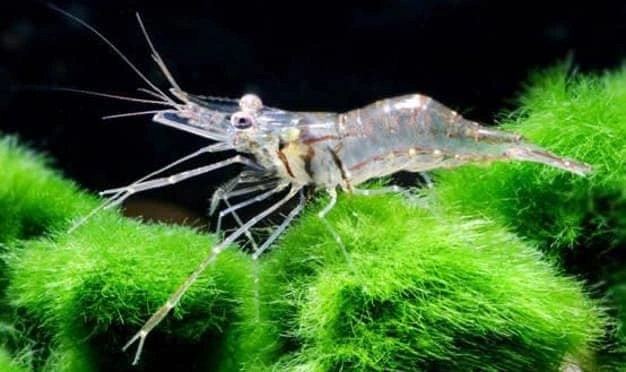
Ghost Shrimp
Palaemonetes paludosus
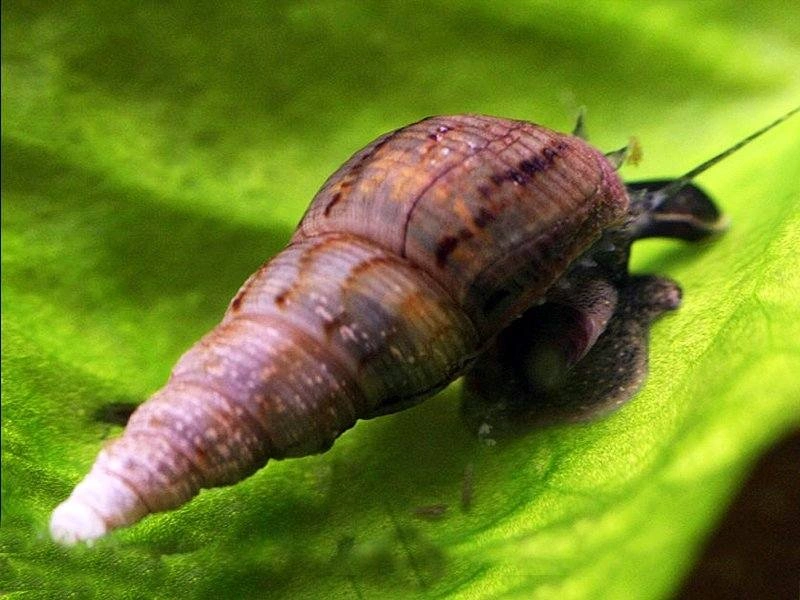
Malaysian Trumpet Snail
Melanoides tuberculata
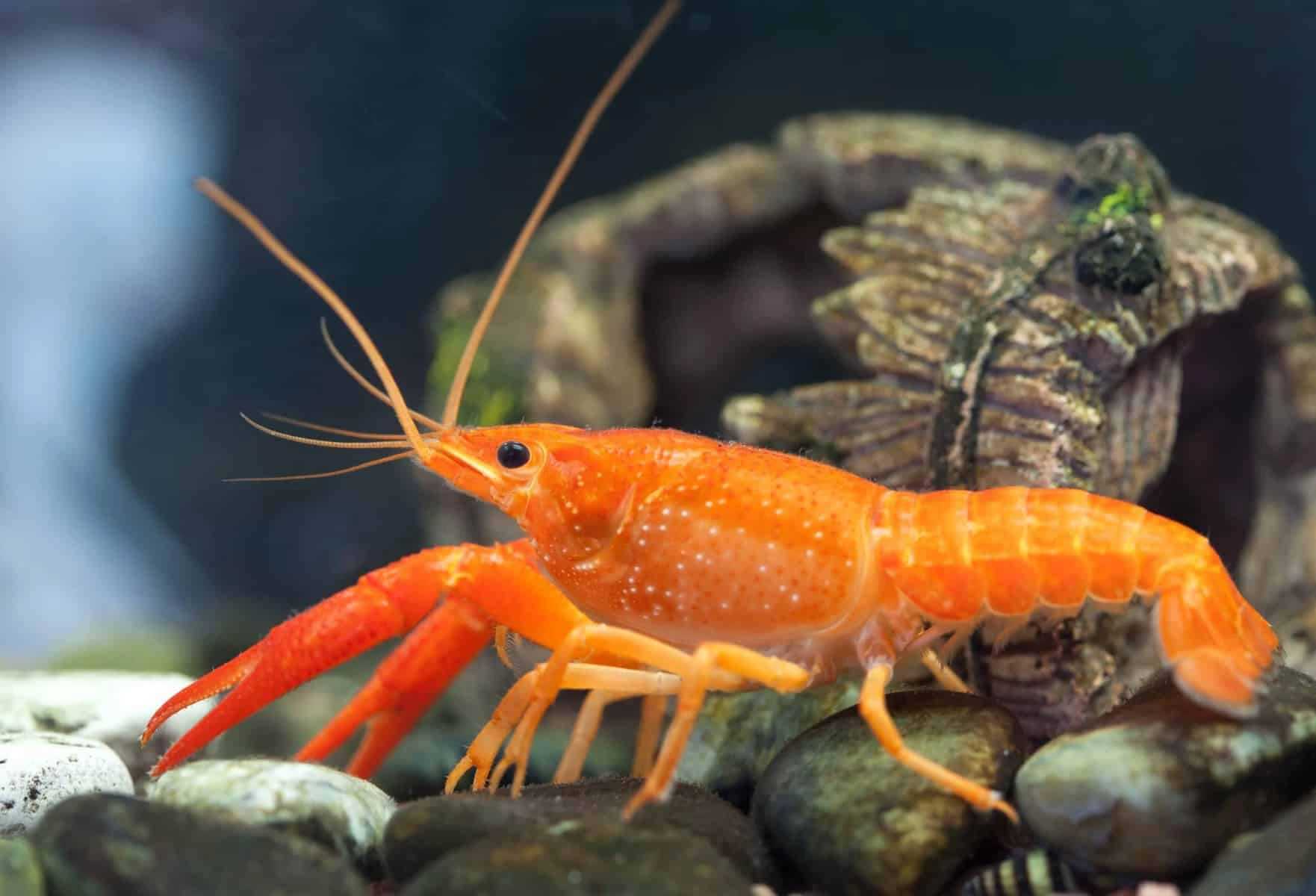
Mexican Dwarf Crayfish
Cambarellus patzcuarensis
Ready to Add Amano Shrimp to Your Tank?
Use our free stocking calculator to check compatibility, bioload, and get personalized recommendations.