
Guppy Grass Care Guide
Najas guadalupensis (syn. Caulinia guadalupensis)
Reviewed by the AquariumStocking team · Updated August 2026
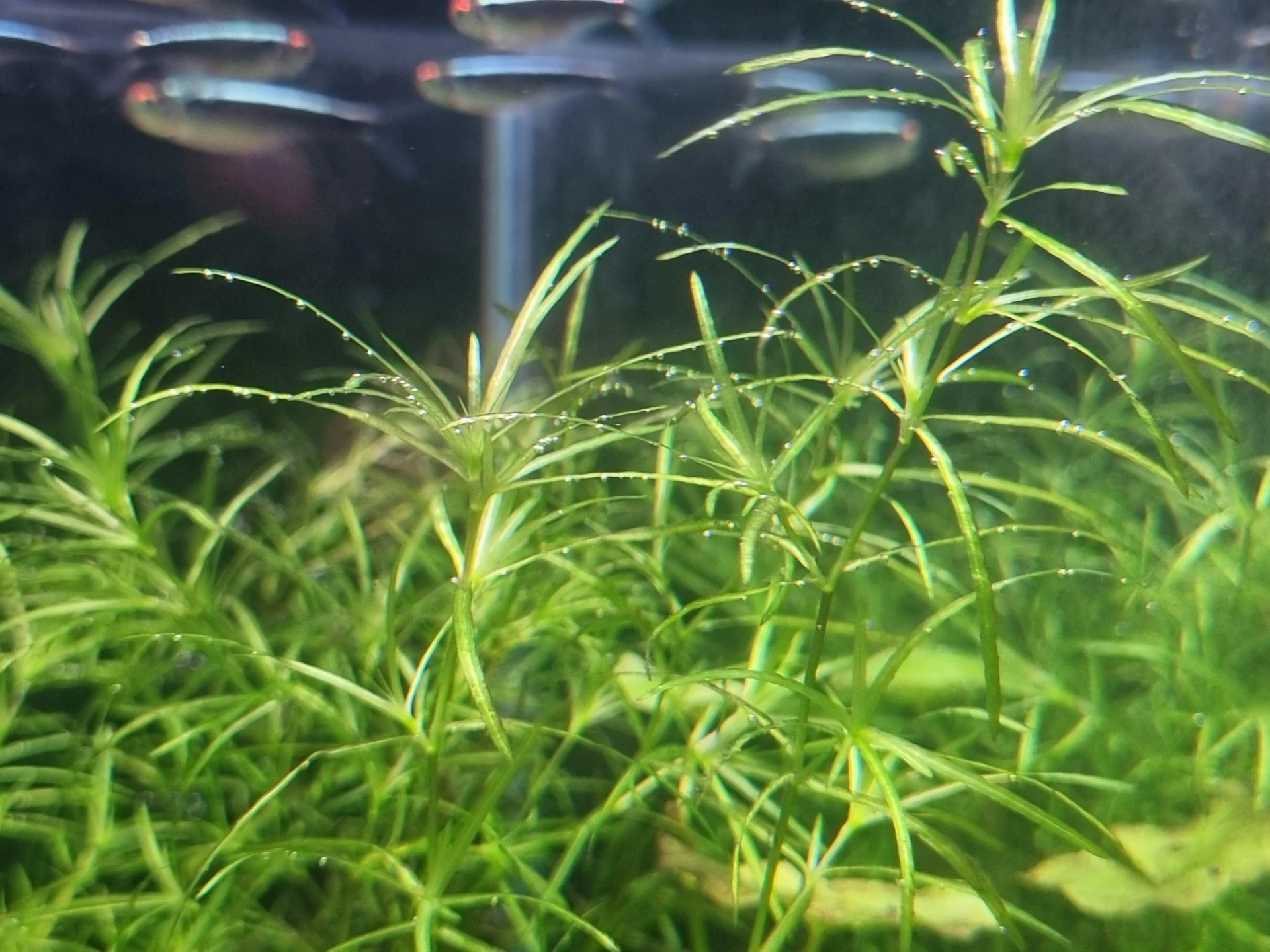
The best fry cover in the hobby, named by the breeders who use it — a fine, tangled, rootless stem plant that grows fast and snaps if you look at it wrong.
Guppy Grass quick facts
- Light demand
- Low
- CO2 requirement
- Not needed
- Difficulty
- Beginner
- Growth rate
- Fast
- Placement
- Background / Floating
- Growth habit
- Stem
- Substrate need
- None — floats or is loosely planted
- Max size
- 90 cm (35.4 in) tall, ~40 cm wide
- pH
- 6.0–8.0
- Hardness
- 2–20 dGH
- Propagation
- Fragmentation — every broken piece grows into a new plant
- Temperature
- 18–30 °C (64–86 °F)
It produces only thin, weak roots and does not anchor properly. Planted stems work loose within days; most keepers simply let it float or wedge it behind hardscape.
Overview
Guppy grass got its common name from the people who use it most: guppy breeders. The plant grows as a loose, three-dimensional tangle of very fine leaves on thin stems, and that tangle is the best fry refuge available in the hobby. Newborn livebearers disappear into it within seconds of being dropped, and no broad-leaved plant comes close to the same effect.
If you are breeding guppies, endler's livebearers, mollies or platies, this is the direct answer to keeping fry alive in a community tank. It costs nothing, needs nothing, and does the job passively.
The second use is nutrient stripping. Guppy grass grows fast in almost any conditions and pulls ammonia and nitrate out of the water column at a rate that makes it genuinely useful in a new tank, a quarantine tank, or a heavily fed fry tank where waste accumulates faster than the filter matures.
The catch is fragility. The stems snap on contact — nets, hands, a determined fish — and every fragment carries on growing wherever it lands. It is the plant's propagation strategy and the main reason people eventually take it out.
What you're buying
It is almost never sold in a pot. Guppy grass changes hands as a bag of loose stems, usually from another hobbyist, and it arrives in worse condition than it will ever be in again.
Expect it to look terrible
Shipped guppy grass arrives as a bruised, shedding tangle. As long as a few stems are green, it recovers within a fortnight — judge it two weeks after it goes in, not on arrival.
A small portion is enough
It doubles quickly. A handful fills a corner of a two-foot tank within a month, and a whole bag will fill the tank itself.
Quarantine it
Hobbyist-to-hobbyist plants bring snails, hydra and planaria more often than shop stock. A week in a bucket saves a lot of trouble in a fry tank.
Handle it as little as possible in the first week. Every transfer costs stems, and the fragments spread through the tank whether you want them to or not.
Rinse it once, gently, and put it straight in. There is no planting step to get right.
Light, CO2 & nutrients
Light
Low
CO2
Not needed
Fertilisation
Water column (liquid)
Light
Low light is enough and bright light simply speeds it up. This is not a plant with a colour response or a compact-growth response to chase — more light means more plant, faster.
Floating at the surface it gets the most light in the tank and grows accordingly, which is usually how people end up with more of it than they wanted.
In a fry tank, a dim light and a thick mat of guppy grass is the standard setup: the fry get cover, the plant gets enough to keep growing, and algae never gets a foothold because the nutrients are gone.
CO2
Not needed. Guppy grass grows fast enough on ambient CO2 that injection adds nothing you would notice.
Floating stems take carbon from the surface layer directly, which is part of why it outpaces rooted plants in the same tank without any assistance.
Work out your CO2 injection rate →
Nutrients
It feeds entirely through its leaves and stems, so root tabs do nothing. A basic all-in-one liquid fertiliser is all it ever needs, and in a well-fed fry tank the fish food covers it.
The uptake rate is the point. Guppy grass strips ammonia, nitrate and phosphate quickly, which is why it works in cycling tanks, quarantine tanks and overfed nurseries. Removing a handful every week is a real export of nutrients from the system.
In a very lean, heavily planted CO2 tank it can go pale and stringy as it loses the competition for nitrogen — an unusual failure, but it happens in tanks where everything else is being dosed precisely.
Water & temperature
pH
6.0–8.0
Hardness
2–20 dGH
Temperature
18–30 °C (64–86 °F)
Extremely tolerant. Guppy grass handles soft water and hard water, acidic and alkaline, and a temperature range from unheated room temperature up to the high twenties.
What it does not tolerate is change. A large parameter swing — a big water change with very different water, a temperature crash, a move between tanks — often causes the whole mass to melt within days.
The melt is usually survivable. Fish out the mush, keep any green stems, and the plant rebuilds from what is left in two or three weeks.
Adding it to the tank
- 1Rinse the portion gently in tank water and pick out any dead brown material.
- 2Drop it in and let it float, or wedge a bundle behind hardscape where the flow will not carry it around.
- 3If you want it planted, push a few stems shallowly into the substrate and accept that they will work loose.
- 4Keep it away from filter intakes — fine stems pin against the strainer and clog it.
- 5Handle it as little as possible for the first fortnight while it recovers from shipping.
- 6Net out any fragments you can see before they root elsewhere in the tank.
There is no correct way to plant this. Guppy grass has no functional root system: it floats, it wedges, and it fragments. Treat handling as the risk, not placement.
Placement & aquascaping role
Most people float it, either as a free mass at the surface or corralled into one end of the tank behind a barrier.
A dense bundle at the back works as a background plant of sorts, though it will not stay tidy and it will not stay where you put it.
In a dedicated fry or breeding tank, forget aquascaping entirely: a loose mat filling a third of the tank is the setup that actually works.
Growth, trimming & maintenance
It grows fast enough to need thinning weekly in a well-lit tank. Pull out handfuls rather than trimming — cutting produces fragments, and every fragment becomes another plant.
The comparison people are actually making is with hornwort, and the two are genuinely close: both are fast, rootless nutrient sponges that float. The differences are real and they point in different directions. Guppy grass is much finer and denser, which is why it is the better fry cover, but it is also far more brittle and it has no chemical effect on algae. Hornwort is coarser and stiffer, tolerates cold water down near freezing, and is allelopathic — it releases compounds that actively suppress algae, which guppy grass does not do at all. Choose guppy grass for a nursery; choose hornwort for an unheated tank or an algae problem.
In a small tank it can overrun everything in a matter of weeks. Plan on removing more than you keep.
Old growth at the bottom of a thick mat browns off from lack of light. Thin from underneath occasionally rather than only skimming the top.
Propagation
There is no technique to learn. Guppy grass propagates by breaking, and it breaks constantly — moving it, netting fish near it, or a fish swimming through it hard enough all produce fragments that carry on growing.
This is why it spreads through a tank and why it is nearly impossible to remove completely once established. The same brittleness that makes it multiply is the reason people complain about it.
- 1Pull off a handful of healthy green stems.
- 2Move them straight into the destination tank — no rooting, trimming or preparation.
- 3Accept the fragments left behind; they will regrow in the source tank.
- 4Net the water surface afterwards to collect loose pieces before they establish elsewhere.
- 5To share it, bag it wet with a little tank water; it survives a day or two in transit but arrives battered.
Troubleshooting & diagnosis
Guppy grass has two failure modes and one nuisance mode: it melts after a shock, it fragments everywhere, and it grows faster than a small tank can absorb.
| Symptom | Likely cause | Fix |
|---|---|---|
| The whole mass melts within days | A sharp change in temperature, hardness or pH | Remove the decaying material, keep any green stems, and leave the tank stable — it rebuilds in two to three weeks. |
| Fragments growing all over the tank | Normal — stems snapped during handling or by fish | Handle it less and net the surface after every maintenance session. Complete removal is difficult once established. |
| Brown, hollow growth under a thick mat | The lower layer is shaded out by the top of the mat | Thin from underneath rather than skimming the surface. |
| Stems pale, thin and stringy | Nitrogen shortage in a lean, heavily planted tank | Dose an all-in-one liquid fertiliser, or accept it in a tank optimised for other species. |
| It has filled the whole tank in a month | Working as intended | Remove handfuls weekly. Regular export is part of why the plant is useful. |
| Clogged filter intake | Fine stems drawn onto the strainer | Fit a sponge pre-filter — which is what a fry tank should have anyway. |
Natural habitat & origin
Native range
The Americas — from the southern United States through Central America to South America
Habitat type
Still and slow-moving ponds, ditches, lakes and backwaters
Wild growing conditions
Warm shallow water over silt, in full sun to partial shade
Najas guadalupensis is a widespread American aquatic, native from the southern United States down through Central and South America, and it grows in exactly the conditions it likes in an aquarium: still, warm, nutrient-rich shallow water with plenty of light.
In the wild it forms the same dense submerged tangles it forms in a tank, and those beds are documented nursery habitat for juvenile fish and invertebrates. The aquarium use is not a hobbyist invention — it is the same ecological function transplanted indoors.
The genus is worth a note before you buy across borders. Najas guadalupensis itself is native to the Americas, but other members of the genus are treated as noxious weeds in some jurisdictions, and aquatic plant restrictions are frequently written at genus level. Check your local list rather than assuming the species name protects you.
Its annual life cycle in the wild — dying back and regrowing from seed and fragments — is a reasonable explanation for the melt-and-recover behaviour that surprises people in an aquarium.
Fish & invert compatibility
Guppy grass has no defences at all: no toughness, no bitterness, no anchor. What saves it in most tanks is growth rate rather than resistance, and that only holds against small fish nibbling rather than large fish grazing.
Safe with Guppy Grass
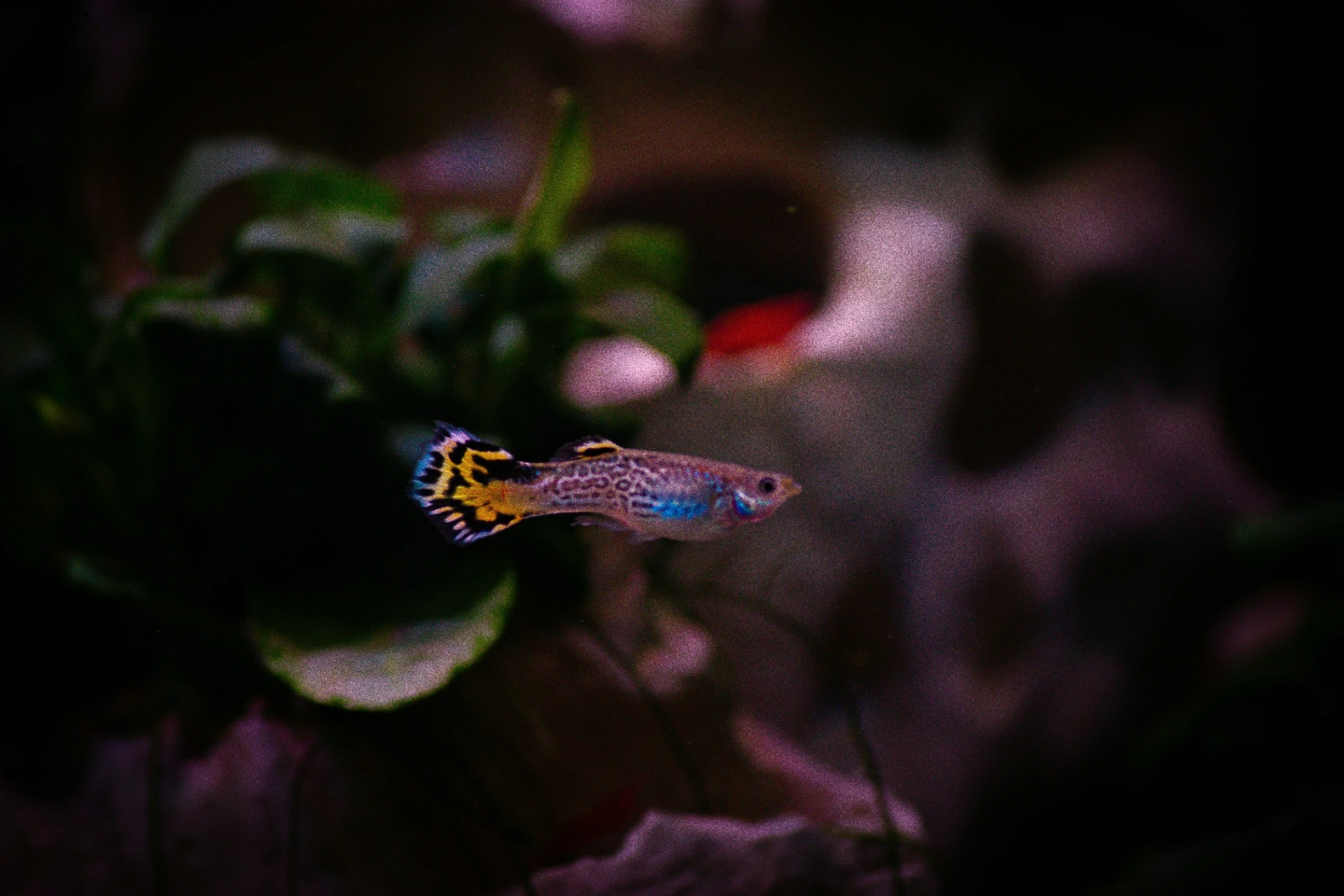 GuppyPoecilia reticulata
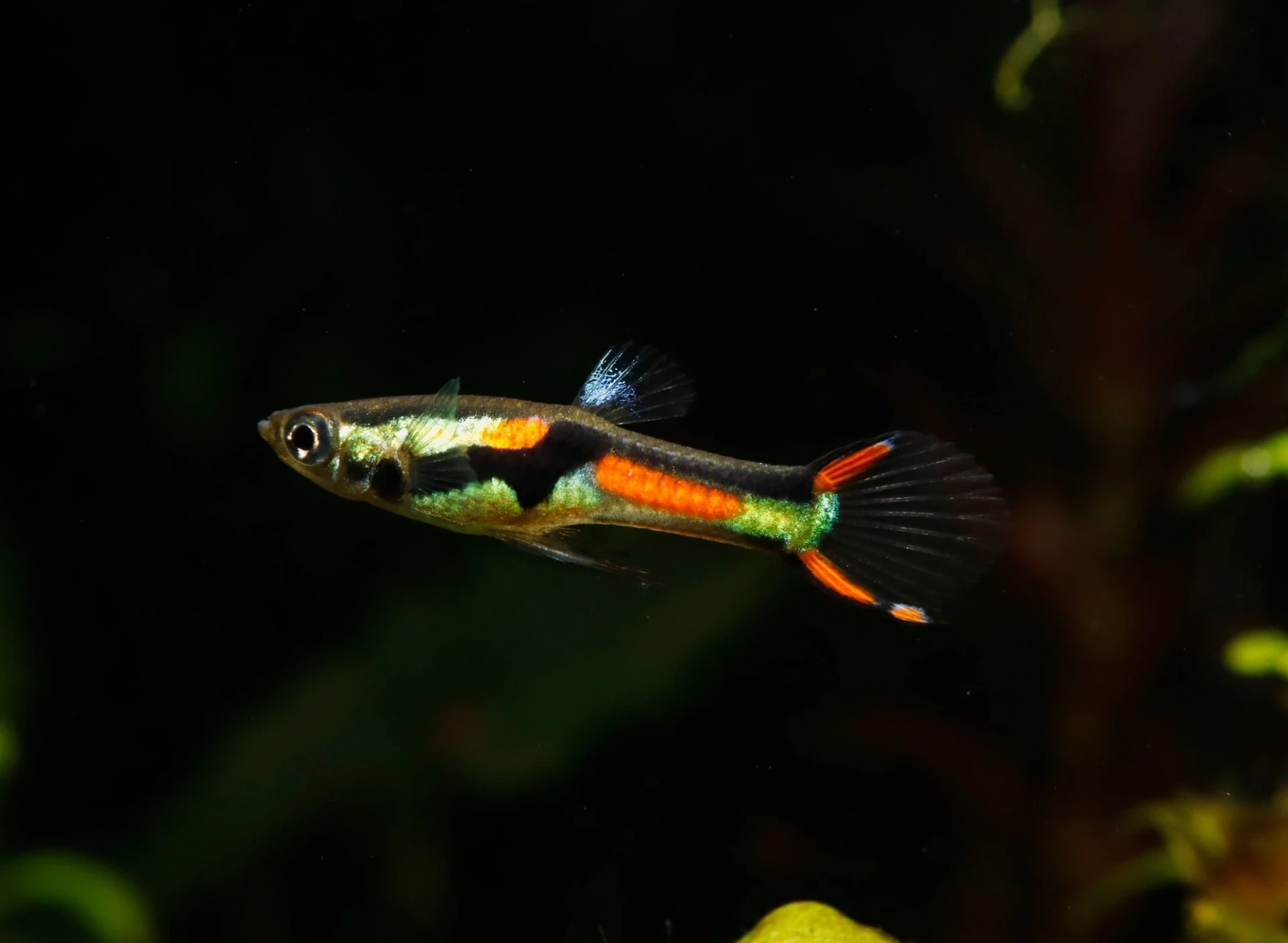 Endlers LivebearerPoecilia wingei
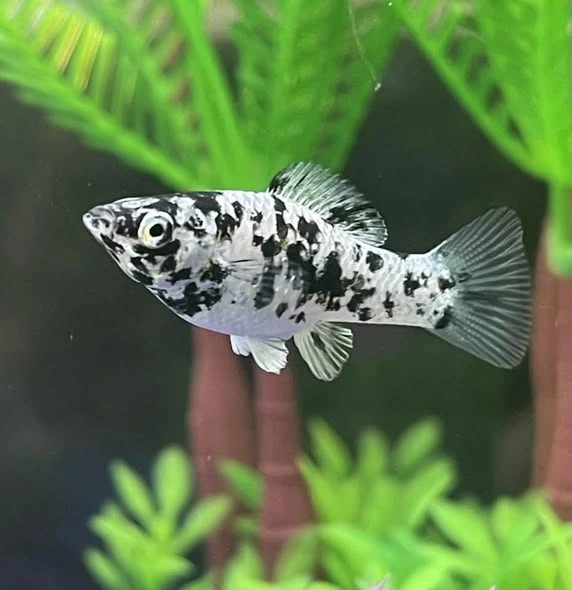 MollyPoecilia sphenops
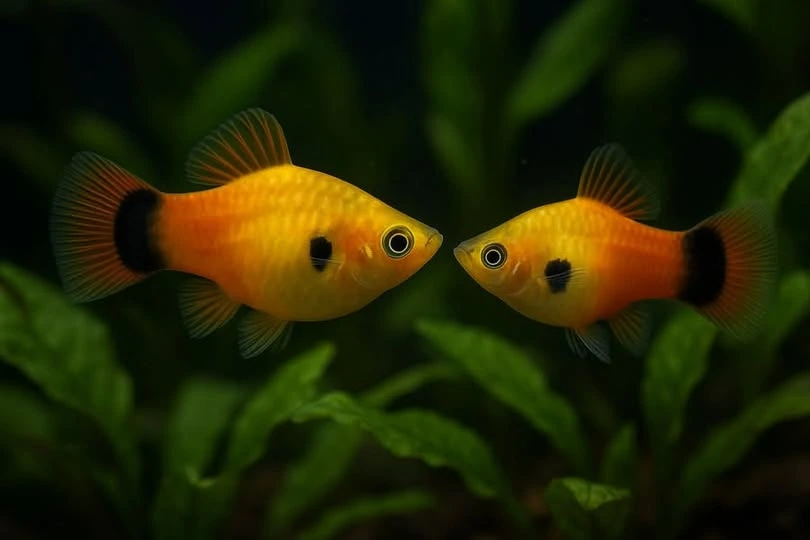 PlatyXiphophorus maculatus
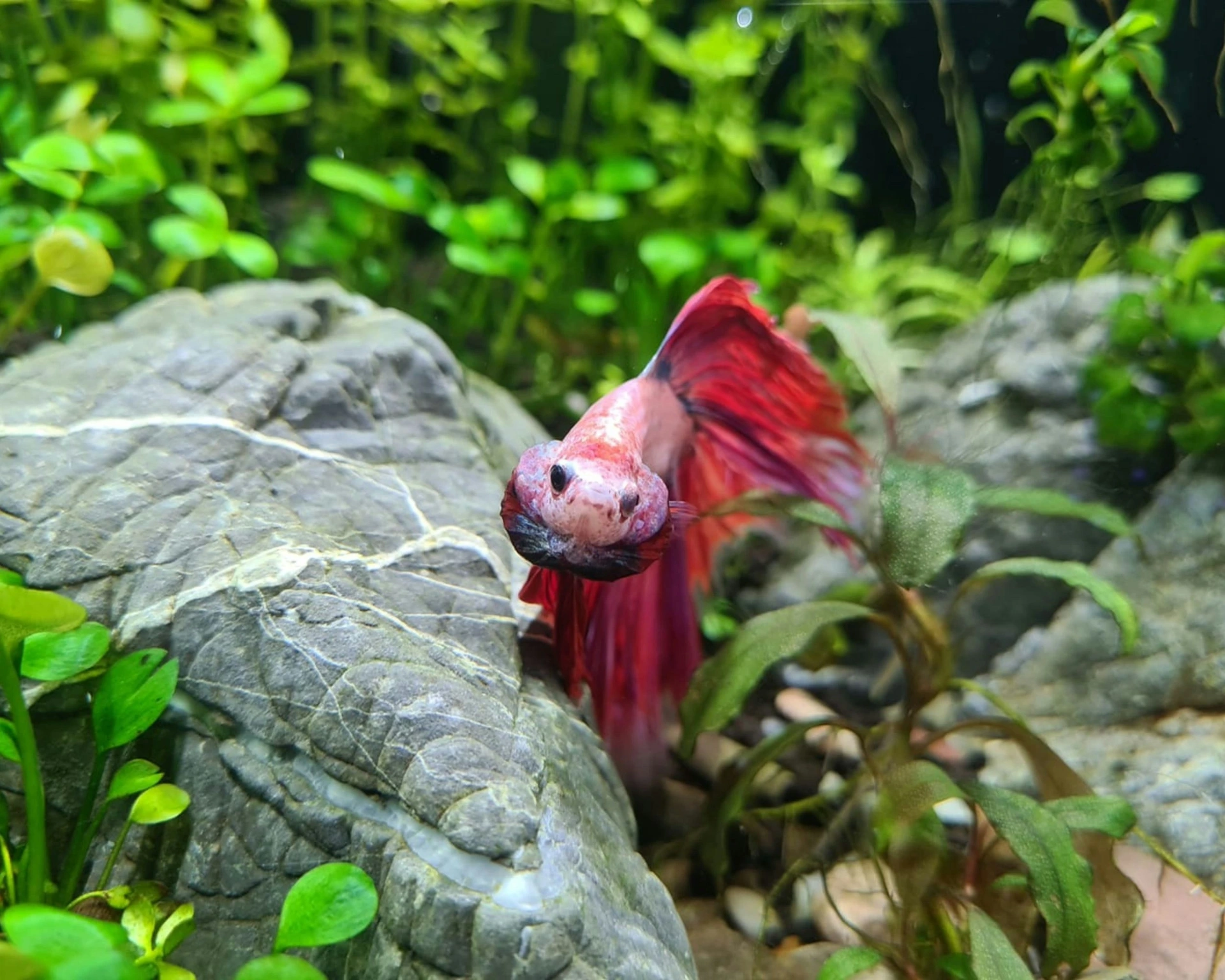 BettaBetta splendens
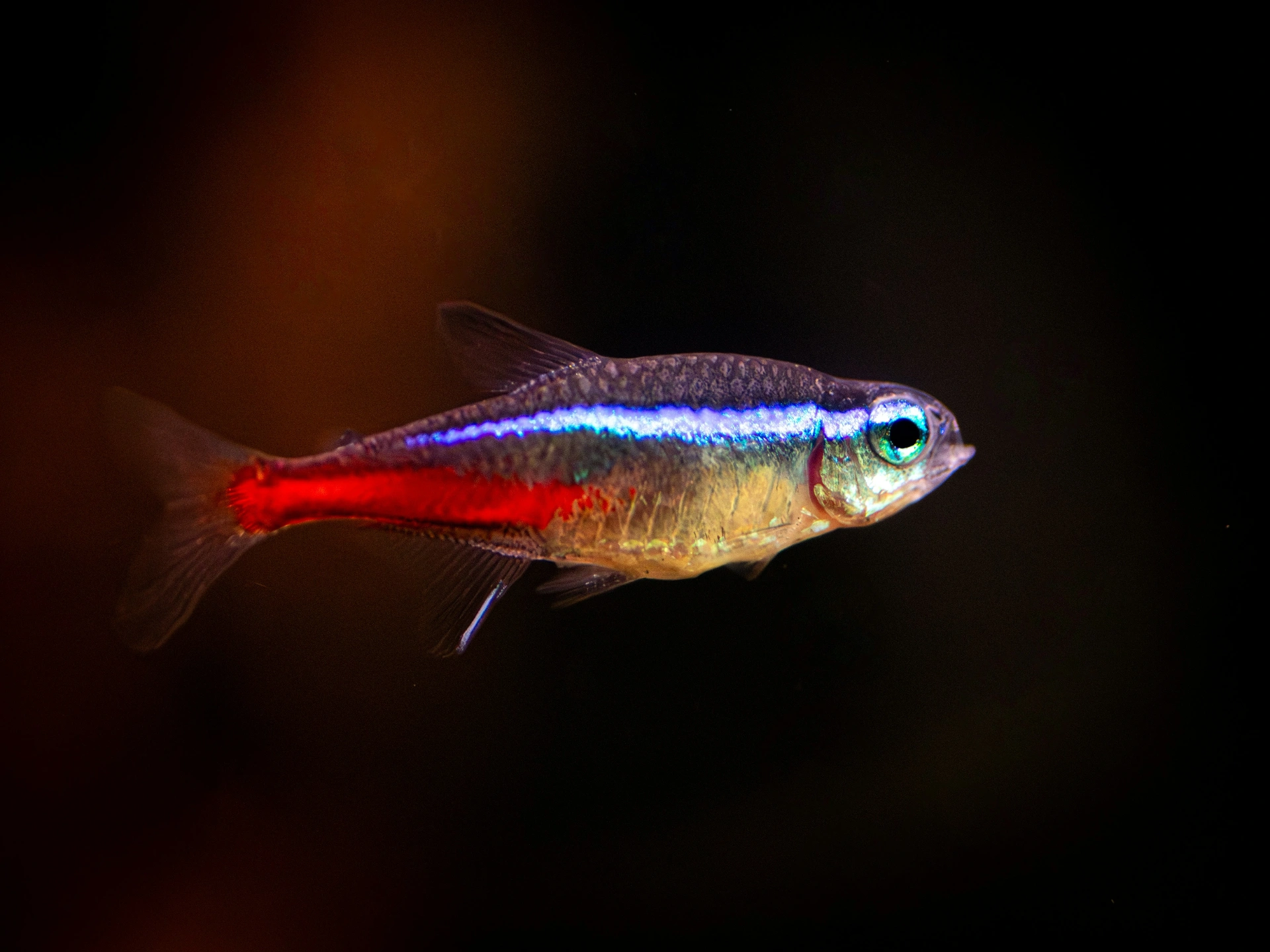 Neon TetraParacheirodon innesi
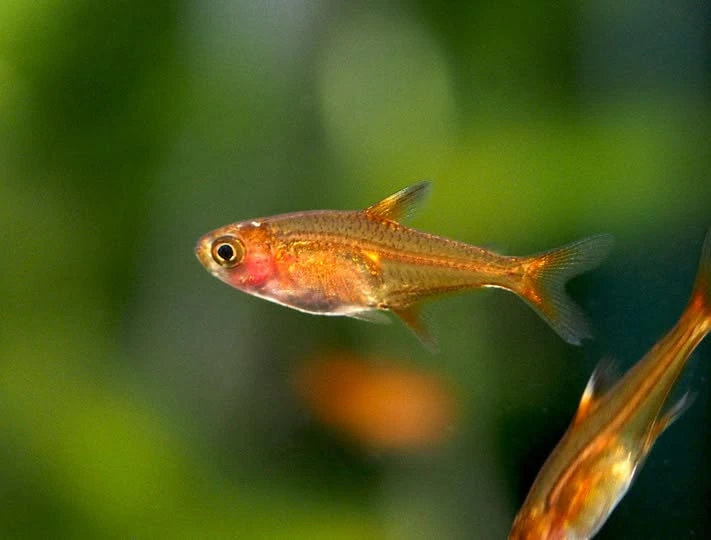 Ember TetraHyphessobrycon amandae
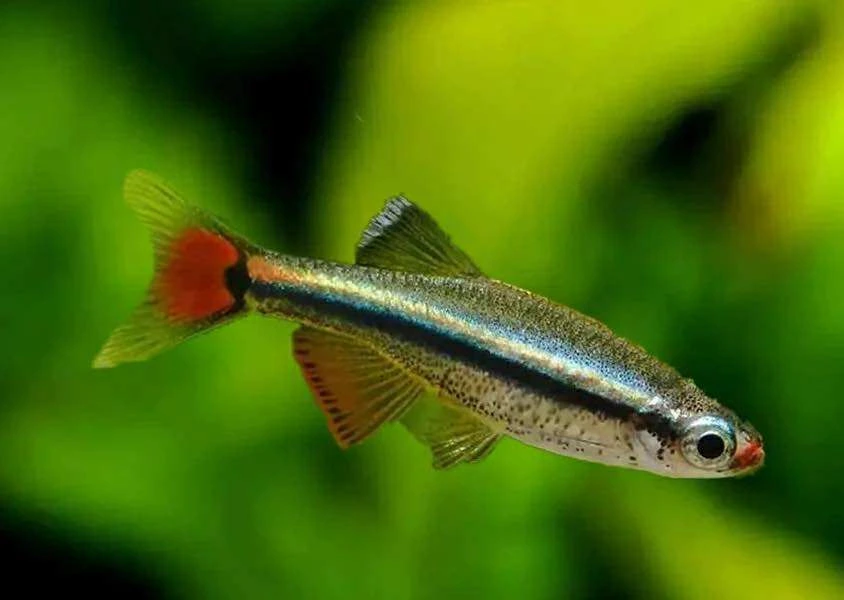 White Cloud Mountain MinnowTanichthys albonubes
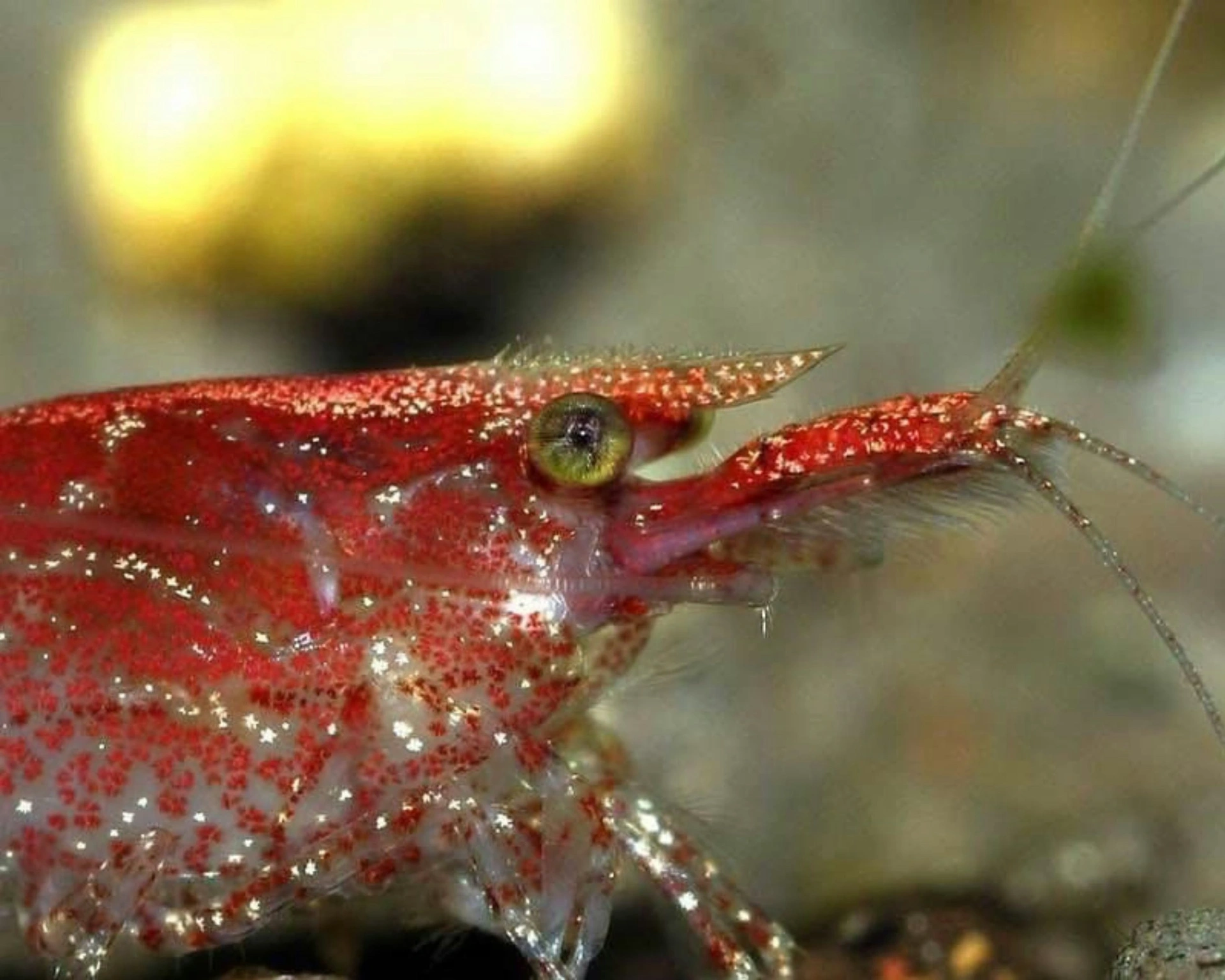 Cherry ShrimpNeocaridina davidi
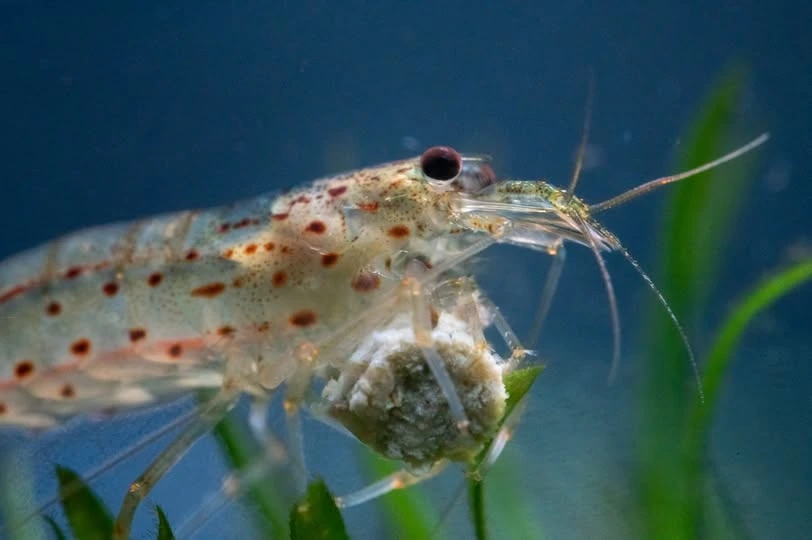 Amano ShrimpCaridina multidentata
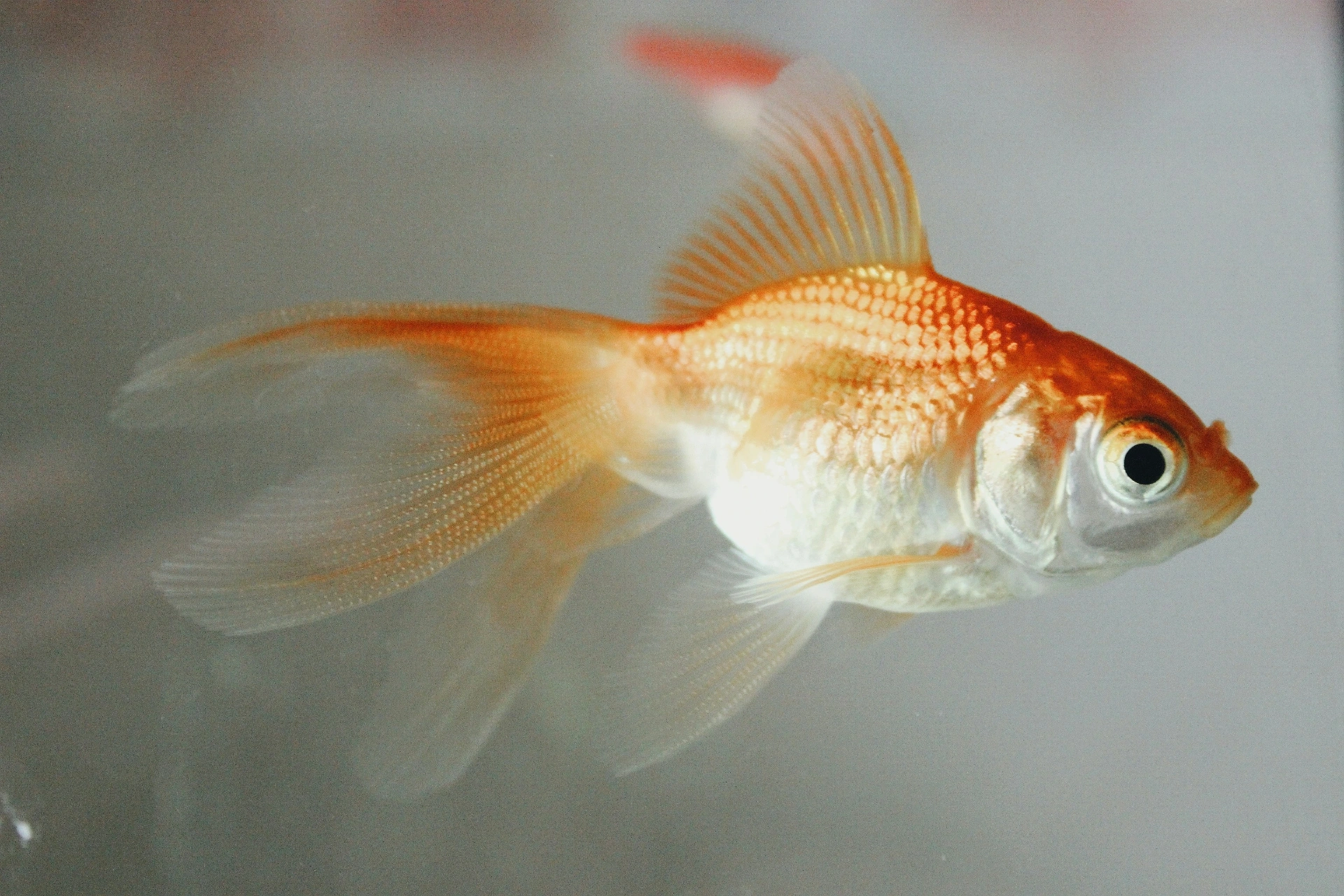
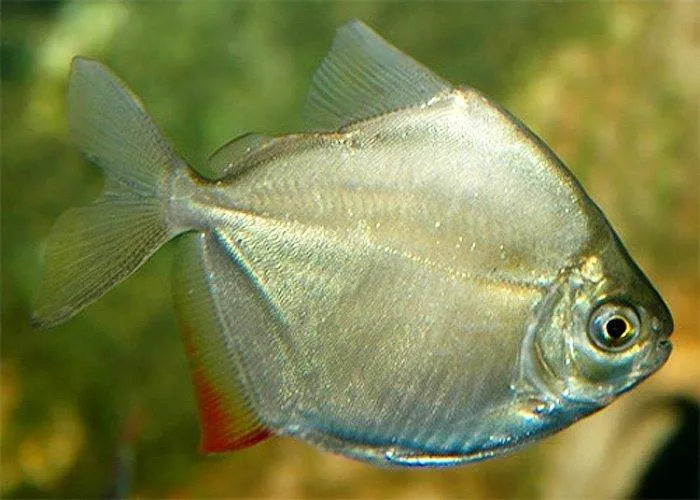
Will eat or uproot it


Companion plants
Other fast, undemanding plants that suit the same tanks guppy grass belongs in — fry tanks, quarantine tanks and new setups where nutrient uptake matters more than aquascaping.
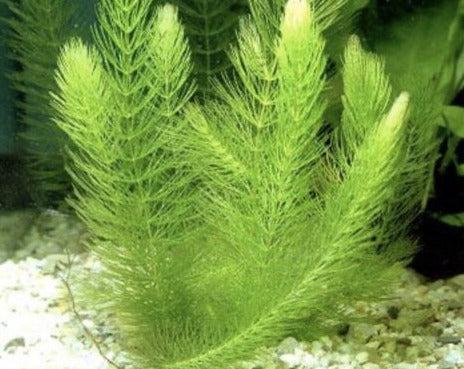
Hornwort
Ceratophyllum demersum
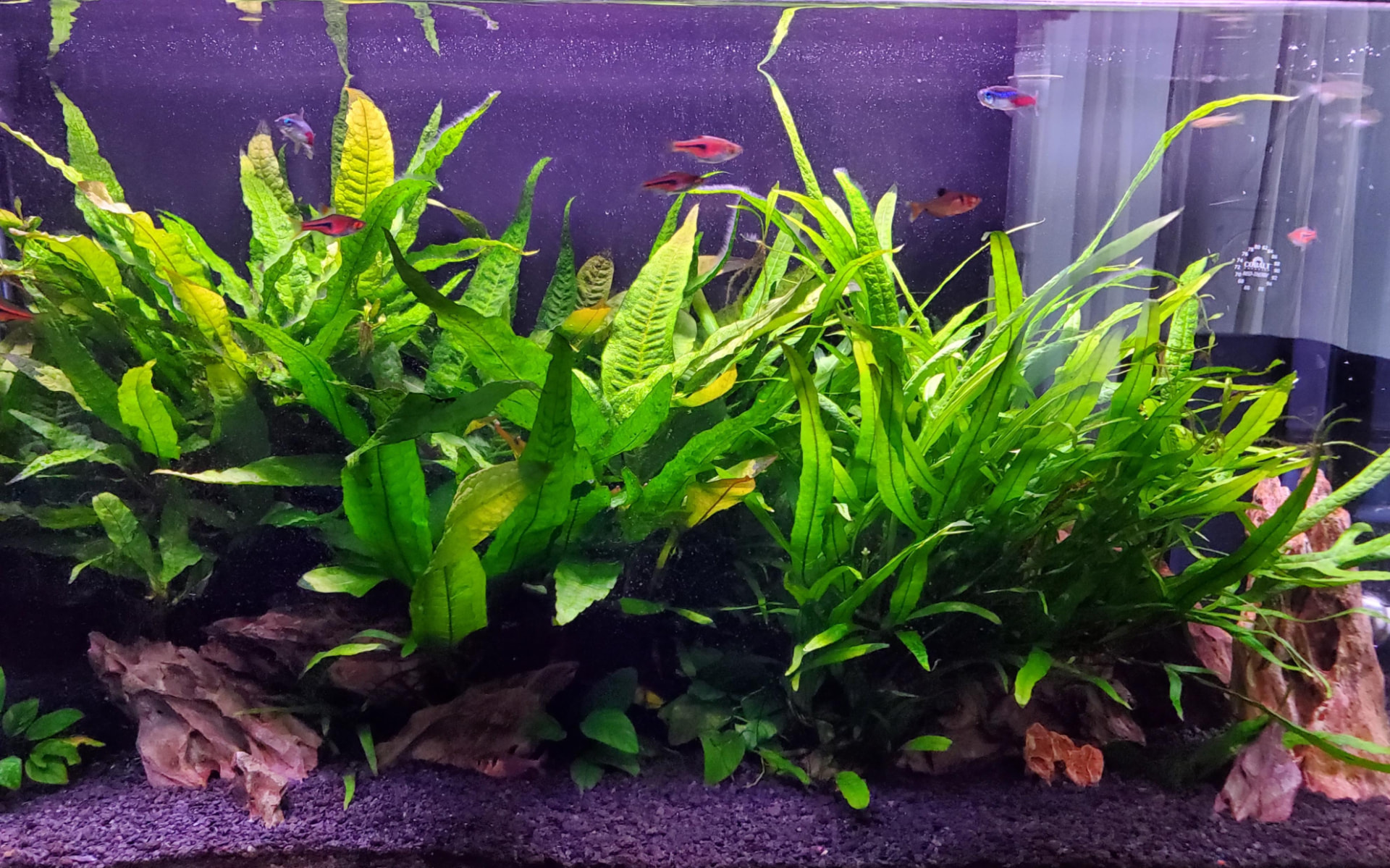
Java Fern
Microsorum pteropus
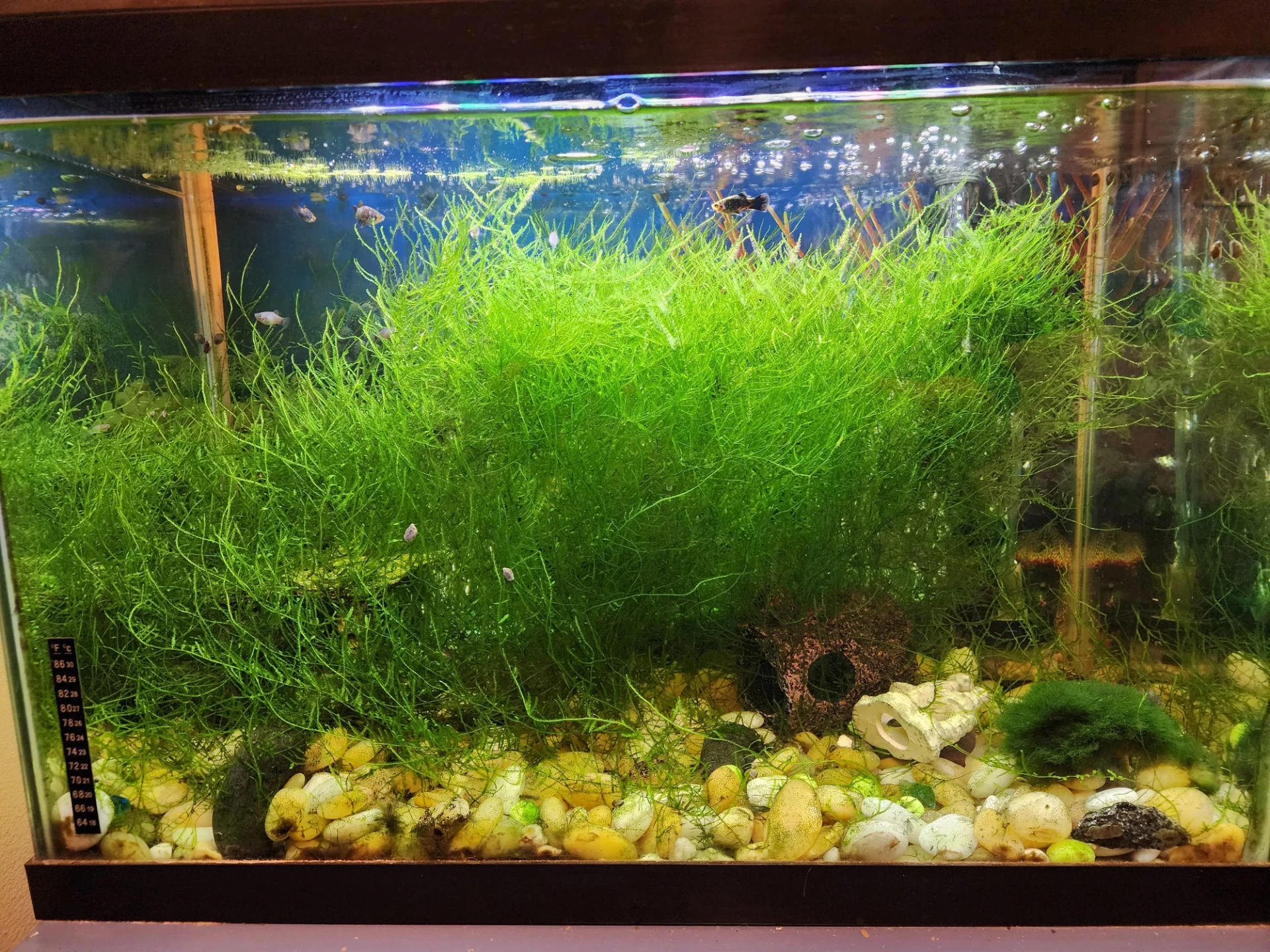
Java Moss
Taxiphyllum barbieri
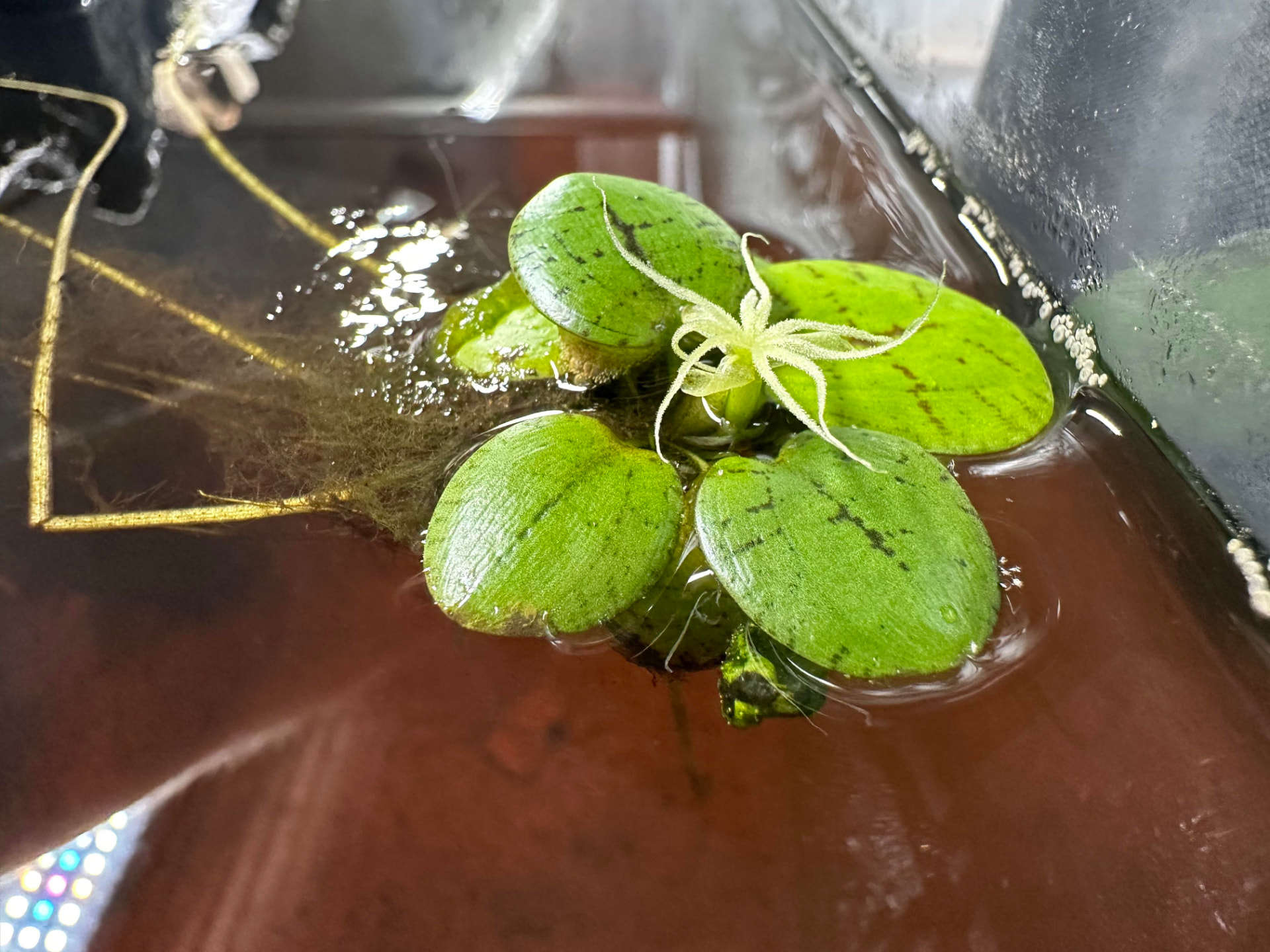
Amazon Frogbit
Limnobium laevigatum
Pro tips & common mistakes
Pro tips
- For a livebearer nursery, fill a third of the tank with it and stop worrying about fry survival.
- Handle it once. Every subsequent move costs stems and scatters fragments.
- Use it in a fishless cycle or a new setup — the ammonia uptake is genuinely useful in week one.
- Fit a sponge pre-filter before you add it, not after the intake clogs.
- Pull handfuls out weekly rather than trimming with scissors; cutting multiplies it.
- Pick hornwort instead if the tank is unheated or you have an algae problem to solve.
Common mistakes
- Trying to plant it in the substrate and being surprised when it floats loose.
- Trimming it with scissors, then finding it in every corner of the tank.
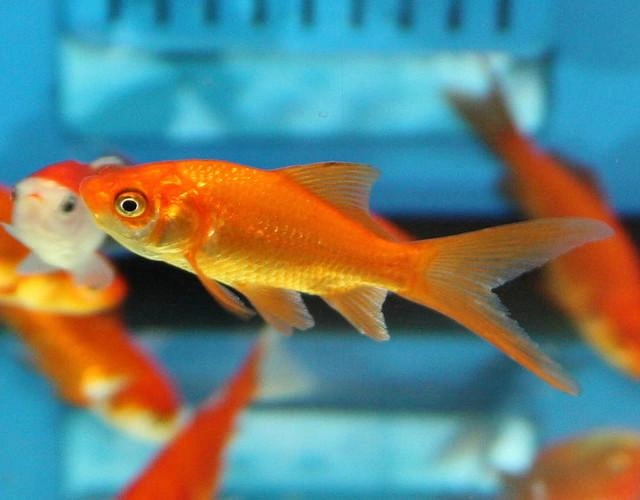
- Adding it to a goldfish tank and expecting hornwort-grade durability.
- Throwing it away after a melt instead of waiting three weeks for it to rebuild.
- Putting it in a nano tank without a plan for removing most of it every week.
Frequently asked questions
Sources
- Plants of the World Online — Accepted name Najas guadalupensis and its native American range.
- USDA APHIS Federal Noxious Weed List — No Najas species is federally listed in the United States, unlike several other aquarium plants.
Related plants
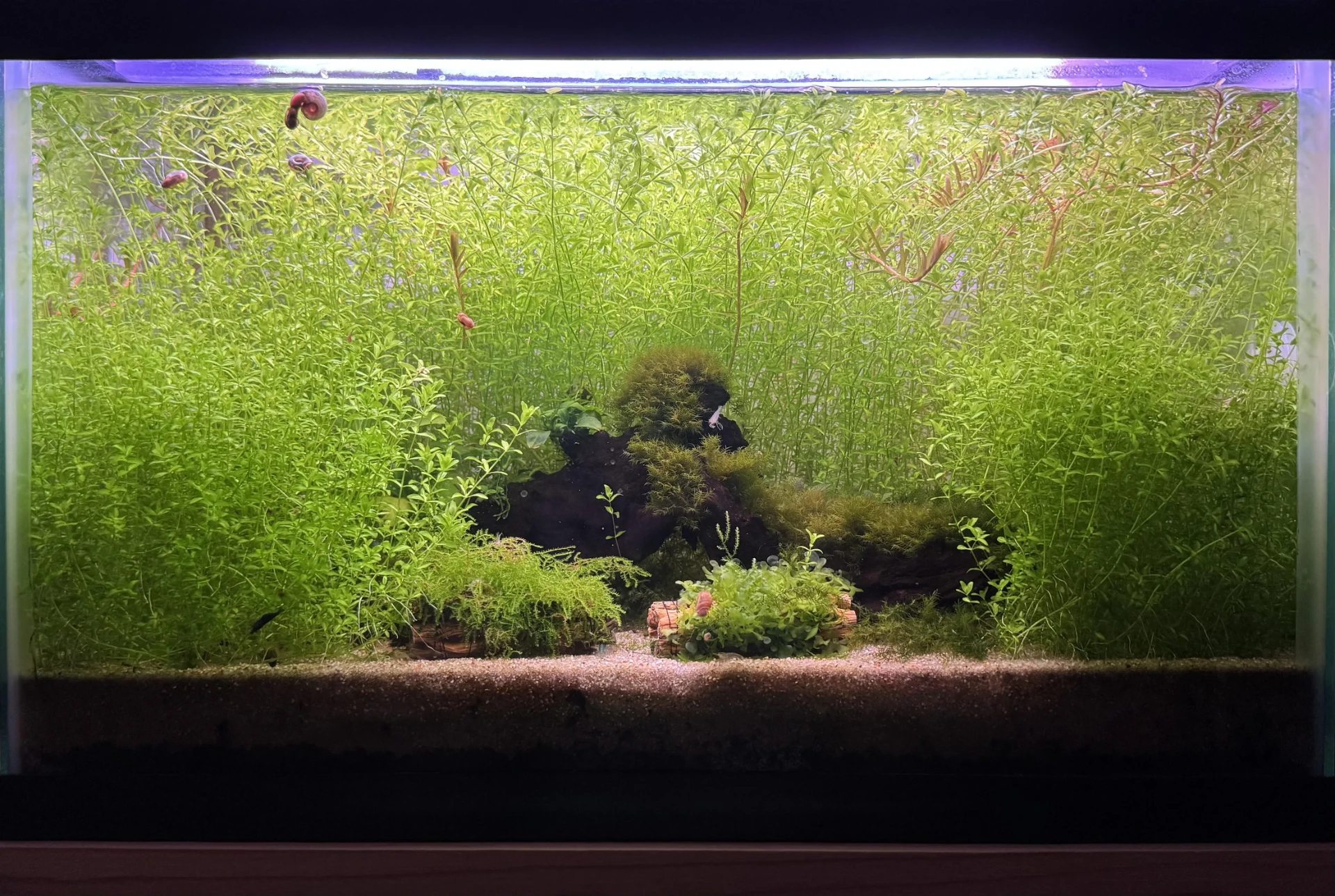
Pearl Weed
Micranthemum micranthemoides
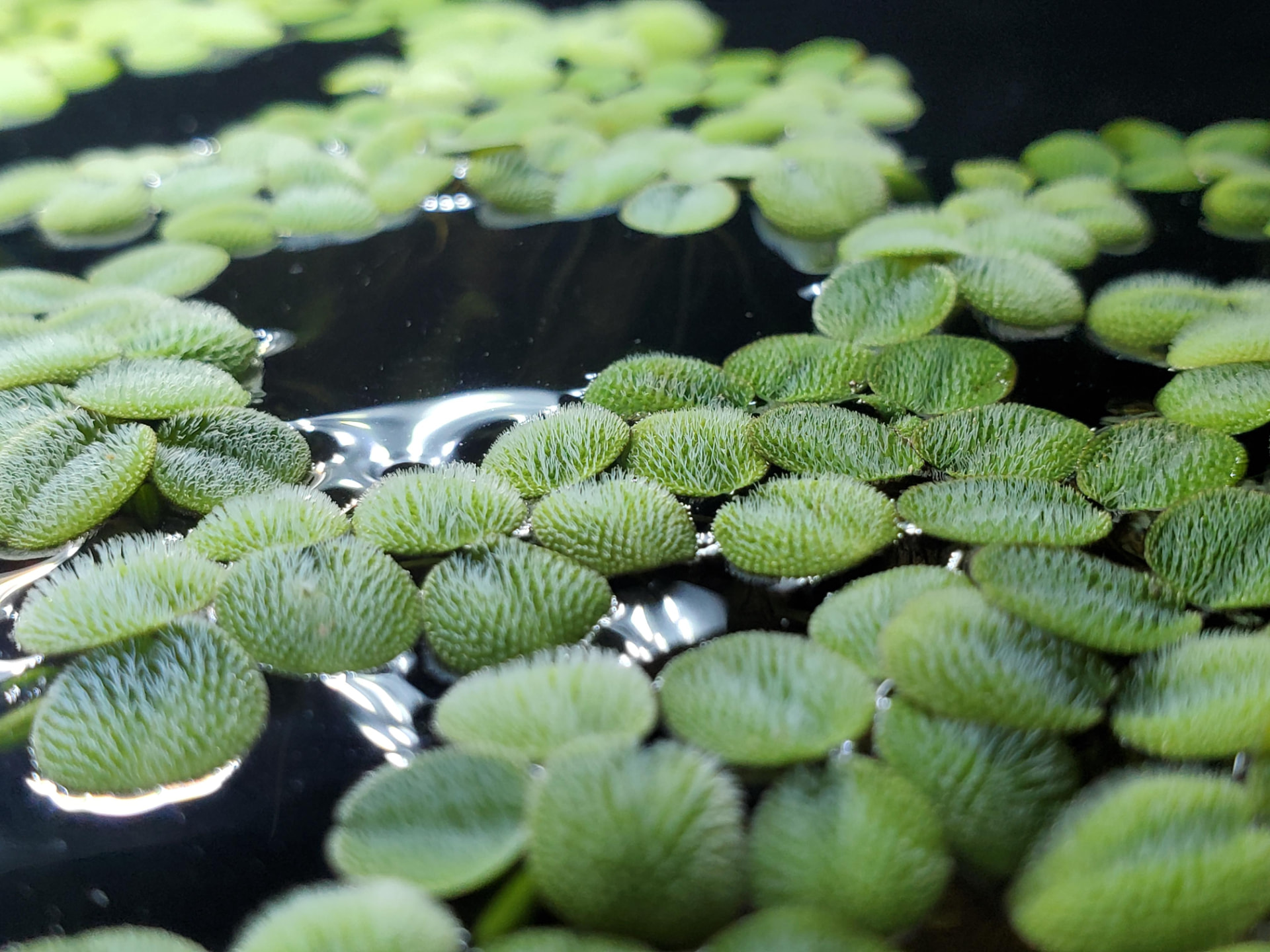
Salvinia
Salvinia minima
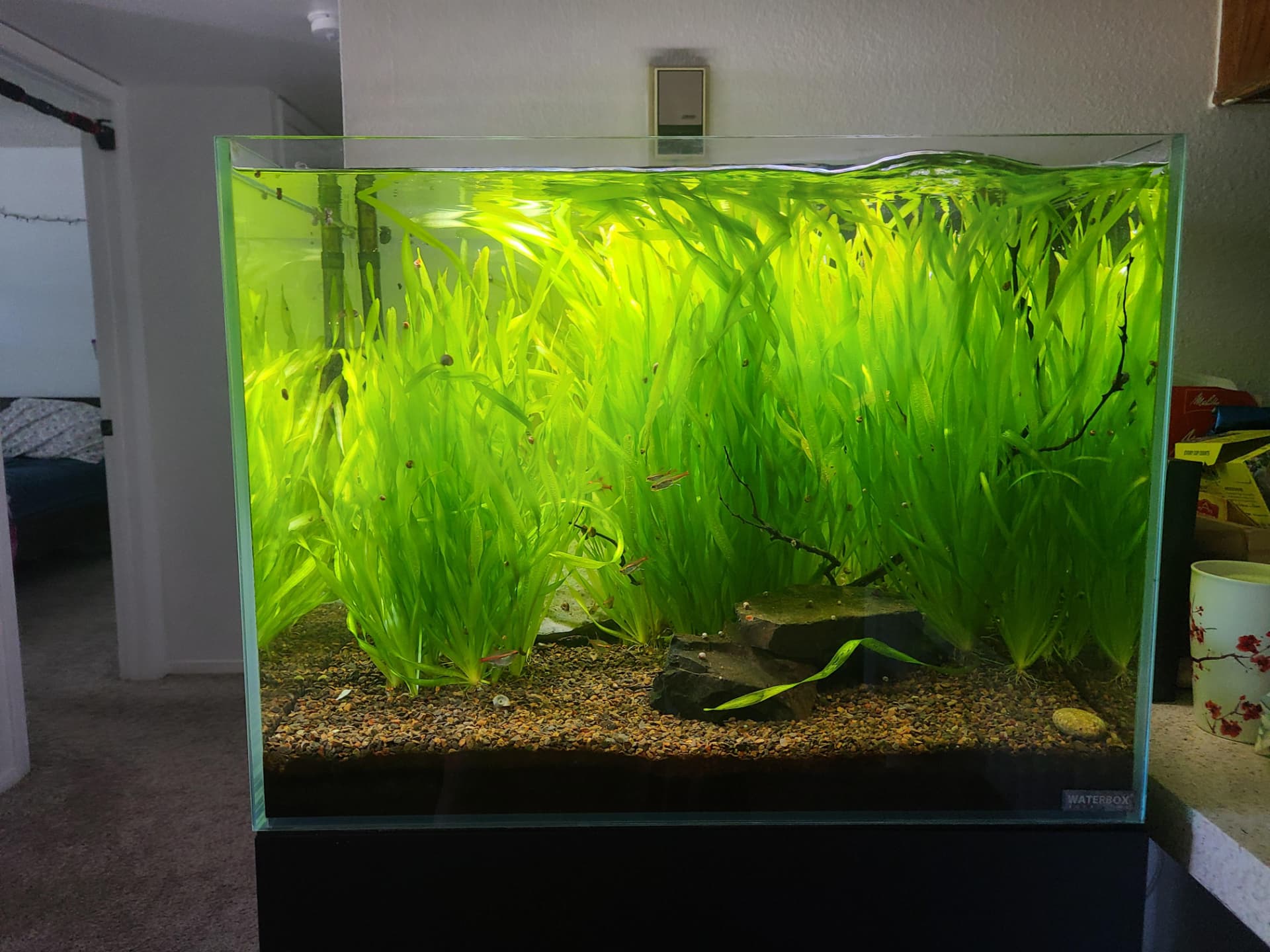
Vallisneria
Vallisneria spiralis
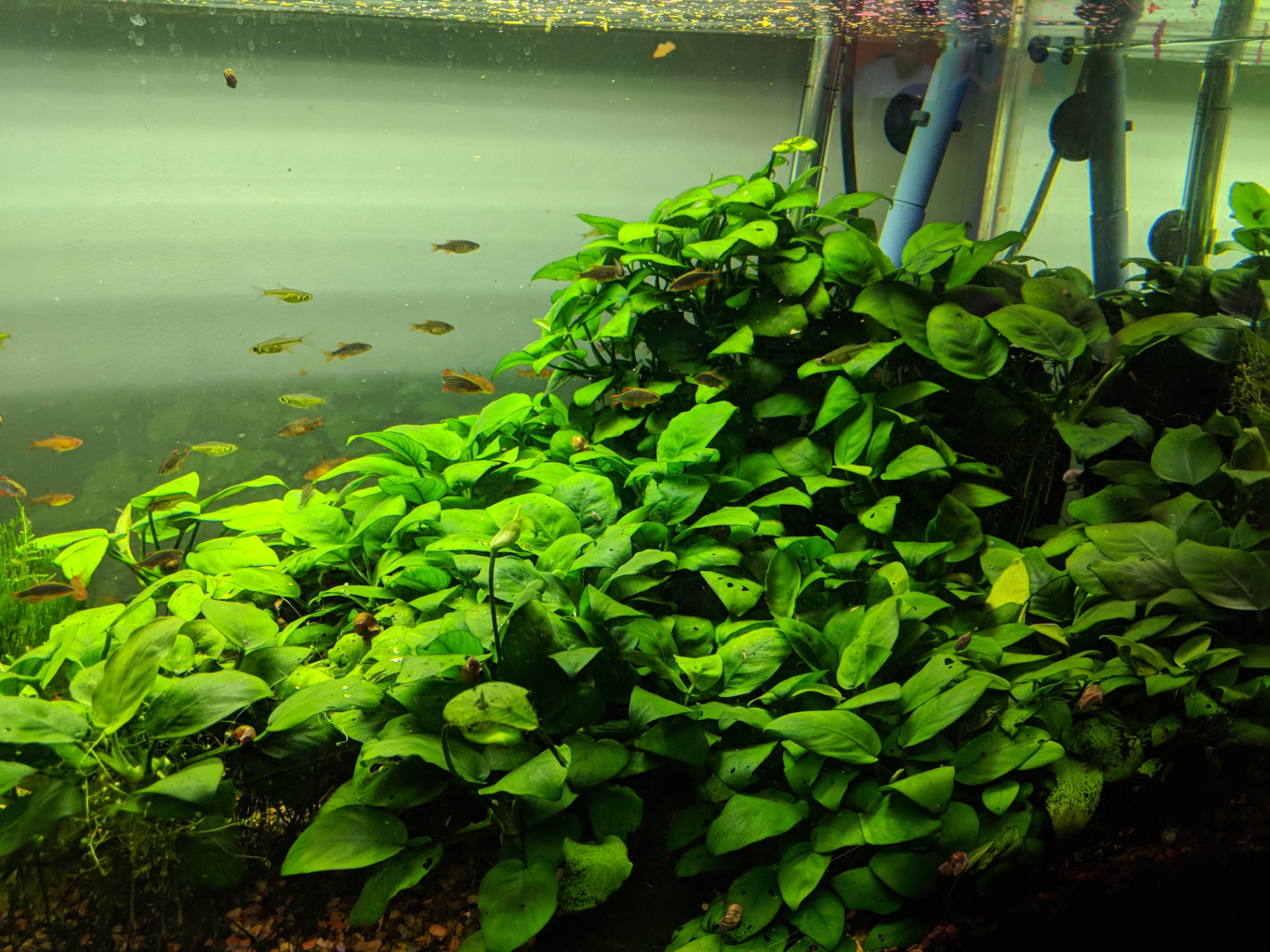
Anubias
Anubias barteri
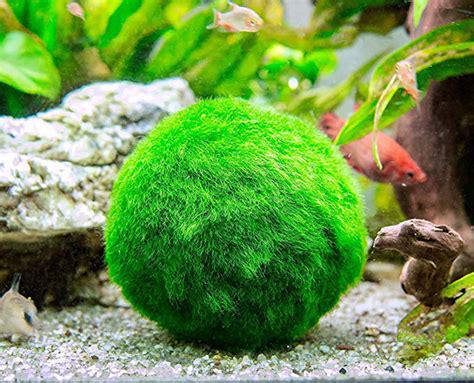
Marimo Moss Ball
Aegagropila linnaei
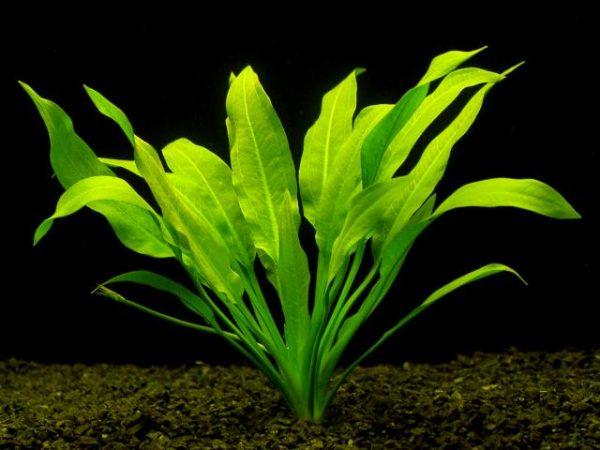
Amazon Sword
Echinodorus grisebachii
Fry cover is not the same as capacity
A tank full of guppy grass absorbs waste quickly, but a livebearer colony still outgrows its filter and footprint. Check what yours can carry before the fry grow up.
Reviewed by the AquariumStocking team · Updated August 2026