
Salvinia Care Guide
Salvinia minima (syn. Salvinia natans (misapplied in the trade))
Reviewed by the AquariumStocking team · Updated August 2026
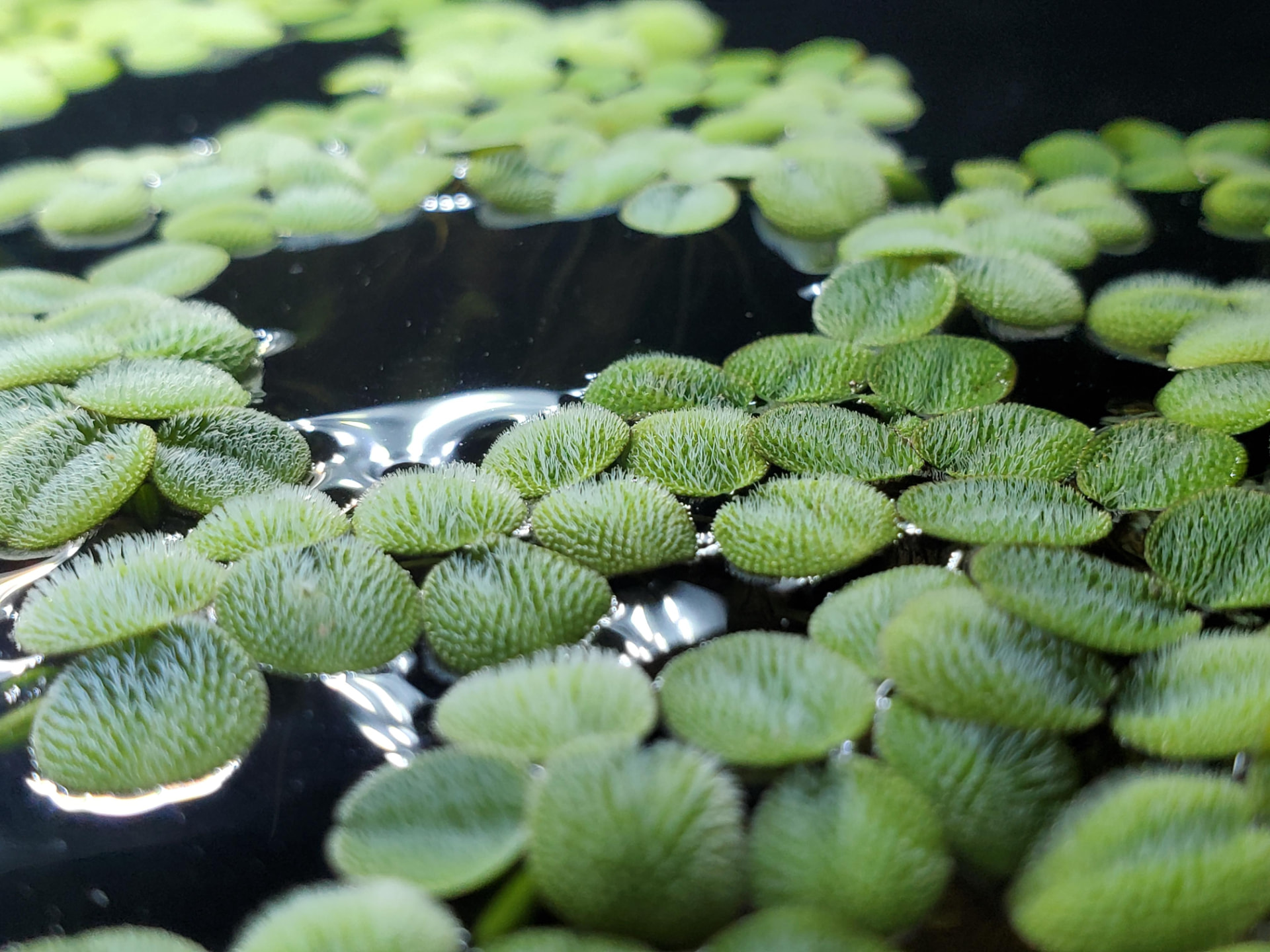
A floating fern whose leaves are armoured with water-repellent hairs — the one common floater that shrugs off surface splash. Grows by fragmentation, so it is easy to spread and hard to remove.
Salvinia quick facts
- Light demand
- Low
- CO2 requirement
- Not needed
- Difficulty
- Beginner
- Growth rate
- Fast
- Placement
- Floating
- Growth habit
- Floating
- Substrate need
- None — floats at the surface
- Max size
- 2 cm (0.8 in) tall, ~2 cm wide
- pH
- 6.0–8.0
- Hardness
- 2–20 dGH
- Propagation
- Fragmentation — every broken piece with a growing point regrows
- Temperature
- 18–30 °C (64–86 °F)
Never planted. What look like roots are modified submerged leaves, and they absorb nutrients directly from the water.
Restricted in some regions
| Jurisdiction | What is restricted | Official source |
|---|---|---|
| United States — Texas | All Salvinia species, including S. minima, are prohibited exotic aquatic plants. Possession, sale and release are illegal. | View list |
| European Union / United States federal (Salvinia molesta only) | Giant salvinia, Salvinia molesta, is on the EU Union list and the US federal noxious weed list. Salvinia minima is not on either. Trade labelling does not reliably distinguish them. | View list |
| United States — Florida | Salvinia species are prohibited, with S. minima specifically excluded from the listing. | View list |
Dry or freeze surplus plants and bin them. A single fragment carrying a growing point can re-establish a population, so never wash it into a drain or waterway.
Lists last checked 2026-08-12. Rules change — check your own state or country before buying, and never assume a plant sold locally is legal to keep.
Overview
Salvinia is a floating fern, not a flowering plant, and that shows in how it behaves: no flowers, no seeds, no true roots, and reproduction by fragmentation and spores rather than runners. What hangs beneath the surface is a third leaf, modified into a root-like organ that does the absorbing.
Its defining feature is the covering of fine hairs on the upper leaf surface. They trap a layer of air and make the leaf genuinely water-repellent, which is why salvinia tolerates surface movement that would rot frogbit or red root floater within a week. In a tank with an HOB filter you cannot reposition, this is the floater that works.
The same toughness has a cost. Fragmentation means any broken piece continues growing, so it establishes quickly, spreads between tanks on nets, and is very difficult to eradicate once you decide you have had enough of it.
What you're buying
The species labelling in this genus is worse than in any other aquarium plant, and one of the species involved is a federally regulated noxious weed. That makes the label worth some attention.
Three names, loosely applied
Shops sell S. minima, S. natans and S. auriculata largely interchangeably. Most aquarium stock in the trade is S. minima.
Giant salvinia is a different matter
Salvinia molesta is on the EU Union list and the US federal noxious weed list. It is not an aquarium plant, and it should not be in trade at all.
Buy small, not large
Leaf size varies with maturity and crowding. A small portion of healthy plant fills a surface within weeks — quantity is not worth paying for.
Rinse the portion thoroughly. Salvinia arrives tangled, and duckweed hides in the tangle better than anywhere else.
Treat every net, bucket and hose that touches it as contaminated between tanks. Fragmentation is the whole reproductive strategy of this plant, and a single fragment is enough.
Light, CO2 & nutrients
Light
Low
CO2
Not needed
Fertilisation
Water column (liquid)
Light
Low light is enough, and it grows faster than most tanks want under anything brighter. Floating directly beneath the fixture, it never competes for light with anything.
Under strong light the leaves get larger, the hairs more pronounced and the plants stack into a thicker layer. That thicker layer is where problems start — the lower plants get shaded out by their own species and break down.
Anything you grow underneath has to work with the light that gets through the gaps. Salvinia lets a bit more through than a frogbit mat, but not much once it doubles up.
CO2
Not needed. As a floater it draws CO2 from the air, and the trapped air layer against its leaf surface means gas exchange is never limiting.
In an injected tank a thick salvinia layer slows surface gas exchange, which is worth knowing if you are running high CO2 and depending on the surface for overnight recovery.
Work out your CO2 injection rate →
Nutrients
It feeds from the water column via the submerged modified leaf, so all fertilisation is liquid. In a stocked tank fish waste often covers the demand entirely.
It grows fast enough to matter as a nutrient export tool, and the export happens at harvest, not while the plant sits there. Skimming a handful out weekly does more for nitrate than leaving a thicker mat in place.
Deficiency shows as small, pale leaves and a mat that thins without any visible damage. That is nitrogen or iron, and an all-in-one liquid fixes both.
Water & temperature
pH
6.0–8.0
Hardness
2–20 dGH
Temperature
18–30 °C (64–86 °F)
The tolerance range is wider than the other floaters here: pH 6.0 to 8.0, 2 to 20 dGH and 18 to 30 °C. It survives cool room-temperature tanks that stall a tropical floater.
Surface flow, the thing that kills every other floater, is largely a non-issue. The hairs shed water, so a spray bar or HOB return that would destroy red root floater merely pushes salvinia around.
Adding it to the tank
- 1Check the Texas restriction and your own local list before buying.
- 2Rinse and untangle the portion in a bucket, picking out duckweed as you go.
- 3Float it hairy-side up; it rights itself readily if it flips.
- 4Add a corral — a floating ring or airline barrier — if you want part of the surface kept clear.
- 5Clean nets and buckets before using them in another tank; fragments travel.
Every fragment is a plant. Salvinia reproduces by breaking apart, so a piece caught in a net, a hose or a bucket will start a colony in the next tank it reaches. Dedicate equipment or rinse it properly, and dry out anything you remove before disposal.
Placement & aquascaping role
It drifts more than the heavier floaters, so without a barrier it accumulates wherever the flow pushes it — usually a back corner, in a pile several plants deep.
That pile is the thing to manage. A single layer is healthy; a stacked one shades and rots from the bottom up. Break piles apart and spread them across the area you have given it.
A third of the surface, corralled, is a sensible target. Because it tolerates flow, you can place that area near the filter outflow rather than as far from it as possible.
Growth, trimming & maintenance
Growth is fast and steady — not duckweed fast, but a small portion covers a surface in two to three weeks.
Maintenance is skimming. Take it off with a net or a cup, and take from the thickest part rather than the edges, since the middle is where the stacking happens.
Check for pieces caught on hardscape, heater brackets and intake strainers. Trapped fragments keep growing where you cannot see them and are how the population rebuilds after a thorough cleanout.
Propagation
It propagates by breaking. Each fragment carrying a growing point becomes a new plant, which is why the population expands without any help and why it spreads between tanks so easily.
As a fern it also produces spores, but that route is irrelevant in aquariums — nothing you do in a tank will make sporocarps useful to you.
- 1Pull off a handful from an established mat — deliberate tearing is fine.
- 2Float it in the destination tank; there is no attachment or acclimation.
- 3Keep the water warm enough (above about 18 °C) for growth to resume.
- 4Confirm the plant is legal in the destination before moving it between homes.
- 5Dry or freeze anything surplus before it goes in the bin.
Troubleshooting & diagnosis
Salvinia has fewer failure modes than other floaters, because the usual killer — surface splash — does not apply. What is left is stacking, cold, and nutrient shortfall.
| Symptom | Likely cause | Fix |
|---|---|---|
| Plants in the middle of the mat going brown and breaking down | Stacking — layers piling up and shading each other | Break the pile apart and skim it back to a single layer. |
| Leaves small and pale, mat thinning without damage | Nitrogen or iron shortfall | Dose an all-in-one liquid fertiliser; add chelated iron if only the colour is off. |
| Growth stalled entirely | Water below about 18 °C | Normal in an unheated tank in winter; growth resumes as the water warms. |
| Population steadily replaced by tiny round leaves | Duckweed contamination outcompeting it | Skim both out repeatedly; duckweed is effectively permanent once established. |
| It keeps appearing in tanks you did not put it in | Fragments travelling on nets and equipment | Rinse and dry nets between tanks, or dedicate equipment per tank. |
| Plants pushed into a corner and rotting | Flow piling the mat against the glass | Corral it with a floating ring or airline and redistribute the pile. |
Natural habitat & origin
Native range
Central and South America; widely naturalised in the southern United States
Habitat type
Ponds, ditches, swamps and slow-moving water, including disturbed sites
Wild growing conditions
Warm to temperate water, full sun, tolerant of moving surfaces
Salvinia minima is native to Central and South America and is now naturalised across much of the southern United States, where it forms surface mats in ditches, ponds and slow bayous. Texas prohibits every species in the genus for that reason, and it is the one common aquarium floater with a genus-wide restriction in a major market.
Its close relative Salvinia molesta — giant salvinia — is the reason the genus is watched so closely. That species is a serious weed of tropical waterways and appears on both the EU Union list and the US federal noxious weed list. The two are easy to confuse in a photograph and are not always distinguished at the retail level.
The hairs that make the leaf water-repellent are the plant's signature adaptation, and in S. molesta they meet at the tips in a distinctive eggbeater shape. They keep an air layer against the leaf in choppy, sun-exposed water — the trait that makes salvinia the only common floater comfortable in a tank with real surface movement.
Fish & invert compatibility
Salvinia is the toughest floater here physically, so the risk list is short and entirely about appetite. Herbivores eat it; nothing else can damage it.
Safe with Salvinia
 BettaBetta splendens
 GuppyPoecilia reticulata
 Endlers LivebearerPoecilia wingei
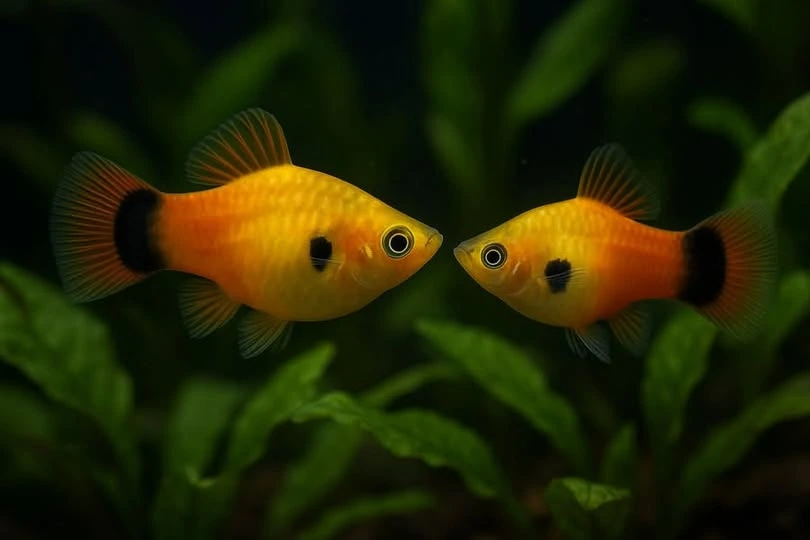 PlatyXiphophorus maculatus
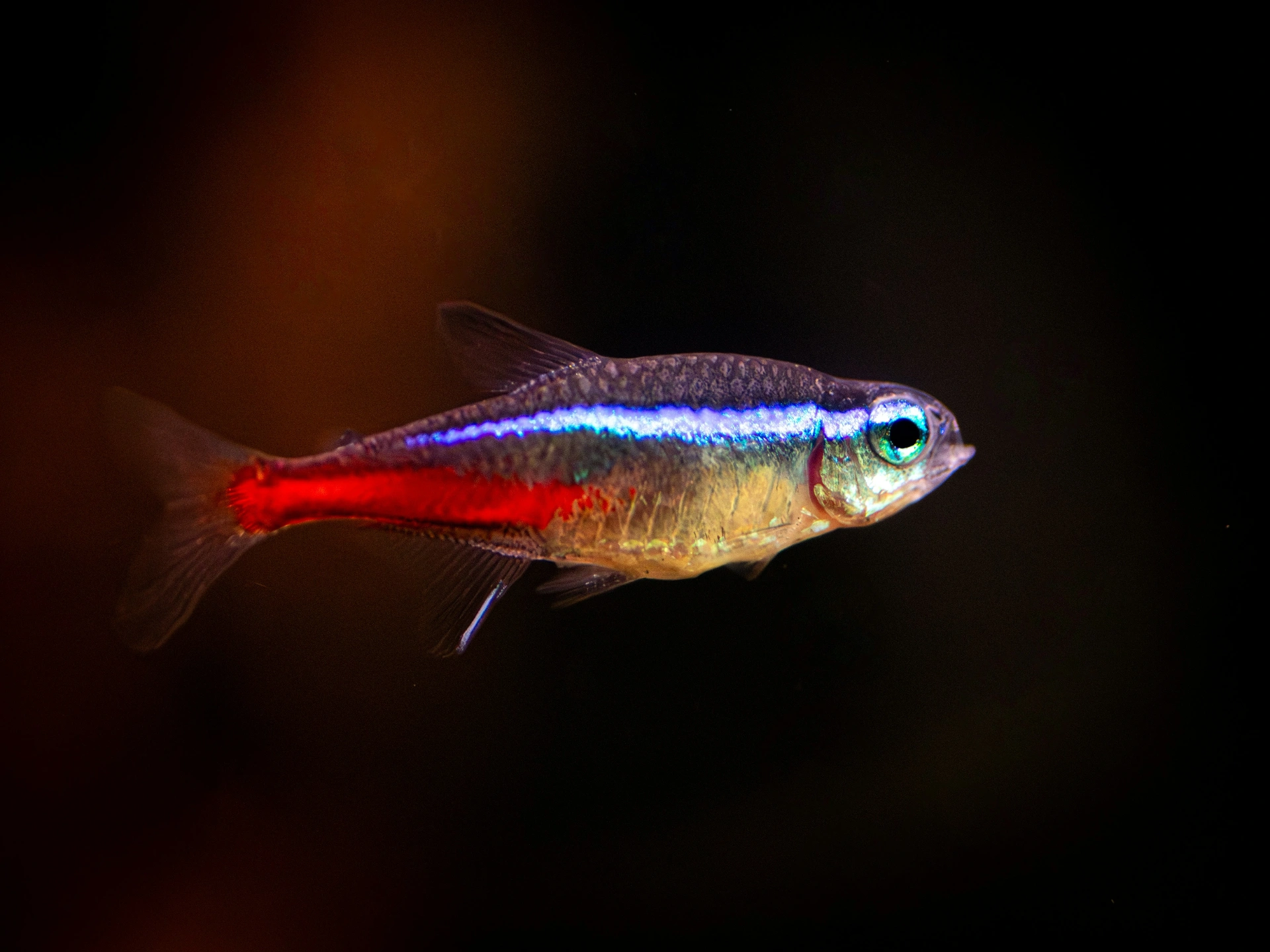 Neon TetraParacheirodon innesi
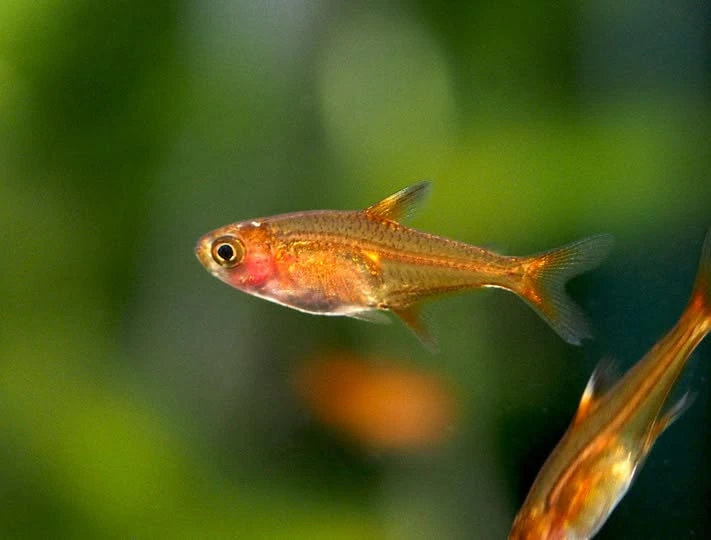 Ember TetraHyphessobrycon amandae
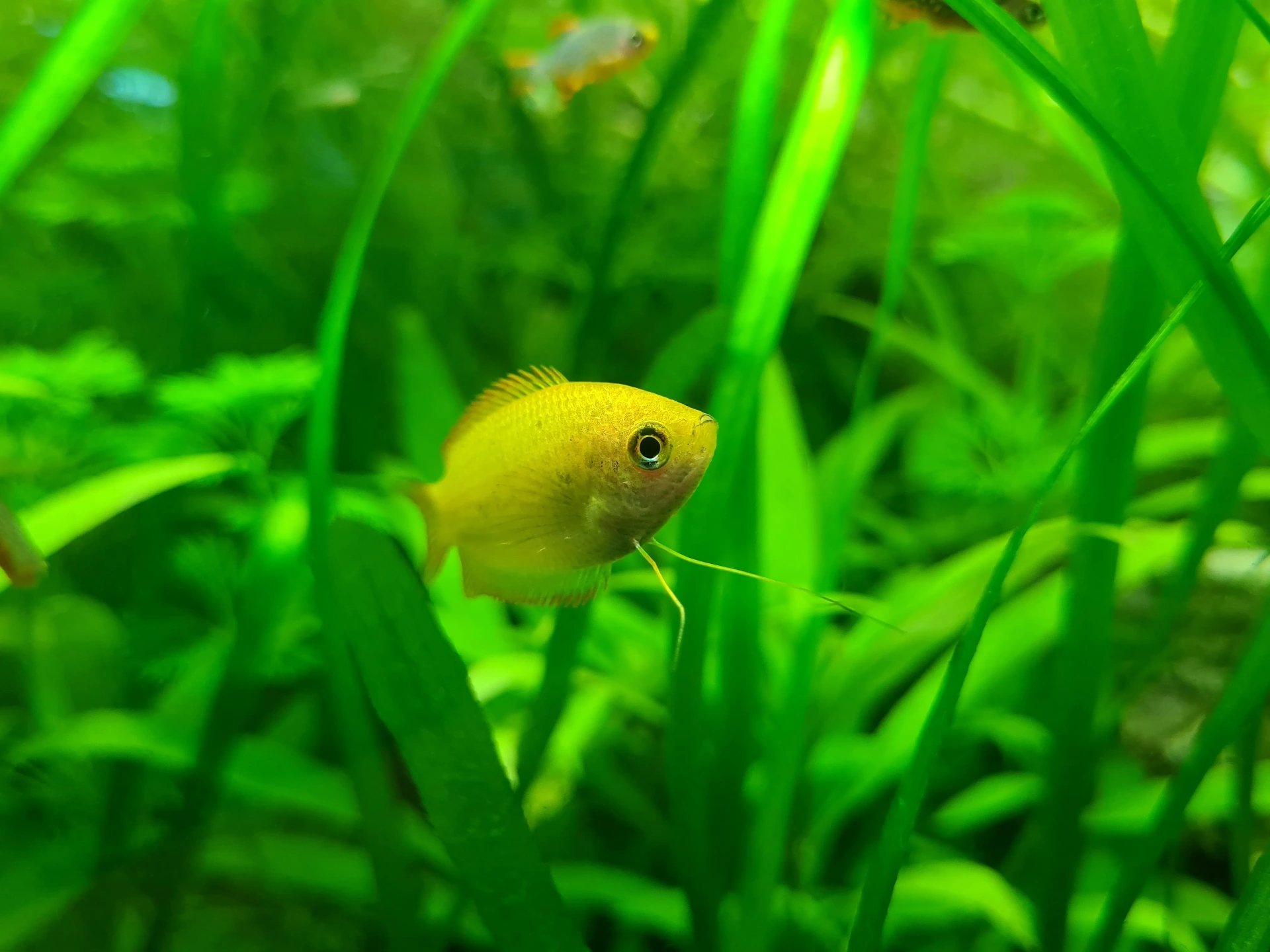 Honey GouramiTrichogaster chuna
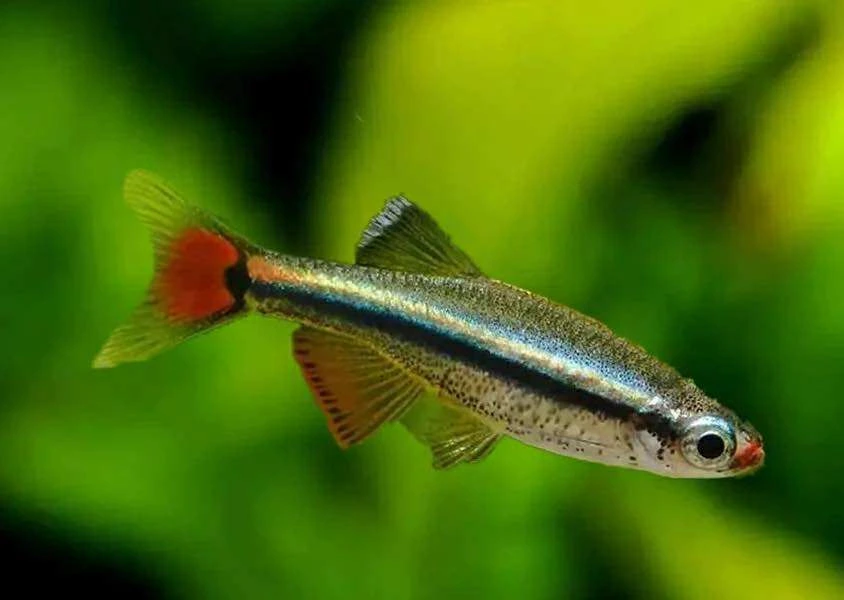 White Cloud Mountain MinnowTanichthys albonubes
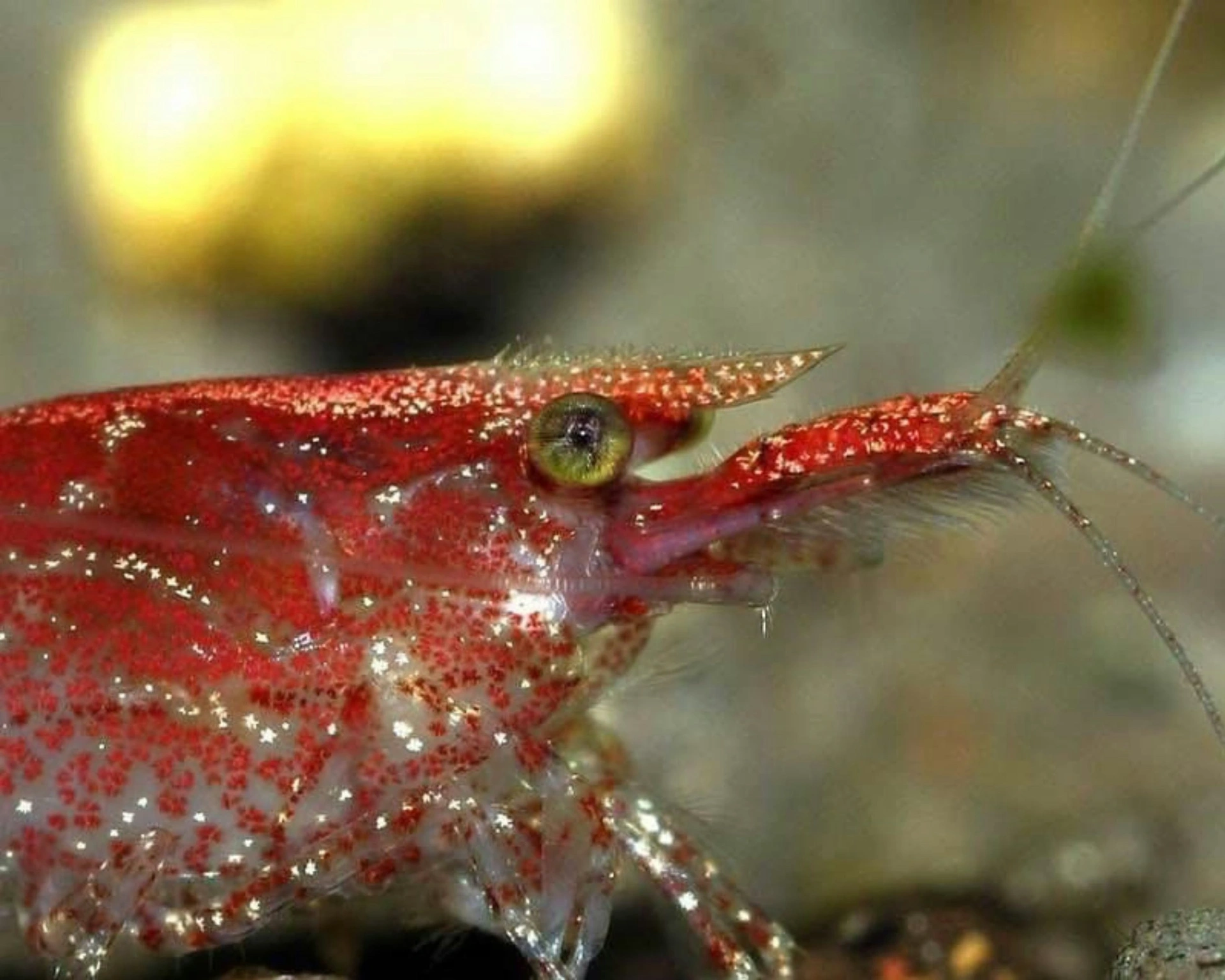 Cherry ShrimpNeocaridina davidi
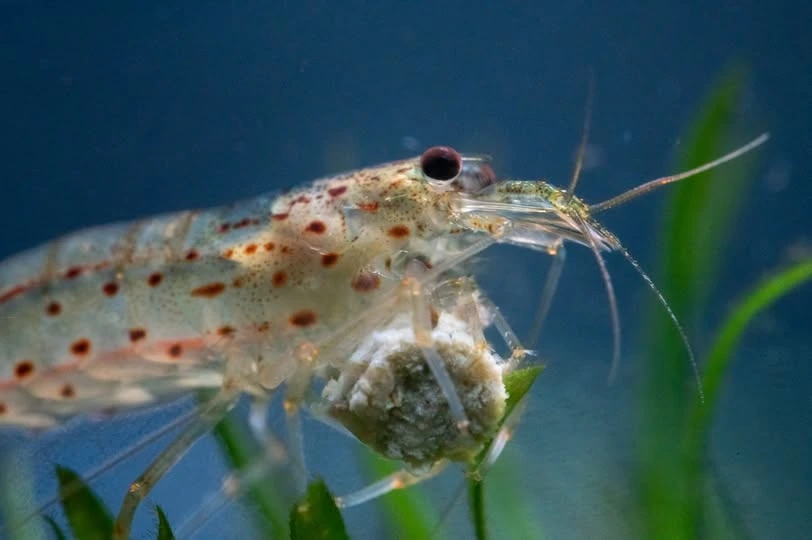 Amano ShrimpCaridina multidentata
Will eat or uproot it
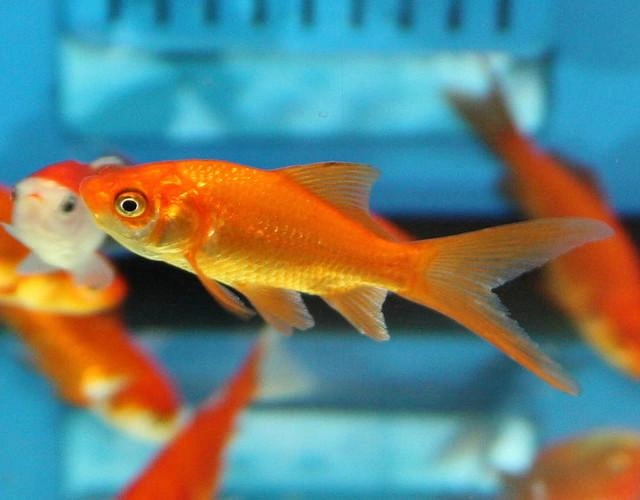
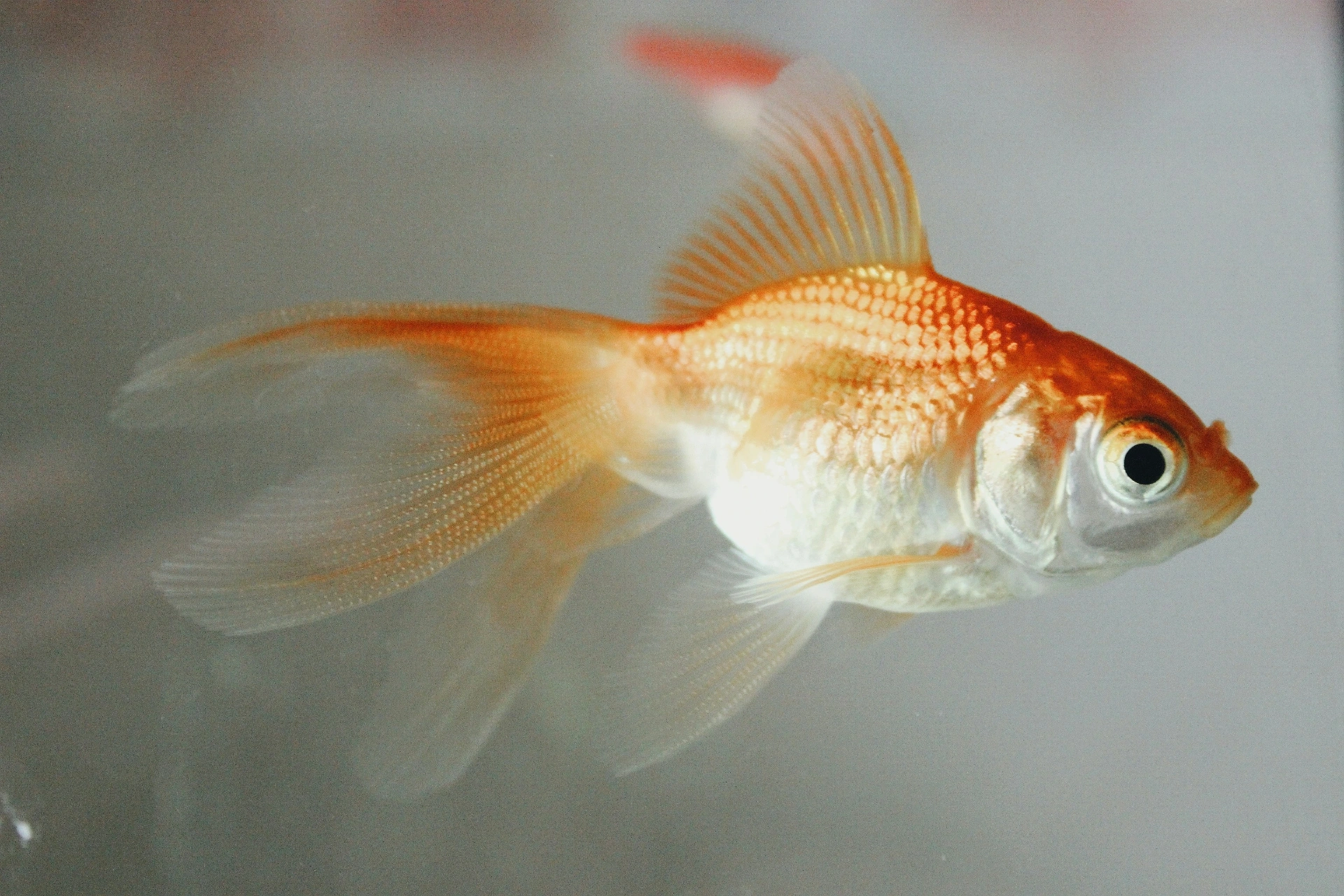
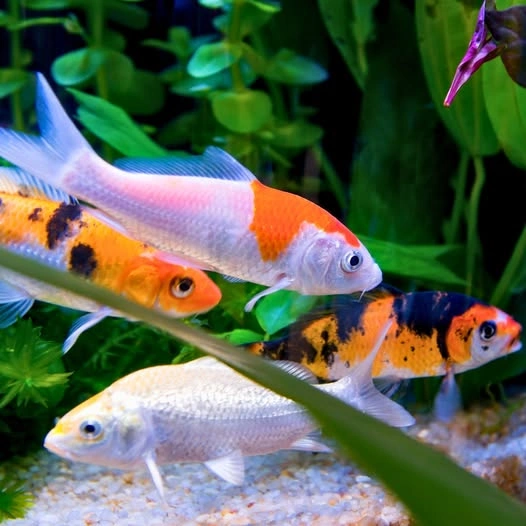
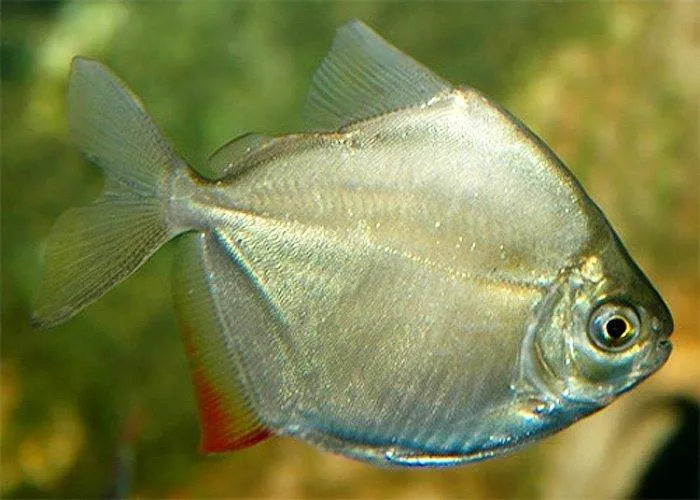
Companion plants
A salvinia layer is thinner and patchier than a frogbit or water lettuce mat, so the plants below have a slightly easier time — but low-light species are still the safe choice.
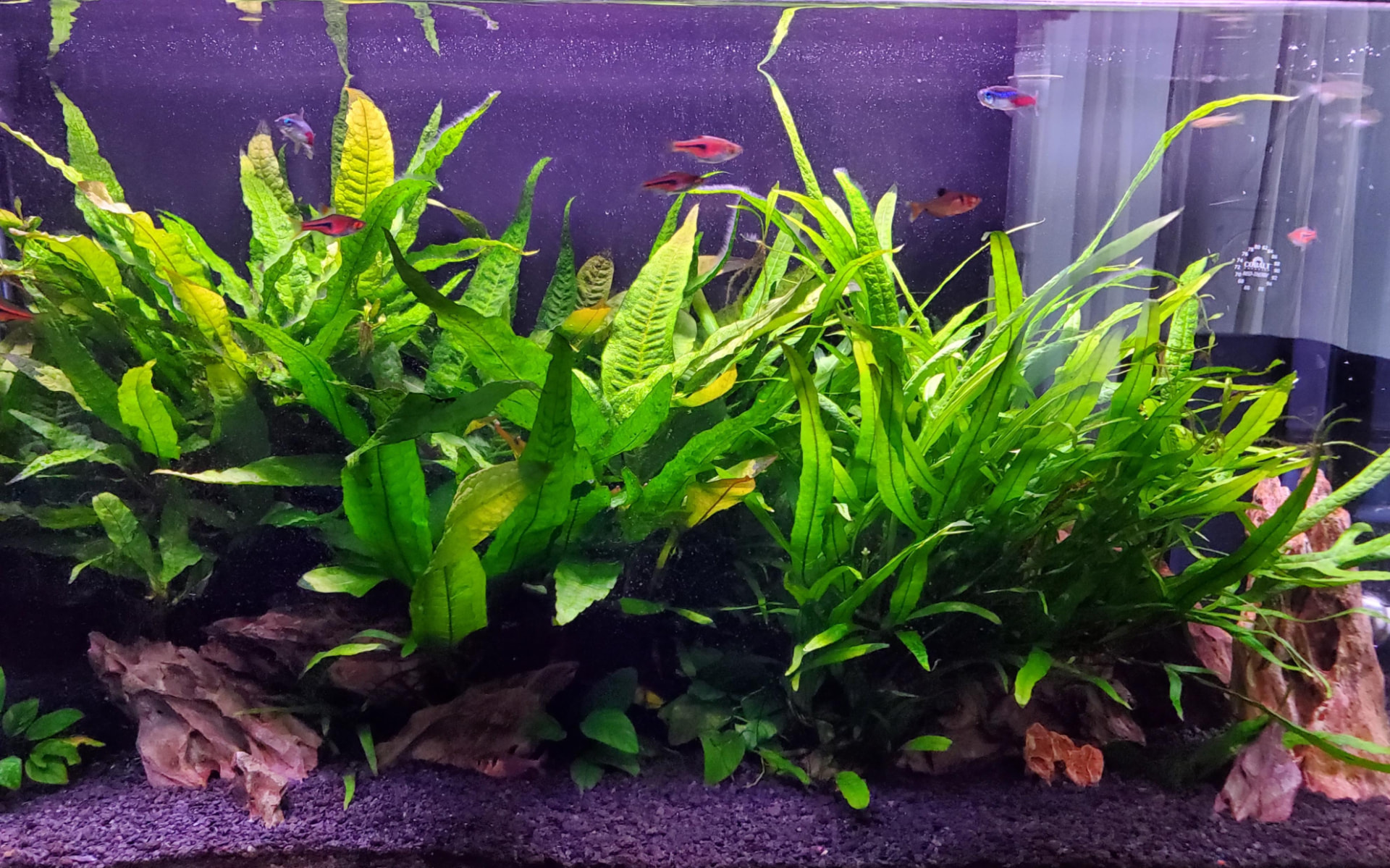
Java Fern
Microsorum pteropus
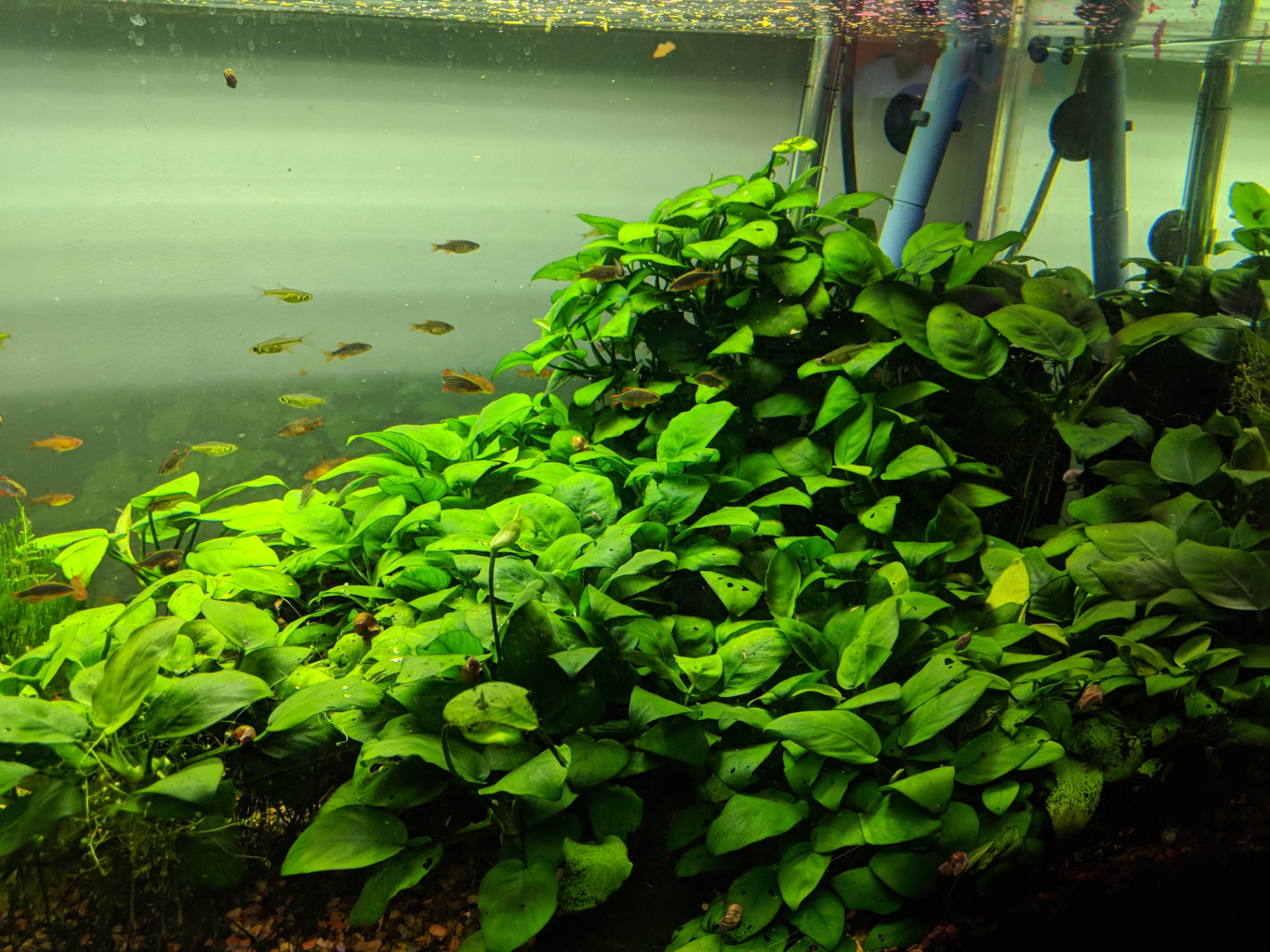
Anubias
Anubias barteri
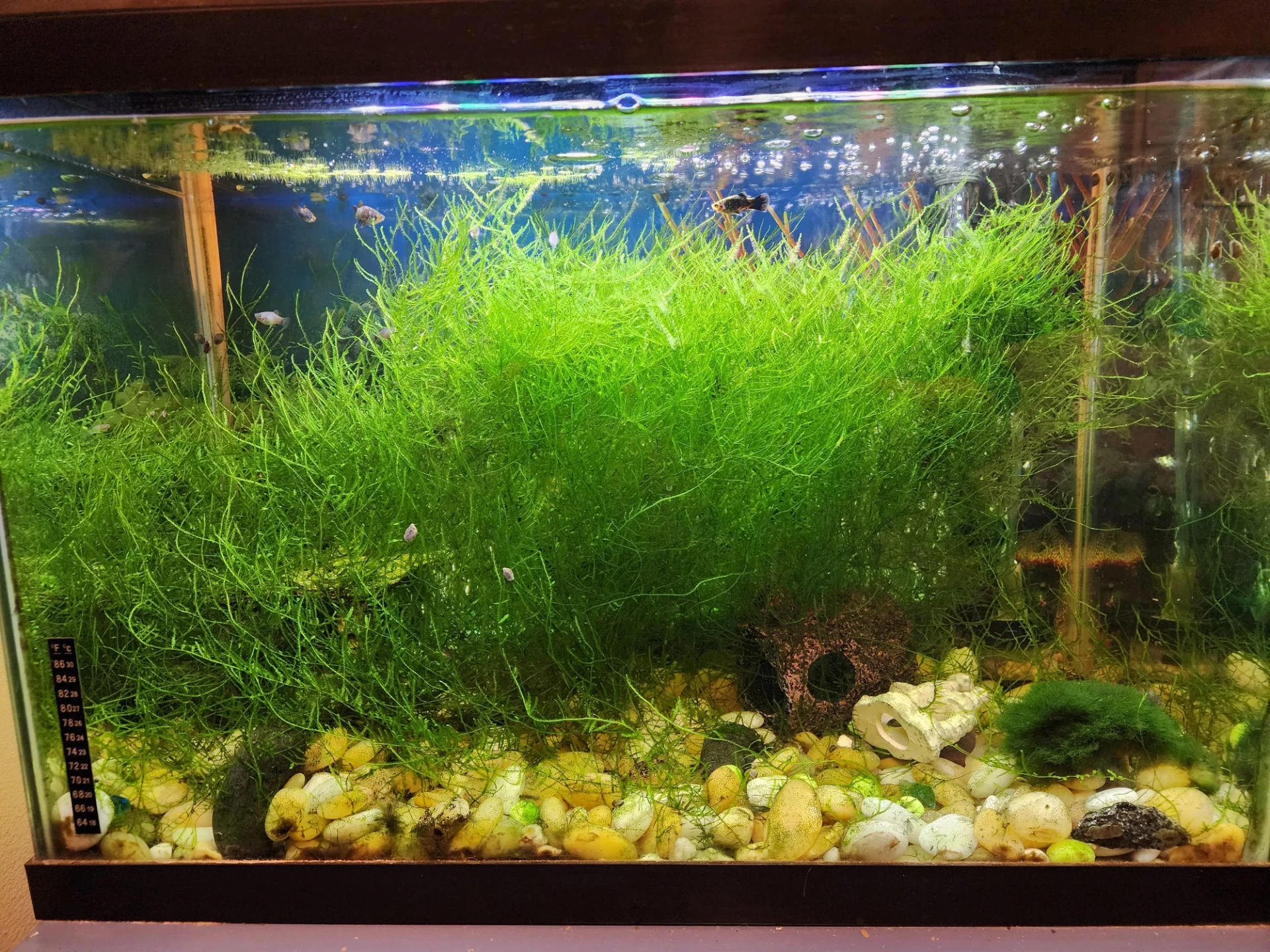
Java Moss
Taxiphyllum barbieri
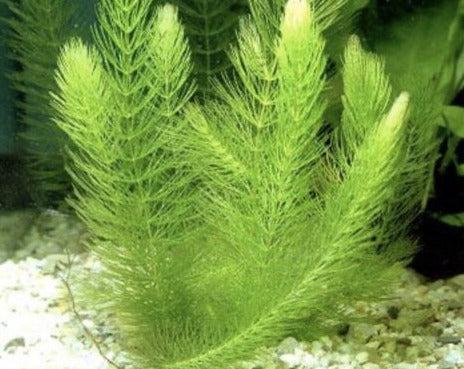
Hornwort
Ceratophyllum demersum
Pro tips & common mistakes
Pro tips
- This is the floater to choose when you cannot stop your filter breaking the surface.
- Skim from the middle of the mat, not the edges — stacking in the centre is what rots.
- Rinse nets between tanks. Fragmentation makes salvinia the easiest plant here to spread accidentally.
- Check the label against Salvinia molesta if you are buying from an unfamiliar source.
- It keeps growing in cool water where tropical floaters stall, which makes it useful in unheated tanks.
Common mistakes
- Letting it pile into layers in one corner and assuming the brown bottom layer is disease.
- Moving it between tanks on a shared net and then wondering how it got there.
- Buying it in Texas, where the whole genus is prohibited.
- Expecting the tolerance to surface flow to extend to the plants growing below it.
- Composting or rinsing away thinnings instead of drying or freezing them first.
Frequently asked questions
Sources
- Plants of the World Online — Accepted name Salvinia minima Baker and its native American range.
- US Federal Noxious Weed List, 7 CFR 360.200 — Federal listing of Salvinia molesta and the exclusion of S. minima.
- Texas Parks & Wildlife — Prohibited Exotic Aquatic Plants — Genus-wide prohibition on Salvinia in Texas.
Related plants
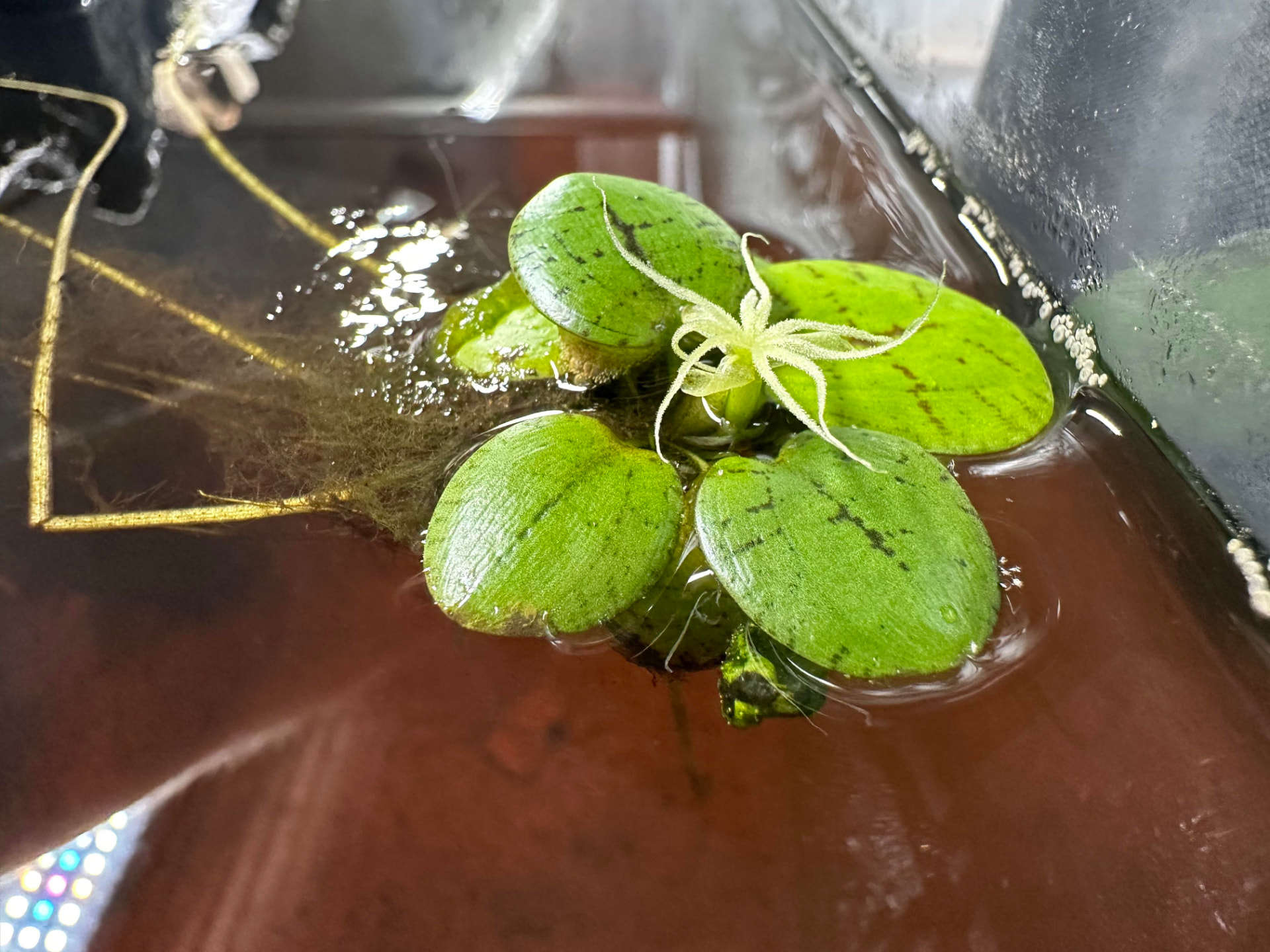
Amazon Frogbit
Limnobium laevigatum
Azolla
Azolla filiculoides
Red Root Floater
Phyllanthus fluitans
Water Lettuce
Pistia stratiotes
Guppy Grass
Najas guadalupensis
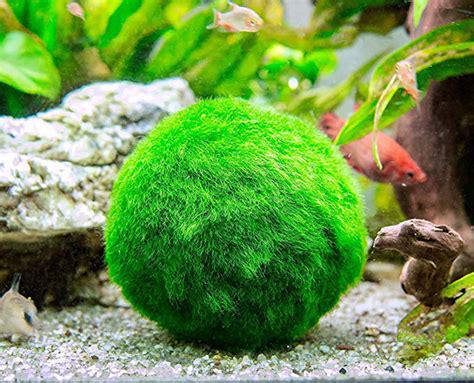
Marimo Moss Ball
Aegagropila linnaei
Cover changes behaviour, not capacity
Surface plants make nervous fish bolder, which is easily mistaken for room to add more. Check the numbers before you do.
Reviewed by the AquariumStocking team · Updated August 2026