
Azolla Care Guide
Azolla filiculoides (syn. Azolla rubra)
Reviewed by the AquariumStocking team · Updated August 2026
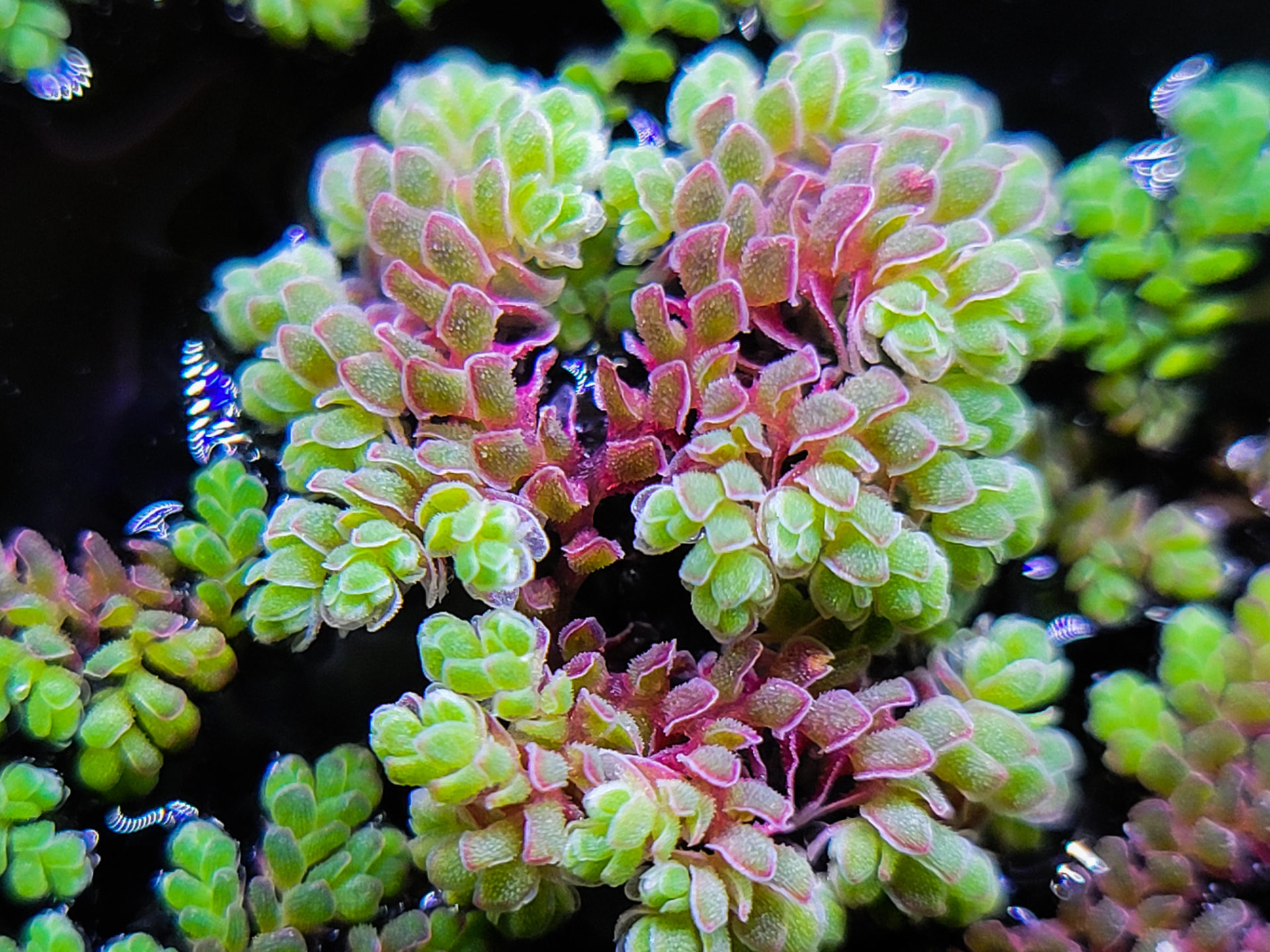
A millimetre-scale floating fern that fixes its own nitrogen through a symbiotic cyanobacterium — and is banned across the EU for exactly the reason it grows so well.
Azolla quick facts
- Light demand
- Medium
- CO2 requirement
- Not needed
- Difficulty
- Beginner
- Growth rate
- Fast
- Placement
- Floating
- Growth habit
- Floating
- Substrate need
- None — floats at the surface
- Max size
- 2 cm (0.8 in) tall, ~2 cm wide
- pH
- 5.5–8.0
- Hardness
- 2–20 dGH
- Propagation
- Fragmentation — fronds branch and separate on their own
- Temperature
- 10–28 °C (50–82 °F)
Never planted. The fronds sit on the surface and short roots dangle a few millimetres into the water, which is all the contact it has with the tank.
Banned in some regions
| Jurisdiction | What is restricted | Official source |
|---|---|---|
| European Union | On the EU’s Union list of regulated invasive species under Regulation 1143/2014, added by Implementing Regulation (EU) 2016/1141. Keeping, breeding, transporting, selling and releasing are prohibited across all member states. | View list |
| United Kingdom | Sale of Azolla filiculoides has been banned since 2014 under the Wildlife and Countryside Act 1981 (Schedule 9), and releasing it into the wild is an offence. | View list |
Never flush it, pour it down a drain, or put it in a pond, ditch or compost heap. Bag what you remove, dry it out completely or freeze it, and dispose of it in household waste.
Lists last checked 2026-08-12. Rules change — check your own state or country before buying, and never assume a plant sold locally is legal to keep.
Overview
For European readers the first fact is a legal one: Azolla filiculoides is on the EU list of regulated invasive species, and keeping, selling, transporting or releasing it is prohibited across all member states. The UK has banned its sale since 2014. If you are in either jurisdiction, this page is background reading rather than a shopping list, and the disposal guidance above matters more than the care advice below.
The biology behind that listing is also what makes azolla interesting. It is the only plant in this database that fixes its own nitrogen: each frond houses a symbiotic cyanobacterium in a small cavity, and that partner converts atmospheric nitrogen into a form the fern can use. Azolla therefore grows explosively in water that contains almost no nitrate — the condition that limits every other plant here.
That capability is why azolla has been used as a rice paddy fertiliser in Asia for centuries, long before anyone put it in an aquarium, and it is why a small starter portion covers a surface in weeks rather than months.
Physically it is tiny. Individual fronds are two to five millimetres across, overlapping into a fine-textured mat that turns deep red under strong light or cold conditions.
What you're buying
Availability is the first question and it is a legal one, not a practical one. Where azolla can be sold, it is cheap, sold by the portion, and needs almost nothing on arrival.
Check your jurisdiction first
Prohibited across the EU and banned from sale in the UK. Restricted in parts of Australia and New Zealand. Check the current list for your country before buying or accepting a portion from another keeper.
A pinch is plenty
Azolla doubles in days under good light. A tablespoon of fronds covers a two-foot surface within a few weeks, and buying a large portion just means thinning it sooner.
Inspect for hitchhikers
Duckweed hides in an azolla portion almost perfectly — both are millimetre-scale floaters. Sorting them apart afterwards is effectively impossible, so check the portion in a white tray before it goes in.
Colour on arrival tells you about the light it came from, not the plant's health. Green stock reddens within weeks under a bright fixture, and red stock greens up under a dim one.
Take nothing from a wild pond, ditch or canal. Beyond the legal exposure in restricted regions, wild azolla arrives with the full complement of pond invertebrates and pathogens.
Light, CO2 & nutrients
Light
Medium
CO2
Not needed
Fertilisation
Water column (liquid)
Light
Medium light is the target and it is doing two jobs: driving growth, and driving colour. Azolla under a strong fixture turns from green through bronze to a deep red across the whole mat, and that colouration is the main aesthetic reason to keep it.
Cold also reddens it, so a mat in a cool, brightly lit tank is at its most colourful. In a dim, warm tank it stays plain green.
What sits below it is the real consideration. A closed azolla mat is dense and blocks a great deal of light from the tank underneath — thinning it is a lighting decision for the plants below as much as a tidiness one.
CO2
Not needed. Like every floater it takes carbon dioxide from the air across its upper surface, which is far richer than anything in solution.
CO2 injection does nothing for it and is not wasted only because the submersed plants below will use it.
Work out your CO2 injection rate →
Nutrients
This is the section where azolla behaves unlike anything else here. Its symbiotic cyanobacterium fixes atmospheric nitrogen inside the frond, so the plant is not dependent on nitrate in the water at all. In a lean, well-maintained tank where other plants stall for want of nitrogen, azolla keeps doubling.
It still needs everything else from the water — phosphorus, potassium, iron and trace elements — and in a very lightly stocked tank those are what limit it. Phosphorus shortage is the usual brake, and it shows as a mat that stops expanding while staying healthy in colour.
A consequence worth understanding: azolla is a poor nitrate remover compared with frogbit or hornwort, because it is not obliged to take nitrogen from the water. Do not add it expecting the nitrate control that other floaters provide.
Iron shortage shows as pale, yellowish fronds and a mat that will not redden no matter how bright the light.
It makes its own nitrogen — dose the rest of the tank accordingly →
Water & temperature
pH
5.5–8.0
Hardness
2–20 dGH
Temperature
10–28 °C (50–82 °F)
Broadly tolerant across pH and hardness, and comfortable well below tropical temperatures — it survives near-freezing conditions outdoors and overwinters in temperate ponds, which is a large part of why it is invasive in Europe.
A calm surface is what it needs most. Strong surface agitation pushes the mat into corners, waterlogs fronds and eventually sinks them.
Very warm water is the one condition it is less fond of: above about 28 °C growth slows and the mat thins out.
Adding it to the tank
- 1Rinse the portion in a white tray and check for duckweed before anything goes in the tank.
- 2Drop the fronds on the surface — there is no planting, weighting or anchoring involved.
- 3Reduce surface agitation. Angle the filter outflow down and turn off any air stone.
- 4Corral it with a floating ring or airline barrier if you do not want it covering the whole surface.
- 5Thin the mat weekly from the start; azolla is much easier to keep in bounds than to bring back under control.
- 6Bag, dry or freeze everything you remove. Never rinse it into a drain.
The disposal step is not optional housekeeping. Azolla is regulated precisely because a few fronds reaching open water are enough to found a population.
Placement & aquascaping role
The surface, and as much or as little of it as you allow. Azolla has no other placement.
Confining it is worth doing from day one. A feeding ring, an airline tied across a corner, or a cut length of tubing floated as a boom will hold the mat in one area while the rest of the surface stays open.
Leave open water for surface breathers. Anabantoids and corydoras need somewhere to reach the air without pushing through a mat, and a fully closed surface makes that harder than it looks.
Growth, trimming & maintenance
Thinning is the whole maintenance routine and it is constant. In good conditions the mat roughly doubles within a week, so a session with a fine net every water change is the minimum.
It is easier to remove than duckweed, which is worth saying plainly: the fronds are larger, they clump together rather than dispersing individually, and a net takes out most of a mat in one pass.
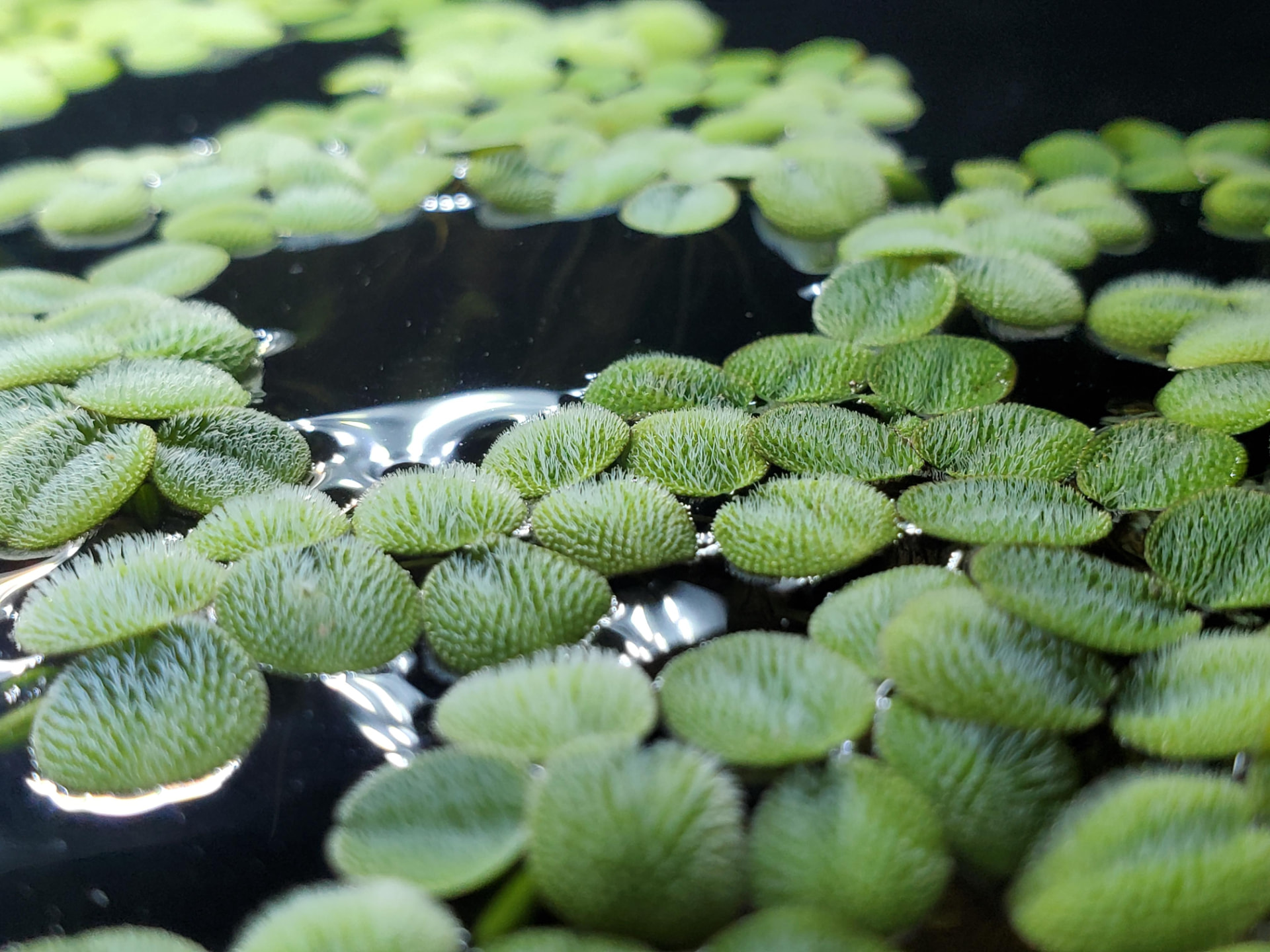
The comparison people are really making is with the other small floaters. Salvinia is the closest relative — also a floating fern, also EU-regulated — but the two are not interchangeable. Salvinia has larger, water-repellent leaves covered in fine hairs that shed splash, which makes it the one to choose in a tank with surface movement. Azolla is smaller, denser and much less tolerant of agitation, and it brings nitrogen fixation and stronger red colour that salvinia does not. Duckweed is the third option and the one to avoid: individual fronds are almost impossible to catch and it is notoriously permanent.
A mat left to thicken stacks into layers, and the fronds underneath rot for want of light. Thin by area rather than skimming the top.
Propagation
There is nothing to do. Azolla branches and the branches separate on their own, which is the entire propagation mechanism and the reason a pinch becomes a mat.
It also produces spores, though in aquarium conditions vegetative division is so rapid that spores are irrelevant to how the population grows in your tank.
- 1Scoop a small portion of healthy fronds with a fine net.
- 2Float them in the destination tank — no acclimation or preparation.
- 3Keep the surface calm for the first week while the mat re-establishes.
- 4Do not share it into a region where it is restricted, and do not move it between outdoor water bodies at all.
Troubleshooting & diagnosis
Azolla problems are short list: agitation sinking it, heat thinning it, nutrients other than nitrogen running out, and the mat closing over faster than expected.
| Symptom | Likely cause | Fix |
|---|---|---|
| Fronds waterlogging and sinking | Surface agitation from a filter outflow or air stone | Angle the outflow downward and remove surface aeration; azolla needs a calm surface. |
| Mat browning and thinning out | Water too warm, usually above 28 °C | Lower the temperature if the stocking allows; azolla is happiest below the upper tropical range. |
| Staying green under a bright light | Iron shortage, or a warm tank — cold and light together drive the red | Dose chelated iron; accept green in a warm tank. |
| Growth stalled but colour fine | Phosphorus or potassium exhausted — nitrogen is never the limit for azolla | Dose a complete all-in-one fertiliser rather than a nitrogen supplement. |
| Rotting layer underneath the mat | The mat has stacked and the lower fronds are shaded out | Thin by area every week rather than letting it thicken. |
| Duckweed spreading through the azolla | It came in with the portion | There is no practical way to separate them. Restart with a clean portion inspected in a white tray. |
Natural habitat & origin
Native range
The Americas — western North America through to southern South America
Habitat type
Still and slow water: ponds, ditches, canals and lake margins
Wild growing conditions
Calm sunlit surfaces, tolerant of cold and of very low nitrate
Azolla filiculoides is native to the Americas and naturalised across Europe, Africa, Asia and Australasia, where it forms mats thick enough to cover an entire pond surface. That capacity for total cover — deoxygenating the water beneath and shading out everything in it — is what put it on the EU list rather than any effect on aquariums.
The nitrogen fixation is the reason it can do that. The symbiotic cyanobacterium living inside each frond supplies nitrogen that the surrounding water does not, so azolla colonises clean water where competing plants are nitrogen-limited. It is a genuine evolutionary advantage and a genuine management problem at the same time.
That same trait made it an agricultural crop. Azolla has been grown in rice paddies across China and Vietnam for centuries as a green fertiliser, and it is still farmed as livestock feed — which is why searches for the plant return far more agronomy than aquarium keeping.
Cold tolerance completes the picture. Azolla overwinters in temperate climates, which is why an aquarium portion tipped into a garden pond in a cool country does not simply die off.
Fish & invert compatibility
Azolla is too small to be habitat in the way a frogbit root curtain is. What it offers underneath is shade and a little cover, and what it risks is being eaten by anything that grazes the surface.
Safe with Azolla
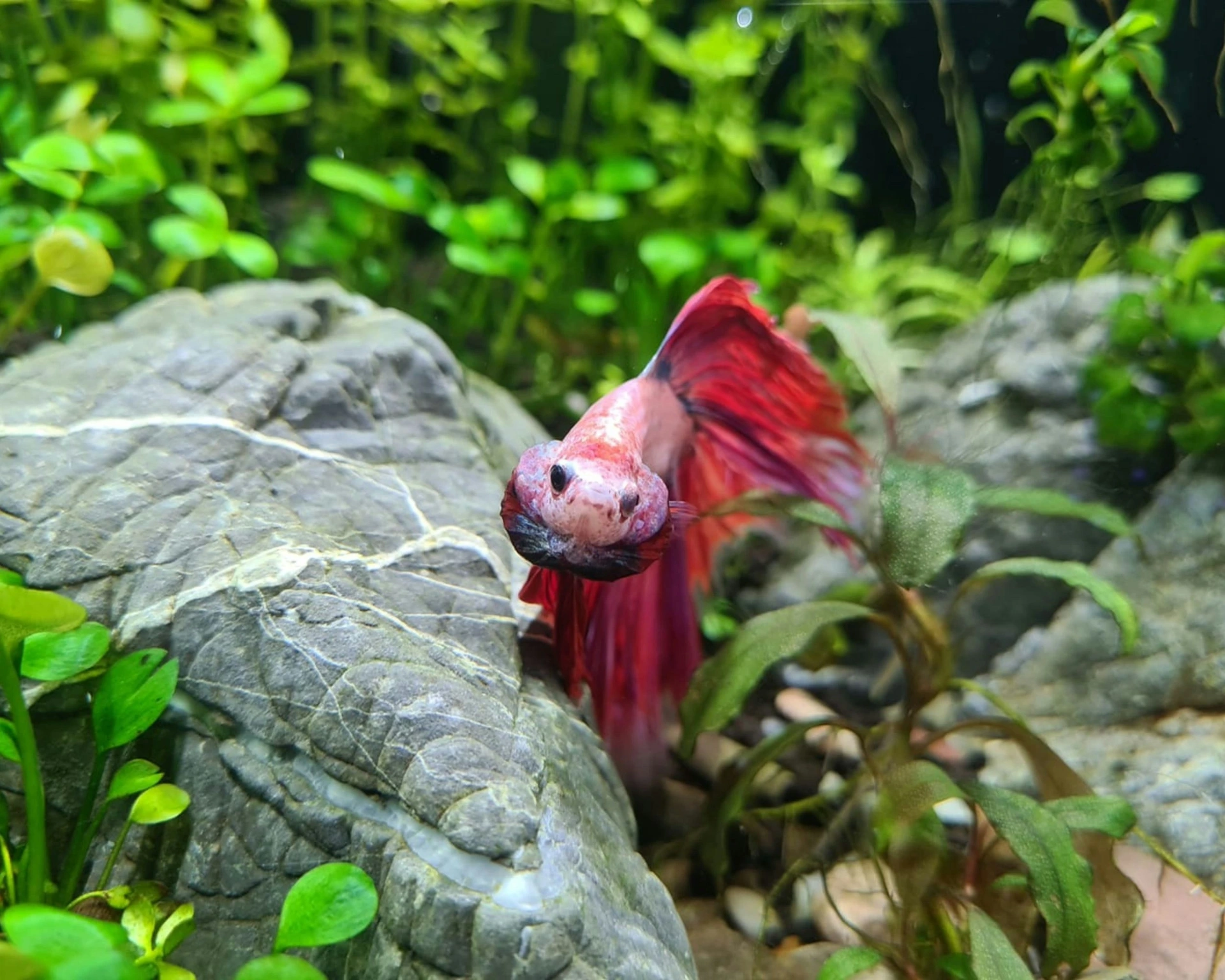 BettaBetta splendens
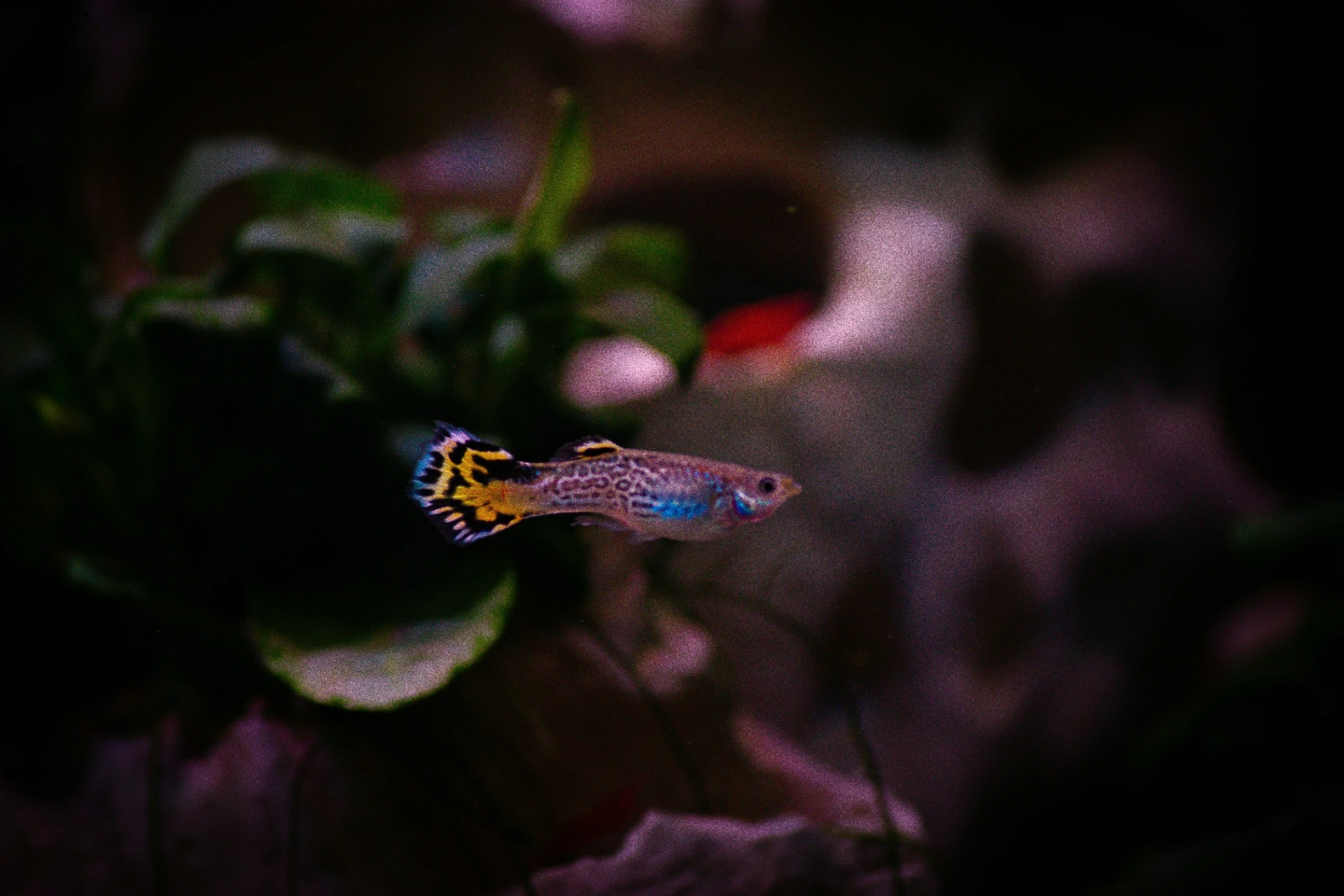 GuppyPoecilia reticulata
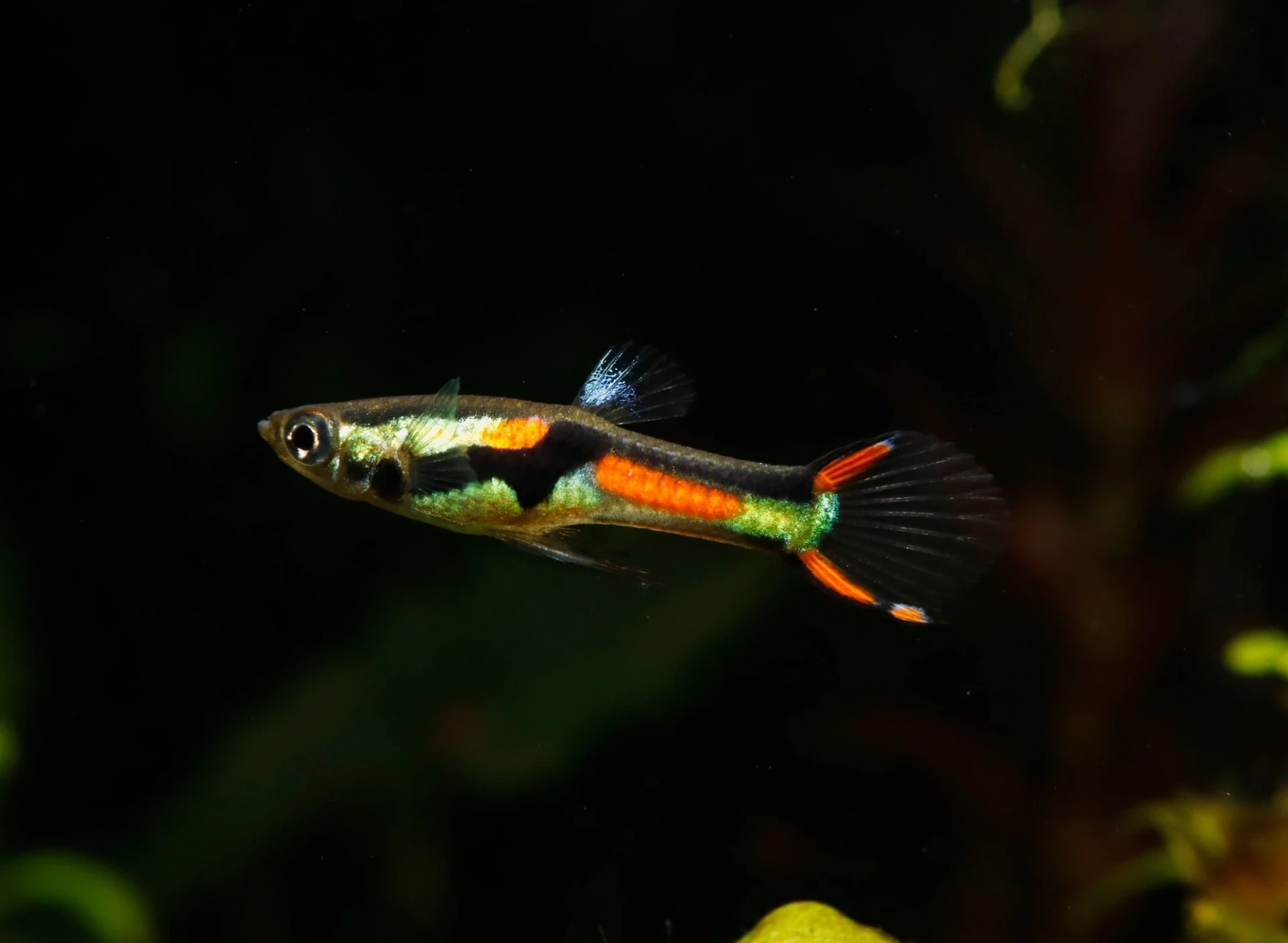 Endlers LivebearerPoecilia wingei
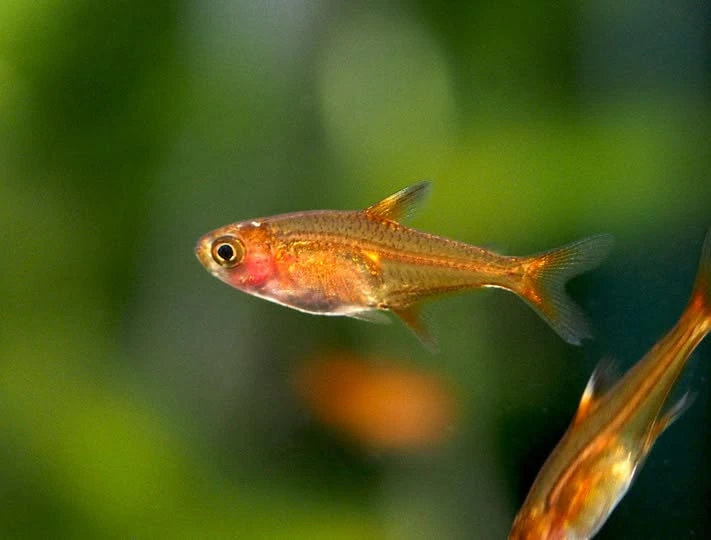 Ember TetraHyphessobrycon amandae
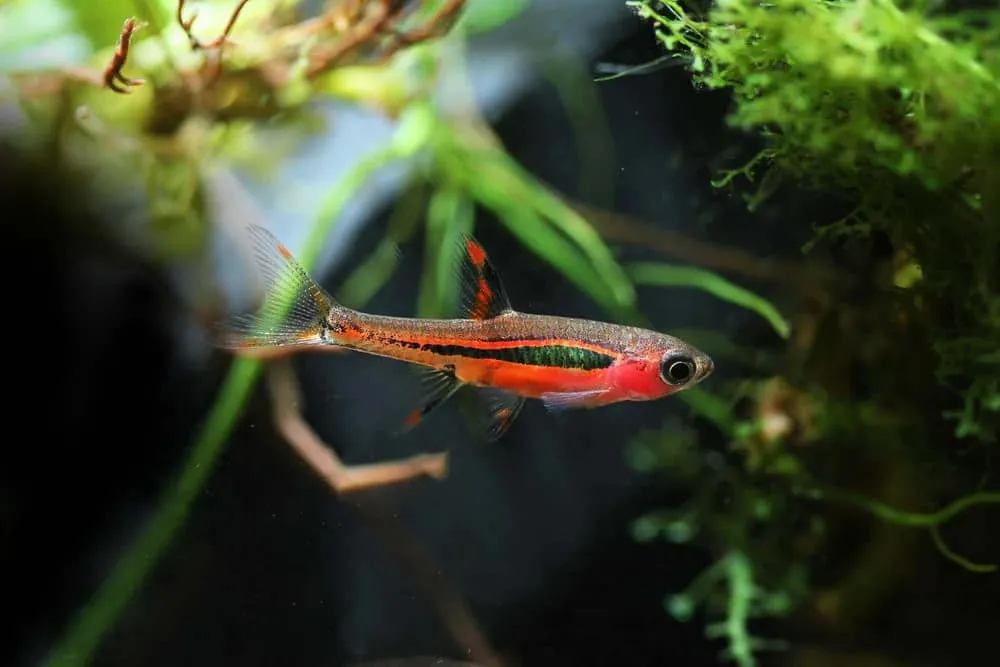 Chili RasboraBoraras brigittae
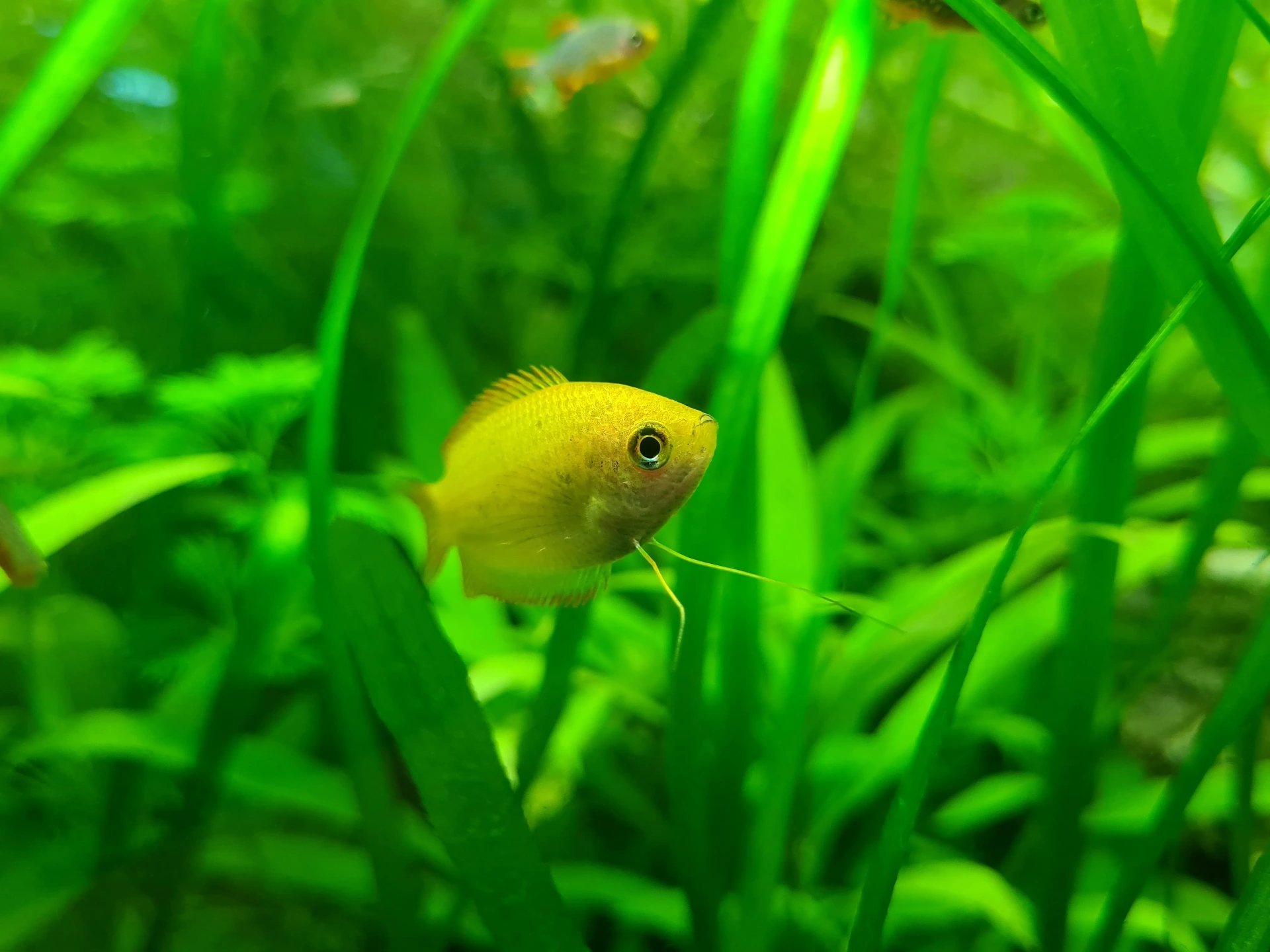 Honey GouramiTrichogaster chuna
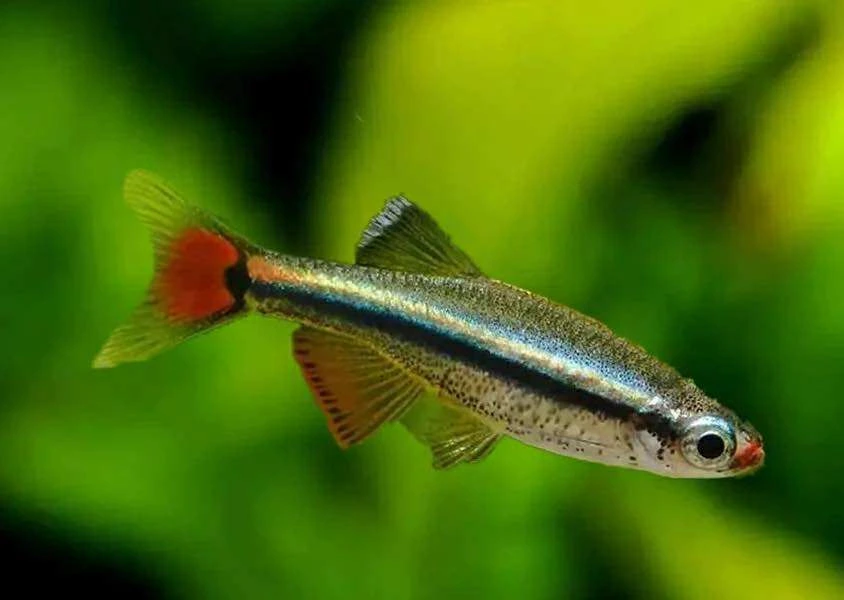 White Cloud Mountain MinnowTanichthys albonubes
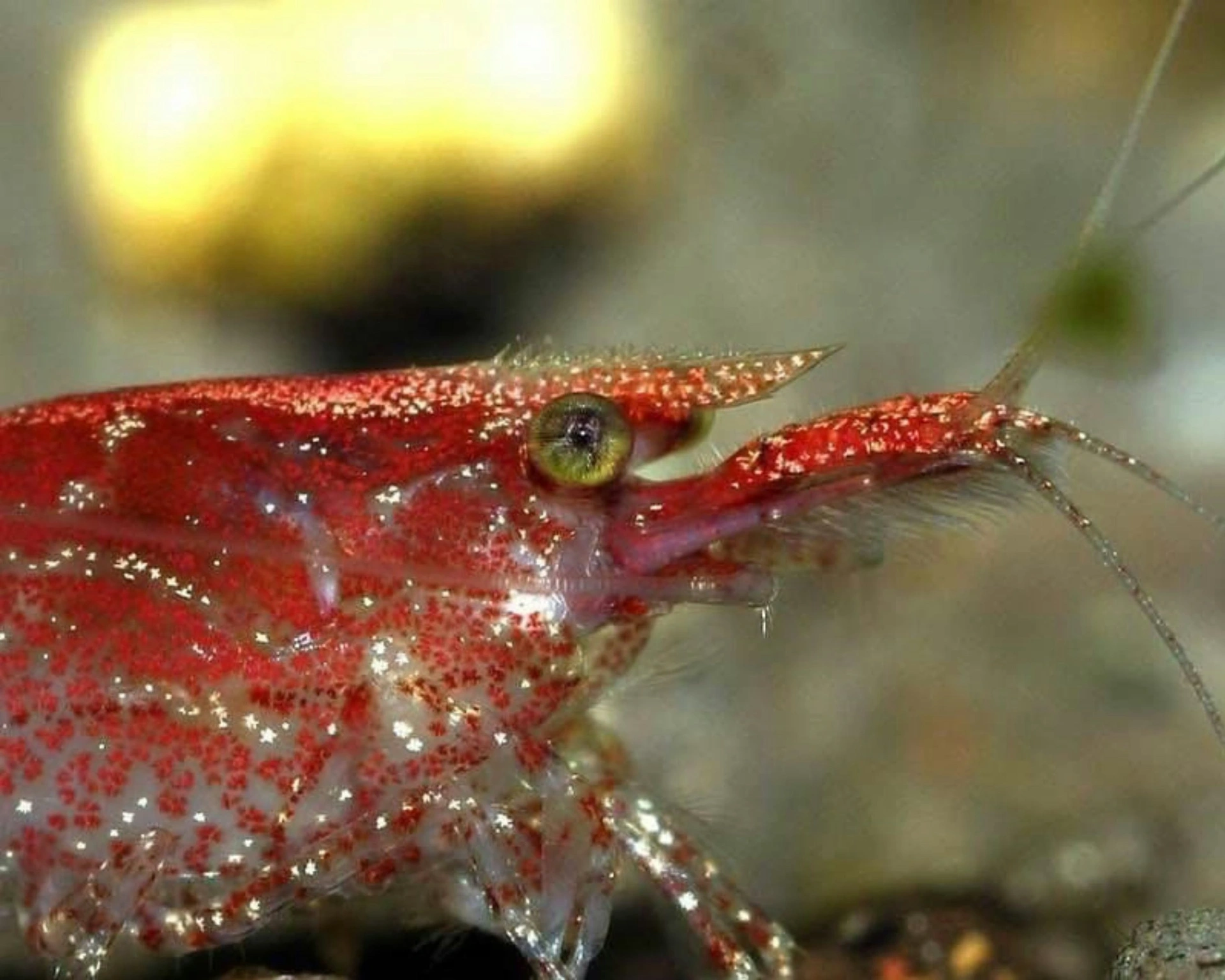 Cherry ShrimpNeocaridina davidi
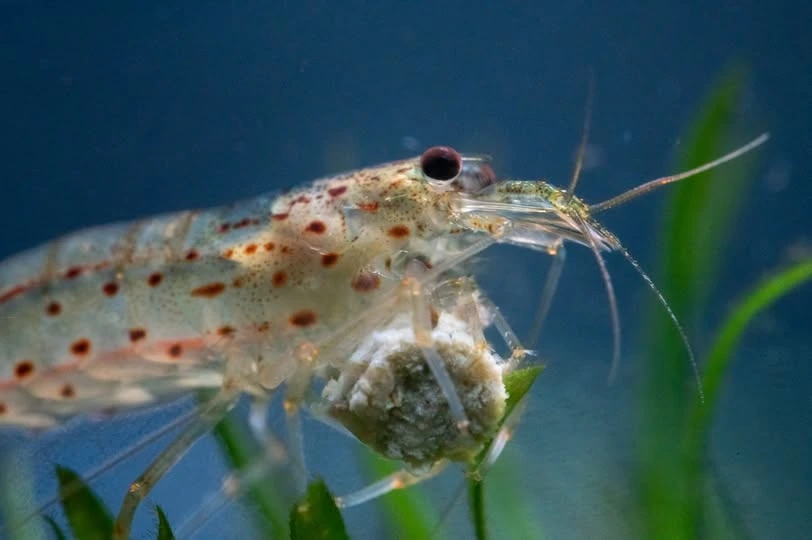 Amano ShrimpCaridina multidentata
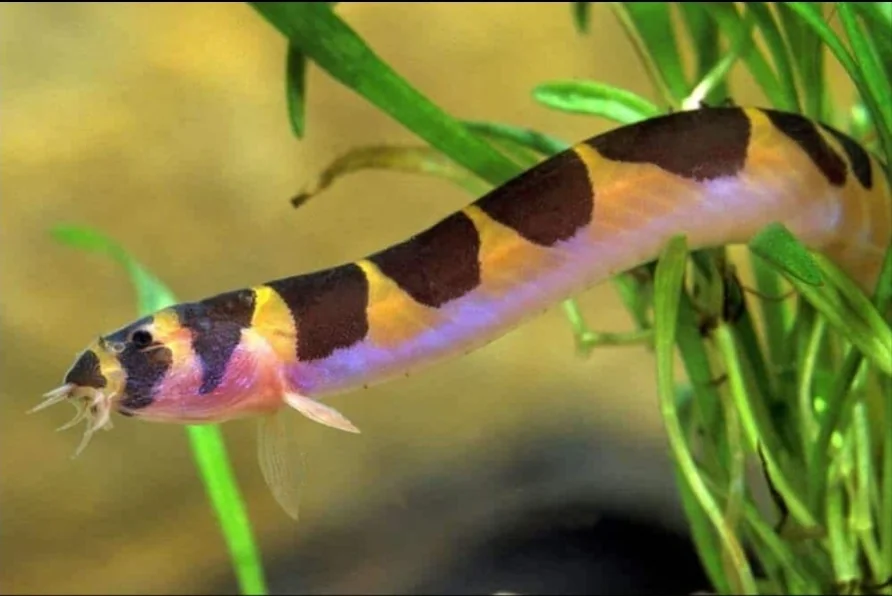 Kuhli LoachPangio kuhlii
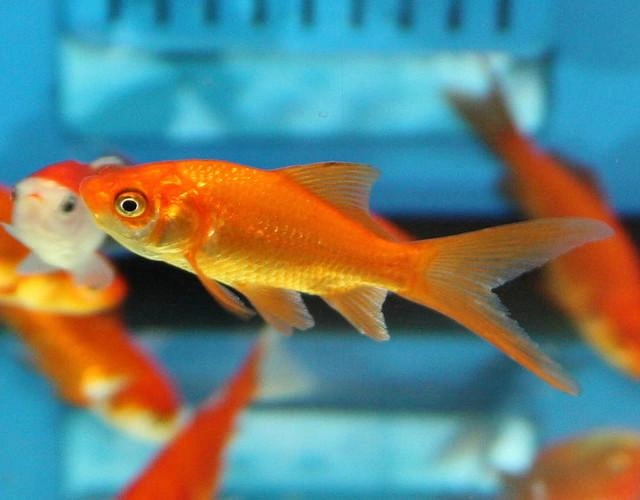
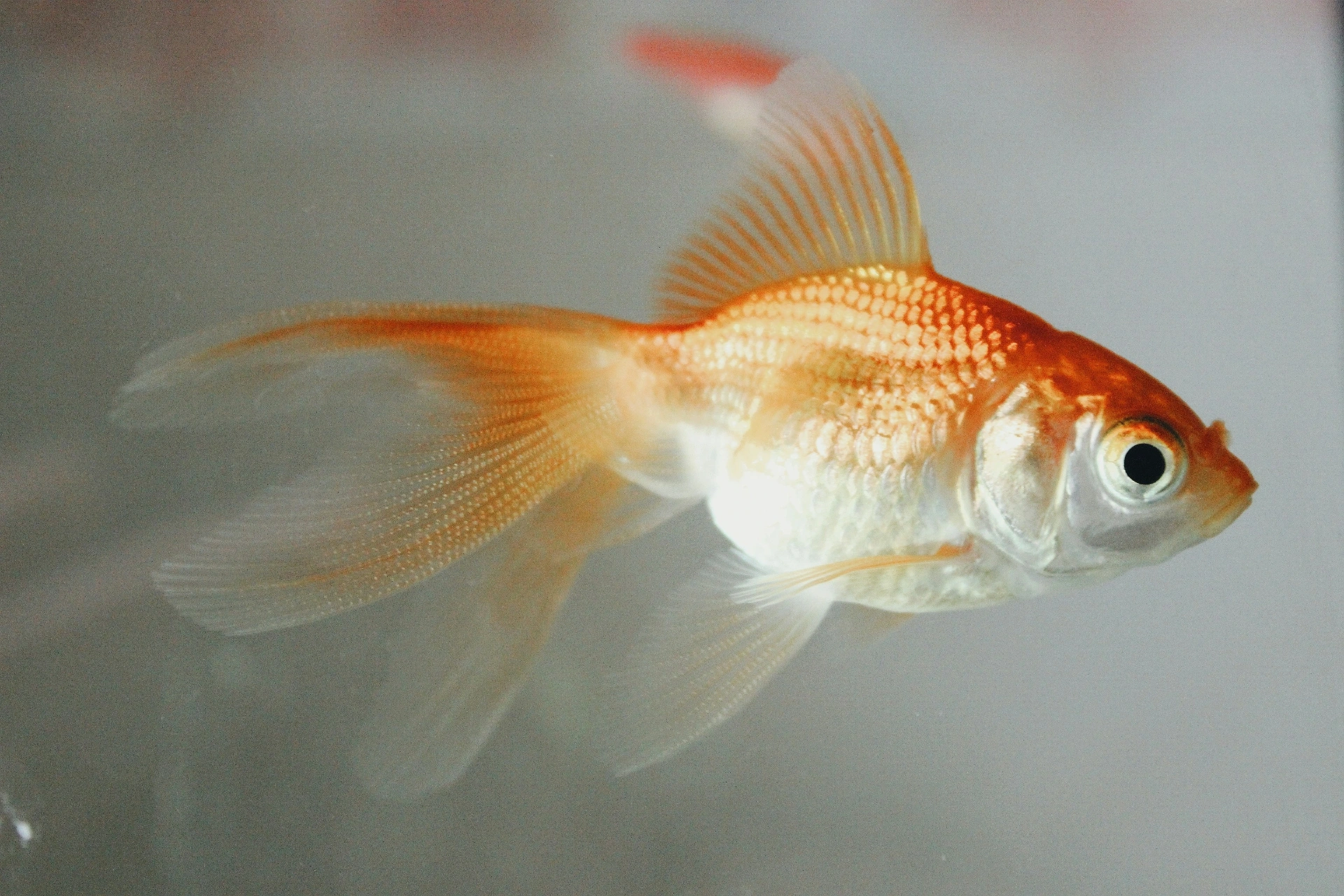
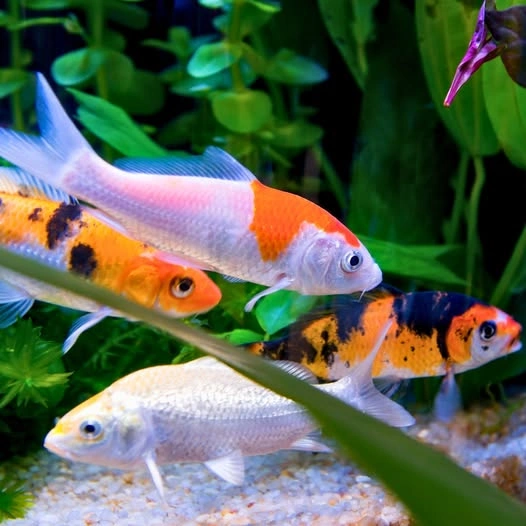
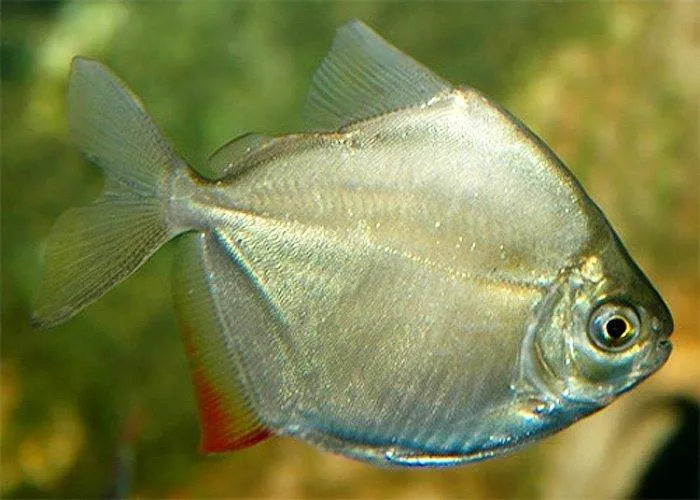
Will eat or uproot it
Companion plants
Shade-tolerant plants only. A closed azolla mat cuts a lot of light out of the tank below, and the plants under it have to be able to live with that.
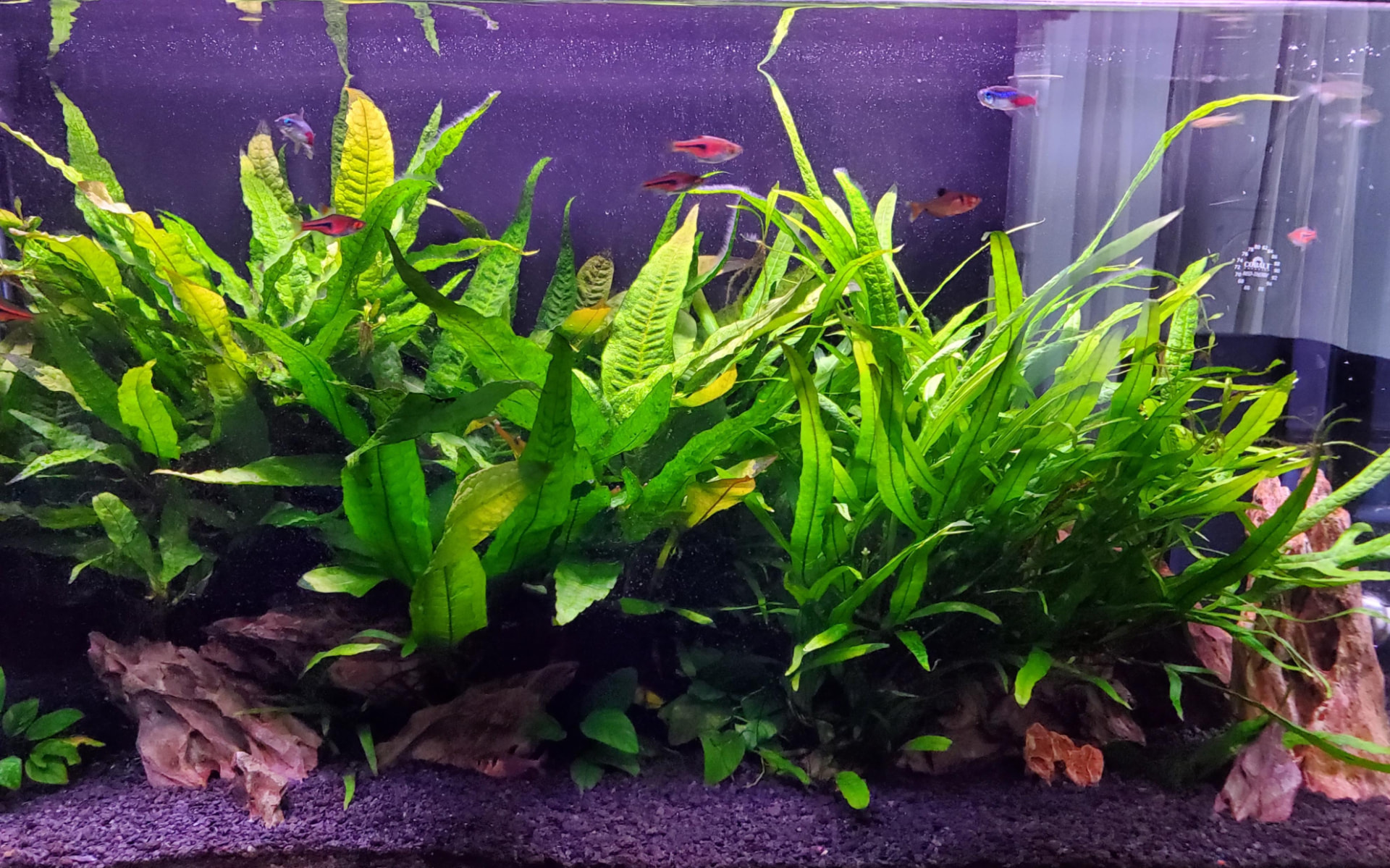
Java Fern
Microsorum pteropus
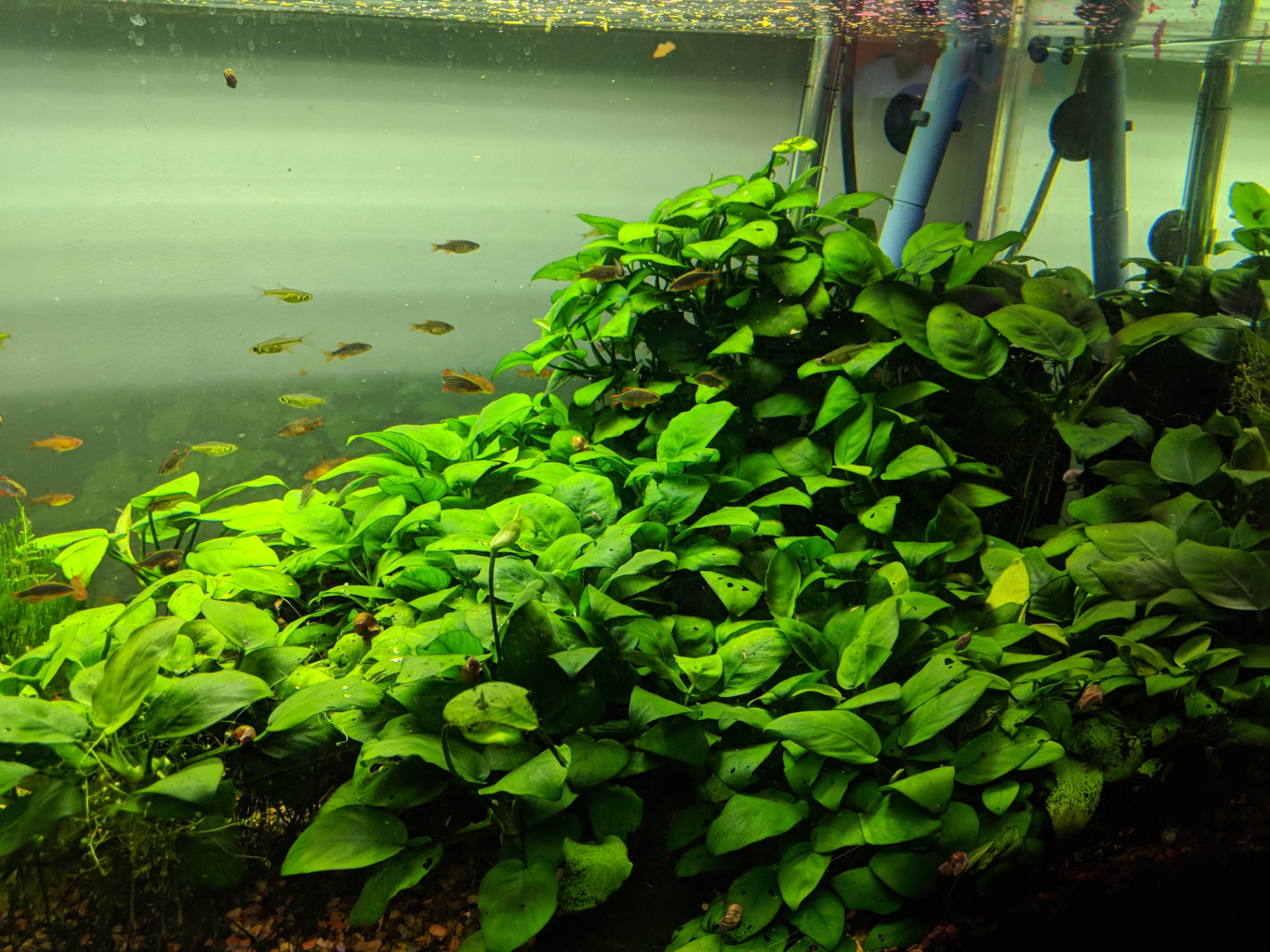
Anubias
Anubias barteri
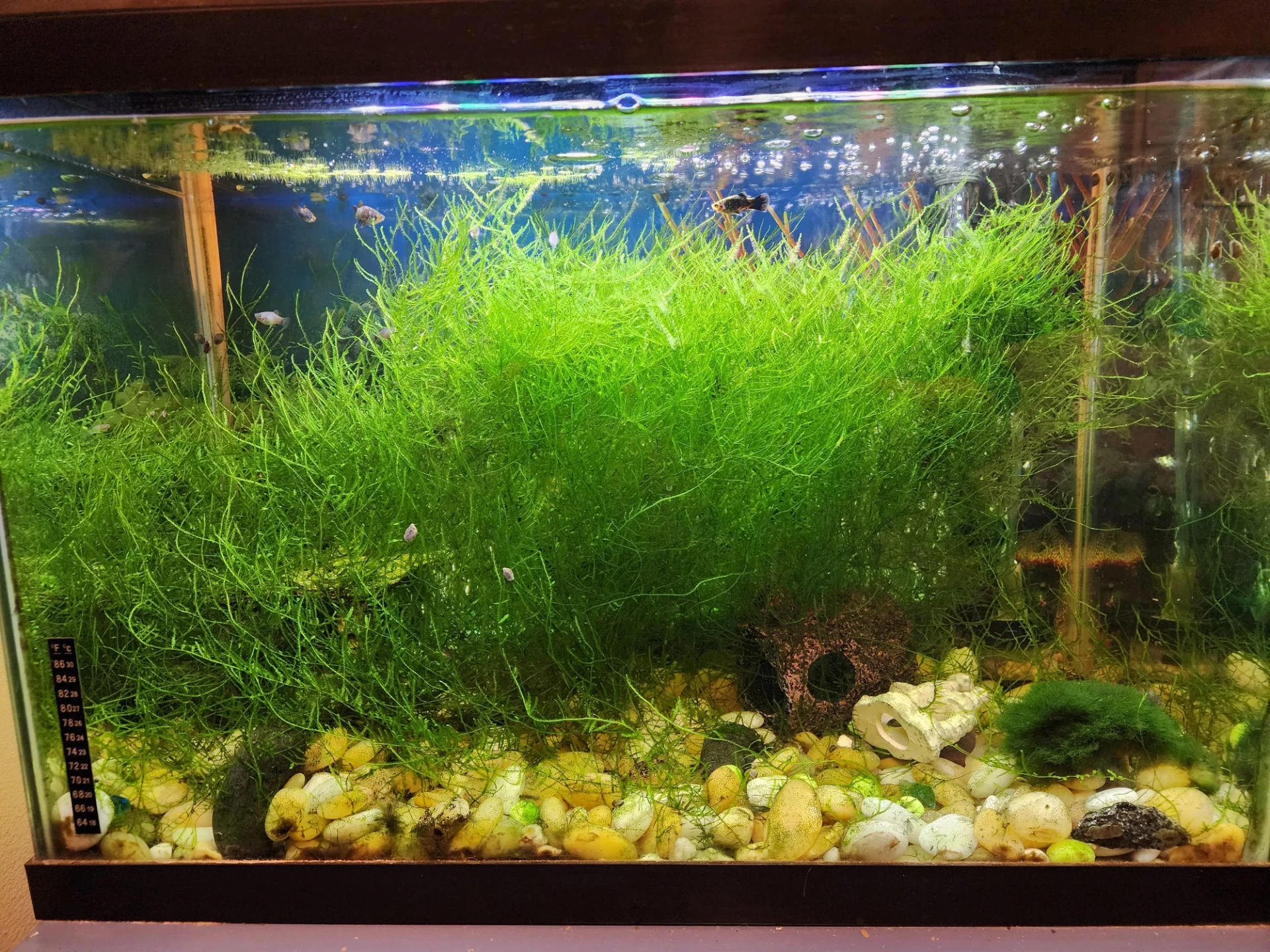
Java Moss
Taxiphyllum barbieri
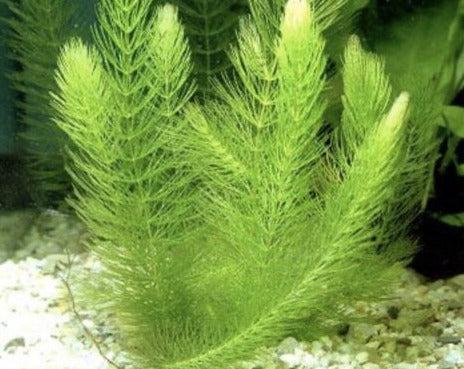
Hornwort
Ceratophyllum demersum
Pro tips & common mistakes
Pro tips
- Check your local regulations before acquiring it — in the EU and UK the answer is already no.
- Corral it from the first day. Controlling a small mat is trivial; reclaiming a covered surface is not.
- Inspect any portion in a white tray for duckweed before it touches the tank.
- Do not add it to strip nitrate — it makes its own nitrogen and is poor at that job compared with frogbit or hornwort.
- Cool water plus strong light is what turns it deep red; heat keeps it green.
- Dry or freeze everything you remove before it goes in the bin.
Common mistakes
- Buying or trading it in a region where it is prohibited.
- Expecting it to control nitrate the way other floaters do.
- Running an air stone or a splashing outflow underneath it and drowning the mat.
- Letting the mat close over completely and shading out the tank below.
- Tipping unwanted plants into a pond or a drain instead of bagging and drying them.
- Accepting a portion with duckweed in it and inheriting a permanent problem.
Frequently asked questions
Sources
- EUR-Lex — Commission Implementing Regulation (EU) 2016/1141 — Azolla filiculoides on the EU Union list of regulated invasive species.
- Plants of the World Online — Accepted name Azolla filiculoides Lam., family Salviniaceae.
- Annual Review of Plant Biology — Peters & Meeks (1989) — The Azolla–Anabaena symbiosis and nitrogen fixation inside the leaf cavities.
Related plants
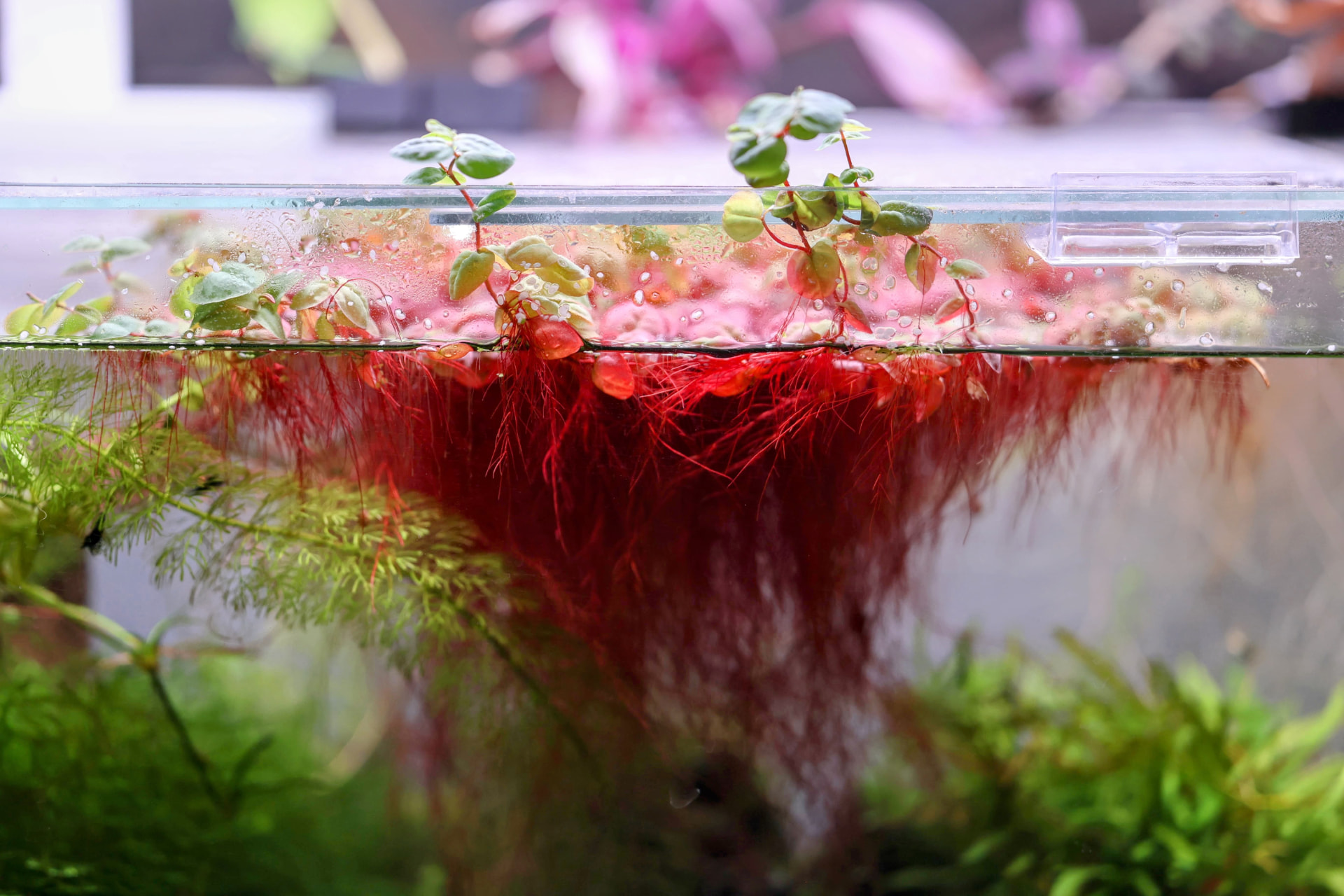
Red Root Floater
Phyllanthus fluitans
Water Lettuce
Pistia stratiotes
Amazon Frogbit
Limnobium laevigatum
Salvinia
Salvinia minima
Amazon Sword
Echinodorus grisebachii
Guppy Grass
Najas guadalupensis
Surface cover changes fish behaviour
Shy species and anabantoids use a covered surface constantly. Work out what your tank actually holds, then decide how much of it to shade.
Reviewed by the AquariumStocking team · Updated August 2026