
Care Requirements
Adult Size
2.0" (5cm)
Min Tank
20 gal
Temperature
75-82°F
pH Range
5.5-7
Lifespan
5-8 years
Min Group
6+ fish
Diet
Omnivore
Swim Level
Bottom
Bioload
2/10
Hardness
1-8 dGH
About Adolfo's Corydoras
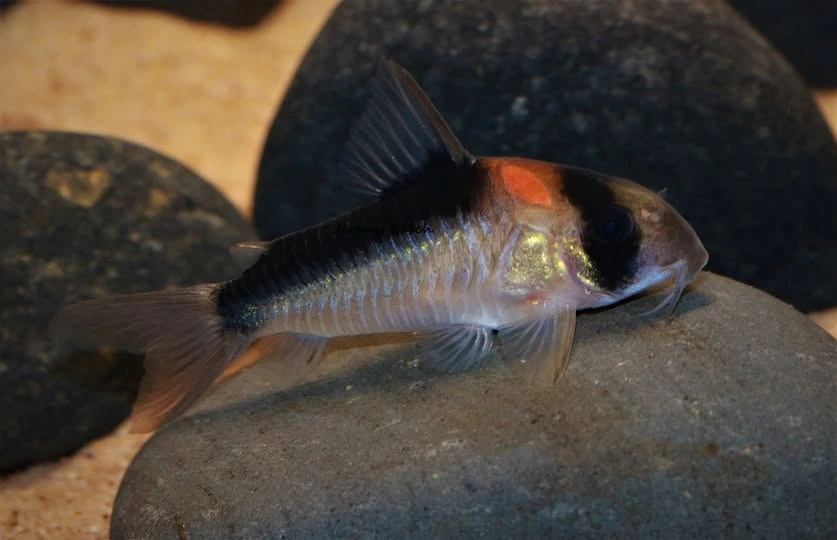
Adolfo's Corydoras stands among the most beautiful catfish in the aquarium hobby. A vivid orange band stretches across the head behind the eyes, contrasting dramatically with the creamy white body and black markings on the dorsal fin. This striking appearance commands premium prices — they typically cost 3-5x more than common Corydoras species — but their beauty justifies the investment for many aquarists.
Originating from Brazil's Rio Negro and its tributaries, Adolfo's Corydoras are blackwater specialists adapted to extremely soft, acidic conditions. While they're more adaptable than some collectors initially assumed, they do best in soft water setups and thrive alongside other Rio Negro species like Cardinal Tetras, which share identical wild habitats.
Despite their higher price and slightly more specific requirements, Adolfo's Corydoras aren't dramatically more difficult than standard Corydoras. Their main needs are warmer water, softer conditions, and the same basics all Corys require: sand substrate, group living, and appropriate feeding. Experienced fishkeepers comfortable with water chemistry find them straightforward.
Their behavior matches other Corydoras — enthusiastic group foraging, resting in piles, and periodic surface dashes for air. The difference is purely aesthetic: that stunning orange band makes every aspect of their activity more visually engaging. A group of Adolfo's Corys foraging across sand is one of the hobby's more beautiful bottom-level displays.
Natural Habitat & Origin
Adolfo's Corydoras originate from the Rio Negro basin in Brazil, specifically the area around São Gabriel da Cachoeira near the Colombian border. The Rio Negro is famous for its 'blackwater' — water stained dark brown by tannins from decomposing vegetation, with extremely low mineral content and acidic pH.
This environment produces some of the softest, most acidic water in the world — pH values below 5.0 are common, and conductivity approaches distilled water levels. The tannin-rich water provides natural antibacterial properties and filters light.
In this habitat, Adolfo's Corydoras inhabit sandy-bottomed tributaries and flooded forest areas where organic debris accumulates. Temperatures are consistently warm, typically 26-28°C year-round.
Replicating these conditions exactly isn't necessary for success, but understanding their origins explains why they prefer soft, acidic water and warm temperatures.
Native Region
Rio Negro basin, Brazil — São Gabriel da Cachoeira region
Habitat Type
Blackwater streams and flooded forests with sandy substrates and abundant organic debris
Wild Water Conditions
Very soft, acidic (pH 4.5-6.5), warm (26-28°C), tannin-stained blackwater
Appearance & Varieties
Adolfo's Corydoras are instantly recognizable by their vivid orange band stretching across the top of the head, running from eye to eye behind the skull. This bright coloration contrasts dramatically with the creamy white body and the bold black blotch in the dorsal fin.
The body is compact and streamlined, reaching approximately 2 inches (5 cm) at maturity. The orange band intensity varies with condition, diet, and stress — healthy, well-fed fish display the brightest coloration.
They're occasionally confused with the similar Corydoras duplicareus (Duplicate Cory), which has a more extensive orange patch covering more of the head.
Popular Varieties
| Variety | Description | Rarity |
|---|---|---|
| Wild-Type | Orange head band with creamy body and black dorsal blotch. The only form available — no selectively bred variants exist. Coloration intensity varies with health and condition. | Uncommon (due to price, not actual scarcity) |
Tank Setup & Requirements
Quick Requirements Summary
Tank Size
Minimum Tank Size
20 gallons
Recommended Tank Size
30 gallons
Adolfo's Corydoras tanks should accommodate their preference for warm, soft water while meeting standard Corydoras requirements. They're not dramatically harder than other Corys but do best with some attention to water chemistry.
Water Parameters
Temperature 24-28°C (75-82°F), ideal 26°C (79°F). pH 5.5-7.0, ideal 6.0-6.5. Hardness 1-8 dGH, ideally under 5 dGH. Prefer warmer, softer, more acidic conditions than many common Corydoras. Avoid hard, alkaline water. Ideal tankmates include other soft-water species like Cardinal Tetras.
Substrate
Fine sand essential. Sand is mandatory for all Corydoras, protecting their sensitive barbels during constant substrate foraging. Given Adolfo's value, proper substrate is especially important.
Plants & Decorations
Create a naturalistic blackwater-style setup. Driftwood and leaf litter (Indian Almond leaves, oak leaves) release tannins that soften water and provide beneficial properties. Plants adapted to soft, acidic water — Cryptocorynes, Anubias, Java fern — thrive in these conditions. Floating plants diffuse light naturally.
Filtration & Water Flow
Standard community filtration works well. Avoid strong currents at substrate level. In blackwater setups, peat filtration or blackwater extracts can help maintain appropriate conditions.
Lighting
Subdued — replicating shaded blackwater. Rio Negro waters are dimly lit due to tannin staining. Reduced lighting or extensive floating plants replicate natural conditions and encourage activity.
Diet & Feeding Guide
Diet Type
omnivore
Feeding Frequency
Once or twice daily
Portion Size
Amount consumed within a few minutes. They eat slowly — ensure food remains available long enough.
Adolfo's Corydoras have typical Corydoras dietary needs — omnivorous scavengers accepting a variety of sinking foods. Quality nutrition helps maintain their vibrant orange coloration.
Best Foods for Adolfo's Corydoras
- High-quality sinking pellets — Staple diet. Premium foods help maintain coloration. Brands like Hikari, Northfin, or New Life Spectrum provide excellent nutrition.
- Frozen bloodworms — Excellent protein source that enhances coloration. Feed 2-3 times weekly. Eagerly accepted.
- Frozen brine shrimp — Good variety food. Enriched brine shrimp add nutritional value.
- Live foods — Blackworms, daphnia, and baby brine shrimp are eagerly consumed and excellent for conditioning. Help maintain peak coloration.
- Sinking catfish tablets — Dense tablets allow group feeding behavior. Quality brands provide complete nutrition.
- Color-enhancing foods — Foods containing carotenoids and astaxanthin can enhance the orange band coloration.
Foods to Avoid
- Floating foods — Bottom-feeders can't effectively eat floating foods. Everything must sink.
- Low-quality foods — Given their premium price, feed premium foods. Quality nutrition maintains health and coloration.
- Expecting leftovers to suffice — Never rely on scraps from other fish. Feed intentionally with appropriate sinking foods.
Quality food directly affects the vibrancy of their orange bands. Cutting corners on food diminishes the visual appeal you paid for.
Behavior & Temperament
Adolfo's Corydoras display typical Corydoras social behavior — they're active group foragers that work across the substrate together and rest in contact during inactive periods. Their striking appearance makes every behavior more visually engaging.
They're enthusiastic schoolers that feel most secure in groups. A group of 6+ foraging across sand creates a beautiful display featuring their orange bands moving in coordinated activity.
Periodic surface dashes for air are normal. Toward tankmates, they're completely peaceful and focus entirely on their own activities.
Tank Mates: Compatibility Guide
Compatible Tank Mates
Perfect companions — both species share the Rio Negro habitat and thrive in identical conditions.
Can be kept with other Corydoras preferring similar conditions.
Ember Tetras, Green Neon Tetras, and similar small tetras make excellent companions.
Apistogramma species from similar habitats work well. Both appreciate soft, acidic conditions.
Caridina shrimp preferring soft water can coexist well. Corydoras are shrimp-safe.
Tank Mates to Avoid
Hard-water species
Fish requiring hard, alkaline water (African cichlids, livebearers) have incompatible water requirements.
Aggressive species
Given their premium price, don't risk damage from aggressive tankmates.
Large predators
Any fish large enough to eat them is obviously incompatible.
Common Pairing Questions
Can Adolfo's Corydoras live with Cardinal Tetras?
Perfect combination — both originate from the Rio Negro and thrive in identical soft, acidic conditions.
What's the difference between Adolfo's and Duplicate Corydoras?
Corydoras duplicareus has a more extensive orange patch covering more of the head, while Adolfo's orange is more of a distinct band. Similar care requirements.
Adolfo's Corydoras can breed in aquariums, though they spawn less readily than prolific species like Peppered Corys. Triggers include cooler water changes — a drop from 28°C to 24°C rather than truly cold water. Soft, acidic conditions improve breeding odds. Typical T-position mating. Clutch sizes are moderate. Eggs hatch in approximately 4-5 days.
Health Issues & Disease Prevention
Adolfo's Corydoras are reasonably hardy once acclimated, but their soft-water origins make them more sensitive to certain conditions than common Corydoras. Maintaining appropriate water chemistry prevents most issues.
Common Diseases
| Disease | Symptoms | Treatment |
|---|---|---|
| Water Chemistry Stress | Faded coloration, lethargy, hiding, loss of appetite. Often occurs in hard or alkaline water. | Improve water chemistry toward soft, acidic conditions. Use RO water if tap water is too hard. Add tannins via driftwood or leaves. |
| Barbel Erosion | Shortened or missing barbels, redness around mouth. | Switch to sand substrate. Improve water quality. Critical to prevent given fish value. |
| Ich | White spots on body and fins, flashing. | Raise temperature gradually to 28-30°C. Use half-dose medication if needed. Higher temperatures tolerable given warm-water preference. |
| Loss of Coloration | Faded orange band, overall washed-out appearance. | Usually indicates stress, poor diet, or inappropriate conditions. Improve water quality, diet variety, and confirm water parameters. |
Signs of a Healthy Adolfo's Corydoras
- Bright orange head band
- Active foraging
- Intact barbels
- Rounded belly
- Social behavior with group
Prevention Tips
- Maintain soft, slightly acidic water
- Use sand substrate exclusively
- Feed high-quality varied diet
- Keep in appropriate groups
- Choose compatible soft-water tankmates
- Avoid temperature swings
Frequently Asked Questions
Several factors: they come from a specific region of Brazil requiring targeted collection; they're not as prolifically bred in captivity as common species; their stunning appearance creates consistent demand. Prices typically range $15-30+ per fish.
Depends on your tap water. If your water is soft and slightly acidic to neutral (under 8 dGH, pH below 7.5), they can adapt. Hard, alkaline tap water is problematic — you'll need RO water or a mix.
Both feature orange head coloration, but Corydoras duplicareus has a more extensive orange patch covering more of the head, while Adolfo's orange is more of a distinct band behind the eyes.
They prefer soft, acidic water — ideally under 5 dGH and pH 6.0-6.5. Adding driftwood and leaves provides tannins that acidify water naturally. They're more adaptable than wild parameters suggest but won't thrive in hard, alkaline water.
Best suited for fishkeepers with some experience, particularly those comfortable with water chemistry. If you already maintain soft-water species like Cardinal Tetras, Adolfo's Corys fit right in.
Several factors affect coloration: water quality, diet (varied foods including carotenoid-rich options), stress levels, and lighting. Healthy, well-fed fish in appropriate conditions show the brightest orange bands.
Tips for Keeping Adolfo's Corydoras
Pro Tips
- ✓Create a Rio Negro biotope — Adolfo's Corys thrive alongside Cardinal Tetras, Pencilfish, and Apistogramma.
- ✓Indian Almond leaves benefit them substantially — providing tannins, antibacterial properties, and foraging opportunities.
- ✓Quality food maintains expensive coloration — cutting corners on food diminishes the visual appeal you paid for.
- ✓Acclimate carefully — drip acclimation over an hour or more helps them adjust to parameter differences.
Common Mistakes to Avoid
- ✗Keeping in hard, alkaline water — chronic stress, faded coloration, shortened lifespan.
- ✗Not providing sand substrate — barbel damage on expensive fish is particularly unfortunate.
- ✗Keeping with incompatible tankmates — water parameter incompatibility or aggression risk.
- ✗Buying single specimens due to price — stressed, hiding fish that never display naturally. If you can't afford 6, wait.
- ✗Feeding low-quality food — faded coloration that defeats the purpose of buying premium fish.
Sources
- FishBase — Accepted scientific name, maximum size and native range for Adolfo's Corydoras.
Related Species You Might Like
View All Fish →
African Butterfly Fish
Pantodon buchholzi
Bronze Corydoras
Corydoras aeneus
Corydoras Julii
Corydoras julii
Corydoras Sterbai
Corydoras sterbai
False Julii Corydoras
Corydoras trilineatus
Panda Corydoras
Corydoras panda
Peppered Corydoras
Corydoras paleatus
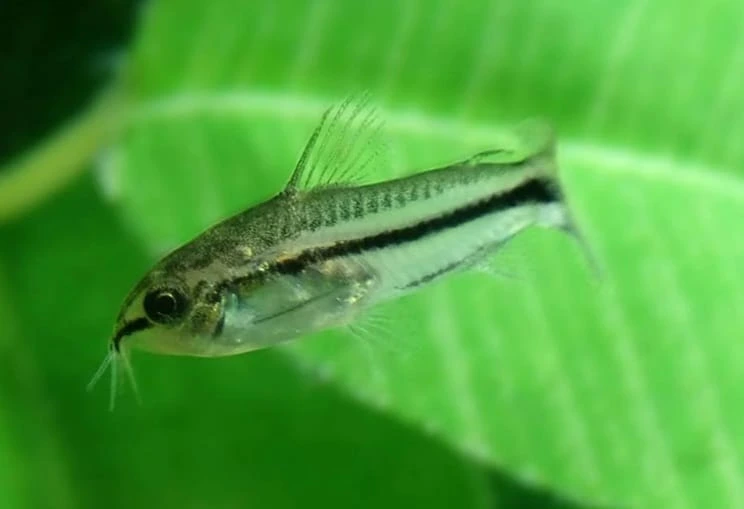
Pygmy Corydoras
Corydoras pygmaeus
Ready to Add Adolfo's Corydoras to Your Tank?
Use our free stocking calculator to check compatibility, bioload, and get personalized recommendations.