
Care Requirements
Adult Size
2.4" (6cm)
Min Tank
20 gal
Temperature
72-79°F
pH Range
6-7.5
Lifespan
5-8 years
Min Group
6+ fish
Diet
Omnivore
Swim Level
Bottom
Bioload
2/10
Hardness
2-15 dGH
About False Julii Corydoras
The False Julii Corydoras presents one of the aquarium hobby's most persistent cases of mistaken identity. Despite being sold almost universally as 'Julii Corydoras,' the fish in virtually every pet store is actually Corydoras trilineatus — the Three-Line or False Julii Cory. True Julii Corydoras (C. julii) are rarely exported and almost never seen in the hobby, while False Julii are abundant, hardy, and beautiful in their own right.
This mix-up matters little for fishkeeping purposes since both species have nearly identical care requirements. However, understanding the difference helps aquarists appreciate what they actually have. The key distinction is in their patterns: True Julii have distinct, isolated spots that never connect, while False Julii show reticulated (connected) patterns where spots form chain-like lines along the body.
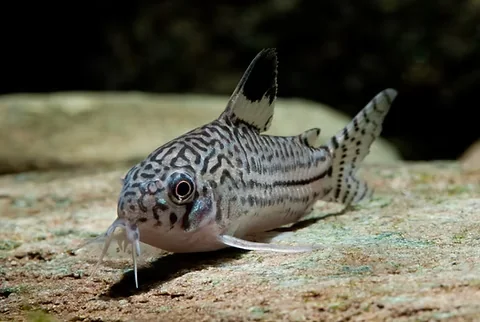
False Julii are among the most attractive commonly available Corydoras. Their silvery-white bodies covered in intricate dark markings create a leopard-like appearance that stands out in any tank. The three horizontal stripes referenced in their scientific name (trilineatus) run along the back, midline, and belly, with reticulated spotting filling the spaces between.
Care-wise, False Julii are hardy, adaptable fish that thrive with standard Corydoras husbandry. They're excellent beginner catfish that display well, school enthusiastically, and contribute to bottom-level activity in community tanks. Their misidentification as 'Julii' shouldn't diminish appreciation for these beautiful, personable fish.
Natural Habitat & Origin
False Julii Corydoras have a wide distribution across the Amazon basin, found in Peru, Ecuador, Colombia, and Brazil. This extensive range encompasses various tributary systems and habitat types, contributing to their adaptability in aquariums. They inhabit slow-moving streams, flooded forest areas, and river margins with soft, sandy or muddy substrates.
Their natural habitat features warm, soft, acidic water often stained with tannins from decomposing vegetation. Dense leaf litter, submerged roots, and overhanging vegetation provide cover and foraging opportunities.
The wide geographic distribution has produced some regional variation in appearance, leading to occasional confusion about subspecies or variants. However, all share the characteristic reticulated patterning.
True Julii Corydoras have a much more restricted range in northeastern Brazil, explaining their rarity in the hobby.
Native Region
Amazon River basin — Peru, Ecuador, Colombia, Brazil (widespread)
Habitat Type
Slow-moving streams, flooded forests, and river margins with soft substrates
Wild Water Conditions
Warm (22-26°C), soft, acidic, often tannin-stained with abundant organic debris
Appearance & Varieties
False Julii Corydoras display striking patterns of dark markings on a silvery-white base. The key identifying feature is their reticulated pattern — dark spots that connect to form chain-like lines and maze patterns along the body. This connected spotting distinguishes them from true Julii Corydoras, which have distinct, isolated spots that never touch.
Three dark horizontal lines run along the body, giving the species its scientific name (trilineatus). Adults reach approximately 2-2.5 inches (5-6 cm). Pattern intensity varies between individuals — some display bold, high-contrast markings while others appear more muted.
Popular Varieties
| Variety | Description | Rarity |
|---|---|---|
| Standard/Wild-Type | Silvery-white base with reticulated dark markings forming chain-like patterns. The only commonly available form. Pattern intensity varies between individuals. | Very Common |
| Long-Fin | Extended fins on standard coloration. Less common than normal-finned specimens. More delicate finnage requires careful tankmate selection. | Uncommon |
Tank Setup & Requirements
Quick Requirements Summary
Tank Size
Minimum Tank Size
20 gallons
Recommended Tank Size
30 gallons
False Julii Corydoras have standard Corydoras requirements — sand substrate, adequate group size, and appropriate water parameters. They're hardy and adaptable, making setup straightforward.
Water Parameters
Temperature 22-26°C (72-79°F). pH 6.0-7.5. Hardness 2-15 dGH. Standard tropical community range suits them well. They're adaptable to most conditions within this range.
Substrate
Sand strongly preferred. All Corydoras constantly sift substrate through their sensitive barbels. Sharp gravel erodes barbels over time. Sand allows natural foraging behavior safely.
Plants & Decorations
Provide shaded resting areas — driftwood, broad-leafed plants, and caves all work. Leave open sandy areas for foraging. They congregate in favorite resting spots. Plants provide cover and improve water quality.
Filtration & Water Flow
Standard community filtration works well. Avoid strong currents at substrate level. Gentle to moderate flow is appropriate. Maintain regular water changes.
Lighting
Corydoras prefer dimmer conditions and are more active under reduced lighting. Floating plants or moderate intensity promotes natural behavior.
Diet & Feeding Guide
Diet Type
omnivore
Feeding Frequency
Once or twice daily
Portion Size
Amount consumed within a few minutes. One sinking tablet per 3-4 fish.
False Julii Corydoras are omnivorous scavengers accepting virtually any sinking food. Feed a varied diet for best health and coloration. 'Scavenger' doesn't mean they survive on scraps — intentional feeding is essential.
Best Foods for False Julii Corydoras
- Sinking pellets/wafers — Staple diet. Quality sinking foods provide complete nutrition. Ensure food reaches the bottom.
- Frozen bloodworms — Excellent protein source eagerly accepted. Feed 2-3 times weekly for variety.
- Frozen brine shrimp — Good variety food readily accepted. Enriched brine shrimp add nutritional value.
- Sinking catfish tablets — Dense tablets allow group feeding behavior. One tablet feeds multiple fish.
- Live foods — Blackworms, daphnia, and baby brine shrimp are eagerly consumed and excellent for conditioning.
- Blanched vegetables — Zucchini and cucumber are often accepted. Provides fiber and variety.
Foods to Avoid
- Floating foods only — Bottom-feeders can't effectively eat from the surface. Everything must sink.
- Relying on leftovers — They need intentional feeding — don't assume scraps are sufficient.
- Sharp foods — Avoid anything that could damage their sensitive barbels.
Feed after lights-out in community tanks to give slower-eating Corydoras time to eat without competition.
Behavior & Temperament
False Julii Corydoras display typical Corydoras social behavior — active group foraging, resting in contact during inactive periods, and periodic surface dashes for air. They're enthusiastic schoolers that feel most secure in groups of 6+.
Their reticulated markings make them particularly attractive during group activities. A school of False Julii working across sand creates one of the more visually engaging bottom-level displays in the hobby.
Toward tankmates, they're completely peaceful. They focus entirely on their own activities and ignore other species.
Tank Mates: Compatibility Guide
Compatible Tank Mates
Can be kept with other Cory species. Different species often loosely school together.
Classic community combination. Tetras occupy mid-water while Corys stay on the bottom.
Peaceful schooling fish that complement Corydoras perfectly.
Different zones and no conflict. Peaceful coexistence.
Generally compatible in appropriately sized tanks. Monitor during breeding.
Corydoras are invertebrate-safe. Won't hunt shrimp or bother snails.
Tank Mates to Avoid
Aggressive cichlids
Large or aggressive cichlids may harass Corydoras despite their armor.
Fin-nipping species
Long-finned varieties especially vulnerable to nippers.
Large predatory fish
Any fish large enough to eat them is incompatible.
Common Pairing Questions
Are these really Julii Corydoras?
Almost certainly not — virtually all 'Julii' sold in stores are False Julii (C. trilineatus). Look for connected spots forming chains — that confirms False Julii.
Can False Julii live with true Julii?
Yes, if you could find true Julii. Both species have identical care requirements and would coexist peacefully.
False Julii Corydoras breed readily with standard Corydoras triggers. Large, cooler water changes simulate rainy season and often trigger spawning. T-position mating, adhesive eggs on surfaces, 50-200+ eggs per spawn. Eggs hatch in 4-6 days. Fry accept infusoria and baby brine shrimp.
Health Issues & Disease Prevention
False Julii Corydoras are hardy fish with typical Corydoras health considerations. Most issues stem from environmental factors — substrate damage to barbels, water quality problems, or inadequate nutrition.
Common Diseases
| Disease | Symptoms | Treatment |
|---|---|---|
| Barbel Erosion | Shortened, damaged, or missing barbels. Redness around mouth. | Usually caused by sharp substrate. Switch to sand and improve water quality. Barbels can partially regenerate. |
| Red Blotch Disease | Red patches on belly, lethargy, loss of appetite. | Improve water quality. Treat with antibacterial medication. Usually secondary to poor conditions. |
| Ich | White spots on body and fins, flashing, clamped fins. | Raise temperature to 28°C for 10-14 days. Use half-dose salt if needed — Corydoras are salt-sensitive. |
| Oxygen Deprivation | Constant surface gasping, lethargy. | Increase aeration immediately. Occasional surface trips are normal; constant gasping indicates problems. |
Signs of a Healthy False Julii Corydoras
- Active foraging
- Intact barbels
- Rounded belly
- Good coloration
- Social behavior with group
Prevention Tips
- Use sand substrate to protect barbels
- Feed sinking foods directly
- Keep in groups of 6+
- Maintain good water quality
- Provide adequate cover
Frequently Asked Questions
The key difference is in their patterns. True Julii (C. julii) have distinct, isolated spots that never connect. False Julii (C. trilineatus) have reticulated patterns where spots connect to form chain-like lines. Look at the body: connected spots mean False Julii (what you almost certainly have).
Decades of mislabeling. When the trade identified attractive spotted Corydoras, they were labeled 'Julii.' By the time the distinction became clear, 'Julii Corydoras' was an established common name. True C. julii comes from a restricted region rarely accessed by collectors.
Not really — both species have nearly identical requirements. The distinction is taxonomically interesting but makes no practical difference for fishkeeping.
Minimum of 6, preferably more. Like all Corydoras, they're social fish that rely on group security. Larger groups of 10+ are even better.
Excellent choice. They're hardy, adaptable, and beautiful. They tolerate a range of conditions, aren't picky eaters, and display well.
Strongly recommended. All Corydoras constantly sift substrate through their sensitive barbels. Sharp gravel erodes barbels over time. Sand is considered mandatory by experienced keepers.
Tips for Keeping False Julii Corydoras
Pro Tips
- ✓Learn to identify true versus false Julii — examining the pattern is informative and fun.
- ✓Sand substrate transforms their behavior — Corydoras on sand versus gravel are visibly different fish.
- ✓Cool water changes trigger breeding — large water changes with cooler water simulate rainy season.
- ✓They mix well with other Corydoras — different species often loosely school together.
Common Mistakes to Avoid
- ✗Using sharp gravel — barbel erosion leading to infection and feeding difficulties.
- ✗Keeping alone or in small groups — stress, hiding, and failure to thrive.
- ✗Expecting leftovers to sustain them — malnutrition from inadequate feeding.
- ✗Caring that they're 'not really Julii' — they're excellent fish regardless of name.
Sources
- FishBase — Accepted scientific name, maximum size and native range for False Julii Corydoras.
Related Species You Might Like
View All Fish →
Fancy Goldfish
Carassius auratus
Adolfo's Corydoras
Corydoras adolfoi
Bronze Corydoras
Corydoras aeneus
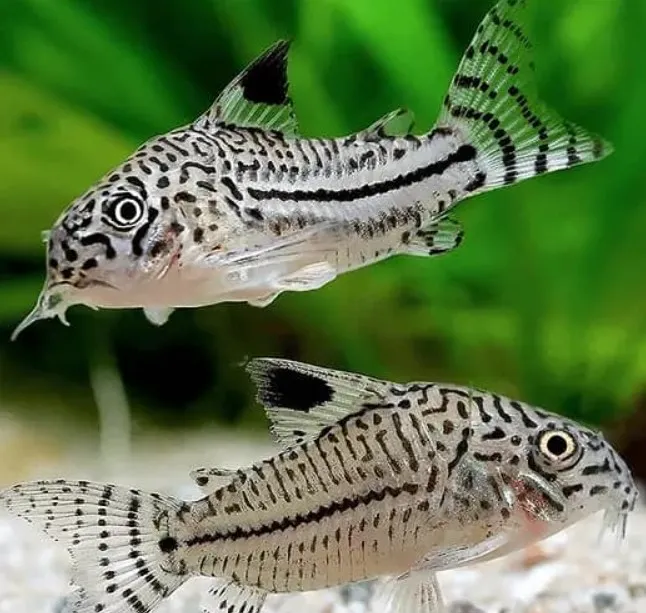
Corydoras Julii
Corydoras julii
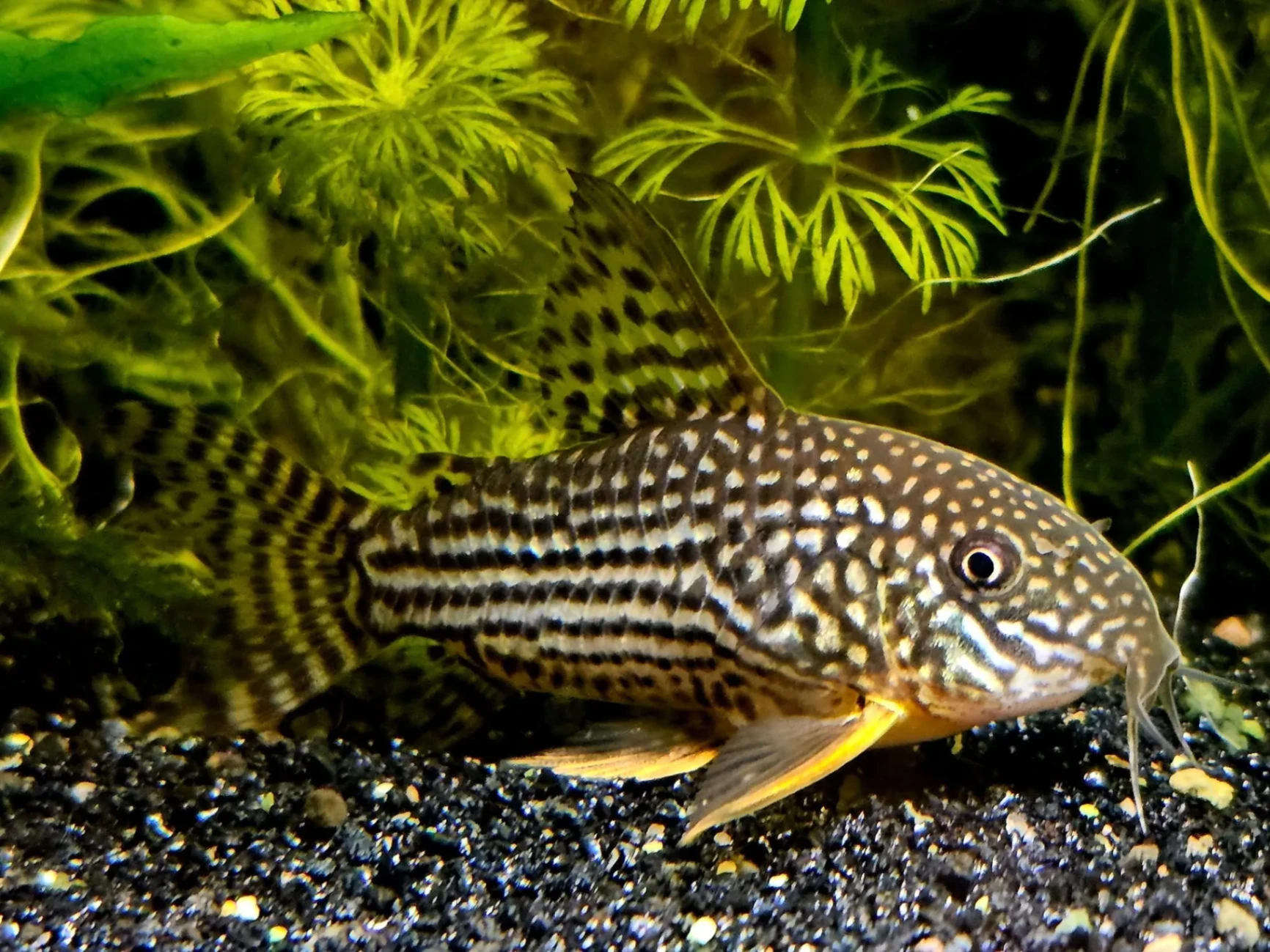
Corydoras Sterbai
Corydoras sterbai
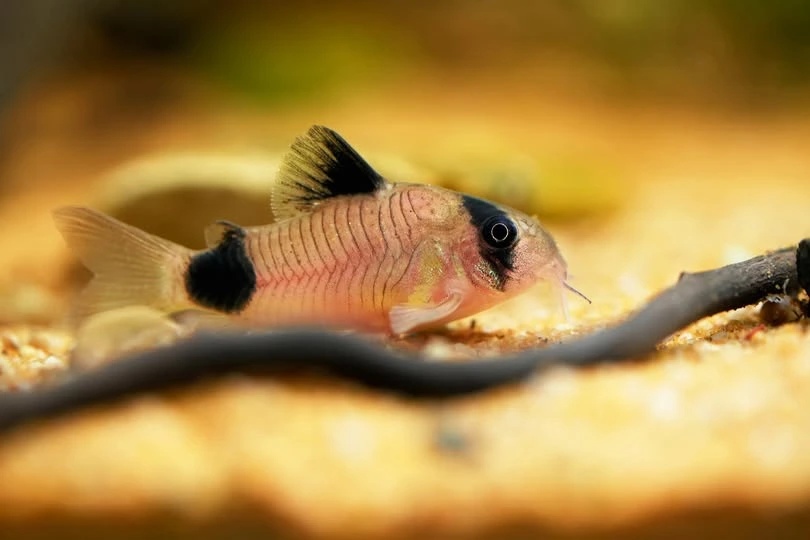
Panda Corydoras
Corydoras panda
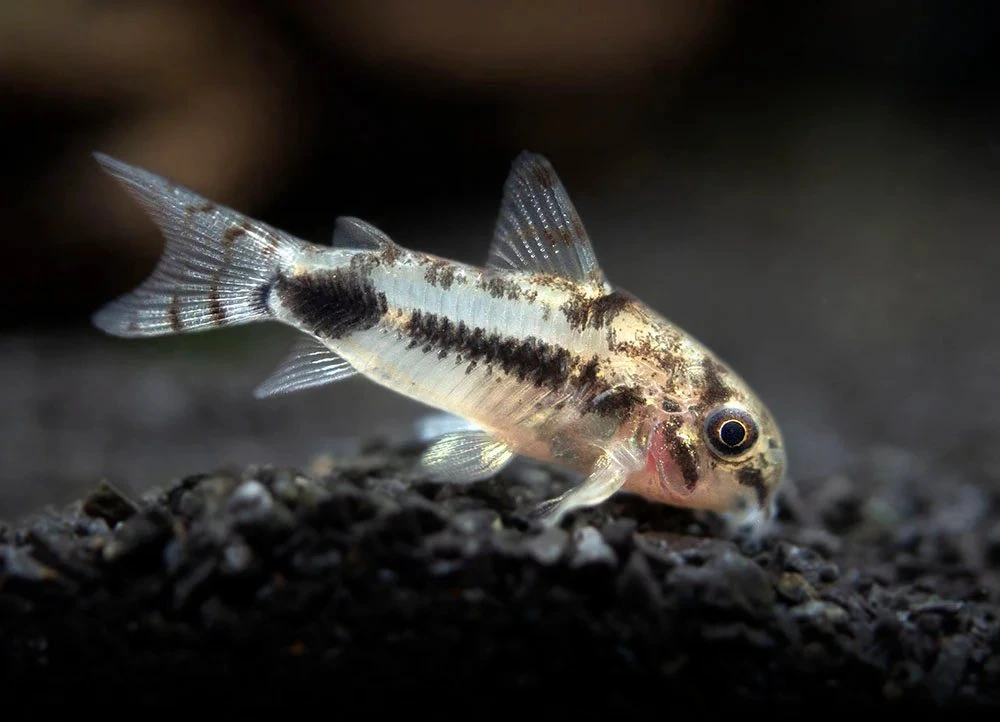
Peppered Corydoras
Corydoras paleatus
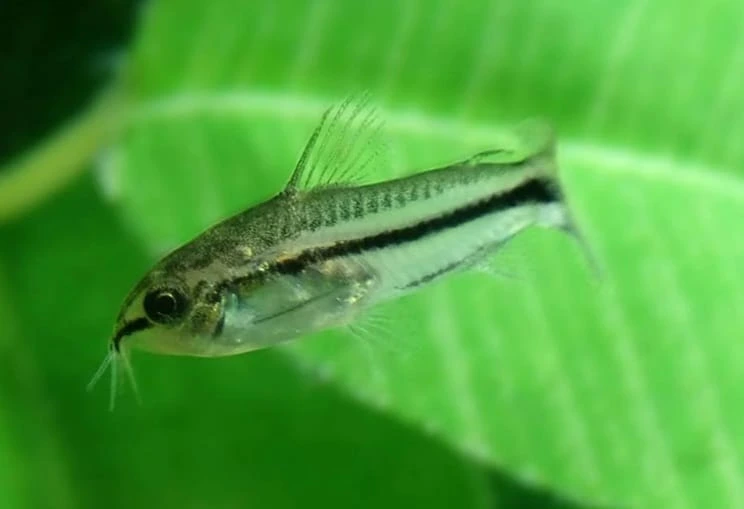
Pygmy Corydoras
Corydoras pygmaeus
Ready to Add False Julii Corydoras to Your Tank?
Use our free stocking calculator to check compatibility, bioload, and get personalized recommendations.