
Care Requirements
Adult Size
2.4" (6cm)
Min Tank
20 gal
Temperature
75-82°F
pH Range
6-7.5
Lifespan
3-6 years
Min Group
6+ fish
Diet
Omnivore
Swim Level
Middle
Bioload
2/10
Hardness
4-15 dGH
About Diamond Tetra
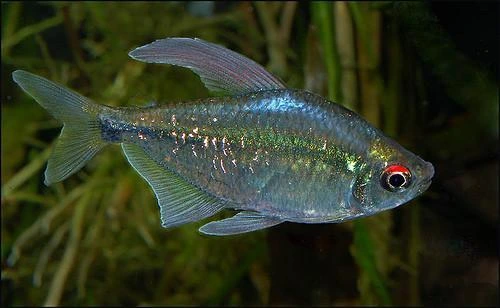
The Diamond Tetra is one of the hobby's most underappreciated gems—literally. Named for the way their scales catch light like faceted diamonds, these fish transform from plain juveniles into spectacular adults with flowing fins and brilliant iridescence.
What makes Diamond Tetras special is their slow-burn beauty. Juveniles at the pet store look unremarkable, but given 6-12 months of proper care, they develop into some of the most elegant freshwater fish available. Males grow dramatically elongated dorsal and anal fins with extended rays, while their scales shimmer with gold, silver, green, and violet hues.
This transformation requires patience and proper display conditions. Dark substrates, appropriate lighting angles, and quality nutrition all contribute to their development. Those willing to invest the time are rewarded with fish that rival any exotic species for sheer elegance.
Natural Habitat & Origin
Conservation status: Endangered (EN)
Diamond Tetras are endemic to a relatively small area—the Lake Valencia basin in coastal Venezuela. This makes them somewhat unique among commonly available tetras, as most come from the vast Amazon system.
Their natural habitat consists of coastal streams and tributaries around Lake Valencia, with dense vegetation, warm water, and moderate flow. The water is slightly acidic to neutral, softer than tap water but not the extreme blackwater conditions some tetras require. This relatively forgiving natural environment translates to good adaptability in aquariums.
Native Region
Lake Valencia basin, Venezuela
Habitat Type
Coastal streams, tributaries, and lake margins with dense vegetation
Wild Water Conditions
Warm (75-82°F), soft to moderately hard, slightly acidic to neutral (pH 6.0-7.5)
Appearance & Varieties
Diamond Tetras are medium-sized tetras reaching about 2.5 inches (6 cm) with deep, compressed bodies. Their claim to fame is their scales—each one reflects light with an iridescent quality that creates a shimmering, diamond-like effect when light catches them at the right angle.
Mature males are particularly impressive, developing dramatically elongated dorsal and anal fins with extended rays that flow elegantly as they swim. Females retain shorter fins but share the sparkling scales. The overall body color is silver with golden-green iridescence, and the sparkle shifts through gold, silver, green, and violet depending on lighting angle.
Tank Setup & Requirements
Quick Requirements Summary
Tank Size
Minimum Tank Size
20 gallons
Recommended Tank Size
30 gallons
Displaying Diamond Tetras properly is about understanding that lighting and background dramatically affect their appearance. The same fish can look plain or spectacular depending on setup.
Water Parameters
Temperature 75-82°F (24-28°C), pH 6.0-7.5, hardness 4-15 dGH. They're adaptable within this range. Stability matters more than hitting exact numbers.
Substrate
Dark substrate is essential—black sand or dark gravel makes their iridescent scales pop dramatically. Light substrates wash out their sparkle entirely.
Plants & Decorations
Heavily planted tanks provide security and create beautiful contrast with their shimmering bodies. Driftwood adds natural aesthetics. Dark backgrounds are non-negotiable for proper display. Leave open swimming space in the center.
Filtration & Water Flow
Moderate flow—they come from areas with some current but prefer calmer water. Standard community filtration works well.
Lighting
This is where Diamond Tetras are special. Side-lighting or angled light shows off their sparkle far better than direct overhead lighting. Their scales catch light differently than most fish. Consider your lighting angles when setting up their tank.
Diet & Feeding Guide
Diet Type
omnivore
Feeding Frequency
1-2x daily
Portion Size
What they consume in 2-3 minutes
Diamond Tetras are unfussy omnivores that benefit from varied, high-quality foods. Proper nutrition is essential for developing their full iridescence and fin growth.
Best Foods for Diamond Tetra
- High-quality flakes — Good staple—color-enhancing formulas recommended
- Small pellets/micro granules — Variety for staple feeding
- Frozen bloodworms — Excellent for conditioning and fin development
- Frozen brine shrimp — Great protein source
- Frozen daphnia — Natural food, excellent nutrition
- Live baby brine shrimp — Ideal for conditioning and color enhancement
Foods to Avoid
- Large pellets — Appropriately sized food important
- Poor quality foods — Won't support scale and fin development
Varied diet with protein-rich foods enhances their iridescent scales and fin development. Color-enhancing foods help maximize their sparkle. They're not picky eaters.
Behavior & Temperament
Diamond Tetras are peaceful, elegant fish that add a touch of class to community tanks. They school loosely when comfortable, with males occasionally displaying to each other by spreading their impressive fins.
These displays are beautiful to watch—males face each other with fully extended finnage, shimmering their bodies to catch light. Despite the dramatic appearance, actual aggression is minimal. They're one of the most peaceful tetras available, lacking the nippy tendencies of some species.
Tank Mates: Compatibility Guide
Compatible Tank Mates
Excellent companions—similar water preferences, both peaceful
Beautiful contrast, similar requirements
Peaceful bottom dwellers
Peaceful, different tank level
Peaceful schooling companion
Safe with adult shrimp
Peaceful community companion
Tank Mates to Avoid
Fin nippers (Serpae Tetra, etc.)
Their flowing fins are irresistible targets
Large aggressive fish
Will stress or damage them
Very boisterous species
May outcompete for food
Common Pairing Questions
Can Diamond Tetras live with angelfish?
Yes! They're excellent angelfish tankmates. Both prefer similar warm, soft water conditions, and Diamond Tetras are peaceful enough not to nip angel fins. They occupy the same mid-tank level but coexist well.
Are Diamond Tetras fin nippers?
No—they're one of the most peaceful tetras and don't nip fins. However, their own long flowing fins can be targets for nippy tankmates. Avoid housing with known fin nippers like Serpae Tetras.
Diamond Tetras can be bred in home aquariums with moderate difficulty. They're egg scatterers with no parental care.
Set up a breeding tank with soft, acidic water (pH 6.0-6.5, 4-8 dGH), fine-leaved plants or spawning mops, and dim lighting. Temperature around 78-82°F (26-28°C). Bare bottom or marbles protect scattered eggs.
Condition a pair with live foods. Male displays with spread fins. Spawning occurs among plants in morning, with 100-400 eggs scattered. Remove adults after spawning. Eggs hatch in 24-36 hours, fry free-swimming in 3-4 days.
Health Issues & Disease Prevention
Diamond Tetras are hardy fish that rarely have health issues when kept in proper conditions. Their main vulnerability is their flowing fins, which can be damaged by nippy tankmates or poor water quality.
Common Diseases
| Disease | Symptoms | Treatment |
|---|---|---|
| Ich (White Spot Disease) | White spots on body and fins, flashing, clamped fins | Raise temperature to 82-86°F, treat with ich medication |
| Fin Rot | Deteriorating fins, especially the long flowing fins of males | Improve water quality, antibacterial medication if severe |
| Velvet Disease | Gold/rust dust-like coating, clamped fins, lethargy | Dim lights, treat with copper-based medication |
Signs of a Healthy Diamond Tetra
- Brilliant iridescent scales
- Flowing fins (males)
- Active swimming
- Good appetite
- Schooling behavior
- Clear eyes
Prevention Tips
- Maintain stable water parameters
- Quarantine new fish 2-3 weeks
- Avoid fin-nipping tankmates
- Provide quality varied diet
- Dark substrate reduces stress
Frequently Asked Questions
Several factors: they need time to mature (6-12 months for full development), proper lighting angle (side-lighting shows sparkle better than overhead), dark substrate/background, and good diet. Pet store juveniles look nothing like mature specimens. Patience is key.
Males have dramatically elongated dorsal and anal fins with extended rays that flow beautifully. Females have shorter, standard fins and are rounder-bodied. The difference becomes obvious as they mature.
Full finnage and iridescence develops over 6-12 months. Juveniles look plain compared to adults. This is a fish that rewards patience—mature specimens are stunning compared to what you buy at the store.
Their scales have an iridescent quality that catches light like diamonds, creating a sparkling effect. When light hits them at the right angle, they shimmer with gold, silver, green, and violet hues.
No—they're one of the most peaceful tetras and don't nip fins. However, their own long flowing fins can be targets for nippy tankmates. Avoid housing with known fin nippers like Serpae Tetras.
Yes! They're excellent angelfish tankmates. Both prefer similar warm, soft water conditions, and Diamond Tetras are peaceful enough not to nip angel fins. They occupy the same mid-tank level but coexist well.
Tips for Keeping Diamond Tetra
Pro Tips
- ✓This fish rewards patience—6-12 months to develop full sparkle and finnage
- ✓Side-lighting or angled light shows their iridescence far better than overhead lights
- ✓Dark background is non-negotiable for displaying their beauty
- ✓One of the best tetras for angelfish community tanks
- ✓Mature males with developed fins are among the most elegant freshwater fish
- ✓Underrated species—often overlooked because juveniles look plain
- ✓Great for planted tanks—their shimmer against green plants is stunning
- ✓Buy a group and watch them transform over the following months
Common Mistakes to Avoid
- ✗Judging by juvenile appearance—they look plain until mature
- ✗Light substrate/background—completely ruins the diamond effect
- ✗Overhead-only lighting—doesn't show off their sparkle
- ✗Expecting instant results—full development takes 6-12 months
- ✗Keeping with fin nippers—their flowing fins are targets
- ✗Too small a group—need 6+ for confidence and display behavior
- ✗Impatience—this is a slow-burn fish that becomes spectacular
- ✗Poor diet—need varied nutrition for scale and fin development
Sources
- FishBase — Accepted scientific name, maximum size and native range for Diamond Tetra.
- IUCN Red List — Endangered conservation assessment for Moenkhausia pittieri.
Related Species You Might Like
View All Fish →
Discus
Symphysodon aequifasciatus
Red Eye Tetra
Moenkhausia sanctaefilomenae
Black Neon Tetra
Hyphessobrycon herbertaxelrodi
Black Phantom Tetra
Hyphessobrycon megalopterus
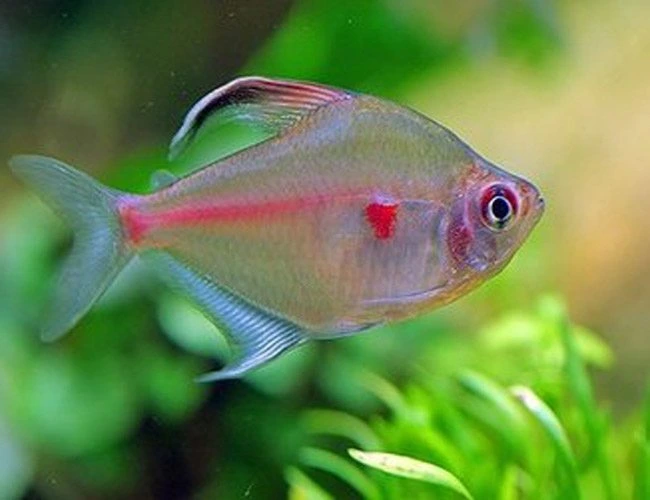
Bleeding Heart Tetra
Hyphessobrycon erythrostigma
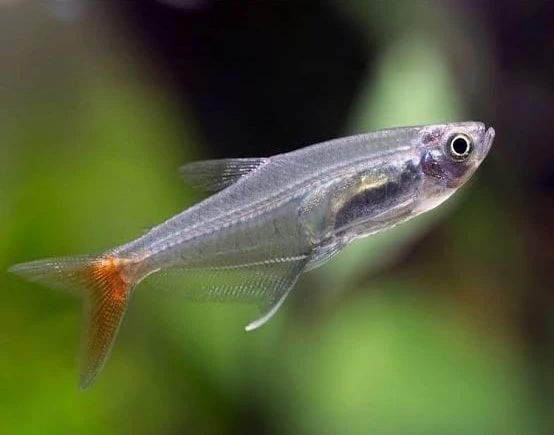
Bloodfin Tetra
Aphyocharax anisitsi
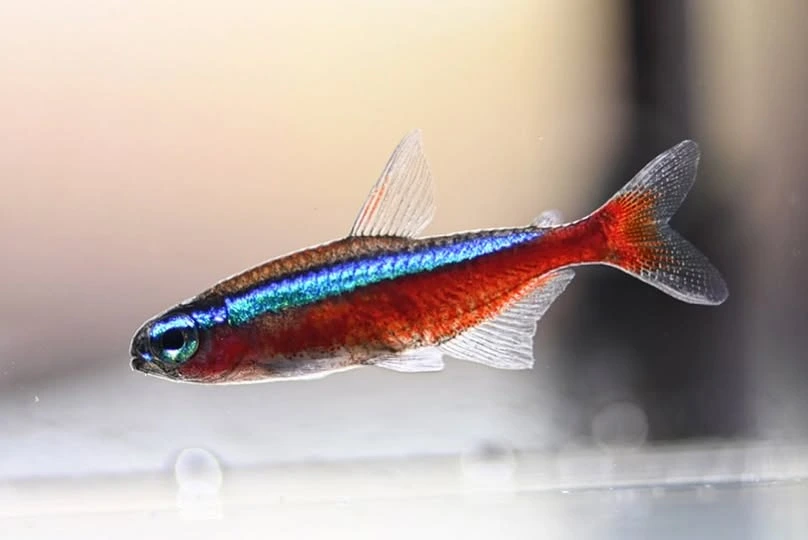
Cardinal Tetra
Paracheirodon axelrodi

Colombian Tetra
Hyphessobrycon columbianus
Ready to Add Diamond Tetra to Your Tank?
Use our free stocking calculator to check compatibility, bioload, and get personalized recommendations.