
Care Requirements
Adult Size
2.8" (7cm)
Min Tank
20 gal
Temperature
72-82°F
pH Range
6-8
Lifespan
3-5 years
Min Group
6+ fish
Diet
Omnivore
Swim Level
Middle
Bioload
2/10
Hardness
5-20 dGH
About Red Eye Tetra
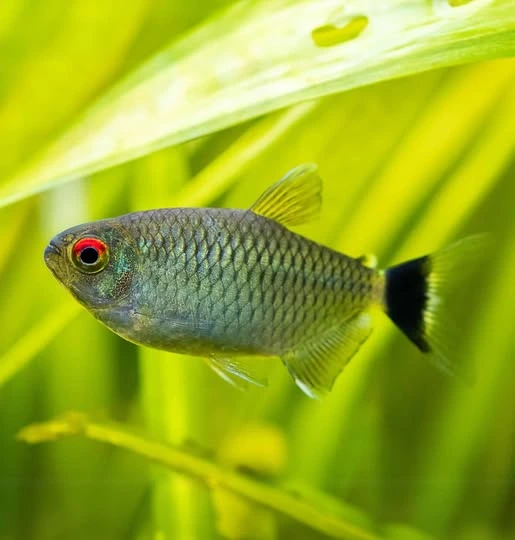
The Red Eye Tetra earns its name from the distinctive bright red marking above each eye — a feature that immediately identifies this species even among dozens of silver-bodied tetras. This splash of color, combined with a bold black tail base marking and silver-scaled body, creates an understated elegance that grows more impressive in well-maintained schools.
Slightly larger than many common tetras at around 2.75 inches, Red Eye Tetras occupy a useful middle ground — big enough to hold their own with medium-sized tankmates yet peaceful enough for diverse community setups. Their size makes them visible and impactful without requiring the tank space of larger characins.
Hardiness defines this species. Red Eye Tetras tolerate a remarkable range of water conditions, from soft acidic to moderately hard alkaline water. They handle temperature fluctuations, adapt to various diets, and generally forgive the mistakes that challenge beginners. This resilience made them aquarium staples since the 1950s.
Their active, schooling nature brings constant movement to mid-water zones. A group of six or more creates a dynamic display as they swim in loose formation, occasionally tightening into coordinated schools when startled. They're the reliable workhorses of the tetra world — perhaps lacking the dramatic coloration of Cardinals or Rummy Noses but compensating with bulletproof hardiness.
Natural Habitat & Origin
Red Eye Tetras originate from the vast Paraguay and Paraná river basins spanning multiple South American countries including Paraguay, Bolivia, Brazil, and Peru. This enormous distribution across varied habitats explains their exceptional adaptability in aquariums.
In the wild, they inhabit a range of environments from slow-moving tributaries to flooded forests during wet seasons. Water conditions vary dramatically across their range — from soft, acidic blackwater streams to harder, more neutral rivers. This natural variation produced fish capable of thriving in conditions that would stress more specialized species.
They typically occupy vegetated areas where overhanging plants and submerged structures provide cover from predators. Schools move through mid-water zones, feeding on insects, small invertebrates, and plant matter. The Paraguay basin's seasonal flooding creates temporary habitats rich in food sources.
Wild populations remain abundant and secure throughout their native range. The aquarium trade has no conservation impact — virtually all specimens sold are commercially bred. Their hardiness and ease of breeding made them ideal candidates for mass production in fish farms worldwide.
Native Region
South America — Paraguay, Bolivia, Brazil, Peru
Habitat Type
Rivers, tributaries, and flooded forests in the Paraguay and Paraná basins
Wild Water Conditions
Variable — temperature (22-28°C), pH (6.0-8.0), soft to moderately hard
Appearance & Varieties
The Red Eye Tetra's signature feature is the brilliant red-orange marking in the upper half of each eye — a bright splash of color that stands out sharply against their silver body. This eye marking remains visible even from across the room and provides instant species identification.
The body is classic tetra shape — compressed laterally with a deep profile and forked tail. Silvery scales cover the body with subtle iridescence that catches light during movement. A prominent black marking at the tail base extends onto the caudal fin, creating visual contrast with the silver body.
Fins are mostly transparent with subtle hints of color. The anal fin shows a thin white leading edge. Overall coloration is understated compared to flashier tetras, but the combination of red eye, silver body, and black tail creates clean, attractive fish that photograph well and display nicely in groups.
Adults reach approximately 2.75 inches (7 cm), larger than Neon Tetras but smaller than Congo Tetras. Males tend slightly slimmer than females, though sexing can be difficult outside breeding condition. Both sexes display the characteristic red eye equally.
Popular Varieties
| Variety | Description | Rarity |
|---|---|---|
| Standard/Wild-Type | Silver body with red eye marking and black tail base. The only form commonly available. Consistent appearance with minimal variation between individuals. | Common |
| Balloon/Short-Body | Selectively bred variant with compressed, rounded body shape. Controversial among hobbyists due to potential health concerns. Less common than standard form. | Uncommon |
Tank Setup & Requirements
Quick Requirements Summary
Tank Size
Minimum Tank Size
20 gallons
Recommended Tank Size
30 gallons
Red Eye Tetras adapt to virtually any reasonable aquarium setup, making them excellent choices for beginners or as reliable additions to established tanks. Their main requirements are adequate swimming space and appropriate group size.
Water Parameters
Exceptionally adaptable — they thrive across a wide parameter range (pH 6.0-8.0, 5-20 dGH, 72-82°F). Most tap water works fine without modification. Consistency matters more than hitting specific targets. One of the most tolerant tetras available.
Substrate
No strong preference for substrate type — they spend their time in mid-water rather than interacting with the bottom. Dark substrates (black sand, dark gravel) dramatically enhance the contrast of their silver scales and make the red eye marking pop visually. If keeping with Corydoras, choose sand or smooth gravel to protect barbels.
Plants & Decorations
Balance is key — provide open swimming lanes through the center and front of the tank where they'll spend most time schooling. Use plants, driftwood, or rock arrangements around the sides and back to create a sense of security without impeding movement. Plants enhance their environment aesthetically and provide security. They won't damage plants — completely plant-safe for any species.
Filtration & Water Flow
Their moderate bioload is easily handled by any appropriately-sized filter. They tolerate moderate current but don't require strong flow. HOB filters, canister filters, and sponge filters all work well. Aim for 4-6x tank volume turnover per hour.
Lighting
Not light-sensitive — they adapt to various lighting levels from moderate to bright. Standard aquarium lighting showcases their silver scales and red eye marking effectively. Their iridescence actually benefits from good lighting. A regular day/night cycle (8-10 hours light) supports natural behavior.
Diet & Feeding Guide
Diet Type
omnivore
Feeding Frequency
Once or twice daily
Portion Size
Amount consumed within 2-3 minutes
Red Eye Tetras are true omnivores accepting virtually any aquarium food without hesitation. They're enthusiastic, unfussy feeders that rarely refuse food — one reason they're so easy to keep.
Best Foods for Red Eye Tetra
- Quality flake food — Staple diet readily accepted. They feed eagerly at surface and mid-water.
- Micro pellets — Appropriately sized pellets provide varied nutrition. Slow-sinking types work well.
- Frozen bloodworms — Excellent protein source eagerly consumed. Feed 2-3 times weekly.
- Frozen brine shrimp — Readily accepted. Good variety food providing different nutritional profile.
- Frozen daphnia — Natural food source with fiber content. Helps digestion and adds variety.
- Live foods — Brine shrimp, daphnia, and mosquito larvae trigger enthusiastic feeding responses.
- Vegetable matter — Spirulina flakes, blanched vegetables occasionally. Provides fiber and plant nutrients.
Foods to Avoid
- Oversized foods — Despite being larger tetras, their mouths remain relatively small. Crush large pellets if needed.
- Single food type only — Variety maintains health. Rotate between different foods rather than feeding only flakes.
Red Eye Tetras are eager feeders that rarely refuse food. Feed small amounts once or twice daily. Their robust appetite means overfeeding is the main risk — stick to what they consume within 2-3 minutes.
Behavior & Temperament
Red Eye Tetras are active schooling fish that spend their time cruising through mid-water zones. They swim in loose formations during normal activity, tightening into coordinated schools when startled or during feeding. This schooling behavior is one of their main appeals — groups create dynamic movement.
They're genuinely peaceful fish that ignore tankmates outside their species. Unlike some tetras with fin-nipping tendencies, Red Eye Tetras rarely cause problems with other fish. They're focused on their own school and food rather than harassing neighbors.
Within the school, males may display to each other with subtle posturing, but serious aggression is virtually unknown. They're social fish that visibly destress when kept in appropriate groups — solitary specimens or pairs often hide and show stress coloration.
Activity level is consistently high during daylight hours. They're always moving, always exploring, creating constant motion in the tank. This energy makes them engaging to watch and ensures they're visible rather than hiding like some shy species.
Tank Mates: Compatibility Guide
Compatible Tank Mates
Different tetra species coexist peacefully and create diverse, active communities.
Classic combination. Corys clean the bottom while tetras occupy mid-water.
Similar temperament and water preferences. Peaceful coexistence.
Gouramis occupy upper areas and ignore tetras. Good vertical zone distribution.
Peaceful livebearers work well given the tetra's parameter flexibility.
Peaceful dwarf cichlids occupy different zones.
Bottom dwellers that completely ignore mid-water tetras.
Tank Mates to Avoid
Large predatory fish
Any fish large enough to eat them will eventually try. Avoid Oscars, large cichlids, etc.
Aggressive cichlids
Territorial aggression can stress or injure peaceful tetras.
Fin-nipping species
While they tolerate most tankmates, avoid known nippers that might target them.
Very small shrimp
May prey on baby shrimp. Adults usually safe but not ideal for breeding colonies.
Red Eye Tetras breed readily in aquariums following typical egg-scattering tetra methodology. They're among the easier tetras to spawn, making them suitable for beginners attempting tetra breeding.
Conditioning with protein-rich foods for 1-2 weeks brings adults into breeding condition. Females become noticeably rounder with eggs. Set up a separate breeding tank with fine-leaved plants or spawning mops and slightly warmer water (26-28°C).
Spawning occurs in early morning, typically triggered by dawn light. Females scatter adhesive eggs among plants while males fertilize. Adults will consume eggs, so remove parents immediately after spawning or use egg traps/mesh.
Eggs hatch in 24-36 hours. Fry are tiny and require infusoria or commercial liquid fry food initially, graduating to baby brine shrimp after about a week.
Health Issues & Disease Prevention
Red Eye Tetras are exceptionally hardy fish that rarely develop health problems when basic care requirements are met. Their resilience makes them forgiving of beginner mistakes.
Common Diseases
| Disease | Symptoms | Treatment |
|---|---|---|
| Ich (White Spot Disease) | White spots on body and fins, flashing against objects, clamped fins. | Raise temperature to 28-30°C for 10-14 days. Commercial ich medications effective. |
| Fin Rot | Frayed or deteriorating fin edges, redness at fin base. | Improve water quality immediately. Antibacterial medication for severe cases. |
| Neon Tetra Disease | Faded coloration, curved spine, erratic swimming, white patches under skin. | No cure exists. Remove affected fish immediately to prevent spread. |
| General Stress/Decline | Faded colors, hiding, loss of appetite. | Review all environmental factors — water quality, temperature, tankmates. |
Signs of a Healthy Red Eye Tetra
- Bright red eye marking clearly visible
- Active swimming in school formation
- Eager feeding response
- Silver scales with good sheen
- Clear eyes and intact fins
Prevention Tips
- Maintain stable water parameters
- Keep in groups of 6+ to reduce stress
- Provide varied diet
- Quarantine new additions
- Perform regular water changes
- Avoid overcrowding
Frequently Asked Questions
The name comes from the distinctive bright red-orange marking in the upper portion of each eye. This vivid marking is the species' most recognizable feature and remains visible even from a distance. It's present in all healthy specimens regardless of sex or age.
Adults reach approximately 2.75 inches (7 cm), making them larger than popular tetras like Neons (1.5 inches) or Cardinals (2 inches) but smaller than Congo Tetras (3+ inches). This medium size makes them visible and impactful without requiring huge tanks.
Extremely hardy — among the toughest commonly available tetras. They tolerate a wide range of water conditions (pH 6.0-8.0, soft to moderately hard water), temperature fluctuations, and generally forgive the mistakes that challenge beginners.
No — they're genuinely peaceful and rarely bother other fish. Unlike some tetras with fin-nipping tendencies (like Serpae Tetras), Red Eye Tetras focus on their own school and food. They're safe with long-finned tankmates.
Minimum 6, preferably 8-10 or more. They're schooling fish that display natural behavior and reduced stress in groups. Solitary specimens or pairs often hide and show poor coloration.
Yes — different tetra species coexist peacefully and create diverse, active communities. The size difference doesn't cause problems since both species are peaceful. They may loosely school together.
Tips for Keeping Red Eye Tetra
Pro Tips
- ✓Use them as 'starter tetras' for new tanks — their exceptional hardiness makes them ideal for cycling tanks.
- ✓Dark substrates intensify their silver scales and red eye marking dramatically.
- ✓Keep them well-fed to prevent any plant nibbling.
- ✓Larger groups of 10-12+ show much more impressive schooling behavior.
Common Mistakes to Avoid
- ✗Keeping too few — stressed fish that hide and show poor color. Keep 6+ minimum.
- ✗Expecting dramatic coloration — they're subtly attractive rather than flashy.
- ✗Tank too small — their active swimming needs 20-gallon minimum.
- ✗Mixing with aggressive tankmates — despite hardiness, they stress under constant harassment.
Sources
- FishBase — Accepted scientific name, maximum size and native range for Red Eye Tetra.
Related Species You Might Like
View All Fish →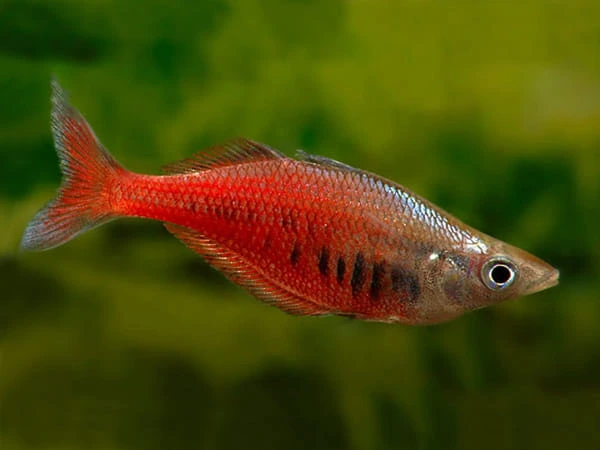
Red Rainbowfish
Glossolepis incisus
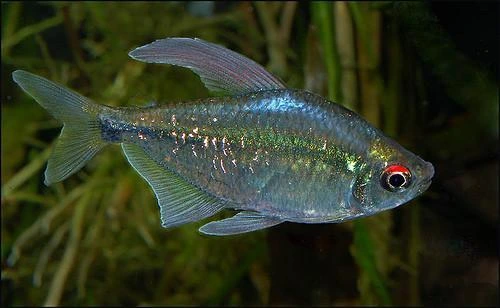
Diamond Tetra
Moenkhausia pittieri
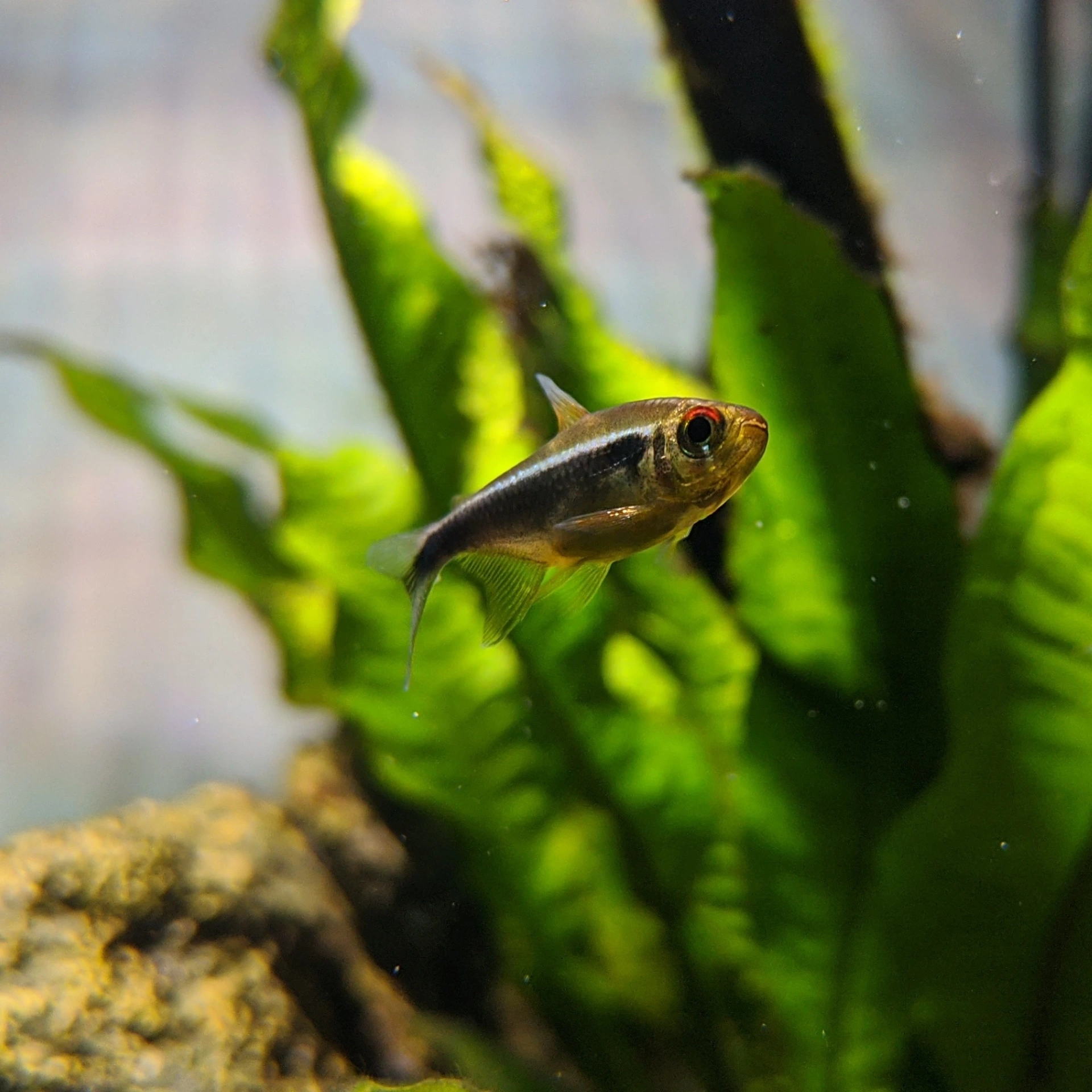
Black Neon Tetra
Hyphessobrycon herbertaxelrodi
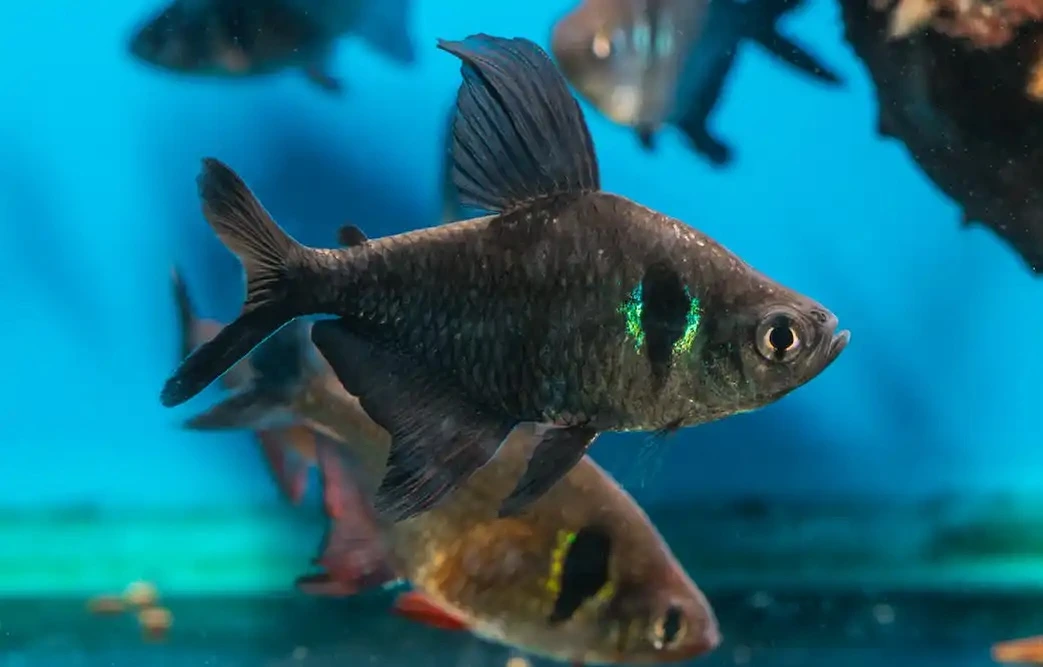
Black Phantom Tetra
Hyphessobrycon megalopterus
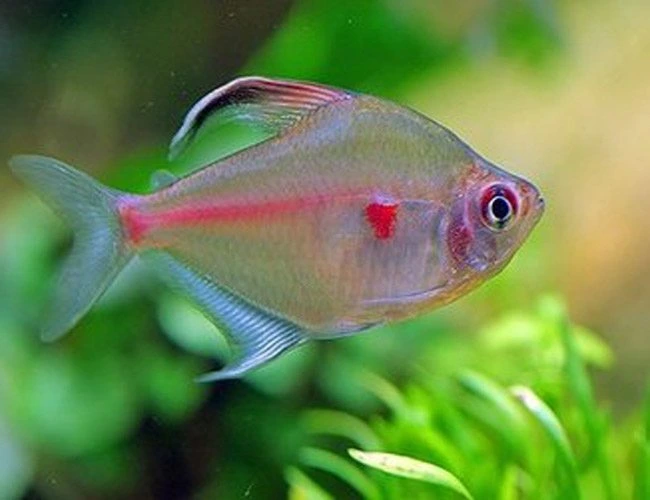
Bleeding Heart Tetra
Hyphessobrycon erythrostigma
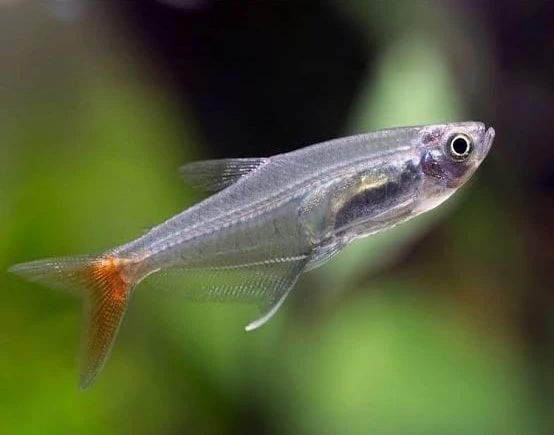
Bloodfin Tetra
Aphyocharax anisitsi
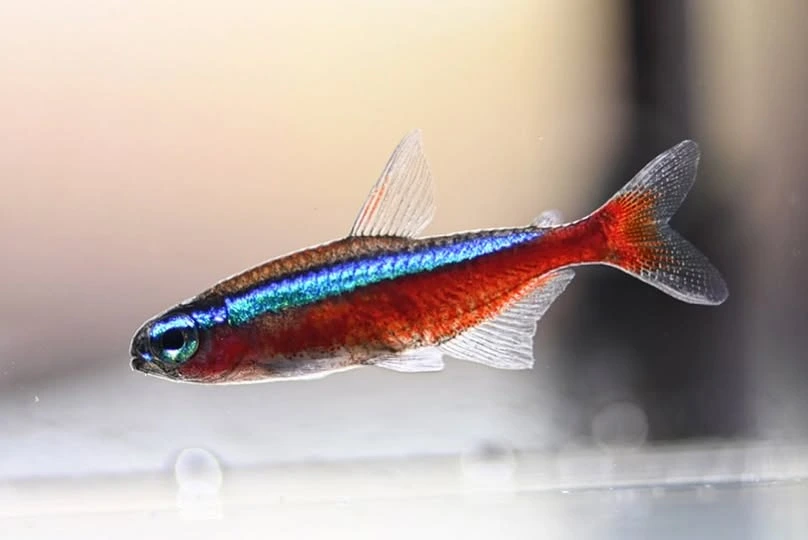
Cardinal Tetra
Paracheirodon axelrodi

Colombian Tetra
Hyphessobrycon columbianus
Ready to Add Red Eye Tetra to Your Tank?
Use our free stocking calculator to check compatibility, bioload, and get personalized recommendations.