
Care Requirements
Adult Size
1.6" (4cm)
Min Tank
15 gal
Temperature
75-82°F
pH Range
5.5-7
Lifespan
4-5 years
Min Group
6+ fish
Diet
Omnivore
Swim Level
Middle
Bioload
1/10
Hardness
2-12 dGH
About Glowlight Tetra
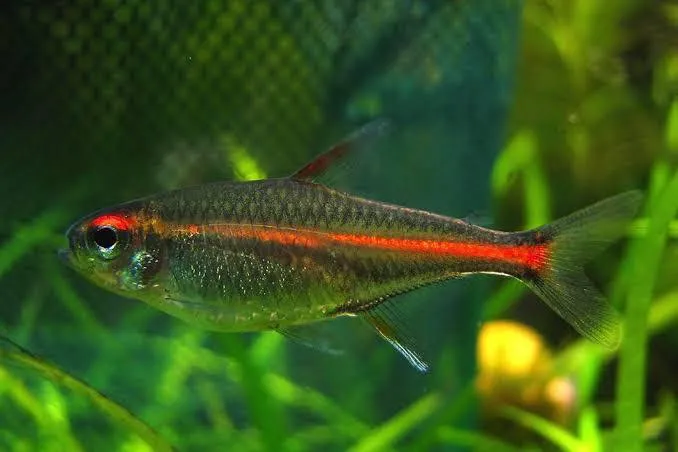
The Glowlight Tetra is one of the most visually striking small tetras, named for the brilliant orange-red iridescent stripe that runs the length of its body and appears to "glow" under aquarium lighting. Native to Guyana, this peaceful schooling fish has been a hobby favorite since its introduction in the 1930s.
What makes glowlight tetras special is their understated elegance. Unlike the flashy neon tetra with its bold blue and red, glowlights have a more subtle beauty—their translucent bodies make that single glowing stripe stand out like a neon light in the dark. In dimly lit, blackwater setups, the effect is truly stunning.
Despite their delicate appearance, glowlight tetras are hardy and beginner-friendly. They're also among the most peaceful tetras available, never showing the fin-nipping tendencies of some relatives. This makes them ideal community fish for aquarists of all experience levels.
Natural Habitat & Origin
Glowlight tetras originate from the Essequibo River basin in Guyana, South America. Their native habitat consists of slow-moving, blackwater streams and tributaries that flow through dense rainforest. These waters are stained tea-colored by tannins leaching from decomposing leaves and wood.
The forest canopy above filters sunlight, creating dim conditions that make the glowlight's iridescent stripe all the more visible—likely serving as a means of keeping schools together in murky water. The substrate is typically covered in leaf litter, and the water is soft, acidic, and warm. This explains why glowlight tetras look their absolute best in aquariums that replicate these blackwater conditions.
Native Region
Guyana - Essequibo River basin
Habitat Type
Slow-moving blackwater streams and tributaries
Wild Water Conditions
Warm (75-82°F), soft, acidic, tannin-stained water
Appearance & Varieties
Glowlight tetras are small, reaching only about 1.5 inches (4 cm) in length. Their bodies are semi-transparent with a silver-peach base color. The defining feature is the brilliant iridescent orange-red stripe that runs horizontally from the snout through the eye to the base of the tail.
This stripe appears to glow, especially under subdued lighting or against dark backgrounds—the effect is created by iridescent cells that reflect light. The dorsal fin has a matching orange-red leading edge, and fins are otherwise transparent. Males and females look similar, though females are slightly rounder when carrying eggs, and males may have slightly more intense coloration.
Tank Setup & Requirements
Quick Requirements Summary
Tank Size
Minimum Tank Size
15 gallons
Recommended Tank Size
15 gallons
Glowlight tetras are adaptable fish that do well in a range of setups, but they truly shine in aquariums designed to showcase their natural beauty. Dark substrates, subdued lighting, and blackwater conditions make their "glow" dramatically more visible.
Water Parameters
Temperature 75-82°F (24-28°C), pH 5.5-7.5, hardness 3-15 dGH. They adapt to a range of conditions but look their best in soft, slightly acidic water. Stable parameters matter more than hitting exact numbers. Keep nitrates below 20 ppm.
Substrate
Dark sand or fine gravel strongly recommended. Dark substrates make the glowing stripe dramatically more visible compared to light-colored substrates. Black sand creates the most stunning contrast.
Plants & Decorations
Heavily planted tanks are ideal. Amazon Sword, Java Fern, Cryptocoryne, Anubias, and floating plants all work well. Include driftwood for tannin release and Indian almond leaves for blackwater effect. Create shaded areas—they're more confident and colorful when not under bright lights.
Filtration & Water Flow
Gentle to moderate flow—they prefer calm water reminiscent of their slow-moving native streams. Sponge filters are ideal for smaller tanks; baffle HOB outputs if needed.
Lighting
Low to moderate lighting is optimal. Their "glow" is actually more visible under subdued lighting, not bright light. Use floating plants to create dappled lighting effects.
Diet & Feeding Guide
Diet Type
omnivore
Feeding Frequency
1-2x daily
Portion Size
What they consume in 2 minutes
Glowlight tetras are omnivores with small mouths. In the wild, they feed on small insects, worms, crustaceans, and plant matter. In captivity, a varied diet enhances their coloration—the glowing stripe becomes more vibrant with good nutrition.
Best Foods for Glowlight Tetra
- Quality tropical flakes — Good staple, crush if needed for small mouths
- Micro pellets — Appropriately sized for small mouths
- Frozen bloodworms — Excellent for color enhancement
- Frozen brine shrimp — Good protein source, readily accepted
- Daphnia — Natural food that promotes vibrant coloration
- Tubifex worms — High protein treat
- Live baby brine shrimp — Exceptional treat, triggers natural hunting behavior
- Grindal worms — Excellent live food for conditioning
Foods to Avoid
- Large pellets — Won't fit in their small mouths, leading to starvation
- Overfeeding — Small fish with small stomachs—excess food pollutes water
Small mouths require appropriately sized food—crush flakes if necessary. Variety enhances coloration; the glowing stripe becomes more vibrant with a quality, varied diet. They're mid-water feeders and may miss food that sinks quickly.
Behavior & Temperament
Glowlight tetras are peaceful, graceful swimmers that spend most of their time in the middle water column. They're true schooling fish, and their behavior is best observed in groups of 10 or more where they move in coordinated formations.
Unlike some tetras that have fin-nipping tendencies, glowlights are exceptionally peaceful—they never nip fins and rarely show any aggression even toward slow-moving tankmates. This makes them ideal for community tanks with more delicate fish.
They're more active and confident in dimmer lighting, often becoming somewhat shy under bright lights. In properly set up tanks with subdued lighting and dark backgrounds, they school tightly and their glowing stripes create a mesmerizing display.
Tank Mates: Compatibility Guide
Compatible Tank Mates
Classic pairing, similar care needs
Beautiful color contrast
Peaceful small tetra, warm orange colors
Peaceful mid-dweller
Peaceful bottom dweller
Adorable bottom dweller
Gentle algae eater
Peaceful bottom-dweller
Peaceful centerpiece fish
Colorful, generally peaceful
Beautiful dwarf cichlid
Hardy dwarf cichlid
Adult shrimp safe, shrimplets may be eaten
Excellent algae control
Tank Mates to Avoid
Large predatory fish
Will eat glowlight tetras
Aggressive cichlids
Too aggressive, will stress or harm them
Tiger Barbs
Known fin nippers that harass peaceful fish
Fish large enough to eat them
They're small and will be seen as food
Common Pairing Questions
Are glowlight tetras the same as neon tetras?
No—though both have glowing stripes. Glowlights have an orange-red horizontal stripe, while neons have a blue horizontal stripe above a red lower belly. Both are peaceful schooling tetras with similar care requirements.
Can glowlight tetras live with bettas?
Generally yes—glowlight tetras are among the safest tetras to keep with bettas because they never nip fins. However, success depends on individual betta temperament. Use a 20+ gallon planted tank, add tetras first, and monitor for aggression.
Can glowlight tetras live with shrimp?
Adult cherry shrimp and larger species are generally safe. However, glowlights may eat shrimplets if they can catch them. Provide dense moss and hiding spots for shrimp to breed successfully alongside them.
Glowlight tetras can be bred in captivity, though it requires some effort to create the right conditions. They're egg scatterers that show no parental care.
Subtle differences exist between sexes. Females are slightly rounder, especially when carrying eggs. Males are slimmer. Comparing fish side by side makes differences more apparent.
Set up a separate breeding tank (5-10 gallons) with very soft acidic water (pH 5.5-6.5), dim lighting or darkness, and spawning mops or fine-leaved plants like Java moss. Bare bottom or marbles protect eggs from being eaten.
Condition a pair with high-quality foods for 1-2 weeks. Place conditioned pair in breeding tank in evening. Spawning typically occurs at dawn. Female scatters 100-150 eggs among plants. Remove parents immediately after spawning—they will eat eggs.
Eggs and fry are light-sensitive—keep the breeding tank dark or dimly lit. Eggs hatch in 24-36 hours. Fry become free-swimming in 3-4 days. They're tiny and need infusoria for the first week, then baby brine shrimp as they grow.
Health Issues & Disease Prevention
Glowlight tetras are generally hardy fish, but like all tetras, they're susceptible to certain diseases. The vibrancy of their glowing stripe is a good indicator of health—stressed or sick fish show faded coloration.
Common Diseases
| Disease | Symptoms | Treatment |
|---|---|---|
| Ich (White Spot) | White spots on body and fins, flashing, clamped fins | Raise temperature to 82-86°F, add aquarium salt, use ich medication |
| Neon Tetra Disease | Restlessness, loss of color, lumps, curved spine, isolation from school | No cure exists—quarantine new fish, avoid stressed specimens, remove affected fish immediately to prevent spread |
| Fin Rot | Frayed, deteriorating fins | Improve water quality, antibacterial medication if severe |
| Velvet | Gold dust-like coating on body, scratching | Copper-based medication, dim lighting, raise temperature slightly |
Signs of a Healthy Glowlight Tetra
- Vibrant glowing stripe
- Active schooling behavior
- Good appetite
- Smooth swimming
- Exploring the tank
Prevention Tips
- Maintain stable water parameters
- Quarantine all new fish for 2-4 weeks
- Keep in proper schools of 6+
- Provide subdued lighting
- Weekly water changes of 25%
- Varied, high-quality diet for best coloration
Frequently Asked Questions
The iridescent orange-red stripe running from nose to tail appears to glow due to light-reflecting cells called iridophores. The effect is enhanced by the fish's slightly translucent body, which makes the stripe stand out brilliantly, especially under subdued lighting.
Minimum 6, but they look spectacular in groups of 10-15+. Larger schools create tighter schooling behavior, and the visual effect of multiple glowing stripes moving together is stunning.
Not required, but appreciated. They come from tannin-stained blackwater streams and look their best in similar conditions. Adding Indian almond leaves or driftwood creates more natural conditions and can enhance coloration, though they adapt well to regular aquarium water.
Faded coloration usually indicates stress or poor conditions. Check water parameters, ensure they're in a proper school (6+), provide hiding spots, and consider dimmer lighting. Sick fish also lose color intensity. A varied, high-quality diet helps maintain vibrant coloration.
Tips for Keeping Glowlight Tetra
Pro Tips
- ✓Dark substrate and background make the glow dramatically more visible
- ✓Subdued lighting brings out the best 'glow' effect—bright lights wash them out
- ✓One of the most peaceful tetras—never nips fins, ever
- ✓Indian almond leaves enhance natural coloration and create preferred water chemistry
- ✓Stunning in large schools of 15-20+
- ✓Perfect for blackwater biotope tanks
- ✓Hardy and beginner-friendly despite their delicate appearance
- ✓Morning and evening feeding times show their best activity
Common Mistakes to Avoid
- ✗Too small schools—need 6+ minimum, 10+ ideal
- ✗Bright lighting—actually dims their glow effect
- ✗Light-colored substrate—reduces visual impact dramatically
- ✗Mixing with fin nippers—they're too peaceful to defend themselves
- ✗Large food particles they can't eat
- ✗No floating plants for shade
- ✗Not appreciating how stunning large schools look
- ✗Expecting them to clean algae—they're insectivores, not algae eaters
Sources
- FishBase — Accepted scientific name, maximum size and native range for Glowlight Tetra.
Related Species You Might Like
View All Fish →
Gold Barb
Barbodes semifasciolatus
Rummy Nose Tetra
Hemigrammus rhodostomus
Black Neon Tetra
Hyphessobrycon herbertaxelrodi
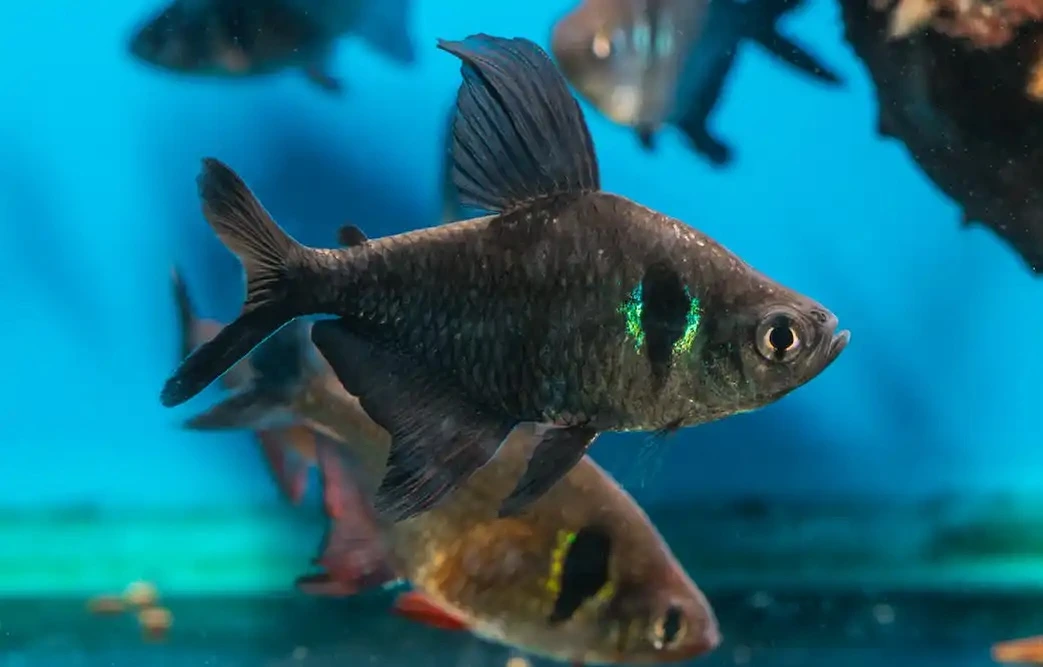
Black Phantom Tetra
Hyphessobrycon megalopterus
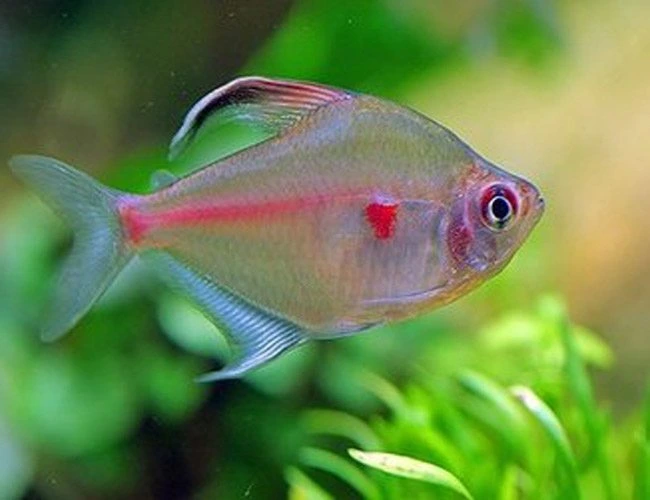
Bleeding Heart Tetra
Hyphessobrycon erythrostigma
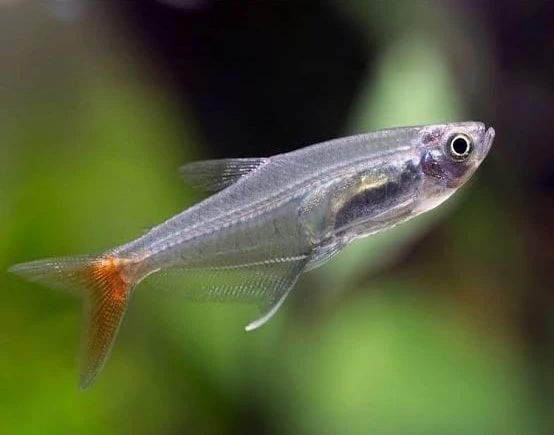
Bloodfin Tetra
Aphyocharax anisitsi
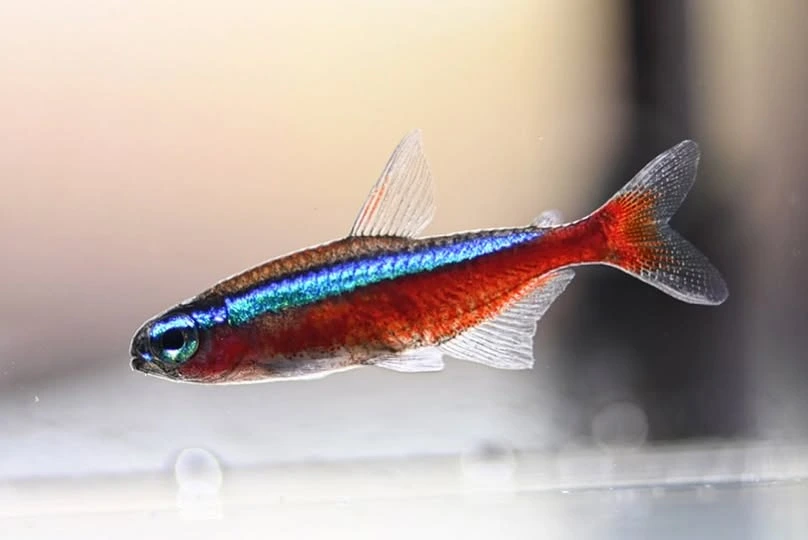
Cardinal Tetra
Paracheirodon axelrodi

Colombian Tetra
Hyphessobrycon columbianus
Ready to Add Glowlight Tetra to Your Tank?
Use our free stocking calculator to check compatibility, bioload, and get personalized recommendations.