
Care Requirements
Adult Size
6.3" (16cm)
Min Tank
30 gal
Temperature
75-82°F
pH Range
6-7.5
Lifespan
10-15 years
Min Group
Can be kept alone
Diet
Herbivore
Swim Level
Bottom
Bioload
1/10
Hardness
2-12 dGH
About Twig Catfish
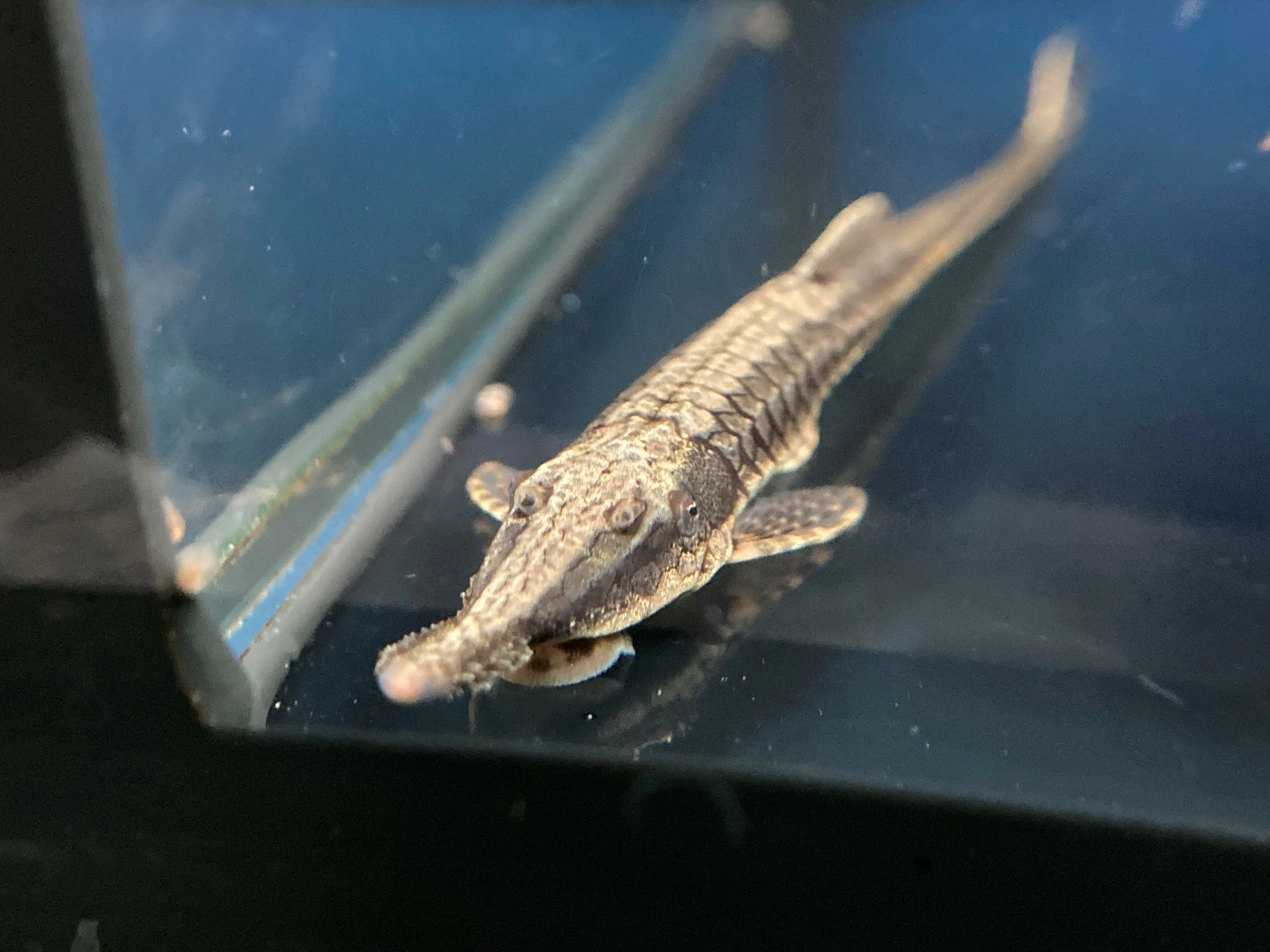
The Twig Catfish represents one of nature's most remarkable examples of camouflage in freshwater fish. Their extremely elongated, stick-thin body — complete with a long, pointed snout and bark-like patterning — creates an almost perfect mimicry of waterlogged twigs and branches. When resting motionless among driftwood (their preferred position), they become virtually invisible. This disguise protects them from predators and allows ambush of the biofilm and algae they graze.
Belonging to the family Loricariidae (armored catfishes, like plecos), Farlowella share the characteristic bony plates and sucker mouth of their relatives but have evolved an entirely different body plan. Where plecos are robust and flattened, Twig Catfish are impossibly slender — appearing fragile despite their armored construction. Several Farlowella species exist; F. acus is among the most commonly available, though species identification can be challenging even for experts.
Their care requirements place them firmly in the advanced category. They're sensitive to water quality, requiring pristine conditions with low nitrates and high oxygen. They need established tanks with mature biofilm — their primary food source — and often struggle in new setups. Many Twig Catfish die in the first weeks after purchase due to inappropriate conditions or starvation from inadequate biofilm. They're not impulse purchases for casual aquarists.
For experienced keepers who can provide appropriate conditions, Twig Catfish reward with genuinely unique appearance and fascinating behavior. Watching them graze along driftwood, seeing males guard eggs on flat surfaces, and appreciating their extraordinary camouflage provides satisfaction unavailable from more common species. They're conversation pieces that challenge assumptions about what a 'catfish' can look like.
Natural Habitat & Origin
Conservation status: Vulnerable (VU)
Twig Catfish inhabit slow-moving rivers, streams, and flooded forest areas across northern South America, particularly Venezuela and Colombia. They're strongly associated with submerged wood — fallen trees, branches, and root tangles where their camouflage provides both protection and access to their primary food source: the biofilm and algae growing on wood surfaces.
Their native waters feature soft, slightly acidic conditions with moderate temperature and abundant organic material. The streams they inhabit are often shaded by forest canopy, reducing light penetration and supporting the biofilm communities they depend on. Water movement is gentle to moderate; they're not adapted for strong current despite the oxygenated water they require.
The abundance of submerged wood in their habitat isn't incidental — it's central to their ecology. They spend nearly all their time attached to or resting on wood surfaces, grazing the biofilm layer that develops on submerged branches. Their elongated body and wood-mimicking coloration evolved specifically for this lifestyle. Remove the wood, and you remove both their food source and their sense of security.
Seasonal flooding in their native range creates temporary connections between water bodies, allowing population exchange. During low water periods, they concentrate in permanent streams and pools. This seasonal variation means they experience fluctuating conditions, but consistently within soft, warm, organic-rich parameters.
Native Region
South America — Venezuela, Colombia
Habitat Type
Slow streams, rivers, flooded forests with abundant submerged wood
Wild Water Conditions
Warm (24-28°C), soft, slightly acidic, rich in organic material
Appearance & Varieties
Twig Catfish possess one of the most extreme body shapes among aquarium fish — impossibly elongated and thin, with a long pointed snout that can comprise a third of total length. Adults reach approximately 6 inches (15-16 cm), but their slender build makes them appear larger. The overall impression is of an animated stick or twig, which is precisely the evolutionary intention.
Body coloration features brown, tan, and olive tones with darker mottling that mimics bark texture. A dark lateral stripe often runs the length of the body, breaking up the outline. The belly is typically lighter. The pointed rostrum (snout) bears the sucker mouth characteristic of loricariid catfishes, positioned on the underside for grazing flat surfaces.
Bony plates cover the body in rows, providing armor while maintaining flexibility. The caudal fin is forked; other fins are relatively small and may be held tight against the body when resting, further enhancing the twig silhouette. When alarmed, they may extend fins slightly but rarely display them prominently.
Sexual dimorphism becomes apparent in mature fish. Males develop small bristles (odontodes) on the sides of the rostrum — these become more pronounced during breeding condition. Males also tend to have slightly broader heads. Females lack rostral bristles and may appear slightly fuller-bodied when gravid. Sexing juveniles is essentially impossible.
Popular Varieties
| Variety | Description | Rarity |
|---|---|---|
| Farlowella acus | The commonly available species with typical twig-like appearance. Brown/tan with darker markings. | Common |
| Other Farlowella species | Multiple species exist (F. vittata, F. mariaelenae, etc.) with subtle differences. Often sold interchangeably as 'Twig Catfish.' | Occasional |
| Royal Farlowella (Sturisoma spp.) | Related genus sometimes called 'Royal Twig Catfish.' Slightly more robust build, similar care requirements. | Occasional |
Tank Setup & Requirements
Quick Requirements Summary
Tank Size
Minimum Tank Size
30 gallons
Recommended Tank Size
40 gallons
Twig Catfish require mature, stable tanks with established biofilm and excellent water quality. Setup should prioritize their specific needs for wood surfaces, oxygenation, and pristine conditions.
Water Parameters
Soft, slightly acidic water is preferred but moderate conditions are tolerated. CRITICAL: Nitrates must stay low (<20 ppm, ideally <10 ppm) — they're highly sensitive to nitrogen waste. High oxygen levels are essential; ensure good surface agitation. Temperature 24-28°C (75-82°F), pH 6.0-7.5, hardness 2-12 dGH.
Substrate
They rarely interact with substrate directly, spending most time on wood. Choose based on other considerations or tankmates. Sand creates natural appearance matching their habitat.
Plants & Decorations
ESSENTIAL: Abundant driftwood — their primary habitat. Driftwood is non-negotiable. Provide multiple pieces with varied surfaces for grazing and resting. They spend nearly all their time on wood; tanks without adequate driftwood stress them and deprive them of food. Plants aren't essential but provide additional biofilm surfaces and improve water quality. Broad-leaved plants (Anubias, Amazon swords) offer grazing opportunities.
Filtration & Water Flow
Strong biological filtration maintains the pristine conditions they require. Ensure good surface agitation for oxygen exchange — they need well-oxygenated water. Canister filters work well. Flow should be moderate; they're not strong swimmers but handle gentle current.
Lighting
Some lighting supports the biofilm/algae growth they feed on. Avoid extremes: very low light inhibits food growth; very high light can cause problematic algae types rather than beneficial biofilm. Standard planted tank lighting typically works well.
Diet & Feeding Guide
Diet Type
herbivore
Feeding Frequency
Daily supplementation recommended
Portion Size
Offer supplemental foods (wafers, vegetables) every evening. Remove uneaten vegetables after 12-24 hours. Biofilm grazing continues constantly. Watch for concave belly — a sign of inadequate nutrition.
Twig Catfish are specialized herbivores feeding primarily on biofilm (aufwuchs) and soft algae. Their dietary needs are specific and often inadequately met, contributing to the high mortality seen in captive specimens.
Best Foods for Twig Catfish
- Established biofilm — Their primary natural food — the microbial/algal film growing on wood and other surfaces. This is why mature tanks with abundant driftwood are essential.
- Algae wafers — High-quality sinking algae wafers supplement biofilm. Feed at night when they're most active.
- Blanched vegetables — Zucchini, cucumber, spinach, peas — offered overnight and removed in the morning.
- Repashy gel foods — Algae-based gel foods can be smeared on driftwood, mimicking natural feeding. Excellent supplementation.
- Spirulina-based foods — Spirulina flakes/pellets that sink provide vegetable nutrition.
Foods to Avoid
- High-protein foods — They're herbivores; protein-heavy foods aren't appropriate as staples.
- Floating foods only — They feed from surfaces, not the water column. Sinking or surface-attached foods required.
- Relying only on 'algae in the tank' — Visible algae isn't the same as biofilm. Active supplementation is usually necessary.
Biofilm is their primary food source and cannot be purchased — it must develop naturally on driftwood over months. This is the #1 reason they fail in new tanks.
What a Twig Catfish will actually graze depends entirely on which algae you have — soft film comes off easily, while black beard and blue-green growth are ignored by almost everything. Identify the algae in your tank before deciding whether livestock is the right fix.
Behavior & Temperament
Twig Catfish behavior centers on their extraordinary camouflage and specialized feeding. They spend the vast majority of time motionless on driftwood surfaces, perfectly mimicking the twigs and branches they resemble. This isn't laziness — it's sophisticated predator avoidance combined with patient grazing on the biofilm beneath them.
When they do move, locomotion is deliberate and measured — slow repositioning along wood surfaces rather than active swimming. They're primarily nocturnal or crepuscular, becoming more active during evening and night hours. Despite their fragile appearance, males become territorial during breeding and will guard egg clutches with dedication. Otherwise, they're completely peaceful with tankmates and conspecifics.
Stressed Twig Catfish may exhibit rapid breathing, refusal to attach to surfaces, or swimming erratically. These are serious warning signs usually indicating water quality problems requiring immediate investigation.
Tank Mates: Compatibility Guide
Compatible Tank Mates
Small peaceful fish that won't bother Twig Catfish and share water parameter preferences.
Peaceful bottom dwellers occupying different niche. Don't compete for food or space.
Non-aggressive dwarf cichlids coexist well.
Similar feeding ecology; both graze biofilm. Ensure adequate food for both species.
Mid-water schooling fish that ignore bottom-dwelling catfish.
Completely peaceful coexistence. Twig Catfish ignore shrimp entirely.
Tank Mates to Avoid
Aggressive cichlids
Aggression stresses these sensitive fish.
Large predatory fish
May harass or attempt to eat them despite their armor.
Very active, boisterous fish
Constant activity may stress these sedentary catfish.
Plecos (competition consideration)
May compete for biofilm and algae. Ensure adequate food if keeping together.
Twig Catfish breeding is achievable in captivity but requires excellent conditions and patience. Males develop rostral bristles when mature. Females deposit eggs on flat surfaces — often glass walls, broad leaves, or flat driftwood. Males guard egg clusters devotedly, fanning them for oxygenation. Eggs hatch in approximately 7-10 days. Fry can take crushed algae wafers and biofilm immediately.
Health Issues & Disease Prevention
Twig Catfish are sensitive fish with specific health vulnerabilities. Most mortality relates to environmental problems — particularly water quality and starvation — rather than pathogens.
Common Diseases
| Disease | Symptoms | Treatment |
|---|---|---|
| Starvation | Concave belly, lethargy, deteriorating condition, eventual death. | Improve feeding: more driftwood surface area, supplemental vegetables, gel foods applied to wood. This is the #1 killer of captive Twig Catfish. |
| Nitrate poisoning | Rapid breathing, erratic behavior, reddening, lethargy. | Immediate water changes to reduce nitrates below 20 ppm. They're highly sensitive to nitrogen waste. |
| Ich | White spots on body and fins, scratching, clamped fins. | Raise temperature to 82-84°F gradually. Medication at reduced dose — they may be sensitive to some treatments. |
| Bacterial infections | Redness, fin erosion, body sores, rapid decline. | Antibacterial medication; improve water quality. Usually secondary to stress or poor conditions. |
| Oxygen deprivation | Gasping at surface, rapid gill movement, lethargy. | Increase surface agitation, add airstone. They require well-oxygenated water. |
Signs of a Healthy Twig Catfish
- Slightly rounded belly
- Calm attachment to driftwood
- Active grazing at night
- Clear eyes and fins
- Normal breathing rate
Prevention Tips
- Only add to mature tanks (3+ months established)
- Maintain pristine water quality (nitrates <20 ppm)
- Provide abundant driftwood surfaces
- Supplement feeding actively
- Ensure high oxygen levels
Frequently Asked Questions
The high mortality rate has two main causes: starvation and poor water quality. Many keepers underestimate their dietary needs — they require established biofilm that only develops in mature tanks, plus active supplementation. New tanks or those without adequate driftwood simply can't support them. Additionally, they're highly sensitive to nitrates and require pristine conditions that many tanks don't maintain.
Observe belly condition: healthy Twig Catfish maintain a slightly rounded belly, while starving individuals develop a distinctly concave (sunken) belly. This 'pinched' appearance indicates inadequate nutrition and requires immediate intervention. Also watch for grazing activity, especially at night.
True Twig Catfish are Farlowella species, while 'Royal Farlowella' typically refers to Sturisoma species — a related but distinct genus. Sturisoma are slightly more robust, often have more prominent finnage, and may be marginally hardier. Both share similar care requirements.
They eat soft algae and biofilm (aufwuchs) but aren't effective algae cleaners in the typical sense. They graze the microbial film that develops on surfaces rather than attacking tough algae like hair algae or black beard algae. Don't purchase them expecting algae control.
Yes, with considerations. Both graze biofilm and algae, so ensure adequate food for all — competition can lead to starvation. Some plecos become territorial toward similar fish. The combination can work well in large tanks with abundant grazing surface.
Erratic swimming usually indicates water quality problems — most commonly high nitrates, ammonia, or low oxygen. Test water parameters immediately and perform a water change if anything is elevated. Twig Catfish are highly sensitive to water quality.
Tips for Keeping Twig Catfish
Pro Tips
- ✓Wait until your tank is truly mature — Twig Catfish should never go into tanks less than 3 months old.
- ✓Apply Repashy gel foods directly to driftwood — mimics natural feeding better than dropping wafers.
- ✓More driftwood is always better — each piece represents food-growing surface area and resting habitat.
- ✓Watch the belly, not just behavior — rounded = fed, concave = starving.
Common Mistakes to Avoid
- ✗Adding to new or immature tanks — starvation from lack of established biofilm.
- ✗Insufficient driftwood — inadequate grazing surface and no appropriate resting places.
- ✗Assuming 'algae in the tank' is enough food — visible algae isn't biofilm.
- ✗Neglecting water quality — high nitrates cause rapid decline.
- ✗Impulse purchases — buying without proper preparation leads to high mortality.
Sources
- FishBase — Accepted scientific name, maximum size and native range for Twig Catfish.
- IUCN Red List — Vulnerable conservation assessment for Farlowella acus.
Related Species You Might Like
View All Fish →
Upside Down Catfish
Synodontis nigriventris
Blue Phantom Pleco
Hemiancistrus sp.
Bristlenose Pleco
Ancistrus sp.
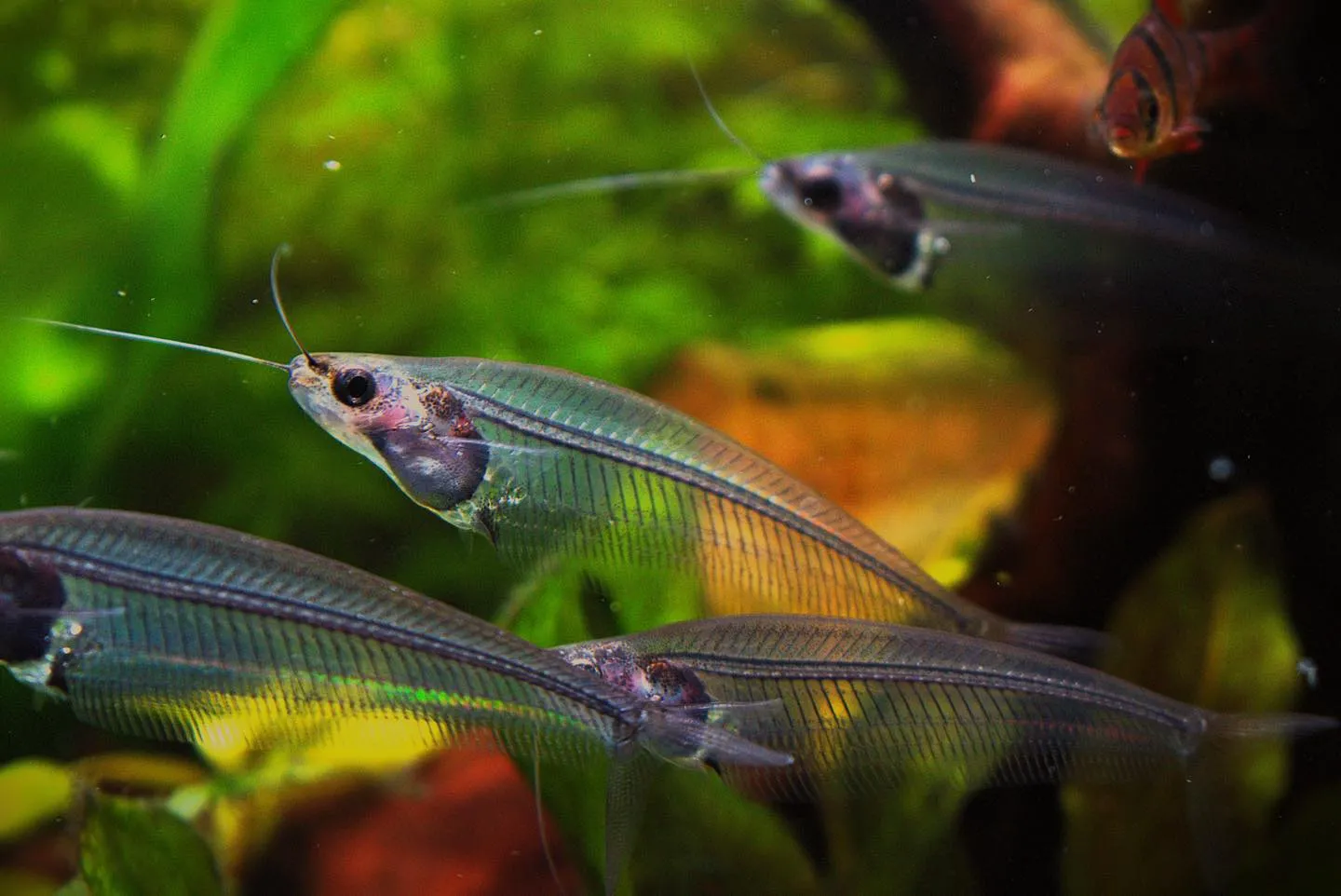
Glass Catfish
Kryptopterus vitreolus
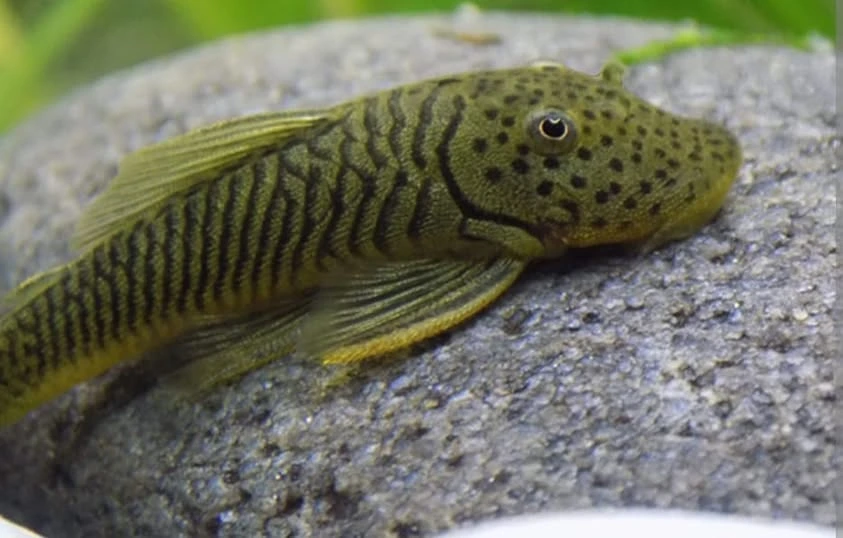
Rubber Lip Pleco
Chaetostoma formosae
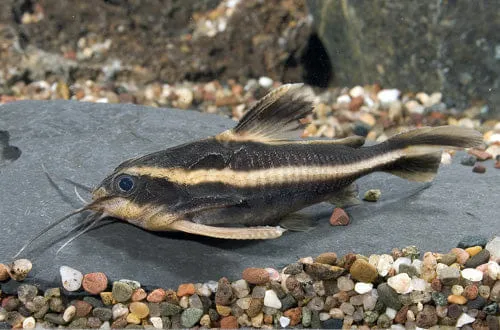
Striped Raphael Catfish
Platydoras armatulus
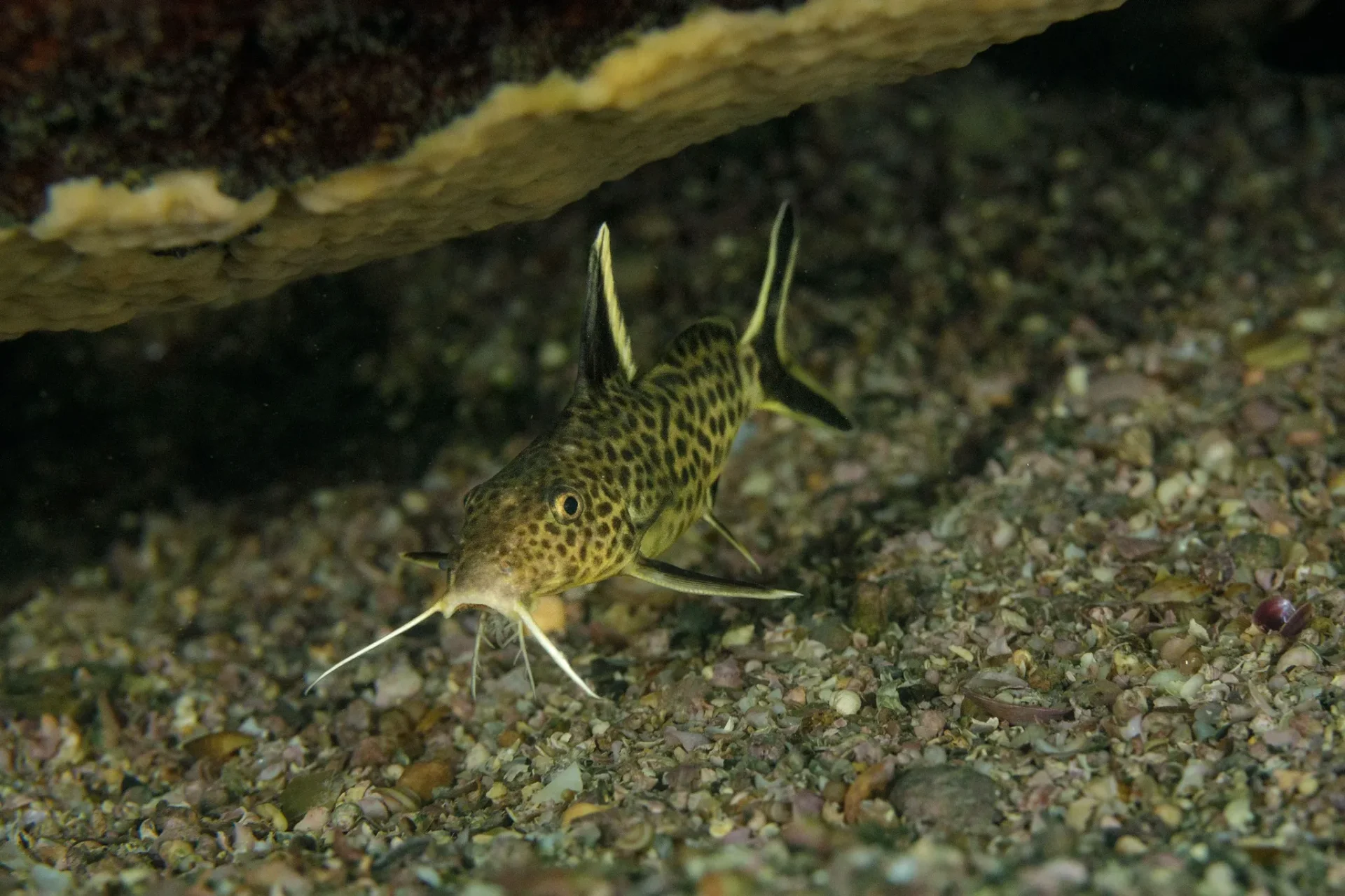
Synodontis Petricola
Synodontis petricola
Zebra Pleco
Hypancistrus zebra
Ready to Add Twig Catfish to Your Tank?
Use our free stocking calculator to check compatibility, bioload, and get personalized recommendations.