
Care Requirements
Adult Size
3.1" (8cm)
Min Tank
30 gal
Temperature
79-90°F
pH Range
6-7.5
Lifespan
10-15 years
Min Group
Can be kept alone
Diet
Omnivore
Swim Level
Bottom
Bioload
2/10
Hardness
2-10 dGH
About Zebra Pleco
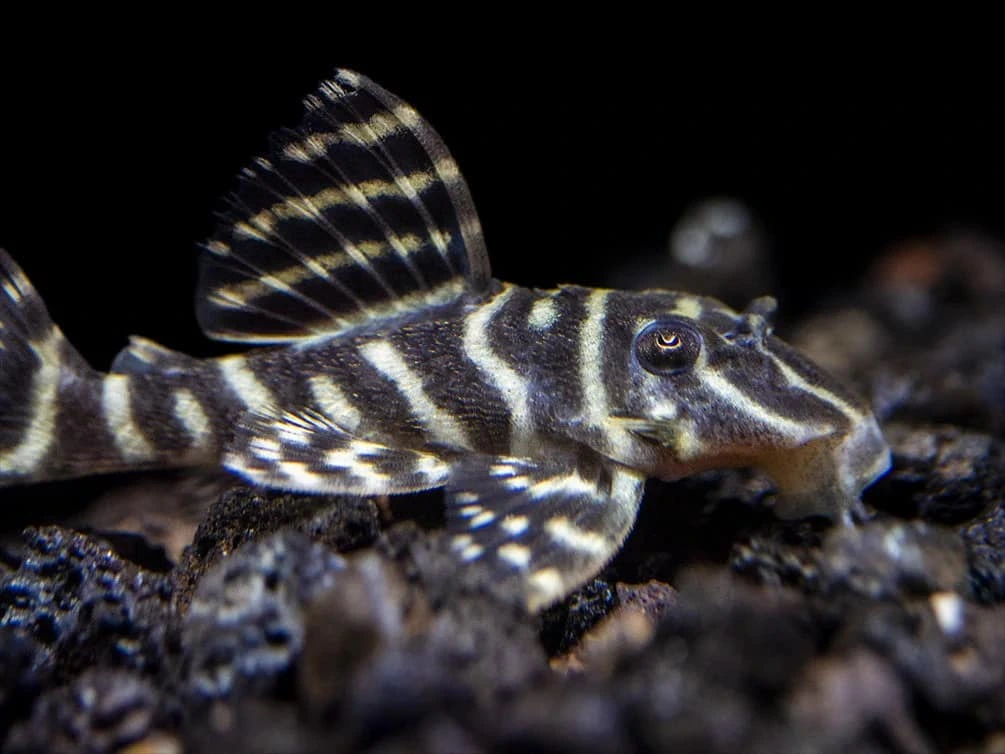
The Zebra Pleco is widely considered the most beautiful pleco in the hobby — striking black and white stripes over a compact 3-inch body create a pattern that captivates aquarists worldwide. Originally designated L046 before formal scientific description, they remain among the most sought-after and expensive freshwater fish available. Prices commonly exceed $300-500 per fish, with breeding specimens commanding even more.
Their desirability is matched by their rarity. Endemic to a single section of Brazil's Rio Xingu, wild Zebra Pleco populations have collapsed due to dam construction that altered their habitat. Brazil has banned exports since 2004, making all legally available specimens captive-bred. Their IUCN status is Critically Endangered — keeping and breeding them responsibly represents genuine conservation contribution.
Unlike most plecos, Zebra Plecos are not algae eaters. They're omnivores with carnivorous tendencies, preferring protein-rich foods over plant matter. This dietary difference surprises many new keepers expecting typical pleco behavior. They also require warmer water (79-86°F), stronger flow, and higher oxygen levels than most community fish — conditions that mimic their native rapids habitat.
Zebra Plecos are not beginner fish. Their environmental requirements, high cost, and specialized diet demand experienced fishkeeping skills. But for advanced aquarists willing to meet their needs, few fish offer such stunning beauty. Successfully keeping and breeding Zebra Plecos is considered a significant accomplishment in the hobby.
Natural Habitat & Origin
Conservation status: Critically Endangered (CR)
Zebra Plecos are endemic to a remarkably small area of Brazil's Rio Xingu — specifically the 'Big Bend' region where fast-flowing rapids carve through fractured bedrock. This specialized habitat features warm water (82-86°F year-round), extremely high oxygen levels from turbulent flow, and complex rock structures creating countless caves and crevices.
The Xingu is a clearwater tributary of the Amazon with soft, slightly acidic conditions. Unlike blackwater rivers, visibility is excellent, allowing the zebra pattern to serve camouflage functions among the light-and-shadow interplay of rocky rapids.
Tragically, construction of the Belo Monte dam complex has devastated this habitat. Altered water flow, temperature changes, and sedimentation have caused wild population crashes exceeding 80%. Brazil's 2004 export ban and subsequent CITES Appendix III listing reflect the species' precarious status. All legally available Zebra Plecos are captive-bred, primarily from German, Asian, and American breeding programs.
This conservation context means responsible keeping and breeding directly supports species preservation. Every successful captive breeding reduces pressure on remnant wild populations.
Native Region
Rio Xingu, Brazil — Big Bend region (extremely restricted range)
Habitat Type
Fast-flowing rapids with fractured bedrock creating caves and crevices
Wild Water Conditions
Warm (28-30°C), soft, slightly acidic, extremely high oxygen, strong flow
Appearance & Varieties
The Zebra Pleco's appearance justifies its name and price — bold black and white stripes wrap around the entire body, extending onto all fins. The base is white or cream with dramatic black bands creating a striking zebra pattern unique among plecos. Each individual has slight pattern variations, but all share the characteristic high-contrast striping.
Adults reach only 3-3.5 inches (8-9 cm), making them among the smaller pleco species. Despite modest size, their pattern ensures they remain visible even in decorated tanks.
Sexing adults is possible through several characteristics: males develop broader heads, more pronounced odontodes (hair-like structures) on the pectoral fin spines and cheeks, and appear slightly more robust. Females have narrower heads and rounder bodies when full of eggs.
Popular Varieties
| Variety | Description | Rarity |
|---|---|---|
| Standard/Wild-Type | Bold black and white stripes — the only naturally occurring pattern. Stripe thickness and spacing vary slightly between individuals. No selectively bred color variants exist. | Rare (due to price/availability) |
Tank Setup & Requirements
Quick Requirements Summary
Tank Size
Minimum Tank Size
30 gallons
Recommended Tank Size
40 gallons
Zebra Pleco tanks must replicate their native rapids environment: warm, well-oxygenated water with strong flow. This differs significantly from typical community setups and drives much of their advanced care requirements.
Water Parameters
Temperature is critical — they need warmer water than most community fish. Native Xingu waters average 82-86°F. Soft, slightly acidic conditions preferred. Temperature 26-32°C (79-90°F), ideal 28-30°C, pH 6.0-7.5, hardness 2-10 dGH. The key non-negotiable is oxygen: dissolved oxygen must be high through strong surface agitation, powerheads, and air stones.
Substrate
Soft substrate protects their undersides. Sand is ideal and allows natural behavior. Some breeders use bare-bottom tanks for easier maintenance, adding caves directly on the glass.
Plants & Decorations
Caves are critical for security and breeding. Zebra Plecos spend most time hidden in tight-fitting caves. PVC pipe, slate caves, ceramic pleco caves, and stacked rocks all work. Provide at least 2-3 caves per fish. Most plants don't survive their warm, high-flow conditions. Anubias attached to rocks may survive.
Filtration & Water Flow
Aim for 10x+ tank volume turnover per hour. Multiple filters or a powerful canister plus powerheads for circulation. Air stones and surface agitation are highly recommended. The goal is simulating their native rapids — strong, oxygen-rich water movement throughout the tank.
Lighting
Zebra Plecos prefer dim conditions and are nocturnal. Bright lighting keeps them hidden and can cause stress. Low-light setups or tanks with floating plants are ideal.
Diet & Feeding Guide
Diet Type
omnivore
Feeding Frequency
Daily, preferably after lights-out
Portion Size
Small amounts that can be consumed within a few hours. They're slow, secretive eaters — food should reach them before tankmates consume it. Target feeding near caves helps ensure they eat.
Zebra Plecos break the 'pleco = algae eater' assumption. They're omnivores with carnivorous leanings, requiring significant protein in their diet. In the wild, they consume small invertebrates, insect larvae, and organic debris rather than grazing algae. Providing appropriate protein-rich foods is essential for health and breeding condition. This dietary difference from typical plecos often surprises new keepers who expect them to clean algae. Zebra Plecos will essentially ignore algae, requiring targeted feeding with appropriate foods.
Best Foods for Zebra Pleco
- High-quality sinking carnivore/omnivore pellets — Should form the staple diet. Look for fish meal or whole fish as primary ingredients.
- Frozen bloodworms — Excellent protein source that Zebra Plecos readily accept. Feed 2-3 times weekly.
- Frozen brine shrimp — Another readily accepted frozen food. Provides variety alongside bloodworms.
- Repashy gel foods (meat-based formulas) — Bottom Scratcher and similar protein-rich gel foods are excellent. Can be pressed into caves.
- Live foods — Blackworms, daphnia, and baby brine shrimp are eagerly consumed and excellent for conditioning breeders.
- Quality algae wafers (supplemental) — Occasional algae wafers add variety but shouldn't be the primary food.
Foods to Avoid
- Purely herbivorous diets — Unlike most plecos, Zebra Plecos need protein. Algae wafers alone won't sustain them.
- Expecting them to eat tank algae — They won't. Don't purchase Zebra Plecos expecting algae control.
- Low-quality foods — Given their value and sensitivity, invest in high-quality foods.
Target feed near known caves to ensure shy Zebra Plecos receive nutrition. Other tankmates often eat food before these secretive plecos emerge.
Behavior & Temperament
Zebra Plecos are extremely shy, nocturnal fish that spend most of their time hidden in caves. During daylight, they typically remain completely invisible, wedged tightly into their preferred hiding spots. Activity peaks after lights-out when they emerge to feed and explore.
Males are territorial around caves, especially breeding males. They'll defend chosen caves from other males, occasionally resulting in physical confrontations. Providing adequate caves prevents most serious aggression. Females are less territorial but appreciate their own hiding options.
Toward other species, Zebra Plecos are peaceful and essentially ignore non-pleco tankmates. Their specialized niche (caves, warm water, nocturnal) minimizes overlap with most community fish.
Breeding behavior is fascinating — males occupy caves and display at cave entrances to attract females. Successful males defend eggs and fry with dedication, fanning and guarding until the fry become free-swimming.
Tank Mates: Compatibility Guide
Compatible Tank Mates
Discus
Similar temperature requirements make Discus logical tankmates. Both prefer warm, soft water.
Tolerate the warm temperatures required by Zebra Plecos. Small, peaceful, and occupy different tank zones.
One of few Corydoras that tolerate warmer water. Check species-specific temperature requirements.
Similar warm-water, soft-water preferences. Peaceful dwarf cichlid that occupies different zones.
Tank Mates to Avoid
Cool-water species
Most common community fish prefer temperatures below Zebra Pleco requirements. Would be stressed at 82-86°F.
Aggressive fish
Given their value and shy nature, avoid any aggressive tankmates that might harass them or outcompete them for food.
Other Hypancistrus in breeding setups
Hypancistrus species can hybridize. Keep species-only for breeding to prevent hybrid offspring.
Large plecos
Larger plecos may outcompete small Zebra Plecos for caves and food.
Small shrimp
Zebra Plecos may prey on small shrimp due to carnivorous tendencies. Not reliably shrimp-safe.
Common Pairing Questions
Can Zebra Plecos live with Discus?
Yes — similar temperature and water chemistry requirements make this a classic combination. Both prefer warm, soft, slightly acidic water.
Are Zebra Plecos shrimp-safe?
Not reliably. Their omnivorous/carnivorous tendencies mean they may prey on small shrimp, particularly shrimplets.
Breeding Zebra Plecos is considered a significant accomplishment in the hobby. Males select and defend caves with single entrances sized to fit tightly. When a female spawns, she deposits 7-15 large eggs on the cave ceiling. The male fertilizes and guards the eggs, fanning them constantly. Eggs hatch in 6-7 days. Fry remain attached to large yolk sacs for approximately two more weeks. Growth is slow — reaching breeding size takes 2-3 years. Successful breeding contributes to conservation of this Critically Endangered species.
Health Issues & Disease Prevention
Zebra Plecos are sensitive fish that require specific conditions to thrive. Most health issues stem from inadequate oxygen, inappropriate temperatures, or nutritional problems. Maintaining their environmental requirements prevents most problems.
Common Diseases
| Disease | Symptoms | Treatment |
|---|---|---|
| Oxygen Deprivation | Increased breathing rate, gasping, lethargy, hanging near water surface or filter outputs. | Increase aeration immediately with air stones, powerheads, and surface agitation. Check water temperature (warmer water holds less oxygen). |
| Malnutrition | Sunken belly, faded coloration, lethargy, slow decline over weeks to months. | Ensure protein-rich foods are reaching them. Target feed near caves. Increase feeding frequency and variety. |
| Ich (White Spot Disease) | Small white spots on body and fins, flashing, clamped fins. | Raise temperature to 86°F+ (already near their preferred range). Use half-dose medication if needed. |
| Bacterial Infections | Red streaks, fin erosion, ulcers, cloudy eyes. | Usually secondary to poor water quality or stress. Improve conditions and treat with appropriate antibacterial medication. |
Signs of a Healthy Zebra Pleco
- Rounded, full belly
- Bold black and white contrast
- Nocturnal activity and feeding
- Clear eyes
- Intact fins
- Normal breathing rate
Prevention Tips
- Maintain excellent oxygenation — the primary health factor
- Keep temperatures consistently warm (82-86°F)
- Feed protein-rich diet with variety
- Provide adequate caves reducing territorial stress
- Maintain pristine water quality
Frequently Asked Questions
Typically $300-500 or more depending on size, source, and local availability. Breeding-quality adults may cost more. Their high price reflects rarity (Brazil export ban since 2004), slow breeding, and exceptional beauty.
Yes — IUCN lists them as Critically Endangered. The Belo Monte dam complex devastated their only wild habitat in Brazil's Rio Xingu. Wild populations have crashed by over 80%. Captive breeding programs are crucial for species preservation.
No — despite being plecos, Zebra Plecos are not algae eaters. They're omnivores with carnivorous leanings, requiring protein-rich foods like bloodworms, brine shrimp, and quality sinking pellets.
Warm — 79-90°F (26-32°C), ideally 82-86°F (28-30°C). This exceeds most community fish preferences. Adequate oxygenation becomes critical at higher temperatures.
Only 3-3.5 inches (8-9 cm) — quite small for plecos. Their compact size suits moderate tanks, but their other requirements still require proper setup.
Yes, with proper setup and patience. They breed in caves, with males guarding eggs and fry. Requirements include warm water (84-86°F), excellent oxygenation, appropriately sized caves, and mature, well-conditioned fish.
Normal behavior — they're extremely shy and nocturnal. Expect them to remain hidden during daylight, emerging only after lights-out. Provide adequate caves for security.
The L-number assigned to Zebra Plecos before formal scientific description. 'L' numbers are provisional identifiers for undescribed loricariid catfish. L046 became Hypancistrus zebra when formally described in 1991.
Tips for Keeping Zebra Pleco
Pro Tips
- ✓Oxygen is everything — multiple air stones, powerheads, and surface agitation are not optional
- ✓Tight-fitting caves are preferred over oversized ones for security and breeding
- ✓Target feed near caves to ensure shy fish receive nutrition
- ✓Breeding contributes to conservation of this Critically Endangered species
Common Mistakes to Avoid
- ✗Inadequate oxygenation — slow decline and eventual death without high dissolved oxygen
- ✗Expecting them to eat algae — they need protein-rich foods, not algae wafers alone
- ✗Temperature too low — they need 82-86°F, warmer than most community fish
- ✗Insufficient caves — territorial stress and aggression between males
- ✗Impulse purchasing due to beauty — specialized requirements demand research before purchase
Sources
- FishBase — Accepted scientific name, maximum size and native range for Zebra Pleco.
- IUCN Red List — Critically Endangered conservation assessment for Hypancistrus zebra.
Related Species You Might Like
View All Fish →
Acei Cichlid
Pseudotropheus acei
Blue Phantom Pleco
Hemiancistrus sp.
Bristlenose Pleco
Ancistrus sp.
Glass Catfish
Kryptopterus vitreolus
Rubber Lip Pleco
Chaetostoma formosae
Striped Raphael Catfish
Platydoras armatulus
Synodontis Petricola
Synodontis petricola
Twig Catfish
Farlowella acus
Ready to Add Zebra Pleco to Your Tank?
Use our free stocking calculator to check compatibility, bioload, and get personalized recommendations.