

Care Requirements
Adult Size
2.8" (7cm)
Min Tank
20 gal
Temperature
64-82°F
pH Range
6-8
Lifespan
5-6 years
Min Group
6+ fish
Diet
Omnivore
Swim Level
Middle
Bioload
3/10
Hardness
5-20 dGH
About Buenos Aires Tetra
The Buenos Aires Tetra is a beautiful, hardy fish that comes with some important caveats. These silver-bodied fish with striking red fins are extremely resilient and adaptable, tolerating a wider range of temperatures than almost any other tetra—from subtropical to fully tropical conditions.
However, Buenos Aires Tetras have two notable characteristics that set them apart from most tetras: they're notorious plant eaters and can be persistent fin nippers. These traits make them unsuitable for planted tanks and peaceful community setups, but perfect for robust fish-only displays or tanks with artificial plants.
For the right aquarist, Buenos Aires Tetras offer exceptional hardiness, bold behavior, and striking appearance. They're particularly valuable for unheated tanks in mild climates or outdoor ponds during warm months. Their activity level and confident nature make them excellent dither fish for larger, robust tankmates.
Natural Habitat & Origin
Buenos Aires Tetras are native to the La Plata River basin in South America, encompassing parts of Argentina, Paraguay, Uruguay, and southeastern Brazil. This is a temperate to subtropical region, explaining their exceptional cold tolerance compared to most tropical tetras.
Their natural habitat includes rivers, streams, ponds, and lagoons with varied conditions. Unlike many Amazon tetras that require soft, acidic water, Buenos Aires Tetras encounter diverse environments from clear to turbid water, with varying vegetation levels. This adaptability to different conditions is what makes them so hardy in captivity.
Native Region
La Plata River basin (Argentina, Paraguay, Uruguay, Brazil)
Habitat Type
Rivers, streams, ponds, and lagoons with varied conditions
Wild Water Conditions
Variable—tolerates wide temperature range (64-82°F), pH 6.0-8.0, moderate to hard water
Appearance & Varieties
Buenos Aires Tetras are one of the larger common tetras, reaching about 2.75 inches (7 cm). They have a classic tetra shape with a silver body that catches light beautifully. Their fins display attractive red coloration, particularly the tail and anal fins, with hints of red in the dorsal as well.
Males are slimmer with more intense red coloration, while females are rounder and deeper-bodied, especially when carrying eggs. Both sexes are attractive, active fish that create an impressive display in larger schools.
Tank Setup & Requirements
Quick Requirements Summary
Tank Size
Minimum Tank Size
20 gallons
Recommended Tank Size
30 gallons
Buenos Aires Tetras need space to accommodate their active nature and should be kept in groups large enough to spread out their sometimes-nippy behavior. They're not suitable for delicate planted tanks or peaceful community setups.
Water Parameters
Remarkably flexible. Temperature can range from 64-82°F (18-28°C)—one of the widest ranges of any tropical tetra. pH from 6.0 to 8.0, hardness from 5-25 dGH. This adaptability makes them suitable for unheated tanks in many climates.
Substrate
Any substrate works—they're not substrate-dependent. Focus on providing swimming space rather than elaborate aquascaping.
Plants & Decorations
CAUTION: They eat most live plants. Java fern and Anubias are sometimes left alone due to tough, bitter leaves, but nothing is guaranteed. Plastic or silk plants are safer choices. Driftwood and rocks provide structure without becoming dinner.
Filtration & Water Flow
Moderate to strong filtration appreciated—they produce moderate bioload and enjoy some current. Good oxygenation important given their active nature.
Lighting
Any lighting works—they're not light-sensitive. Without live plants to consider, lighting becomes purely aesthetic choice.
Diet & Feeding Guide
Diet Type
omnivore
Feeding Frequency
1-2x daily
Portion Size
What they consume in 2-3 minutes
Buenos Aires Tetras are omnivores with notably herbivorous tendencies compared to other tetras. Including vegetable matter in their diet helps satisfy their plant-eating urges and may reduce damage to any live plants.
Best Foods for Buenos Aires Tetra
- High-quality flakes — Staple diet—spirulina or vegetable flakes recommended
- Pellets — Good variety for staple feeding
- Spirulina-based foods — Satisfies herbivorous tendencies
- Frozen bloodworms — Excellent protein source
- Blanched vegetables — Spinach, lettuce, zucchini—helps reduce plant nibbling
- Algae wafers — Good supplemental vegetable matter
Foods to Avoid
- Protein-only diet — They need vegetable matter—will seek it from plants if not provided
A well-fed Buenos Aires Tetra is less likely to devastate plants (though will still nibble). Include vegetable matter regularly. Their hearty appetite makes them easy to feed but ensure tankmates aren't outcompeted.
Behavior & Temperament
Buenos Aires Tetras are highly active, confident fish that constantly swim throughout the tank. They establish a pecking order within their school, which involves chasing and displaying but rarely causes harm among themselves.
However, their energetic nature extends to their tankmates. They're known fin nippers, particularly attracted to slow-moving fish with flowing fins. This behavior intensifies in small groups—larger schools of 8+ distribute the behavior more widely, reducing individual targeting. They're also one of the few tetras that actively eat live plants, making them unsuitable for planted tanks.
Tank Mates: Compatibility Guide
Compatible Tank Mates
Tiger Barbs
Similar activity level and temperament
Rainbowfish
Fast and robust enough to handle BA Tetras
Giant Danios
Active and too fast to be bothered
Usually ignored as they occupy different space
Armored and peaceful coexistence
Medium Cichlids
Can hold their own—dither fish dynamic
Active enough, though monitor fin condition
Tank Mates to Avoid
Bettas
Long fins are irresistible targets—guaranteed harassment
Fancy Guppies
Flowing tails will be destroyed
Angelfish
Slow-moving with long fins—constant target
Discus
Too slow and delicate for BA Tetras
Small peaceful fish
Will be harassed and outcompeted
Shrimp
Will be hunted and eaten
Common Pairing Questions
Will Buenos Aires Tetras eat my plants?
Yes—they're notorious plant eaters and will consume most aquarium plants. This is the #1 thing to know about this species. Use tough plants like Java fern and Anubias, artificial plants, or skip plants entirely. Keeping them well-fed reduces but doesn't eliminate plant damage.
Can Buenos Aires Tetras live with angelfish?
Not recommended. Buenos Aires Tetras are known fin nippers and will harass slow-moving, long-finned angelfish. The angels' trailing fins are irresistible targets. Choose different tankmates for both species.
Buenos Aires Tetras are among the easier tetras to breed. They're prolific egg scatterers that spawn readily when conditions are right.
Set up a breeding tank with fine-leaved plants or spawning mops, slightly acidic water (pH 6.5-7.0), and temperature around 75-79°F (24-26°C). Condition the pair with varied diet including live foods. Male chases female, and eggs are scattered among plants during morning spawning.
Remove adults after spawning—they'll eat eggs and fry. Eggs hatch in 24-36 hours. Fry can be fed infusoria initially, then baby brine shrimp. They produce 300-500+ eggs per spawn, so be prepared for many fry.
Health Issues & Disease Prevention
Buenos Aires Tetras are exceptionally hardy fish that rarely have health issues when basic care requirements are met. Their tolerance for varied conditions makes them resistant to many common fish ailments.
Common Diseases
| Disease | Symptoms | Treatment |
|---|---|---|
| Ich (White Spot Disease) | White spots on body, flashing, lethargy | They tolerate temperature fluctuation well—raise to 82-86°F, treat with medication |
| Fin Rot | Frayed, deteriorating fins | Improve water quality, antibacterial treatment if needed |
| Internal Parasites | Weight loss despite eating, white stringy feces | Anti-parasitic medication, ensure varied diet |
Signs of a Healthy Buenos Aires Tetra
- Bright silver body
- Red fins
- Active swimming
- Good appetite
- Intact fins
- Confident behavior
Prevention Tips
- Quarantine new fish for 2 weeks
- Maintain water quality despite their hardiness
- Provide varied diet including vegetables
- Keep in groups of 8+ to reduce stress
Frequently Asked Questions
Yes—they're notorious plant eaters and will consume most aquarium plants. This is the #1 thing to know about this species. Use tough plants like Java fern and Anubias, artificial plants, or skip plants entirely. Keeping them well-fed reduces but doesn't eliminate plant damage.
They're semi-aggressive and can be fin nippers, especially in small groups or with slow/long-finned tankmates. Keep in groups of 8+ to spread aggression, and house with similarly robust species. Not suitable for peaceful community tanks.
They tolerate cooler temperatures (down to 64°F/18°C) better than most tropical tetras, making them suitable for unheated tanks in mild climates or even outdoor ponds in summer. They're one of the most temperature-tolerant tetras.
Minimum 6, but 8-12+ is strongly recommended. Larger groups significantly reduce fin nipping and aggression by spreading the behavior across more individuals. Small groups concentrate aggression on fewer targets.
Not recommended. Buenos Aires Tetras are known fin nippers and will harass the slow-moving, long-finned angelfish. The angels' trailing fins are irresistible targets. Choose different tankmates for both species.
Usually because the group is too small (under 8) or they're underfed. Increase group size to spread aggression, ensure adequate feeding, provide more swimming space, and remove any unsuitable long-finned tankmates.
Tips for Keeping Buenos Aires Tetra
Pro Tips
- ✓Keep in groups of 8+ minimum to reduce fin nipping behavior
- ✓One of the few tetras that can live in cooler water—good for unheated tanks
- ✓Feed vegetables regularly—spirulina flakes help satisfy their herbivorous tendencies
- ✓Accept that plants will be eaten—plan tank accordingly
- ✓Great for larger community tanks with robust fish like barbs and rainbowfish
- ✓Very hardy—good choice for beginners who don't want plants
- ✓Their activity makes them good dither fish for shy medium-sized cichlids
- ✓Can be kept in outdoor ponds during warm months in temperate climates
Common Mistakes to Avoid
- ✗Keeping with long-finned fish—they WILL nip fins
- ✗Expensive planted tank—they'll eat your plants
- ✗Group size under 8—dramatically increases aggression
- ✗Housing with small peaceful fish—too boisterous and nippy
- ✗Expecting peaceful community behavior—they're semi-aggressive
- ✗Not providing enough swimming space—very active fish
- ✗Keeping with bettas or fancy guppies—guaranteed fin damage
- ✗Underfeeding—hungry fish are more aggressive and more likely to eat plants
Sources
- FishBase — Accepted scientific name, maximum size and native range for Buenos Aires Tetra.
Related Species You Might Like
View All Fish →
Bumblebee Cichlid
Pseudotropheus crabro
Serpae Tetra
Hyphessobrycon eques
Black Neon Tetra
Hyphessobrycon herbertaxelrodi
Black Phantom Tetra
Hyphessobrycon megalopterus
Bleeding Heart Tetra
Hyphessobrycon erythrostigma

Colombian Tetra
Hyphessobrycon columbianus
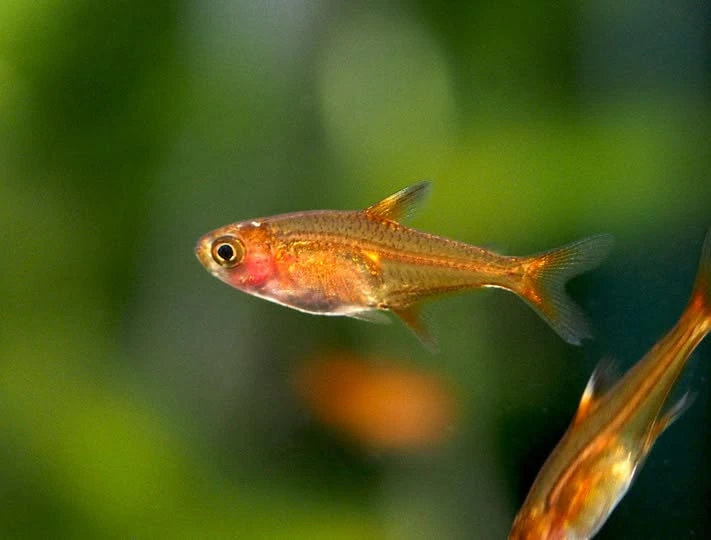
Ember Tetra
Hyphessobrycon amandae
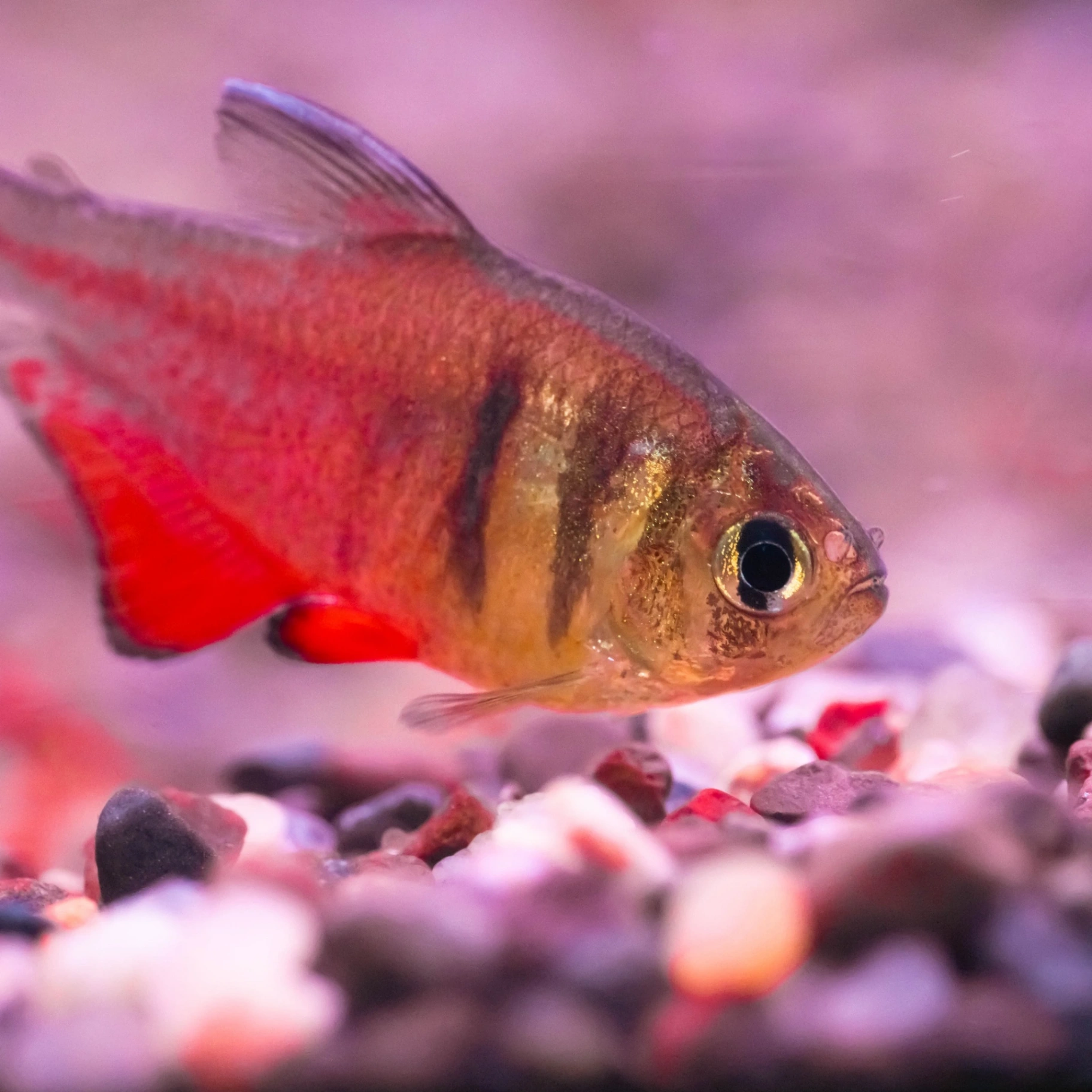
Flame Tetra
Hyphessobrycon flammeus
Ready to Add Buenos Aires Tetra to Your Tank?
Use our free stocking calculator to check compatibility, bioload, and get personalized recommendations.