Tiger Barb Tank Mates: 7 Compatible Species (and 7 to Avoid)
Almost every tank mate list for the Tiger Barb starts in the wrong place, by asking which fish are tough enough to survive them. The variable that actually decides the outcome is how many barbs you bought. A shoal of six spends its energy on whatever else is in the tank; a shoal of twelve spends it on each other, and the same species that shredded a gourami last year becomes an ordinary community fish. What follows treats group size as the primary control and the species list as secondary.
Reviewed by the AquariumStocking team · Updated
The tank size that makes this work
Behaviour and tank size are linked here in a way they are not for most species, because the most effective anti-nipping measure is more barbs rather than fewer. Seventy-five litres, about 20 gallons, holds the shoal alone; a community tank containing them starts higher. Our database puts the tiger barb minimum at 20 gallons.
20 gallons
Enough for a group of six or seven tiger barbs and nothing else worth mentioning. Six is the number where the pecking order is thin and the surplus attention lands on tank mates, so a 20 gallon community with tiger barbs in it is the setup that gives the species its reputation. Keep the tank as a barb-only display and it works well.
Ten to twelve barbs plus one robust mid-water group and a bottom crew. This is the first size where the shoal is large enough to absorb its own aggression, and the difference in tank mate survival between six barbs and twelve in the same tank is not subtle. Length matters more than volume — a long 40 gives chased fish somewhere to go.
A dozen barbs, a second barb or danio species, a catfish group and an algae crew, with room for the whole thing to run as a fast-moving Southeast Asian community. At this size the barbs stop being the tank's problem and become its engine, pulling shy fish out into open water. It is the setup the species is best suited to.
Six is the number printed on shop labels and it is the root of most tiger barb failures. Aggression in this species is directed within the group first, and a small group runs out of internal targets quickly. Twelve barbs redistribute the same behaviour among themselves, and keepers who make this one change usually stop needing a tank mate list at all.
Speed protects better than size
A tiger barb is 7 cm and will test a fish twice its length, so bulk is no defence. What works is a tank mate that simply cannot be caught — danios, other barbs, larger tetras that hold formation and move on impulse. Judge a candidate on how it swims rather than on how big it gets.
Nothing with trailing fins, at any group size
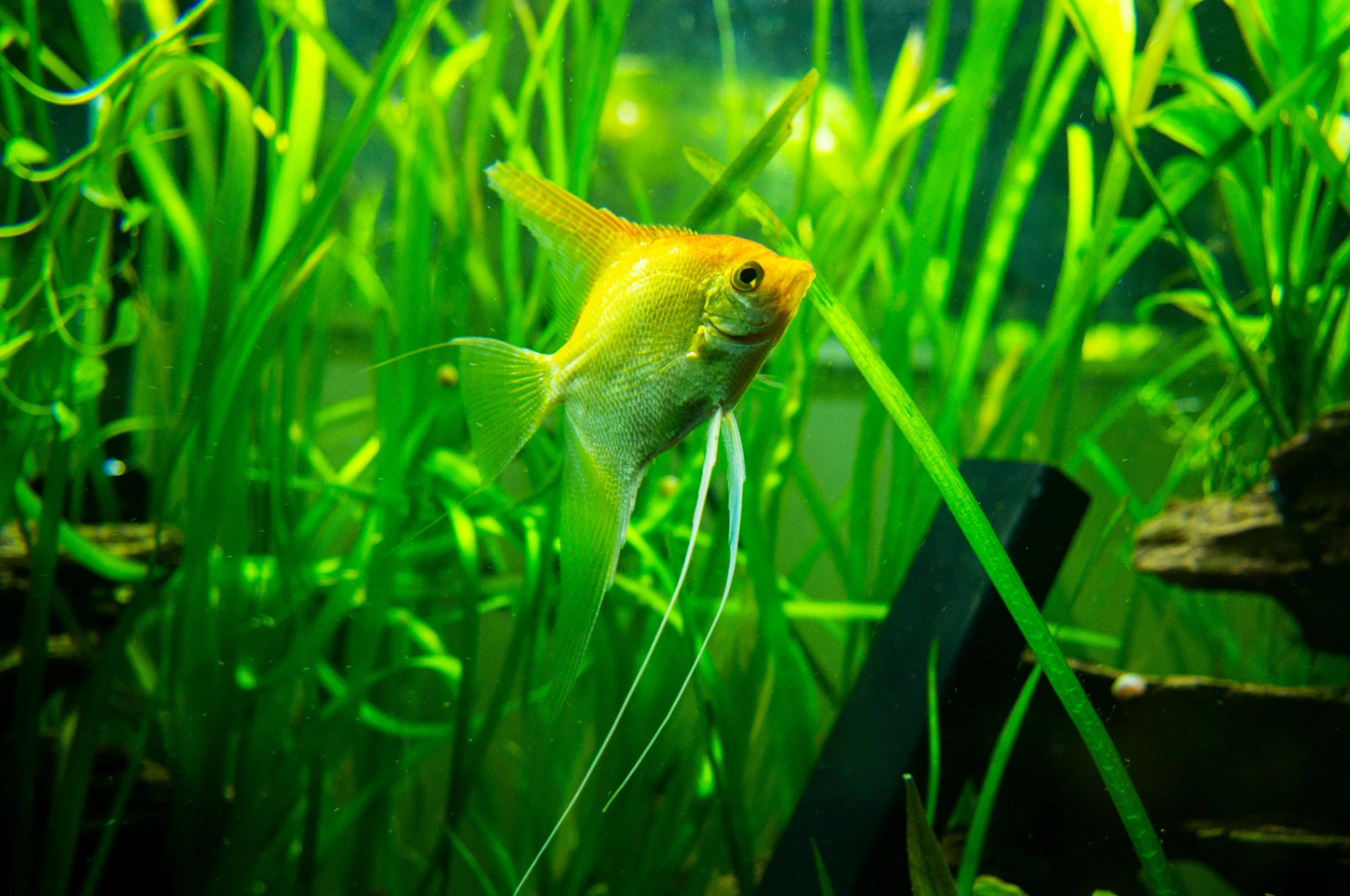
Long fins are the trigger, not the temperament of their owner. Guppies, bettas, angelfish and every fancy-finned variety register as something to pull at, and no amount of shoal management changes that reliably. This is the one rule on the page with no exceptions worth trying.
Occupy the bottom, because the barbs do not
Tiger barbs live in the middle third of the tank and largely ignore the substrate, which leaves the whole floor available. A group of corydoras or a pair of loaches use space the barbs are not competing for, and armoured or thick-bodied bottom fish are difficult to harass in any case. This layer is where the safest additions come from.
Slow eaters will go hungry
Barbs feed like they swim — immediately, and everywhere. Any tank mate that grazes or picks slowly needs food that sinks past the shoal or arrives after lights out, otherwise it thins out while looking healthy for months. Wafers dropped at night solve this for catfish and plecos.
Add the barbs last, not first
A shoal introduced into an established tank spends its first weeks working out its own hierarchy in unfamiliar territory rather than claiming the tank. Reversing the order — barbs first, community afterwards — means every later addition arrives as an intruder into settled ground. The stocking order genuinely changes the result here.
Compatible species, ranked by fit
Seven species fast enough, armoured enough, or low enough in the tank not to care what the shoal is doing.
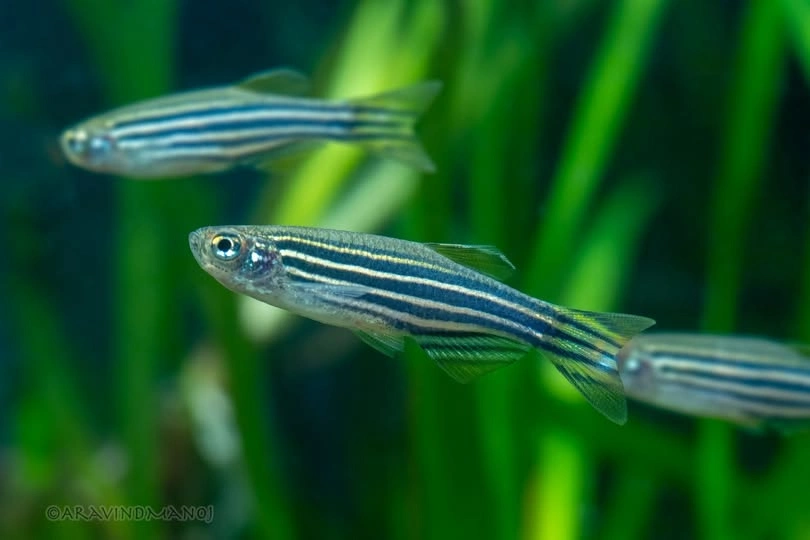
Zebra Danio
Danio rerio
The closest thing to a barb-proof fish: permanently in motion, impossible to corner, and hardy across the same 22–26 °C band. A group of eight keeps to the upper third and the barbs keep to the middle, so contact is brief and inconsequential. They also feed at the same speed, which removes the usual competition problem. The one caveat is that danios are themselves fin-curious, so this pairing suits a tank of short-finned fish rather than a mixed one.
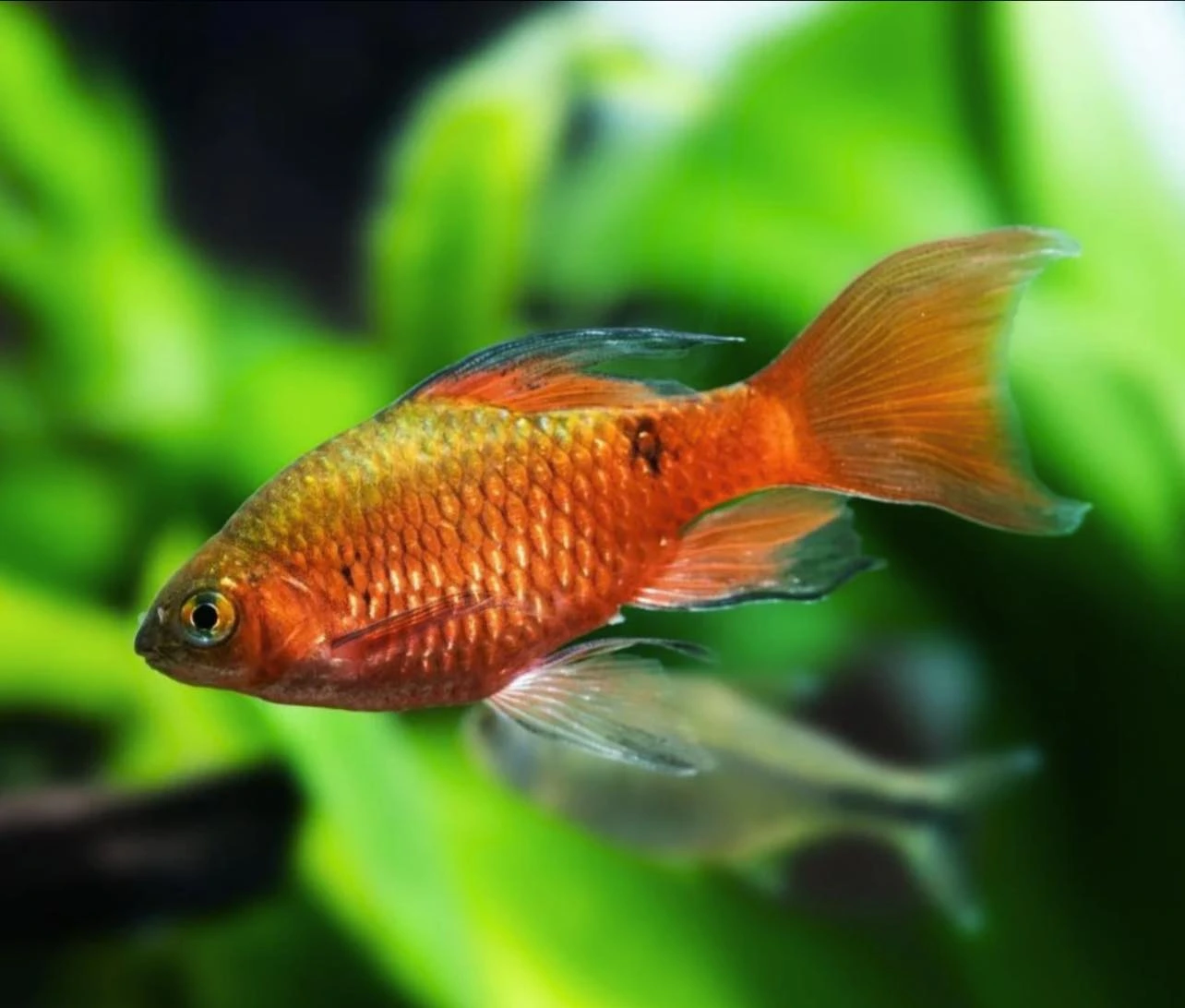
A larger barb from the same behavioural family, which means it reads tiger barb signalling correctly and neither party escalates. At 15 cm it is well beyond nipping range and its own energy gets absorbed into the general activity of the tank. Keep six or more or the rosy barbs become the nippers instead. They prefer the cooler end of the shared range, so run the tank at 23–24 °C rather than 26.
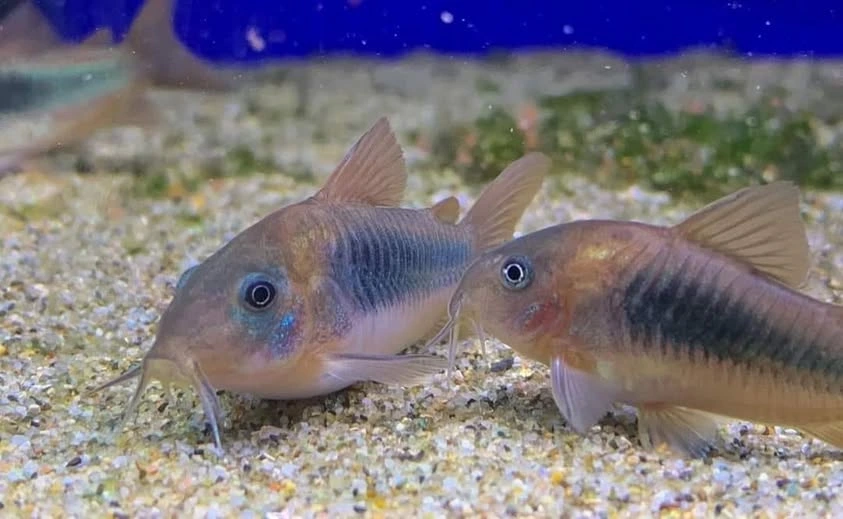
Armoured, bottom-dwelling and completely uninterested in what happens above them, which describes the ideal tiger barb tank mate. Their pectoral spines make them awkward to harass and a group of six spends the day working the sand for food the barbs missed. Feed sinking wafers after lights out or the shoal takes them mid-water. Sand rather than sharp gravel, as always with corydoras.
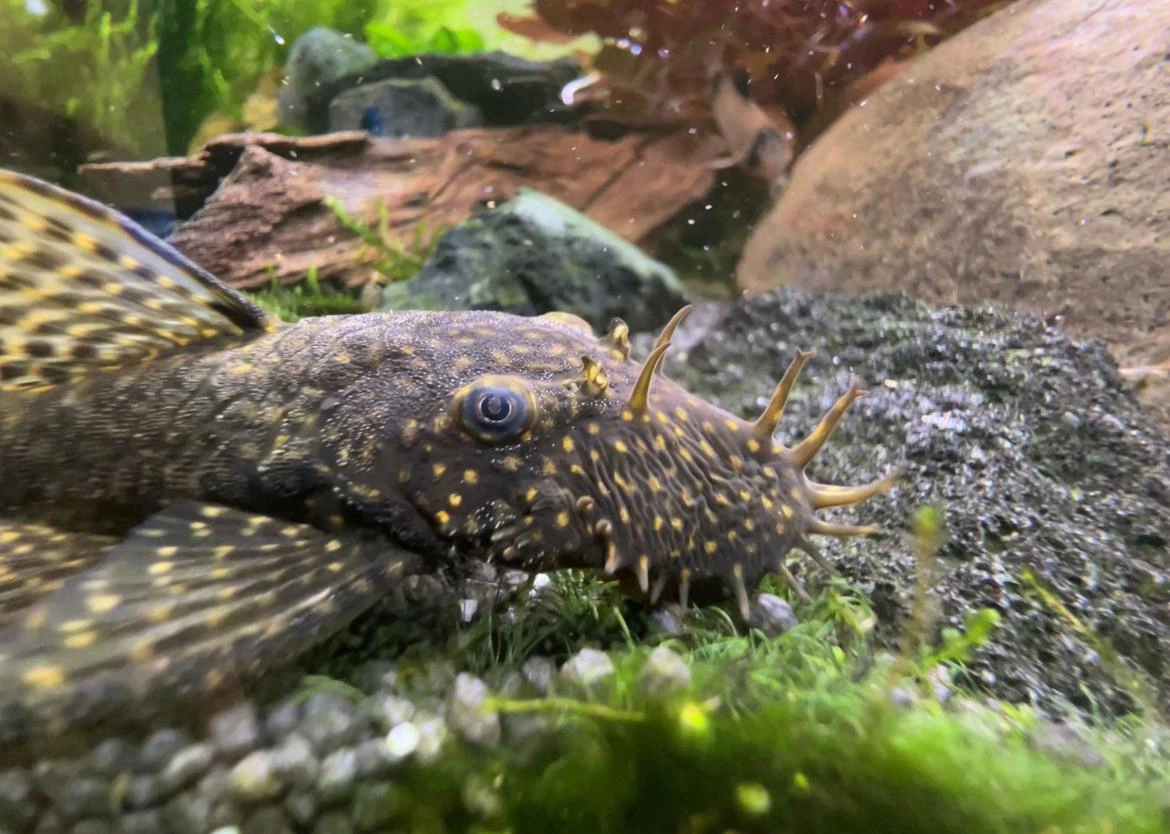
A plated 12 cm algae grazer that a barb can do nothing to, and which spends the day wedged under wood in any case. It handles the same temperature and water range and adds a genuine cleaning function rather than just occupying space. Its bioload is heavier than its size suggests, so account for it before adding one to a 20 gallon. Courgette after lights out keeps it fed in a tank where the barbs clear everything.
A 8 cm tetra with real body depth that shoals tightly and moves as one unit, which is exactly the profile barbs leave alone. It brings colour to the mid-water without the fragility of the small tetras usually suggested for community tanks. The flowing fins on mature males are the one risk, so this pairing needs the barb shoal at ten or more before it is worth trying. Six congos minimum, in a tank at least four feet long.
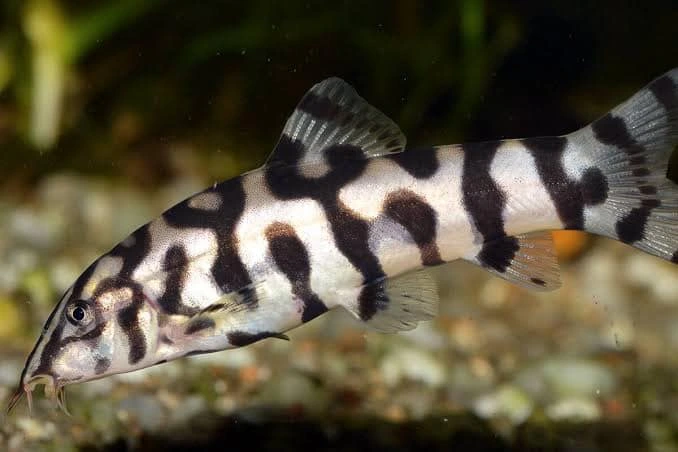
A busy, muscular loach that patrols the bottom and lower rockwork and gives as good as it gets, which in practice means nothing gets started. It shares the temperature range, eats snails and leftover food, and is active enough during the day to be worth watching. Keep five or more — a lone yoyo becomes territorial and a pair fights. Provide caves, because a loach without a retreat is a stressed loach.
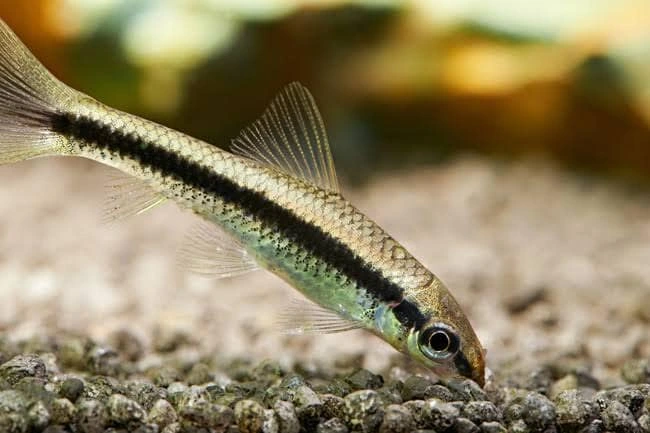
Fast, streamlined and around 14 cm, it moves through the tank on its own business and outpaces anything the barbs attempt. It is the only common algae eater that genuinely eats black beard algae, which earns it a place beyond simply tolerating the shoal. Buy carefully — flying foxes and Chinese algae eaters are sold under the same name and the latter turns aggressive with age. Two or three in a four-foot tank.
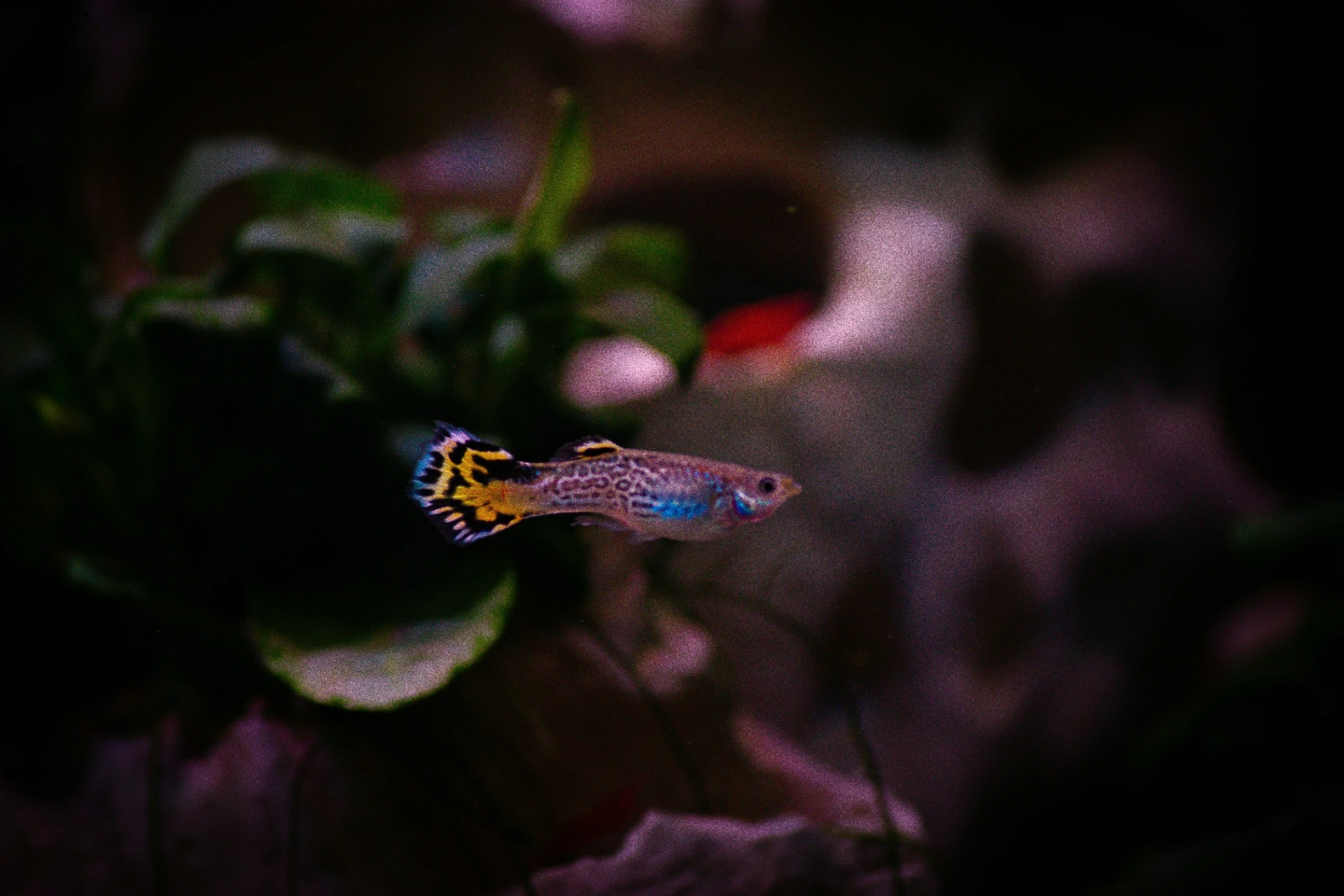
The single most frequently attempted tiger barb pairing and the one that fails fastest. A guppy's tail is large, brightly coloured and slow, which is a precise description of what a barb shoal investigates. Damage usually starts within the first day and the fish is bare-tailed inside a week. No group size, tank length or planting arrangement makes this workable.
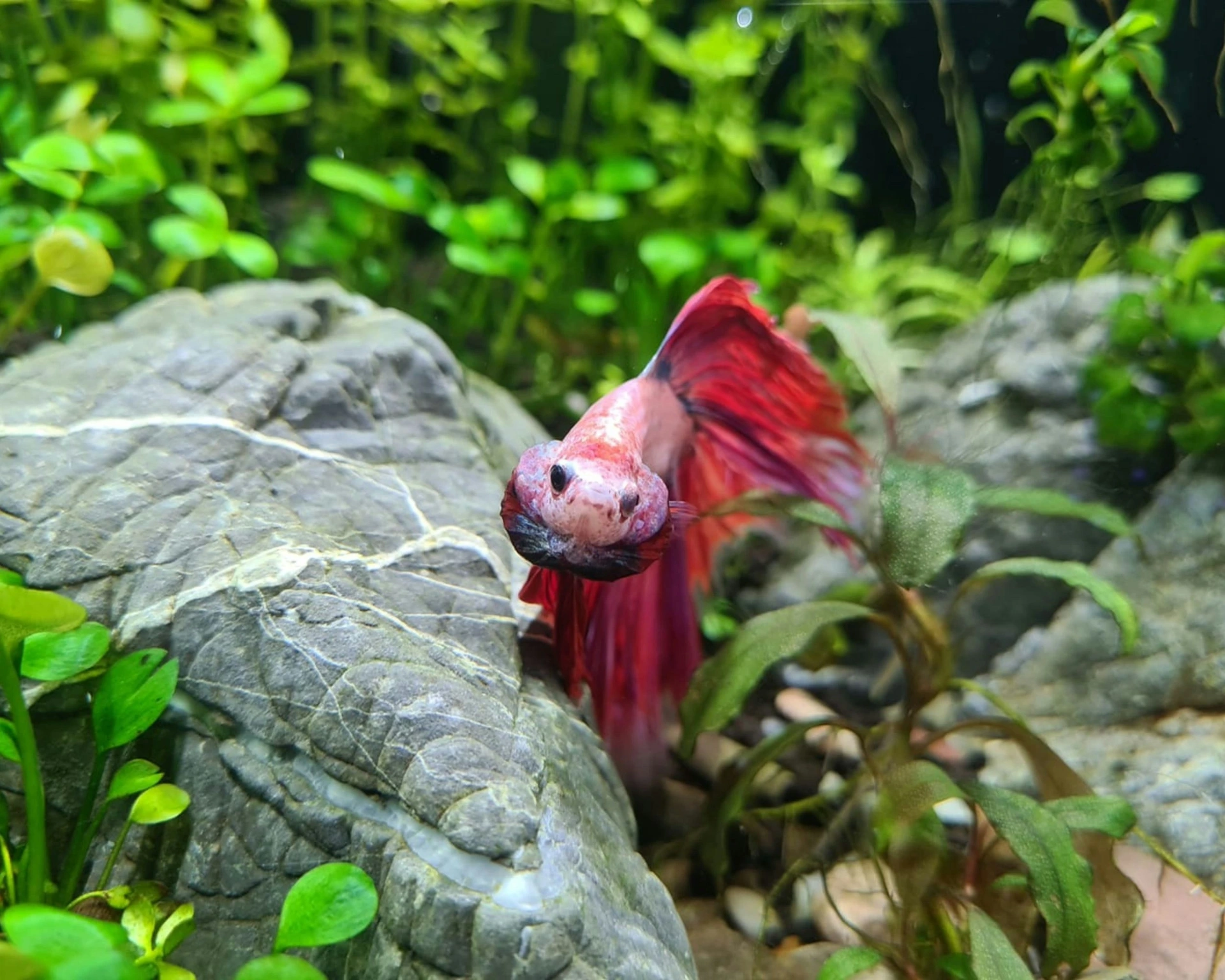
A betta cannot outrun a barb and cannot defend a territory against twelve of them, so it ends up cornered at the surface with its fins reduced. It also wants still water at the warm end of the range, while barbs want flow at the cool end. The two are frequently sold together as a centrepiece plus shoal combination, which is how the pairing keeps happening.
Size does not help here. An angelfish's trailing ventral filaments hang below a body that turns slowly, and barbs strip them methodically until the fish stops feeding. The angelfish then retaliates against smaller tank mates out of stress, so a single bad pairing degrades the whole community. This combination appears on old stocking lists and should not have survived them.
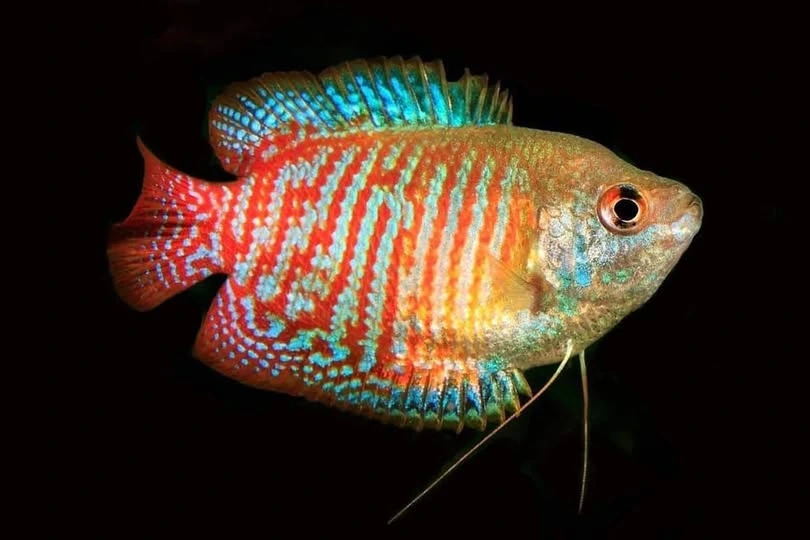
The dwarf gourami's trailing ventral feelers are used to sense its surroundings, and barbs remove them within days. A gourami without them becomes disoriented and stops coming to the surface to feed properly. Add the species' underlying disease problems in the trade and the pairing has no upside worth the risk.
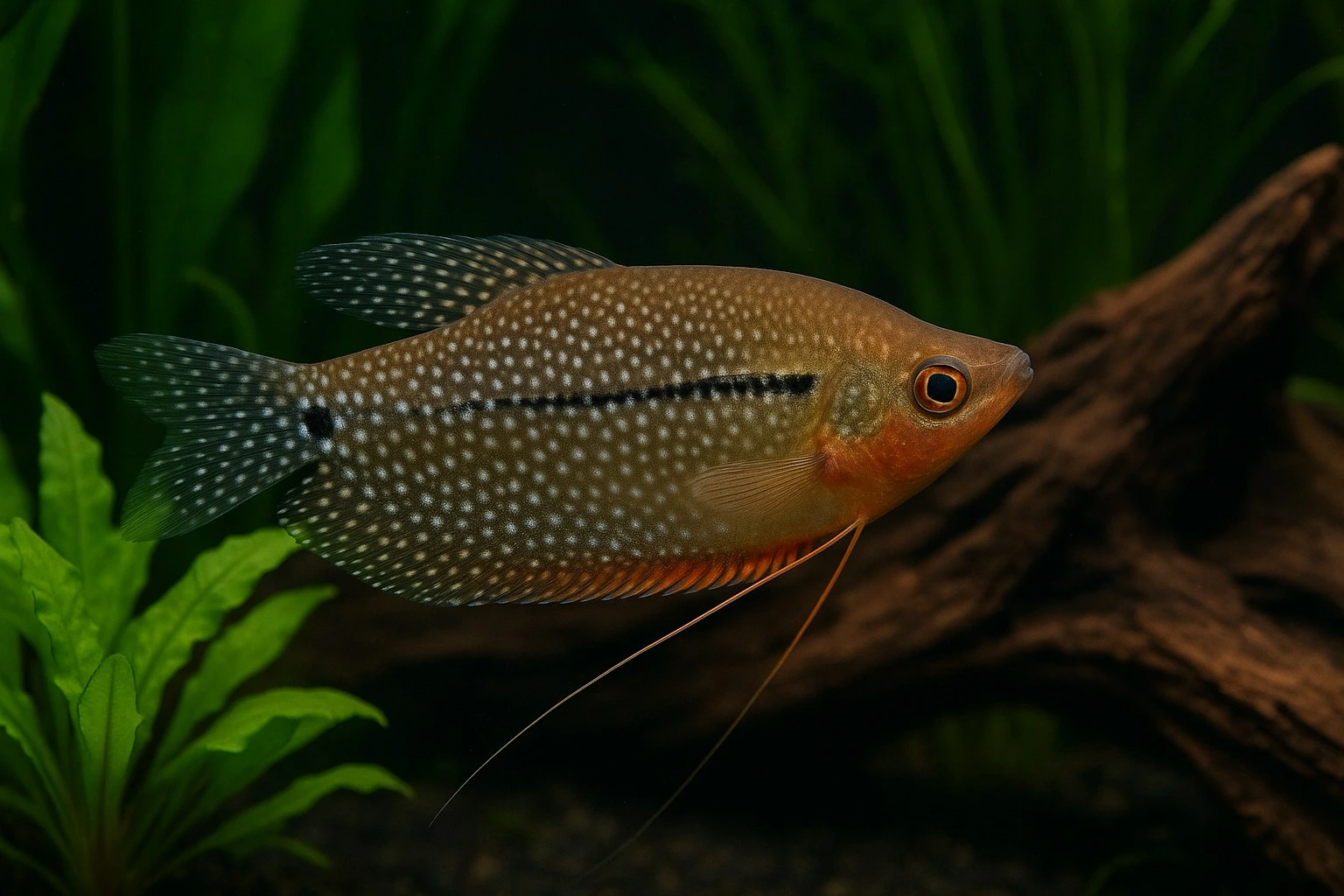
Larger and calmer than a dwarf gourami, and still the wrong choice, because the extended fin rays that make the fish worth keeping are the exact thing barbs pursue. Pearl gouramis also hold station near the surface rather than moving away, so harassment is continuous rather than occasional. Keep them with rasboras and small tetras instead.
A 5 cm fish whose entire appeal is long trailing filaments, kept in a tank with a shoal that pulls at long trailing filaments. It is also slow, delicate and reluctant to compete at feeding time, so it loses on two counts. Threadfins belong in a quiet tank with pygmy corydoras and chili rasboras.
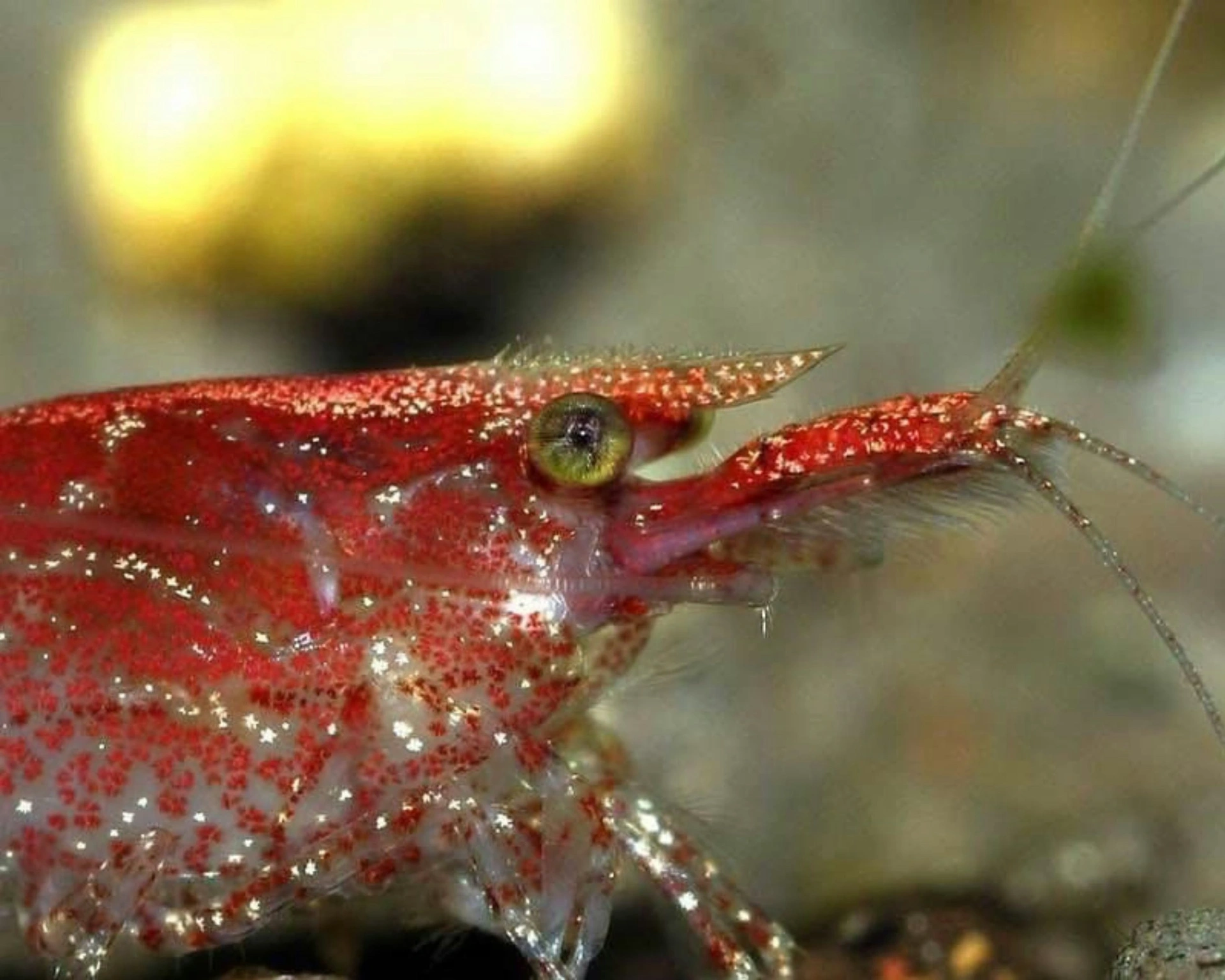
Adult cherry shrimp are occasionally left alone in a heavily planted tank, but every shrimplet produced is eaten immediately, so the colony never establishes. Barbs also learn where shrimp shelter and work moss and driftwood over systematically. If you want a shrimp colony and tiger barbs, you want two tanks.
Two that hold up in a large shoal and struggle in a small one.
Harlequin Rasbora
Trigonostigma heteromorpha
Condition: Only with twelve or more barbs, in a four-foot tank
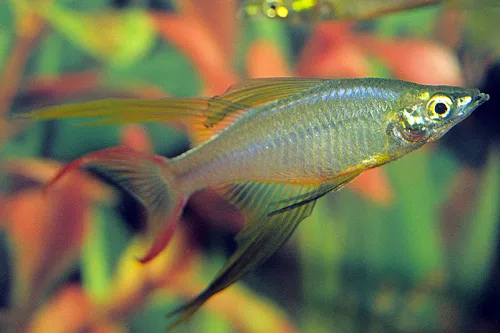
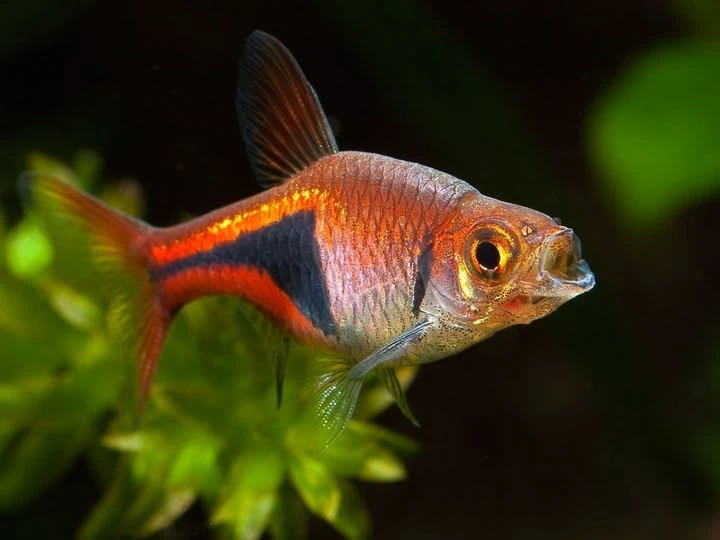
Harlequins are peaceful, quick and shaped like a fish that does not attract attention, and in a well-managed shoal they are ignored entirely. In a group of six barbs they become the default target because they are the next most visible thing in mid-water. The pairing therefore succeeds or fails on your barb count rather than on anything about the rasbora. Keep ten harlequins so the two shoals balance.
Condition: Only short-finned varieties, and expect fry to disappear
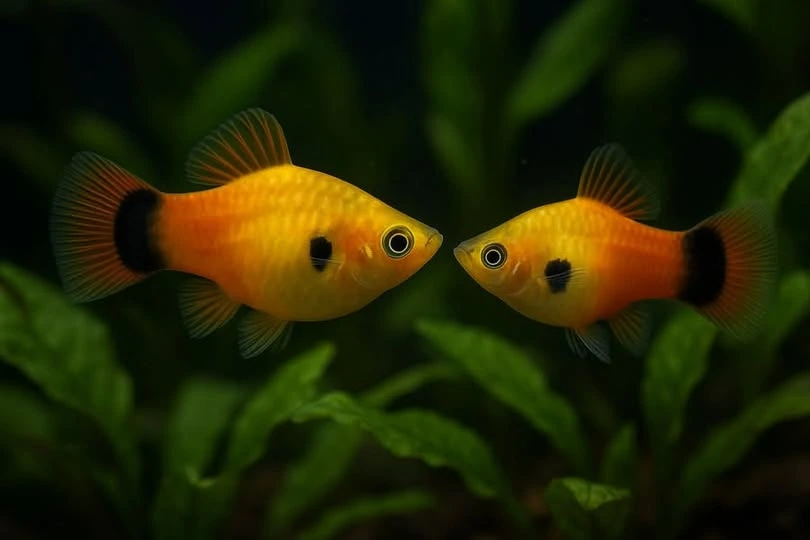
A standard platy is stocky, fast and thick-finned enough to shrug off a passing barb, and the two share water parameters comfortably. Hi-fin and sword-tailed varieties are a different proposition and get worked over within days. Platies also breed constantly, and every fry produced will be eaten by the shoal — which some keepers treat as a feature. Keep more females than males so the pressure is not all on one fish.
Drop your tank size and shortlist into the stocking calculator to check bioload, swim-level balance and compatibility flags.
Frequently asked questions
How many tiger barbs should be kept together?
Ten to twelve, not the six usually recommended. Aggression in this species is directed within the group before it goes anywhere else, and a larger shoal spreads it thin. Keepers who move from six to twelve typically report that fin nipping among tank mates stops altogether.
Are tiger barbs really fin nippers?
Yes, but conditionally. In a small group with long-finned tank mates they are among the most destructive community fish sold. In a shoal of twelve, in a tank of short-finned fast movers, they behave like ordinary barbs. The behaviour is real; the outcome depends on how you set the tank up.
Can tiger barbs live with guppies or bettas?
No. Both are slow, long-finned surface fish and both get stripped, usually within the first week. This is the clearest incompatibility on the page and there is no group size or tank size that changes it.
What size tank do tiger barbs need?
The database minimum is 75 litres, roughly 20 gallons, for the shoal alone. Because the practical fix for nipping is a bigger group rather than a smaller one, a 40 gallon is the realistic starting point for a community tank containing them.
Do tiger barbs need a heater?
Yes. They are tropical fish comfortable at 22–26 °C, and the lower half of that range suits them better than the upper. Running the tank at 23–24 °C also slows their metabolism slightly, which takes some edge off the shoal.
Will tiger barbs eat shrimp?
They will eat shrimplets without exception and will pick at adults in an open tank. A mature cherry shrimp colony in a densely planted tank may hold a small population, but it will not grow. Plan for barbs or shrimp, not both.
Can tiger barbs live with corydoras?
Yes, and it is one of the better pairings available. Corydoras are armoured, stay on the substrate the barbs ignore, and share the same water requirements. Feed them sinking food after lights out so the shoal does not intercept it.