Dwarf Gourami Tank Mates: 7 Compatible Species (and 7 to Avoid)
Two things decide who can live with a Dwarf Gourami, and neither is aggression. The first is that it breathes air and holds the top few centimetres of the tank, so anything else claiming that same strip becomes a rival rather than a neighbour. The second is that it carries fine trailing feelers it uses to feel its way around, and those are the first thing an opportunistic fish removes. There is also an honest health caveat attached to this species that belongs on a page like this, and it is covered below.
Reviewed by the AquariumStocking team · Updated
The tank size that makes this work
A gourami needs a stretch of quiet surface it can call its own, and that is what extra volume buys. Sixty litres, around 15 gallons, is genuinely enough for the fish by itself, but it is not enough for the fish plus a shoal — undersized tanks are where the territorial half of this species shows up. Our database puts the dwarf gourami minimum at 15 gallons.
20 gallons
One dwarf gourami plus one small shoal — eight harlequin rasboras, or a group of pygmy corydoras on the bottom. There is no room for a second labyrinth fish of any kind here, and no room for a second male gourami under any circumstances. Keep the surface partly covered with floating plants and the fish will use the whole tank rather than hovering in one corner.
The comfortable size. One male, a mid-water shoal, a bottom group and an algae crew, with enough footprint that the gourami holds a territory without patrolling the entire tank. A male and two females works here too, provided the planting is dense enough for the females to break line of sight. This is the setup most dwarf gourami keepers should be aiming at.
Room for a proper Southeast Asian community built around one gourami, with two or three shoals at different levels and a substantial planted section. The extra length means a gourami that gets displaced from one end has somewhere to be, which matters if you ever keep more than one. Even at this size, more than one male is a fight postponed rather than avoided.
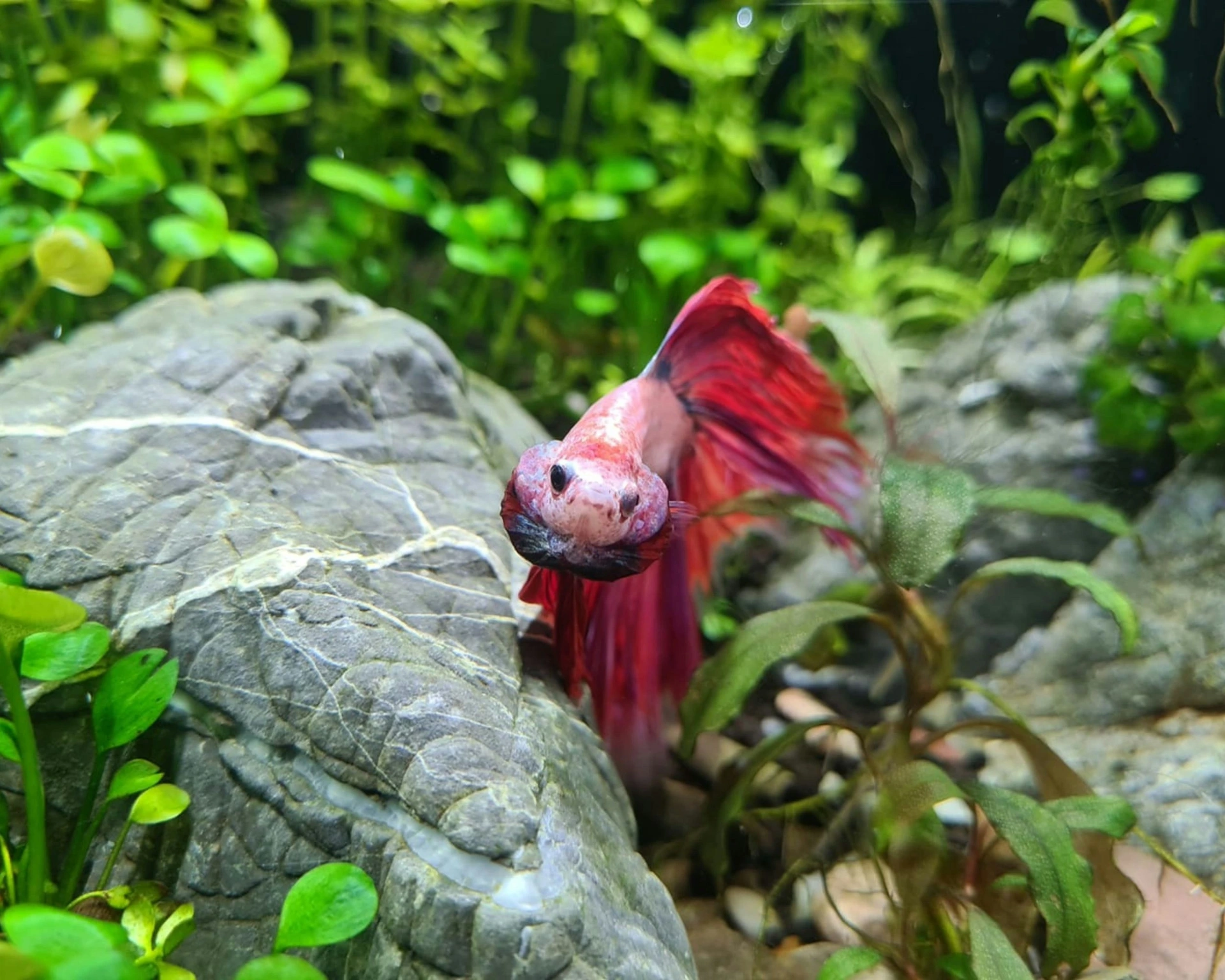
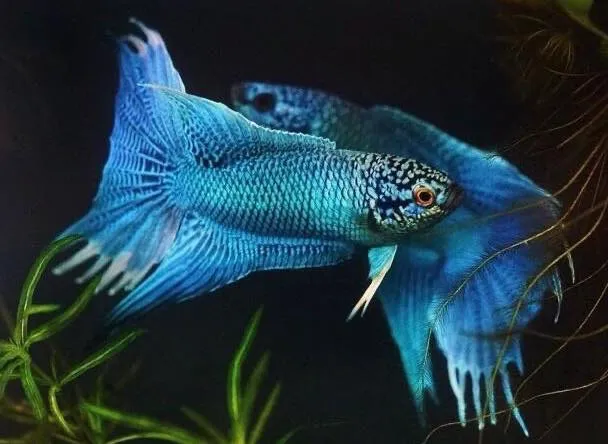
A dwarf gourami works the top few centimetres, gulping air and picking food from the meniscus, and it treats that band as its own. Any other fish that lives there — a betta, a hatchetfish, another gourami — is competing for the same strip in a way that a mid-water tetra never is. Read candidates by the level they occupy before reading their temperament rating.
No other labyrinth fish, including the small ones
Honey gouramis and sparkling gouramis are gentler fish and they are still the wrong answer, because the conflict is over the same niche rather than over relative size. What follows is a male gourami spending the day driving another gourami away from air, which exhausts both. One labyrinth fish per tank is the whole rule.
Its feelers are a target
The two thread-like ventral fins are sensory organs, not decoration, and a fish deprived of them becomes hesitant and feeds poorly. Barbs, serpae tetras and any habitual nipper will strip them, so those species are excluded regardless of how well the rest of the parameters line up. Short-finned peaceful shoals are the safe category.
Buy the fish carefully — iridovirus is real
Dwarf gourami iridovirus is widespread in mass-produced stock and there is no treatment; affected fish decline over weeks with sores, loss of colour and wasting despite good care. It is not caught from tank mates and it is not a water quality failure, though it looks like one. Buy from a local breeder where possible, choose an active fish that is feeding in the shop, and quarantine before adding it to a stocked tank.
Still water, or the fish stops using the surface
Strong outflow at the top of the tank is a practical incompatibility as much as any species on this page, because a gourami pushed around while surfacing stays low and becomes withdrawn. Baffle the filter or angle it downwards, and choose tank mates that do not need heavy flow. That rules out hillstream loaches and most riverine species even where the engine clears them.
Give the tank a lid and a shaded surface
A labyrinth fish breathes air that is warmer and more humid than the room, and a cold draught on the surface causes respiratory problems. Floating plants serve two purposes here: they break up the surface into territories and they make a shy fish confident enough to come out. A tank with an open, bare surface makes this species look far more nervous than it is.
Compatible species, ranked by fit
Seven species that keep to the middle or the floor and have no interest in the surface or in trailing fins.
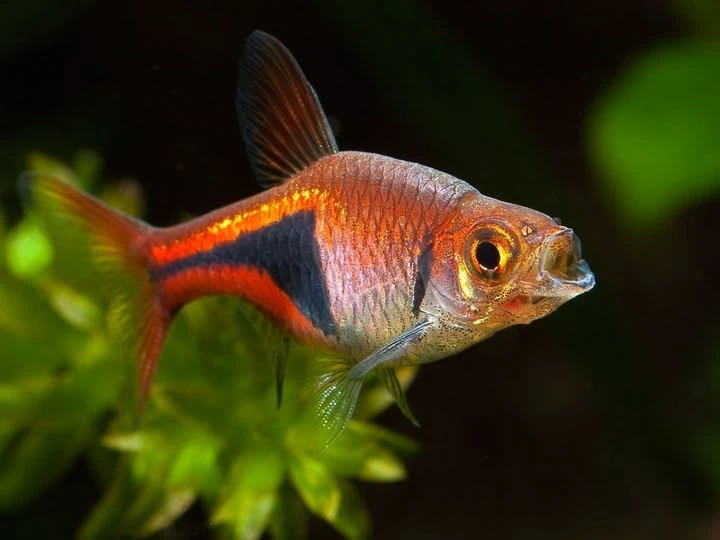
Harlequin Rasbora
Trigonostigma heteromorpha
A mid-water shoal that is peaceful, quick, short-finned and content in exactly the soft, warm, still water a gourami wants. Ten of them occupy the middle third and never rise to the surface band the gourami is holding, so the two share the tank without interacting. They are also confident feeders, which encourages a nervous gourami to come out and eat. There is no meaningful downside to this pairing in a tank of 20 gallons or more.
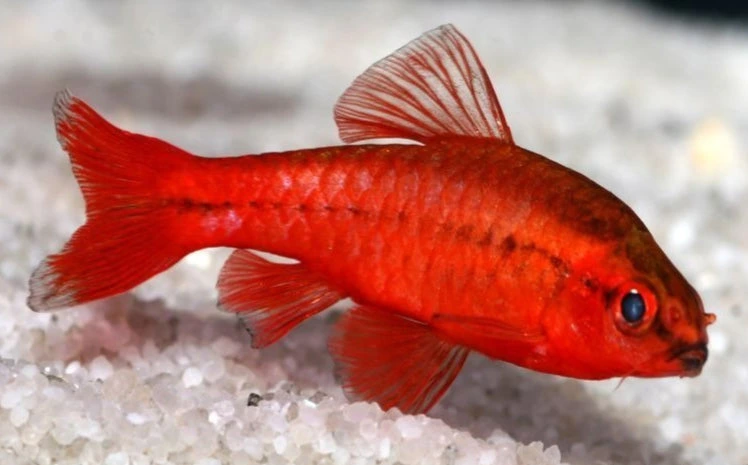
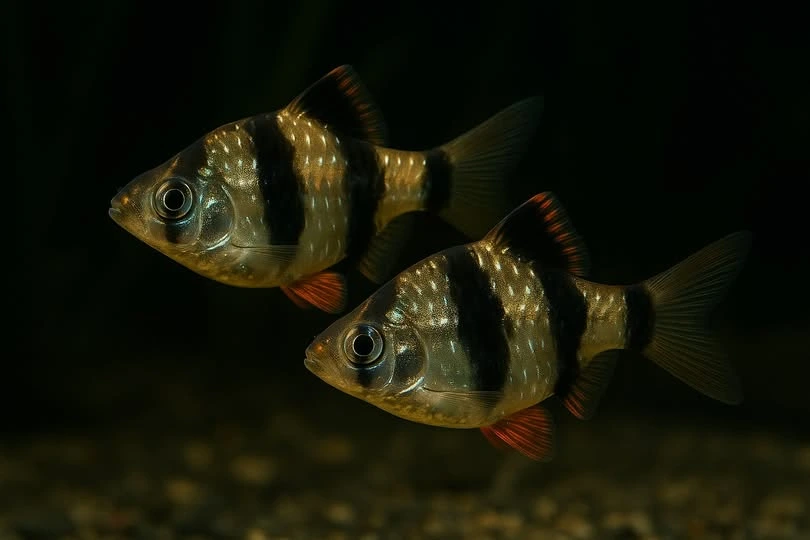
The exception among barbs: a slim, calm 5 cm fish that shoals loosely and has none of the nipping habit its relatives are known for. It stays low in the water column, tolerates the same temperature and pH, and its colour works against a gourami rather than competing with it. Keep six or more, with more females than males, or the males spend their time displaying at each other. In a group of two or three they become the tank's most restless fish.
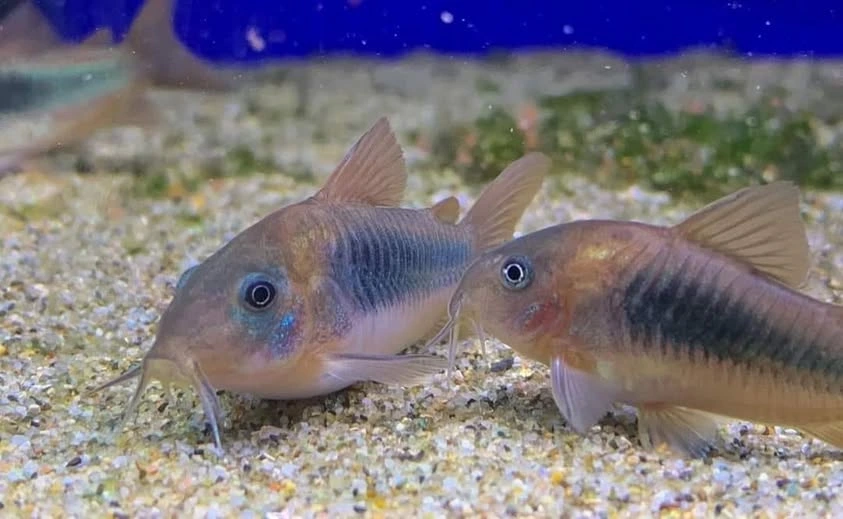
A bottom group is the most useful thing you can add to a gourami tank, because it puts activity in the one layer the gourami never visits. Bronze corydoras are armoured, sociable and completely indifferent to what happens above them. Keep six on soft sand and feed sinking wafers, since a surface-feeding gourami leaves less on the floor than you would expect. They tolerate the warm end of the range that suits the gourami.
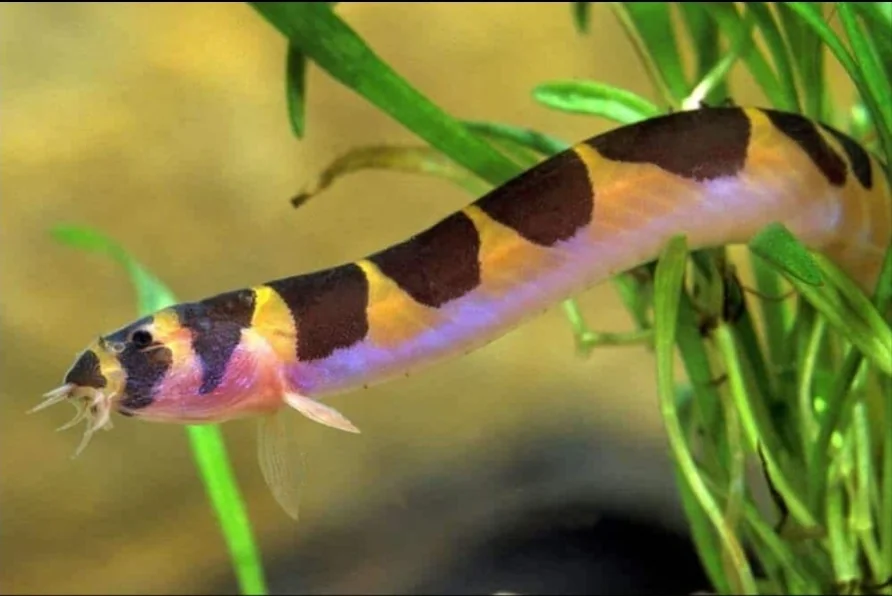
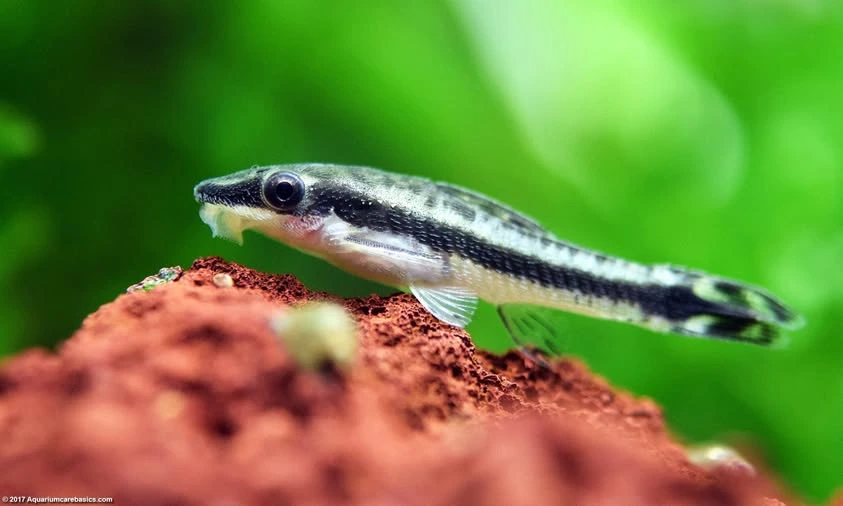
An eel-shaped nocturnal loach that spends the day buried and the night working the substrate, which makes it invisible to a fish that lives at the surface. It wants the same warm, soft, still water and it has no fins worth pulling at. Keep at least five or they never emerge at all, and use sand with plenty of leaf litter and wood. Feed after lights out, because nothing else in the tank will leave food for them.
A 4 cm suckermouth that grazes soft algae off leaves and glass and holds position rather than swimming around, so it never crosses the gourami's territory in a way that registers. It needs a mature tank with real algae growth — a clean new setup starves them, which is the usual cause of losses. Keep six, and supplement with blanched courgette. Its water requirements overlap the gourami's closely.
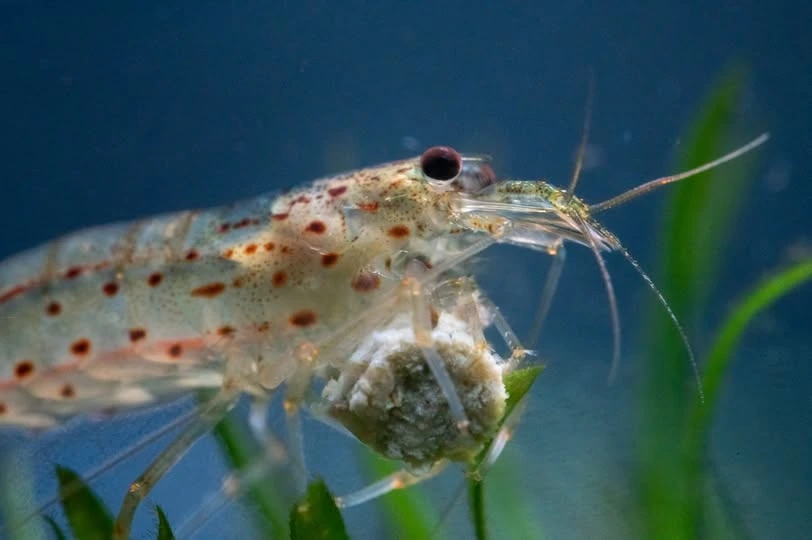
At 5 cm an amano is too large for a dwarf gourami to swallow, which is not true of cherry shrimp, and it works the mid-level plants and hardscape rather than the surface. It clears algae and uneaten food efficiently in a tank whose main occupant feeds at the top. Expect the gourami to investigate one occasionally without doing damage. Provide moss and hiding places for moulting and the colony holds up indefinitely.
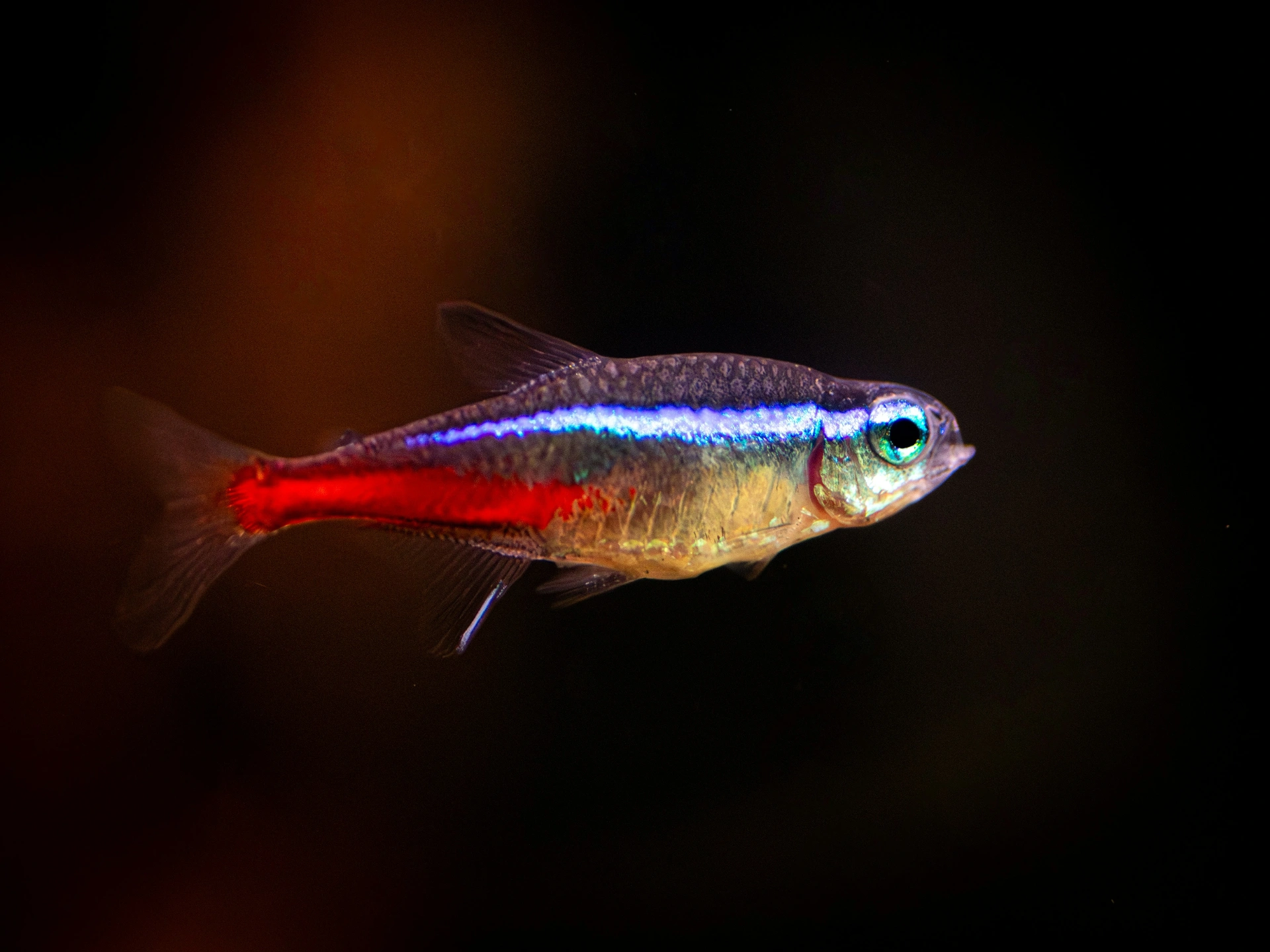
The standard choice, and here it is genuinely right: a small, fast, short-finned shoal that occupies mid-water and shares the gourami's preference for soft, warm, gently filtered water. A group of ten moves as a block and gives the tank movement at a level the gourami is not defending. Buy from a good source, as mass-bred neons are fragile and the losses tend to come in the first month. Nothing about the pairing needs managing after that.
Two air-breathing fish, both males, both claiming the surface of the same tank — the outcome is decided by which one is more committed rather than by size. Fights are frequently fatal and the winner is not predictable. Shops display them side by side, which is where the idea that they can be combined comes from.
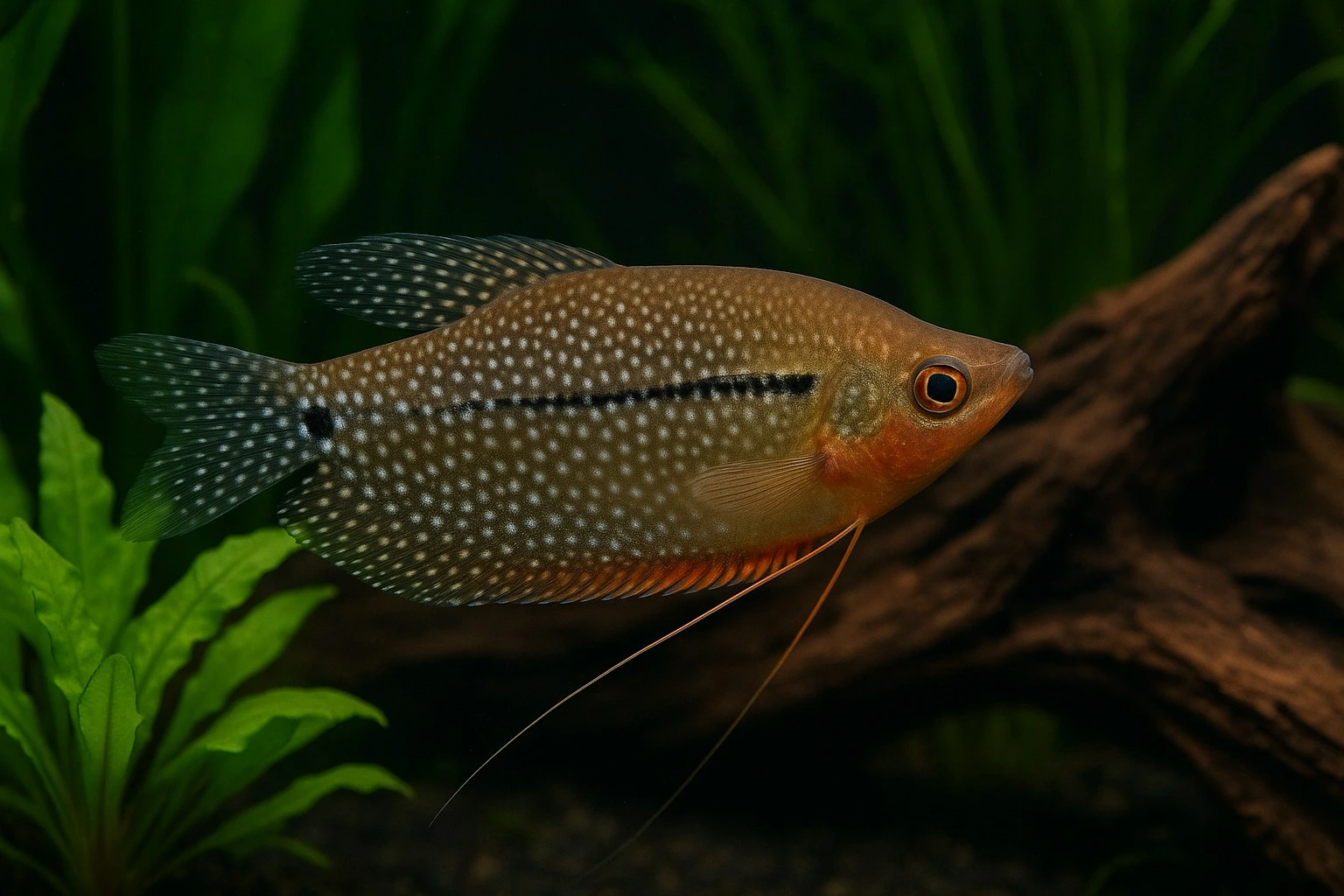
Larger and generally milder, but still a labyrinth fish laying claim to the same strip of surface. A pearl gourami will win the territory and a dwarf gourami will spend its day avoiding it, which shows up as a fish that hides and stops eating rather than as visible conflict. Keep one gourami species per tank.
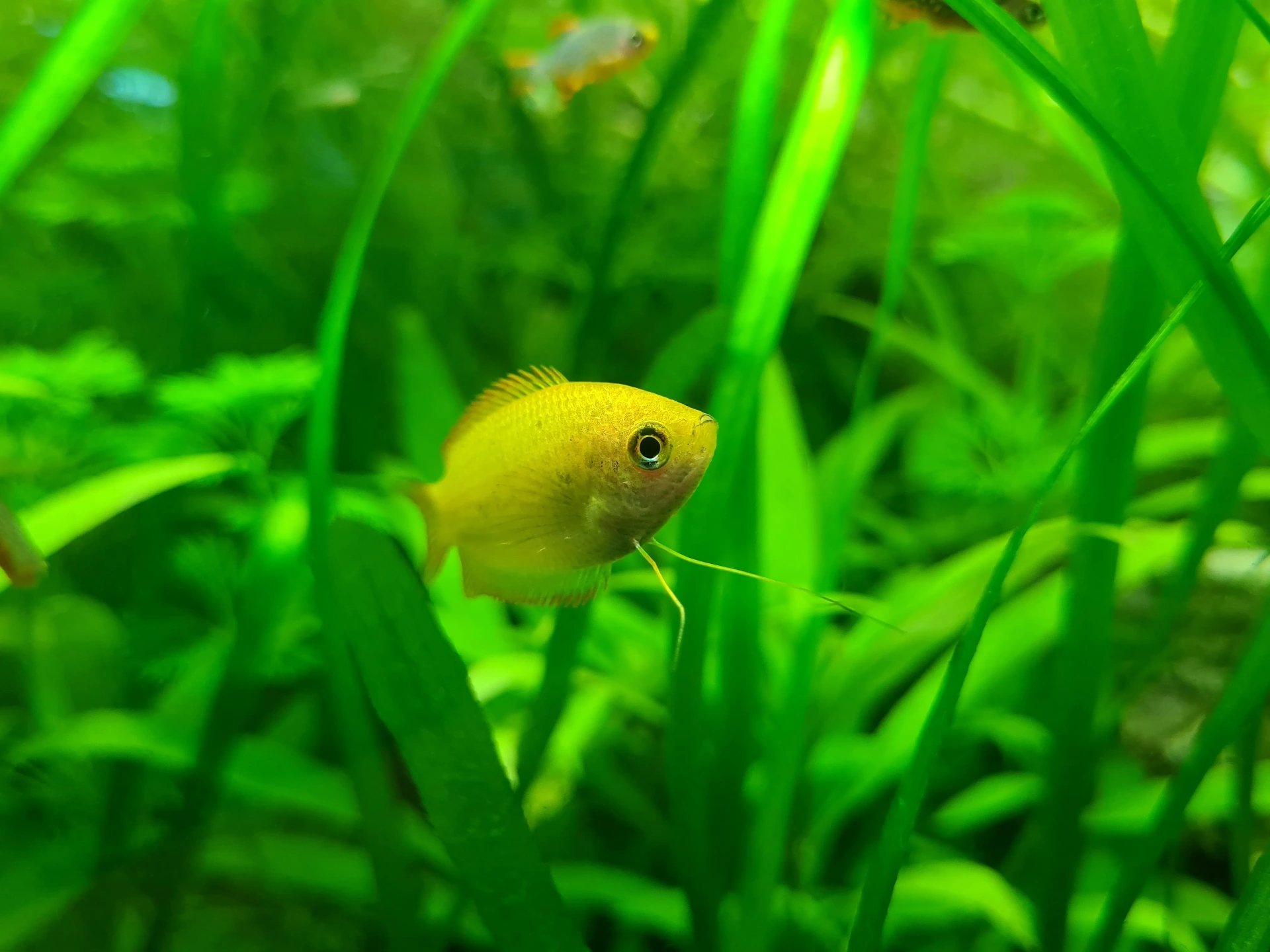
The gentlest gourami commonly sold, and still excluded on the same grounds. Honeys are smaller and are the ones that lose, ending up pressed into a corner near the filter outflow. The pairing is suggested often because both are described as peaceful, which mistakes temperament for niche.
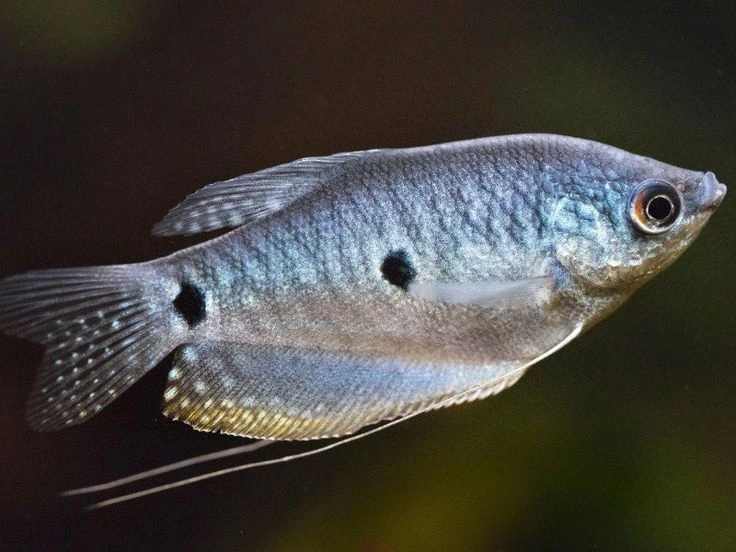
Reaches 15 cm and grows noticeably pushy with age, which turns a shared surface into a one-sided arrangement quickly. It is also strong enough to injure a dwarf gourami rather than merely displace it. Blue, gold and opaline gouramis are all the same fish sold under different colour names, so the exclusion covers all of them.
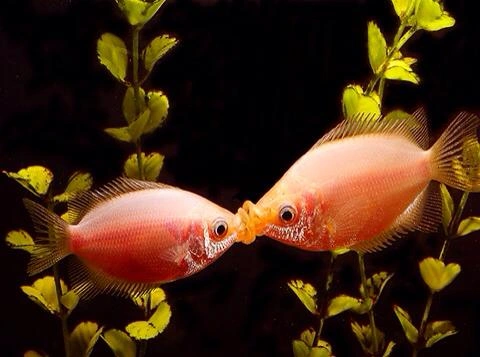
Sold at the same size on the same shelf and finishing at 30 cm, four times the length of a dwarf gourami and with a grazing mouth that tests anything slow. It takes the surface completely, so the smaller fish loses access to air as well as to food, and its feelers are an obvious target. If you want a large gourami, build the tank around it instead — see the kissing gourami profile for what an adult actually needs.
A labyrinth fish that is genuinely aggressive rather than merely territorial, and one that prefers cooler water than a dwarf gourami should be kept in. It will pursue a gourami persistently and there is no tank layout that stops it. Paradise fish do best in a species tank or a large cool community.
The gourami's ventral feelers are removed within days by a barb shoal, and a fish that has lost them navigates and feeds badly. Barbs also feed fast and low, so the gourami arrives second at everything. This is the most common cause of a dwarf gourami declining in a community tank that otherwise looks well set up.
Two that work in the right tank and cause problems in the wrong one.
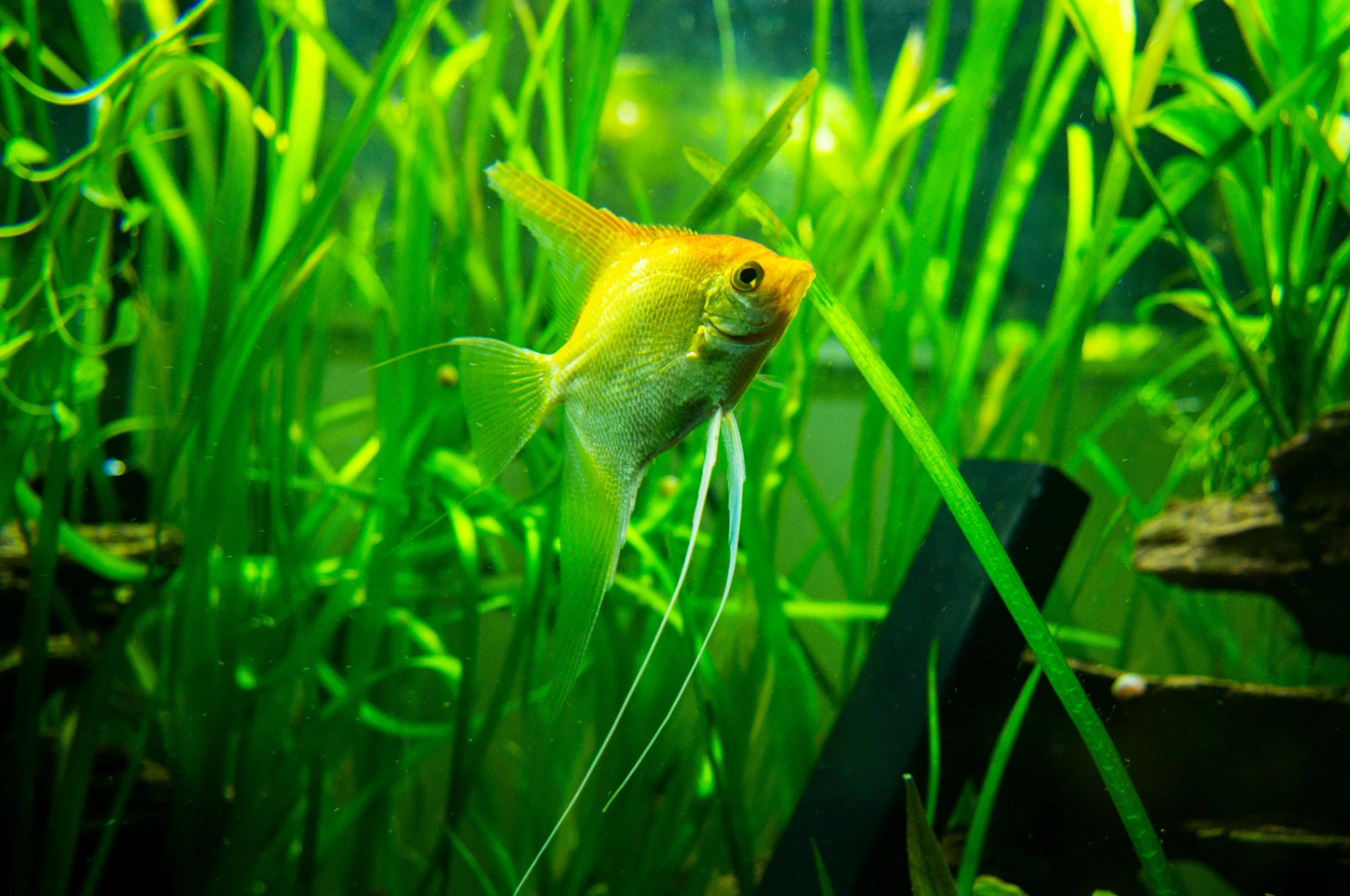
Angelfish
Pterophyllum scalare
Condition: Only in a 55 gallon or larger, with dense planting
Both are calm fish and the water parameters match, so on paper this looks straightforward. The problem is that an adult angelfish also claims vertical space in the upper half of the tank, and a gourami that gets pushed out of the surface band has nowhere else to breathe. In a long, heavily planted tank with broken sight lines it works; in a standard four-foot tank with open water it usually resolves in the angelfish's favour. Watch the gourami's feeding rather than looking for obvious fighting.
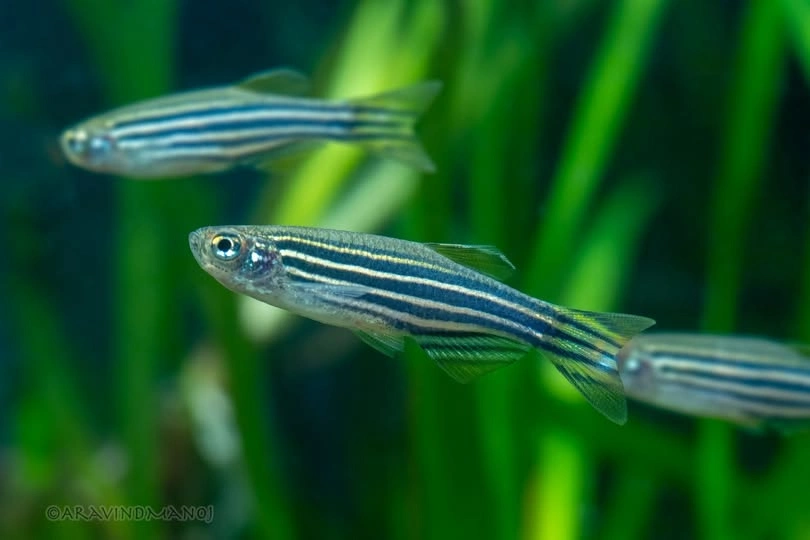
Danios are hardy, harmless and share the temperature range, but they are relentlessly active and they spend much of their time high in the water column. A shy gourami in a short tank reads that constant movement overhead as pressure and stays hidden. Given length, the danios use one end and the gourami holds the other, and the pairing is fine. Keep at least eight so their attention stays on each other.
Drop your tank size and shortlist into the stocking calculator to check bioload, swim-level balance and compatibility flags.
Frequently asked questions
Can two dwarf gouramis live together?
Two males, no. A male with two or three females can work in a 30 gallon or larger with dense planting, because the females can break line of sight when he displays. In a smaller tank even that arrangement leaves one fish permanently cornered.
What is dwarf gourami iridovirus and can I avoid it?
It is an incurable viral disease widespread in mass-produced dwarf gouramis, causing sores, colour loss and wasting over several weeks. It is not caused by poor care and cannot be treated. Buying from a local breeder rather than a chain supplier, choosing a fish that is actively feeding, and quarantining before introduction are the only practical defences.
What size tank does a dwarf gourami need?
Our database puts the minimum at 60 litres, about 15 gallons, for a single fish. A 20 gallon is the realistic floor once a shoal is added, and 30 gallons is where the fish stops behaving territorially towards its tank mates.
Why does my dwarf gourami stay at the surface?
Some of it is normal — it is an air breather and belongs in the top of the tank. Constant hovering in one corner without feeding is different and usually means either strong surface flow pushing it around, an open unplanted surface leaving it exposed, or another surface-claiming fish it is avoiding.
Can dwarf gouramis live with shrimp?
Amano shrimp yes, cherry shrimp with reservations. An amano at 5 cm is too large to be eaten, while cherry shrimp and their young are the right size for a gourami's mouth and the colony gradually disappears. Heavy moss planting slows the losses without stopping them.
Do dwarf gouramis need a lid?
Yes. A labyrinth fish gulps air at the surface, and a cold draught over an open tank chills that air and causes respiratory problems. A lid also keeps humidity above the water, which is what the organ is adapted to.
Are dwarf gouramis aggressive?
Towards other surface-dwelling and labyrinth fish, yes. Towards a mid-water shoal or a bottom group, essentially never. The species is mislabelled as either peaceful or aggressive when what it actually is is territorial about one specific layer of the tank.