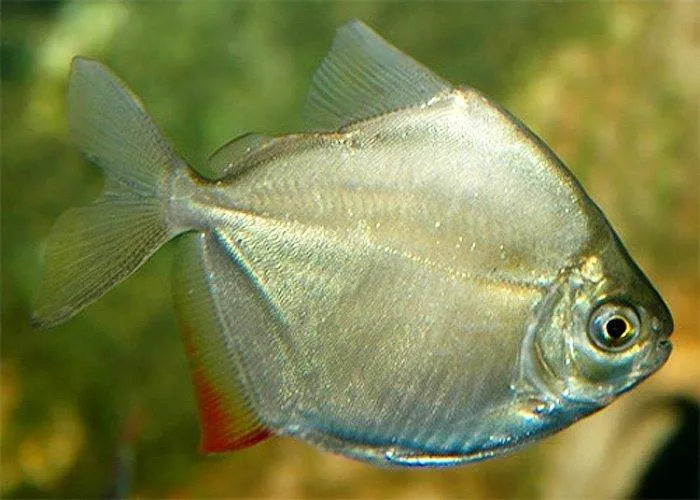
Silver Dollar
The natural partner: same adult size, same open-water habits, same appetite for plants, so nothing is lost that was not already going to be eaten.
Adult Size
11.8" (30cm)
Min Tank
75 gal
Temperature
72-82°F
pH Range
6-8
Lifespan
15-25 years
Min Group
Can be kept alone
Diet
Omnivore
Swim Level
Middle
Bioload
4/10
Hardness
5-20 dGH
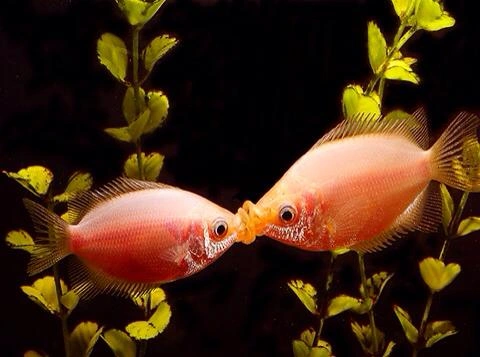
The Kissing Gourami's signature behavior — two fish pressing their fleshy lips together — looks romantic but is actually a trial of strength between rivals. These lip-locks are dominance displays, not affection. The misconception has made them popular impulse purchases, often by people expecting small, peaceful community fish. They're neither.
Adults reach 10-12 inches in aquariums (larger in ponds), transforming from cute 2-inch juveniles into substantial fish requiring 75+ gallon tanks. This growth catches many keepers off guard. Combined with their 15-25 year lifespan, Kissing Gouramis represent a serious long-term commitment that impulse buyers rarely anticipate.
Their unusual mouth structure — thick, fleshy lips lined with fine teeth — serves their grazing lifestyle. In the wild, they scrape algae and biofilm from surfaces, supplementing with plant matter and small invertebrates. This makes them effective algae controllers but also means they'll consume soft-leaved plants. Planted tanks and Kissing Gouramis don't mix well.
Two color forms dominate the trade: the pink (leucistic) form most commonly sold, and the green (wild-type) form occasionally available. Pink specimens lack the camouflage coloration of wild fish but are otherwise identical in care and behavior. Both forms display the characteristic lip-locking when housed together or with their reflections.
Kissing Gouramis inhabit slow-moving waters across Southeast Asia — Thailand, Indonesia, Malaysia, Vietnam, and Cambodia. They occupy rivers, lakes, ponds, and flooded areas with abundant vegetation and organic matter to graze upon.
Their native waters are typically warm, often turbid, and rich in plant growth. As labyrinth fish, they can breathe atmospheric air, allowing survival in oxygen-poor conditions that stress other species. This adaptation suits stagnant ponds and vegetation-choked backwaters.
Wild populations are commercially important as food fish, particularly in Thailand where aquaculture is well-established. The species' tolerance of poor conditions and omnivorous diet makes farming straightforward. Aquarium specimens are typically captive-bred rather than wild-caught.
Their grazing ecology shapes behavior — they spend considerable time working over surfaces, scraping food with their specialized lips. This natural foraging should be accommodated in captivity through surfaces that develop algae and biofilm.
Native Region
Southeast Asia — Thailand, Indonesia, Malaysia, Vietnam, Cambodia
Habitat Type
Slow rivers, lakes, ponds, flooded areas
Wild Water Conditions
Warm (22-28°C), variable hardness, often turbid
The Kissing Gourami's most distinctive feature is its mouth — protruding, fleshy lips lined with fine horny teeth for scraping surfaces. This unique mouth structure enables their grazing lifestyle and characteristic 'kissing' displays. No other common aquarium fish shares this lip morphology.
Body shape is laterally compressed and deep-bodied, typical of gouramis but more robust than most relatives. Adults reach 10-12 inches (25-30 cm) in aquariums — substantially larger than most gourami species kept in home tanks.
Two color forms exist: the pink form (most common in trade) displays pale pink to flesh coloration resulting from leucism — reduced pigmentation rather than true albinism, as they retain dark eyes. The green form shows olive-green to silvery coloration with darker lateral markings, representing wild-type pigmentation. Both forms show slight iridescence under good lighting.
Sexing is difficult — no reliable external differences exist outside breeding condition. Mature females may appear fuller-bodied when carrying eggs, but determination typically requires observing breeding behavior.
| Variety | Description | Rarity |
|---|---|---|
| Pink (Leucistic) | Pale pink to flesh-colored body lacking wild-type pigmentation. Dark eyes distinguish from true albinos. The dominant form in aquarium trade. | Very Common |
| Green (Wild-Type) | Olive-green to silver body with darker lateral markings. Natural coloration providing camouflage. Less common in trade but occasionally available. | Uncommon |
| Balloon | Selectively bred for shortened, rounded body shape. Controversial form with potential health implications. Available but not recommended. | Uncommon |
Minimum Tank Size
75 gallons
Recommended Tank Size
100 gallons
Kissing Gouramis require significantly larger tanks than most gourami species. Their adult size and active grazing behavior demand space that surprises keepers expecting a typical community gourami.
Remarkably adaptable to various water conditions — one reason they're farmed successfully. They tolerate soft acidic through moderately hard alkaline water. Temperature stability matters more than hitting specific targets. Their hardiness shouldn't excuse poor maintenance.
Sand or gravel both work. They don't interact much with substrate beyond occasional foraging. Choose based on other considerations or tankmate needs.
Provide surfaces that develop algae and biofilm for natural grazing behavior. Large driftwood pieces and smooth rocks work well. Avoid sharp decorations that could injure their fleshy lips during grazing. Kissing Gouramis consume soft-leaved plants enthusiastically — stick to tough species like Java Fern, Anubias, or plastic alternatives.
Their size means significant waste production. Robust filtration is necessary — canister filters or appropriately-sized HOB filters. They tolerate moderate current but don't require high flow. Good biological filtration capacity is essential.
No special requirements. Moderate lighting encourages algae growth on surfaces, providing natural grazing opportunities. They're not light-sensitive.
Diet Type
omnivore
Feeding Frequency
1-2 times daily
Portion Size
What they'll consume in a few minutes. Include regular vegetable offerings. Allowing tank surfaces to develop some algae provides ongoing natural grazing opportunities.
Kissing Gouramis are true omnivores with strong herbivorous tendencies. Their specialized lips evolved for grazing, and diet should reflect this natural feeding style.
Their herbivorous tendencies mean plant matter should feature prominently in diet. Regular offerings of blanched vegetables prevent digestive issues.
The signature 'kissing' behavior involves two fish pressing their lips together and pushing — a strength contest between rivals. Both males and females engage in this behavior. The lip-locking can escalate from brief displays to prolonged wrestling matches. Despite the apparent aggression, serious injury is uncommon.
Beyond lip-locking, they're moderately territorial fish that may harass tankmates, particularly fish of similar size or shape. Slow-moving fish and long-finned species may be targeted. They're not as aggressive as some cichlids but shouldn't be considered peaceful community fish.
Their grazing behavior is constant and entertaining — watching them methodically work over surfaces with their specialized lips demonstrates their ecological niche. They'll graze tank glass, decorations, and unfortunately plants with equal enthusiasm.
As labyrinth fish, they breathe atmospheric air and regularly visit the surface to gulp. Ensure surface access isn't blocked by floating plants or decorations. This behavior is normal, not a sign of oxygen problems.
The fish sold at two inches is a foot-long herbivore that can still be alive in twenty years, and the stocking decision has to be made for that animal rather than the one in the bag. Adults rasp surfaces, lip-lock with anything their own shape, and strip soft plants. Choose tank mates that will still be an appropriate size in five years.
The natural partner: same adult size, same open-water habits, same appetite for plants, so nothing is lost that was not already going to be eaten.
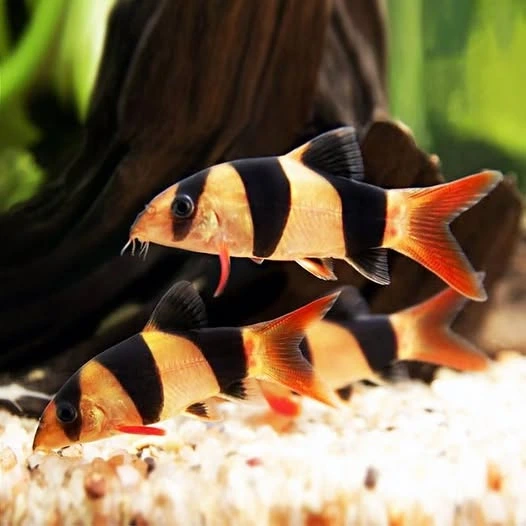
A loach that reaches 30 cm and lives as long as the gourami does, which solves the commitment problem better than any other fish on the list.
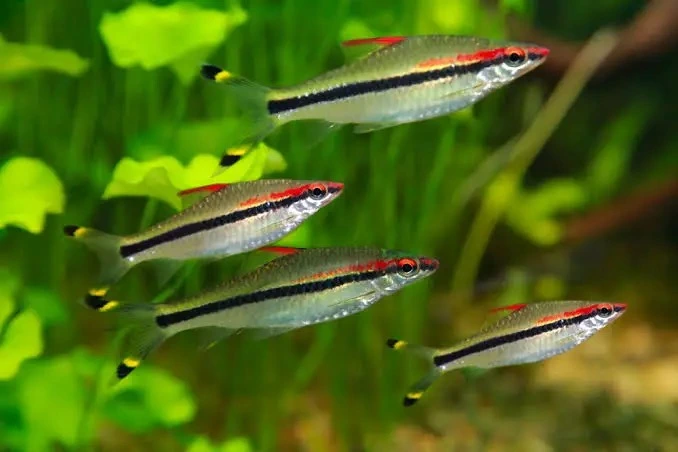
Fast, torpedo-shaped and 15 cm at maturity — a fish the gourami cannot catch and would not recognise as a rival.
Also compatible: Giant Danio, Bristlenose Pleco, Striped Raphael Catfish, Boesemani Rainbowfish
Also avoid: Dwarf Gourami, Honey Gourami, Amano Shrimp, Cherry Shrimp
Full Kissing Gourami tank mates guideKissing Gourami breeding is achievable but less common in home aquariums than with smaller gouramis. They don't build bubble nests like most gouramis — eggs are released freely among floating plants.
Sexing is difficult outside breeding condition. Females carrying eggs appear fuller-bodied. Conditioning with quality foods and slightly warmer temperatures may trigger spawning.
Spawning involves typical gourami embraces beneath floating plants. Eggs are released in batches, floating to the surface or attaching to plants. Unlike bubble-nesting gouramis, there's no nest construction or parental care. Parents may eat eggs if not removed.
Eggs hatch in approximately 24 hours. Fry are tiny and require infusoria or commercial fry food initially, graduating to baby brine shrimp.
Kissing Gouramis are hardy when their space and dietary requirements are met. Most health issues stem from inadequate tank size, poor diet, or standard aquarium diseases.
| Disease | Symptoms | Treatment |
|---|---|---|
| Ich (White Spot) | White spots on body and fins, flashing against objects, clamped fins. | Raise temperature to 30°C (86°F) and add aquarium salt, or use commercial ich medication. |
| Bacterial infections | Fin rot, body sores, redness, lethargy. | Improve water quality. Antibacterial medication for serious cases. |
| Hole-in-the-head (HITH) | Pitting, lesions on head and lateral line. | Improve diet (more vegetables/vitamins), improve water quality. |
| Lip damage | Torn, damaged, or infected lips from fighting or sharp objects. | Remove sharp decorations. Antibacterial treatment if infected. |
| Bloat/Constipation | Swollen abdomen, loss of appetite, lethargy. | Fast for 2-3 days, then offer blanched peas. Often results from protein-heavy diet lacking fiber. |
The 'kissing' is actually lip-locking combat — a trial of strength between rivals, not affection. Both males and females engage in this behavior to establish dominance. The fish push against each other until one yields. It's the equivalent of arm wrestling, not romance.
Adults reach 10-12 inches (25-30 cm) in aquariums — much larger than most people expect when buying 2-inch juveniles. This size requires minimum 75-gallon tanks.
Not really — despite peaceful appearances, they're semi-aggressive fish that may harass tankmates, particularly slow-moving or long-finned species. They work in community settings only with robust fish of similar size in appropriately large tanks.
Yes — they're enthusiastic plant eaters. Their specialized grazing lips evolved to scrape algae and plant matter. Soft-leaved plants will be consumed. Use tough species like Anubias or Java Fern.
15-25 years with proper care — far longer than most aquarium fish. This exceptional lifespan makes them a serious commitment.
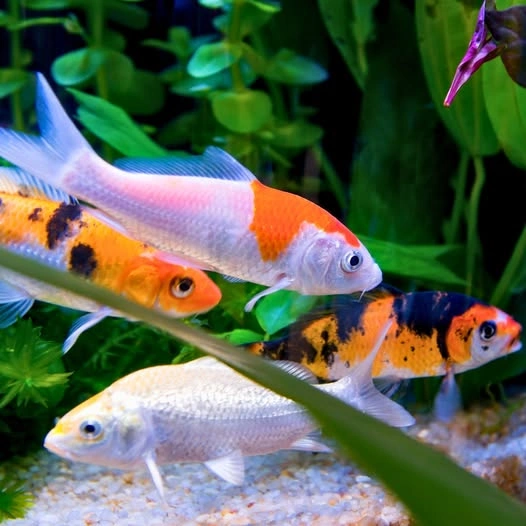
Cyprinus rubrofuscus
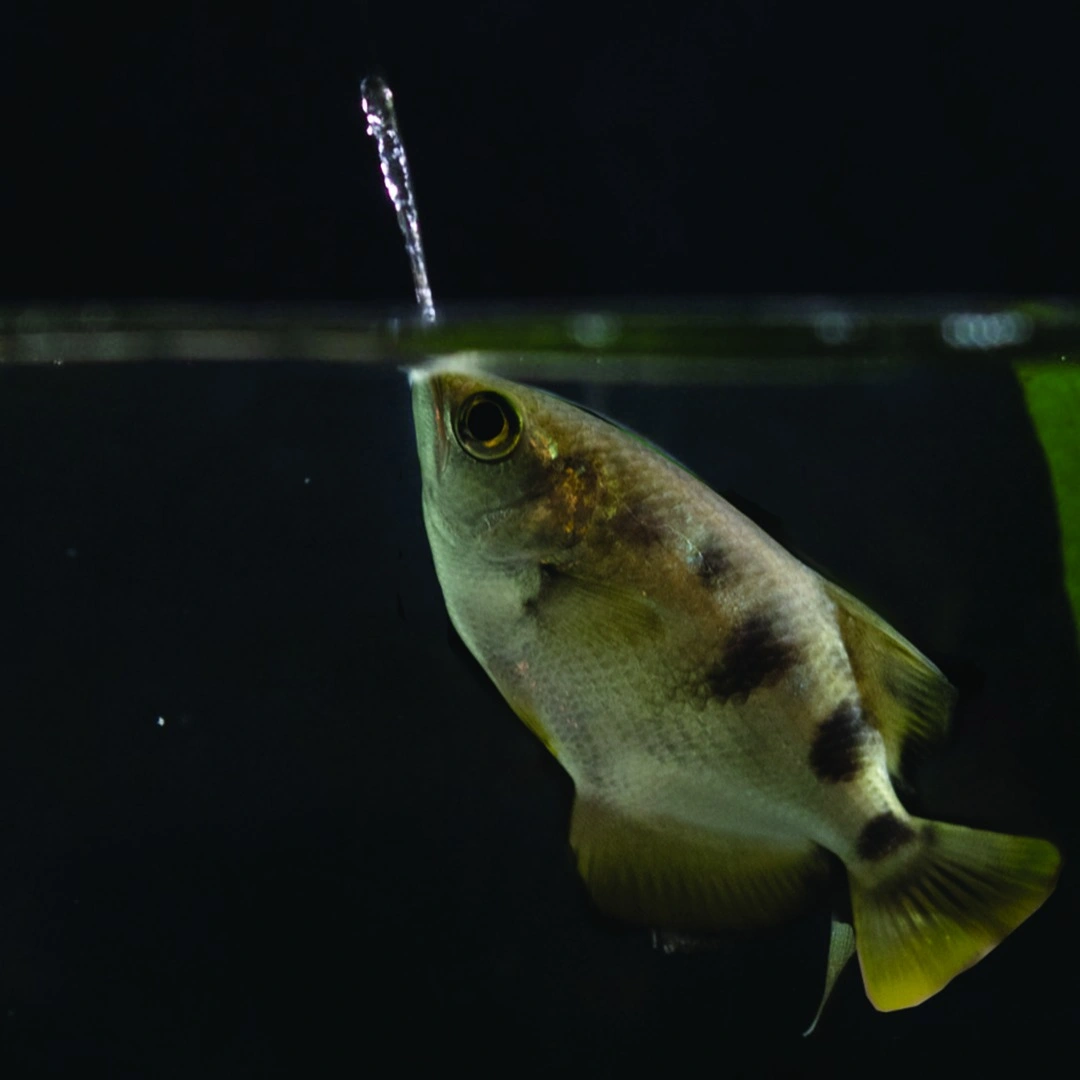
Toxotes jaculatrix

Sciaenochromis fryeri
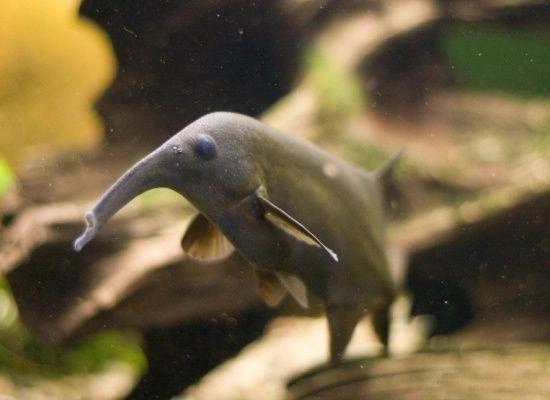
Gnathonemus petersii
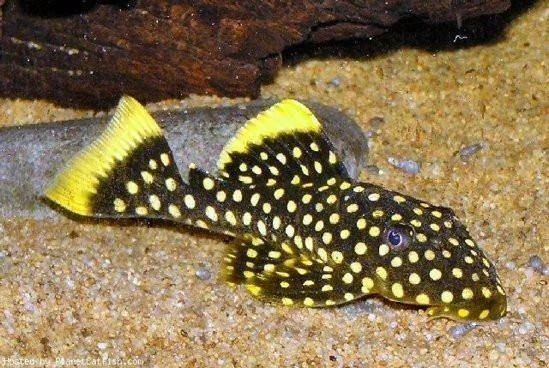
Baryancistrus xanthellus
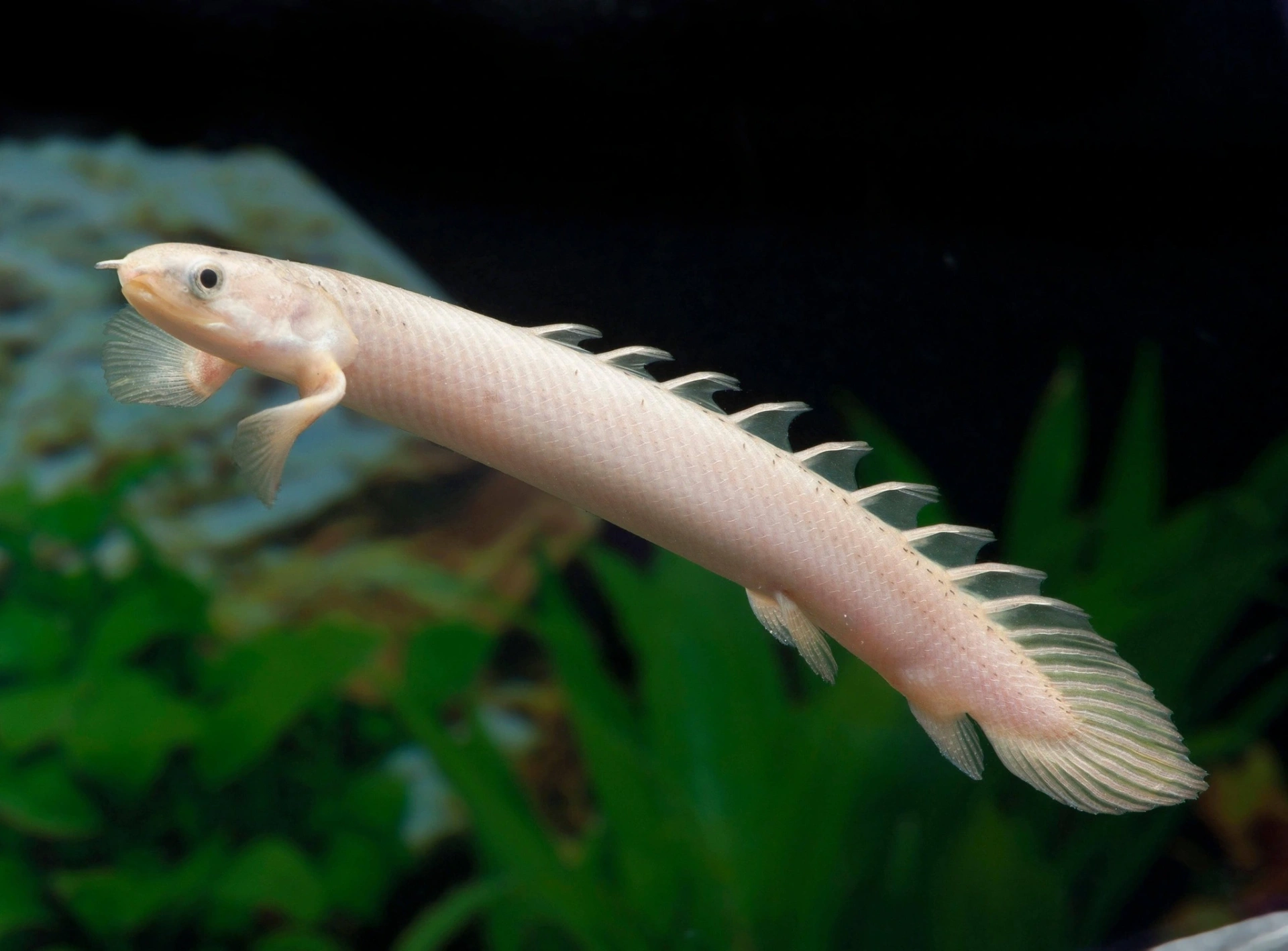
Polypterus senegalus

Heros efasciatus

Pseudotropheus acei
Use our free stocking calculator to check compatibility, bioload, and get personalized recommendations.