
Care Requirements
Adult Size
11.8" (30cm)
Min Tank
75 gal
Temperature
75-82°F
pH Range
6.5-7.5
Lifespan
15-20 years
Min Group
Can be kept alone
Diet
Carnivore
Swim Level
Bottom
Bioload
4/10
Hardness
5-20 dGH
About Senegal Bichir
The Senegal Bichir offers fishkeepers a living window into prehistoric times — these remarkable fish belong to an ancient lineage that has remained virtually unchanged for over 60 million years. Often called 'dinosaur eels' or 'dragon fish' in the trade, they're neither eels nor dragons but represent a unique order (Polypteriformes) found only in Africa. Their primitive features, including lung-like swim bladders and thick ganoid scales, make them fascinating alternatives to typical aquarium fish.
Their most remarkable adaptation is the ability to breathe atmospheric air. The modified swim bladder functions as a primitive lung, allowing them to survive in oxygen-poor water or even out of water briefly. You'll regularly see them rise to the surface to gulp air — a behavior that's essential, not optional. This adaptation also makes them notorious escape artists; they can and will crawl out of uncovered tanks.
Senegal Bichirs are the most commonly kept and hardiest of the Polypterus species, making them the ideal entry point into bichir keeping. They reach a manageable 10-12 inches in aquariums (occasionally larger), smaller than many congeners. Their gray-beige coloration may seem plain, but watching their serpentine movement and prehistoric appearance provides unique fascination that colorful fish can't match.
These are long-lived commitments — 15-20 years is typical with proper care. They're ambush predators that will eat anything fitting in their surprisingly large mouths, so tankmate selection requires careful consideration. Despite predatory nature, they're not aggressive toward fish too large to eat, making them compatible with appropriately-sized companions.
Natural Habitat & Origin
Senegal Bichirs inhabit a vast range across tropical Africa, found in the Nile, Niger, Senegal, Lake Chad, and numerous other river systems and lakes. This enormous distribution across varied habitats demonstrates their remarkable adaptability — few freshwater fish thrive across such diverse conditions.
They occupy slow-moving or still waters with abundant vegetation and hiding spots — floodplains, swamps, lake margins, and sluggish river sections. These environments often experience seasonal changes in water level, oxygen content, and available habitat. Their air-breathing ability evolved as adaptation to oxygen-poor waters common in warm, vegetated tropical environments.
During dry seasons when water levels drop dramatically, bichirs can survive in shrinking pools with poor water quality by breathing atmospheric air. They may even move between water bodies across wet ground using their strong pectoral fins. This incredible resilience translated to aquarium hardiness.
Wild bichirs are nocturnal predators, hiding among vegetation and debris during daylight and emerging at night to hunt. Diet consists of insects, worms, small fish, and crustaceans — essentially anything they can catch and swallow. Their poor eyesight means they rely heavily on smell and electroreception to locate prey in murky conditions.
Native Region
Africa — Nile, Niger, Senegal, Lake Chad basins and beyond
Habitat Type
Slow-moving rivers, floodplains, swamps, and vegetated lake margins
Wild Water Conditions
Warm (24-28°C), variable pH and hardness, often low oxygen
Appearance & Varieties
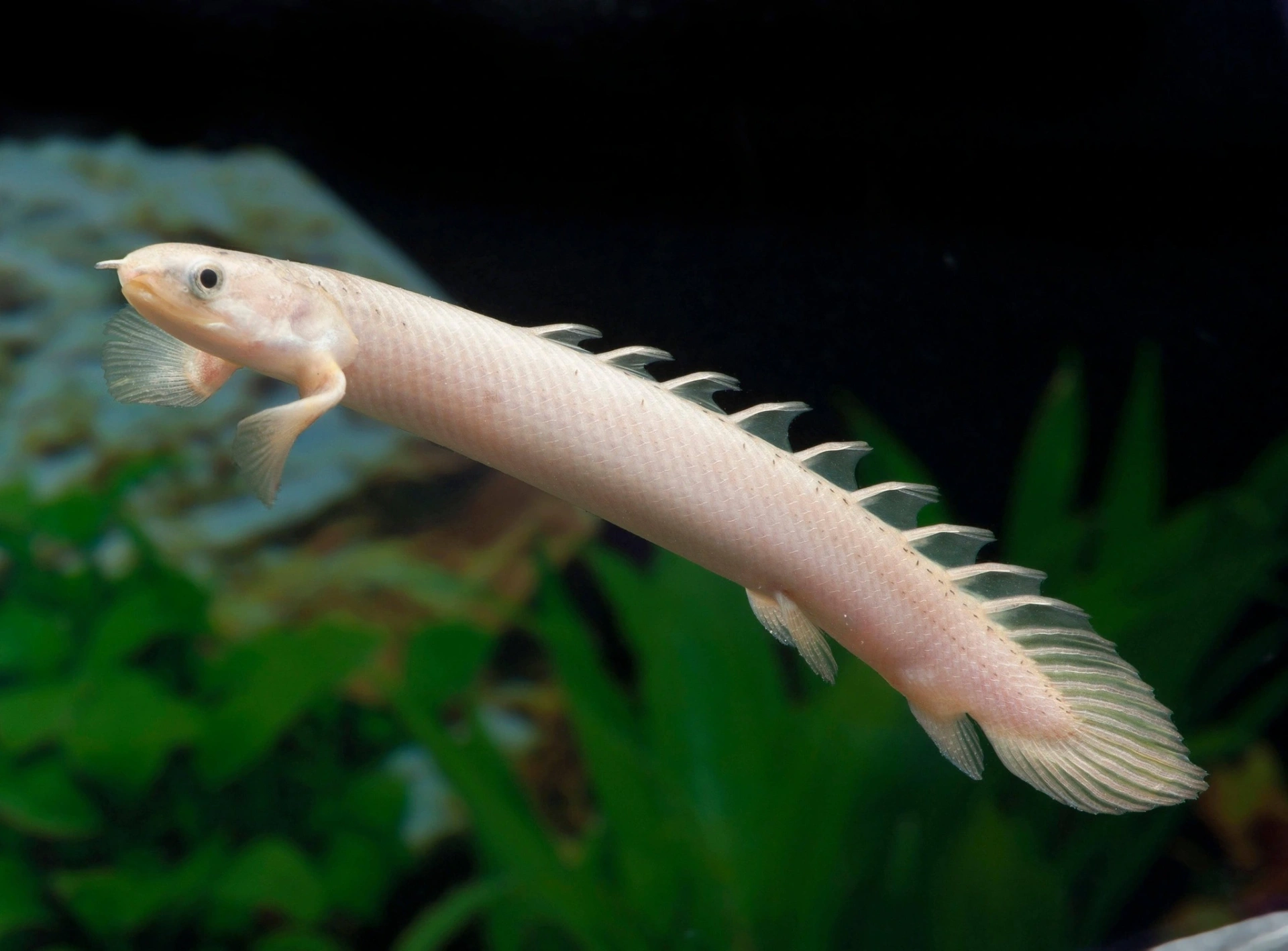
Senegal Bichirs possess a distinctive prehistoric appearance unlike any common aquarium fish. The elongated, cylindrical body is covered in thick, diamond-shaped ganoid scales — an ancient scale type also found in fossils. These interlocking scales create an armored appearance and feel rough to the touch.
The dorsal fin is unique among fish — rather than a single fin, it consists of 8-11 separate finlets (flaglike structures) running along the back. This feature instantly identifies bichirs. The pectoral fins are fleshy and muscular, positioned on arm-like lobes that allow the fish to 'walk' along the bottom and even across land briefly.
Coloration is typically gray-beige to olive-brown, sometimes with faint darker banding or mottling. While not colorful, this camouflage serves them well as ambush predators. An albino/leucistic variant exists, showing pale cream coloration with pink eyes — increasingly popular in the hobby.
Adults typically reach 10-12 inches (25-30 cm) in aquariums, occasionally larger with exceptional care. Wild specimens may exceed this. Growth is slow but steady over several years. Juveniles are more slender and may show slightly more distinct patterning than adults.
Popular Varieties
| Variety | Description | Rarity |
|---|---|---|
| Standard/Wild-Type (Gray) | Gray-beige to olive coloration with possible faint banding. The natural form found throughout their range. Hardy and most commonly available. | Common |
| Albino/Leucistic | Pale cream to white coloration with pink or red eyes. Striking appearance that shows well against dark substrates. Equally hardy as wild-type despite color mutation. | Uncommon |
Tank Setup & Requirements
Quick Requirements Summary
Tank Size
Minimum Tank Size
75 gallons
Recommended Tank Size
100 gallons
Senegal Bichirs require spacious tanks with secure lids and appropriate décor for their bottom-dwelling, nocturnal lifestyle. While not demanding regarding water chemistry, their size and predatory nature require thoughtful setup.
Water Parameters
Remarkably adaptable to various water conditions — their vast natural range spans diverse habitats. Moderately soft to moderately hard water with neutral pH works well, but they tolerate reasonable variation. Consistency matters more than hitting specific targets. They handle temperature fluctuations better than most tropical fish. Water quality is more important than precise parameters — keep ammonia and nitrite at zero, nitrates reasonable.
Substrate
Fine sand is the ideal substrate for bichirs — they spend significant time resting on and moving across the bottom, and sand won't damage their undersides or barbels. Smooth river gravel works as an alternative but isn't as comfortable for them. Avoid sharp or rough substrates that could injure their belly as they drag across it. Dark sand enhances their appearance and makes them feel more secure.
Plants & Decorations
Provide multiple hiding spots — caves, PVC pipes, driftwood tangles, or dense plant thickets where they'll spend daylight hours. These are nocturnal fish that need secure daytime retreats. Large pieces of driftwood work excellently, creating both shelter and natural aesthetics. Plants aren't necessary but add natural aesthetics — choose robust species like Anubias, Java Fern, and Amazon Swords that can handle their movement.
Filtration & Water Flow
Bichirs are carnivores producing significant waste — robust filtration is essential. Canister filters are ideal, providing strong mechanical and biological filtration. Target 6-8x tank volume turnover per hour minimum. They tolerate moderate current but don't require strong flow. Weekly water changes of 25-30% help manage waste.
Lighting
As nocturnal fish, they prefer dimmer conditions and become more active in low light. Bright lighting often keeps them hidden throughout the day. Subdued lighting, floating plant cover, or shaded areas allow them to venture out during daytime viewing hours. Moonlight/blue LED options allow nighttime viewing when they're most active.
Diet & Feeding Guide
Diet Type
carnivore
Feeding Frequency
Every 2-3 days for adults, daily for juveniles
Portion Size
Amount roughly equal to head size per feeding. They're ambush predators with slow metabolism — don't require or benefit from daily feeding as adults.
Senegal Bichirs are obligate carnivores requiring meaty foods. They're not fussy eaters once food is detected, but their poor eyesight and nocturnal nature require feeding strategies that ensure food reaches them.
Best Foods for Senegal Bichir
- Sinking carnivore pellets — High-quality sinking pellets provide balanced nutrition and convenience. Feed after lights out for best acceptance.
- Frozen fish/seafood — Silversides, smelt, prawns, mussels — eagerly accepted. Cut to appropriate size. Vary types for nutritional diversity.
- Earthworms/nightcrawlers — Excellent natural food eagerly consumed. Highly nutritious and trigger strong feeding response. Rinse before feeding.
- Frozen bloodworms — Good supplemental food, especially for juveniles. Adults may find them too small to bother with.
- Shrimp and crustaceans — Frozen or fresh shrimp (shell-on provides calcium). Good calcium source supporting their armored scales.
- Frozen krill — Highly nutritious, eagerly consumed. The chitin provides fiber. Good staple alongside pellets.
Foods to Avoid
- Plant-based foods —
- Mammal meat (beef heart, etc.) —
- Unquarantined live fish —
Feed after lights out when they're most active. Their poor eyesight means they hunt by smell — sinking foods at night reach them most effectively.
Behavior & Temperament
Senegal Bichirs are nocturnal ambush predators that spend daylight hours hidden and become active at night. Understanding this rhythm is essential — if you only observe your tank during daytime, you may rarely see them active. Movement is distinctively serpentine, using undulating body motions combined with their unusual pectoral fins. They 'walk' along the bottom using those fleshy pectoral fins. As ambush predators, they'll eat anything fitting in their surprisingly large mouths. Regular surface trips for air are normal and necessary — don't be alarmed by this behavior.
Tank Mates: Compatibility Guide
Compatible Tank Mates
Tank Mates to Avoid
Small fish of any species
If it fits in their mouth, it will eventually be eaten. No exceptions.
Dwarf shrimp and small invertebrates
Natural prey — will be hunted and consumed.
Aggressive cichlids
While bichirs have armored scales, persistent aggression causes stress.
Small bottom-dwellers
Corydoras, small loaches are right in the danger zone — bottom-dwelling and small enough to eat.
Common Pairing Questions
Can I keep a Senegal Bichir with tetras?
Only large tetras like Congo Tetras that are too big to eat. Small tetras will become food.
Can I keep multiple bichirs together?
Yes — multiple bichirs coexist well if similar-sized. Avoid significant size differences.
Breeding Senegal Bichirs in aquariums is possible but rarely occurs without specific effort. Sexing adults is subtle — males have thicker anal fins. Simulated rainy seasons may trigger spawning. Eggs hatch in 3-4 days with fry having external gills initially.
Health Issues & Disease Prevention
Senegal Bichirs are remarkably hardy fish that rarely develop health problems when basic care is provided. Most issues relate to environmental problems rather than disease susceptibility.
Common Diseases
| Disease | Symptoms | Treatment |
|---|---|---|
| Infections from escape attempts | Visible injuries, damaged scales, dry patches, fungal growth on wounds. | Return to water immediately. Treat with aquarium salt and antifungal medication. Prevention through secure lids is essential. |
| Ich (rare but possible) | White spots, especially visible on darker specimens. Flashing against objects. | Raise temperature to 30°C — bichirs tolerate heat well. Salt treatment works well. |
| Bacterial infections | Cloudy eyes, redness, ulcers, fin deterioration. | Improve water quality immediately. Antibacterial medication for serious infections. |
| Internal parasites | Weight loss despite eating, white stringy feces, bloating. | Anti-parasitic medication. More common in wild-caught specimens. |
| Oxygen deprivation | Constant surface breathing, gasping, lethargy. | Ensure surface access immediately. They MUST be able to reach surface to breathe. |
Signs of a Healthy Senegal Bichir
- Regular air-breathing trips
- Active nighttime movement
- Healthy appetite
- Clear eyes
- Intact scales and fins
- Appropriate body condition
Prevention Tips
- Absolutely secure lid — no gaps
- Maintain good water quality
- Provide multiple hiding spots
- Ensure surface access for breathing
- Feed appropriate carnivore diet
- Quarantine new tankmates
Frequently Asked Questions
No, but they're genuinely ancient fish — their lineage dates back over 60 million years with remarkably little evolutionary change. The 'dinosaur eel' nickname comes from their primitive appearance, but they're neither dinosaurs nor eels. They belong to their own unique order (Polypteriformes) found only in Africa.
Yes — their modified swim bladder functions as a primitive lung, and surface breathing is essential, not optional. You'll see them rise regularly to gulp air. They cannot survive without surface access. This air-breathing also means they can survive out of water briefly — which is why they escape so readily.
If tankmates fit in their surprisingly large mouths — yes, eventually. This isn't aggressive behavior; it's simply their nature as ambush predators. Choose tankmates at least 2/3 the bichir's length to be safe.
A completely secure lid with NO gaps is the only solution. They can squeeze through surprisingly small openings, climb filter intakes, and push through loose covers. Tape or weigh down any potential exit points.
That's normal — they're nocturnal. Expect them to hide during daylight hours and become active after lights out. Try dimmer lighting, more hiding spots, and feeding at dusk.
15-20 years is typical with proper care — some reach 25+ years. This is a serious long-term commitment comparable to a dog.
Tips for Keeping Senegal Bichir
Pro Tips
- ✓Feed after lights out — as nocturnal predators, they feed most readily in darkness.
- ✓Multiple hiding spots reduce stress dramatically — counterintuitively, more cover makes bichirs MORE visible.
- ✓Check the floor daily when new — most escape attempts happen early in new environments.
- ✓They can coexist with similar-sized tankmates peacefully — don't isolate them unnecessarily.
Common Mistakes to Avoid
- ✗Inadequate lid security — escaped fish found dead on floor. The #1 cause of bichir death.
- ✗Tankmates too small — gradual disappearance of small fish as bichir grows.
- ✗Tank too small — 75 gallons minimum for a fish reaching 12 inches that lives 20 years.
- ✗Expecting daytime activity — they're nocturnal, daytime hiding is normal.
- ✗Blocking surface access — stress or death from inability to breathe air.
Sources
- FishBase — Accepted scientific name, maximum size and native range for Senegal Bichir.
Related Species You Might Like
View All Fish →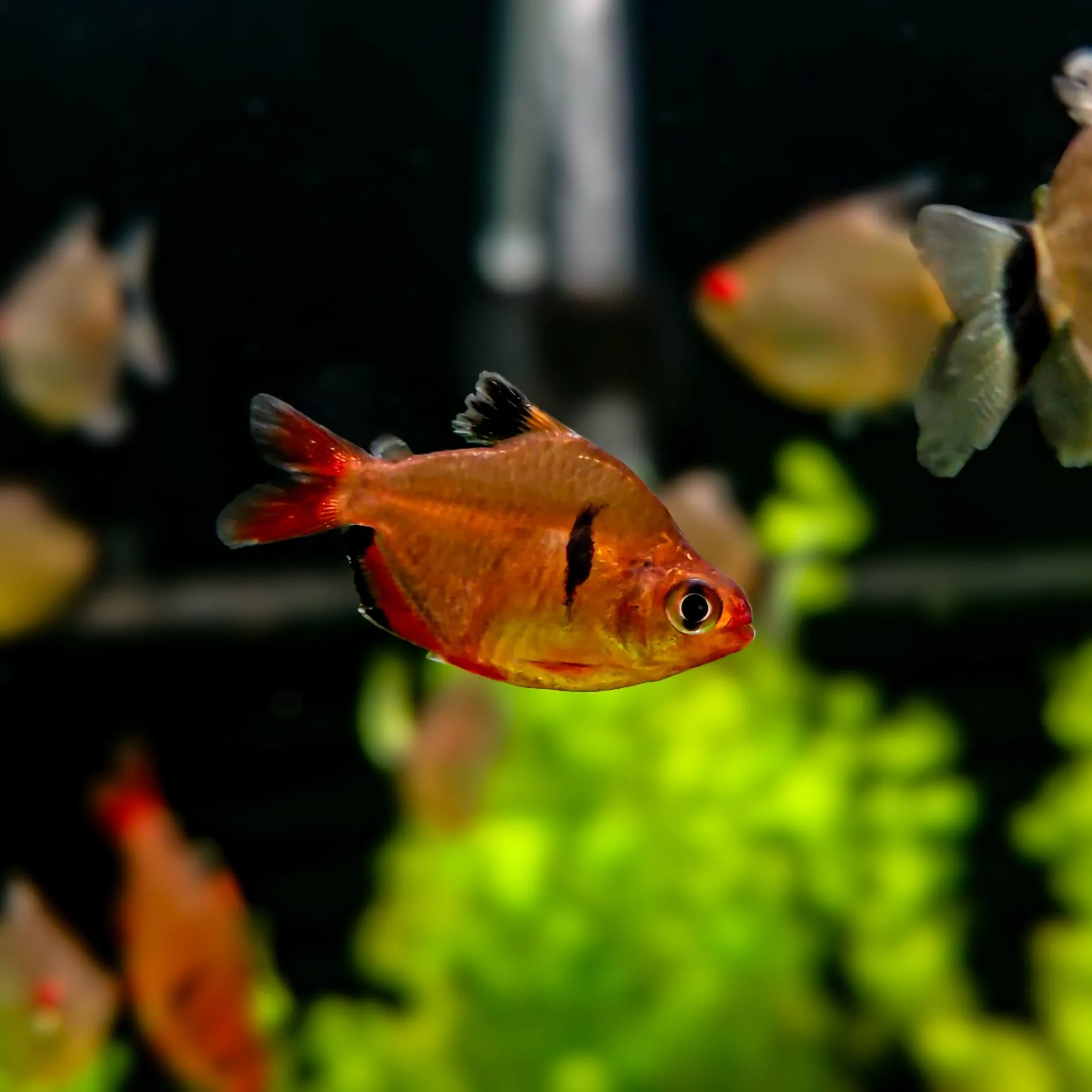
Serpae Tetra
Hyphessobrycon eques
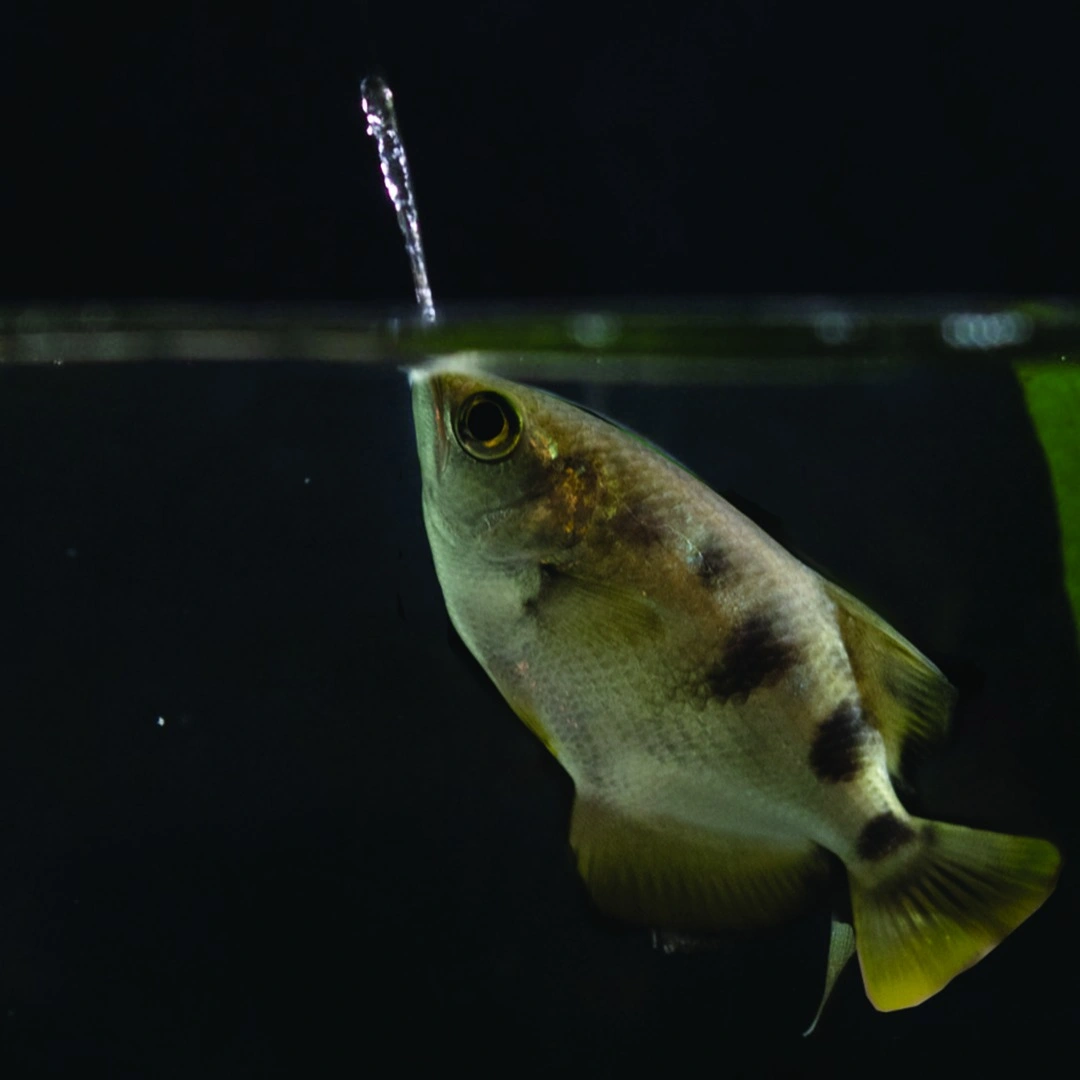
Archer Fish
Toxotes jaculatrix
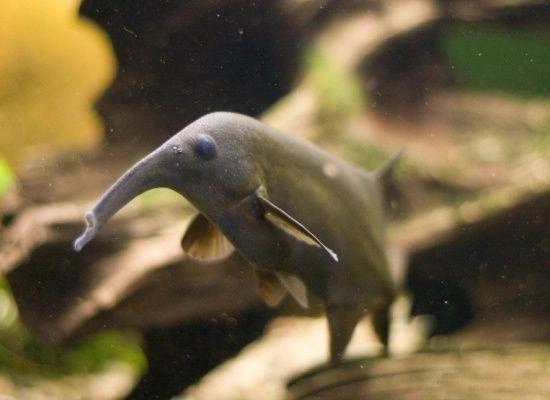
Elephant Nose Fish
Gnathonemus petersii

Electric Blue Hap
Sciaenochromis fryeri
Gold Nugget Pleco
Baryancistrus xanthellus
Kissing Gourami
Helostoma temminckii

Severum
Heros efasciatus

Flowerhorn Cichlid
Hybrid (Amphilophus × Vieja crosses)
Ready to Add Senegal Bichir to Your Tank?
Use our free stocking calculator to check compatibility, bioload, and get personalized recommendations.