
Care Requirements
Adult Size
9.1" (23cm)
Min Tank
75 gal
Temperature
75-82°F
pH Range
6-7.5
Lifespan
6-10 years
Min Group
Can be kept alone
Diet
Carnivore
Swim Level
Bottom
Bioload
3/10
Hardness
5-15 dGH
About Elephant Nose Fish
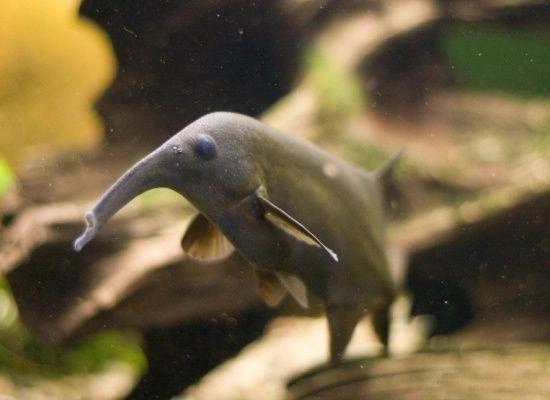
The Elephant Nose Fish ranks among the most intelligent and unusual fish available to aquarists. Their elongated chin appendage — resembling an elephant's trunk — serves as an incredibly sensitive electroreceptive organ, probing substrate and detecting prey in conditions where vision is useless. This 'nose' contains thousands of electroreceptors, making it perhaps the most sensitive biological sensing organ known in fish.
Their intelligence is remarkable. Elephant Nose Fish possess the largest brain-to-body ratio of any fish species — comparable to humans. Studies demonstrate their ability to learn complex tasks, recognize individual humans, and solve problems. Long-term keepers often describe distinct personalities and interactive behavior that transcends typical fish keeping.
However, this sensitivity comes at a cost. Elephant Nose Fish are challenging to keep, demanding pristine water quality, dim lighting, peaceful tankmates, and specific diet. They're stress-prone, disease-susceptible when conditions aren't optimal, and often difficult to establish initially. They're absolutely not beginner fish despite their irresistible appearance.
For experienced aquarists willing to meet their demanding requirements, Elephant Nose Fish offer something rare in the hobby — a genuinely intelligent fish with unique behavior, remarkable sensory abilities, and potential for meaningful keeper interaction.
Natural Habitat & Origin
Elephant Nose Fish inhabit slow-moving and still waters across West and Central Africa — the Niger River and its tributaries, Ogun River in Nigeria, and portions of the Congo Basin. They occupy murky, heavily vegetated environments where their electroreception provides crucial advantage over vision-dependent predators and competitors.
Their natural habitat features soft, acidic water darkened by tannins from decaying vegetation. Dense plant growth, submerged wood, and accumulated leaf litter create complex environments they navigate using their electric sense.
They're nocturnal or crepuscular, most active during dawn, dusk, and night hours. Daylight is spent hiding among vegetation and debris. Their elongated 'trunk' continuously probes the substrate searching for insect larvae, worms, and small invertebrates.
African elephant fish belong to the Mormyridae family, all of which possess electroreceptive abilities. They generate weak electric pulses and detect distortions in the resulting field for navigation, prey detection, and communication.
Native Region
West and Central Africa — Niger, Ogun, Congo River systems
Habitat Type
Slow-moving rivers, vegetated swamps, murky backwaters
Wild Water Conditions
Warm (24-28°C), soft, acidic, heavily vegetated, low visibility
Appearance & Varieties
The Elephant Nose Fish's unique appearance centers on its elongated chin extension — a finger-like protrusion packed with electroreceptors. The body is elongated and laterally compressed, dark gray to black with two distinct white-edged bars connecting dorsal and anal fins. Overall length reaches approximately 9 inches (23 cm) in aquariums.
Eyes are small — appropriate for fish relying primarily on electrolocation rather than vision. The mouth is small and positioned at the base of the trunk extension, adapted for picking small prey from substrate. Sexing is extremely difficult with no reliable external differences.
Popular Varieties
| Variety | Description | Rarity |
|---|---|---|
| Standard/Wild-Type | Dark gray to black body with white-edged connecting bars between dorsal and anal fins. The only form available — no color variants or selectively bred forms exist. All specimens are wild-caught. | Common |
Tank Setup & Requirements
Quick Requirements Summary
Tank Size
Minimum Tank Size
75 gallons
Recommended Tank Size
100 gallons
Elephant Nose Fish require carefully designed environments addressing their sensitivity, electric sense, and nocturnal nature. Setup details significantly impact their health and survival.
Water Parameters
Sensitive to water quality — pristine conditions are essential, not optional. Ammonia, nitrite, and elevated nitrates cause rapid health decline. Soft, acidic water (pH 6.5-7.0) mimics natural conditions and produces best results. Weekly water changes of 25-30% minimum. They're among the first fish to show stress when parameters slip.
Substrate
Sand substrate is critical — they probe the bottom constantly with their sensitive trunk. Sharp or rough substrates damage this delicate organ, which can prove fatal. Fine, soft sand allows natural foraging behavior. Dark sand mimics their murky natural habitat.
Plants & Decorations
Abundant hiding spots are essential — multiple caves, tubes, and sheltered areas. Dense planting creates the vegetated habitat they prefer. Low-light species thrive in the dim conditions they need — Java Fern, Anubias, Cryptocorynes, and mosses are excellent. Floating plants help dim lighting naturally.
Filtration & Water Flow
Excellent filtration is crucial for water quality, but they dislike strong current. Canister filters with spray bars dispersing flow work well. Sponge filters provide gentle filtration for smaller setups. High biological filtration capacity handles their waste while maintaining pristine conditions.
Lighting
Bright lighting stresses them significantly — they're from murky, shaded waters. Dim lighting, floating plant cover, or moonlight settings are preferable. If keeping plants requiring more light, ensure extensive shaded areas where they can retreat.
Diet & Feeding Guide
Diet Type
carnivore
Feeding Frequency
Once or twice daily
Portion Size
Small amounts they can find and consume. Feed after lights dim when they're naturally active.
Elephant Nose Fish are carnivores requiring small meaty foods. Their sensitive trunk locates food even buried in substrate. Feeding can be challenging initially — they're often reluctant feeders that require patience.
Best Foods for Elephant Nose Fish
- Frozen bloodworms — The most reliable food — almost universally accepted. Essential staple for most keepers.
- Live blackworms/tubifex — Excellent food triggering enthusiastic feeding. Worms burrowing in sand mimic natural prey perfectly.
- Frozen brine shrimp — Usually accepted, good variety food. Less nutritious as sole staple but useful for diversity.
- Frozen mysis shrimp — Nutritious food typically accepted once feeding is established.
- Live daphnia — Appropriate size, good for conditioning. Movement helps trigger feeding response.
- Mosquito larvae — Excellent live food closely matching natural diet. Highly nutritious if available.
Foods to Avoid
- Flakes and pellets — Rarely if ever accepted. They're specialized feeders requiring appropriate live/frozen meaty foods.
- Large food items — Their small mouths limit food size. All foods must be small enough to consume easily.
- Plant-based foods — Obligate carnivores — plant matter isn't appropriate or accepted.
Scatter food so it falls to the substrate where they forage. New specimens may take weeks to feed confidently — patience is essential. Target feeding near their preferred areas helps establish routines.
Behavior & Temperament
Elephant Nose Fish demonstrate intelligence and behavioral complexity unusual among fish. Their electric sense creates an entirely different perception of their environment — they 'see' electrically, detecting objects, prey, and other fish through field distortions.
They're typically peaceful toward dissimilar tankmates but often aggressive toward conspecifics. Their electric fields interfere with each other, creating territorial signals.
Intelligence manifests in various ways: they learn feeding schedules, recognize individual keepers, and show distinct personalities. Some become remarkably interactive.
They're primarily nocturnal or crepuscular, most active at dawn, dusk, and nighttime. Dim lighting increases daytime activity.
Tank Mates: Compatibility Guide
Compatible Tank Mates
African tankmates of appropriate size. Peaceful, too large to be prey.
African catfish sharing similar nocturnal habits. Peaceful coexistence.
Too large to eat, peaceful enough not to harass.
Surface dweller occupying completely different zone. No interaction or competition.
African cichlid of appropriate size. Generally peaceful if both have adequate territory.
African oddball with similar nocturnal habits. Peaceful coexistence in large tanks.
Tank Mates to Avoid
Other Elephant Nose Fish
Often aggressive toward conspecifics. Electric field interference creates stress.
Other electric fish
Electric field interference causes stress and communication problems.
Aggressive or fast-feeding fish
They're slow, deliberate feeders easily outcompeted.
Very small fish
May be consumed — anything mouth-sized is potential food.
Fin nippers
Their unique fins and sensitive skin make them vulnerable.
Common Pairing Questions
Can Elephant Nose Fish live with other electric fish?
Generally not recommended — electric field interference causes stress and communication problems for both species.
Will they starve in a community tank?
Possible if tankmates are faster feeders. Target feeding and feeding after lights dim helps ensure they get food.
Breeding Elephant Nose Fish in aquariums is virtually unknown — no reliable reports of successful captive breeding exist. All specimens in the trade are wild-caught from African rivers.
Health Issues & Disease Prevention
Elephant Nose Fish are sensitive fish prone to health problems when conditions aren't optimal. They're often considered 'indicator species' — the first to show stress when something goes wrong.
Common Diseases
| Disease | Symptoms | Treatment |
|---|---|---|
| Ich (White Spot) | White spots on dark body — highly visible. Flashing, scratching. | Raise temperature gradually to 30°C. Use reduced-dose medication if needed. |
| Bacterial infections | Cloudy eyes, fin deterioration, body lesions, redness. | Pristine water quality is crucial. Mild antibacterial treatment. |
| Trunk damage | Visible injury, discoloration, or deterioration of trunk extension. | Ensure sand substrate and smooth decorations. Minor damage may heal with excellent water quality. |
| Stress-related decline | Refusing food, hiding constantly, weight loss, faded color. | Address stressors — improve water quality, dim lighting, remove aggressive tankmates. |
| Starvation | Sunken belly, emaciation despite food availability. | Offer live foods (blackworms especially). Target feed near their preferred areas. |
Signs of a Healthy Elephant Nose Fish
- Active trunk probing behavior
- Good appetite
- Smooth skin and intact trunk
- Clear eyes
- Normal swimming
- Appropriate body condition
Prevention Tips
- Maintain pristine water quality
- Use fine sand substrate to protect trunk
- Provide dim lighting and ample hiding spots
- Keep with appropriate peaceful tankmates
- Feed quality varied diet
- Quarantine new fish
Frequently Asked Questions
The elongated chin extension resembles an elephant's trunk. However, it's not actually a nose — it's a chin modification packed with electroreceptors. This 'trunk' probes substrate, detects prey, and senses the environment through electrical fields.
Yes — they generate weak electric fields (not harmful) and detect distortions in these fields. This electrolocation serves multiple purposes: navigation in murky water, prey detection, and communication with other electric fish.
Remarkably intelligent — they have the largest brain-to-body ratio of any fish species, comparable to humans. Scientific studies demonstrate learning ability, problem-solving, and memory. Keepers report individual recognition and interactive behavior.
Common reasons: stress from inadequate hiding spots or aggressive tankmates, inappropriate food (they need live/frozen bloodworms, not flakes), bright lighting causing stress, poor water quality, or faster tankmates taking food before they find it.
Challenging — they're often aggressive toward conspecifics. Single specimens are usually easiest. Groups sometimes work in very large tanks (200+ gallons) with multiple distinct territories.
Their trunk constantly probes the substrate — it's their primary foraging behavior. Sharp gravel damages this incredibly sensitive organ. Trunk damage is serious, potentially fatal. Fine, soft sand is mandatory.
Tips for Keeping Elephant Nose Fish
Pro Tips
- ✓Live blackworms burrowing into sand perfectly mimic natural prey and establish reluctant feeders.
- ✓Moonlight viewing reveals their most active behavior without stress.
- ✓Create 'foraging zones' with consistent target feeding — they learn these spots.
- ✓They recognize their keepers — building this relationship takes time but results in interactive fish.
Common Mistakes to Avoid
- ✗Sharp or rough substrate — trunk damage affecting primary sensory organ.
- ✗Bright lighting — constant stress, hiding, food refusal.
- ✗Keeping with fast-feeding tankmates — starvation as other fish take all food.
- ✗Poor water quality — rapid health decline as they're extremely sensitive.
- ✗Expecting them to eat flakes or pellets — starvation risk.
Sources
- FishBase — Accepted scientific name, maximum size and native range for Elephant Nose Fish.
Related Species You Might Like
View All Fish →
Ember Tetra
Hyphessobrycon amandae
Archer Fish
Toxotes jaculatrix
Senegal Bichir
Polypterus senegalus

Electric Blue Hap
Sciaenochromis fryeri
Gold Nugget Pleco
Baryancistrus xanthellus
Kissing Gourami
Helostoma temminckii

Severum
Heros efasciatus

Flowerhorn Cichlid
Hybrid (Amphilophus × Vieja crosses)
Ready to Add Elephant Nose Fish to Your Tank?
Use our free stocking calculator to check compatibility, bioload, and get personalized recommendations.