Kissing Gourami Tank Mates: 7 Compatible Species (and 7 to Avoid)
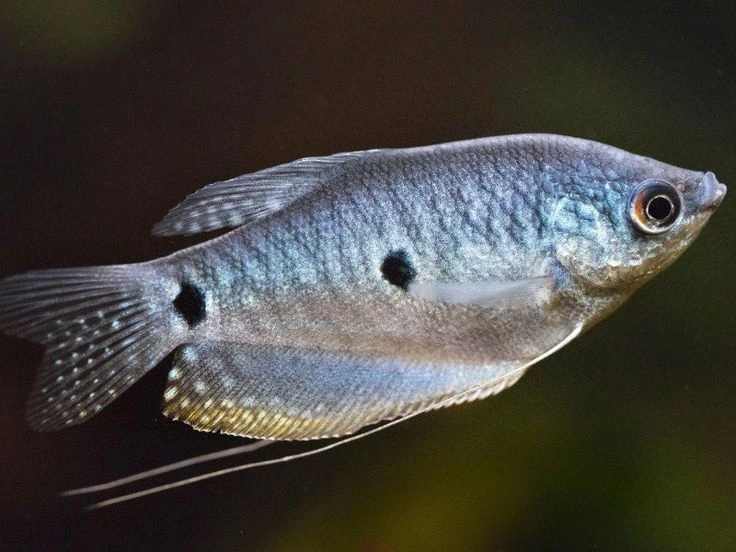
Every problem with this species comes from the gap between what is sold and what arrives. A Kissing Gourami leaves the shop at 5 cm and finishes at 30 cm, and it can reach that size while its first tank mates are still alive, because 15 to 25 years is a normal lifespan here. So the question on this page is not which fish get along with the gourami you have; it is which fish will still be safe beside the gourami you will have. Everything below is written for the adult.
Reviewed by the AquariumStocking team · Updated
The tank size that makes this work
This is one of the few community species where the database minimum is not a starting point for a beginner tank at all. Two hundred and eighty-five litres, about 75 gallons, is the floor for the adult fish, and the useful stocking decisions begin above it. Our database puts the kissing gourami minimum at 75 gallons.
75 gallons
One adult kissing gourami plus one group of large, fast mid-water fish and a substantial bottom dweller. There is no room here for a second kissing gourami — two adults in a four-foot tank spend their time locking lips over the same territory, which is sparring rather than affection whatever the name suggests. Plan the hardscape around wood and rock, because soft plants will not survive the fish.
The size at which the species stops being a compromise. A pair or trio can be kept if the footprint is long enough for one fish to leave another alone, and there is space for two proper shoals at different levels. Filtration matters more than usual: an adult grazes constantly and produces waste to match, so oversize the filter rather than the stocking.
Room for a full large-community tank built around three or four gouramis, with silver dollars in open water and a group of clown loaches on the floor. At this size the gourami reads as a calm centrepiece rather than a fish permanently at the edge of its space. It is also the size that matches the animal's lifespan — a tank you will not need to replace in ten years.
Stock for the 12-inch adult, not the 2-inch juvenile
Shops sell this fish alongside tetras and dwarf gouramis because at 5 cm it looks like one of them. Anything that fits in an adult's mouth eventually will, and the fish that were fine for two years become food in the third. The only safe rule is to pick tank mates that are already too large to swallow at the size you buy them.
It is a grazer with a mouth built for rasping
Those permanently pursed lips are lined with fine teeth used to scrape biofilm and algae off hard surfaces, which is where the fish spends most of its day. It means an adult works over glass, wood and rock rather than hunting, and it also means soft-leaved plants get grazed to stems. Choose a hardscape of wood, rock and tough anubias, and put your planting effort somewhere else.
Lip-locking happens with anything the same shape
The behaviour the species is named for is a contest of strength between two fish of similar body plan, and it is not reserved for its own kind. Deep-bodied, slow, disc-shaped tank mates invite it, and repeated bouts wear down the smaller fish even though no wound is visible. Prefer streamlined tank mates with a different outline.
Fins get tested, so keep them short
This species is recorded as a fin nipper in the database and the behaviour shows up mostly at feeding time, when the gourami investigates whatever is moving slowly nearby. Trailing fins are the obvious casualty: guppies, angelfish and the thread-finned gouramis all lose material. Short-finned, fast-moving fish never register as a target.
The surface belongs to the gourami
It is a labyrinth fish and takes air from the top of the tank, so anything else claiming that band becomes a rival rather than a neighbour. That excludes the small gouramis and bettas regardless of how the rest of the parameters line up — the conflict is over the same niche, not over size. One air-breather per tank remains the simplest version of this rule.
Match the commitment, not just the water
Two decades is longer than most aquarium fish, most tanks and a good number of aquarium hobbies. Pairing a gourami with a species that lives three years means restocking around it repeatedly, which is fine if you plan for it and unpleasant if you do not. Long-lived tank mates — clown loaches, plecos, large catfish — keep the tank stable across the gourami's whole life.
Compatible species, ranked by fit
Seven species already too large to be eaten, too fast to be caught, or too armoured to care.
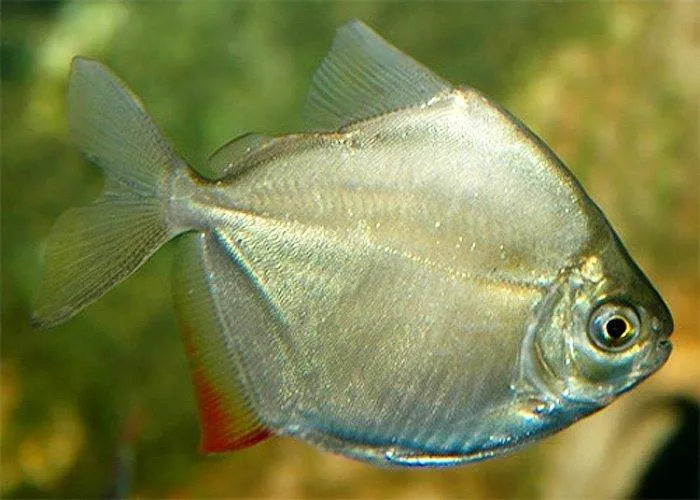
Silver Dollar
Metynnis argenteus
The natural partner: same adult size, same open-water habits, same appetite for plants, so nothing is lost that was not already going to be eaten. A shoal of five or six moves fast enough that a gourami never starts anything, and their height makes them awkward to test. They want the warmer half of the shared range, so hold the tank at 25–27 °C. Both species need a 75 gallon as a floor, which makes this a large-tank-only combination.
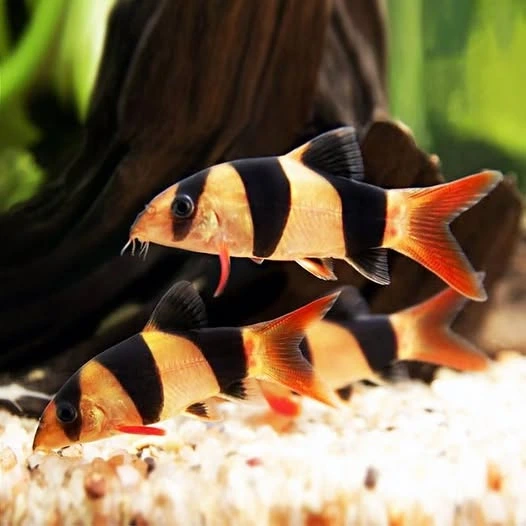
A loach that reaches 30 cm and lives as long as the gourami does, which solves the commitment problem better than any other fish on the list. It works the floor and the caves while the gourami works mid-water and the glass, so the two rarely meet. Keep five or more or they become withdrawn, and account for the fact that a group of adults needs a very large tank. Sand or smooth gravel, because loaches dig.
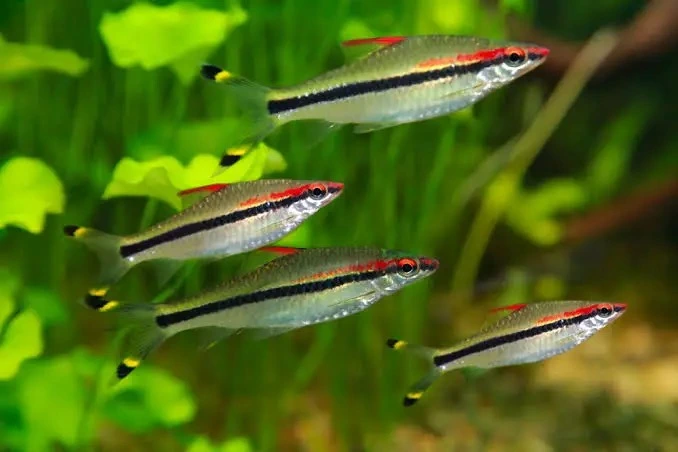
Fast, torpedo-shaped and 15 cm at maturity — a fish the gourami cannot catch and would not recognise as a rival. A group of six in a four-foot-plus tank keeps the mid-water busy, which draws a shy gourami out rather than stressing it. They prefer cooler, well-oxygenated water, so run the tank towards 24–25 °C with real flow at one end. Six minimum; a pair becomes nervous and hides.
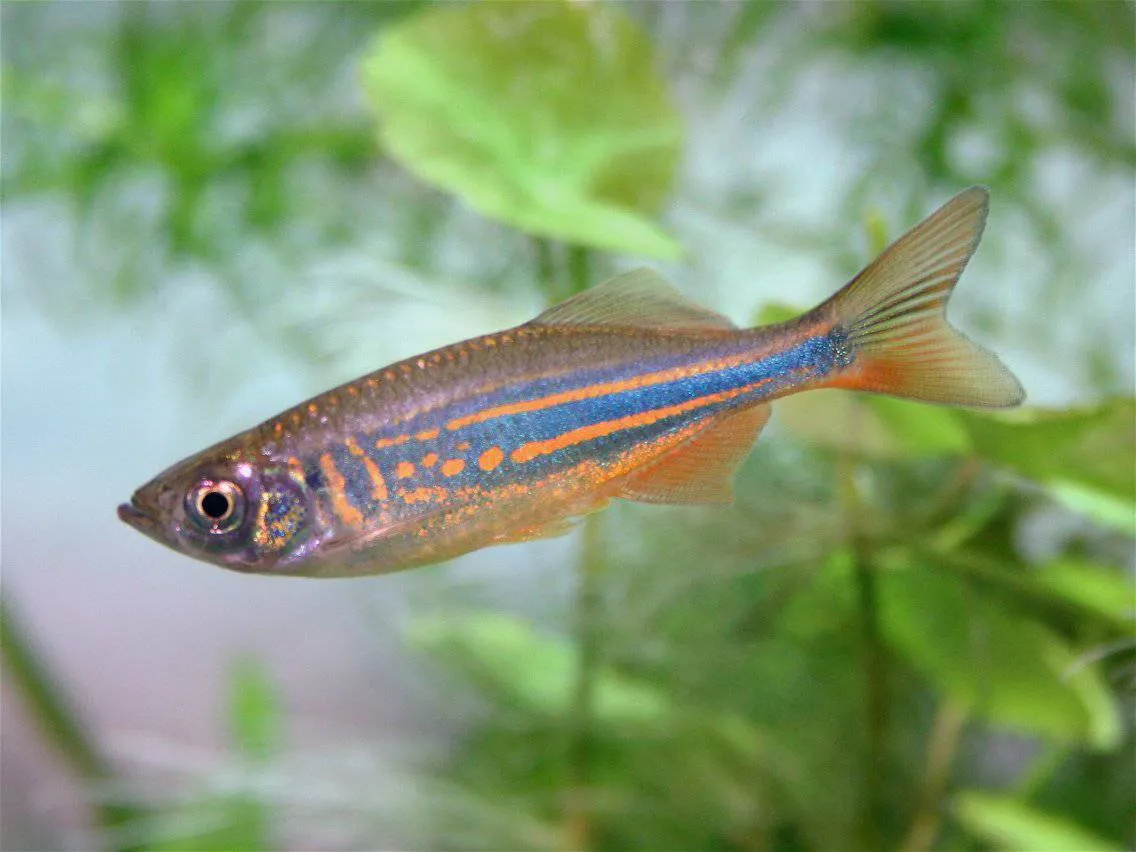
Twelve centimetres of permanent motion in the upper third of the tank, and effectively uncatchable. It is short-finned, competitive at feeding time and completely indifferent to gourami posturing, which is exactly the profile that works here. Keep eight or more so the group holds formation. Being a surface-oriented fish it needs a lid, and so does the gourami, so nothing is lost by covering the tank.
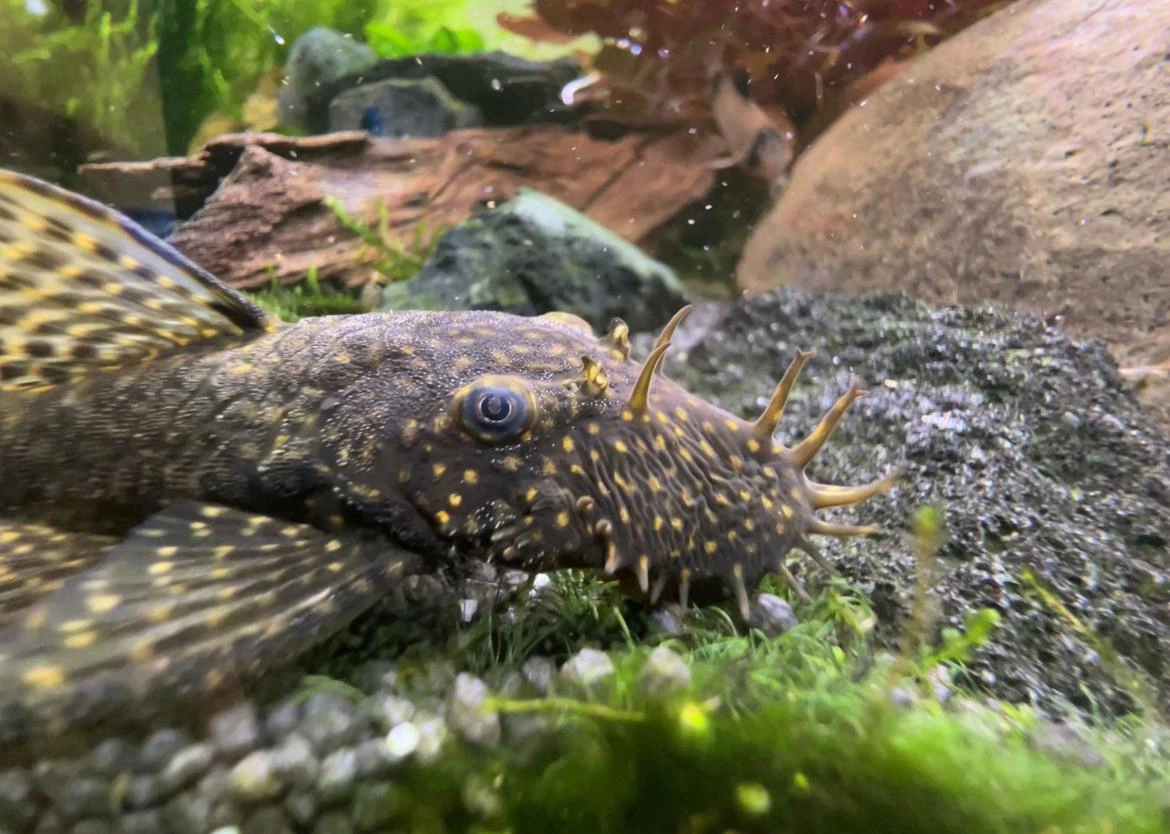
Plated, nocturnal and immovable, with a grazing habit that overlaps the gourami's without any conflict — one takes the wood, the other takes the glass. It handles the same wide pH band and adds a genuine cleaning function in a tank that grows algae under bright light. Feed courgette or wafers after lights out, or the gourami clears them first. Its bioload is heavier than its 12 cm suggests, so allow for it.
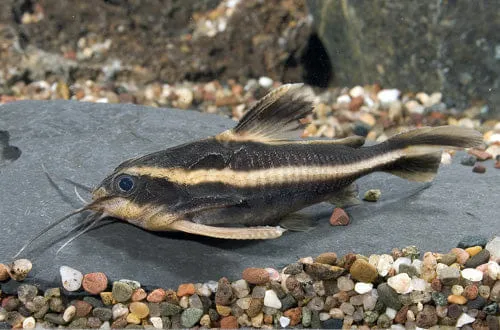
Heavily armoured, nocturnal and content to wedge itself under wood all day, which makes it invisible to a fish that spars by daylight. At 20 cm it is far beyond mouth size and its spines make it genuinely unpleasant to harass. Give it a cave it can back into and it will use the same one for years. Handle it with a container rather than a net — the spines lock into mesh.
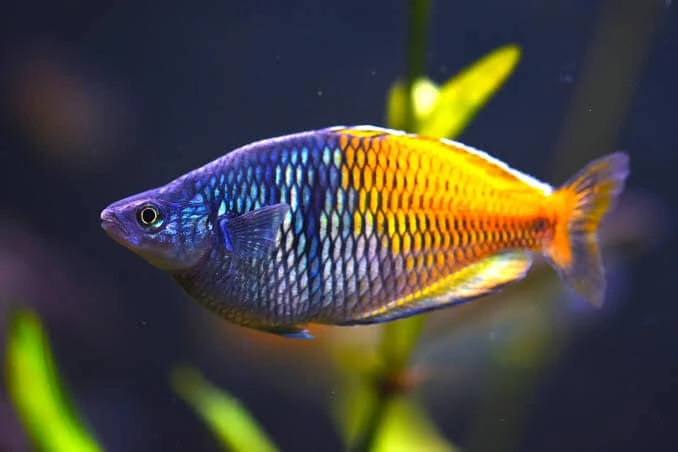
A deep-bodied, hard-swimming 11 cm fish that lives in open mid-water and moves constantly, so it neither invites lip-locking nor gets caught out at feeding time. Six or more in a long tank produce the sort of activity that makes a large gourami look settled. They like harder, more alkaline water, which sits comfortably inside this gourami's unusually wide range. Colour develops slowly, so buy adults if you want it now.
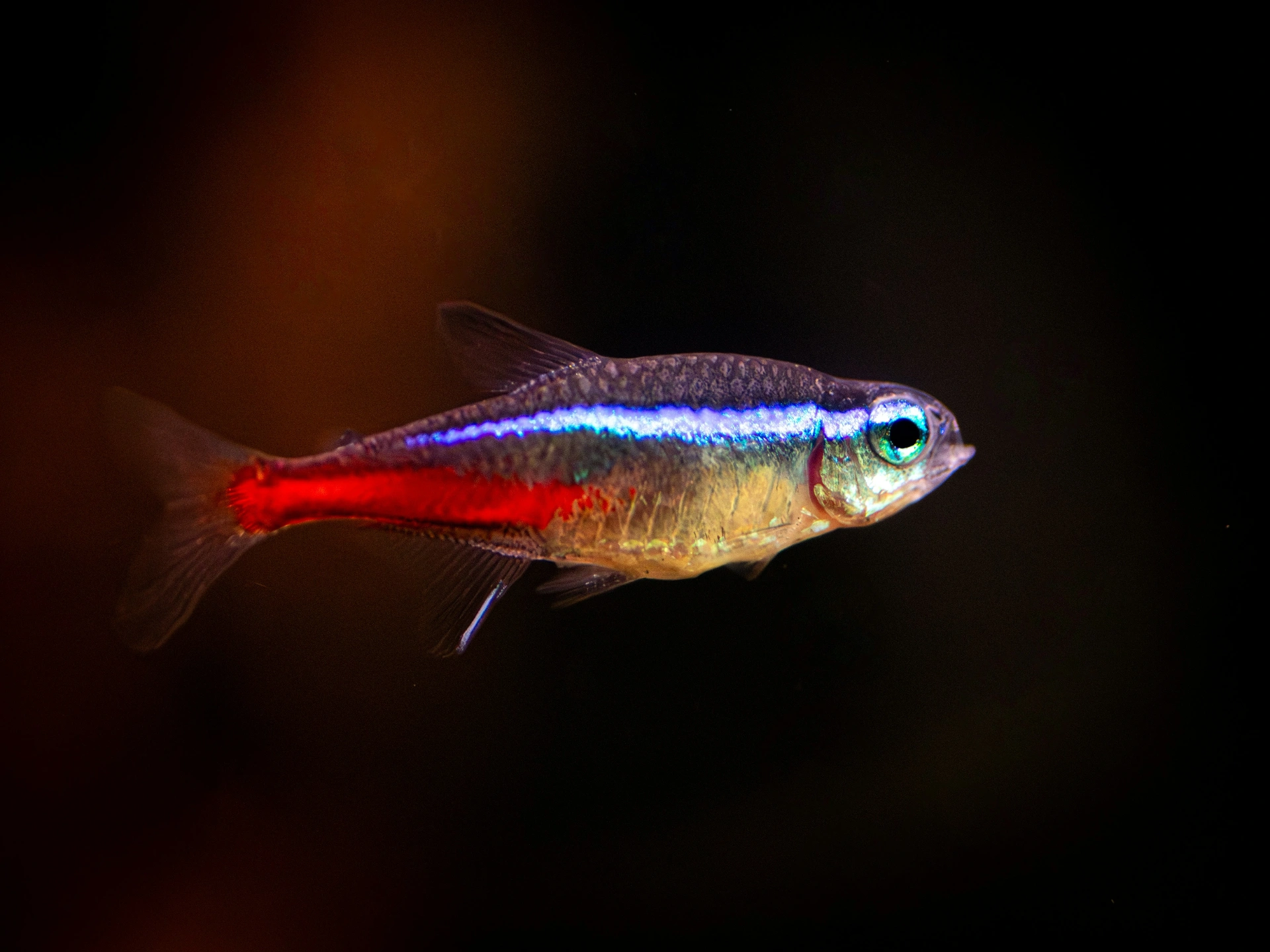
A 3 cm tetra beside a 30 cm omnivore is food, and the fact that the pairing survives the first year is what makes it so common. Juvenile gouramis are sold in the same tanks as neons and the two genuinely coexist at that size, so keepers assume it will hold. It does not: the tetras disappear one at a time as the gourami grows, usually blamed on something else.
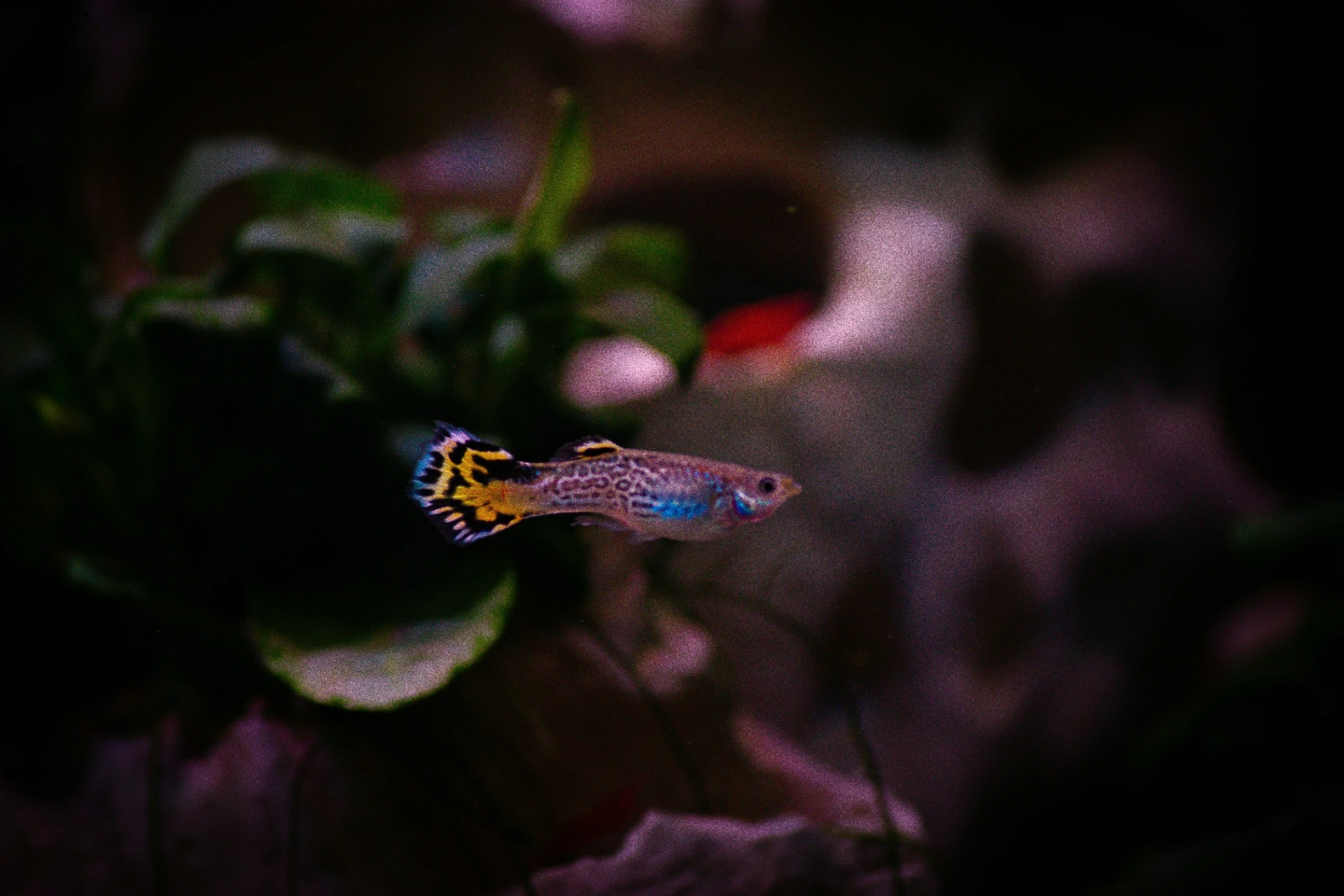
Slow, brightly coloured and trailing a large tail — a precise description of what this fish investigates at feeding time. Even where the guppy is too big to swallow, the tail is reduced within weeks and the fish stops feeding well. Guppies also want harder, cooler conditions than a gourami tank usually runs. Keep them in their own community and use fast, short-finned fish here.
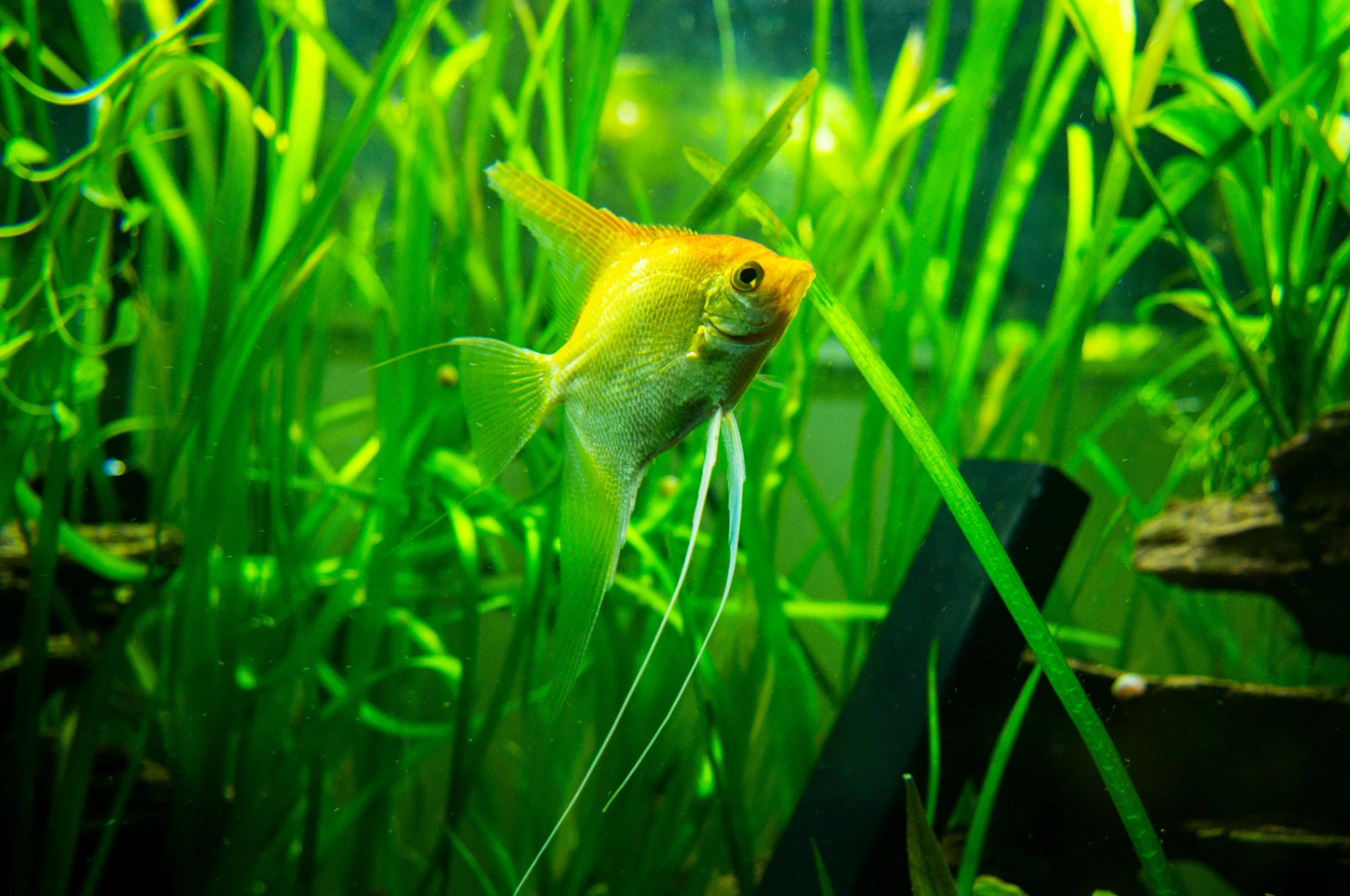
A tall, slow, disc-shaped fish with trailing ventral filaments is the single worst body plan to put in front of a kissing gourami, because it invites both of the behaviours this species is known for. Bouts leave no visible wound and still end with an angelfish that hides and stops eating. The angelfish then takes it out on smaller tank mates, so one bad pairing degrades the whole tank.
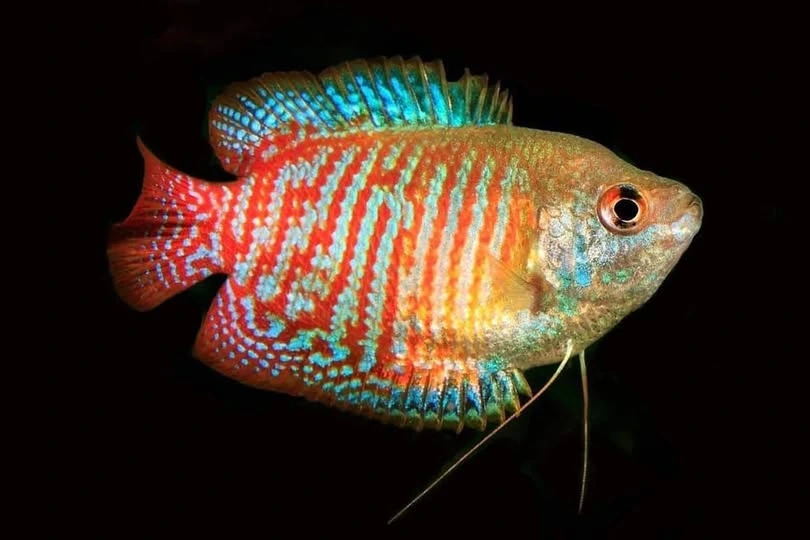
Both fish breathe air and both want the same few centimetres, but one of them is nine centimetres long and the other is thirty. The smaller fish loses access to the surface, loses its sensory feelers, and declines in a way that looks like illness rather than bullying. Shops stock the two together because they share a shelf label, which is the only sense in which they belong together.
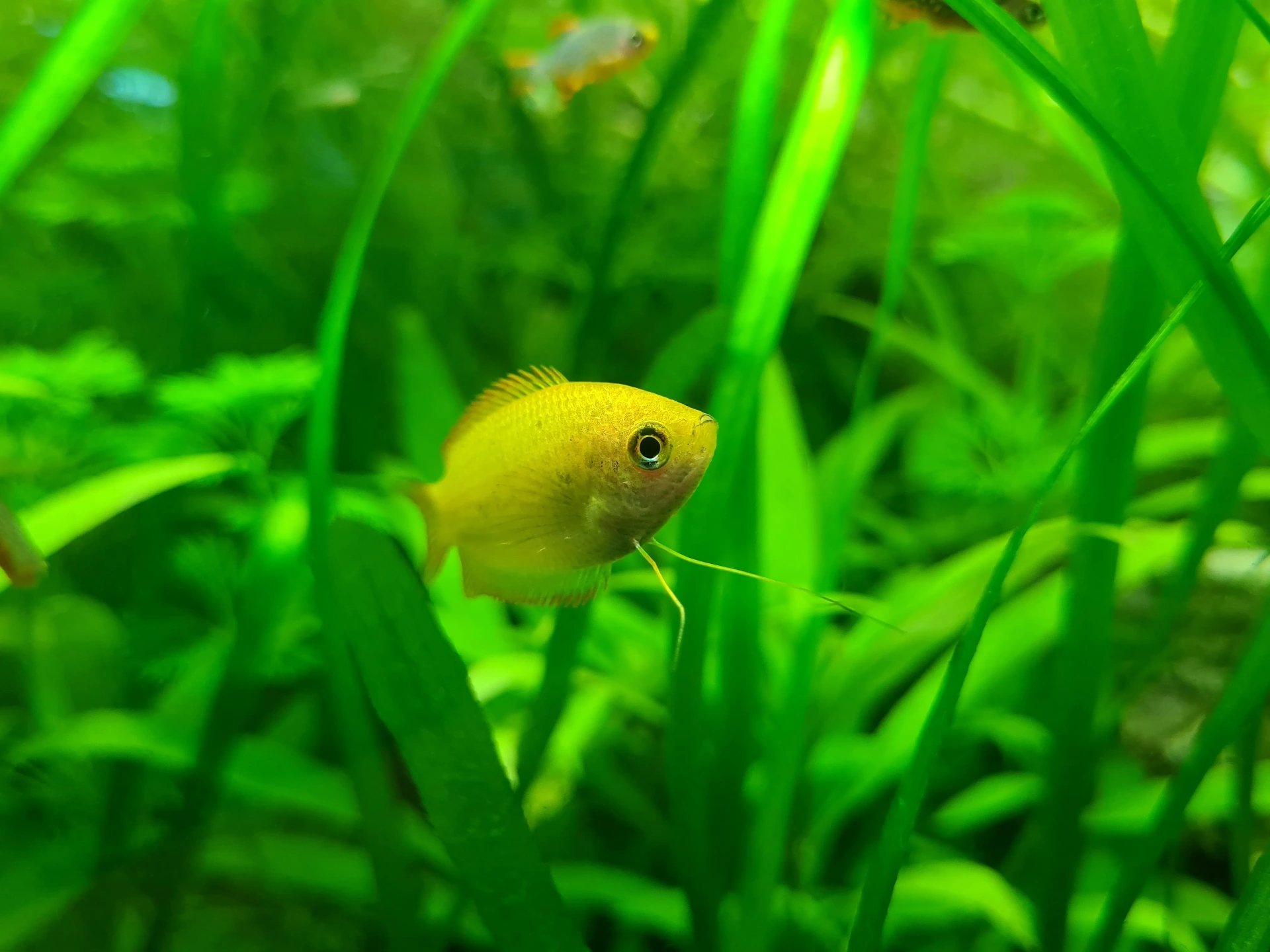
A gentle 5 cm labyrinth fish that will not compete for food and cannot defend a surface territory against anything. It is also small enough to become a target rather than merely a rival as the host matures. Keep honey gouramis in a quiet 20 gallon with rasboras — a tank built for a foot-long grazer is the wrong environment for them at every stage.
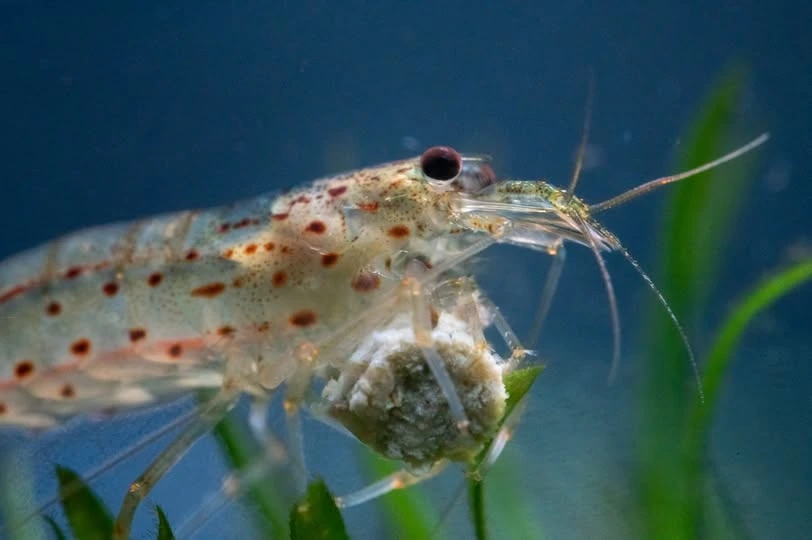
Amanos survive most community fish because 5 cm is too large a mouthful, but that argument does not apply here. An adult kissing gourami works exactly the same surfaces the shrimp graze and will take them, moulting individuals first. The database flags this species as not shrimp-safe for that reason. If you want an algae crew in a tank this size, use a pleco instead.
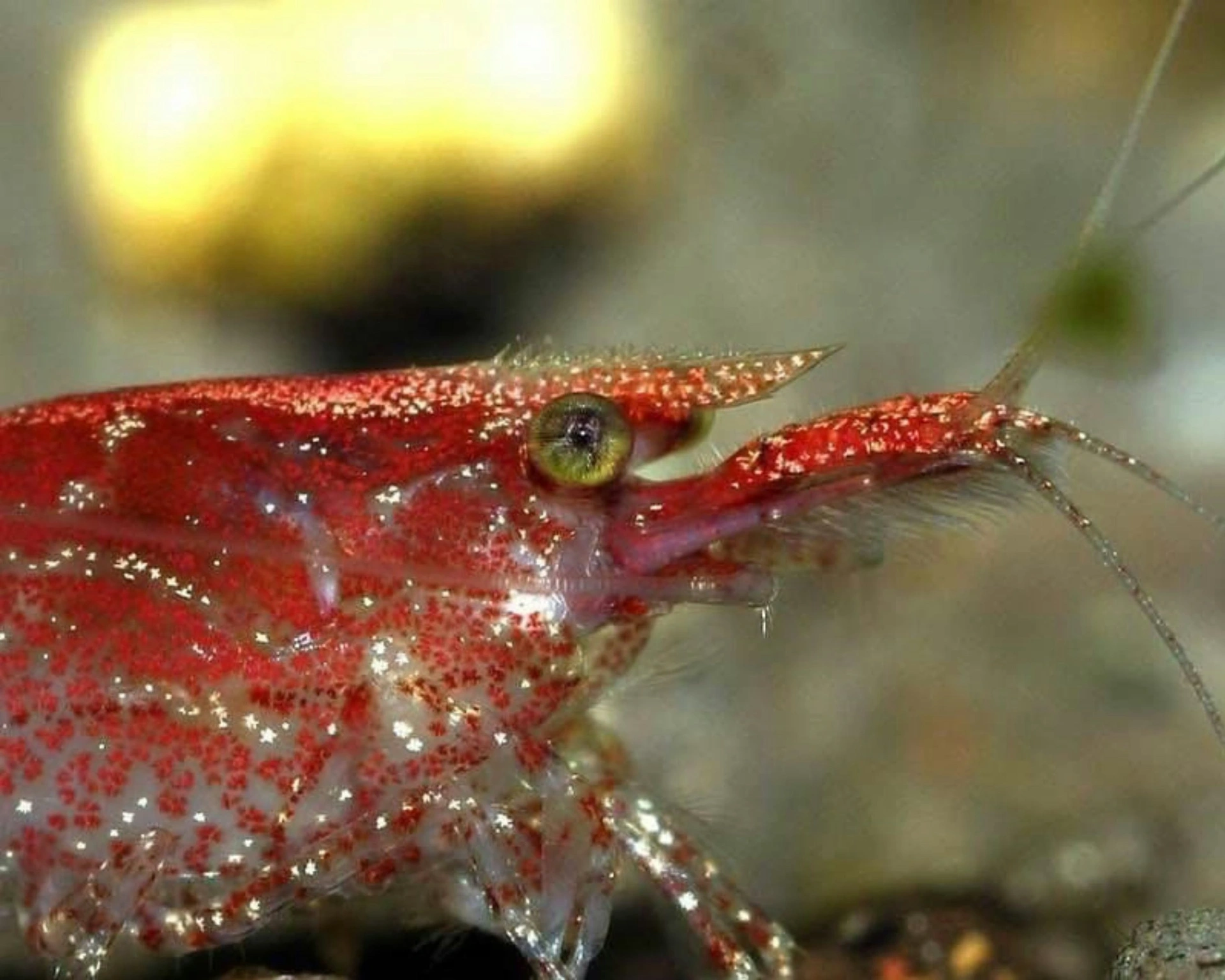
Three centimetres, slow, and permanently out in the open on plants and wood — a colony does not establish and adults do not last. Even in heavy planting the gourami grazes the same leaves the shrimp shelter under, so encounters are constant rather than occasional. Shrimp and a full-grown kissing gourami is a two-tank plan.
Two that work in a genuinely large tank and cause trouble in a merely big one.
Severum
Heros efasciatus
Condition: Only in a 125 gallon or larger, and only outside breeding
Two similar-sized, similar-tempered, plant-eating fish can share a big tank without much happening, and severums are among the calmer large cichlids. The trouble starts when a severum pairs off and claims a corner, at which point a gourami that wanders through gets driven repeatedly. Length is what makes it work: a six-foot tank has room for two territories, a four-foot tank has one. Do not attempt it with a bonded severum pair.
Condition: Only with a heavily broken-up surface and one male of each
The same family, the same size class and the same taste for the top of the tank, which is both why it looks like an obvious match and why it often is not. It works where floating plants and wood split the surface into separate territories, and fails in an open tank where the two meet constantly. Keep one male of each species, never two of either. If either fish starts holding station over the other, the experiment is over.
Drop your tank size and shortlist into the stocking calculator to check bioload, swim-level balance and compatibility flags.
Frequently asked questions
How big do kissing gouramis get?
Thirty centimetres, about 12 inches, and they are routinely sold at 5 cm with no size warning on the tank. That single fact decides most of this page: the tank mates that suit the juvenile are food or targets for the adult. Stock for the finished fish from the start.
How long do kissing gouramis live?
Fifteen to twenty-five years in good conditions, which is longer than most aquarium fish and longer than many aquariums. Pairing one with three-year species means restocking around it repeatedly, so long-lived tank mates like clown loaches and plecos make for a more stable tank.
What size tank do kissing gouramis need?
A 75 gallon, 285 litres, is the working minimum for one adult, and a 100 to 125 gallon is where the species is genuinely comfortable and where more than one can be kept. Length matters more than volume, because a gourami that gets crowded needs somewhere else to be.
Are kissing gouramis aggressive?
Semi-aggressive rather than aggressive. They spar by locking lips with fish of similar shape, test slow-moving fins, and claim the surface, but they do not hunt tank mates the way a large cichlid does. In a tank with the right footprint and the right body shapes around them they behave like a calm centrepiece.
Can two kissing gouramis live together?
In a 100 gallon or larger, yes, and a trio is often steadier than a pair because attention gets divided. In a 75 gallon two adults lock lips over the same territory repeatedly. Never keep two in a tank shorter than four feet.
Will a kissing gourami eat my plants?
Soft-leaved plants, yes — this is a grazing herbivore and it rasps leaves as readily as it rasps glass. Anubias, java fern and bolbitis attached to wood survive; stem plants and most carpets do not. Build the layout from wood and rock and treat plants as expendable.
Can kissing gouramis live with shrimp or snails?
Not with shrimp. An adult grazes the same surfaces shrimp use and the database marks the species as not shrimp-safe, so even 5 cm amanos are taken eventually. Large, hard-shelled snails fare better, though nothing about them is guaranteed with a fish this size.