Oscar Tank Mates: 7 Compatible Species (and 7 to Avoid)
Almost everything written about Oscar tank mates skips the part that decides the outcome: a 35 cm fish that shifts rocks with its face, uproots anything planted, and produces more waste than the rest of the stock combined. Temperament barely enters into it. What matters is whether the tank has the floor space to hold two large fish and the filtration to keep up with them — and for most people asking this question, it does not, which makes the honest answer a species-only tank rather than a shortlist.
Reviewed by the AquariumStocking team · Updated
The tank size that makes this work
Nothing below carries any weight until the volume is settled. An oscar alone needs 285 litres, roughly 75 gallons, and that figure assumes one fish with nothing else competing for the floor. Every tank mate you add has to be paid for twice — once in swimming room, once in the biological load the filter has to process. Our database puts the oscar minimum at 75 gallons.
75 gallons
One oscar, and realistically one large armoured bottom-dweller. That is the whole stocking list. People routinely try to add a second big cichlid at this volume and the tank runs at the edge of its filtration for years, with nitrates that never quite come down between water changes. If 75 gallons is your ceiling, the better plan is a single oscar with a pleco and a heavily over-specified filter rather than a community you are constantly managing.
The first volume where a genuine tank mate makes sense rather than merely fitting. A shoal of silver dollars or a second robust cichlid works here because the extra length gives the oscar somewhere to be that is not on top of the other fish. Waste is still the limiting factor — plan on two canisters or a sump, and weekly changes of half the volume rather than a quarter.
Room for an oscar plus a shoal plus a large catfish, with the layout left intact long enough to look deliberate. At this footprint the oscar can rearrange its own corner without disturbing everyone else, and the water volume buffers the ammonia spike that follows every feeding. This is also the size at which a second oscar stops being a gamble, provided both are raised together.
Anything that fits in the mouth is food, not a tank mate
An adult oscar can engulf a 12 cm fish without effort, and it does so opportunistically rather than out of aggression — usually at night, usually with no evidence left. The practical floor is roughly 15 cm of adult body depth, and it needs to be depth rather than length, because a slim fish of the same length still goes down. That single threshold removes tetras, rasboras, livebearers, corydoras, dwarf cichlids and every small pleco from consideration.
Waste is the second filter on the list
Oscars are messy feeders that tear food apart rather than swallowing it, and they produce a bioload out of all proportion to their length. Adding a second heavy-waste fish — a large pleco, a bichir, another cichlid — roughly doubles the demand on your filtration, so the question is never just whether the pairing gets along. Budget filtration for the combined load before you buy the second fish, not after nitrates climb.
The tank gets redecorated whether you like it or not
Substrate is moved, wood is shoved, heaters get dislodged and plants come up roots first. Tank mates that depend on a stable layout — anything that holds one cave, or a species that needs dense planting to feel secure — will spend its life being evicted from wherever it settled. Choose fish that either carry their armour with them or are large enough to ignore the disruption.
Build the stock list at the same time, not in stages
An oscar introduced first treats the entire tank as its own and will contest a newcomer added months later. Adding everything together as juveniles, or at minimum adding the oscar last, avoids most of the conflict people attribute to the species. Where that is not possible, rearrange the hardscape on the day you add the new fish so nobody is defending an existing claim.
Similar size beats similar temperament
A robust cichlid of comparable bulk is a safer neighbour than a peaceful fish half the size, because parity is what stops the pursuit before it starts. This is the reverse of how most community stocking works and it is why the compatible list below is full of fish that would be unsuitable almost anywhere else. Match the mass; the behaviour follows.
Know the point where the honest answer is nothing
Plenty of oscars live well in a bare 75-gallon tank with a piece of wood and no company at all, and there is no welfare cost to that. If the volume is fixed, the filtration is already working hard, or you want a planted tank you can look at, keeping one fish and doing it properly beats forcing a second in. Run the stock list through the calculator before you commit — it will tell you what the tank can actually carry.
Compatible species, ranked by fit
Ordered by how much tank each one needs alongside the oscar, smallest requirement first. None of these belong in anything under 75 gallons.
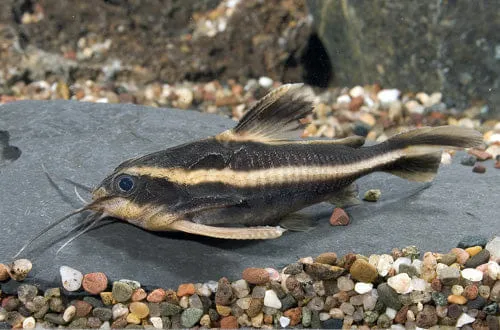
Striped Raphael Catfish
Platydoras armatulus
The single most forgiving choice on this list. It is a solid, spined catfish that wedges itself under wood during the day and comes out to eat after dark, which means it is rarely in the oscar's way at all. Nothing about an oscar's bulk or digging bothers it, and its armour makes it a poor target even for a fish that tries. The only real caution is that it will happily eat leftover food indefinitely, so it is easy to overfeed a tank that already has a waste problem.
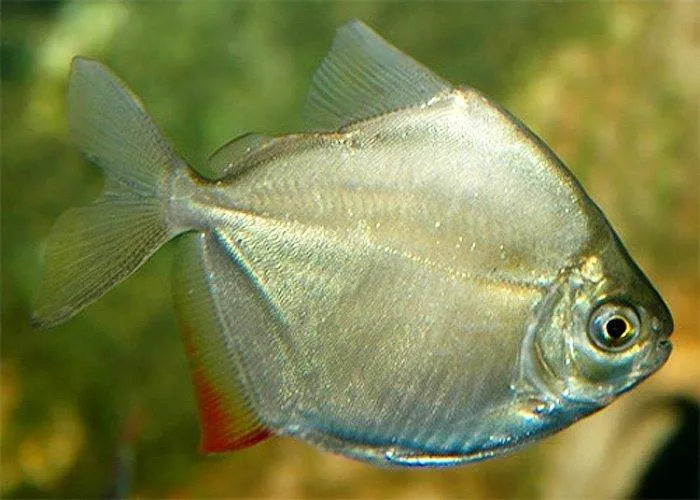
A deep, disc-shaped shoaler that is exactly the wrong shape to be swallowed, and fast enough to stay out of reach if the oscar does take an interest. Kept in a group of five or more they fill the upper half of the tank, which is the part an oscar largely ignores. They are herbivorous, so anything green in the tank goes — but in an oscar tank there is nothing green left anyway. Buy them at full size or close to it; juveniles under 10 cm are still within mouth range.
A broad South American cichlid that reaches 25 cm and holds its ground without escalating, which is an unusual combination at this size. It occupies mid-water rather than the floor, so the two fish rarely compete for the same territory. Where it goes wrong is at spawning time, when a severum pair will hold a corner and the oscar will test it — long tanks defuse this, tall ones do not. Feed it more plant matter than the oscar gets, or it fills out on the wrong diet.
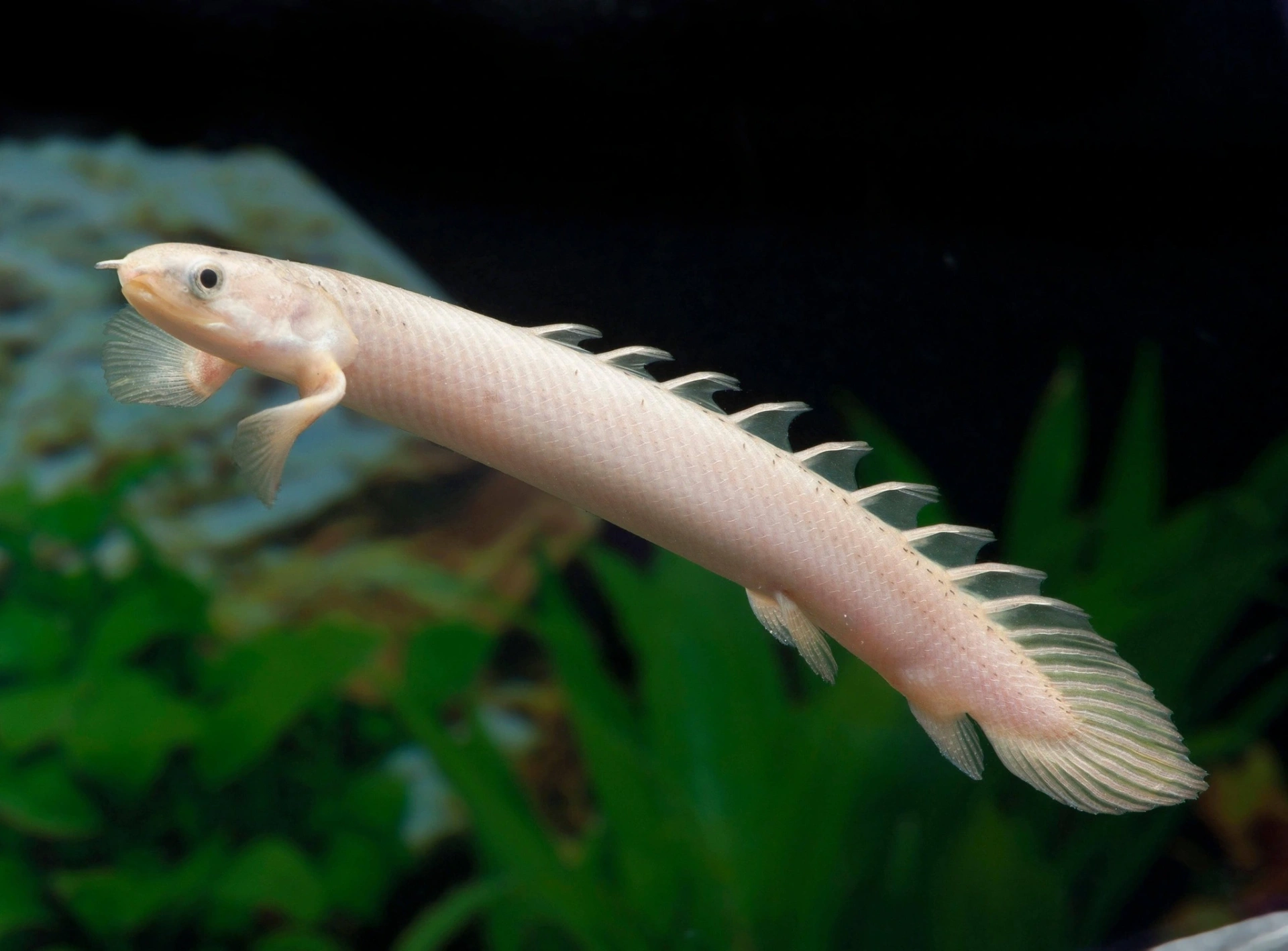
An armoured, air-breathing predator that lives on the bottom and treats the oscar as scenery. Nothing an oscar does registers as a threat to it, and its plated body puts it well outside the risk category. It will eat anything small that reaches the substrate, which in this tank is only ever leftover food. Keep the lid weighted — bichirs are determined climbers and this is the most common way people lose one.
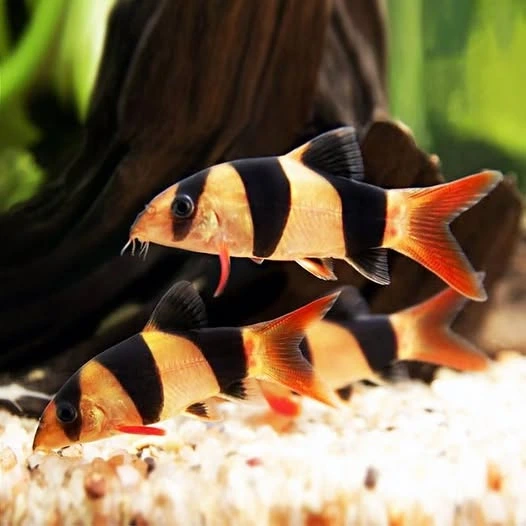
Reaches 30 cm in a tank that is genuinely large enough, which is what makes it viable here and useless in most community setups. A group of five or more is busy, sociable and thick-bodied, and they clean up leftovers the oscar scatters. They need caves they can actually get into, so anchor the wood — an oscar will move anything loose and a loach that loses its retreat becomes reclusive and stops feeding properly.
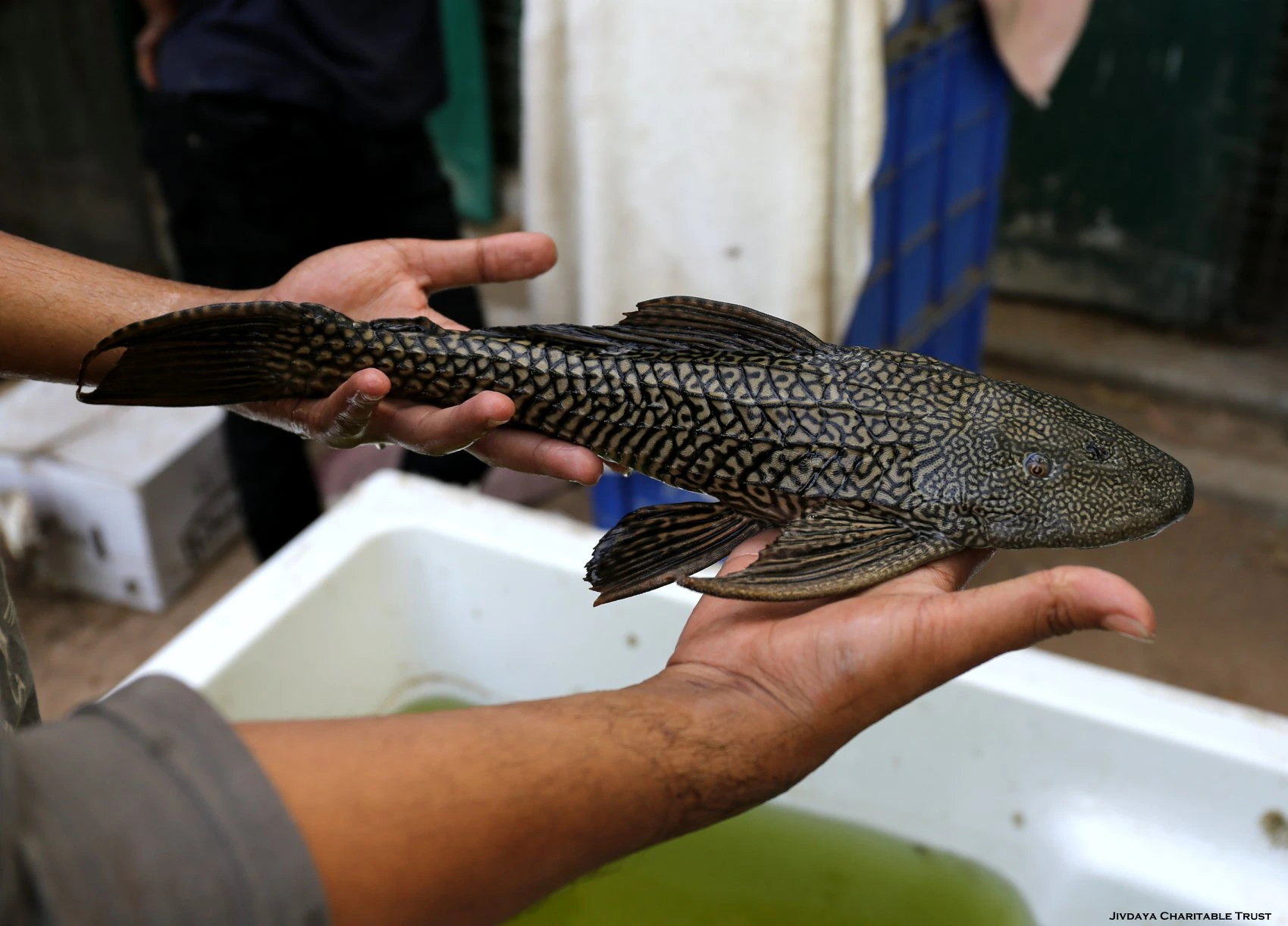
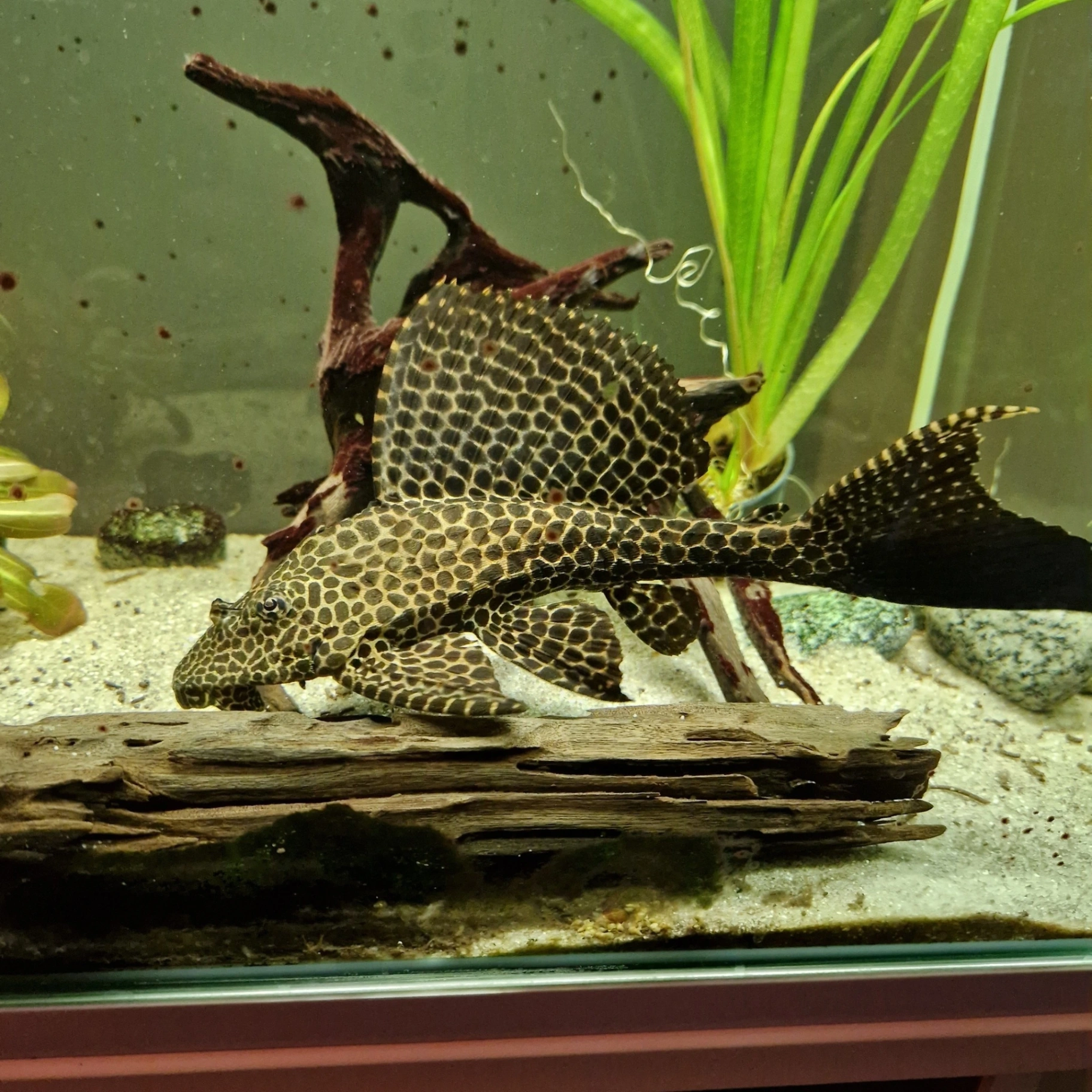
The traditional oscar companion, and it works for the reason it always has: it is armoured, it grows to 45 cm, and it is indifferent to being shoved. The catch is the one nobody mentions at purchase — it is a serious waste producer in a tank that already has one, and it will occasionally rasp at the flanks of a slow fish for slime coat. Give it real driftwood to graze on and check the oscar's sides periodically for the marks that betray the habit.
Everything the common pleco offers with a better temperament and an even larger adult size, which at 50 cm is also the problem. Our database puts its own minimum at 570 litres, so this pairing only makes sense in a 150-gallon tank or larger — below that you are housing two fish that each need the whole footprint. Where the volume exists it is the better of the two plecos, less inclined to bother tank mates and far more impressive as an adult.
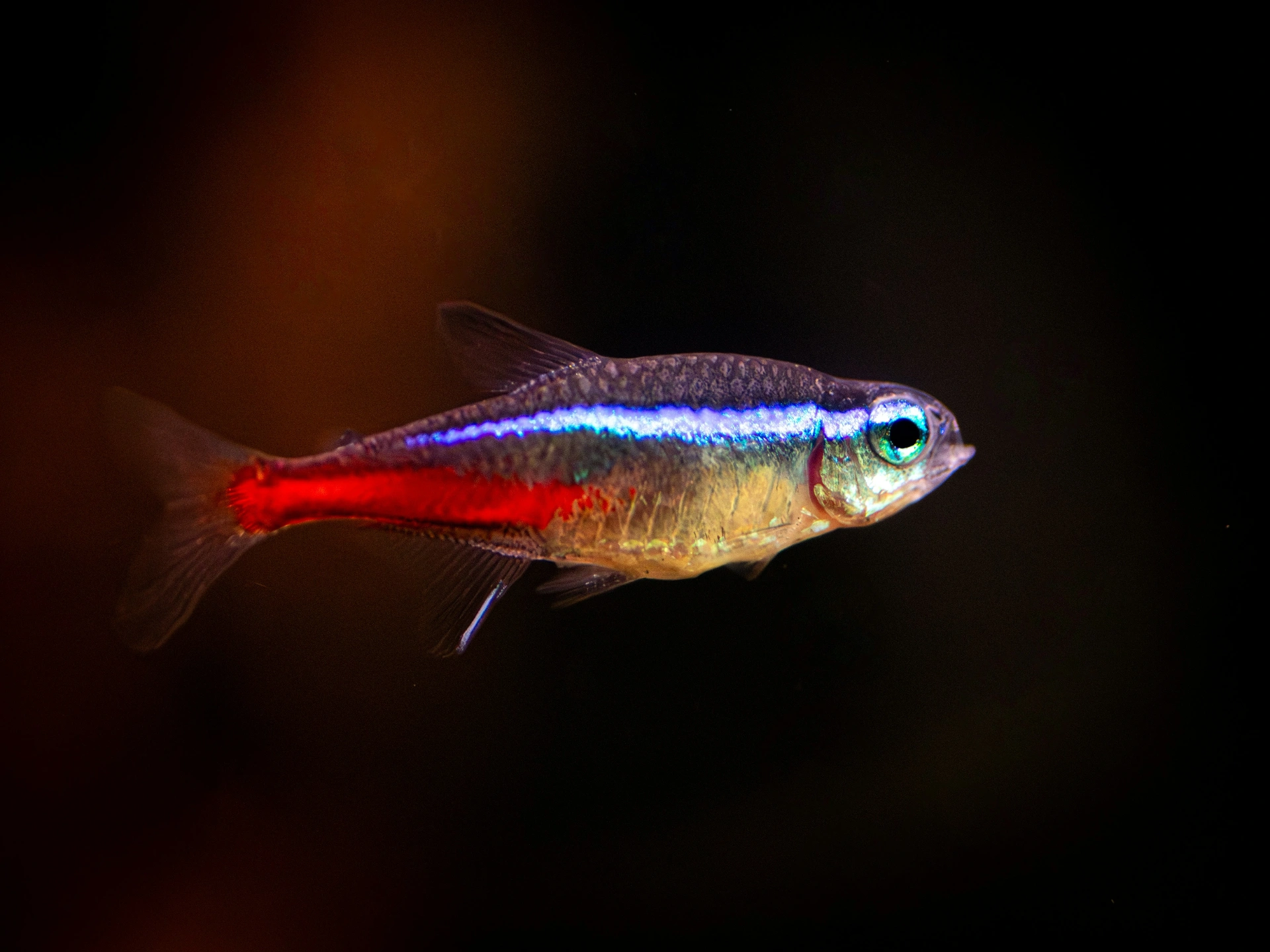
Three centimetres of slow fish in front of a mouth built for whole prey. This is not a risk to be mitigated with planting or a larger shoal — it is a feeding, and it happens in the first week. Anything of this size added to an oscar tank should be understood as live food, which is exactly how oscars are often fed and why the mistake is so common.
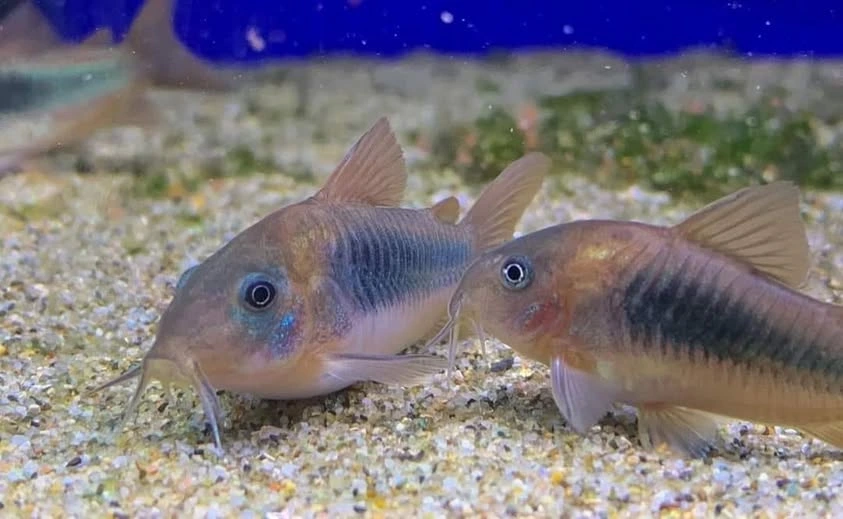
The stiff pectoral spines mean an oscar sometimes cannot swallow one, and that outcome is worse than the alternative: a cory lodged in the throat kills both fish. At 7 cm they are well inside the attempt range, and they feed on the substrate the oscar is busy excavating. If you want bottom activity in this tank, use a raphael or a bichir with real armour.
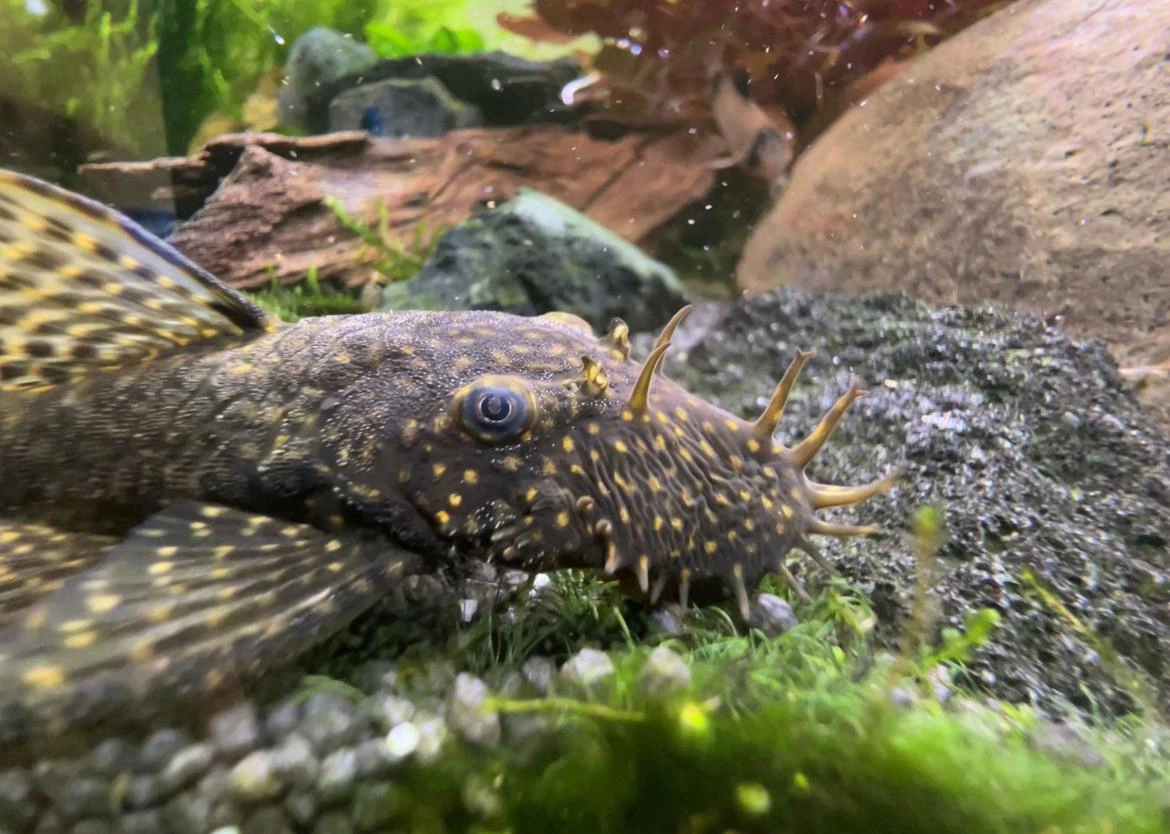
Frequently recommended as the sensible pleco for large tanks, and it is — just not for this one. At 12 cm it is below the threshold an adult oscar can swallow, and being armoured only means the attempt goes badly for both. Common and sailfin plecos do the same job at a size the oscar will not test.
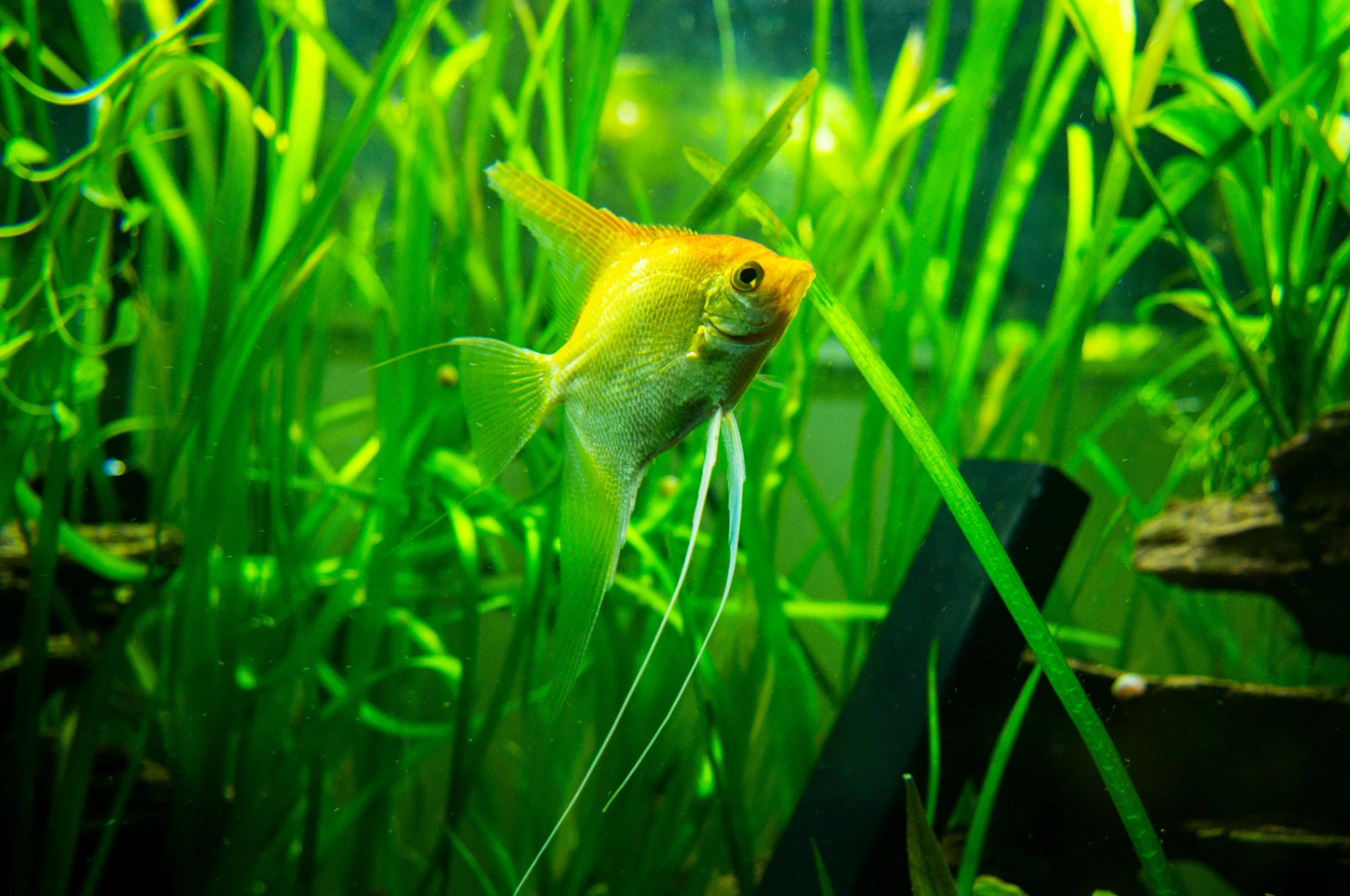
The height is misleading. An angelfish is a thin, slow-moving fish that an oscar will pick at from the side, and the trailing fins are shredded long before anything more decisive happens. Both being cichlids from the same continent gets this pairing suggested constantly, and it is a size mismatch first and a behaviour mismatch second.
Wrong on every axis at once. A discus needs 28–30 °C, near-zero nitrate and a calm tank; an oscar delivers none of those, and produces the waste load that makes discus keeping fail. Even setting the water quality aside, the discus is smaller, slower and shaped to be bullied. There is no tank size that reconciles the two.
A calm 15 cm cichlid that has no strategy for a fish more than twice its bulk. It occupies the bottom of the tank, which is precisely the zone the oscar claims, so there is no way for it to stay out of the way. It stops feeding and holds a corner long before anyone notices the tank has a problem.
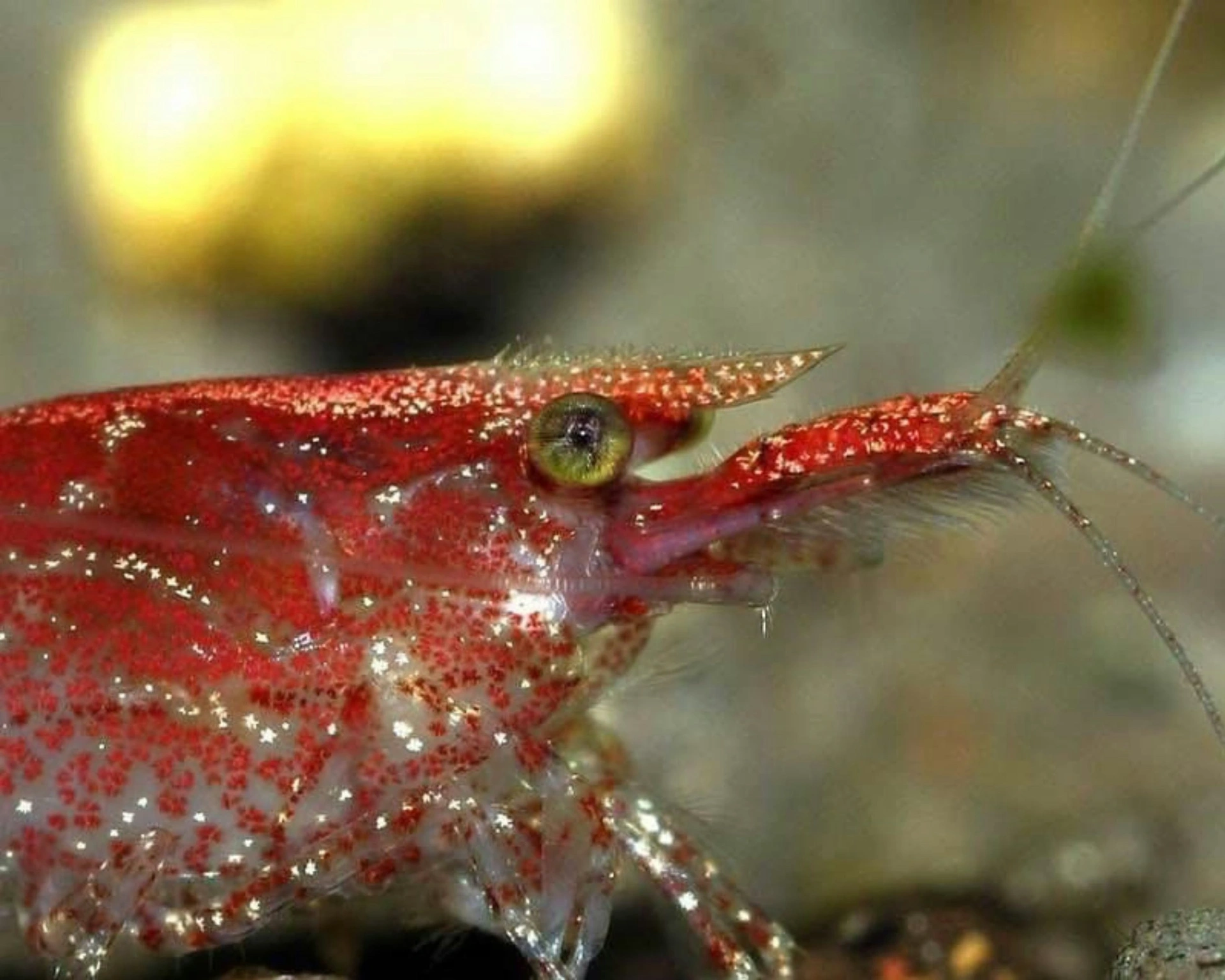
An oscar sifts and excavates substrate as a matter of routine, which is exactly how a shrimp colony gets found. Even in a heavily planted tank — and an oscar tank will not stay planted — the colony is eaten out within weeks. Nothing invertebrate survives long enough to be worth the cost here.
Three big cichlids that work or fail on the individual fish and the footprint you give them. The condition on each card is the deciding factor.
Jack Dempsey
Rocio octofasciata
Condition: Only in 125 gallons or more, with both fish added at the same time as juveniles
Two comparably sized Central and South American cichlids that will either establish separate ends of the tank or fight over the middle, and which of those happens is down to the individuals. Introduced together and given enough length, keepers run this pairing for years. Introduced late into an established oscar tank, it goes wrong within days. Have a second tank ready before you try it rather than after.
Condition: Only in 125 gallons or more, and only with sightlines broken by wood or rock
A green terror matches the oscar in size and exceeds it in willingness to escalate, so parity here cuts both ways. It works in a long tank with visual barriers because neither fish can hold the whole floor at once, and it fails in an open rectangle where every encounter is a confrontation. Watch feeding time in particular — this is where the pursuit usually starts.
Condition: Only for keepers prepared to separate them permanently at short notice
Flowerhorns are individually variable to a degree that makes any general rule useless: some ignore an oscar entirely, others attack anything that moves for their whole lives. The size match is right and the space requirements are similar, so the pairing is physically sensible. It is the temperament lottery that makes it conditional, and the losing outcome is a dead fish rather than a stressed one.
Drop your tank size and shortlist into the stocking calculator to check bioload, swim-level balance and compatibility flags.
Frequently asked questions
What is the minimum tank size for an oscar with tank mates?
Our database sets 285 litres, about 75 gallons, for a single oscar with nothing else in the tank. Once you add a tank mate the working figure becomes 100 gallons, and a shoal plus a large catfish needs 125. The constraint is filtration as much as swimming room — an oscar tank at its minimum volume has no margin left for a second heavy-waste fish.
Can you keep an oscar in a 55 gallon tank with other fish?
No. A 55 gallon is below the minimum for one adult oscar on its own, so there is no room to add anything. The tank looks fine for the first year while the fish is still growing, which is why the setup is so common, and it becomes a problem at around 25 cm. Upgrade the tank or keep a single fish.
Can two oscars live together?
Yes, in 125 gallons or more, and best if they are raised together from juveniles. A bonded pair is stable; two unrelated adults introduced later frequently are not. Keep a second tank available before you try it, because the failure mode is fast.
Will an oscar eat other fish?
Anything under about 15 cm, yes — usually overnight and usually without a trace. It is opportunistic feeding rather than aggression, so a peaceful oscar and a hungry oscar do the same thing. This is why every species on the compatible list is either large, armoured, or both.
Do oscars destroy plants and decorations?
Consistently. They move substrate, shove wood, uproot plants and dislodge equipment, and they do it repeatedly rather than once. Anchor hardscape to the glass or to weighted bases, use suction-free equipment mounts where possible, and treat any planted layout as temporary unless the plants are attached to wood.
How much filtration does an oscar tank need?
Plan for turnover of six to eight times the tank volume per hour, split across two filters or a sump so that maintenance never leaves the tank unfiltered. Oscars tear food apart and produce large amounts of solid waste, so mechanical capacity matters as much as biological. Weekly water changes of 40–50 percent are normal rather than excessive.
Can an oscar live with a pleco?
A common or sailfin pleco, yes — both are armoured and grow large enough to be ignored. A bristlenose is too small and should not be tried. Note that plecos add substantially to the waste load and occasionally rasp at the slime coat of slow-moving fish, so check the oscar's flanks now and then and provide driftwood to graze on.
Is a species-only tank better for an oscar?
For most keepers, yes. A single oscar in a 75 gallon tank with good filtration and a solid piece of wood is a well-kept fish, and it removes the compromises that come with squeezing in a second large species. Oscars are interactive enough on their own that the tank does not feel empty.