Pick the water chemistry group first, not the fish
Rift lake cichlids from Malawi and Tanganyika evolved in hard, alkaline water — pH 7.8–8.6 and high mineral content. South American cichlids evolved in soft, acidic blackwater at pH 6.0–7.0. You cannot mix these two worlds in one tank and keep both healthy; one group is always fighting its environment. Test your tap water before you fall in love with a species. Hard alkaline tap makes you a natural Malawi keeper; soft acidic tap makes rams and apistos easy and mbuna a chore.
Territoriality is the real stocking limit
With most fish you stock by bioload. With cichlids you stock by floor space and sight lines, because an adult male defends a territory measured in square centimetres of substrate, not litres of water. A single male jack dempsey will claim the entire footprint of a 200 L tank. That is why rift lake tanks are deliberately overstocked — crowding spreads aggression so no one fish gets hunted to death — while a New World cichlid tank is deliberately understocked with broken sight lines instead.
Adult size, and what it does to your filter
Cichlids eat like predators and produce waste to match. An Oscar at 35 cm has roughly the bioload of thirty neon tetras and will visibly dirty a tank in three days. Plan for oversized filtration (2–3× turnover of what the tank size suggests) and weekly 40–50% water changes on any tank holding a large cichlid. If that maintenance schedule sounds unrealistic, choose from the dwarf group instead — it is a far better outcome than an under-filtered Oscar.
Dwarf cichlids are the answer for most community tanks
Rams, apistogrammas, kribensis and keyholes give you the full cichlid experience — pair bonding, substrate spawning, parents herding fry — inside 80–150 L, alongside tetras and corydoras. Their aggression is real but localised to a 30 cm radius around a cave during spawning. If you want cichlid behaviour without rehoming your community, this is the group to shop in.
Buy the species, then design the hardscape around it
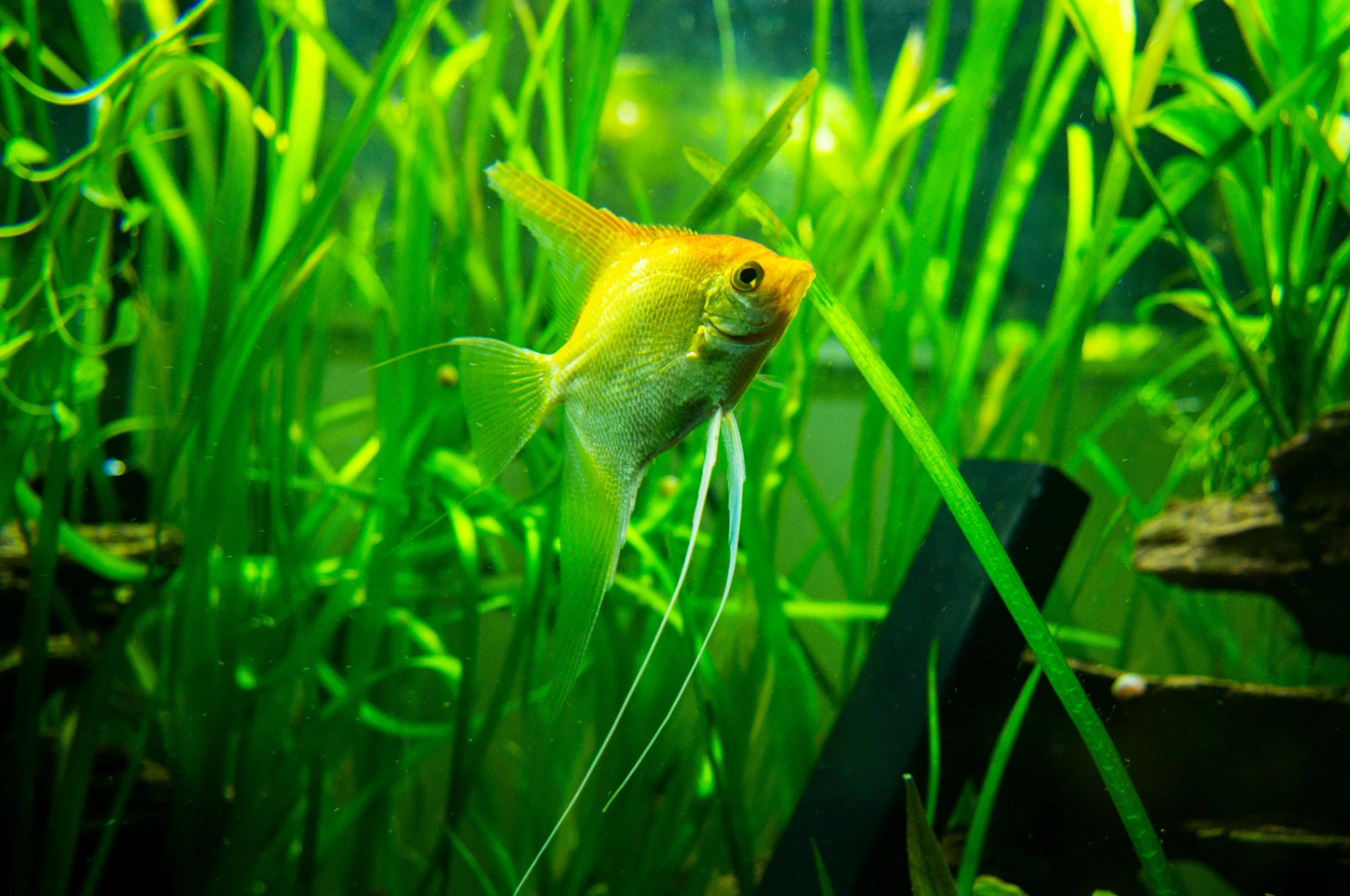
Mbuna need a rock wall with caves from substrate to surface and almost no plants. Tanganyikan shell dwellers need a sand bed 5 cm deep with escargot shells scattered across it. Discus and angelfish need vertical height, driftwood branches and calm flow. Apistogrammas need leaf litter and dark substrate. Getting the hardscape wrong is the most common reason a healthy cichlid still looks washed-out and hides — the fish is telling you the tank is not its habitat.
Hybrids are a personal call — but know what you are buying
Blood parrots and flowerhorns are man-made hybrids with no wild counterpart. Blood parrots have deformed mouths that never fully close, which limits feeding and can cause problems with faster tank mates. Flowerhorns are single-specimen fish, often kept alone for life. Neither is a bad pet in the hands of an owner who knows this going in — but neither belongs in a first cichlid tank.