Species Guide
    9 min read

    Types of Loaches: 7 Species & Care Needs

    "Loach" is a shop label stretched across fish that have almost nothing in common beyond living on the bottom. A 3 cm rosy loach, a 30 cm clown loach and a cold-water, high-flow hillstream all end up in the same tank aisle, and buying one on looks alone is how people end up with a fish their tank cannot support. This guide covers the seven loaches in our database with live care numbers for each, sorted by what they actually need from you.

    Reviewed by the AquariumStocking team · Updated

    Collage of loach species: kuhli, clown, yoyo, and hillstream

    How to choose

    Work out which kind of loach you are actually shopping for

    There are three distinct groups here. Social bottom loaches — clown and yoyo — are boisterous, long-lived botiids that want a real group, a big footprint and warm, well-filtered water. The hillstream loach is a specialist: cool, fast, oxygen-saturated water and a diet of biofilm scraped off hard surfaces. Nano loaches — dwarf chain and rosy — stay small enough for planted tanks under 100 L and behave more like tiny schooling fish than substrate lurkers. Kuhli and weather loaches sit off to the side as the burrower and the cold-tolerant oddball. Decide which of those tanks you have before you decide which fish you like.

    Group size is not optional for any of them

    Every loach on this list is social, and the minimums in our database are honest minimums, not suggestions. Kuhli, dwarf chain and rosy loaches want six or more; clown and yoyo loaches want five or more; hillstreams and weather loaches want three or more. A single kuhli hides permanently and you never see it. A single clown loach becomes withdrawn and often stops eating properly. Under-grouped botiids also redirect their energy at tank mates — most "my yoyo loach turned aggressive" reports are a group-of-two problem, not a species problem.

    Flow and temperature split this list in half

    Clown, yoyo, kuhli and dwarf chain loaches are warm-water fish (24–30 °C) that want moderate flow. Hillstream loaches want 18–24 °C with turnover high enough to ripple the surface and a powerhead aimed along the glass — they will not tolerate a warm, still tank, and pairing them with discus or dwarf chain loaches is a slow failure. Weather loaches sit at 15–25 °C and are genuinely happy unheated in a cool room. Rosy loaches prefer the low end of tropical at 20–26 °C. Check your existing tank temperature before you shortlist anything.

    The hillstream needs a purpose-built tank, not a corner of yours

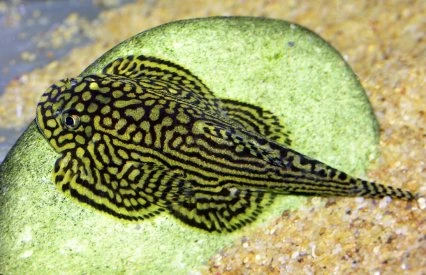
    Sewellia lineolata evolved on rock faces in fast Vietnamese streams. It needs a mature tank with algae and biofilm already established on smooth stones and glass, strong linear flow from a powerhead or spray bar, high dissolved oxygen, and cool temperatures. Bare new tanks starve them; warm tanks suffocate them. If you can commit to that setup, they are one of the most rewarding fish in the hobby — flattened, patterned, and constantly grazing in the open where you can see them. If you cannot, pick a different loach.

    Sand, hiding places, and a lid

    Loaches probe substrate with sensitive barbels, so sharp gravel wears them down — sand or smooth rounded gravel is the default for kuhli, weather, clown and yoyo loaches. All of them want caves, driftwood tangles and shaded overhangs, and they will use every one of them. Kuhli and weather loaches in particular are escape artists that will find any unsealed filter cut-out or gap at the back of the lid. Seal the gaps before you add the fish, not after you find one on the floor.

    Snail control is a side effect, not a job description

    Yoyo and dwarf chain loaches will strip a pest snail population fast, and that is a legitimate reason to like them. It is not a reason to buy them for a tank that is too small or too cold. A yoyo loach needs 150 L and a group of five whether or not you have snails, and it will also harass nerites and small shrimp once the pest snails are gone. Buy the loach because you want the loach.

    The species, ranked by fit

    Every parameter below is pulled live from our species database.

    Kuhli Loach emerging from aquarium plants

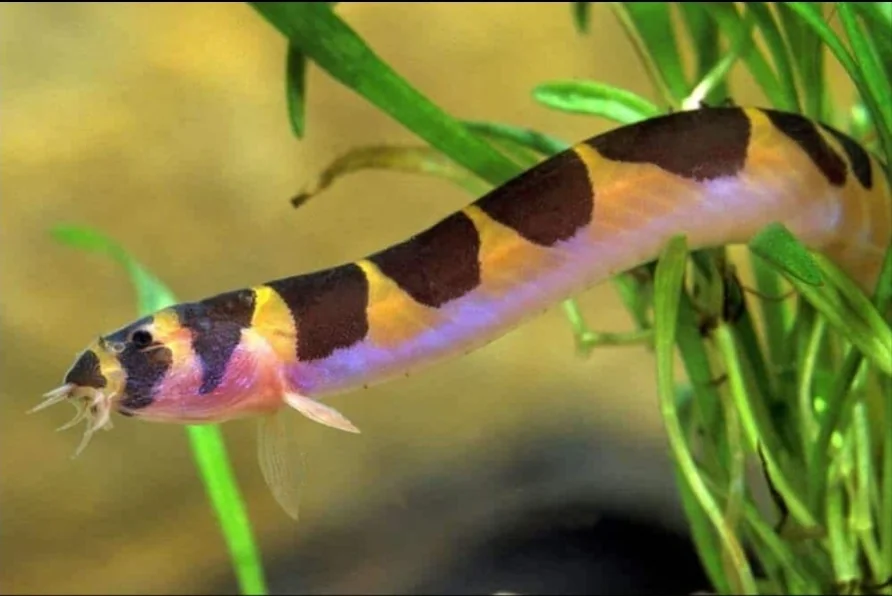
    Kuhli Loach

    Pangio kuhlii

    The eel-shaped, banded burrower most people meet first, and the one most often kept wrong. In a group of six or more on sand with dense cover they become surprisingly bold and forage in the open during the day; kept as one or two they vanish for months at a time. Soft, acidic, warm water suits them best, and they will squeeze through any gap in the hood. A great pick for a planted community over 75 L that already has calm, small tank mates.

    Min tank 20 gallons+
    75-82°F
    pH 5.57
    10 cm (3.9")
    Peaceful
    Intermediate
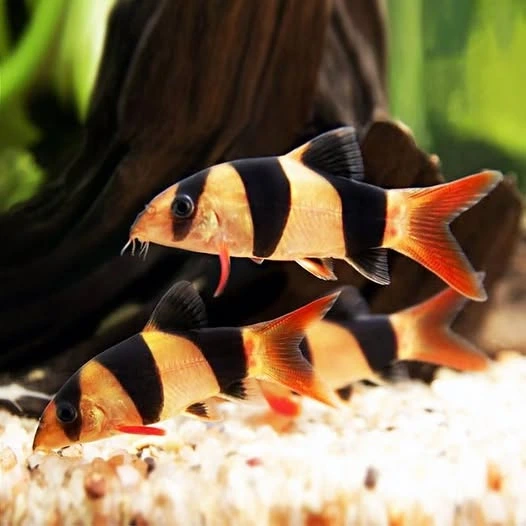
    Two Clown Loaches swimming at the bottom of an aquarium

    Clown Loach

    Chromobotia macracanthus

    The most charismatic loach in the hobby and the one most likely to be sold irresponsibly. Shops sell 5 cm juveniles; adults reach 30 cm, live for decades and need a group of five in a very large tank — our database puts the honest minimum at 475 L. They are also notoriously ich-prone and sensitive to poor water. Choose clown loaches only if you are building a big, warm, heavily filtered tank around them from the start.

    Min tank 125 gallons+
    77-86°F
    pH 67.5
    30 cm (11.8")
    Peaceful
    Intermediate
    Yoyo loach swimming in an aquarium

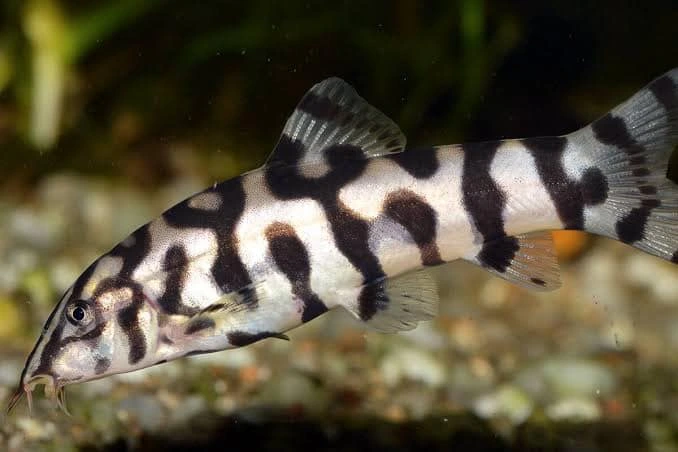
    Yoyo Loach

    Botia almorhae

    A busy, intelligent botiid with Y-O-Y-O script markings and a genuine personality — it investigates every new object in the tank and demolishes pest snails. Rated semi-aggressive here for good reason: it is boisterous, squabbles noisily within its own group, and will stress shy or long-finned tank mates. Keep five or more in 150 L+ with robust company like barbs, rainbowfish or larger tetras.

    Min tank 40 gallons+
    75-82°F
    pH 67.5
    13 cm (5.1")
    Semi-aggressive
    Intermediate
    Hillstream loach eating a piece of cucumber at the bottom of an aquarium

    Hillstream Loach

    Sewellia lineolata

    The specialist of the group, and the one worth building a tank around. Flattened like a tiny ray, it clings to smooth stones and glass in fast water and grazes biofilm all day in full view. It needs 18–24 °C, strong flow, high oxygen and a mature surface for grazing — not a warm, slow community tank. Pick it if you want a cool-water, high-flow river biotope; skip it if your tank runs at 26 °C.

    Min tank 20 gallons+
    64-75°F
    pH 6.57.5
    7 cm (2.8")
    Peaceful
    Intermediate
    Two weather loaches laying at the bottom of an aquarium

    Weather Loach

    Misgurnus anguillicaudatus

    Also sold as the dojo loach: a long, cold-tolerant, dog-like fish that will take food from your fingers and famously gets restless before a pressure drop. It reaches 25 cm and wants a long tank with a deep sand bed to burrow into, but it is the only beginner-rated loach here and thrives unheated at 15–25 °C. The natural choice for an unheated coldwater or goldfish-adjacent tank with room to spare.

    Min tank 55 gallons+
    59-77°F
    pH 6.58
    25 cm (9.8")
    Peaceful
    Beginner
    Dwarf chain loach laying on white rock substrate in an aquarium

    Dwarf Chain Loach

    Ambastaia sidthimunki

    All the botiid personality of a yoyo loach at a sixth of the size. It stays around 6 cm, stays peaceful, and unlike most loaches it spends much of the day chasing around midwater in a tight group rather than hiding. It needs six or more, warm water (25–30 °C) and a mature tank, and it clears pest snails efficiently. This is the loach to pick for a planted community from 75 L upwards.

    Min tank 20 gallons+
    77-86°F
    pH 67.5
    6 cm (2.4")
    Peaceful
    Intermediate
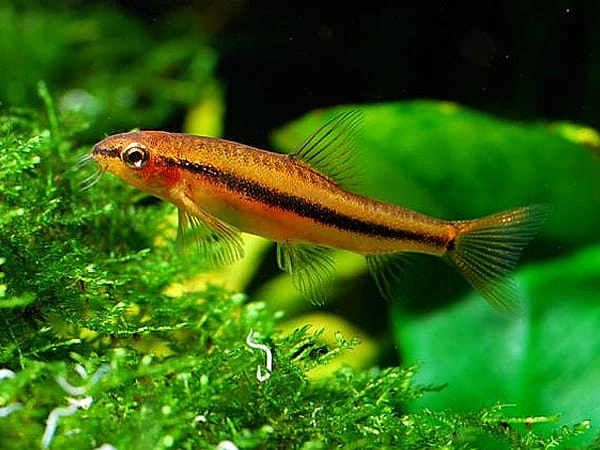
    Rosy loach swimming near some aquatic moss in a fish tank

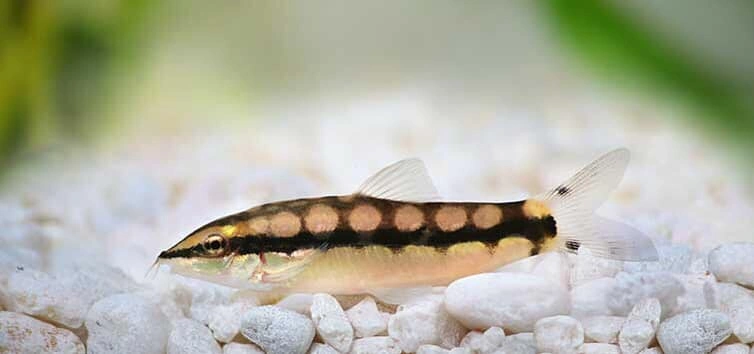
    Rosy Loach

    Petruichthys sp. 'rosy'

    A genuine nano option at just 3 cm, with rose-pink flanks that intensify when males display to each other. Despite the name it sits closer to the danios than the true loaches, and it behaves that way — constantly active, foraging across every level, and comfortable in a 40 L tank. It prefers the cooler end of tropical at 20–26 °C, so it pairs well with white clouds and other temperate nanos rather than with warm-water loaches.

    Min tank 10 gallons+
    68-79°F
    pH 6.57.5
    3 cm (1.2")
    Peaceful
    Intermediate

    Compare at a glance

    Sort by any column — tap a header to reorder.

    Rosy Loach10 gallons68-79°F6.57.53 cm (1.2")IntermediatePeaceful
    Kuhli Loach20 gallons75-82°F5.5710 cm (3.9")IntermediatePeaceful
    Hillstream Loach20 gallons64-75°F6.57.57 cm (2.8")IntermediatePeaceful
    Dwarf Chain Loach20 gallons77-86°F67.56 cm (2.4")IntermediatePeaceful
    Yoyo Loach40 gallons75-82°F67.513 cm (5.1")IntermediateSemi-aggressive
    Weather Loach55 gallons59-77°F6.5825 cm (9.8")BeginnerPeaceful
    Clown Loach125 gallons77-86°F67.530 cm (11.8")IntermediatePeaceful

    Not sure how many will fit?

    Drop your tank size and shortlist into the stocking calculator to see real bioload, swim-level balance, and compatibility flags.

    Frequently asked questions

    How many loaches should I keep together?

    It depends on the species, but never one. Kuhli, dwarf chain and rosy loaches need six or more. Clown and yoyo loaches need five or more. Hillstream and weather loaches need at least three. Under-grouped loaches hide constantly, feed poorly, and in the case of botiids like yoyo loaches redirect their social behaviour into harassing other fish.

    Do loaches need to be in a group?

    Yes. Every loach in this guide is a social species, and a lone loach is a stressed loach. Kuhli loaches kept singly disappear into the hardscape and are rarely seen again; clown loaches kept alone often become withdrawn and stop feeding normally. If you only have room for a small group, choose a small species like the dwarf chain or rosy loach rather than keeping one large one.

    Are loaches hard to keep?

    Most are intermediate rather than difficult. They are scaleless or fine-scaled, so they are more sensitive to poor water quality and to full-dose medications than typical community fish, and clown loaches in particular are ich-prone. The weather loach is the only beginner-rated loach in our database. The real difficulty is usually the tank requirement — group size, footprint and, for hillstreams, cool high-flow water.

    Which loaches are good for a small tank?

    The rosy loach at 3 cm works in tanks from 40 L, and the dwarf chain loach at 6 cm works from 75 L in a group of six. Kuhli loaches also fit a 75 L planted tank. Clown loaches (475 L) and weather loaches (210 L) are not small-tank fish at any life stage, regardless of the size they are sold at.

    What do loaches eat?

    Most are omnivorous bottom feeders that take sinking pellets, wafers, frozen bloodworms and brine shrimp, plus whatever they scavenge from the substrate. Yoyo and dwarf chain loaches actively hunt pest snails. The hillstream loach is the exception — it grazes biofilm and algae from hard surfaces and needs a mature tank plus supplemental vegetable food and repashy-type gels.