Kuhli Loach Tank Mates: 7 Compatible Species (and 6 to Avoid)
Most tank mate pages exist because the host causes trouble. This one runs the other way round. A Kuhli Loach is a 10 cm banded eel that spends its day under wood and its night sifting sand, and it has no weapon, no territory and no interest in anything else in the tank. The question is not what it will tolerate but what will leave it alone: what will not out-eat it at feeding time, will not pick at a scaleless body, and will not keep it hidden for months on end. Group size and hardscape settle more of that than the species list does.
Reviewed by the AquariumStocking team · Updated
The tank size that makes this work
What kuhlis need is floor area and cover rather than depth, and the requirement is set by the group, not the individual. Six of them start at 75 litres, about 20 gallons, and a long, shallow tank suits them far better than a tall one holding the same water. Our database puts the kuhli loach minimum at 20 gallons.
20 gallons
Six kuhlis, a sand bed, a tangle of wood and a single small mid-water shoal above them. That is the honest ceiling. The loaches use the whole floor at night and need somewhere shaded to pile into by day, so the hardscape takes up space the stocking list would otherwise want. Keep the mid-water group modest and you will see the kuhlis out in the evening within a few weeks.
Room for eight or ten kuhlis, which is where their behaviour changes noticeably — larger groups forage in daylight and stack together in the open rather than wedging into the filter intake. A surface fish, a mid-water shoal and a grazer all fit above them without crowding the floor. This is the size most people should aim at if the loaches are the point of the tank.
A long footprint lets you run a dozen kuhlis alongside a second, unrelated bottom group without the two competing for the same wood. Feeding gets easier too: sinking food dropped in three places rather than one means the loaches are not racing a corydoras group to a single spot. Watch the lid, not the stocking level — every extra centimetre of tank is another gap to seal.
Fewer than six and a kuhli behaves like a different animal — permanently hidden, feeding at three in the morning, invisible for the life of the tank. No choice of tank mate compensates for that. Six is the floor and ten is better, and the difference between the two is the difference between a fish you own and a fish you occasionally glimpse.
Substrate and cover count as stocking decisions
Kuhlis burrow, and sharp gravel abrades the barbels they feed with and the unprotected skin along their flanks. Soft sand, driftwood with undercuts, a few caves and floating plants to dim the light get them out in the open far sooner than any change of tank mates would. A bare, brightly lit tank produces the classic complaint that the loaches were never seen again.
Speed at feeding time is the real threat
A kuhli finds food by smell and works its way toward it slowly. Fast, greedy mid-water fish clear a sinking wafer before it reaches the sand, and the loaches quietly thin out over several months from simple undernourishment. Feed after lights-out, use sinking food heavy enough to drop fast, and prefer tank mates that feed at the surface.
Scaleless skin rules out nippers and rules in caution with medication
A kuhli has no scale armour, so a nip that a barb would shrug off opens a wound here. It also means full-dose copper and formalin treatments are risky — half doses are standard practice for this fish. Any species with a habit of investigating other fish, however small, is a poor match.
Keep the tank mates small-mouthed
Adults are safe from anything reasonable, but a 3 cm juvenile kuhli is a worm-shaped snack to a medium cichlid or a large gourami. If you plan to grow young ones on, the stocking list should be small-mouthed throughout the first year. Full-grown loaches widen the options considerably.
Soft, warm water narrows the field usefully
They come from peat-stained streams in Southeast Asia and sit best at pH 5.5–7.0 and 24–28 °C. That excludes the hard-water livebearers and every Rift Lake cichlid on parameters alone, before temperament enters the picture. Softwater tetras, rasboras and small anabantoids are the natural pool to pick from.
Compatible species, ranked by fit
Seven species that feed elsewhere in the tank, want the same soft warm water, and give a nocturnal burrower no reason to stay hidden.
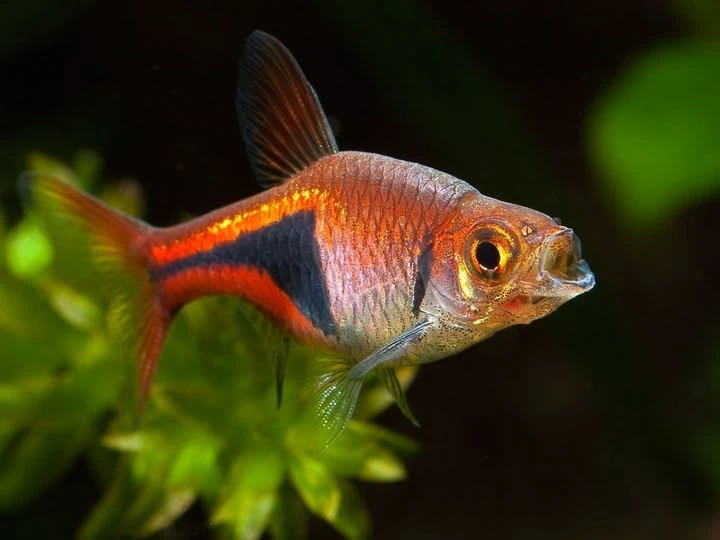
Harlequin Rasbora
Trigonostigma heteromorpha
A calm mid-water shoal that occupies the layer kuhlis never use and takes its food at the surface, so nothing sinking gets intercepted. It wants the same soft, acidic, warm water and the same dim, planted tank, which makes the two a single biotope rather than a compromise. A visible shoal above also acts as a dither group — the loaches read active fish overhead as a sign the tank is safe and emerge earlier. Keep eight or more or the shoal tightens up and stops doing that job.
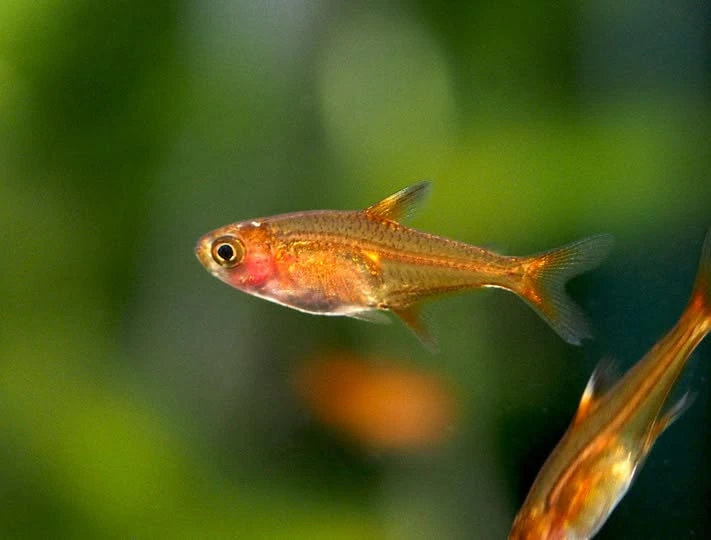
Two centimetres of orange that hangs among plant stems and never approaches the substrate, which is about as low-impact as a tank mate gets. Its bioload is negligible, so adding a dozen to a kuhli tank costs almost nothing in filtration terms. It shares the soft-water preference exactly and shows its best colour under the dim, tannin-stained conditions the loaches want. Too small to threaten even a juvenile kuhli and too slow-feeding to steal from one.
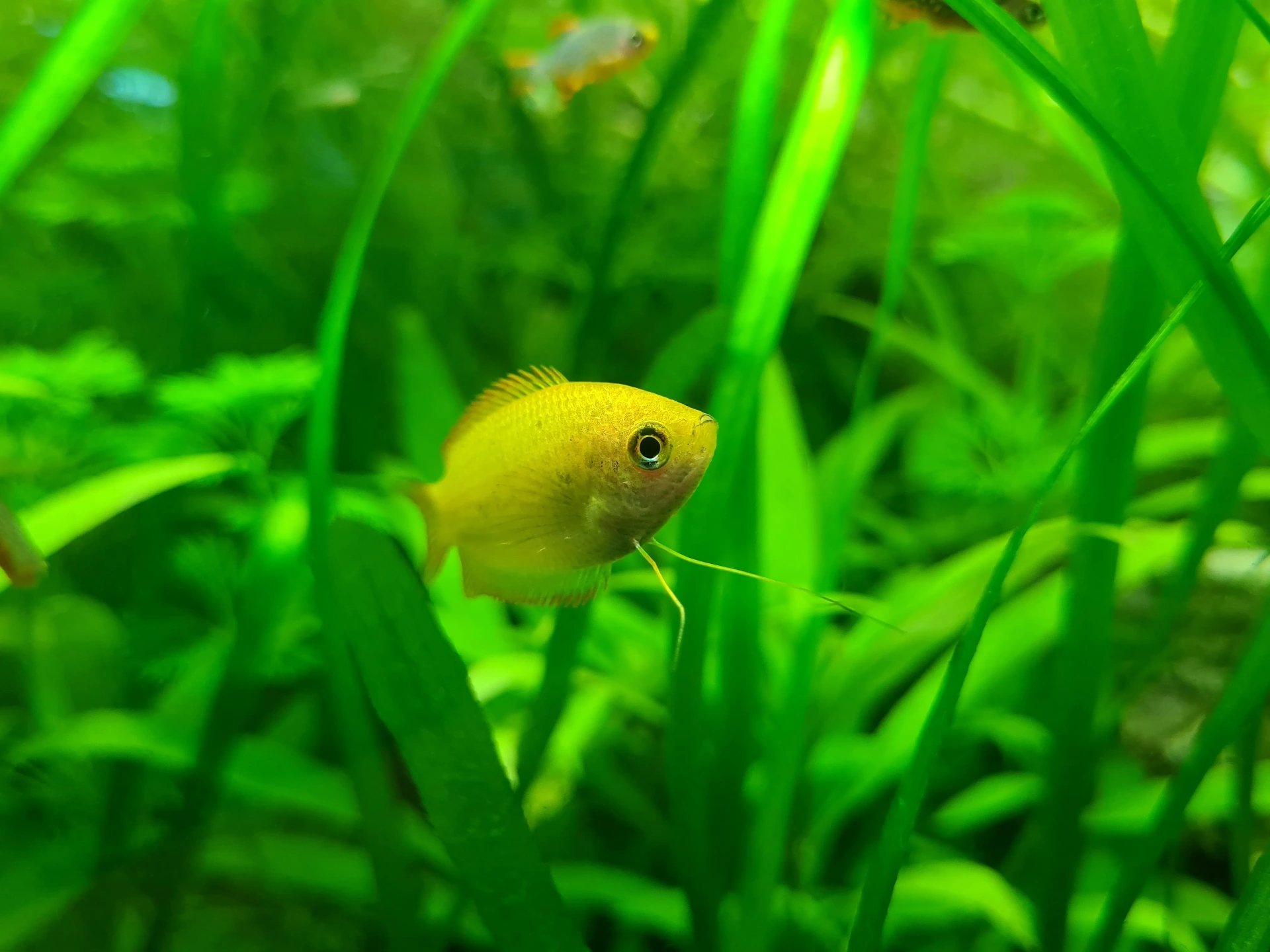
A genuinely mild anabantoid that patrols the top third and breathes at the surface, leaving the floor entirely alone. Unlike its dwarf cousin it is not territorial in a normal community and does not chase, so nothing forces the kuhlis back under the wood. It appreciates floating plants, which are exactly what dims the tank enough for the loaches to come out. One or a pair, not a group of males.
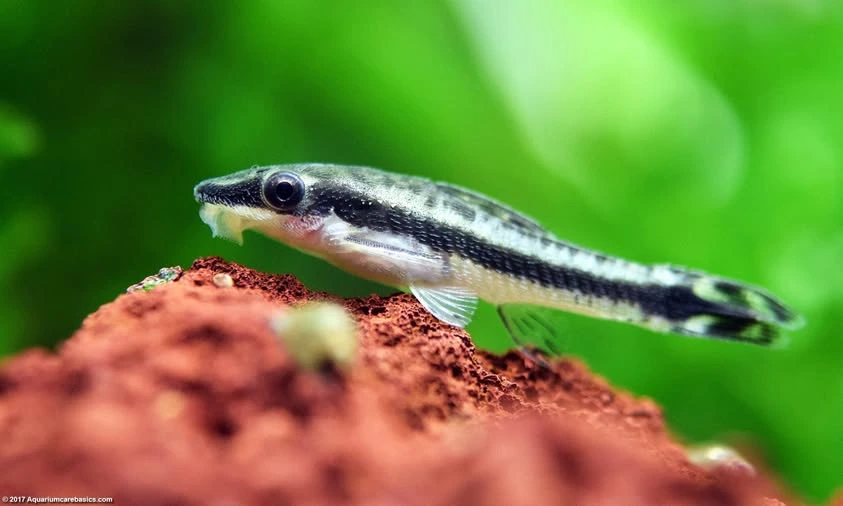
Shares the bottom half of the tank without competing for it — an oto grazes biofilm off leaves and glass while the kuhli works the sand, and neither eats the other food. It is small, unarmed and entirely uninterested in other fish, which is what this list needs. It does need an established tank with real algae growth, so add it several months in rather than at setup. A group of six, topped up with blanched vegetables when the glass runs clean.
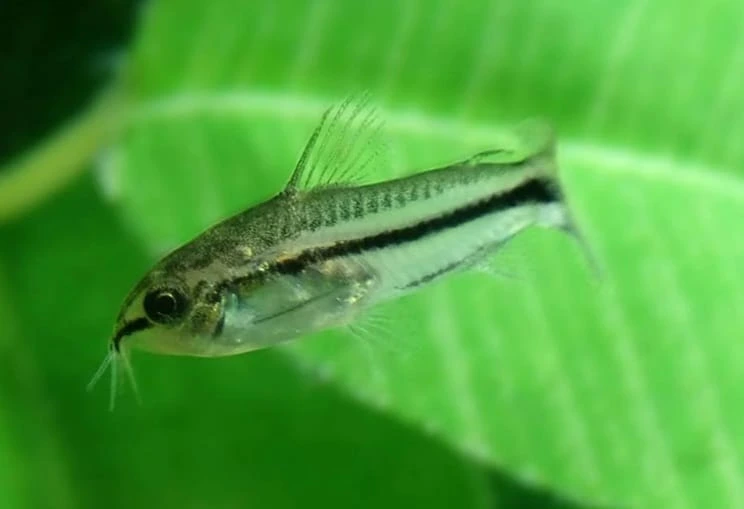
The one bottom-dwelling group worth adding here, because at 2.5 cm it hovers in midwater as much as it forages and takes far less from the sand than a full-size corydoras would. It also wants soft sand and shaded cover, so the tank you build for the loaches is already right for it. Feed enough sinking food for both groups — this is the pairing where under-feeding shows first. Ten or more, or they cluster in a corner and stop moving.
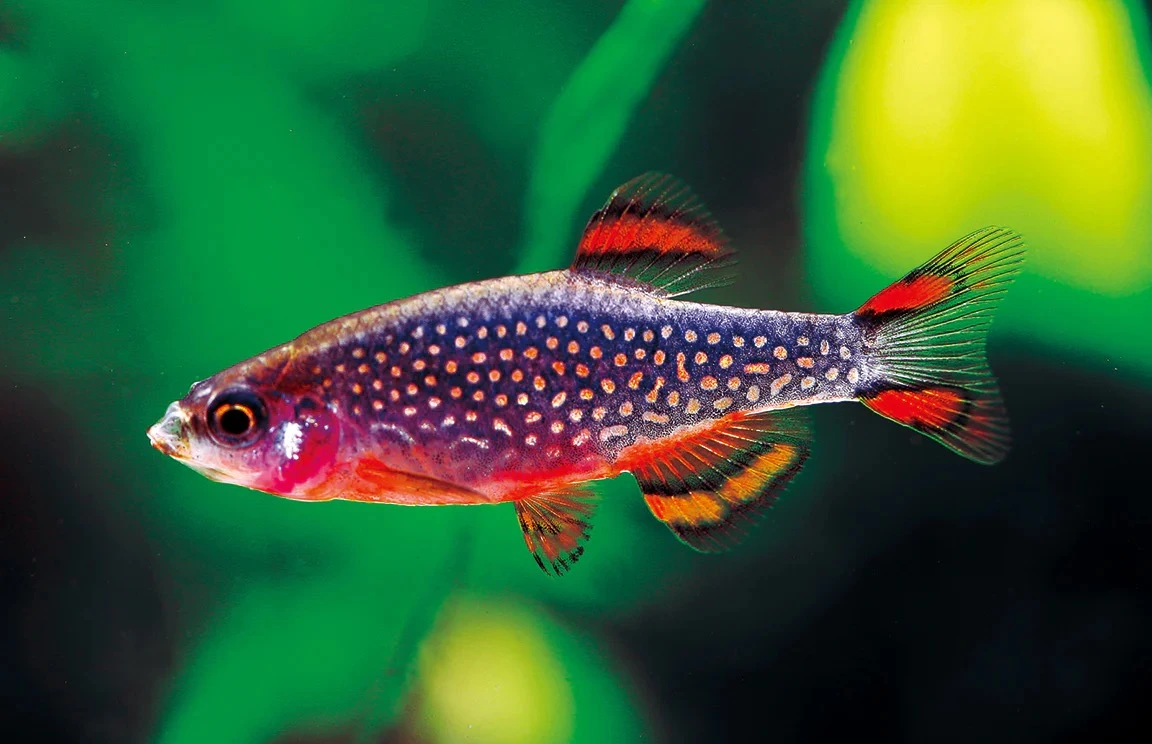
Stays in the lower midwater among plants and hardscape, close to the loaches but never on the substrate, and it is far too small to bother anything. Males display to each other over territory the size of a plant clump, which is entertaining and harmless to a kuhli. It suits the same dim, heavily planted layout and the same soft water. Keep it away from strong flow and it will spend most of the day in view.
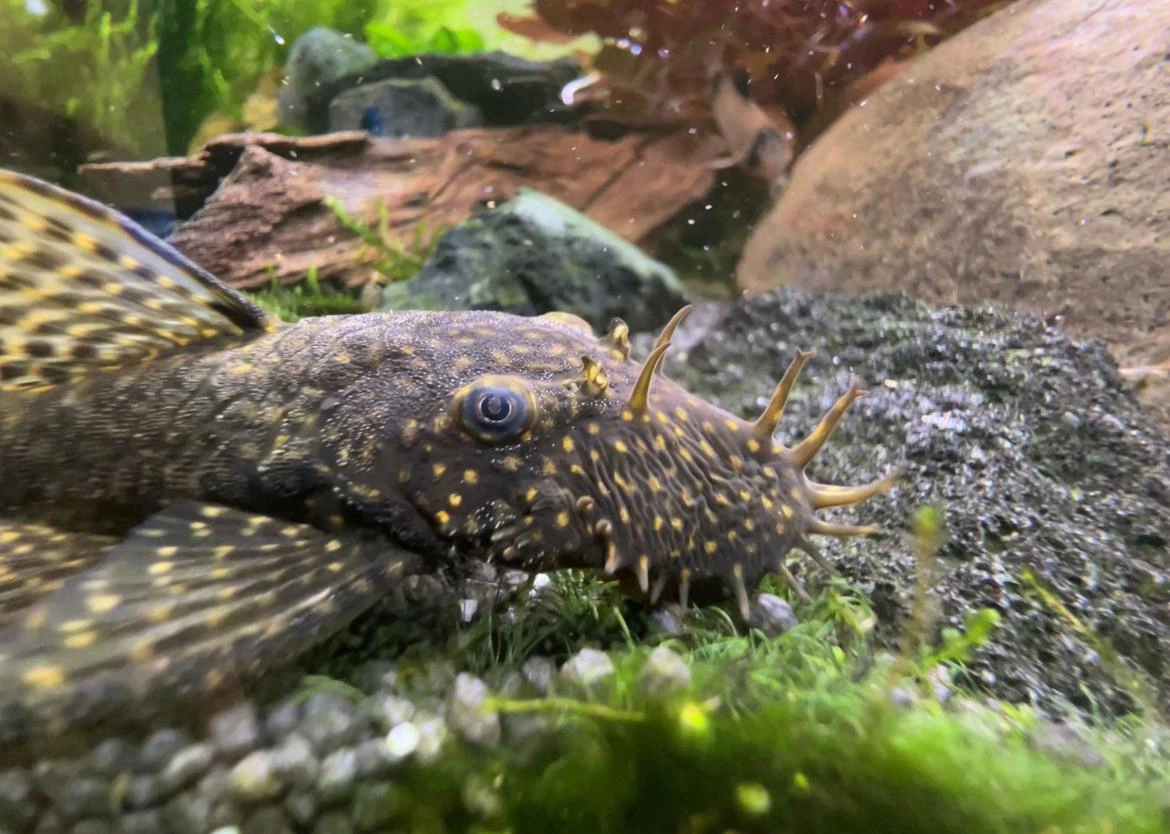
Shares the floor without contesting it: the pleco rasps wood and glass while the kuhlis sift sand, and their active hours barely overlap. It is armoured, placid and entirely uninterested in other bottom fish, so there is no harassment risk in either direction. The catch is waste — a bristlenose produces a lot of it, so this pairing wants a tank of 30 gallons upward and good mechanical filtration. Give it its own wood so the two are not competing for the same cave.
A 35 cm cichlid with a mouth built for engulfing prey, in a tank a kuhli could not occupy anyway. Oscars hunt the substrate at will, and an eel-shaped 10 cm fish is a natural target rather than an accidental one. There is no tank size at which this becomes safe, because the Oscar goes wherever the loaches are.
A robust Central American cichlid that claims the floor of the tank and defends it, which is the exact space kuhlis need. Even setting predation aside, a Dempsey guarding a cave turns the substrate into a no-go area and the loaches never feed properly. The water is wrong too — Dempseys prefer harder, more neutral conditions than a kuhli should live in.
Sold as a cleaner and grows into a 25 cm bully that attaches itself to the flanks of slow-moving tank mates and rasps at their slime coat. A scaleless loach is the worst possible target for that behaviour. It also monopolises caves and driftwood as it matures, which removes the cover the kuhlis depend on.
Peaceable enough as a juvenile and then, the moment a pair forms, it claims the substrate and attacks anything that crosses it for weeks at a time. Kuhlis cannot outrun that and have nowhere to retreat to, since the contested ground is their entire habitat. A pairing that looks fine for six months and then collapses in a fortnight.
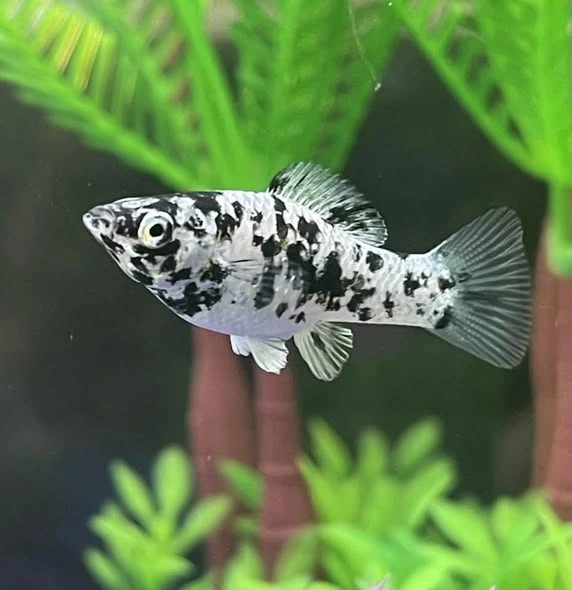
No aggression problem — mollies simply want hard, alkaline water around pH 7.5–8.5, and kuhlis want soft and acidic. Meeting in the middle keeps both species at the wrong end of their range permanently. Mollies are also fast, greedy feeders that clear food before it reaches the sand, so even the chemistry aside they make feeding harder.
A beaked predator that investigates everything in the tank with its teeth, and a worm-shaped scaleless fish is precisely the sort of thing it investigates. Adults also need brackish water, which a kuhli cannot tolerate at all. Two species with almost no overlap in what they need or how they behave.
Two where the outcome depends on the setup rather than the species.
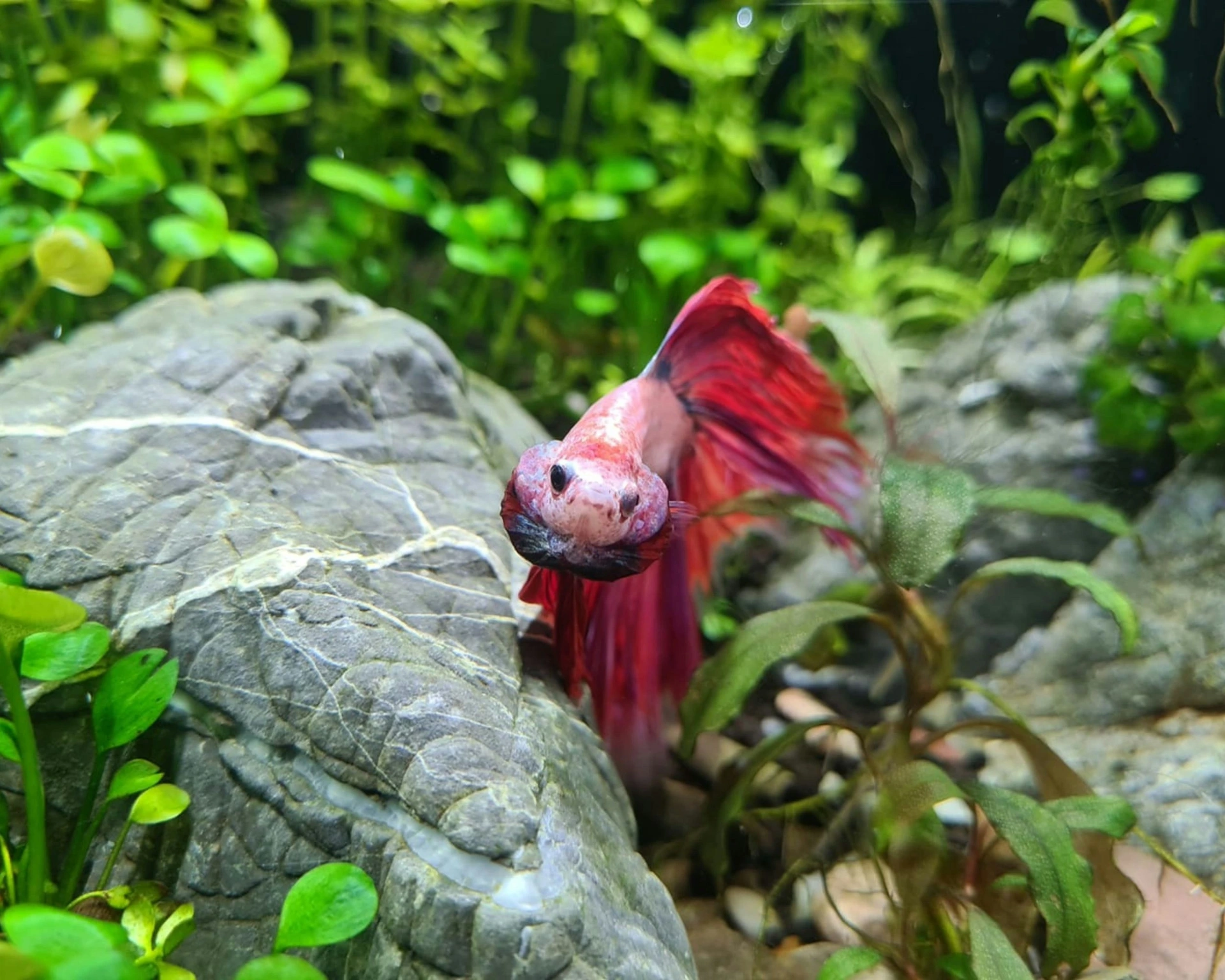
Betta
Betta splendens
Condition: Only in a well-planted tank of 20 gallons or more, and only with a calm individual
A betta and a kuhli want identical water and use different levels, which is the reason the pairing gets recommended so often. What varies is the fish: some bettas ignore a loach entirely, others follow it along the substrate and flare at every appearance until it stops coming out. There is no way to know in advance, so the tank needs enough plant cover and floor area for the loaches to avoid the betta if it turns out to be the second kind. Have a plan for separating them.
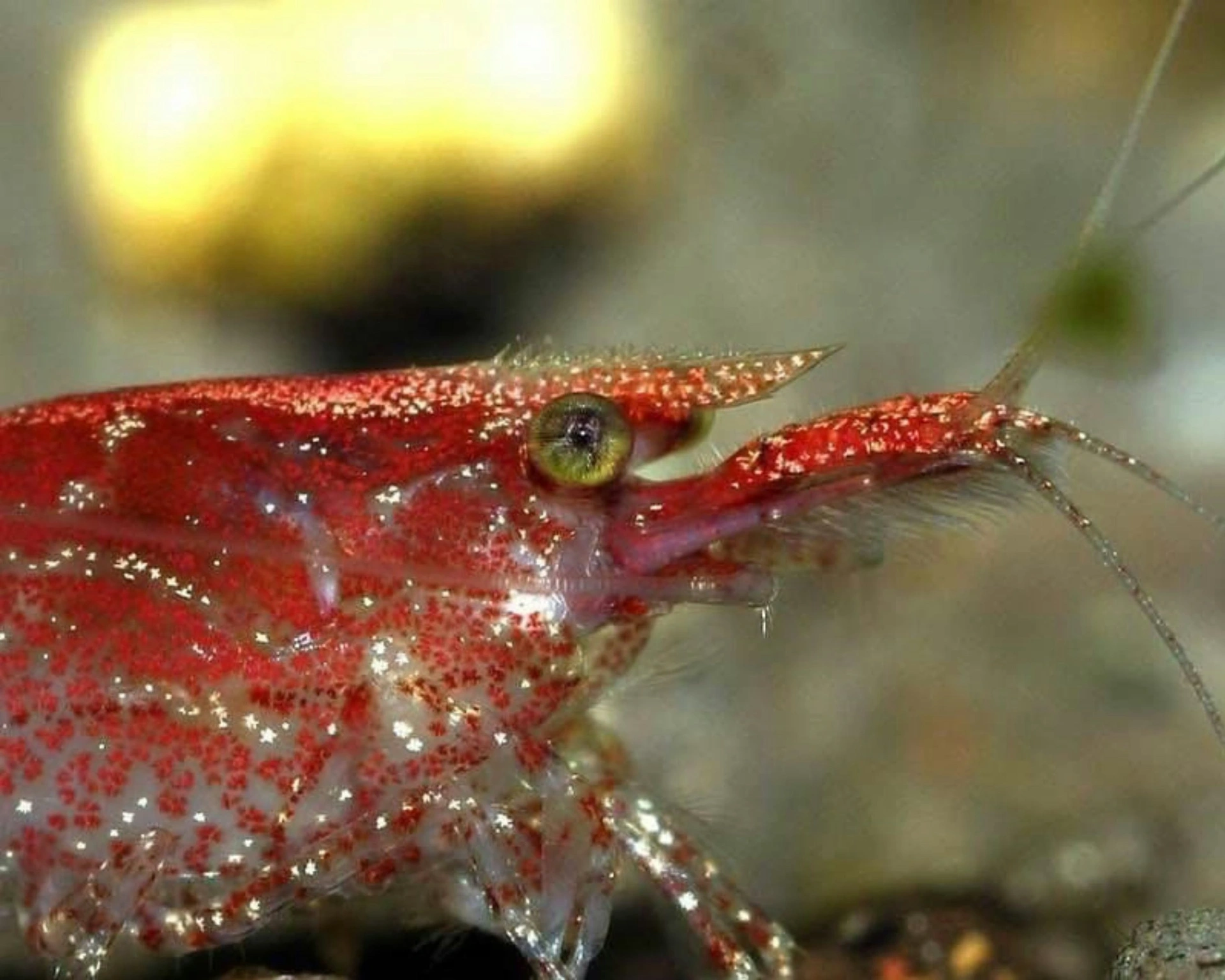
Adult cherry shrimp are fast enough and large enough to be safe, and they occupy the same soft-water planted tank happily. Newly hatched shrimplets on the substrate at night are simply food to a foraging kuhli, and the colony stays flat rather than growing. In a densely mossed tank enough survive to keep numbers steady. If you want a shrimp colony to expand, breed them elsewhere and move adults in.
Drop your tank size and shortlist into the stocking calculator to check bioload, swim-level balance and compatibility flags.
Frequently asked questions
What fish can live with kuhli loaches?
Small, calm species that feed above the substrate: harlequin rasboras, ember tetras, honey gouramis, celestial pearl danios, otocinclus and pygmy corydoras all work well. A bristlenose pleco is fine from 30 gallons up. Avoid anything large-mouthed, territorial on the floor, or fast enough to clear sinking food before the loaches reach it.
How many kuhli loaches should I keep together?
Six minimum, ten if the tank allows it. This matters more than any other decision on this page. Kept in twos or threes they hide permanently and feed only in the middle of the night; in a proper group they forage in the open and are out in the evening with the lights on.
Why do I never see my kuhli loaches?
Almost always one of three things: too few of them, gravel instead of sand, or a tank that is too brightly lit with too little cover. Fix the group size first, then add floating plants and a driftwood tangle. Most people who report invisible kuhlis have three of them on bare gravel.
Do kuhli loaches need sand?
Effectively yes. They sift substrate through their gills and burrow into it, and sharp gravel wears down their barbels and abrades their scaleless flanks. Soft sand or very smooth, rounded fine gravel is the only sensible choice.
Will kuhli loaches eat shrimp?
Adult cherry or amano shrimp are safe. Newly hatched shrimplets are not — a kuhli foraging across the substrate at night will take them, so a colony stays at a steady size rather than growing. Heavy moss cover improves survival noticeably.
Can kuhli loaches live with a betta?
Often, but not reliably. The water parameters and tank levels line up perfectly, so it comes down to the individual betta. Some ignore the loaches completely; others patrol the substrate and keep them hidden. Give the tank enough plant cover and floor space that the loaches can avoid the betta, and keep a backup plan.
Are kuhli loaches hard to keep?
They are easy to keep alive and easy to keep badly. Water quality matters more than for a scaled fish, medications need half doses, and they will escape through any unsealed gap in the lid. Get the group size, the sand and the cover right and they need very little else.