

Care Requirements
Adult Size
6.7" (17cm)
Min Tank
30 gal
Temperature
75-82°F
pH Range
7.5-8.5
Lifespan
10-15 years
Min Group
Can be kept alone
Diet
Carnivore
Swim Level
All
Bioload
4/10
Hardness
15-30 dGH
About Green Spotted Puffer
The Green Spotted Puffer is one of the aquarium hobby's most charming and most commonly mis-sold fish. Their appealing spotted appearance, curious behavior, and genuine personality make them irresistible — but stores routinely sell them as 'freshwater community fish,' which they absolutely are not. This misinformation causes mass die-offs of fish that could otherwise live 10-15 years.
The critical fact: Green Spotted Puffers require BRACKISH water, not freshwater. Juveniles tolerate lower salinity, which allows stores to keep them in freshwater temporarily, but adults need marine salt at significant concentrations (SG 1.010-1.020). Keeping them in freshwater long-term causes chronic stress, disease susceptibility, and dramatically shortened lifespan. If you cannot maintain brackish conditions, don't purchase this fish.
Beyond water chemistry, they're also aggressive fish unsuitable for community tanks. They bite tankmates, nip fins, and generally make life miserable for other fish. Most successful GSP keeping involves single specimens in species-appropriate setups. Their intelligence and personality make solo keeping rewarding rather than boring — they interact with keepers like few other fish.
They also require hard-shelled foods to maintain their constantly-growing teeth. Without shells to grind on, teeth overgrow and prevent eating — a painful death sentence. Snails, shellfish, and crustaceans must be regular diet components. GSP keeping requires commitment, but properly maintained specimens provide 15+ years of engaging, interactive fishkeeping unlike anything community tanks offer.
Natural Habitat & Origin
Green Spotted Puffers inhabit coastal brackish environments across a wide range from Sri Lanka through Southeast Asia to Indonesia and the Philippines. They're found in estuaries, mangrove forests, and coastal streams where fresh and salt water mix — true brackish environments, not freshwater.
Salinity in their natural habitat fluctuates with tides and seasons, but maintains significant salt content. Juveniles may venture into fresher waters temporarily, but adults predominantly occupy brackish zones. This natural history directly informs captive care — they're brackish fish that tolerate freshwater briefly, not freshwater fish that tolerate salt.
Natural diet consists heavily of hard-shelled invertebrates: snails, clams, mussels, crustaceans. Their powerful beak-like teeth evolved specifically to crush shells. Without regular shell access, teeth overgrow continuously. Wild puffers have no teeth problems because their diet naturally maintains dental health.
They're curious, intelligent predators that investigate their environment actively. In the wild, this means exploring structures for prey. In aquariums, it means interacting with décor, equipment, and keepers in ways that demonstrate genuine awareness and engagement.
Native Region
Southeast Asia — Sri Lanka to Indonesia, Philippines
Habitat Type
Coastal brackish waters, estuaries, mangrove forests
Wild Water Conditions
Warm (24-28°C), brackish (variable salinity), hard, alkaline
Appearance & Varieties
Green Spotted Puffers display the classic puffer shape — rounded body capable of inflation, large eyes, and beak-like fused teeth. Their name describes their coloration: greenish-yellow to olive dorsal surface covered with distinctive black spots, transitioning to white undersides. The spotting pattern is individually unique, like fingerprints.
Eyes are large and mobile, capable of independent movement — they can watch you while simultaneously scanning for food elsewhere. This eye mobility, combined with their expressive faces, gives them the most 'personable' appearance of commonly kept fish.
Adults reach approximately 6 inches (15-17 cm) in aquariums. When threatened or stressed, they can inflate with water, becoming spherical. Inflation is a stress response, not entertainment — deliberately triggering inflation harms them.
Sexing is difficult. No reliable external differences distinguish males from females in this species.
Popular Varieties
| Variety | Description | Rarity |
|---|---|---|
| Standard/Wild-Type | Green-yellow body with black spots, white belly. The only form available — no selectively bred variants exist. Spot patterns vary individually. | Common |
Tank Setup & Requirements
Quick Requirements Summary
Tank Size
Minimum Tank Size
30 gallons
Recommended Tank Size
50 gallons
Green Spotted Puffers require brackish setups with robust filtration. Their intelligence means they benefit from environmental enrichment, and their aggression means tankmate options are limited.
Water Parameters
BRACKISH WATER REQUIRED — this is non-negotiable for long-term health. Adults need SG 1.010-1.020; juveniles can start lower (1.005) and increase gradually. Use marine salt, not aquarium salt. Hard, alkaline water suits them well. Temperature: 24-28°C (75-82°F), pH: 7.5-8.5, Hardness: 15-30 dGH.
Substrate
Sand allows natural foraging behavior and is gentle if they rest on bottom. Fine, smooth gravel works as alternative. Crushed coral can help maintain alkalinity.
Plants & Decorations
Their intelligence means they benefit from environmental complexity they can investigate. Rocks, driftwood, caves, and various structures provide mental stimulation. Brackish conditions limit plant options — Java Fern, Java Moss, and Anubias tolerate light brackish; higher salinity kills most plants.
Filtration & Water Flow
GSPs are messy eaters producing substantial waste, particularly from shell-crushing activities. Powerful filtration handles debris and waste. Marine-capable filters for brackish setups. Target 8-10x tank volume turnover.
Lighting
No special requirements. Standard aquarium lighting works fine. Lighting that showcases their coloration and spots enhances viewing.
Diet & Feeding Guide
Diet Type
carnivore
Feeding Frequency
Once daily for juveniles, every other day for adults
Portion Size
Moderate amounts; include hard-shelled items at every feeding or every other feeding minimum.
Green Spotted Puffers require hard-shelled foods to maintain dental health — this is essential, not optional. Their beak-like teeth grow continuously and must be worn down by crushing shells.
Best Foods for Green Spotted Puffer
- Snails (essential) — Pond snails, ramshorn snails, Malaysian trumpet snails — all provide essential shell-grinding. Must be regular diet component.
- Shellfish (clams, mussels) — Excellent shell-grinding and nutrition. Fresh, frozen, or on-the-half-shell.
- Shrimp (shell-on) — Good nutrition though shells are softer than mollusks. Frozen shrimp with shell contribute to dental wear.
- Frozen krill — Good protein source with some dental benefit from exoskeleton. Usually accepted eagerly.
- Crayfish — Excellent shell-grinding food. Live crayfish also provide hunting enrichment.
Foods to Avoid
- Soft foods exclusively — Diets without hard shells cause tooth overgrowth. Soft foods can be occasional supplements but cannot be the entire diet.
- Flakes and pellets — Generally rejected and inappropriate anyway. They need shell, not processed foods.
- Feeder fish — Disease risk. They'll eat small fish but feeders carry parasites and bacteria.
Shell-grinding is mandatory at every feeding. Maintain a snail colony as food source.
Behavior & Temperament
Green Spotted Puffers display intelligence and personality that genuinely sets them apart from typical aquarium fish. They recognize their keepers, respond to presence, and display what can only be described as curiosity about their environment. Many owners describe them as 'aquatic puppies' for their interactive, engaging behavior.
This personality comes packaged with significant aggression. GSPs bite tankmates, nip fins, and harass other fish relentlessly. They're not community fish despite sometimes being sold as such. Most successful keeping involves single specimens where their personality shines without causing harm.
Their activity level is high — constant patrolling, investigating, and interacting with their environment. Boredom is possible; environmental complexity helps. They investigate new objects, rearrange moveable items, and pay attention to activity outside their tank.
The ability to inflate is a stress response, not a party trick. Deliberately triggering inflation by handling, chasing, or frightening them causes harm. Inflated puffers may swallow air rather than water, which can be fatal. Never trigger inflation for entertainment.
Tank Mates: Compatibility Guide
Compatible Tank Mates
None (safest approach)
GSPs are aggressive fin-nippers best kept alone. Solo keeping lets their personality shine without risking other fish.
Other GSPs (very risky)
Sometimes works in very large tanks with visual barriers. Often results in aggression and injury.
Both are brackish; gobies may be ignored if tank is large enough with hiding spots.
Tank Mates to Avoid
Most fish
GSPs bite, nip fins, and harass. Most tankmates suffer from persistent aggression.
Slow-moving fish
Easy targets for fin-nipping. Will be relentlessly attacked.
Long-finned fish
Fins attract attention and nipping. Will be damaged.
Freshwater fish
Beyond aggression issues, brackish requirements are incompatible with freshwater species.
Invertebrates
Food. Shrimp, snails (unless intended as food), crabs — all will be eaten.
Common Pairing Questions
Can GSPs live with other fish?
Generally no. They're aggressive fin-nippers that harass most tankmates. Solo keeping is the norm.
Are GSPs freshwater fish?
No — they require brackish water despite frequently being sold as freshwater fish.
Green Spotted Puffer breeding in home aquariums is extremely rare to non-existent. Sexing is difficult with no reliable external differences. All specimens in the trade are wild-caught.
Health Issues & Disease Prevention
GSPs are hardy when their specific needs are met — brackish water and appropriate diet. Most health problems trace directly to freshwater keeping or lack of shell foods.
Common Diseases
| Disease | Symptoms | Treatment |
|---|---|---|
| Freshwater stress/decline | Chronic lethargy, faded colors, disease susceptibility, shortened lifespan. | Transition to proper brackish conditions. Prevention through proper keeping from the start. |
| Tooth overgrowth | Difficulty eating, visible overgrown beak, eventual starvation. | Prevention through shell foods is essential. Manual trimming under anesthesia by experienced keepers or vets for severe cases. |
| Ich (White Spot) | White spots on body and fins. | Raise temperature, increase salinity slightly. Brackish conditions help — ich struggles in salt. |
| Internal parasites | Weight loss, loss of appetite, sunken belly despite eating. | Anti-parasitic medication. Common in wild-caught specimens. |
| Bacterial infections | Cloudy eyes, fin rot, body lesions. | Improve water quality. Antibacterial medication appropriate for brackish fish. |
Signs of a Healthy Green Spotted Puffer
- Active, curious behavior
- Strong appetite
- Bright coloration
- Clear eyes
- Properly worn teeth
- Interactive with keeper
Prevention Tips
- Maintain proper brackish conditions
- Feed hard-shelled foods regularly
- Keep alone to prevent aggression stress
- Provide environmental complexity
- Never trigger inflation deliberately
Frequently Asked Questions
NO — despite frequently being sold as freshwater fish, they require BRACKISH water. Juveniles tolerate fresher water temporarily, but adults need marine salt at SG 1.010-1.020. Keeping them in freshwater long-term causes chronic stress, disease, and dramatically shortened lifespan.
Their beak-like teeth grow continuously throughout life. Without hard shells to crush, teeth overgrow and eventually prevent eating — a slow death from starvation. Snails, clams, mussels, and crustaceans wear down teeth naturally. This isn't optional; it's essential for survival.
Generally no. They're aggressive fin-nippers that harass most tankmates relentlessly. Solo keeping is the norm and allows their engaging personality to shine without causing harm.
Use marine salt (not aquarium salt or table salt) added to dechlorinated freshwater. Measure specific gravity with a hydrometer or refractometer. Target SG 1.005-1.008 for juveniles, gradually increasing to 1.010-1.020 for adults.
NO — inflation is a stress response, not entertainment. Deliberately triggering inflation causes harm and stress. They may swallow air rather than water when inflated, which can be fatal.
With proper care (brackish water, appropriate diet): 10-15 years. The common perception of short puffer lifespan reflects mass deaths from freshwater keeping, not natural lifespan.
Tips for Keeping Green Spotted Puffer
Pro Tips
- ✓Maintain a snail colony for food — regular snail feeding is essential for dental health.
- ✓Use a refractometer for salinity — more accurate than hydrometers for precise, consistent salinity maintenance.
- ✓Embrace solo keeping — their intelligence and personality make single-specimen tanks engaging rather than boring.
- ✓Increase salinity gradually as they grow — juveniles can start at lower salinity (SG 1.005) and increase over months.
Common Mistakes to Avoid
- ✗Keeping in freshwater — chronic stress, disease, dramatically shortened lifespan.
- ✗Not providing hard-shelled foods — tooth overgrowth leading to starvation.
- ✗Keeping in community tanks — dead or injured tankmates from aggression.
- ✗Triggering inflation for entertainment — stress, potential air swallowing, possible death.
- ✗Buying on impulse because they're 'cute' — dead fish when needs aren't met.
Sources
- FishBase — Accepted scientific name, maximum size and native range for Green Spotted Puffer.
Related Species You Might Like
View All Fish →
Green Terror
Andinoacara rivulatus
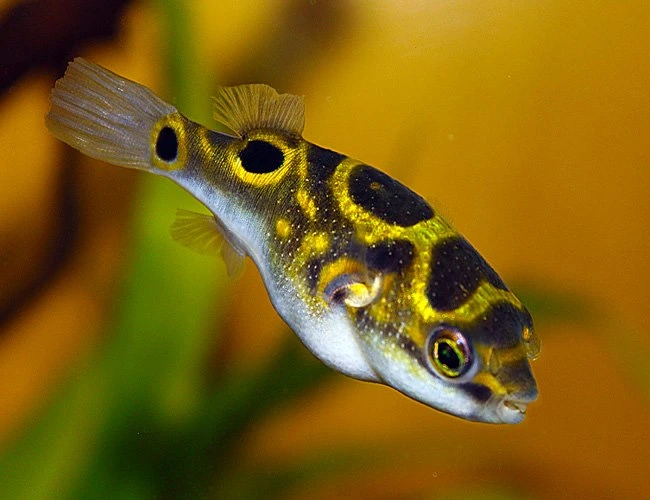
Figure 8 Puffer
Dichotomyctere ocellatus

Auratus Cichlid
Melanochromis auratus

Chinese Algae Eater
Gyrinocheilus aymonieri

Cobalt Blue Zebra
Maylandia callainos

Convict Cichlid
Amatitlania nigrofasciata

Demasoni
Pseudotropheus demasoni

Jewel Cichlid
Hemichromis bimaculatus
Ready to Add Green Spotted Puffer to Your Tank?
Use our free stocking calculator to check compatibility, bioload, and get personalized recommendations.