

Care Requirements
Adult Size
1.6" (4cm)
Min Tank
10 gal
Temperature
75-86°F
pH Range
7-8.5
Lifespan
3-5 years
Min Group
4+ fish
Diet
Carnivore
Swim Level
Bottom
Bioload
1/10
Hardness
12-30 dGH
About Bumblebee Goby
The Bumblebee Goby packs remarkable personality into a tiny package — these 1.5-inch fish display bold coloration and bigger attitudes than their size suggests. Their striking black and yellow banding immediately evokes their namesake insect, making them among the most visually distinctive nano fish available. Each individual establishes territory and defends it fiercely against perceived intruders.
Despite their small size, Bumblebee Gobies aren't beginner fish. They present several challenges: they prefer brackish conditions (though adapt to hard freshwater), they're notoriously picky eaters that usually reject prepared foods, and their territorial nature requires thoughtful stocking. Understanding these needs before purchase prevents frustration and fish loss.
Their feeding challenges particularly frustrate new keepers. These are ambush predators requiring live or frozen meaty foods — most will never accept flakes or pellets regardless of hunger level. Brine shrimp, bloodworms, and similar foods are necessities, not treats. Keepers unwilling to provide appropriate feeding shouldn't attempt these fish.
However, for keepers meeting their needs, Bumblebee Gobies reward with fascinating behavior. Watching them defend tiny territories, hunt food items, and interact with tankmates provides entertainment far exceeding their minimal space requirements. They're proof that engaging aquarium fish don't need to be large.
Natural Habitat & Origin
Bumblebee Gobies inhabit brackish estuaries, coastal streams, and mangrove environments across Southeast Asia — Indonesia, Thailand, Vietnam, and Malaysia. These transitional zones between freshwater and marine environments feature fluctuating salinity.
The brackish preference is important context for aquarium care. While they can adapt to hard, alkaline freshwater, their native waters contain measurable salt content. Many specimens in the trade come from brackish collection sites.
Native habitat features muddy or sandy substrates with rocks, shells, and debris providing territorial boundaries. Water tends toward hard and alkaline due to marine influence.
Several Brachygobius species are sold as 'Bumblebee Gobies.' Care requirements are similar across species, though some tolerate freshwater better than others.
Native Region
Southeast Asia — Indonesia, Thailand, Vietnam, Malaysia
Habitat Type
Brackish estuaries, coastal streams, mangrove environments
Wild Water Conditions
Warm (25-30°C), hard, alkaline, brackish (SG 1.002-1.006)
Appearance & Varieties
Bumblebee Gobies display bold black (or dark brown) and yellow (or gold) banding that immediately identifies them. Body shape is typical goby — elongated with large head, prominent eyes, and fused pelvic fins forming a suction disc. They're bottom-dwelling fish rarely seen in open water.
Adults reach only about 1.5 inches (3-4 cm). Their small size belies their territorial attitude. Males and females look similar, though males may show slightly more intense coloration.
Popular Varieties
| Variety | Description | Rarity |
|---|---|---|
| Standard (various species) | Black/brown and yellow/gold banding. Several Brachygobius species sold under this common name with similar care requirements. | Common |
Tank Setup & Requirements
Quick Requirements Summary
Tank Size
Minimum Tank Size
10 gallons
Recommended Tank Size
15 gallons
Bumblebee Gobies need appropriately sized tanks with territorial boundaries, appropriate water chemistry (preferably brackish), and careful tankmate selection.
Water Parameters
Brackish water (SG 1.002-1.006) is ideal — add marine salt. They can adapt to hard, alkaline freshwater but often do better with some salt. Soft, acidic water is poorly tolerated. If keeping freshwater, ensure it's hard (12+ dGH) and alkaline (pH 7.5+).
Substrate
Fine sand mimics natural muddy habitat and allows natural foraging. They'll sift through sand searching for food. Dark substrates enhance their yellow coloration through contrast.
Plants & Decorations
Provide numerous small caves, crevices, and hiding spots — each goby needs potential territory. Rocks with small gaps, PVC pipe sections, small terracotta pots all work. More hiding spots than gobies is essential. Salt-tolerant plants like Java Fern, Java Moss, Anubias tolerate low-end brackish.
Filtration & Water Flow
They're not strong swimmers and dislike powerful current. Sponge filters are excellent choices providing gentle filtration. In brackish setups, ensure filter media handles salt exposure.
Lighting
Standard aquarium lighting works fine. Moderate lighting shows their coloration well. Match lighting to plant needs if keeping live plants.
Diet & Feeding Guide
Diet Type
carnivore
Feeding Frequency
Once or twice daily
Portion Size
Small amounts they can consume in 2-3 minutes. Target feed near their territories if faster tankmates compete.
Feeding Bumblebee Gobies is their greatest challenge — they're carnivores that almost universally reject prepared foods. Live or frozen meaty foods are requirements.
Best Foods for Bumblebee Goby
- Live or frozen bloodworms — Often the most readily accepted food. A staple for most keepers.
- Live brine shrimp — Excellent food triggering natural hunting behavior. The movement stimulates feeding even in reluctant eaters.
- Frozen brine shrimp — Usually accepted once feeding established. Good staple alongside bloodworms.
- Live daphnia — Appropriate size and movement triggers feeding. Good variety food.
- Live blackworms — Excellent live food readily consumed. Movement along substrate mimics natural prey.
- Grindal worms — Small live worms appropriate for their size. Can be cultured at home.
Foods to Avoid
- Flakes and pellets —
- Large food items —
- Plant-based foods —
They almost never accept prepared foods. Live or frozen meaty foods are absolute requirements. Target feed near their territories if keeping with faster tankmates.
Behavior & Temperament
Bumblebee Gobies are territorial fish that establish and defend small domains around their chosen shelter. Despite territorial aggression toward immediate space invaders, they're not tank terrors — aggression is defensive rather than offensive. They're ambush predators that hunt from shelter. Most active during feeding and territorial disputes.
Tank Mates: Compatibility Guide
Compatible Tank Mates
Tank Mates to Avoid
Aggressive fish
Their tiny size makes them vulnerable to harassment.
Fast, greedy feeders
Will outcompete slow-feeding gobies for food. Starvation risk.
Other bottom-dwelling territorial fish
Territory conflicts at the substrate level.
Freshwater fish intolerant of salt
If maintaining brackish conditions, many freshwater fish are incompatible.
Dwarf shrimp
Small shrimp will be hunted. Not shrimp-safe.
Common Pairing Questions
Can Bumblebee Gobies live in freshwater?
They can adapt to hard, alkaline freshwater but prefer brackish conditions. Adding marine salt often improves health.
Can I keep multiple Bumblebee Gobies?
Yes — groups of 4+ work well if there are more hiding spots than gobies. Aggression spreads across multiple targets.
Bumblebee Gobies can breed in aquariums. They're cave spawners with males guarding eggs. Males clean chosen spawning sites and court females. Eggs hatch in approximately 7-9 days. Fry are tiny and require infusoria.
Health Issues & Disease Prevention
Bumblebee Gobies are reasonably hardy when their needs are met but suffer in inappropriate conditions. Most health issues trace to water chemistry problems or starvation.
Common Diseases
| Disease | Symptoms | Treatment |
|---|---|---|
| Starvation | Sunken belly, lethargy, faded coloration, refusing food. | Offer live foods. Target feed near territories. Ensure faster tankmates aren't taking all food. |
| Ich (White Spot) | White spots on body and fins, flashing. | Raise temperature. If brackish, increase salinity slightly. |
| Water chemistry stress | Lethargy, pale coloration, loss of appetite. | Review parameters — they need hard, alkaline water, preferably brackish. |
| Bacterial infections | Redness, ulcers, fin deterioration, cloudy eyes. | Improve water quality. Antibacterial medication. |
| Parasites | Scratching, visible spots, weight loss. | Identify specific parasite. Treat with appropriate medication. |
Signs of a Healthy Bumblebee Goby
- Bold black and yellow coloration
- Active territorial behavior
- Eating live/frozen foods
- Alert posture
- Defending territory
- Good body condition
Prevention Tips
- Maintain hard, alkaline, preferably brackish water
- Provide live or frozen foods
- Create multiple territories
- Ensure food reaches them
- Quarantine new specimens
Frequently Asked Questions
They don't absolutely require it but definitely prefer it. Adding marine salt (SG 1.002-1.006) often improves health and longevity. If keeping freshwater, ensure it's hard (12+ dGH) and alkaline (pH 7.5+).
Almost certainly not. They're notoriously picky eaters that reject prepared foods. Live or frozen meaty foods are requirements. Don't acquire these fish expecting to train them onto convenient prepared foods.
Groups of 4+ work well if the tank has abundant territories — more hiding spots than gobies. Their territorial nature is spread across multiple fish. Single specimens or pairs are fine for smaller setups.
They're territorial rather than truly aggressive. Each goby defends a small area around its shelter. Fish avoiding their space are ignored. Manageable with proper setup — provide numerous hiding spots.
Minimum 10 gallons for a small group. Despite their 1.5-inch size, their territorial nature requires adequate space. Larger tanks of 15-20 gallons make peaceful group keeping easier.
You're likely offering wrong foods (try live brine shrimp or bloodworms), water conditions may be wrong (they need hard, alkaline, preferably brackish water), or faster tankmates are taking all food. Live foods are most likely to trigger feeding.
Tips for Keeping Bumblebee Goby
Pro Tips
- ✓More hiding spots than gobies is the key to peaceful groups.
- ✓Marine salt improves health even if sold as 'freshwater' specimens.
- ✓Target feeding prevents starvation in community tanks.
- ✓Live brine shrimp often solves feeding refusal.
Common Mistakes to Avoid
- ✗Expecting them to eat prepared foods — starvation risk.
- ✗Keeping in soft, acidic water — chronic stress and poor health.
- ✗Insufficient hiding spots — constant territorial conflict.
- ✗Keeping with aggressive tankmates — stress or injury due to tiny size.
- ✗Assuming they'll find food in community tanks — starvation as faster fish take everything.
Sources
- FishBase — Accepted scientific name, maximum size and native range for Bumblebee Goby.
Featured in Biotope Presets
Related Species You Might Like
View All Fish →
Calvus
Altolamprologus calvus

African Clawed Frog
Xenopus laevis

Apistogramma Cacatuoides
Apistogramma cacatuoides

Black Skirt Tetra
Gymnocorymbus ternetzi

Buenos Aires Tetra
Hyphessobrycon anisitsi
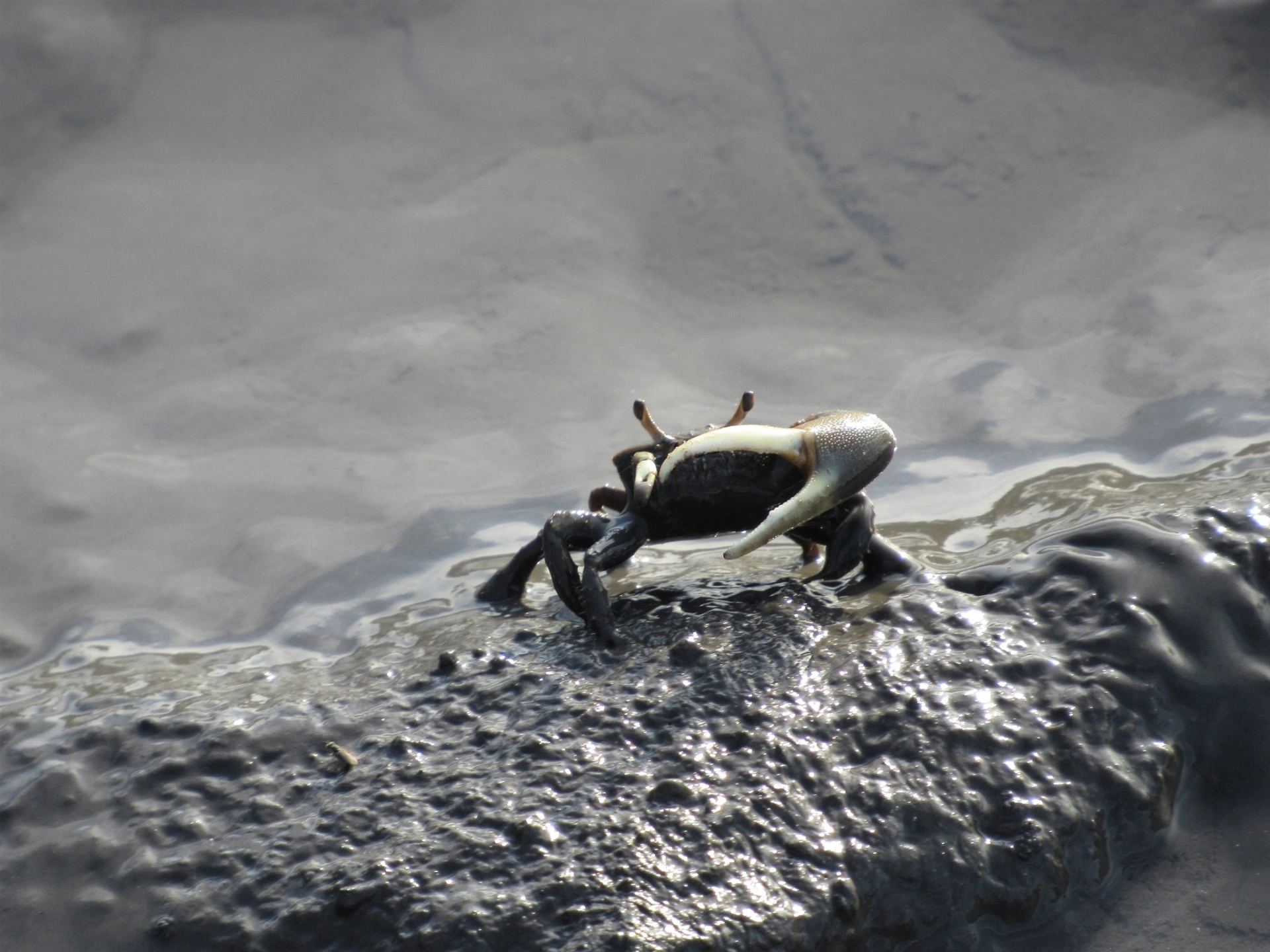
Fiddler Crab
Uca spp.

Golden Wonder Killifish
Aplocheilus lineatus

Kribensis
Pelvicachromis pulcher
Ready to Add Bumblebee Goby to Your Tank?
Use our free stocking calculator to check compatibility, bioload, and get personalized recommendations.