Stocking Guide
    12 min read

    Best Fish for a 55 Gallon Tank

    27 species that genuinely thrive in this popular tank size — plus stocking combinations that actually work together.

    A 55-gallon tank is the sweet spot for serious fishkeeping. With 48 inches of swimming length and roughly 200 liters of water volume, you finally have room for species that would be cramped in smaller setups — proper schools of active swimmers, stunning centerpiece fish, and enough biological stability to keep demanding species healthy.

    But extra space also means extra ways to go wrong. Pet stores will happily sell you fish that outgrow this tank in months. This guide cuts through the noise: 27 species that genuinely thrive at this size, honest stocking combinations, and a clear list of what to avoid.

    Schooling Fish

    A 55-gallon gives you room for proper schools — 10 to 15 fish moving as one. The 48-inch length accommodates active swimmers that would pace endlessly in smaller tanks. Focus on one or two species in larger numbers rather than mixing many species in small groups.
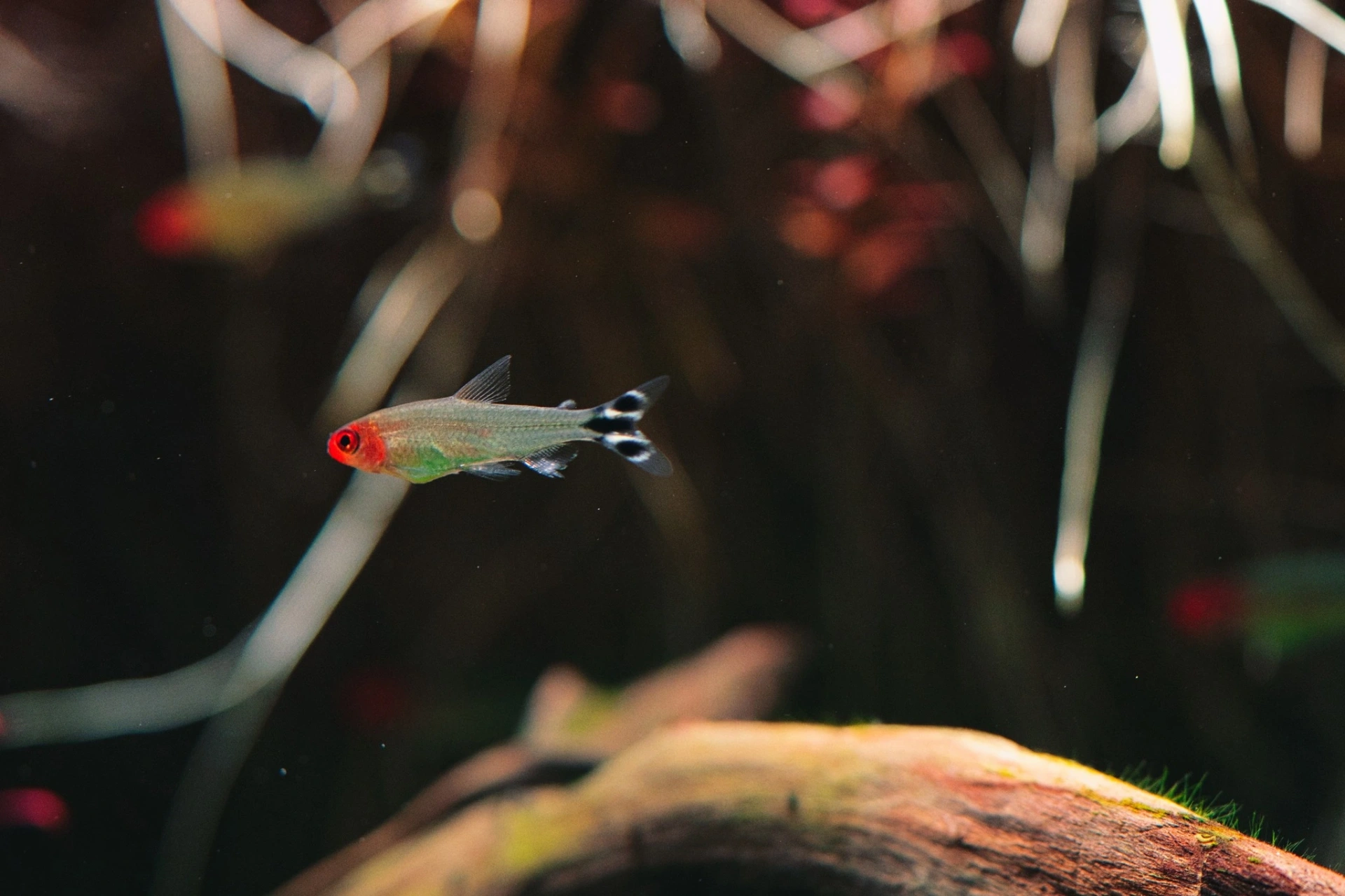
    Rummy nose tetra swimming in an aquarium
    Easy

    Rummy-Nose Tetra

    Hemigrammus rhodostomus

    The tightest schooling tetra — their synchronized movement is mesmerizing in larger tanks.

    2"School: 10-1572-82°F
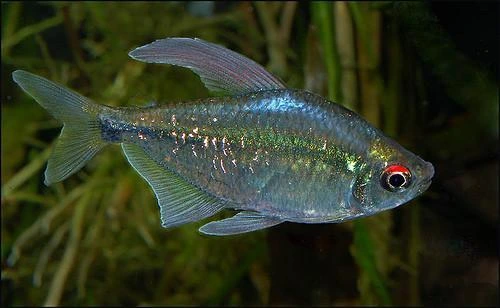
    Congo tetra swimming in an aquarium
    Moderate

    Congo Tetra

    Phenacogrammus interruptus

    Iridescent blues and flowing fins make these the showpiece of any tetra collection.

    3"School: 8-1075-82°F
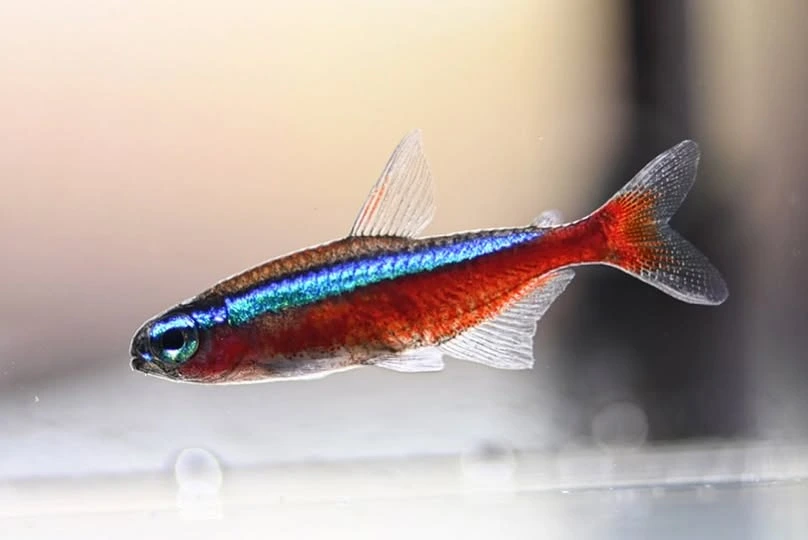
    Single cardinal tetra swimming in an aquarium
    Easy

    Cardinal Tetra

    Paracheirodon axelredi

    The full red stripe (vs neon's half) really pops in a large, well-planted school.

    2"School: 15-2073-81°F
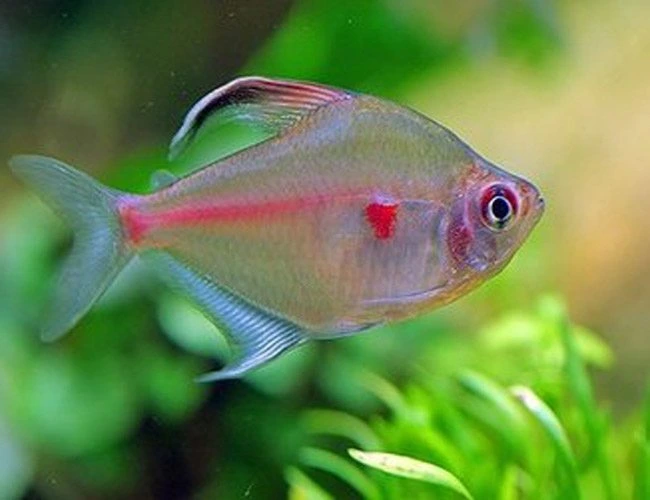
    Bleeding heart tetra swimming in an aquarium
    Easy

    Bleeding Heart Tetra

    Hyphessobrycon erythrostigma

    Dramatic red spot and tall body profile — needs swimming room to show off.

    2.5"School: 8-1072-80°F
    A diamond tetra swimming at the bottom of an aquarium
    Easy

    Diamond Tetra

    Moenkhausia pittieri

    Reflective scales sparkle under good lighting — an underrated gem.

    2.5"School: 8-1072-82°F
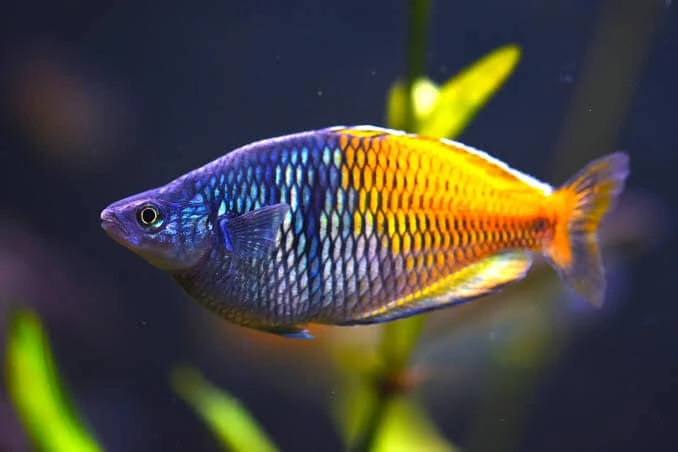
    Boesemani rainbow fish swimming in an aquarium slowly
    Moderate

    Boesemani Rainbowfish

    Melanotaenia boesemani

    Half blue, half yellow-orange — one of the most striking freshwater fish, period.

    4"School: 6-875-86°F
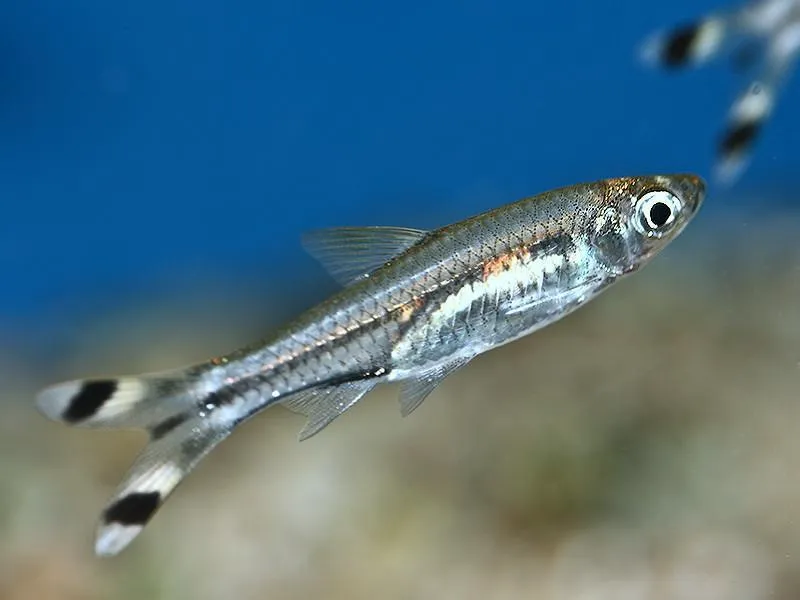
    Scissortail rasbora swimming in an aquarium
    Easy

    Scissortail Rasbora

    Rasbora trilineata

    Active swimmers with distinctive forked tails — need the 48" length to stretch out.

    3.5"School: 8-1073-78°F
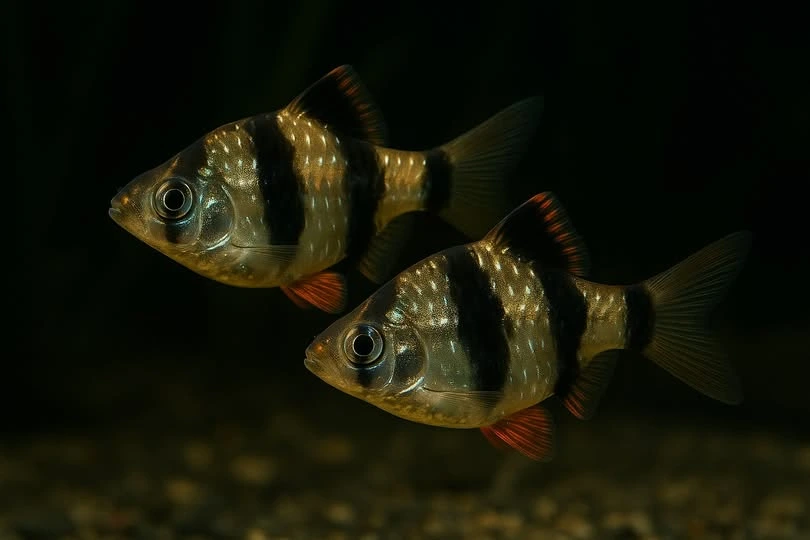
    Two Tiger Barbs swimming in the middle of an aquarium
    Easy

    Tiger Barb

    Puntigrus tetrazona

    Notorious fin-nippers become peaceful in groups of 10+ with enough space.

    3"School: 10+74-82°F
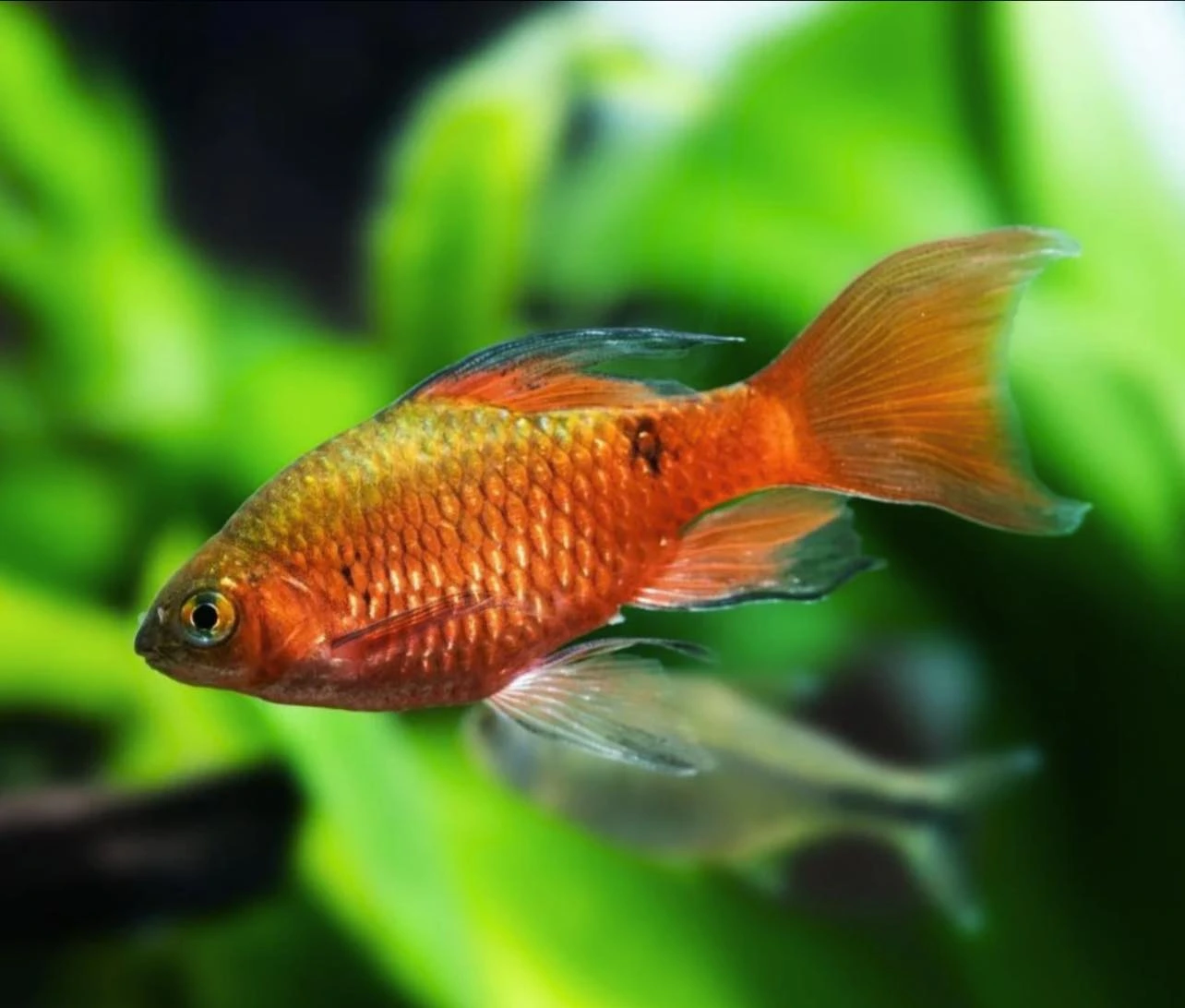
    Longfin rosy barb swimming in an aquarium
    Easy

    Rosy Barb

    Pethia conchonius

    Hardy, colorful, and active — males develop brilliant red during breeding.

    4"School: 6-864-77°F
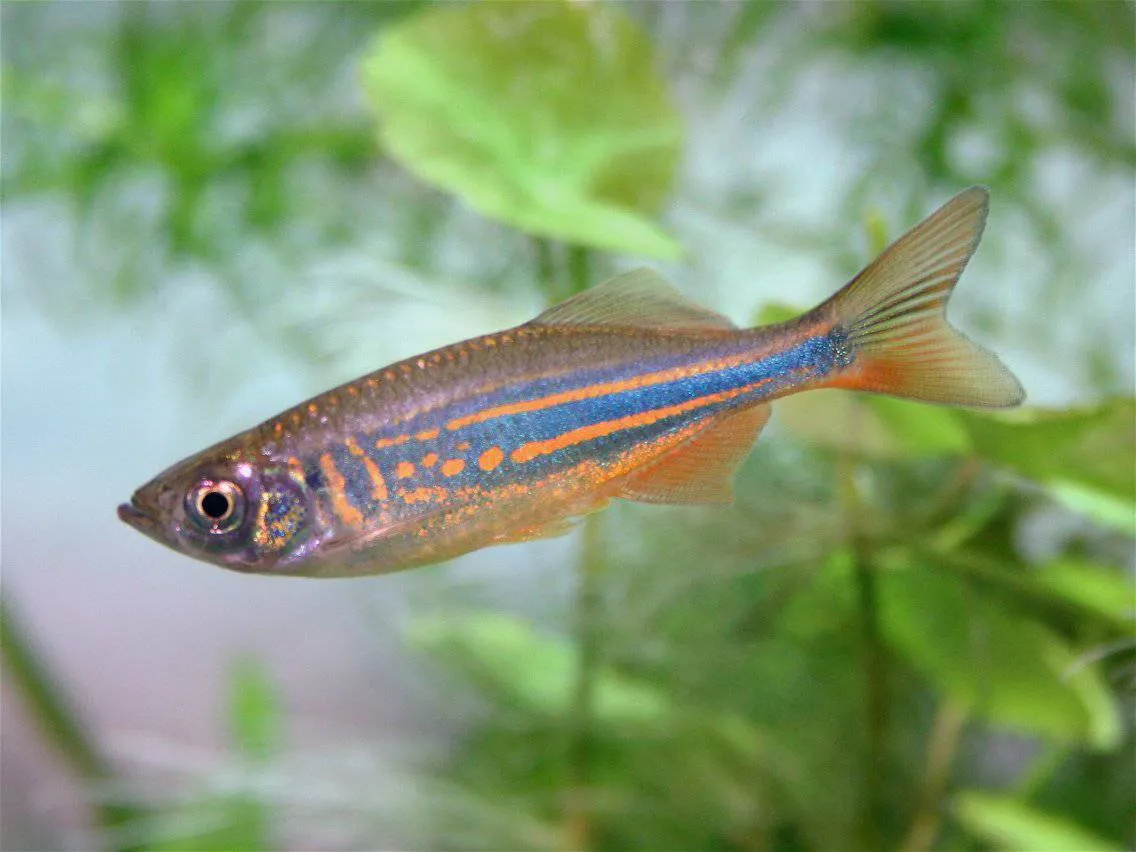
    A single giant danio swimming in an aquarium
    Easy

    Giant Danio

    Devario aequipinnatus

    Fast, torpedo-shaped swimmers that finally have room to sprint in a 55.

    4"School: 6-872-81°F

    Centerpiece Fish

    With 55 gallons, you can keep centerpiece species that need real territory. Angelfish finally have vertical space, larger gouramis won't feel cramped, and peaceful cichlids can establish proper territories without constant conflict.
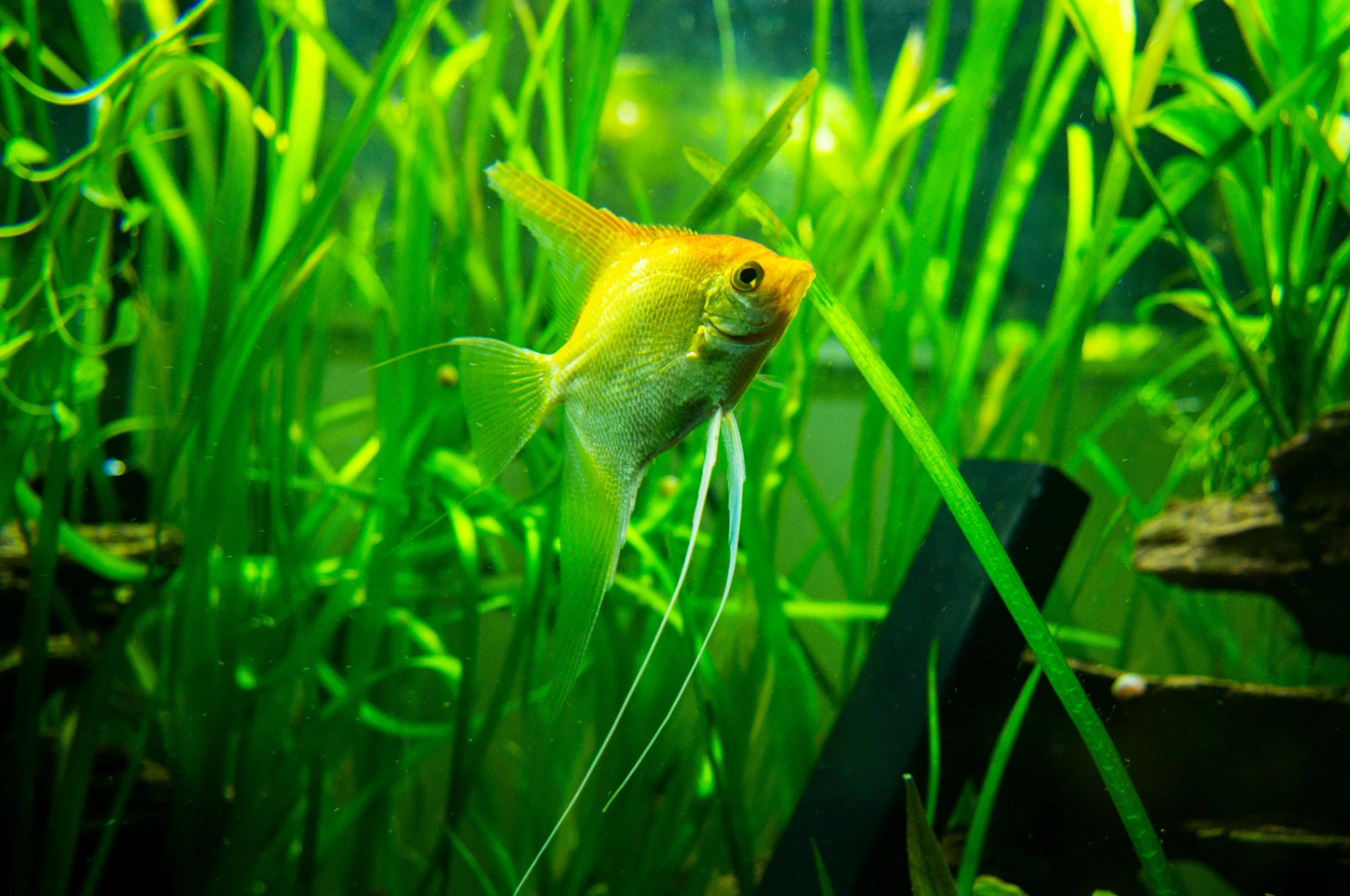
    Yellow Angelfish swimming near the surface among aquatic plants
    Moderate

    Angelfish

    Pterophyllum scalare

    The classic centerpiece — 55 gallons is the minimum for a pair to thrive long-term.

    6"School: 276-84°F
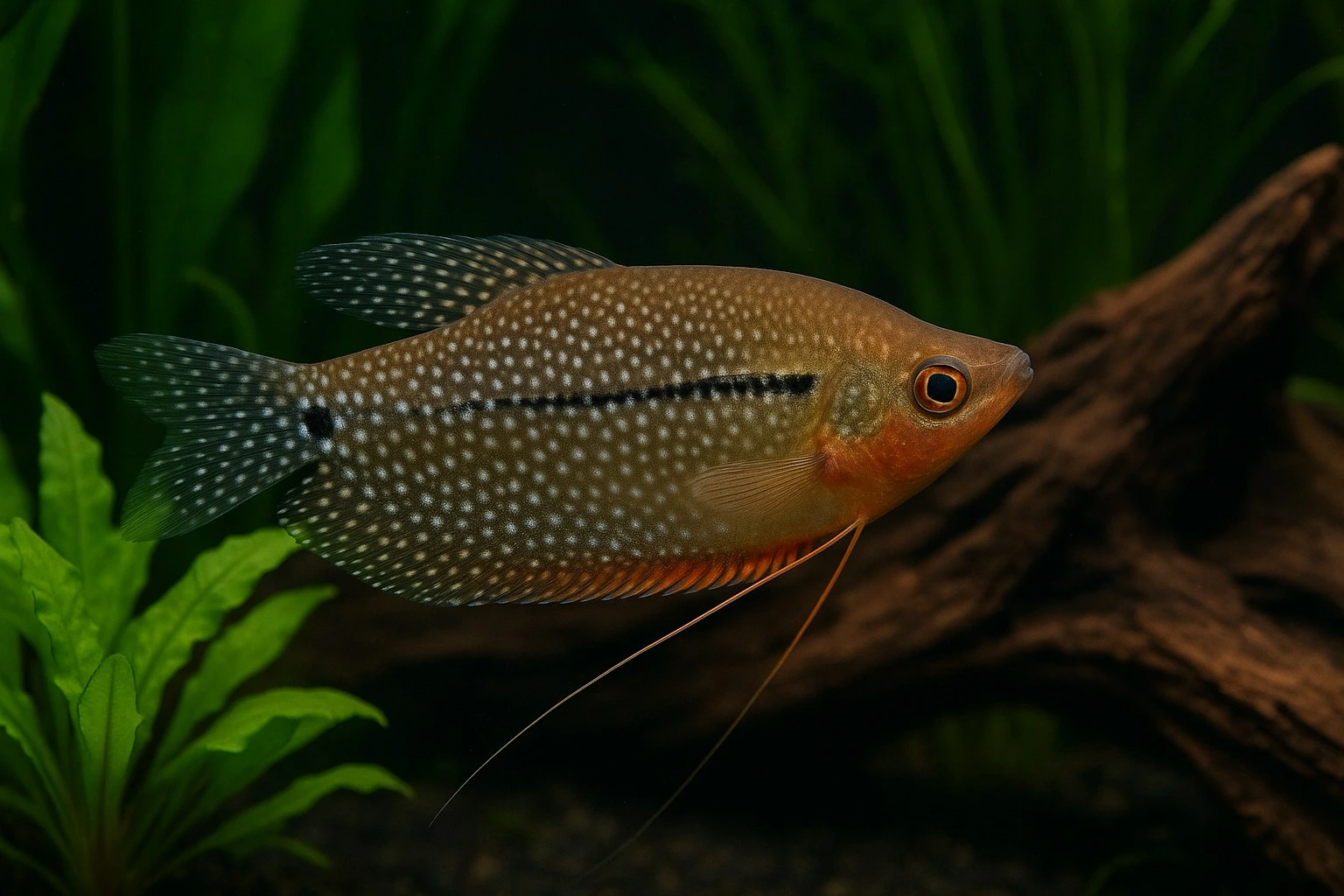
    Pearl Gourami swimming in the middle of an aquarium
    Easy

    Pearl Gourami

    Trichopodus leerii

    Peaceful, elegant, and one of the hardiest gouramis — lace-like patterning is stunning.

    4.5"School: 1-277-82°F
    Electric blue acara swimming near aquarium plants
    Moderate

    Electric Blue Acara

    Andinoacara pulcher

    A peaceful cichlid with electric blue coloration — the 55 is perfect for a pair.

    6"School: 1-272-82°F
    Colorful bolivian ram swimming in an aquarium
    Easy

    Bolivian Ram

    Mikrogeophagus altispinosus

    Hardier than German Blues, these peaceful cichlids add color to the lower tank.

    3"School: 1 pair72-79°F
    Keyhole cichlid swimming in an aquarium
    Easy

    Keyhole Cichlid

    Cleithracara maronii

    One of the most peaceful cichlids — shy but rewarding once settled.

    4"School: 1-272-82°F
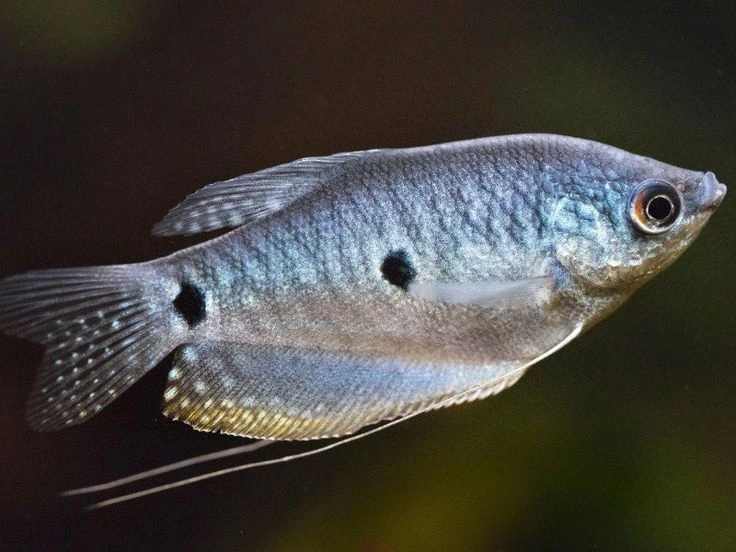
    Three spot gourami swimming in an aquarium
    Easy

    Three-Spot Gourami

    Trichopodus trichopterus

    Comes in blue, gold, and opaline varieties — needs space to reduce territorial behavior.

    5"School: 175-82°F
    Kribensis swimming in an aquarium
    Easy

    Kribensis

    Pelvicachromis pulcher

    Females show stunning purple bellies when breeding — great for community tanks.

    4"School: 1 pair75-79°F

    Bottom Dwellers

    The 55-gallon's footprint gives bottom dwellers plenty of territory. You can keep proper groups of corydoras, add a bristlenose without crowding, or try more active species like yoyo loaches that need room to explore.
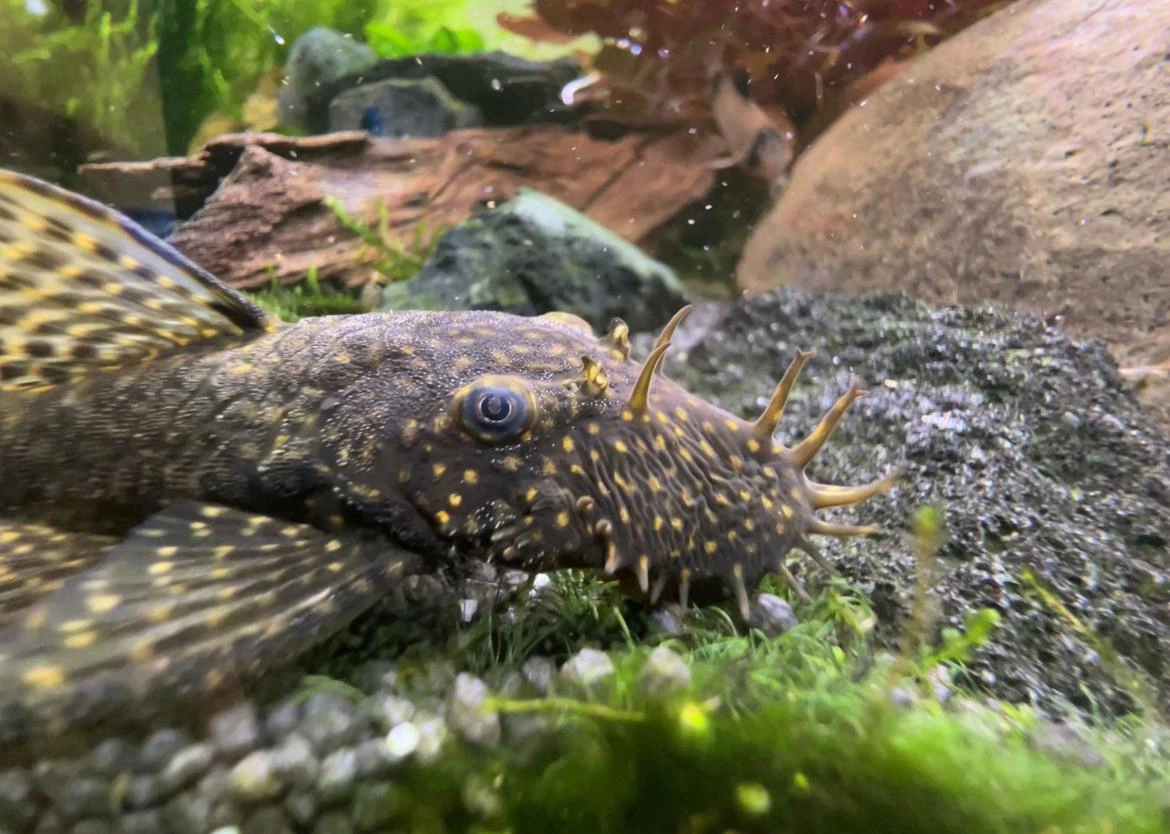
    Bristlenose pleco laying at the bottom of an aquarium
    Easy

    Bristlenose Pleco

    Ancistrus sp.

    The sensible pleco choice — maxes out at 5" and actually earns its keep on algae.

    5"School: 173-81°F
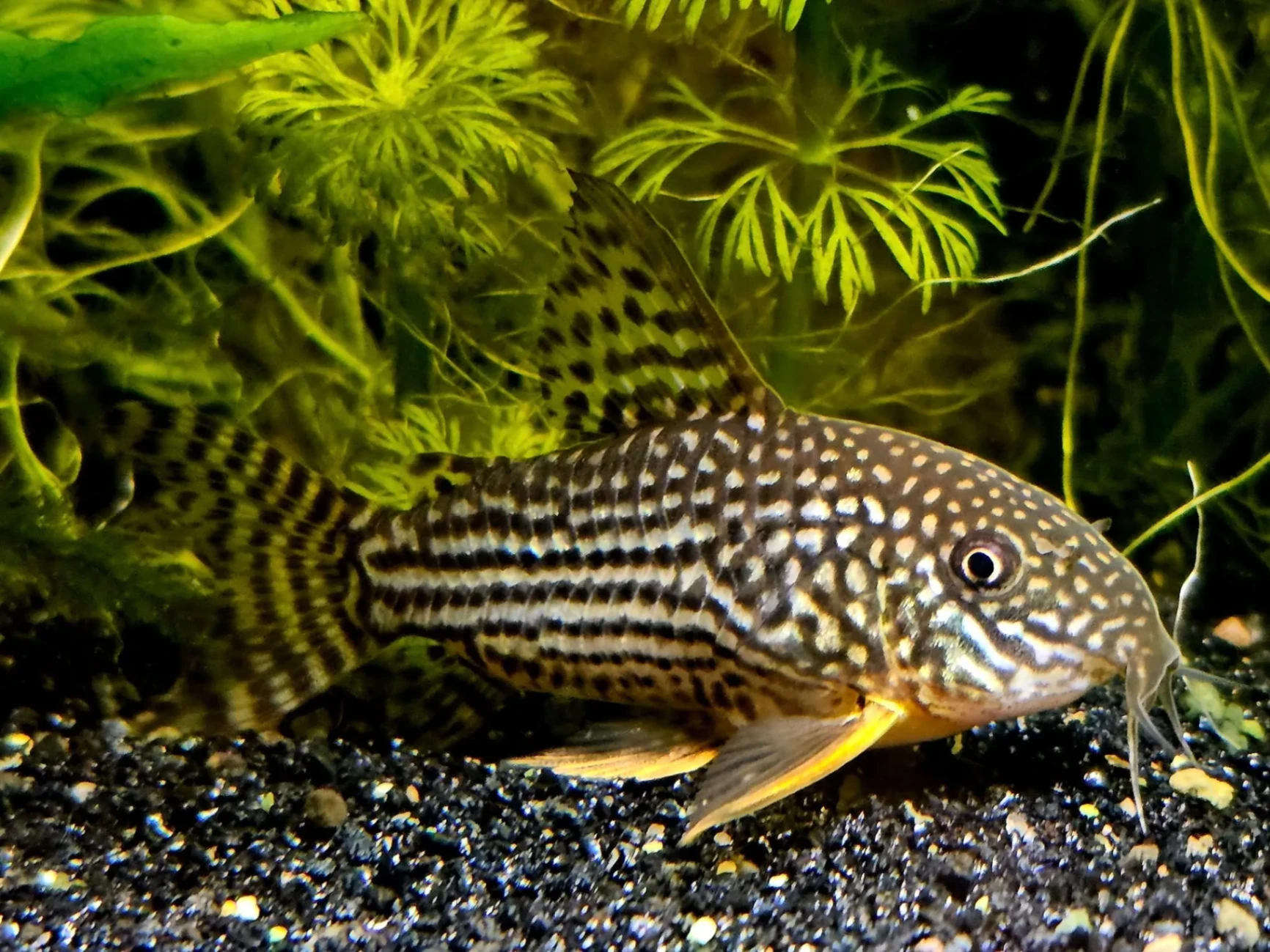
    Corydoras sterbai laying at the bottom of an aquarium near aquatic plants
    Easy

    Corydoras Sterbai

    Corydoras sterbai

    Orange pectoral fins and white spots — one of the most attractive corydoras species.

    2.5"School: 875-82°F
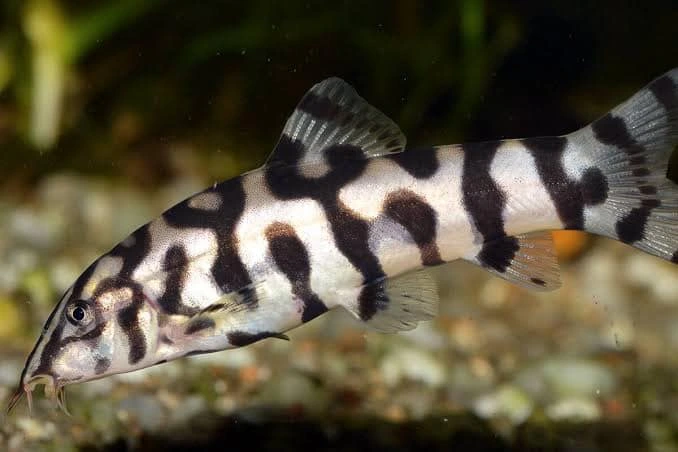
    Yoyo loach swimming in an aquarium
    Moderate

    Yoyo Loach

    Botia almorhae

    Active, personable, and great at controlling snail populations.

    5"School: 4-575-86°F
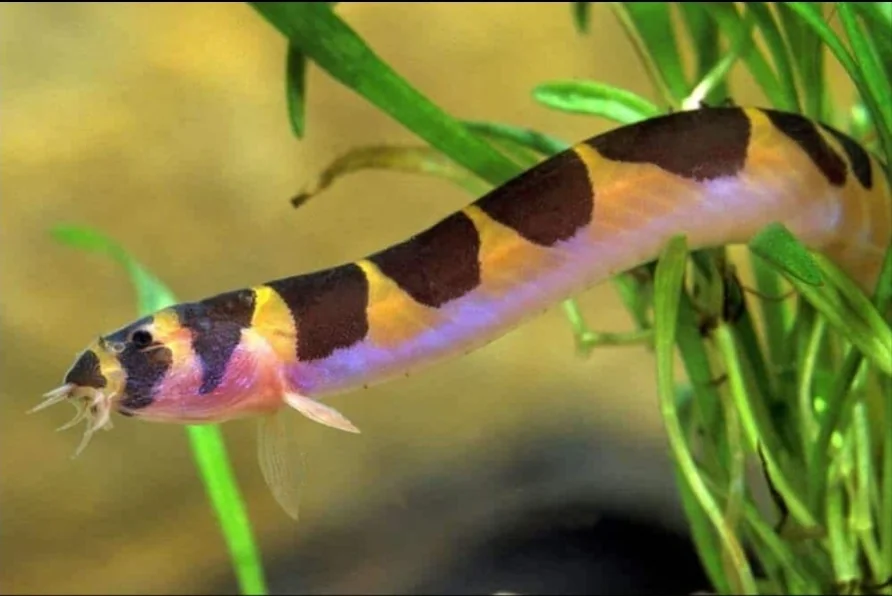
    Kuhli Loach emerging from aquarium plants
    Easy

    Kuhli Loach

    Pangio kuhlii

    Eel-like and nocturnal — keep 6+ and provide plenty of hiding spots.

    4"School: 6+75-86°F
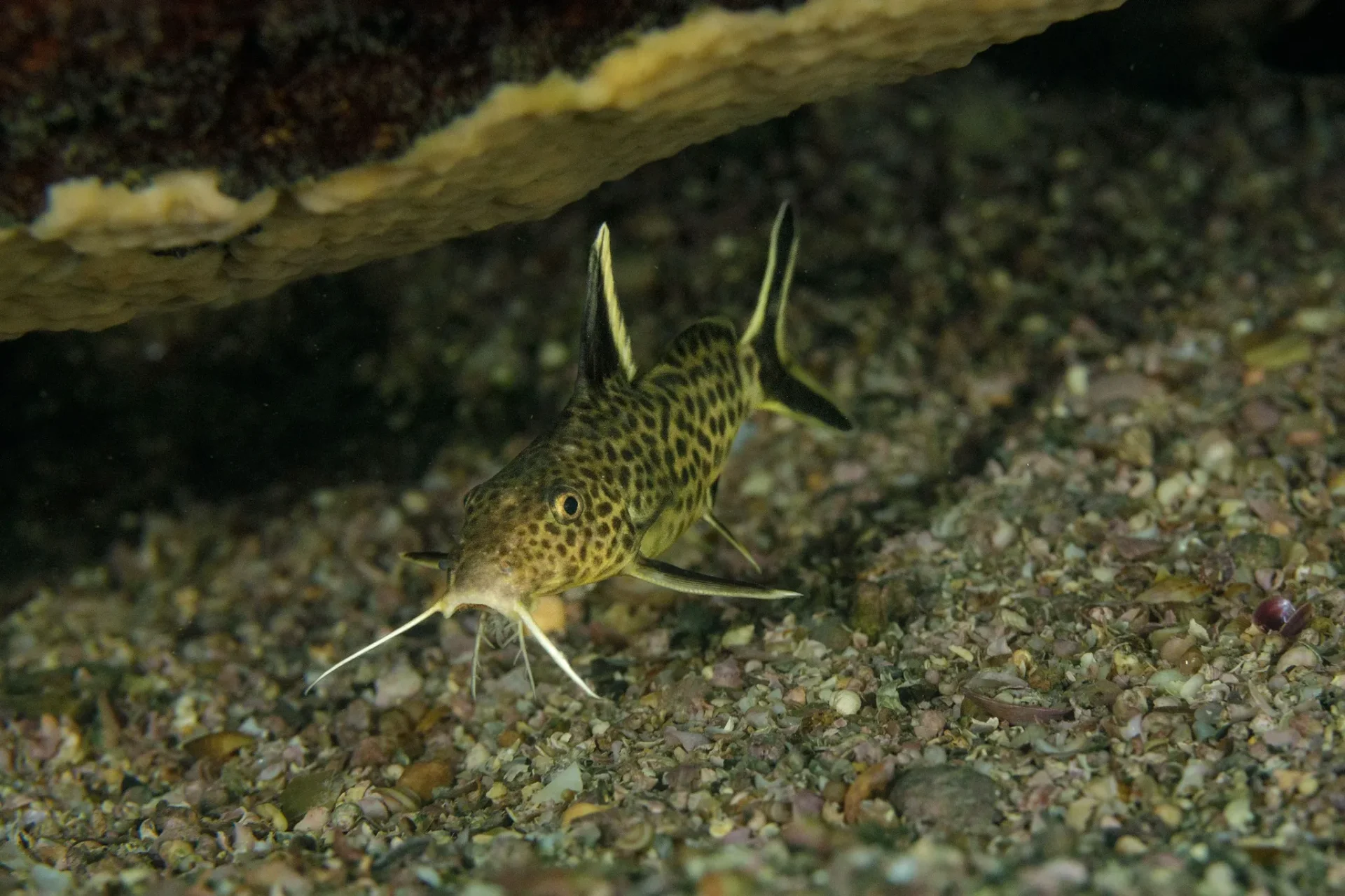
    Synodontis petricola swimming near aquarium substrate
    Moderate

    Synodontis Petricola

    Synodontis petricola

    A striking African catfish that's active at night and peaceful during the day.

    4"School: 3-475-82°F
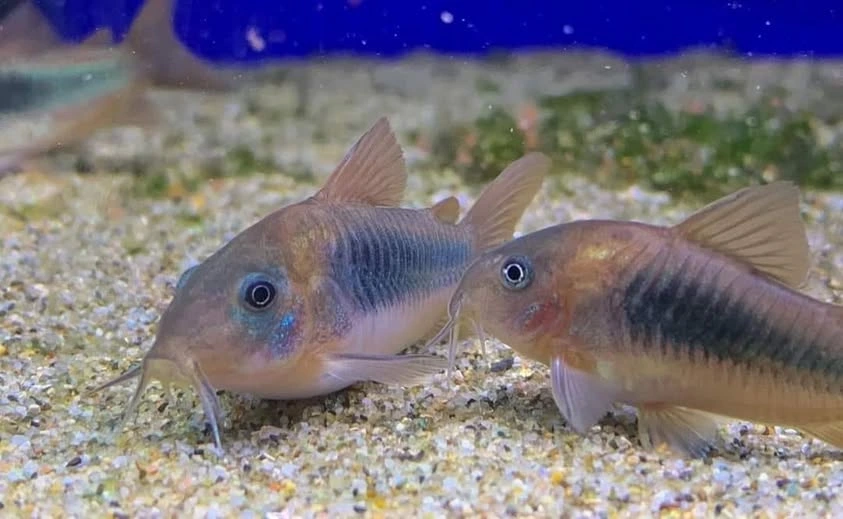
    Two bronze corydoras swimming at the bottom of an aquarium
    Easy

    Bronze Corydoras

    Corydoras aeneus

    The bulletproof beginner cory — active, hardy, and endlessly charming in groups.

    2.5"School: 872-79°F
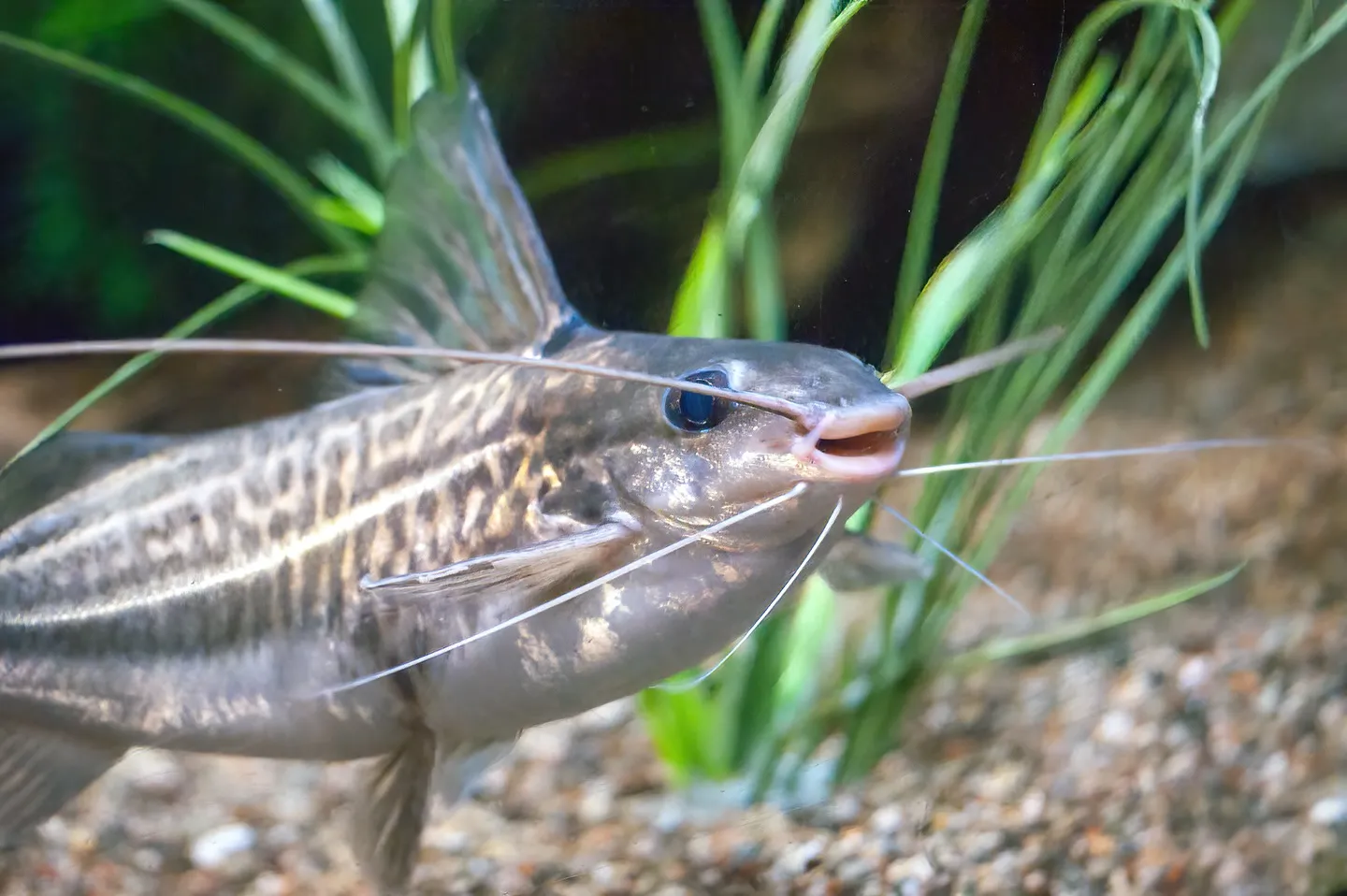
    Pictus catfish slowly swimming in an aquarium
    Moderate

    Pictus Catfish

    Pimelodus pictus

    Long whiskers and silver spotted body — active swimmers that need open space.

    5"School: 2-375-81°F
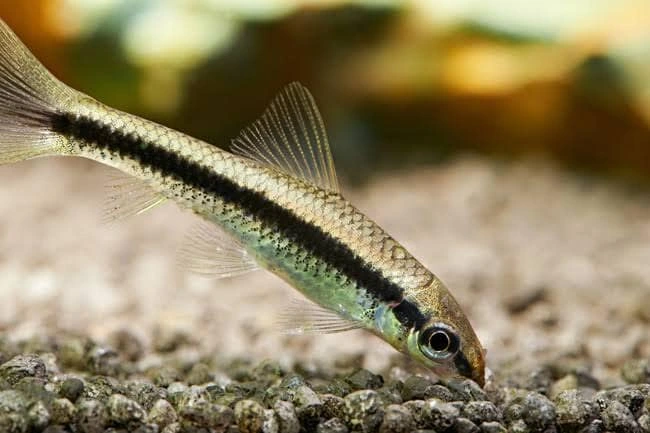
    Siamese Algae Eater foraging for food at the bottom of an aquarium
    Easy

    Siamese Algae Eater

    Crossocheilus oblongus

    One of the few fish that eats black beard algae — functional and attractive.

    6"School: 1-275-79°F

    Livebearers

    A 55-gallon handles livebearer colonies beautifully. Swordtails and mollies can grow to full size, and you'll have space to manage the inevitable population explosions with proper male-to-female ratios.

    Red swordtail swimming in an aquarium
    Easy

    Swordtail

    Xiphophorus hellerii

    Males sport impressive tail extensions — need length to swim and spar naturally.

    5"School: 6-872-82°F
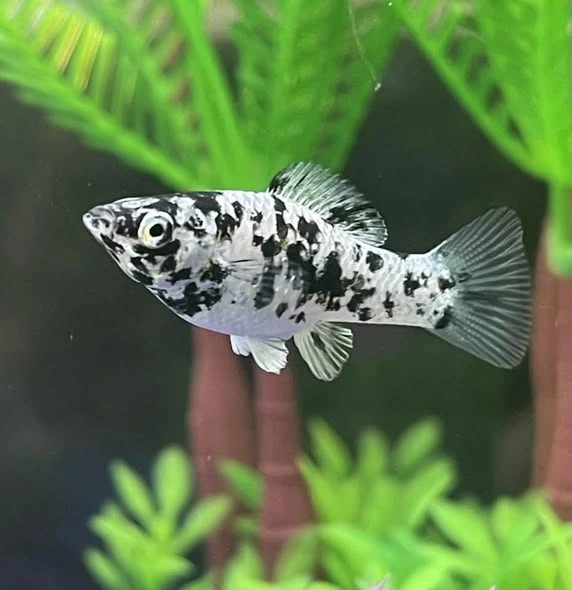
    White large molly with black spots swimming near aquarium plants
    Easy

    Molly

    Poecilia sphenops

    Comes in dozens of color varieties — prefers hard, slightly brackish water.

    4"School: 6-872-82°F
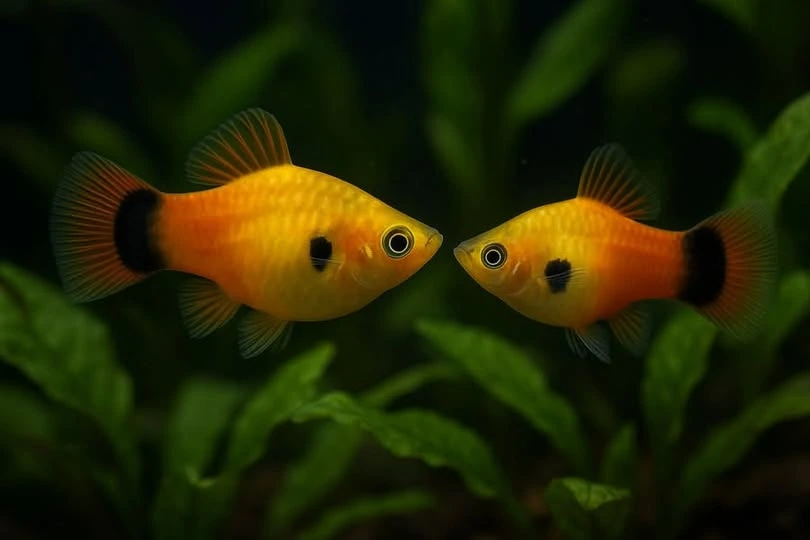
    Two orange platies swimming in aquarium plants
    Easy

    Platy

    Xiphophorus maculatus

    Colorful, peaceful, and constantly active — excellent for community setups.

    2.5"School: 8-1070-80°F
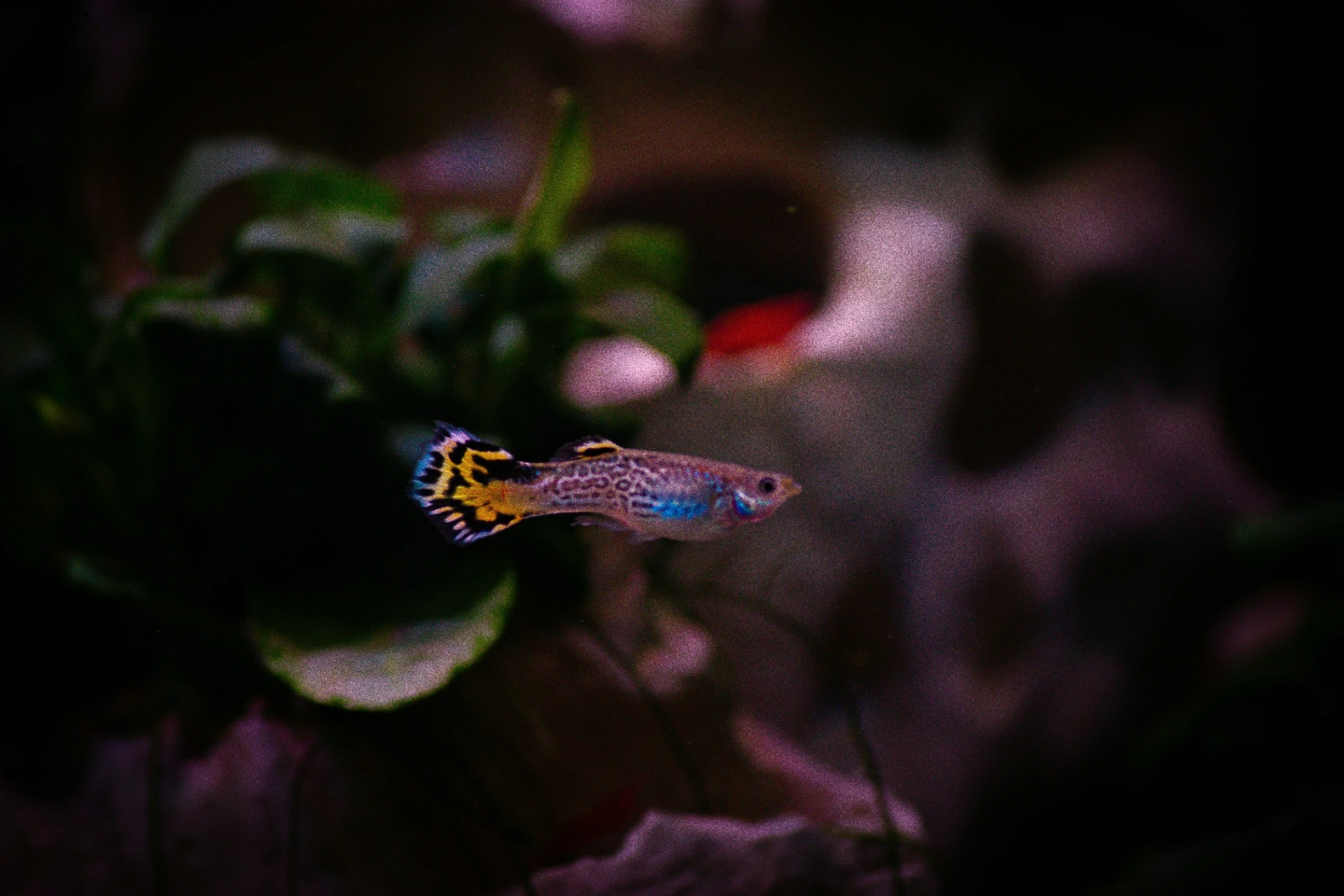
    Yellow female tiger guppy fish swimming in aquarium
    Easy

    Guppy

    Poecilia reticulata

    Endless color varieties — males display constantly in a well-planted 55.

    2"School: 8-1272-82°F

    Invertebrates

    Invertebrates fill ecological niches fish can't. A 55-gallon can support larger filter-feeding shrimp and multiple mystery snails without running out of algae or biofilm.
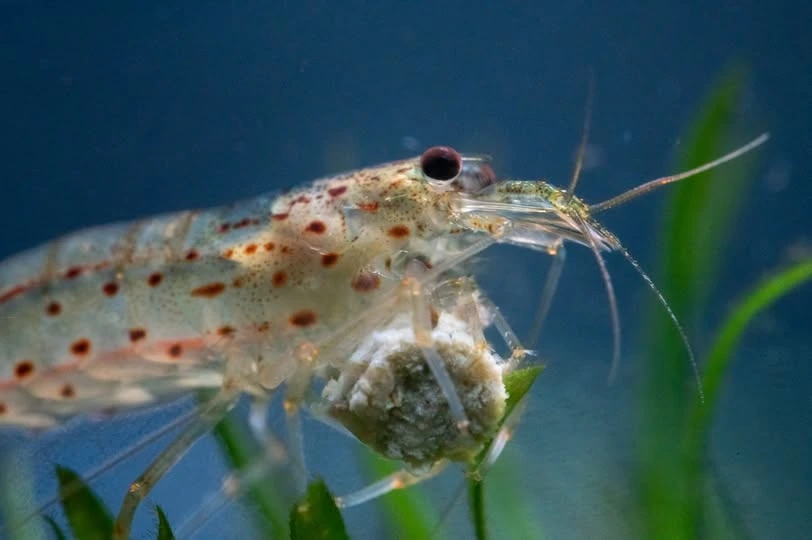
    Amano shrimp eating a piece of algae wafer at the bottom of an aquarium
    Easy

    Amano Shrimp

    Caridina multidentata

    The best algae-eating shrimp — large enough to avoid most fish predation.

    2"School: 8-1270-80°F
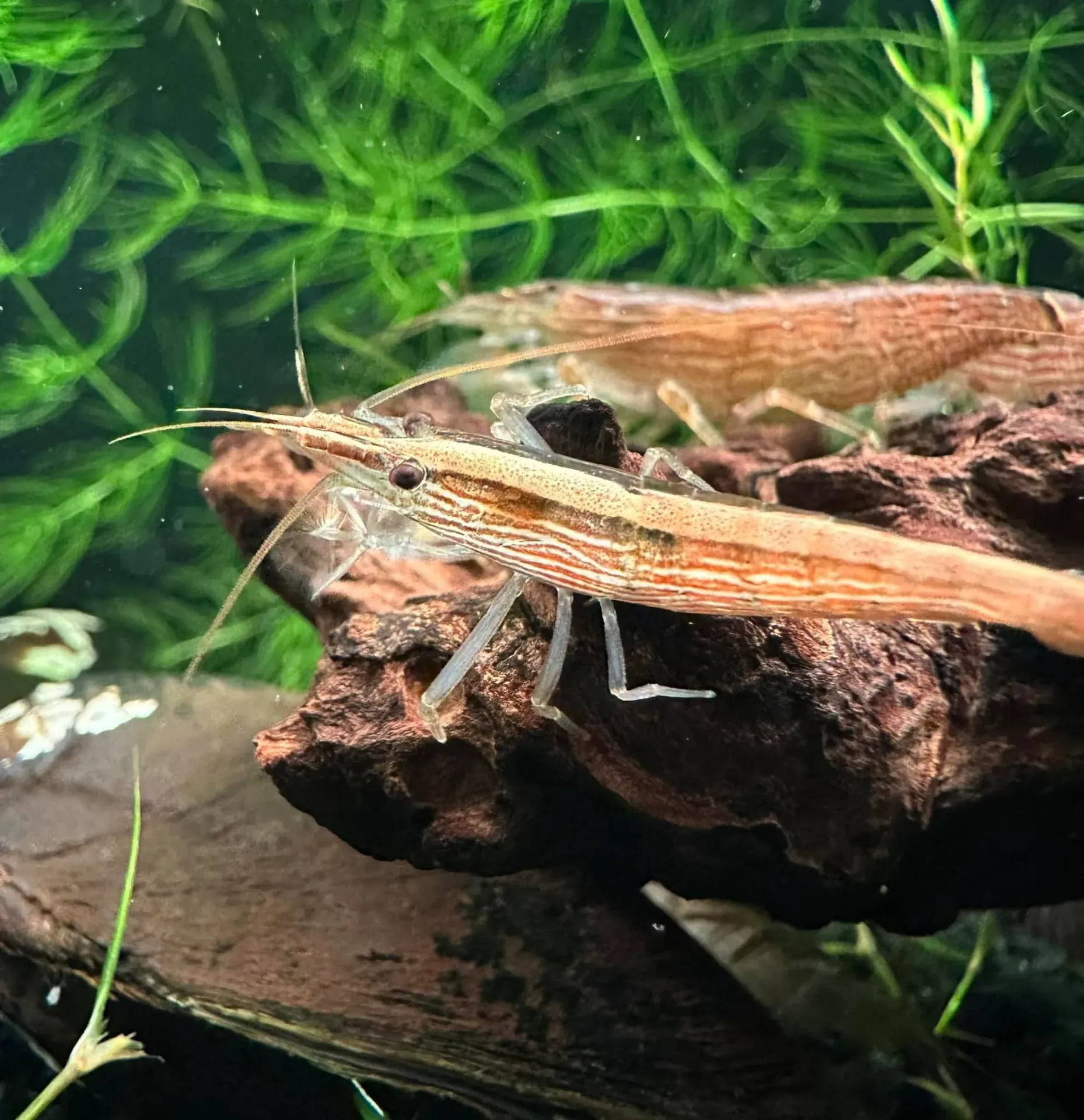
    A group of bamboo shrimp standing on aquarium driftwood
    Moderate

    Bamboo Shrimp

    Atyopsis moluccensis

    Filter feeders that fan food from the current — fascinating to watch and need flow.

    3"School: 2-475-82°F
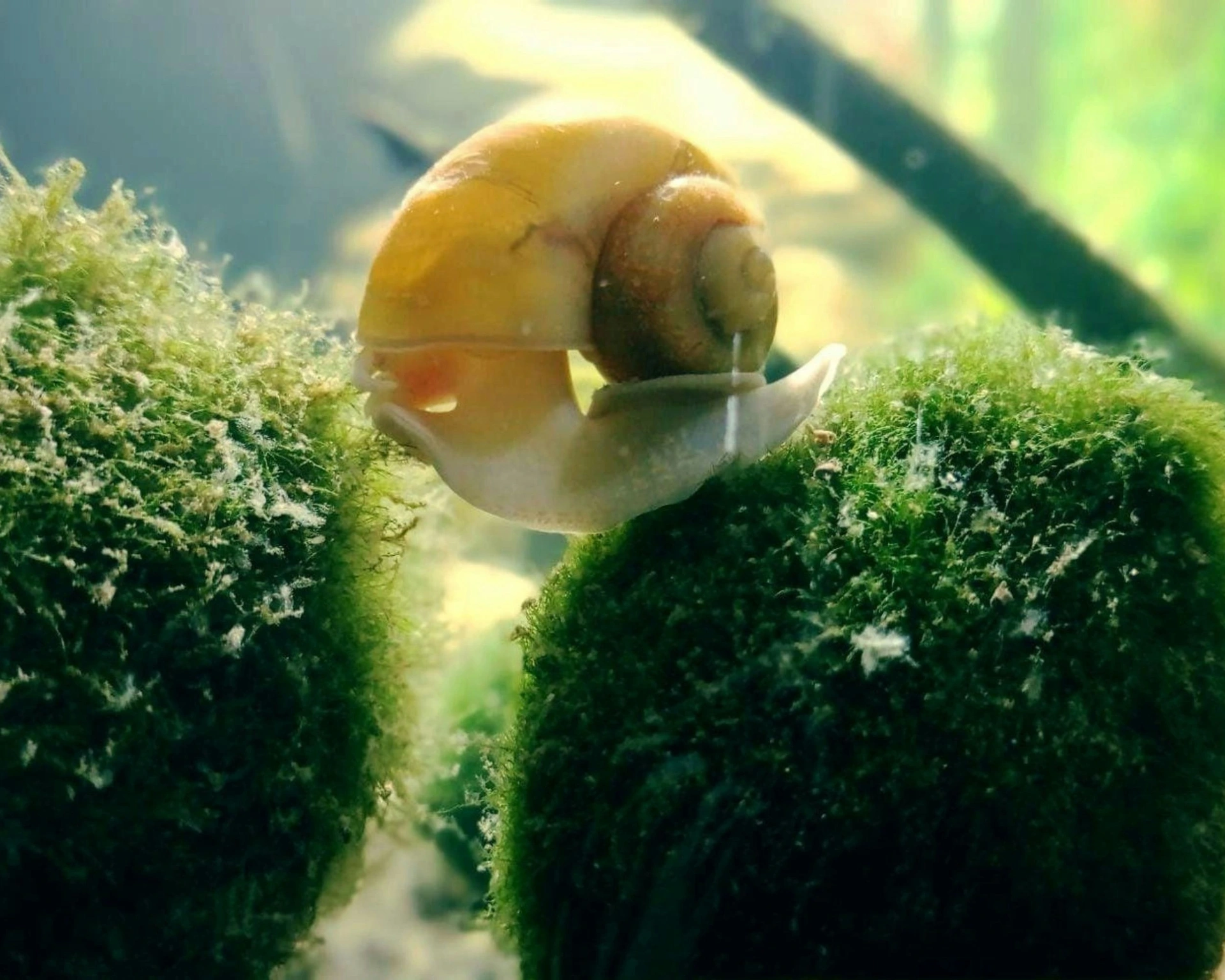
    A yellow mystery snail walking on a marimo moss ball in an aquarium
    Easy

    Mystery Snail

    Pomacea bridgesii

    Available in gold, blue, purple, and ivory — won't eat live plants.

    2"School: 2-468-82°F
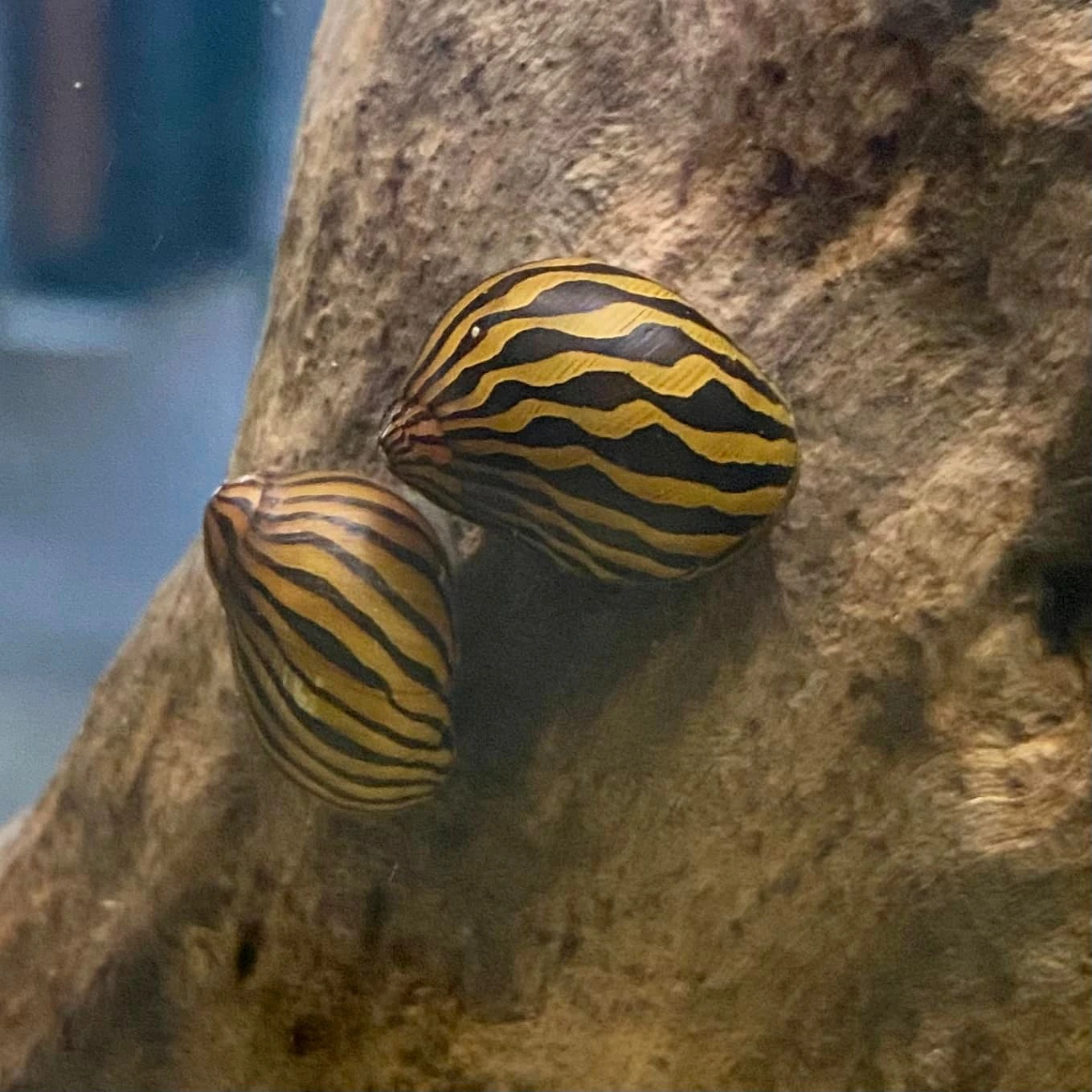
    Two nerite snails on a piece of driftwood in an aquarium
    Easy

    Nerite Snail

    Neritina natalensis

    Superior algae control and beautiful shell patterns — won't reproduce in freshwater.

    1"School: 4-672-78°F

    Stocking Combinations That Work

    These combinations have been tested by experienced fishkeepers. Start with one and adjust based on your specific setup, filtration, and maintenance schedule.

    Classic Community

    Beginner

    1 pair Angelfish + 12 Rummy-Nose Tetras + 8 Corydoras Sterbai + 1 Bristlenose Pleco + 4 Nerite Snails

    Keep tetras in a tight school to minimize angelfish predation on stragglers.

    Rainbowfish Showcase

    Intermediate

    8 Boesemani Rainbowfish + 8 Scissortail Rasboras + 6 Kuhli Loaches + 1 Bristlenose Pleco

    High flow, tight-fitting lid. Both species are jumpers.

    Peaceful Cichlid Community

    Intermediate

    1 pair Electric Blue Acara + 12 Congo Tetras + 6 Yoyo Loaches + 4 Mystery Snails

    Provide caves for the acaras and driftwood for the loaches.

    Barb Tank

    Beginner

    12 Tiger Barbs + 8 Rosy Barbs + 6 Bronze Corydoras + 1 Bristlenose Pleco

    Larger barb groups reduce fin-nipping. Avoid long-finned tankmates.

    ⚠️ Fish to Avoid in a 55 Gallon Tank

    These species are commonly sold for 55-gallon tanks but will outgrow it, cause aggression problems, or simply won't thrive. Save yourself the heartache.

    Common PlecoGrows to 15"+

    Outgrows tank within 2 years, produces massive waste.

    OscarGrows to 14"

    Needs 75+ gallons minimum, extremely high bioload.

    Clown LoachGrows to 12"

    Grows slowly but needs 125+ gallons long-term.

    Bala SharkGrows to 14"

    Active schooling fish that needs 125+ gallons.

    Silver DollarGrows to 6"

    Needs schools of 6+ and more swimming room.

    Jack DempseyGrows to 10"

    Aggressive and territorial, needs 75+ gallons.

    Green TerrorGrows to 12"

    Highly aggressive, especially when breeding.

    Needs 75+ gallons for proper territory.

    DiscusGrows to 6"

    Require groups, pristine water, and expert care.

    Convict CichlidGrows to 6"

    Breeding pairs become extremely aggressive.

    How Many Fish Can You Keep?

    The "one inch per gallon" rule is dangerously oversimplified. A 55-gallon could hold 55 one-inch tetras, but it couldn't hold a single 55-inch fish. Real stocking depends on species bioload, activity level, territory needs, and your filtration capacity.

    A 55-gallon typically supports 20-30 small to medium fish in a well-filtered community, but a pair of large cichlids might be the maximum. Use the calculator below for species-specific guidance.

    💧 55 gal

    208 liters

    📐 48 × 13"

    footprint

    🐟 20-30

    typical community

    Setup Tips for a 55 Gallon Tank

    A few things to consider before stocking your 55 gallon — filtration, layout, and heating all matter more at this size.

    🌊

    Filtration Matters More

    A 55-gallon needs serious filtration — aim for 8-10x turnover. Canister filters or dual HOBs work better than a single small filter.

    🌿

    Embrace the Length

    48 inches gives you room for dramatic aquascaping. Create distinct zones — open swimming areas, planted sections, and hiding spots.

    🔥

    Two Heaters Are Better

    Use two 150W heaters instead of one 300W. If one fails, the other provides backup and prevents temperature crashes.

    💨

    Consider Flow Patterns

    Active swimmers and rainbowfish love current. Bottom dwellers and bettas prefer calmer areas. Position outlets strategically.

    Underrated 55 Gallon Picks Worth a Look

    A 55 gallon is where several commonly overlooked species become genuinely comfortable. The Electric Blue Acara has real territory here, and it pairs well with a Bolivian Ram or a pair of Keyhole Cichlids on the lower levels without the aggression most cichlid combinations bring.

    If you would rather go the rift lake route, 55 gallons is the honest minimum for a Red Zebra Mbuna setup with heavy rockwork and hard, alkaline water. For clean-up and character, a school of Dwarf Chain Loaches, a group of Bronze Corydoras, or a high-flow corner for a Hillstream Loach all fit comfortably. A Blue Phantom Pleco suits the same oxygen-rich, driftwood-heavy layout, and a Peacock Eel gives you a nocturnal sand-dweller with plenty of personality.

    Still deciding which cichlid direction to take? Our guide to all types of cichlids groups every species by New World, dwarf, African rift lake and centerpiece so you can match a fish to your water chemistry before you buy.

    Ready to stock your 55 gallon?

    Check compatibility, bioload, and tank capacity for your exact setup.