Stocking Guide
    14 min read

    Best Fish for a 75 Gallon Tank

    30 species that make the most of this versatile tank size — including fish that finally have room to reach their full potential.

    The 75-gallon sits at a crossroads in the hobby. Same 48-inch length as a 55, but the extra depth and height (18" × 21" vs 13" × 20") opens up possibilities that smaller tanks simply can't offer. Tall-bodied fish like discus and angelfish get vertical swimming room. Territorial cichlids have space to claim corners without constant warfare. And the extra water volume provides a stability buffer that makes demanding species far more forgiving.

    This guide covers 30 species that take full advantage of what a 75 offers — plus honest warnings about fish that still need more room despite what the pet store tells you.

    Schooling Fish

    Seventy-five gallons handles impressive schools without the bioload stress of cramming fish into smaller tanks. The wider footprint means mid-level swimmers have room to shoal naturally across the tank's depth, not just its length.

    Congo tetra swimming in an aquarium
    Moderate

    Congo Tetra

    Phenacogrammus interruptus

    Males develop spectacular finnage and rainbow iridescence when given space to mature properly.

    3"School: 8-1075-82°F
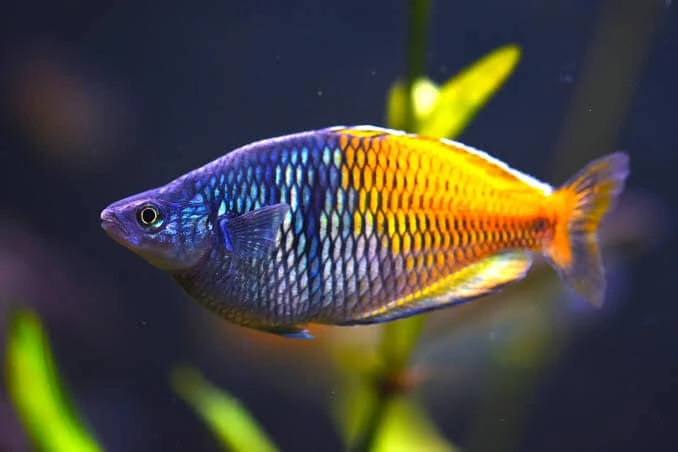
    Boesemani rainbow fish swimming in an aquarium slowly
    Moderate

    Boesemani Rainbowfish

    Melanotaenia boesemani

    The poster child for rainbowfish — vibrant coloration intensifies with age and proper conditions.

    4"School: 8-1075-86°F
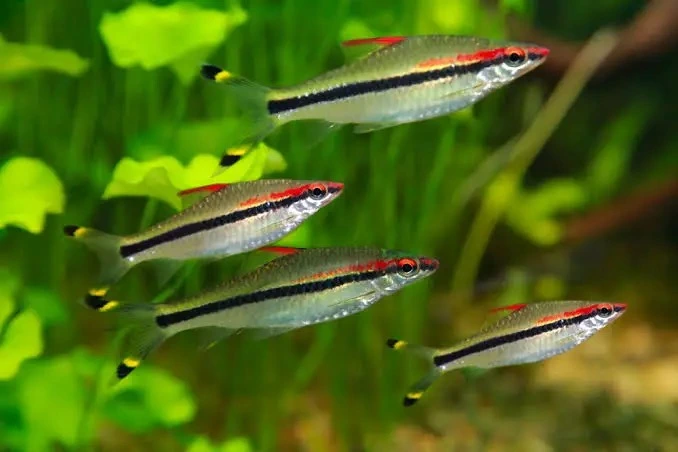
    A group of denison barbs swimming in an aquarium
    Moderate

    Denison Barb

    Sahyadria denisonii

    Torpedo-shaped with a striking red line — active swimmers that appreciate the extra swimming lanes.

    5"School: 6-865-77°F
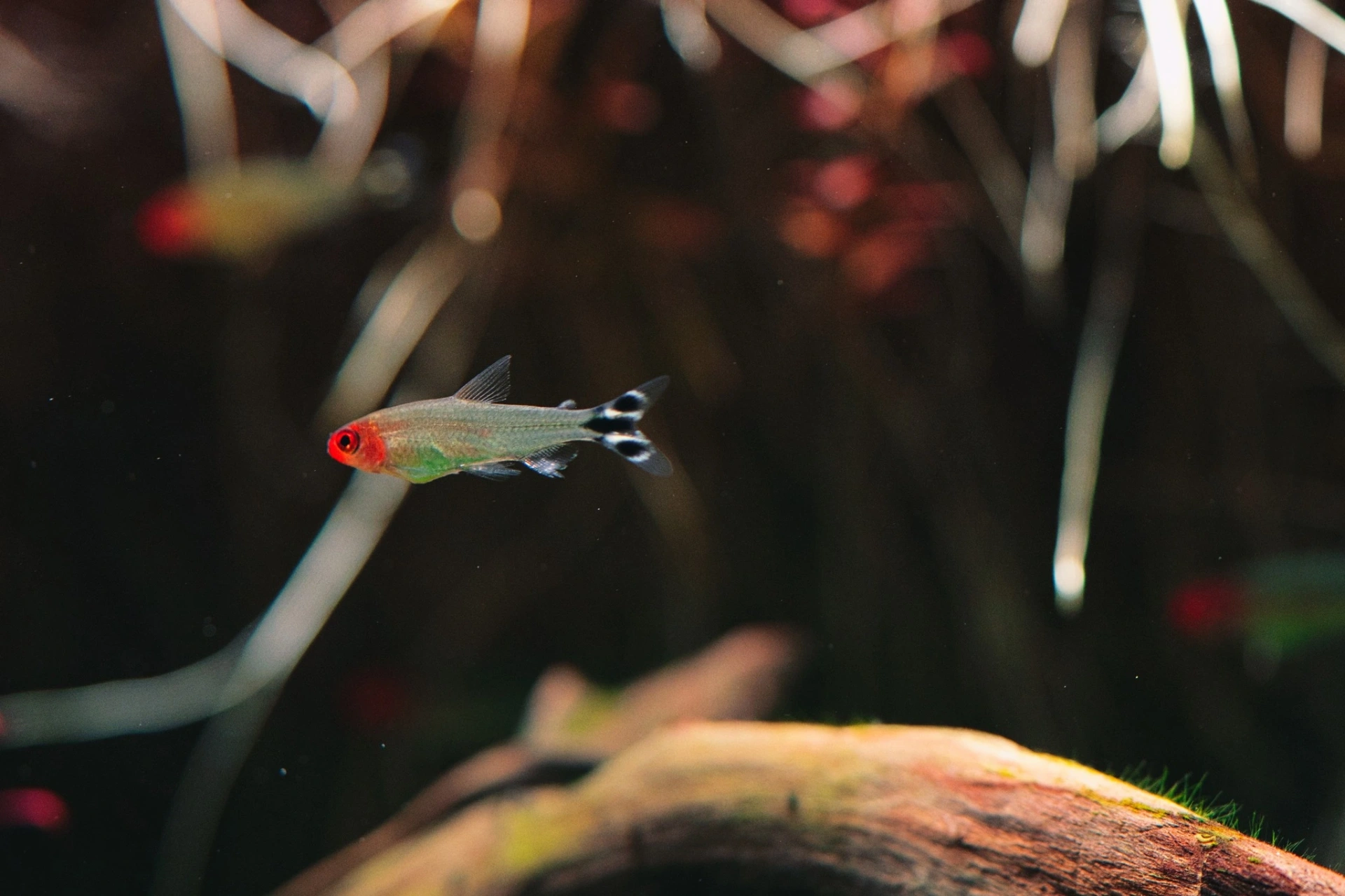
    Rummy nose tetra swimming in an aquarium
    Easy

    Rummy-Nose Tetra

    Hemigrammus rhodostomus

    Red noses deepen in color when water quality is pristine — a living water quality indicator.

    2"School: 12-1572-82°F
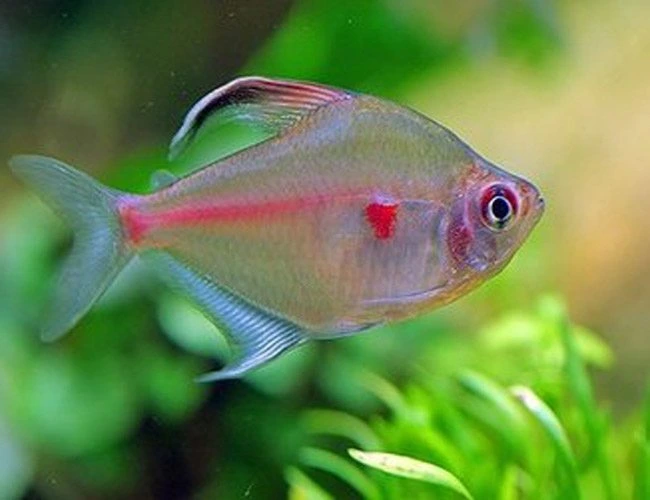
    Bleeding heart tetra swimming in an aquarium
    Easy

    Bleeding Heart Tetra

    Hyphessobrycon erythrostigma

    Deep-bodied tetra with a distinctive red marking — looks best in groups of 10+.

    2.5"School: 10+72-80°F
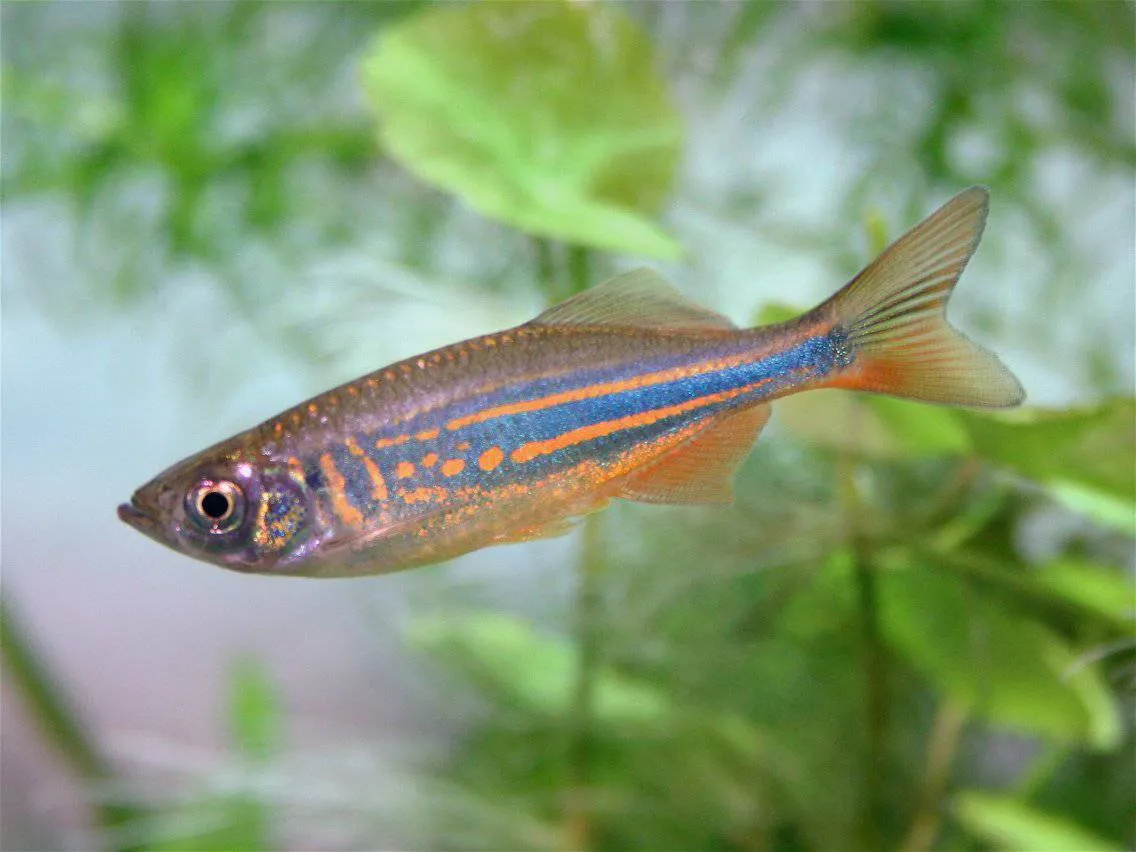
    A single giant danio swimming in an aquarium
    Easy

    Giant Danio

    Devario aequipinnatus

    Tireless swimmers that dart across the upper water column — a tight lid is mandatory.

    4"School: 6-872-81°F
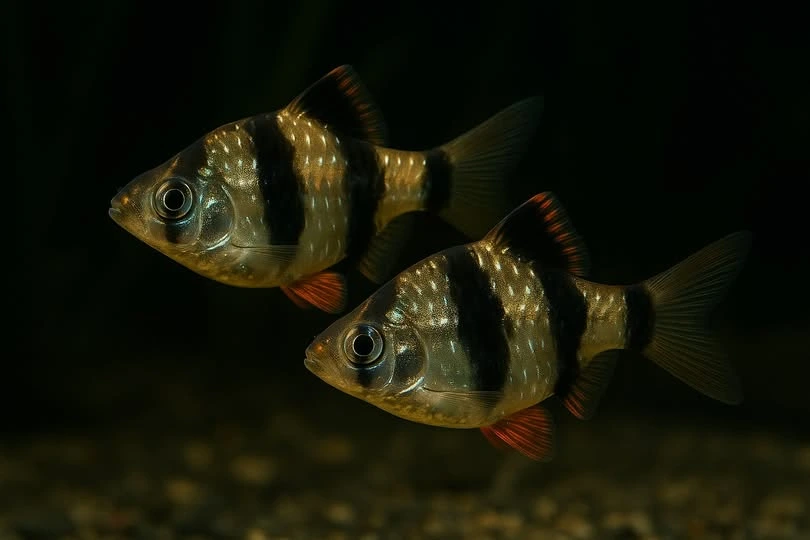
    Two Tiger Barbs swimming in the middle of an aquarium
    Easy

    Tiger Barb

    Puntigrus tetrazona

    Keep 12+ and they'll focus aggression inward rather than harassing tankmates.

    3"School: 12+74-82°F
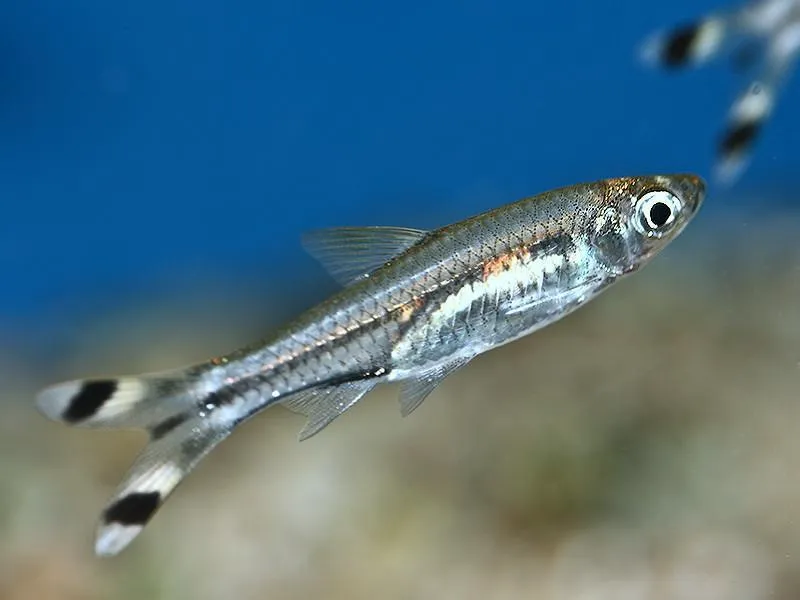
    Scissortail rasbora swimming in an aquarium
    Easy

    Scissortail Rasbora

    Rasbora trilineata

    Peaceful and active with a distinctive tail movement that gives them their name.

    3.5"School: 8-1073-78°F
    Buenos Aires tetra swimming at the bottom of an aquarium
    Easy

    Buenos Aires Tetra

    Hyphessobrycon anisitsi

    Hardy and robust — one of few tetras tough enough to hold their own with semi-aggressive tankmates.

    3"School: 8-1064-82°F
    A school of black skirt tetras swimming in an aquarium
    Easy

    Black Skirt Tetra

    Gymnocorymbus ternetzi

    Bold vertical stripes and flowing fins — occasionally nippy but manageable in larger groups.

    2.5"School: 8-1070-85°F

    Centerpiece Fish

    This is where 75 gallons truly shines. You can finally keep species that would struggle or cause problems in smaller setups — a breeding pair of angelfish, a single oscar, or cichlids that need room to establish proper territories.

    Black and orange oscar swimming in an aquarium
    Moderate

    Oscar

    Astronotus ocellatus

    The dog of the fish world — recognizes owners and develops real personality. One fish, one tank.

    14"School: 174-81°F
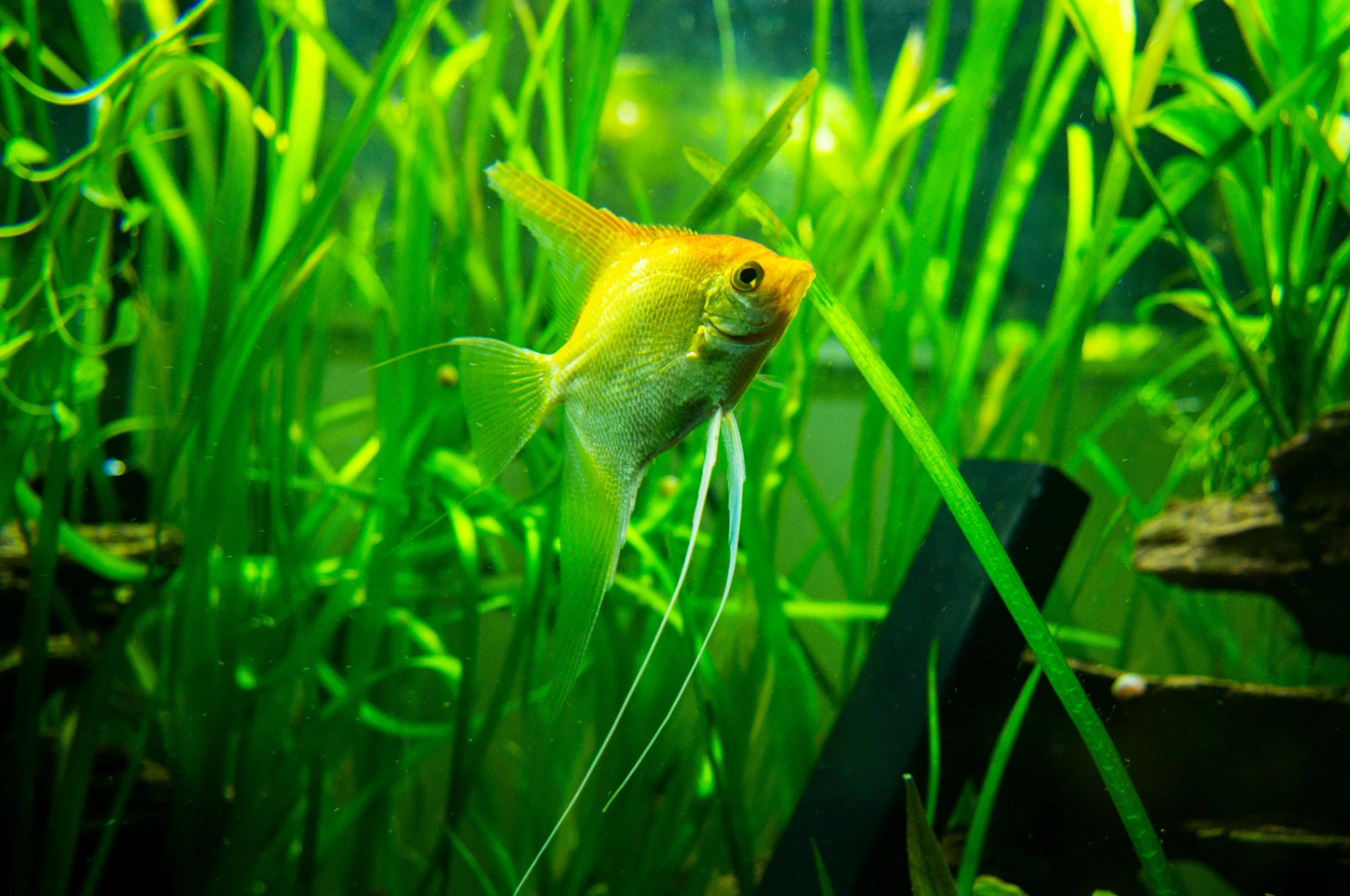
    Yellow Angelfish swimming near the surface among aquatic plants
    Moderate

    Angelfish

    Pterophyllum scalare

    A breeding pair thrives here with room for dither fish that won't trigger territorial aggression.

    6"School: 2-476-84°F
    Orange blood parrot cichlid swimming in an aquarium
    Moderate

    Blood Parrot Cichlid

    Hybrid

    Controversial but undeniably personable — their beaky mouths limit aggression despite cichlid attitude.

    8"School: 1-276-80°F
    Electric blue acara swimming near aquarium plants
    Moderate

    Electric Blue Acara

    Andinoacara pulcher

    Peaceful for a cichlid, stunning coloration — pairs may breed without terrorizing tankmates.

    6"School: 1-272-82°F
    Yellow severum swimming in an aquarium
    Moderate

    Severum

    Heros severus

    The poor man's discus — similar shape and demeanor without the demanding water requirements.

    8"School: 1-275-84°F
    Firemouth cichlid swimming near aquarium driftwood
    Easy

    Firemouth Cichlid

    Thorichthys meeki

    More bark than bite — the red throat display is dramatic but actual aggression stays moderate.

    6"School: 1 pair75-86°F
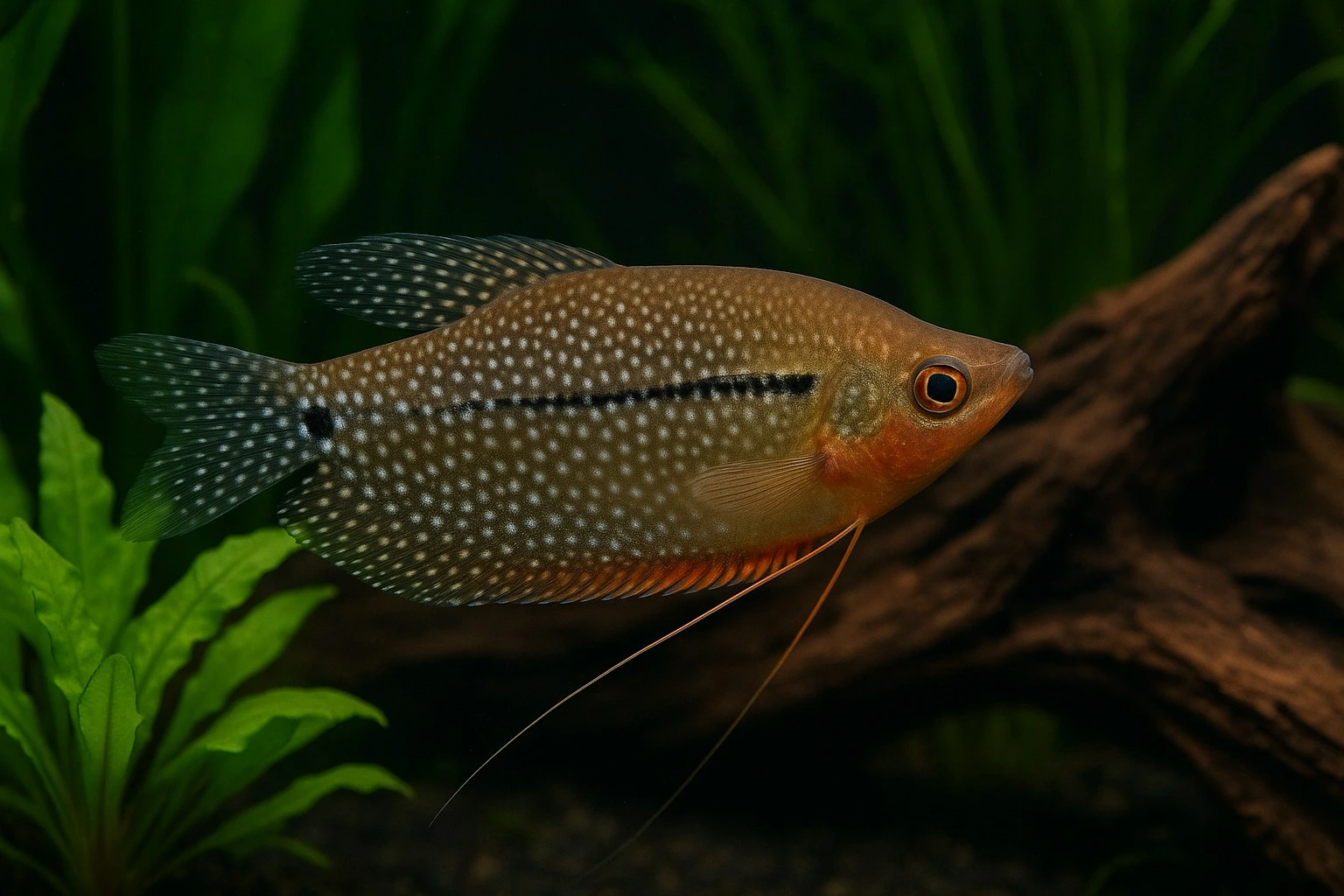
    Pearl Gourami swimming in the middle of an aquarium
    Easy

    Pearl Gourami

    Trichopodus leerii

    Lace-like patterns across the body — peaceful and elegant in a planted setup.

    4.5"School: 1-277-82°F
    Kribensis swimming in an aquarium
    Easy

    Kribensis

    Pelvicachromis pulcher

    Small but feisty when breeding — the female's purple belly intensifies during courtship.

    4"School: 1 pair75-79°F

    Bottom Dwellers

    The 18-inch front-to-back depth is a game changer for bottom dwellers. Territorial catfish have room to claim separate zones, and you can keep proper groups of larger loach species without overcrowding the substrate.
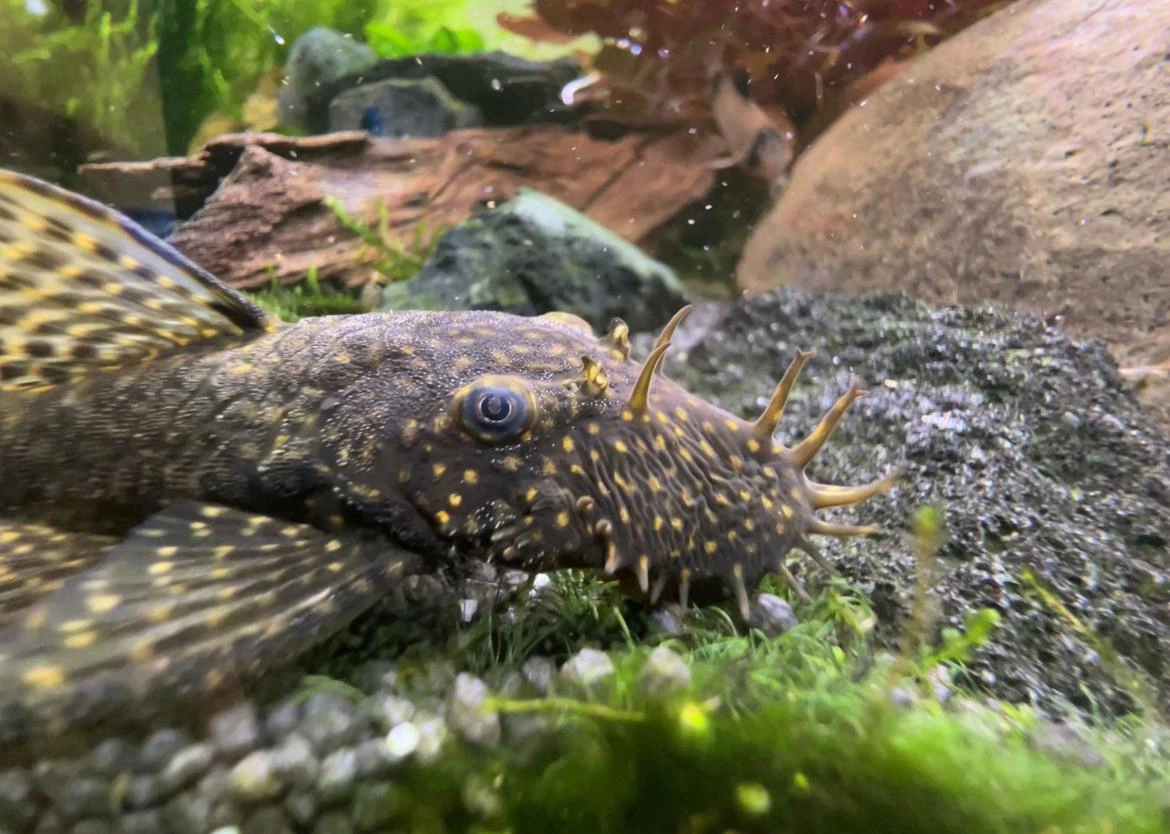
    Bristlenose pleco laying at the bottom of an aquarium
    Easy

    Bristlenose Pleco

    Ancistrus sp.

    Compact, efficient, and won't outgrow its welcome — the responsible pleco choice.

    5"School: 173-81°F
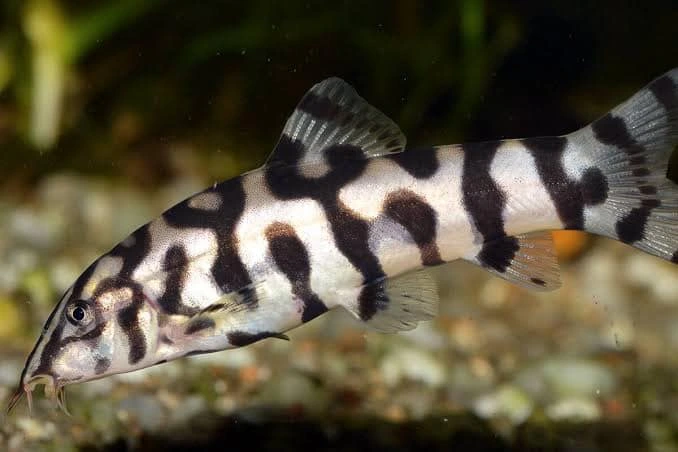
    Yoyo loach swimming in an aquarium
    Moderate

    Yoyo Loach

    Botia almorhae

    Named for the Y-O pattern on their sides — curious fish that investigate everything.

    5"School: 4-575-86°F
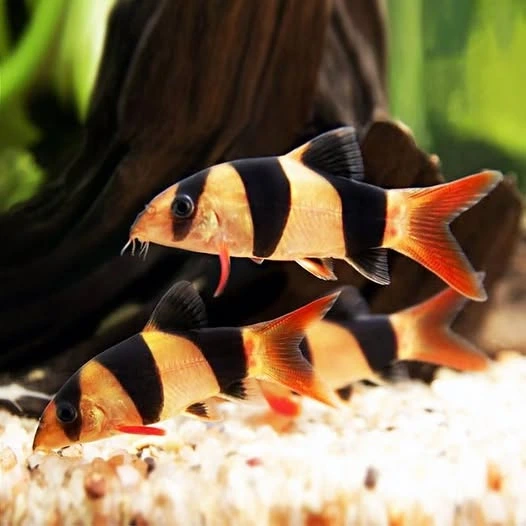
    Two Clown Loaches swimming at the bottom of an aquarium
    Moderate

    Clown Loach

    Chromobotia macracanthus

    Social and long-lived — grows slowly but eventually needs 125+ gallons. Plan accordingly.

    12"School: 4-577-86°F
    Pictus catfish slowly swimming in an aquarium
    Moderate

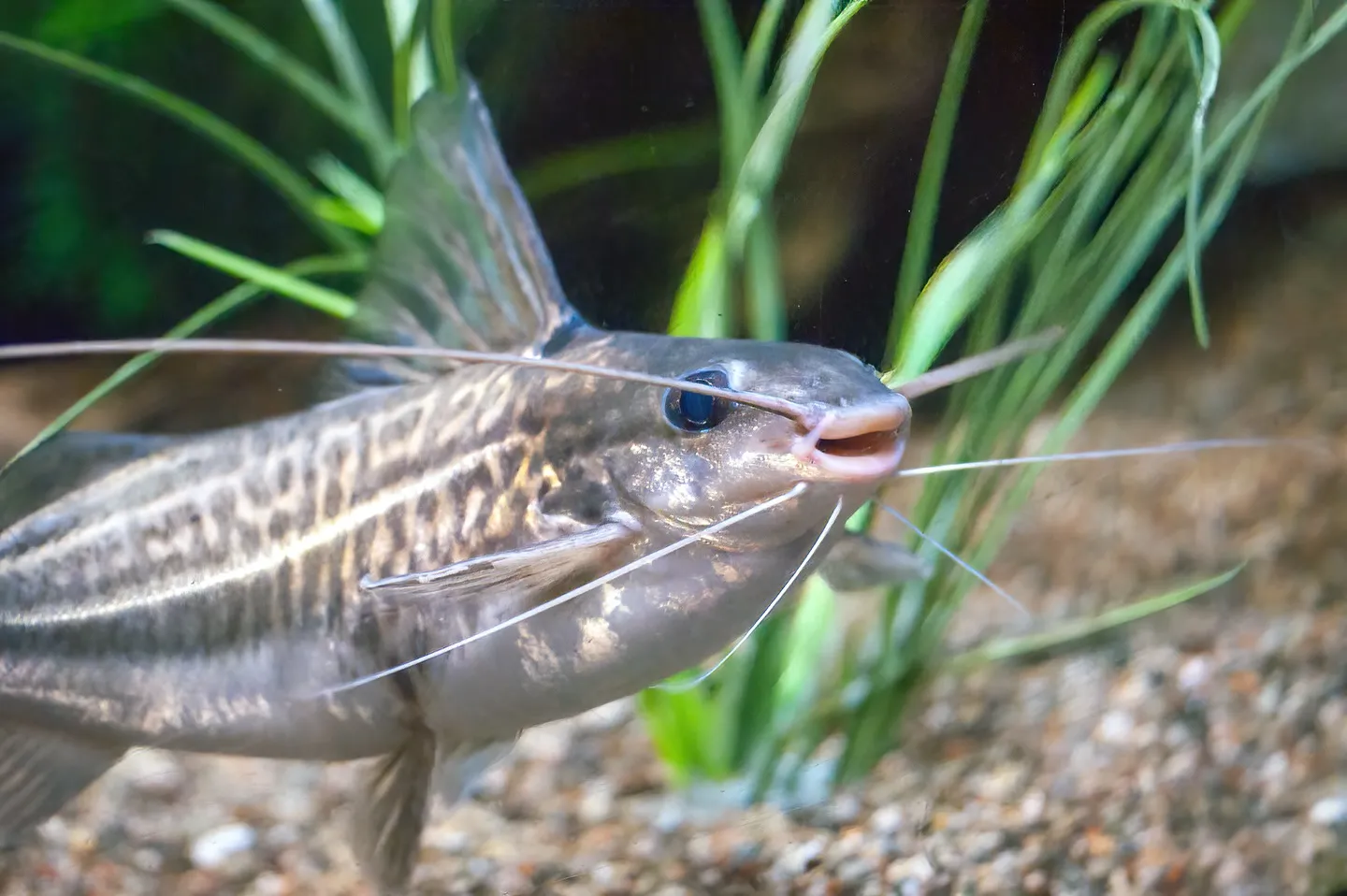
    Pictus Catfish

    Pimelodus pictus

    Striking spots and extra-long barbels — active at night and surprisingly fast swimmers.

    5"School: 2-375-81°F
    Synodontis petricola swimming near aquarium substrate
    Moderate

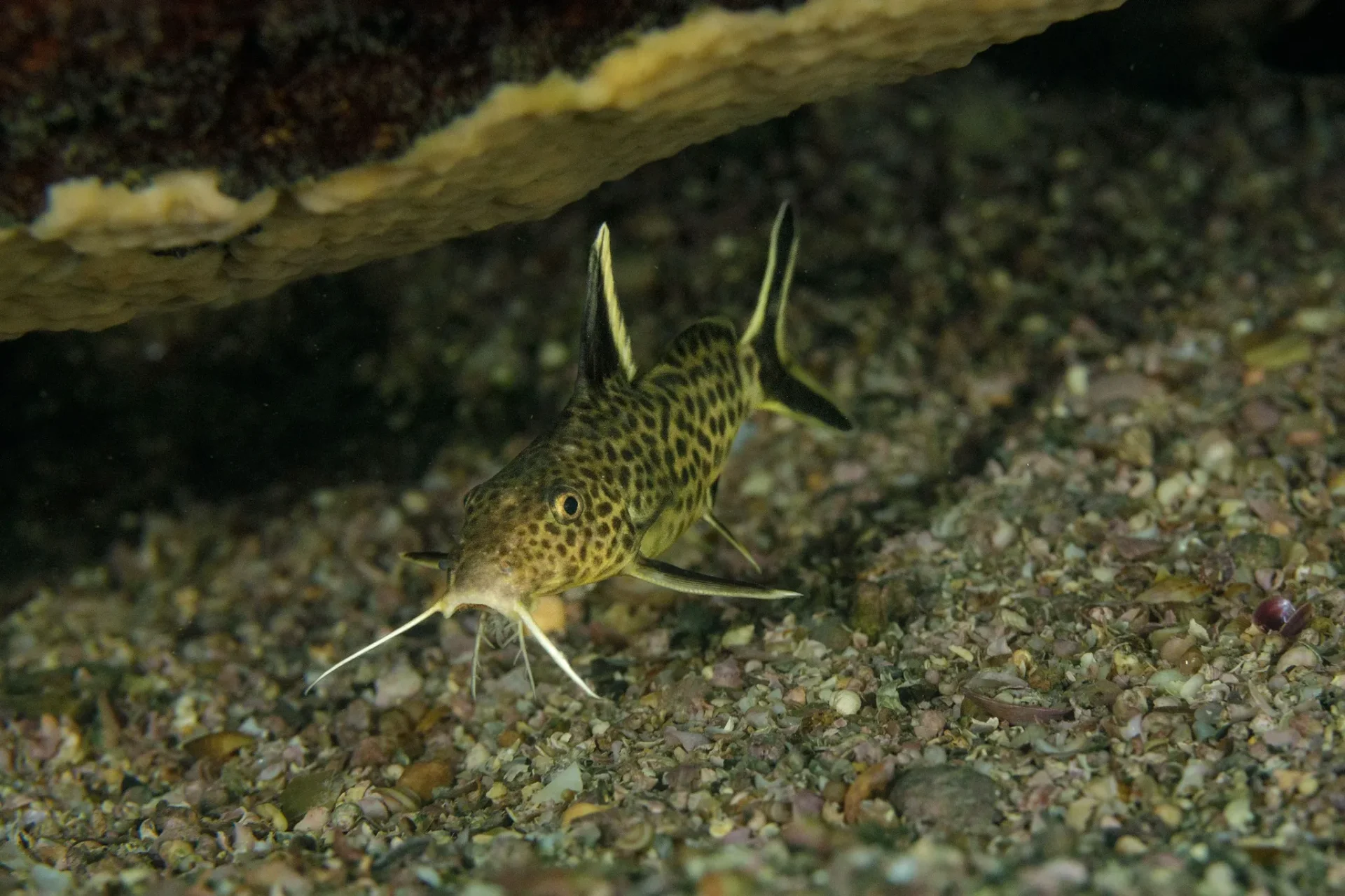
    Synodontis Petricola

    Synodontis petricola

    A dwarf synodontis from Lake Tanganyika — spots and a social personality.

    4"School: 3-475-82°F
    Corydoras sterbai laying at the bottom of an aquarium near aquatic plants
    Easy

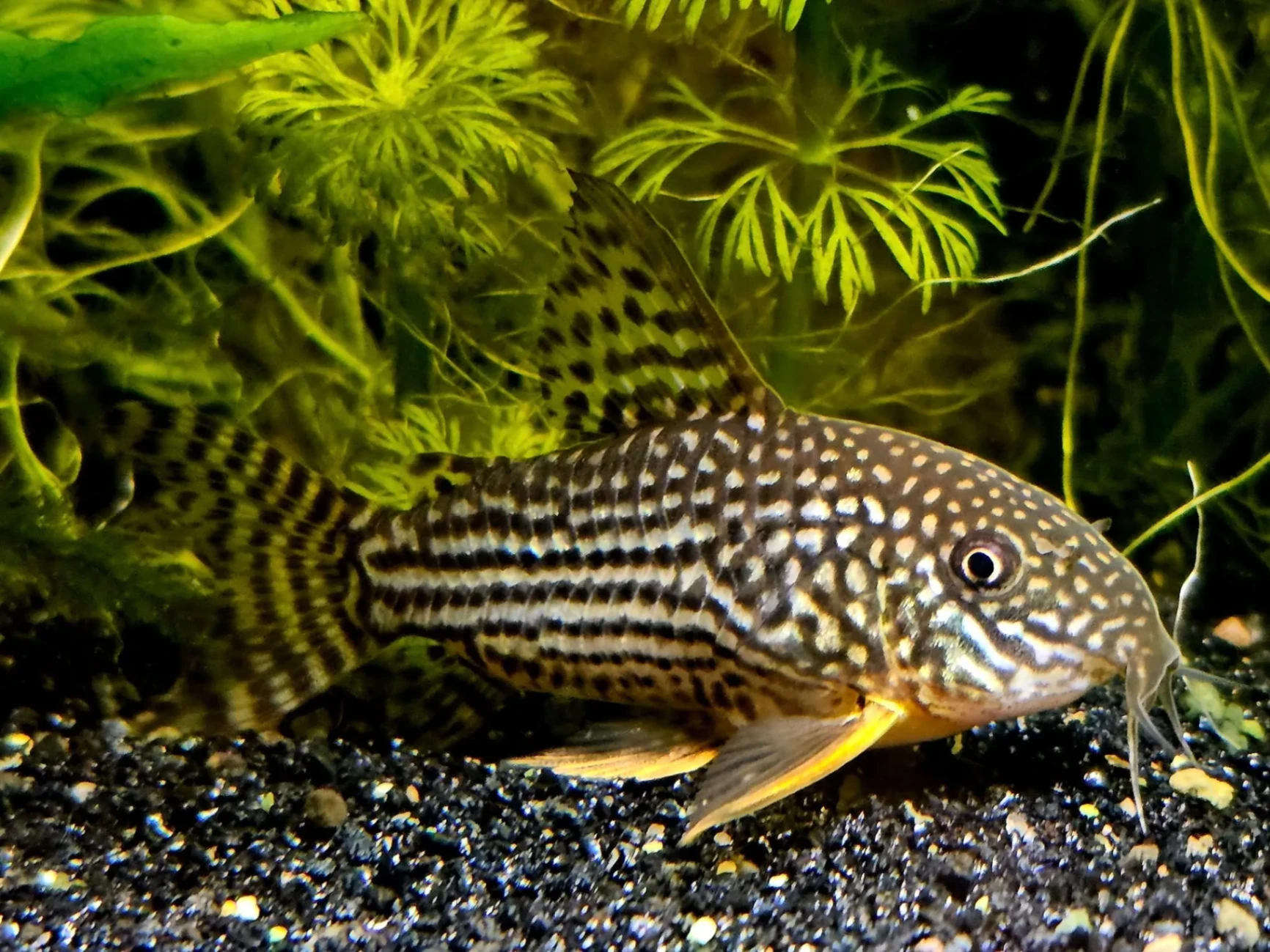
    Corydoras Sterbai

    Corydoras sterbai

    Handles warmer water than most corydoras — pairs well with discus and angelfish.

    2.5"School: 8-1075-82°F
    Striped raphael catfish laying on a rock in an aquarium
    Easy

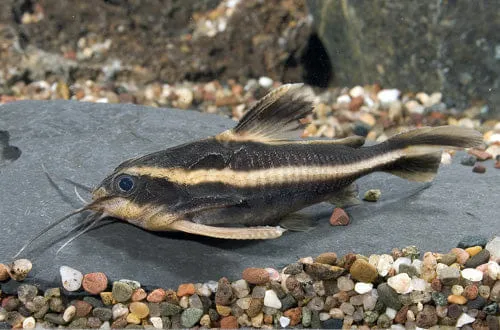
    Striped Raphael Catfish

    Platydoras armatulus

    Armored and nocturnal — makes audible croaking sounds when netted. Handle carefully.

    8"School: 1-275-86°F
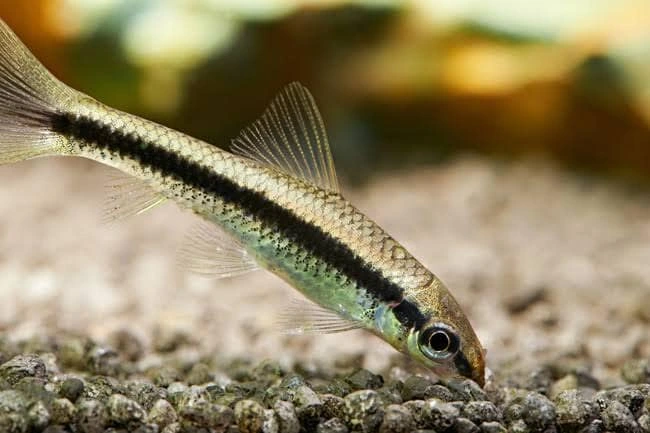
    Siamese Algae Eater foraging for food at the bottom of an aquarium
    Easy

    Siamese Algae Eater

    Crossocheilus oblongus

    Actually eats algae as adults, unlike many "algae eaters" — functional and attractive.

    6"School: 1-275-79°F

    Livebearers

    With 75 gallons, livebearer colonies can grow naturally without immediate overcrowding. Swordtails display full tail extensions, mollies reach proper adult size, and population control becomes a matter of preference rather than panic.

    Red swordtail swimming in an aquarium
    Easy

    Swordtail

    Xiphophorus hellerii

    Males develop impressive tail swords when not stressed by cramped conditions.

    5"School: 6-872-82°F
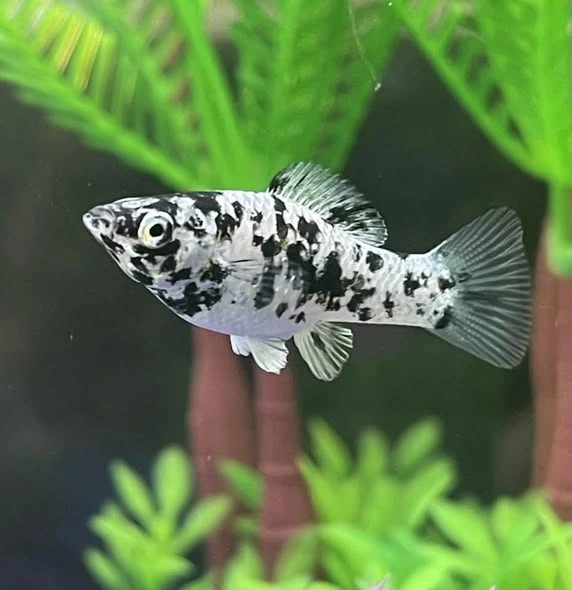
    White large molly with black spots swimming near aquarium plants
    Easy

    Molly

    Poecilia sphenops

    Sailfin varieties reach their full potential here — prefers hard, alkaline water.

    4"School: 6-872-82°F
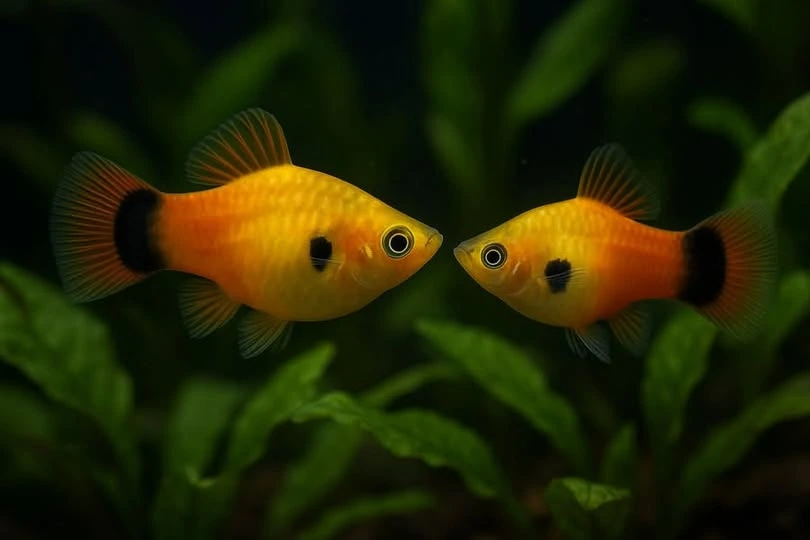
    Two orange platies swimming in aquarium plants
    Easy

    Platy

    Xiphophorus maculatus

    Endless color morphs and constantly active — breed readily but manageable in this volume.

    2.5"School: 8-1070-80°F
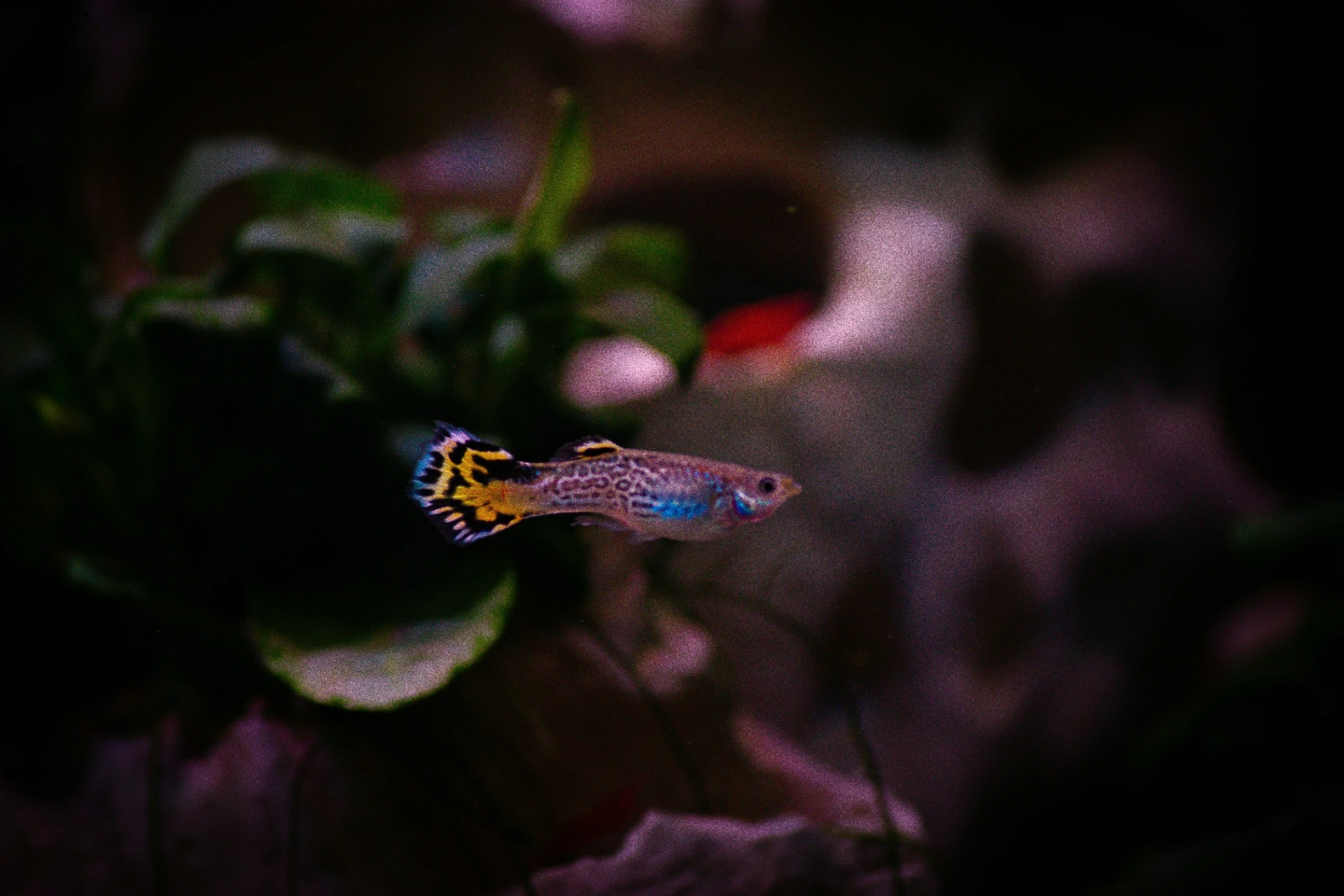
    Yellow female tiger guppy fish swimming in aquarium
    Easy

    Guppy

    Poecilia reticulata

    Fancy males display elaborate finnage — population explodes quickly without predators.

    2"School: 10-1572-82°F

    Invertebrates

    Larger tanks support larger invertebrate populations and species. Filter-feeding shrimp have enough water column to find food, and snail crews can handle the increased algae without being overwhelmed.
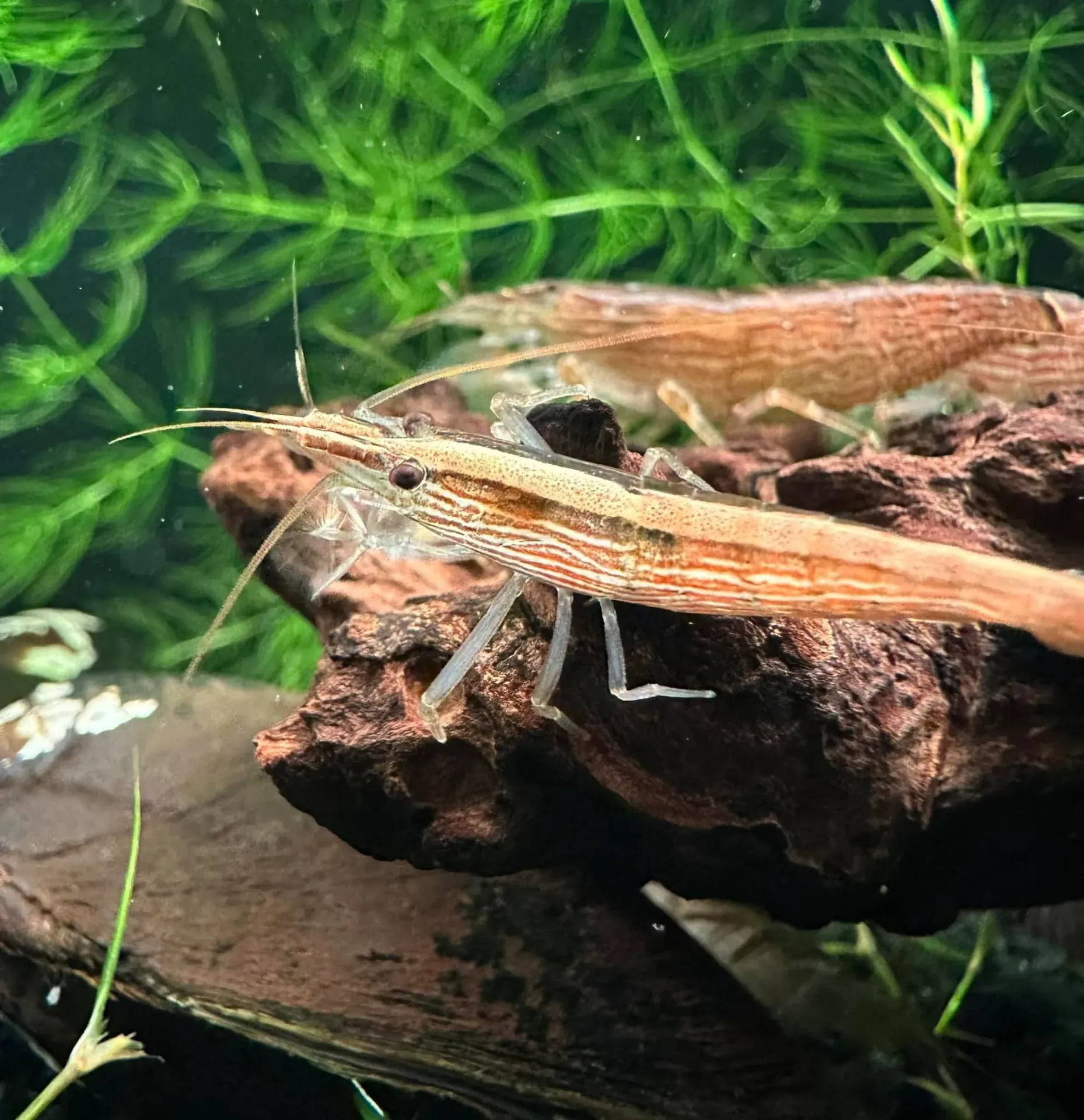
    A group of bamboo shrimp standing on aquarium driftwood
    Moderate

    Bamboo Shrimp

    Atyopsis moluccensis

    Fan feeders that station themselves in current to catch passing particles — mesmerizing.

    3"School: 2-475-82°F
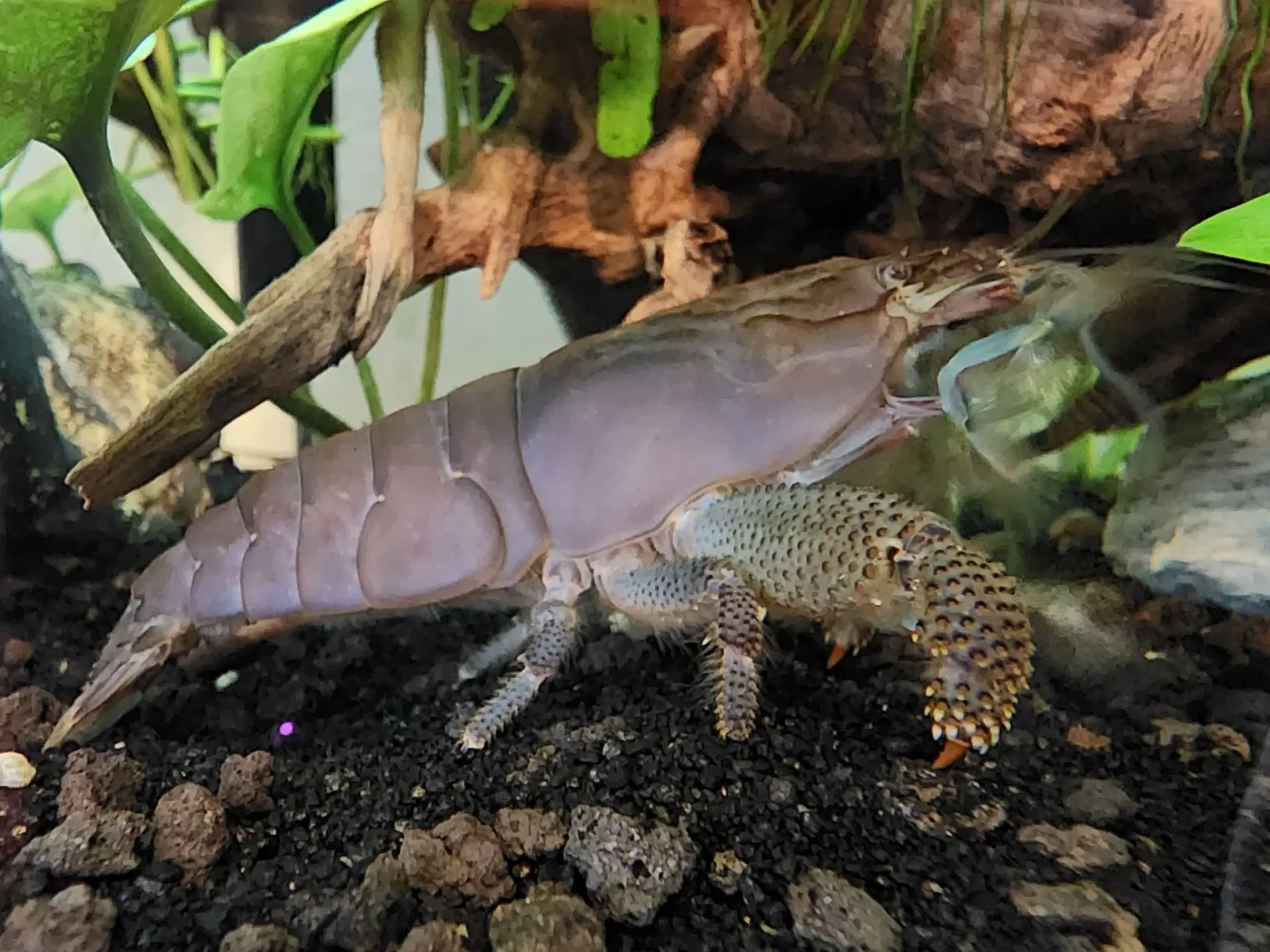
    Vampire shrimp eating algae at the bottom of an aquarium
    Moderate

    Vampire Shrimp

    Atya gabonensis

    Larger cousin of the bamboo shrimp — impressive size and similar filter-feeding behavior.

    5"School: 1-274-84°F
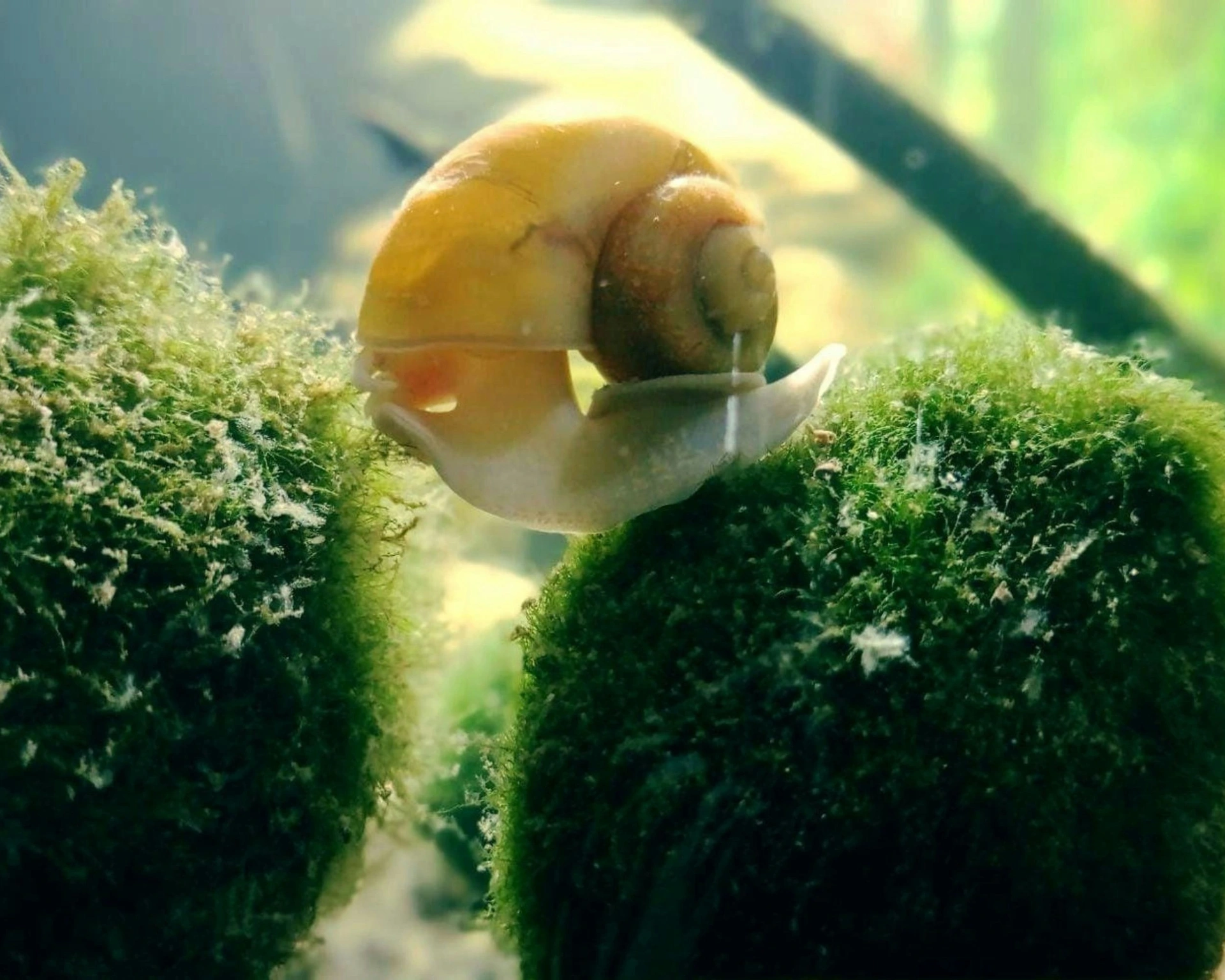
    A yellow mystery snail walking on a marimo moss ball in an aquarium
    Easy

    Mystery Snail

    Pomacea bridgesii

    Golf ball-sized cleanup crew in multiple colors — lay eggs above the waterline.

    2"School: 3-568-82°F
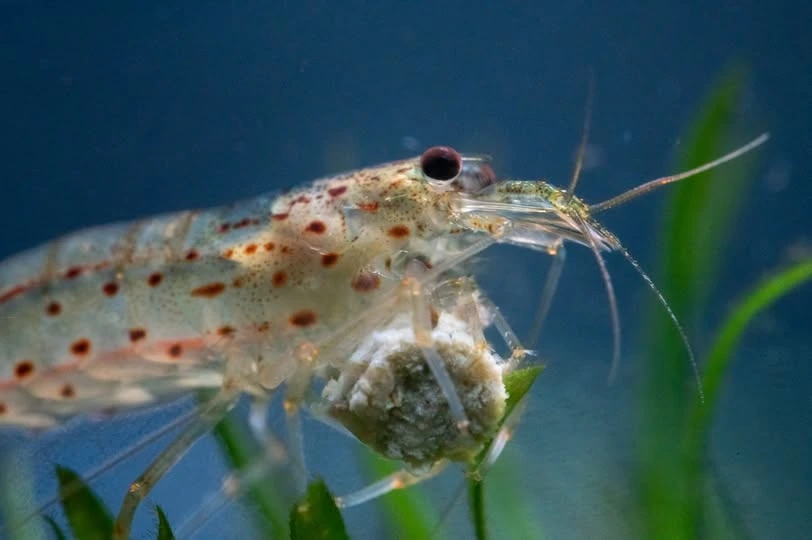
    Amano shrimp eating a piece of algae wafer at the bottom of an aquarium
    Easy

    Amano Shrimp

    Caridina multidentata

    Workhorses of algae control — large enough to avoid predation by most community fish.

    2"School: 10-1570-80°F

    Stocking Combinations That Work

    These combinations leverage the 75-gallon's strengths — enough volume for demanding species, enough territory for mild aggression, and enough biological capacity for impressive fish counts.

    Oscar Kingdom

    Intermediate

    1 Oscar + 1 Bristlenose Pleco

    Less is more. Oscars produce massive waste — overfilter and perform weekly 30% water changes. Add dither fish at your own risk.

    Angelfish Planted Tank

    Intermediate

    4 Angelfish + 15 Rummy-Nose Tetras + 10 Corydoras Sterbai + 6 Amano Shrimp

    Dense planting breaks sightlines and reduces angelfish aggression. Cardinals work too but may become snacks.

    Rainbowfish River

    Intermediate

    10 Boesemani Rainbowfish + 8 Denison Barbs + 6 Yoyo Loaches + 1 Bristlenose Pleco

    High flow, high oxygen, tight lid. Both species jump when startled.

    Peaceful Cichlid Community

    Intermediate

    1 pair Severum + 1 pair Electric Blue Acara + 8 Buenos Aires Tetras + 1 Striped Raphael Catfish

    Provide caves and driftwood territories. Buenos Aires are tough enough to handle cichlid tankmates.

    ⚠️ Fish to Avoid in a 75 Gallon Tank

    Even at 75 gallons, some fish still don't fit. These species are commonly recommended but will outgrow this tank, become problematic, or simply deserve more space.

    Common PlecoGrows to 15"+

    Massive bioload and will outgrow tank within 2 years.

    Bala SharkGrows to 14"

    Active schooling fish that needs 125+ gallons minimum.

    ArowanaGrows to 24"+

    Needs 250+ gallons and specialized care.

    Redtail CatfishGrows to 48"+

    Pet store favorite that becomes a 4-foot problem.

    PacuGrows to 30"+

    Sold as "vegetarian piranha" — needs pond-sized housing.

    Jack DempseyGrows to 10"

    Territorial aggression spikes when breeding.

    Green TerrorGrows to 12"

    Lives up to its name when mature.

    Multiple OscarsGrows to 14" each

    Two oscars need 125+ gallons minimum.

    Large Pleco SpeciesGrows to 12-18"

    Many species hit 12-18" — research before buying.

    Fancy GoldfishGrows to 8"

    Prefer cooler water than tropical community fish.

    How Many Fish Can You Keep?

    Stocking capacity varies wildly by species. A single oscar maxes out a 75-gallon, while a community of small tetras and corydoras could number 50+. The real limits are bioload, territory, and swimming space — not arbitrary inch-per-gallon rules.

    A 75-gallon with proper filtration (8-10x turnover) typically supports 25-40 small to medium fish comfortably, or a handful of larger specimens. Run your specific combination through the calculator for personalized guidance.

    💧 75 gal

    284 liters

    📐 48 × 18"

    footprint

    🐟 25-40

    typical community

    Setup Tips for a 75 Gallon Tank

    A few things to consider before stocking your 75 gallon — weight, filtration, and layout all matter at this size.

    ⚖️

    Account for the Weight

    A filled 75-gallon weighs over 700 lbs. Verify floor support and use a proper aquarium stand — furniture won't cut it.

    🔄

    Double Your Filtration

    Canister filters shine at this size. Run two medium canisters or one large rated for 100+ gallons for proper turnover.

    🏔️

    Use the Depth

    18 inches front-to-back means room for foreground, midground, and background aquascaping. Create depth, not just width.

    🌡️

    Dual Heater Strategy

    Two 200W heaters on opposite ends prevent cold spots and provide redundancy if one fails overnight.

    Underrated 75 Gallon Picks Worth a Look

    At 75 gallons the species most guides call too big finally become reasonable. A Kissing Gourami reaches a foot long and needs exactly this kind of footprint, and a Peacock Eel can stretch out over a wide sand bed instead of hiding permanently.

    The extra width also suits high-flow specialists. A Blue Phantom Pleco thrives with strong current, driftwood, and oxygen-rich water, and the same setup supports a small group of Hillstream Loaches. Prefer cichlids? An Electric Blue Acara pair remains community-safe at this size, while a hard-water build can hold a proper Red Zebra colony with enough rock to break up sightlines.

    A 75 opens up most of the family, so it is worth reading our guide to all types of cichlids first — it splits every species into New World, dwarf, African rift lake and centerpiece groups so you pick one that matches your tap water rather than fighting it.

    Ready to stock your 75 gallon?

    Check compatibility, bioload, and tank capacity for your exact setup.