Stocking Guide
    15 min read

    Best Fish for a 100 Gallon Tank

    32 species that flourish at this size — plus stocking strategies for the tank that changes everything.

    Breaking into triple digits changes the game. A 100-gallon tank isn't just bigger — it's a fundamentally different fishkeeping experience. Water parameters stabilize. Territorial disputes have room to resolve without casualties. Species that merely survived in smaller tanks now thrive and display natural behaviors. Discus become viable for intermediate keepers. Cichlid communities that would implode in a 75 suddenly work. This guide covers 32 species that reward you for making the jump to 100 gallons, along with combinations that leverage all that extra space and stability.

    Schooling Fish

    Triple-digit volume means triple-digit schools are finally practical. Twenty rummy-noses moving as one. A dozen Congo tetras flashing iridescence across four feet of tank. The visual impact multiplies when you stop compromising on school size.
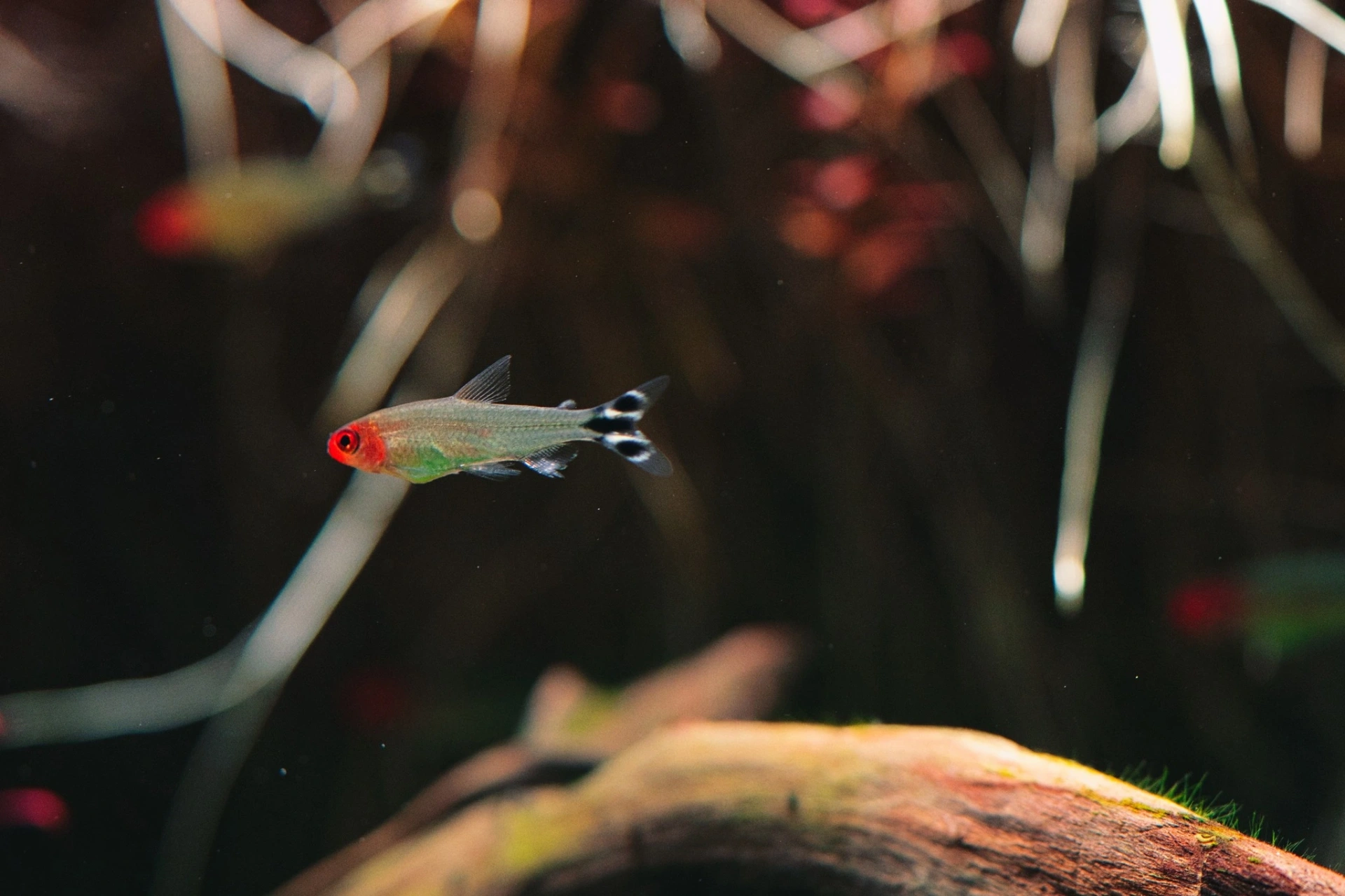
    Rummy nose tetra swimming in an aquarium
    Easy

    Rummy-Nose Tetra

    Hemigrammus rhodostomus

    Twenty of these moving in perfect sync is one of the hobby's great sights — go big here.

    2"School: 15-2072-82°F
    Congo tetra swimming in an aquarium
    Moderate

    Congo Tetra

    Phenacogrammus interruptus

    Males need space to develop full finnage — cramped conditions stunt their showpiece potential.

    3"School: 10-1275-82°F
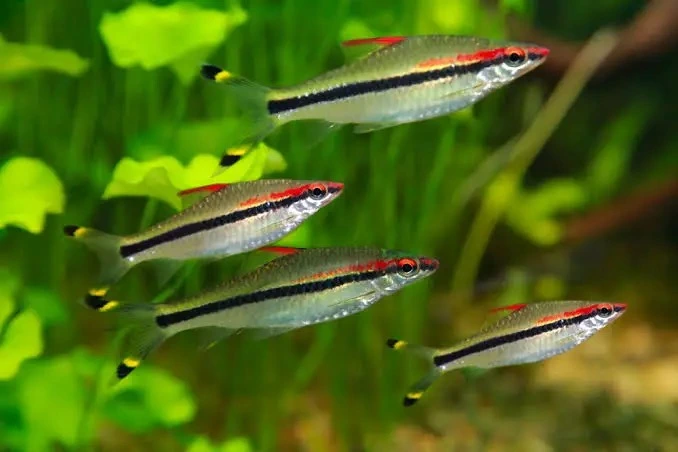
    A group of denison barbs swimming in an aquarium
    Moderate

    Denison Barb

    Sahyadria denisonii

    Schools of 8+ create a river-like effect as they cruise back and forth endlessly.

    5"School: 8-1065-77°F
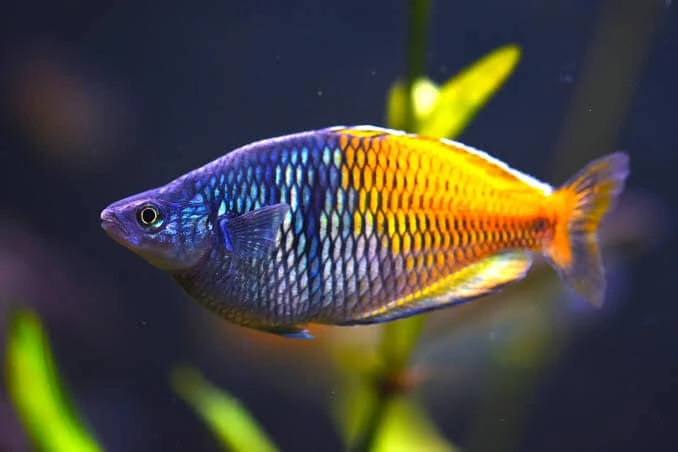
    Boesemani rainbow fish swimming in an aquarium slowly
    Moderate

    Boesemani Rainbowfish

    Melanotaenia boesemani

    Keep a proper ratio of males to females and watch the color competitions unfold.

    4"School: 10-1275-86°F
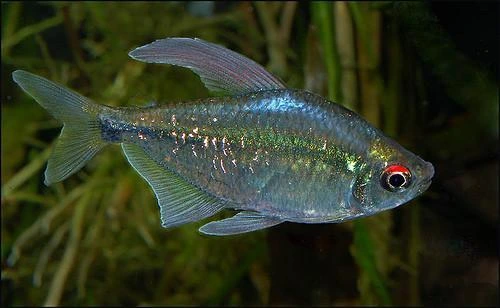
    A diamond tetra swimming at the bottom of an aquarium
    Easy

    Diamond Tetra

    Moenkhausia pittieri

    Under proper lighting, a school of twelve catches light like scattered gemstones.

    2.5"School: 10-1272-82°F
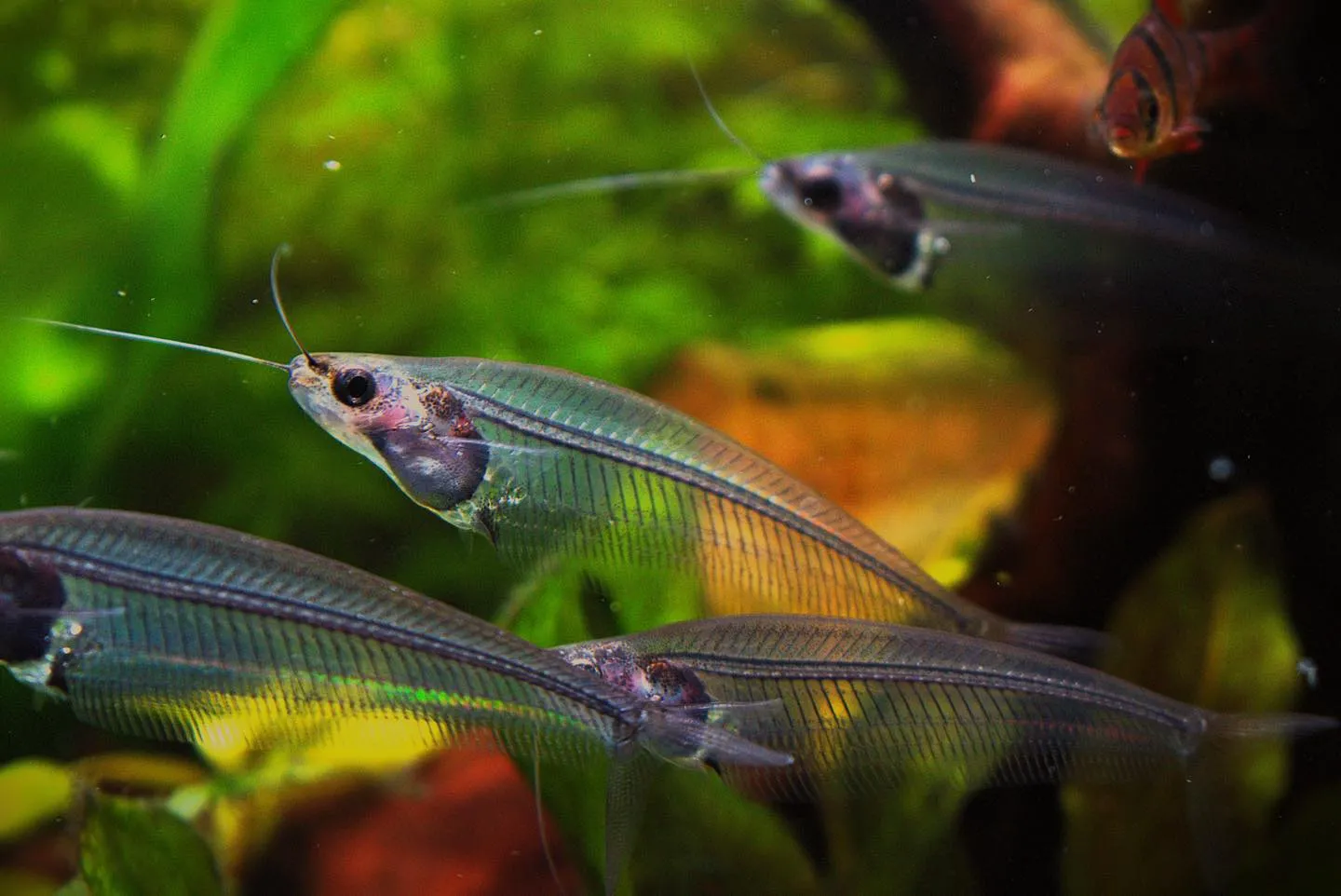
    A school of glass catfish swimming together in an aquarium
    Moderate

    Glass Catfish

    Kryptopterus vitreolus

    Transparent bodies reveal working organs — keep 8+ for confidence and natural hovering behavior.

    4"School: 8-1075-82°F
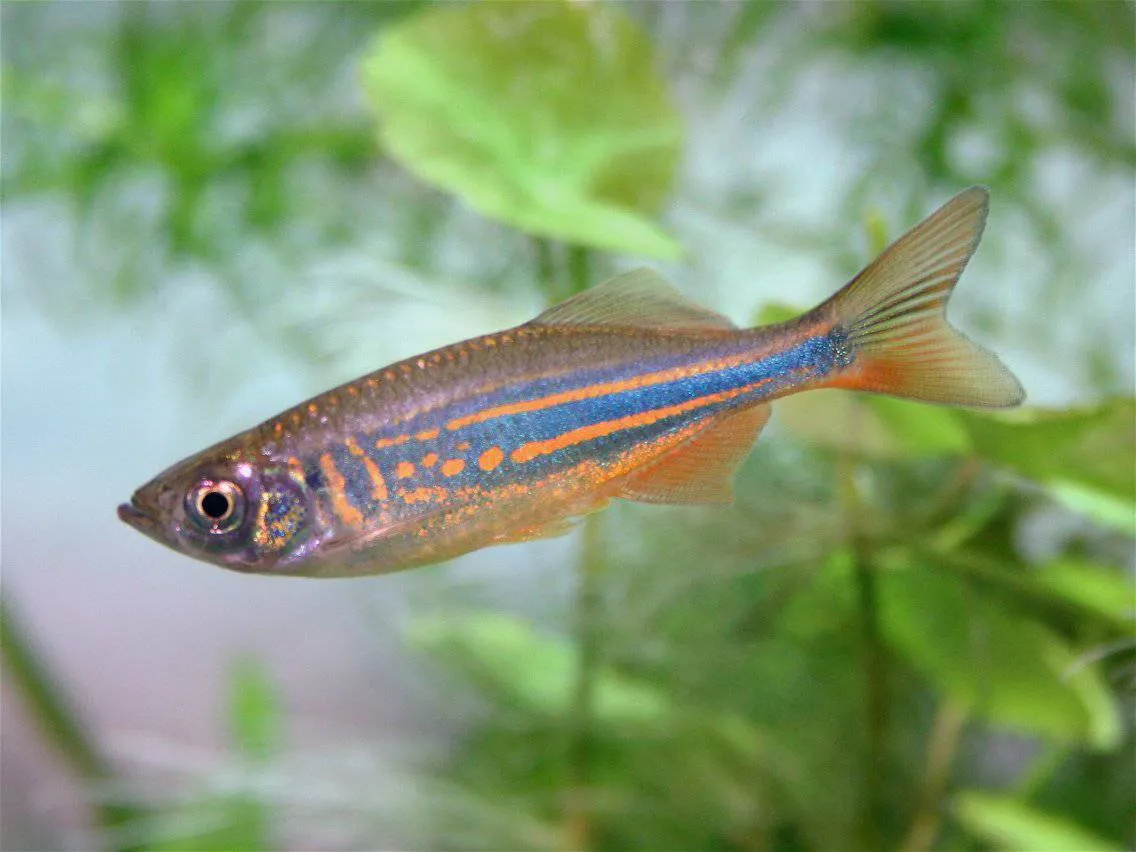
    A single giant danio swimming in an aquarium
    Easy

    Giant Danio

    Devario aequipinnatus

    Relentless energy that would overwhelm smaller tanks becomes appropriate at this scale.

    4"School: 8-1072-81°F
    Odessa barb swimming in an aquarium
    Easy

    Odessa Barb

    Pethia padamya

    Males develop a brilliant red stripe during breeding displays — underrated and hardy.

    3"School: 8-1070-79°F
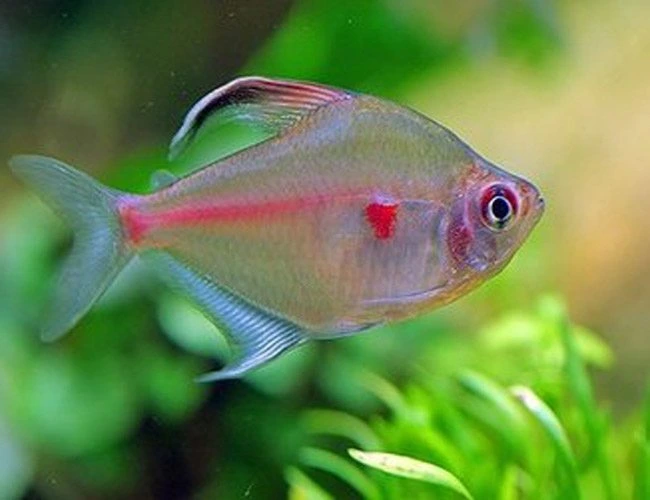
    Bleeding heart tetra swimming in an aquarium
    Easy

    Bleeding Heart Tetra

    Hyphessobrycon erythrostigma

    Deep bodies and dramatic markings — substantial enough to hold their own visually.

    2.5"School: 10-1272-80°F
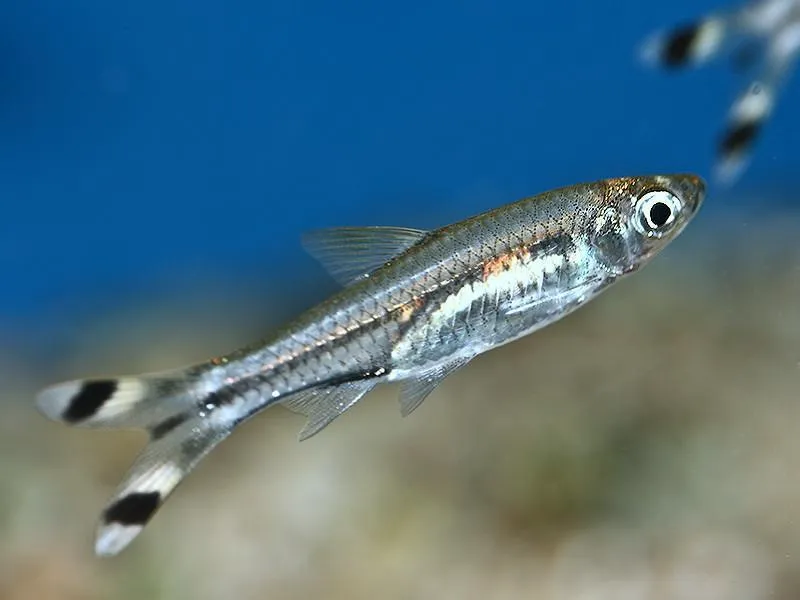
    Scissortail rasbora swimming in an aquarium
    Easy

    Scissortail Rasbora

    Rasbora trilineata

    The distinctive tail flick during swimming creates a rhythmic visual pattern in large schools.

    3.5"School: 10-1273-78°F

    Centerpiece Fish

    At 100 gallons, you're no longer choosing between impressive fish — you can combine them. A discus group with an angelfish pair. Multiple cichlid species sharing territory. The hierarchy gets interesting when everyone has enough space to coexist.

    Blue discus swimming in an aquarium
    Advanced

    Discus

    Symphysodon spp.

    The king of freshwater finally becomes practical — 100 gallons supports a group of 5-6 properly.

    6"School: 5-682-88°F
    Black and orange oscar swimming in an aquarium
    Moderate

    Oscar

    Astronotus ocellatus

    Room for a pair if you're willing to commit — or one spectacular solo specimen with tankmates.

    14"School: 1-274-81°F
    Yellow severum swimming in an aquarium
    Moderate

    Severum

    Heros severus

    Multiple color morphs available — peaceful enough for community life at this tank size.

    8"School: 1 pair75-84°F
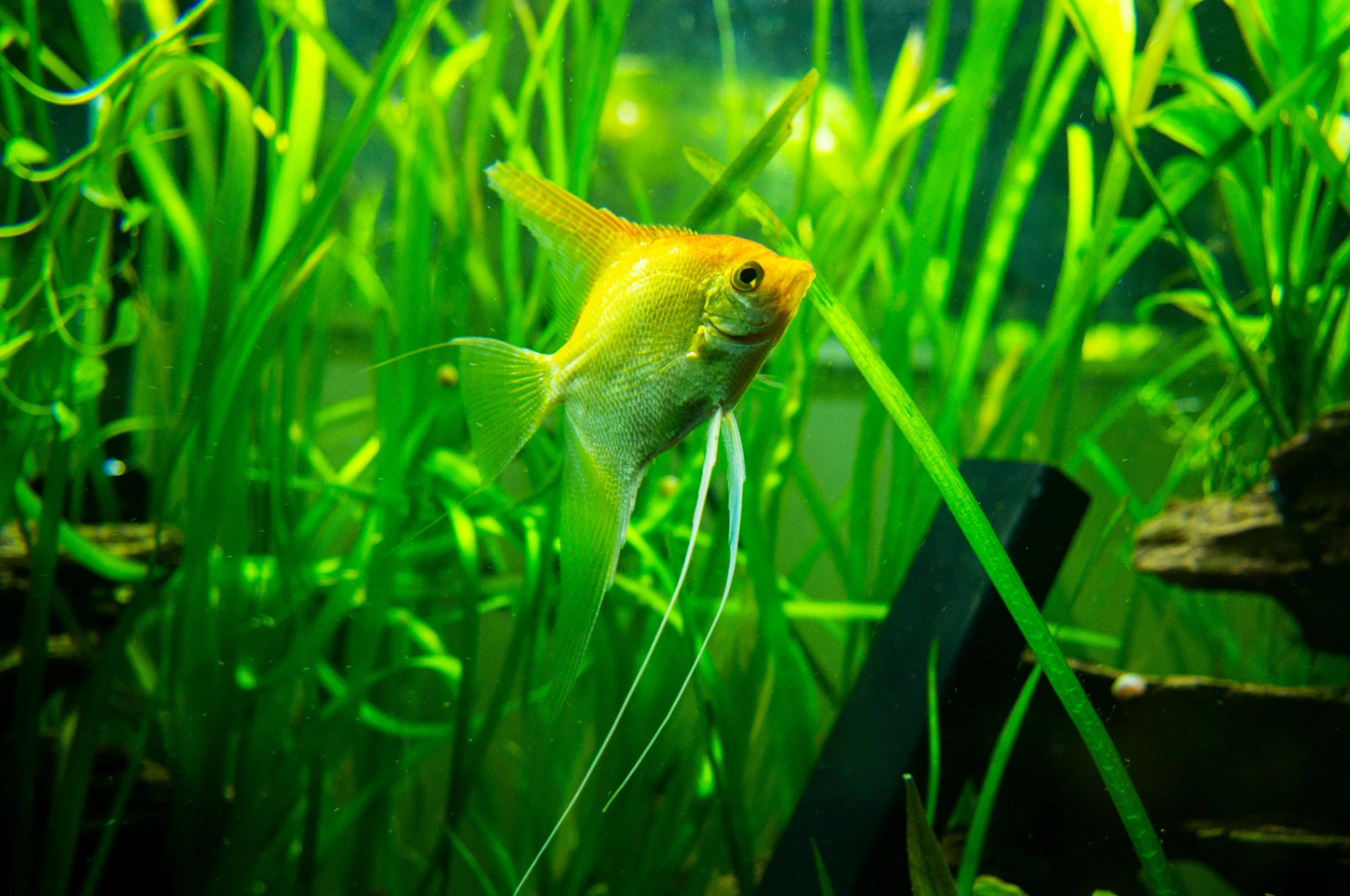
    Yellow Angelfish swimming near the surface among aquatic plants
    Moderate

    Angelfish

    Pterophyllum scalare

    Keep a group of 6 and let pairs form naturally — enough space for losers to retreat.

    6"School: 4-676-84°F
    Orange blood parrot cichlid swimming in an aquarium
    Moderate

    Blood Parrot Cichlid

    Hybrid

    Keep 3-4 to spread aggression — their deformed mouths make serious damage rare.

    8"School: 3-476-80°F
    Electric blue acara swimming near aquarium plants
    Moderate

    Electric Blue Acara

    Andinoacara pulcher

    One of few cichlids genuinely deserving the "peaceful" label — stunning pairs work well here.

    6"School: 1 pair72-82°F
    Firemouth cichlid swimming near aquarium driftwood
    Easy

    Firemouth Cichlid

    Thorichthys meeki

    The throat-flaring display is all show — actual aggression stays manageable with space.

    6"School: 1 pair75-86°F
    Colorful bolivian ram swimming in an aquarium
    Easy

    Geophagus (Bolivian Ram)

    Mikrogeophagus altispinosus

    Earth-eaters that sift substrate constantly — fascinating behavior and peaceful temperament.

    3"School: 2-472-79°F
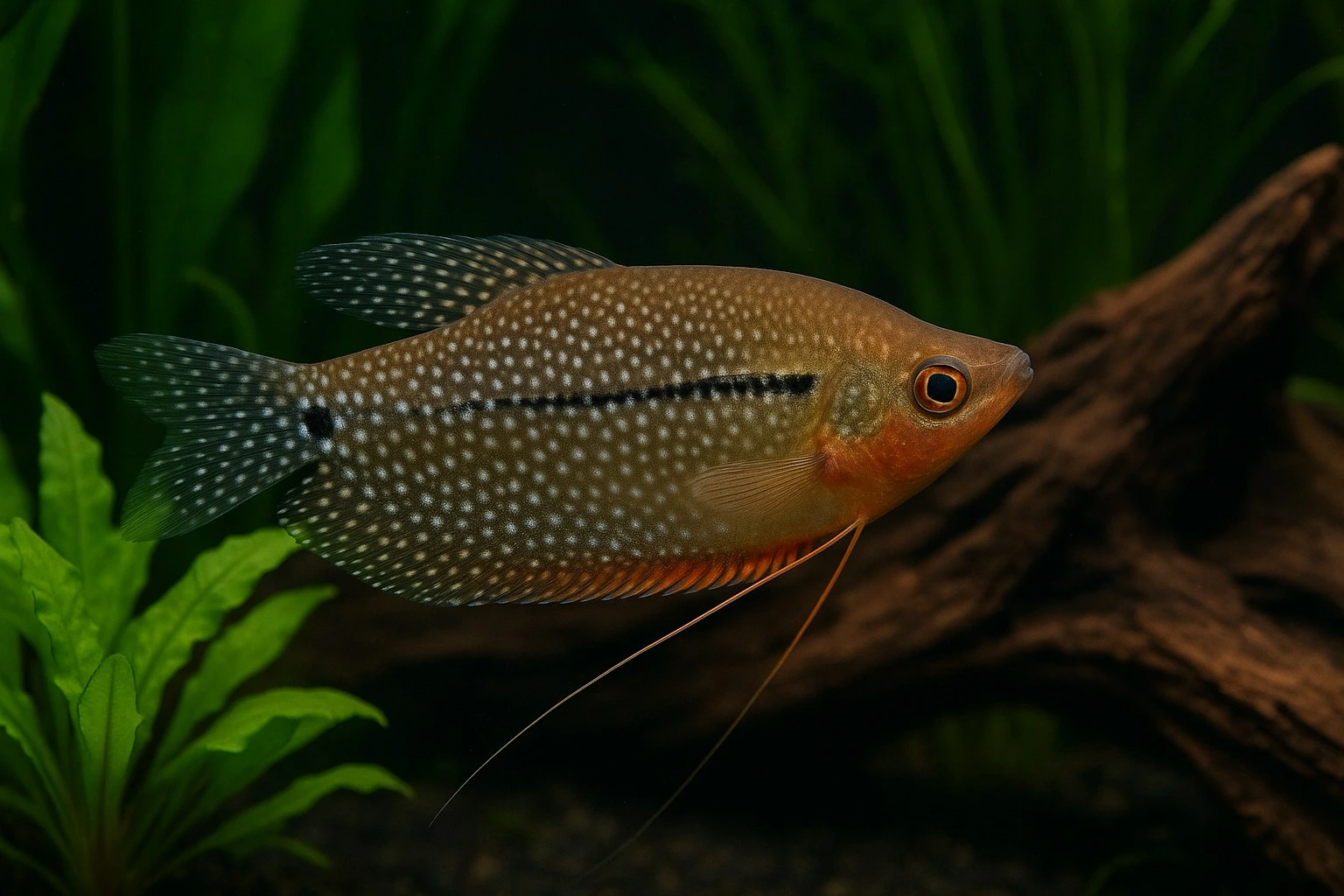
    Pearl Gourami swimming in the middle of an aquarium
    Easy

    Pearl Gourami

    Trichopodus leerii

    Multiple males can coexist here without the aggression common in smaller setups.

    4.5"School: 2-377-82°F

    Bottom Dwellers

    The substrate becomes prime real estate at 100 gallons. Room for a proper loach gang, a pleco or two staking out driftwood territories, and catfish that actually have space to patrol. Layer the bottom wisely.
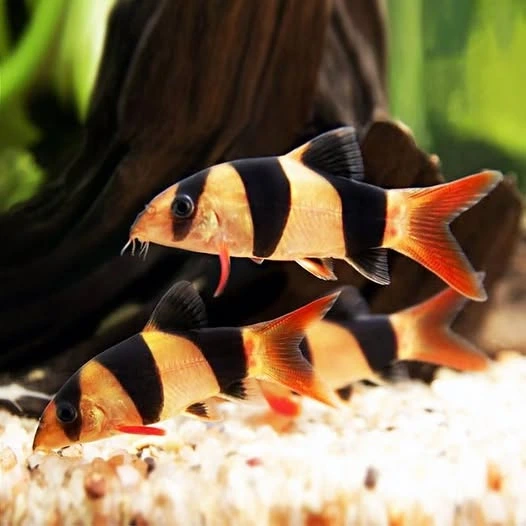
    Two Clown Loaches swimming at the bottom of an aquarium
    Moderate

    Clown Loach

    Chromobotia macracanthus

    A 100-gallon buys you time with these slow growers — plan for an upgrade in 3-5 years.

    12"School: 4-677-86°F
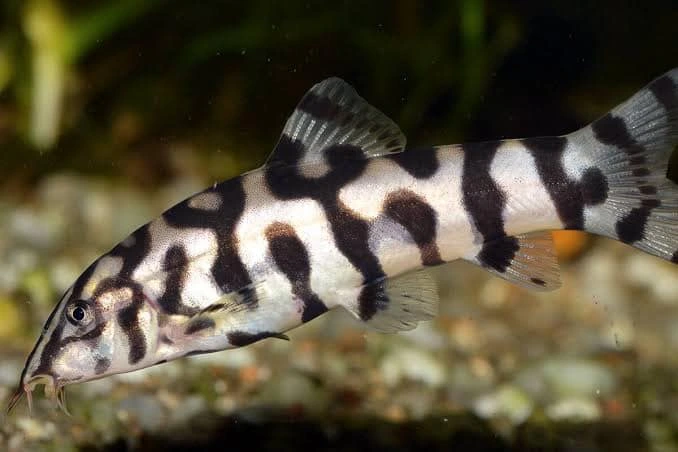
    Yoyo loach swimming in an aquarium
    Moderate

    Yoyo Loach

    Botia almorhae

    Personality-packed snail assassins — keep a group of 6 and watch the antics.

    5"School: 675-86°F
    Two weather loaches laying at the bottom of an aquarium
    Easy

    Weather Loach

    Misgurnus anguillicaudatus

    Eel-like and personable — becomes more active when barometric pressure drops.

    8"School: 2-350-77°F
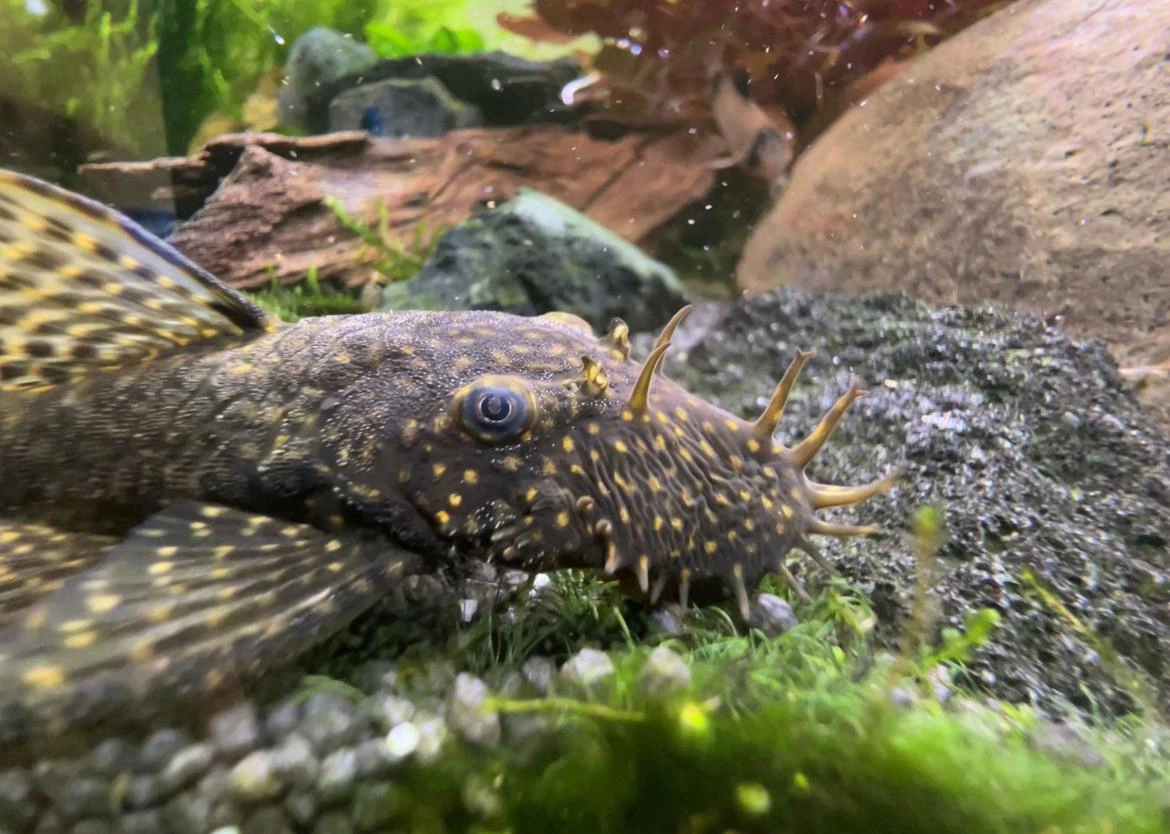
    Bristlenose pleco laying at the bottom of an aquarium
    Easy

    Bristlenose Pleco

    Ancistrus sp.

    Multiple bristlenoses can coexist here — each stakes out a cave and minds its own business.

    5"School: 1-273-81°F
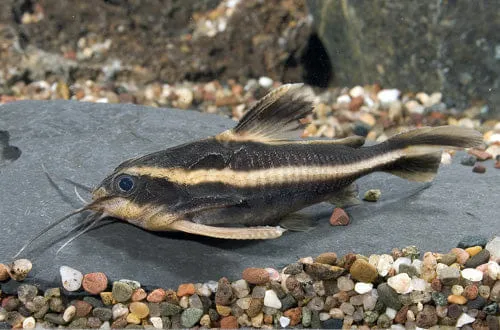
    Striped raphael catfish laying on a rock in an aquarium
    Easy

    Striped Raphael Catfish

    Platydoras armatulus

    Nocturnal armored catfish that croaks when handled — grows slowly but lives for decades.

    8"School: 1-275-86°F
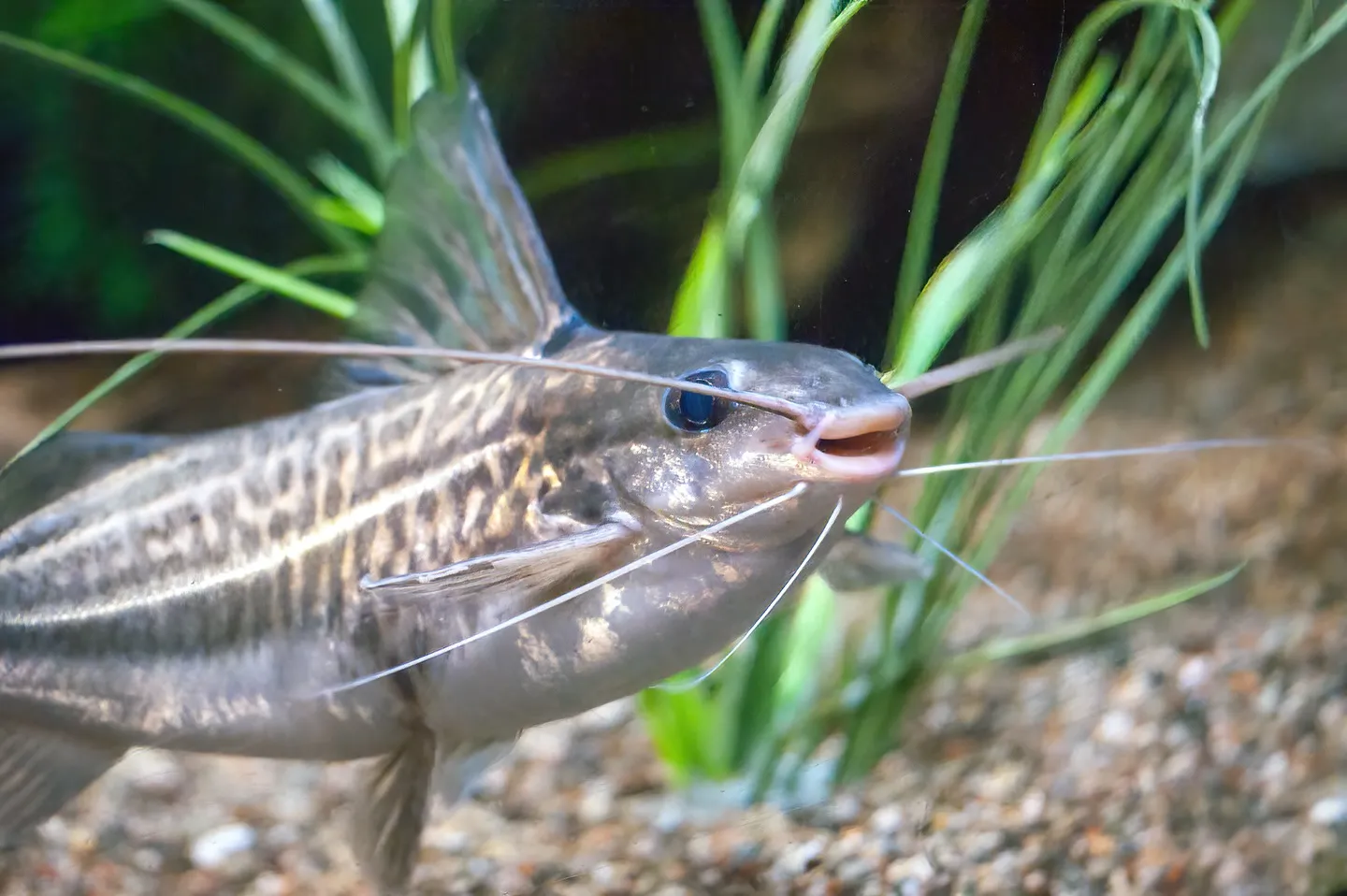
    Pictus catfish slowly swimming in an aquarium
    Moderate

    Pictus Catfish

    Pimelodus pictus

    Silvery and spotted with extravagant whiskers — keep 3+ for bold daytime activity.

    5"School: 3-475-81°F
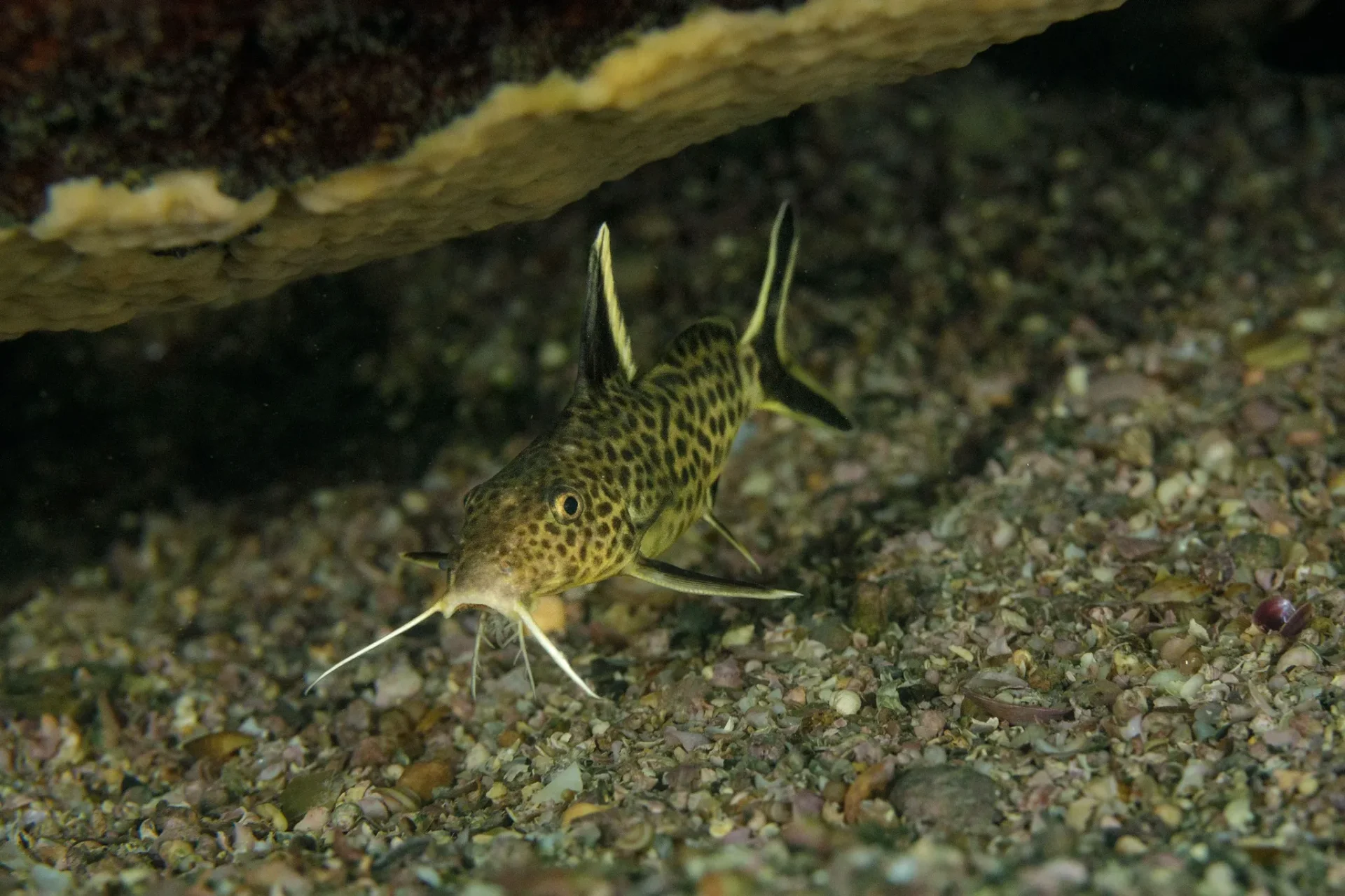
    Synodontis petricola swimming near aquarium substrate
    Moderate

    Synodontis Petricola

    Synodontis petricola

    Compact squeaker catfish from Lake Tanganyika — active and social in groups.

    4"School: 3-575-82°F
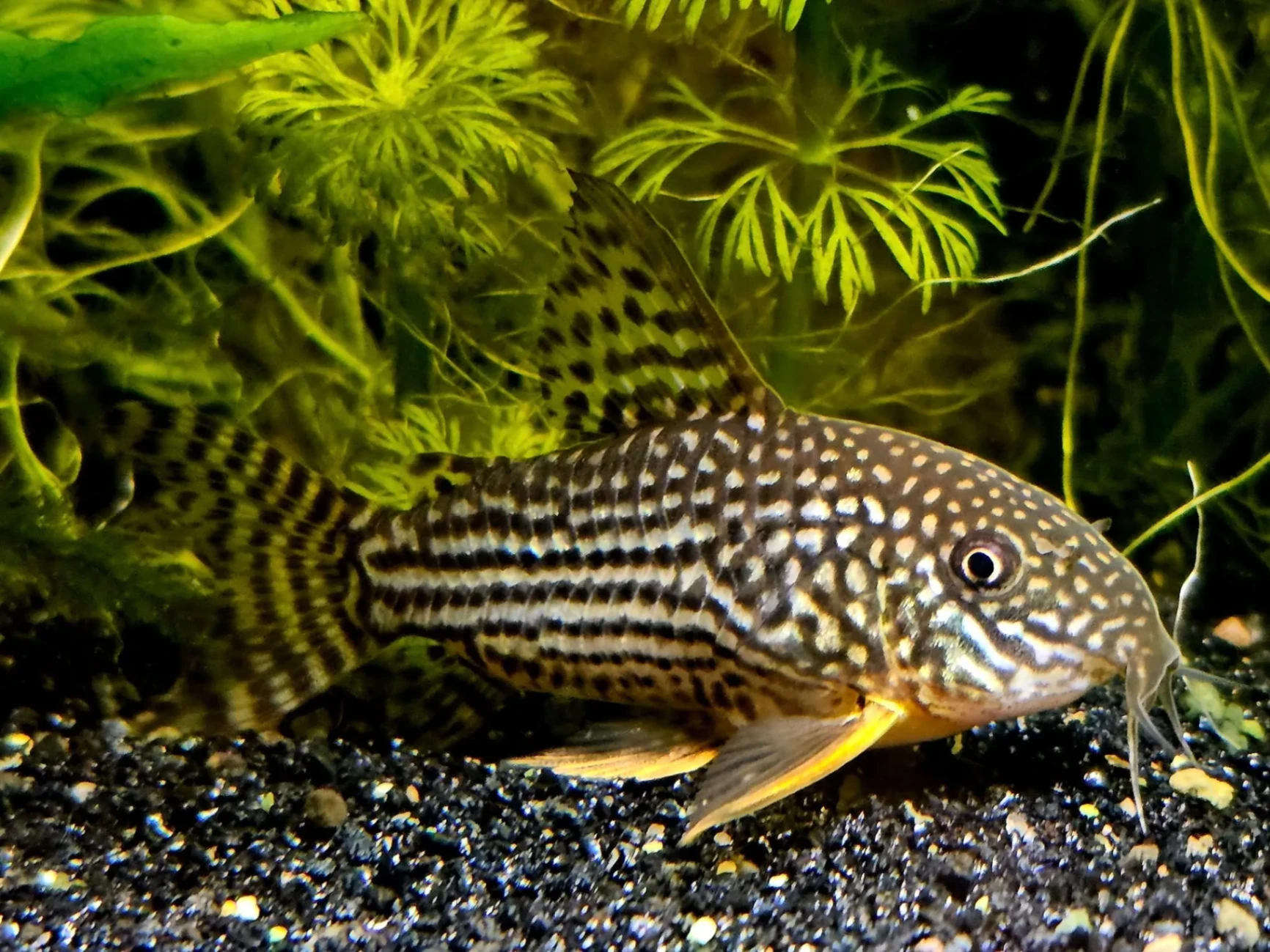
    Corydoras sterbai laying at the bottom of an aquarium near aquatic plants
    Easy

    Corydoras Sterbai

    Corydoras sterbai

    Tolerates the warmer temperatures discus and angelfish prefer — orange fin accents pop.

    2.5"School: 10-1275-82°F
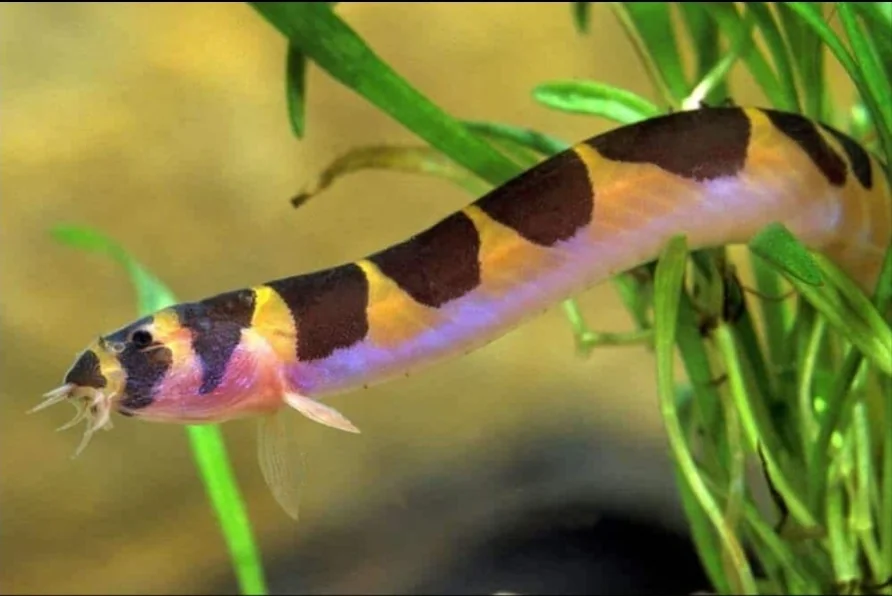
    Kuhli Loach emerging from aquarium plants
    Easy

    Kuhli Loach

    Pangio kuhlii

    Noodle-shaped and nocturnal — keep 10+ and provide fine substrate for burrowing.

    4"School: 10+75-86°F

    Livebearers

    At this volume, livebearer populations can establish naturally without constant intervention. Predation from larger tankmates provides population control, or you can let colonies boom and supply local fish stores.

    Red swordtail swimming in an aquarium
    Easy

    Swordtail

    Xiphophorus hellerii

    Multiple males can coexist and display without the constant chasing seen in smaller tanks.

    5"School: 6-872-82°F
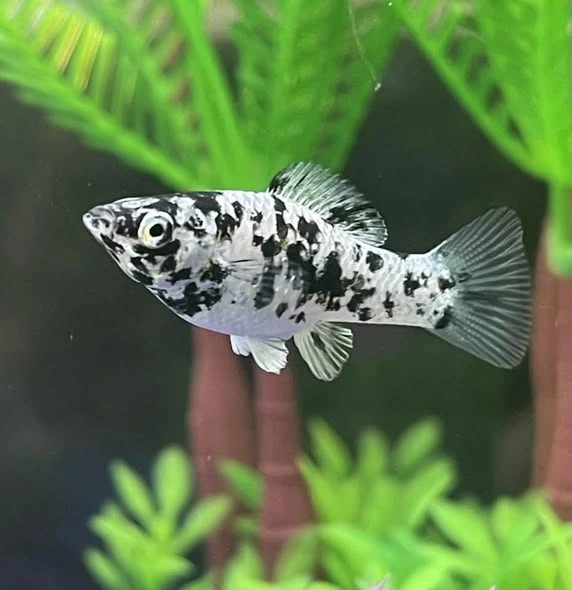
    White large molly with black spots swimming near aquarium plants
    Easy

    Molly

    Poecilia sphenops

    Sailfin varieties reach maximum size here — the fins become genuinely impressive.

    4"School: 6-872-82°F
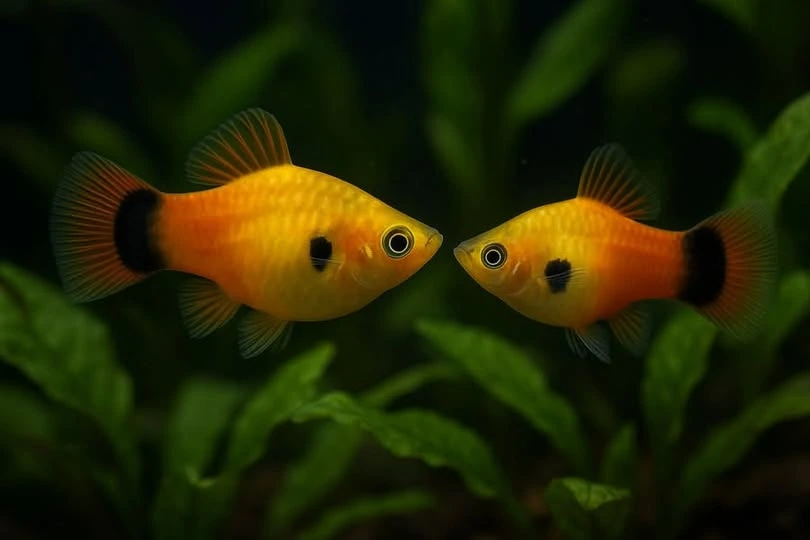
    Two orange platies swimming in aquarium plants
    Easy

    Platy

    Xiphophorus maculatus

    Colorful and prolific — angelfish will happily thin the fry population naturally.

    2.5"School: 8-1070-80°F
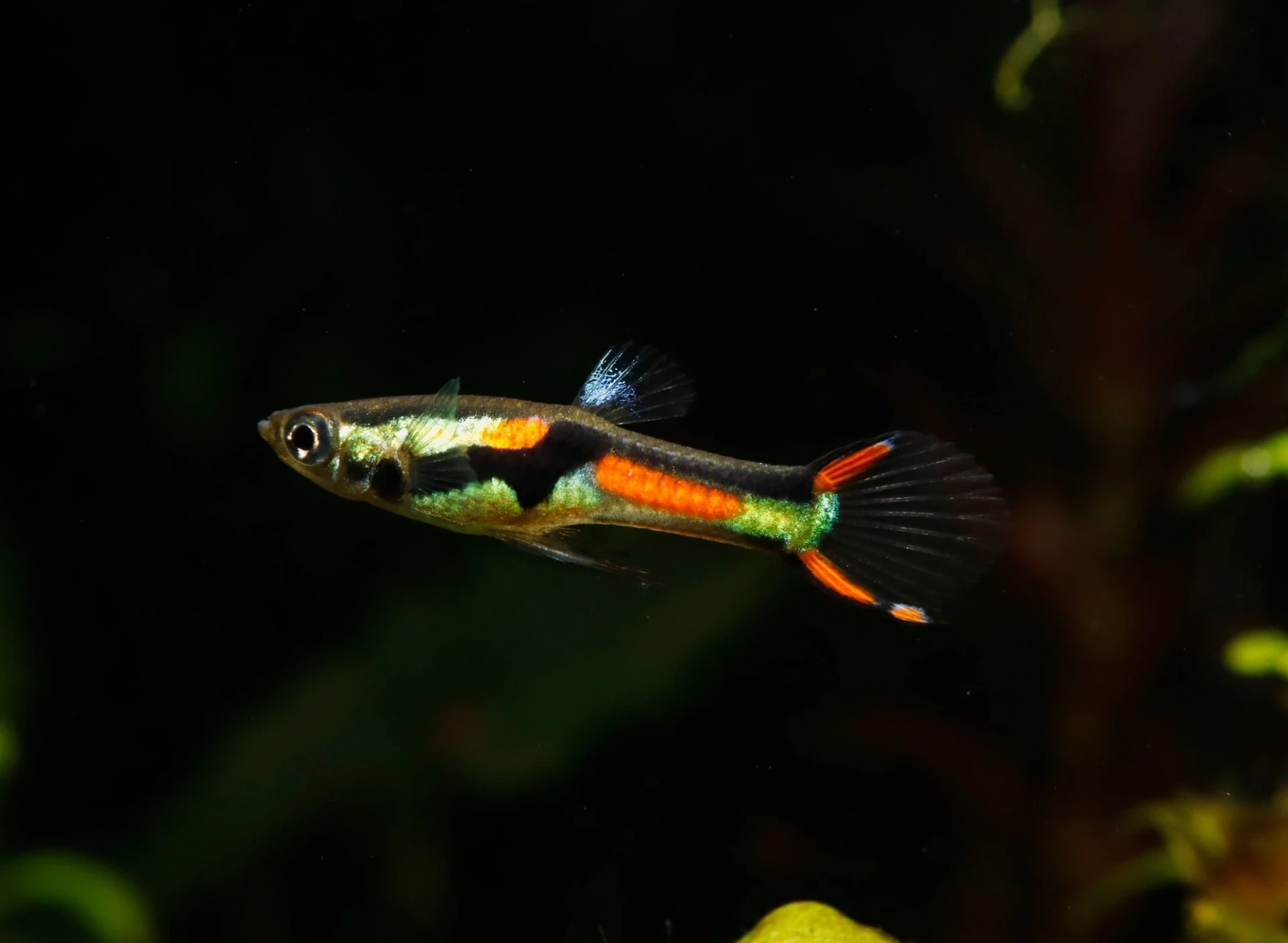
    Endler's livebearer swimming in an aquarium
    Easy

    Endler's Livebearer

    Poecilia wingei

    Smaller and more colorful than guppies — less likely to hybridize in mixed tanks.

    1.5"School: 10-1575-86°F

    Invertebrates

    Larger tanks mean larger and more interesting invertebrate options. Filter-feeding shrimp have enough current and food supply. Snail crews can tackle the increased algae production without being overwhelmed.
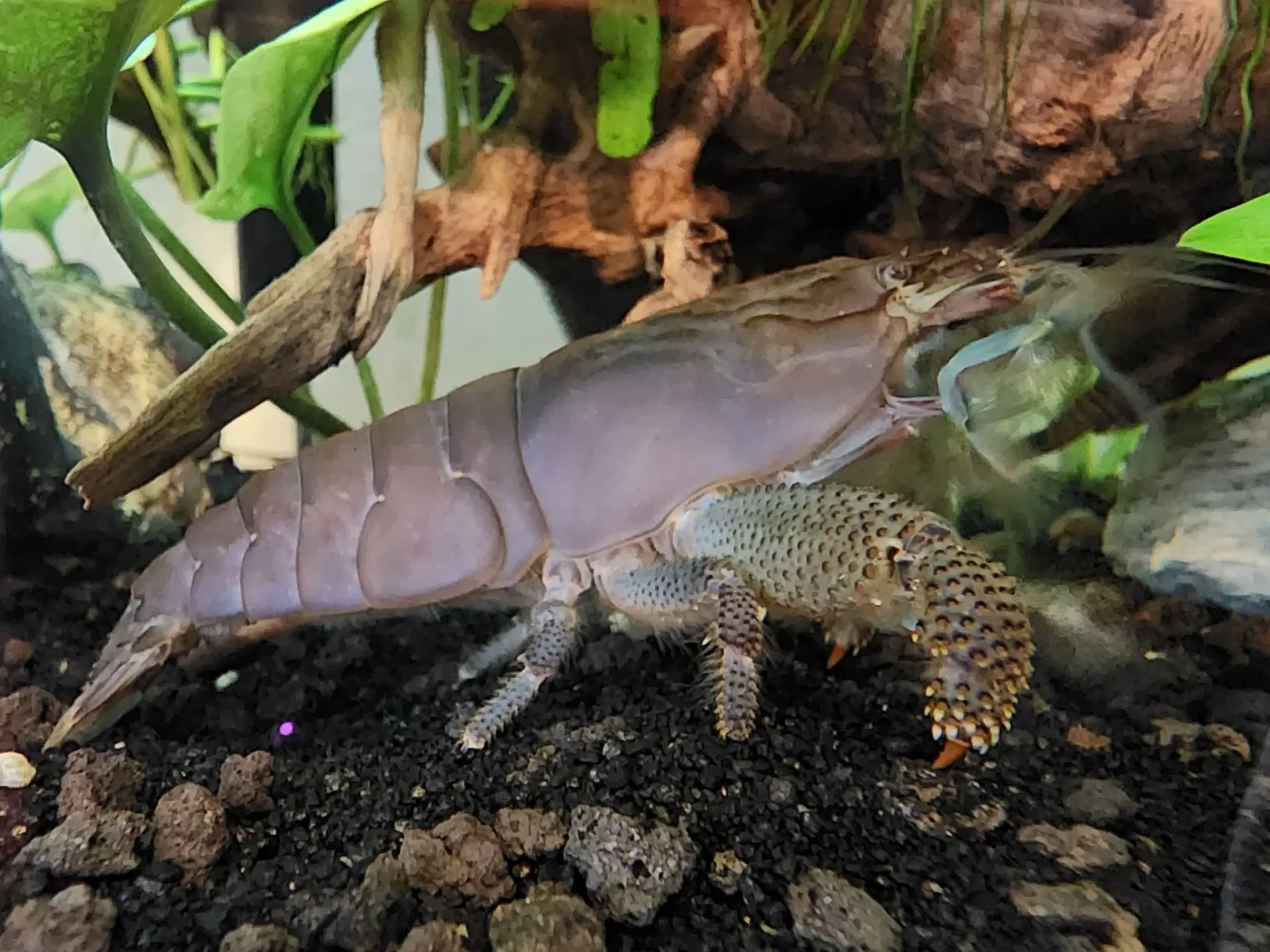
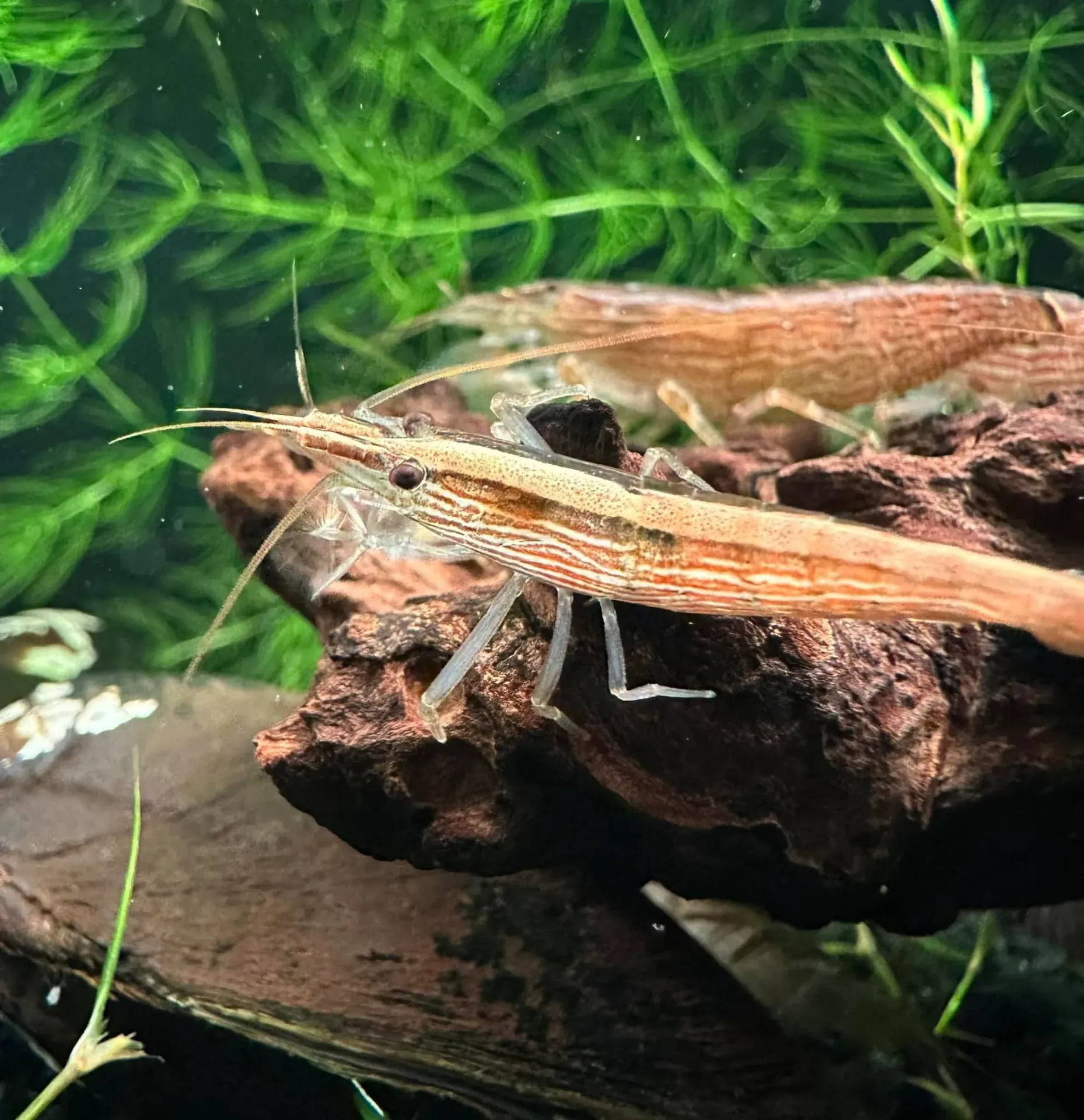
    Vampire shrimp eating algae at the bottom of an aquarium
    Moderate

    Vampire Shrimp

    Atya gabonensis

    Blue-gray giants that fan food from the current — completely peaceful despite the name.

    5"School: 1-274-84°F
    A group of bamboo shrimp standing on aquarium driftwood
    Moderate

    Bamboo Shrimp

    Atyopsis moluccensis

    Smaller than vampires but equally fascinating filter-feeding behavior.

    3"School: 2-475-82°F
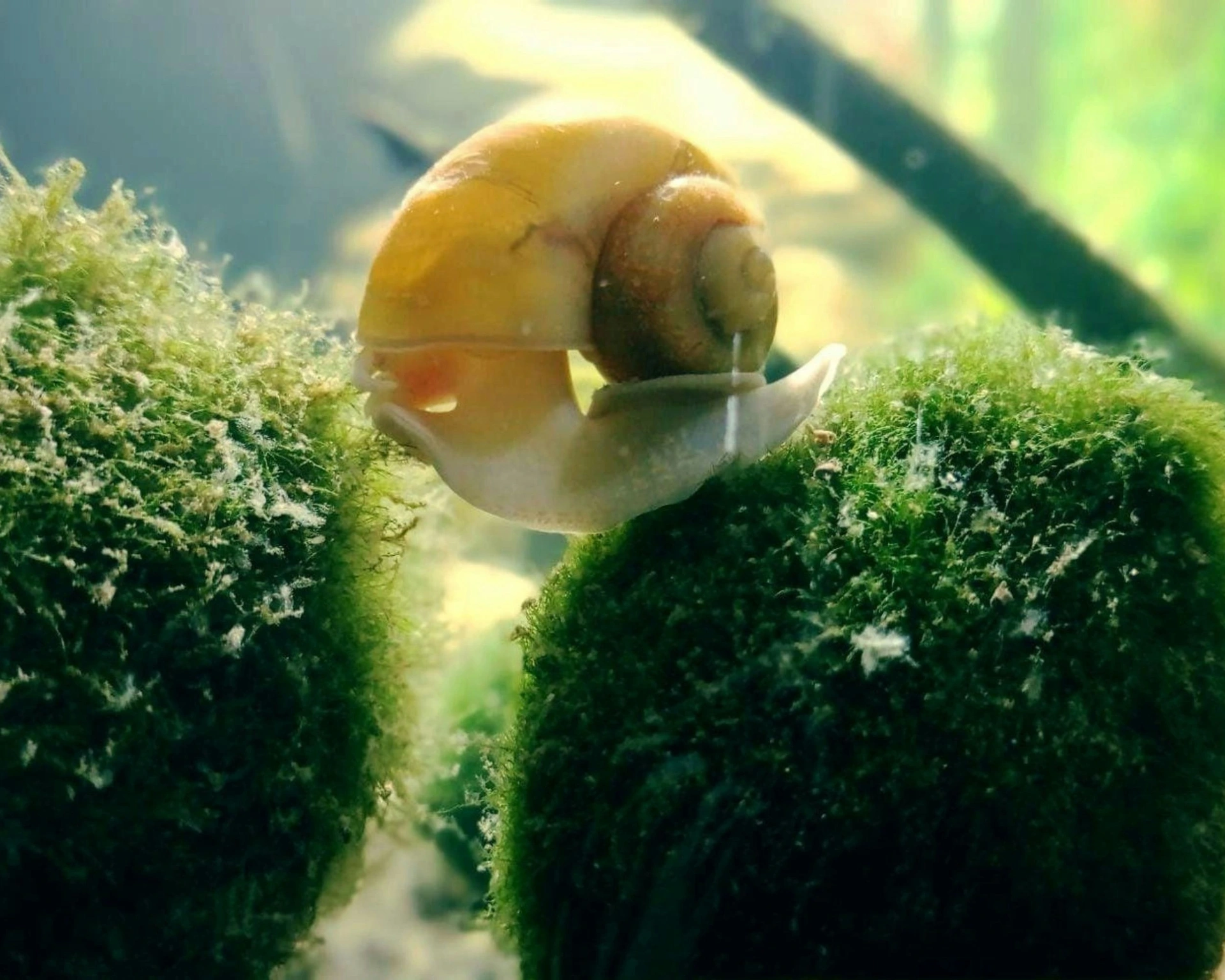
    A yellow mystery snail walking on a marimo moss ball in an aquarium
    Easy

    Mystery Snail

    Pomacea bridgesii

    Multiple color varieties — lay distinctive pink egg clutches above the waterline.

    2"School: 4-668-82°F
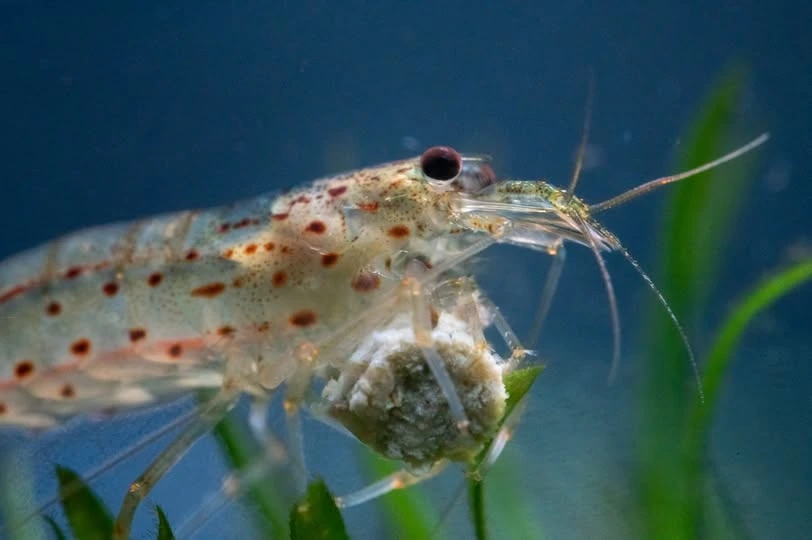
    Amano shrimp eating a piece of algae wafer at the bottom of an aquarium
    Easy

    Amano Shrimp

    Caridina multidentata

    Large enough to avoid most predation — 10-15 provide serious algae control.

    2"School: 10-1570-80°F

    Stocking Combinations That Work

    A hundred gallons lets you build communities that would fail at smaller scales. These combinations take advantage of the stability and space to mix species that need room to coexist.

    Discus Showcase

    Advanced

    6 Discus + 15 Rummy-Nose Tetras + 10 Corydoras Sterbai + 6 Amano Shrimp

    84-86°F, pristine water, twice-weekly changes. Sterbai handle the heat; other corydoras won't. Worth the effort.

    Cichlid Community

    Intermediate

    1 pair Severum + 1 pair Electric Blue Acara + 1 pair Firemouth Cichlid + 8 Giant Danios + 1 Bristlenose Pleco

    Provide distinct territories with driftwood and rock piles. Danios keep cichlids from fixating on each other.

    Rainbowfish Paradise

    Intermediate

    12 Boesemani Rainbowfish + 10 Denison Barbs + 8 Yoyo Loaches + 2 Bristlenose Plecos

    High flow, excellent oxygenation, secure lid. Both schooling species are active jumpers.

    Angelfish Empire

    Intermediate

    6 Angelfish + 12 Congo Tetras + 12 Bleeding Heart Tetras + 6 Clown Loaches + 4 Mystery Snails

    Let angelfish pair naturally. Unpaired fish may need rehoming once breeding starts.

    Fish to Avoid in a 100 Gallon Tank

    Even a hundred gallons has limits. These species are routinely sold to 100-gallon owners but belong in larger setups, public aquariums, or ponds.

    Common Pleco15"+

    Still too large and dirty for this footprint.

    Bala Shark14"

    Schooling fish that needs 150+ gallons for a proper group.

    Arowana24"+

    Absolute minimum is 250 gallons, and that's still cramped.

    Redtail Catfish48"+

    Will outgrow this tank within its first year.

    Pacu30"+

    Needs pond-sized housing despite the pet store pitch.

    Iridescent Shark48"+

    Another pet store monster that needs commercial tanks.

    Giant Gourami18"+

    Grows large enough to eat most tankmates.

    Fahaka Puffer18"

    Extremely aggressive and needs species-only housing.

    Large Bichir Species20"+

    Requires more floor space than 100 gallons offers.

    Multiple Large Cichlids10"+ each

    Two oscars or jack dempseys still fight here.

    How Many Fish Can You Keep?

    100 gallons
    379 liters
    72 × 18 inches
    typical footprint
    30-50 fish
    typical community

    The answer spans from "one oscar" to "sixty tetras" depending entirely on what you're keeping. A 100-gallon handles impressive bioloads with proper filtration, but territory matters as much as water volume. A discus group of 6 maxes out the tank despite being "only" 36 inches of fish. Run your planned combination through the calculator — it accounts for species-specific bioload, swimming needs, and territorial requirements rather than obsolete rules of thumb.

    Setup Tips for a 100 Gallon Tank

    🏗️

    Reinforce the Floor

    A filled 100-gallon approaches 1,000 lbs. First floor on a concrete slab is ideal — upper floors may need structural assessment.

    Plan the Electrical

    Multiple heaters, canister filters, powerheads, and lighting add up. Dedicate a circuit and use a quality surge protector rated for aquarium use.

    🔧

    Dual Filtration

    Run two canister filters on opposite ends. Provides redundancy, eliminates dead spots, and makes maintenance easier with rolling cleaning schedules.

    🌊

    Create Current Zones

    Use powerheads to establish high-flow areas for rainbowfish and calm zones for angels. Strategic current planning makes diverse communities viable.

    Underrated 100 Gallon Picks Worth a Look

    A 100 gallon lets you stock species that simply do not work in smaller tanks. A Kissing Gourami or two can grow out fully here, and a Peacock Eel gets the long open sand bed it actually uses.

    This is also the size where a serious rift lake colony makes sense — a Red Zebra group with dozens of caves stays far more stable than a cramped 55. For the same reason, an Electric Blue Acara pair can hold a territory without dominating the tank, and a Blue Phantom Pleco gets the flow and oxygen it needs. Keep in mind that even at 100 gallons a Giant Gourami is still out of scope — that species needs a 200+ gallon tank or a pond.

    Ready to stock your 100 gallon?

    Check compatibility, bioload, and tank capacity for your exact setup.