

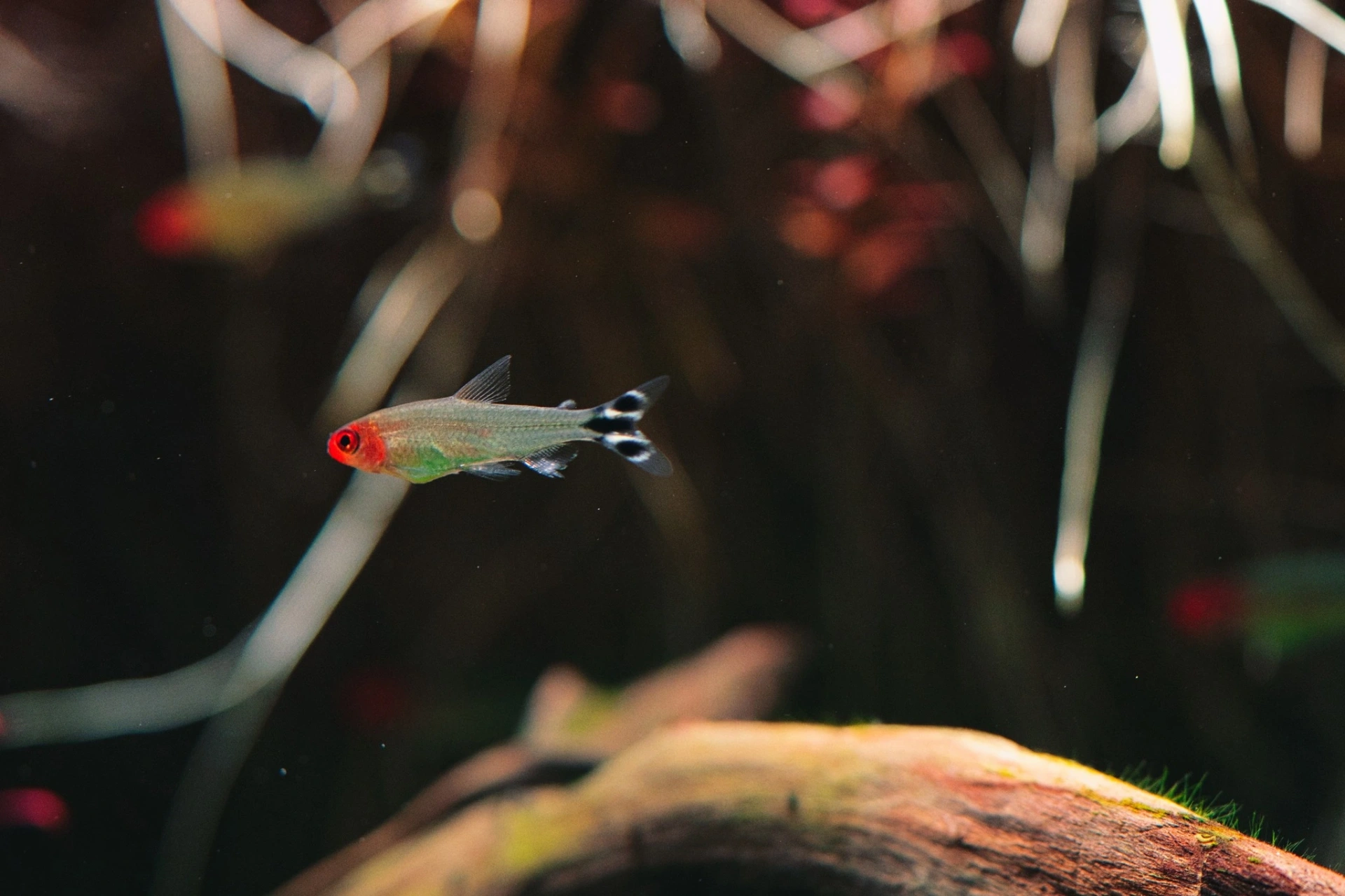
Rummy Nose Tetra
The most reliable mid-water shoal for this tank.
Adult Size
5.9" (15cm)
Min Tank
40 gal
Temperature
72-82°F
pH Range
6.5-8
Lifespan
8-10 years
Min Group
Can be kept alone
Diet
Omnivore
Swim Level
Middle
Bioload
5/10
Hardness
6-20 dGH
The Electric Blue Acara is one of the most stunning freshwater fish available, featuring an intense, shimmering electric blue coloration that covers nearly the entire body. What makes them truly special in the cichlid world is their remarkably peaceful temperament—they're often called the 'gateway cichlid' because they allow beginners to experience cichlid personality and beauty without the extreme aggression typical of the family.
Originating from South America (Trinidad, Tobago, Venezuela, and Colombia), Electric Blue Acaras are a color variant of the standard Blue Acara, selectively bred to intensify their blue coloration. The result is a fish that looks almost artificially colored—their iridescent blue scales shimmer under aquarium lighting in a way that photographs rarely capture.
Unlike most cichlids, Electric Blue Acaras can successfully live in many community tank setups. While they will establish territories and may show increased aggression when breeding, their day-to-day behavior is peaceful and curious. They recognize their owners, display fascinating pair-bonding behavior, and make excellent parents—all the cichlid traits fishkeepers love, without the tank terror reputation.
Wild Blue Acaras (the parent species) inhabit slow-moving rivers, streams, and standing water bodies throughout South America, particularly in Trinidad, Tobago, Venezuela, and Colombia. Their natural environment features sandy or muddy bottoms, aquatic vegetation, and submerged wood that provides structure and hiding places.
These waters are typically warm, slightly acidic to neutral, and can vary in hardness. The adaptability of wild specimens to various water conditions has translated to the captive-bred Electric Blue variant, making them remarkably hardy and flexible in aquarium settings.
Native Region
South America - Trinidad, Tobago, Venezuela, Colombia
Habitat Type
Slow-moving rivers, streams, and standing water with sandy/muddy bottoms
Wild Water Conditions
Warm (72-82°F), pH 6.0-8.0, sandy bottoms with vegetation and submerged wood
Electric Blue Acaras are medium-sized cichlids reaching about 6 inches in length. Their most striking feature is their intense, iridescent electric blue coloration that covers nearly the entire body. Under proper lighting, they display a shimmering, almost metallic quality that's truly breathtaking.
Their body shape is typical of South American cichlids—slightly compressed laterally with a rounded profile. Fins may show subtle orange or yellow highlights, particularly in males. The eyes often have a reddish-orange tinge. Males are generally larger with more pointed dorsal and anal fins, while females are rounder and slightly smaller.
| Variety | Description | Rarity |
|---|---|---|
| Electric Blue Acara | Intense electric blue coloration throughout body | Common |
| Standard Blue Acara | The parent species with more muted blue and green coloration | Common |
Minimum Tank Size
40 gallons
Recommended Tank Size
55 gallons
Electric Blue Acaras require a minimum of 30 gallons for a single specimen, with 50+ gallons recommended for pairs or community setups. They appreciate tanks with structure—caves, driftwood, and plants—that allow them to establish territories without feeling exposed.
Temperature 72-82°F (22-28°C), pH 6.0-8.0 (very flexible), hardness 6-20 dGH. They're remarkably adaptable to various water conditions, making them excellent for beginners. Maintain ammonia and nitrite at 0 ppm, nitrate below 40 ppm.
Sand or fine gravel is ideal—they enjoy sifting through substrate for food, and sand allows this natural foraging behavior. Avoid sharp substrates that could damage them during digging.
Unlike many cichlids, EBAs are relatively plant-safe. They may dig occasionally and uproot plants, but they don't actively destroy vegetation. Use hardy plants like Amazon Sword, Java Fern, Anubias, and Vallisneria. Provide caves, driftwood, and rock formations for territory establishment.
Standard HOB or canister filtration works well—moderate bioload doesn't require extreme filtration. They tolerate moderate flow but don't need strong currents.
Moderate to good lighting brings out their stunning blue coloration. Invest in quality aquarium lighting—the better the light, the more their iridescent scales will shimmer.
Diet Type
omnivore
Feeding Frequency
1-2 times daily
Portion Size
What they consume in 2-3 minutes
Electric Blue Acaras are omnivores that accept a wide variety of foods. In the wild, they eat insects, crustaceans, worms, and plant matter. A varied diet is key to maintaining their vibrant blue coloration and overall health.
Varied diet significantly enhances their brilliant blue coloration. They're enthusiastic feeders and can be messy. Look for foods with color-enhancing ingredients like spirulina and astaxanthin. Quality nutrition is the key to keeping their electric blue color vibrant.
Electric Blue Acaras are among the most peaceful cichlids available, making them unique in a family known for aggression. They establish territories and may show mild aggression when defending them, but serious fighting is rare. Males may display to each other, but these interactions rarely result in injury.
They're curious, intelligent fish that recognize their owners and often approach the glass when their 'person' is nearby. During feeding time, they become more active and may display excited behavior. Their personality is engaging without the stress of managing a aggressive cichlid.
When breeding, both parents participate in egg guarding and fry care—fascinating behavior to observe. Aggression does increase during breeding, but it's typically limited to defending eggs and fry rather than general tank warfare. Pairs form strong bonds and may stay together long-term.
An electric blue acara is a cichlid that behaves like a community fish until breeding season, then claims a patch of the bottom and defends it. Mid-water and surface fish barely notice; other bottom dwellers do. Size is the second filter — anything small enough to be a mouthful eventually becomes one.
The most reliable mid-water shoal for this tank.
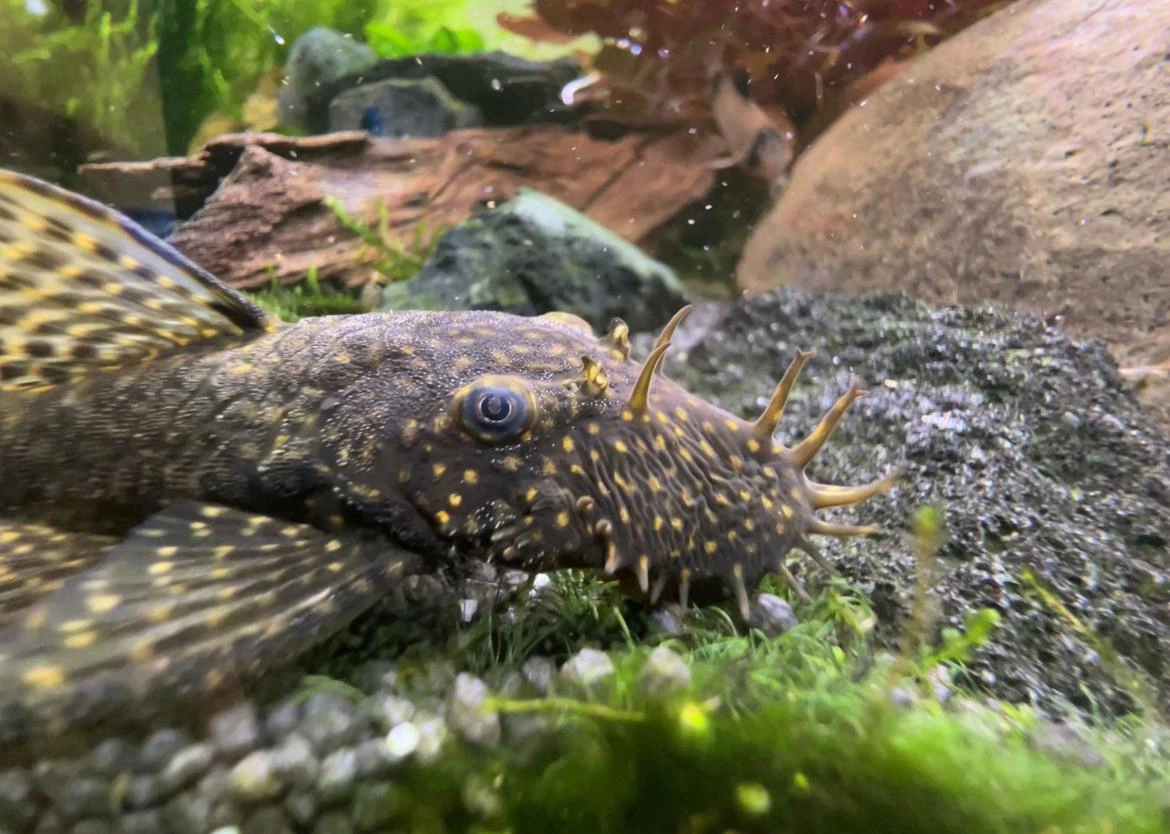
An armoured 12 cm algae eater that an acara has no leverage over and no reason to fight.

A large iridescent shoaler that fills the open middle of the tank without ever touching the floor the acara patrols.
Also compatible: Bronze Corydoras, Boesemani Rainbowfish, Pearl Gourami, Harlequin Rasbora, Yoyo Loach
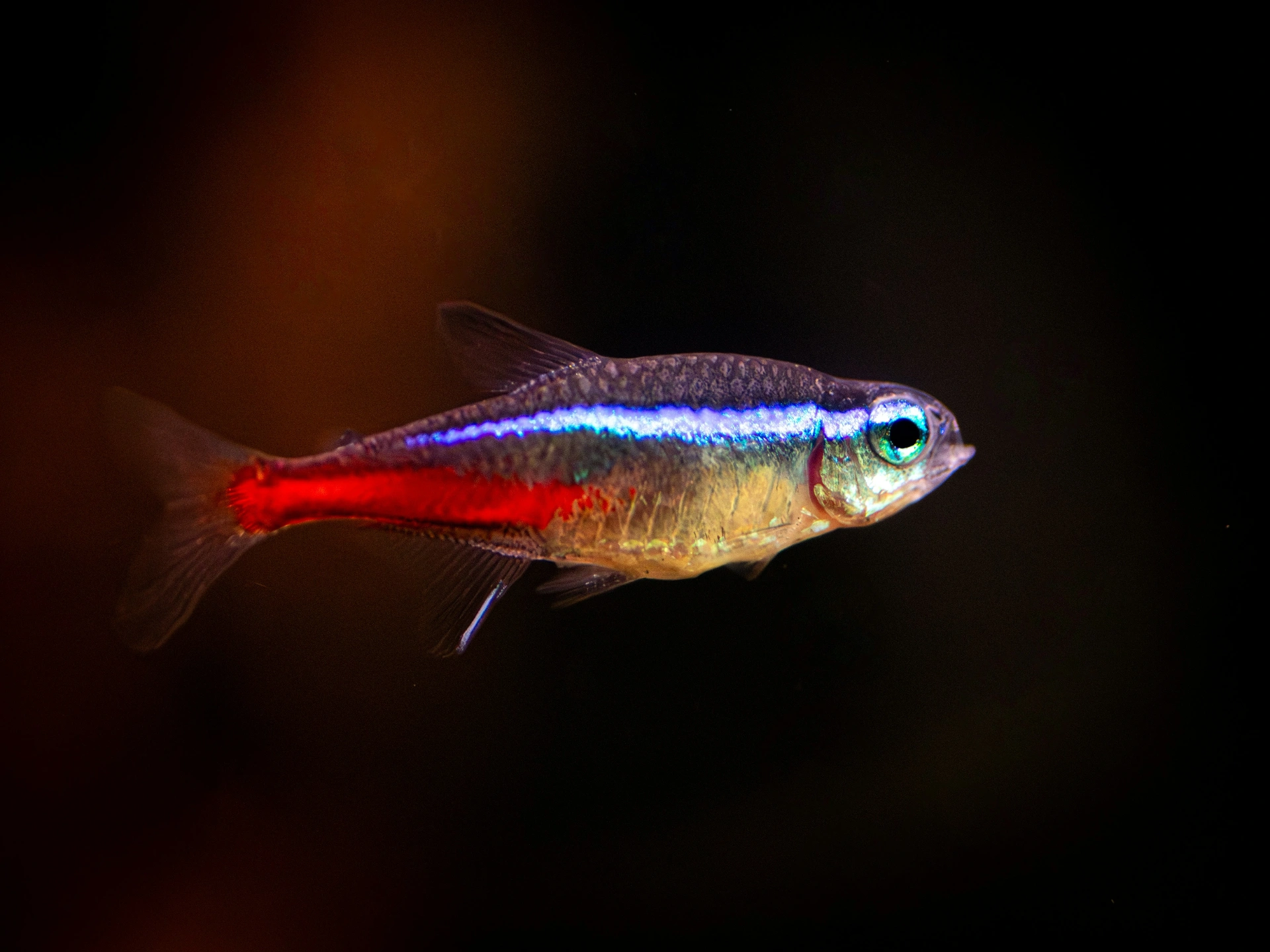
Avoid — will be eaten

Avoid — too aggressive

Avoid — too aggressive
Also avoid: Green Terror, Cherry Shrimp, Pygmy Corydoras, Chinese Algae Eater
Full Electric Blue Acara tank mates guideElectric Blue Acaras are one of the easier cichlids to breed and make excellent subjects for aquarists wanting to observe cichlid parental behavior. Pairs form strong bonds and both parents participate actively in raising their fry.
Electric Blue Acaras are generally hardy fish that tolerate a range of conditions. When kept properly with good water quality and varied diet, they rarely experience health issues.
| Disease | Symptoms | Treatment |
|---|---|---|
| Ich (White Spot) | White spots on body and fins, scratching, rapid breathing | Raise temperature to 82-86°F, aquarium salt, ich medication |
| Hole-in-the-Head (HITH) | Pits and holes in head and lateral line | Improve water quality, varied diet with vitamins, Metronidazole for severe cases |
| Bloat | Swollen abdomen, loss of appetite, lethargy | Epsom salt baths, fast the fish, improve diet variety—often from overfeeding |
| Fin Rot | Ragged, deteriorating fins | Improve water quality—often resolves with pristine conditions |
Minimum 30 gallons for one fish, 50+ gallons for a pair or community setup. Larger tanks (75+ gallons) allow for breeding and more tankmates while reducing territorial stress.
High-quality varied diet with color-enhancing ingredients (spirulina, astaxanthin), pristine water quality, proper lighting, and reduced stress all maximize their electric blue coloration. Quality foods are the single biggest factor.
Yes! They're often called the 'gateway cichlid' because they offer cichlid personality and beauty without extreme aggression. They're hardy, adaptable to various water parameters, and peaceful enough for many community setups.
Yes, single specimens do well. However, their pair-bonding and breeding behavior is fascinating, and keeping a pair in a 50+ gallon tank offers a more rewarding experience.
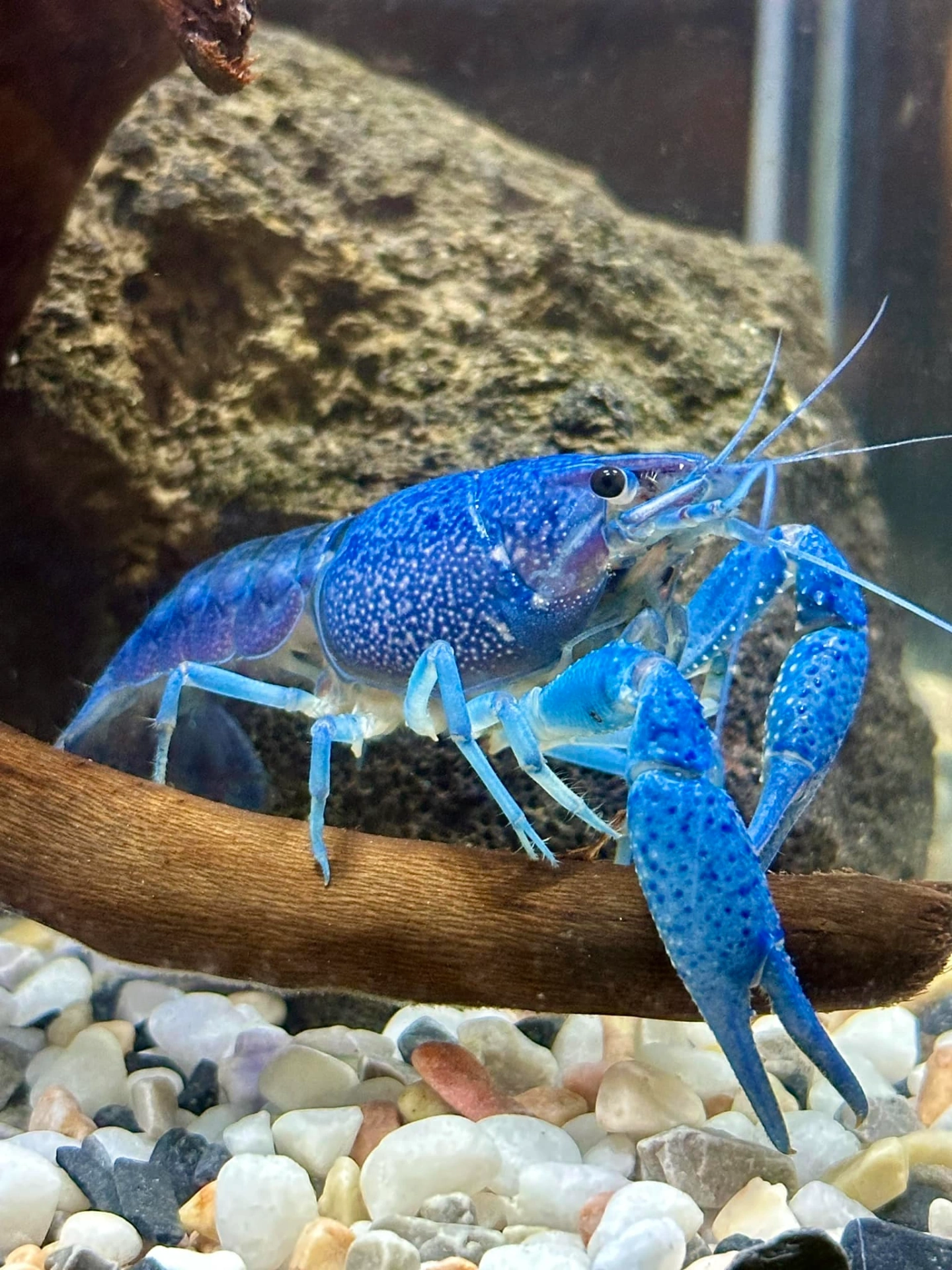
Procambarus alleni

Andinoacara rivulatus
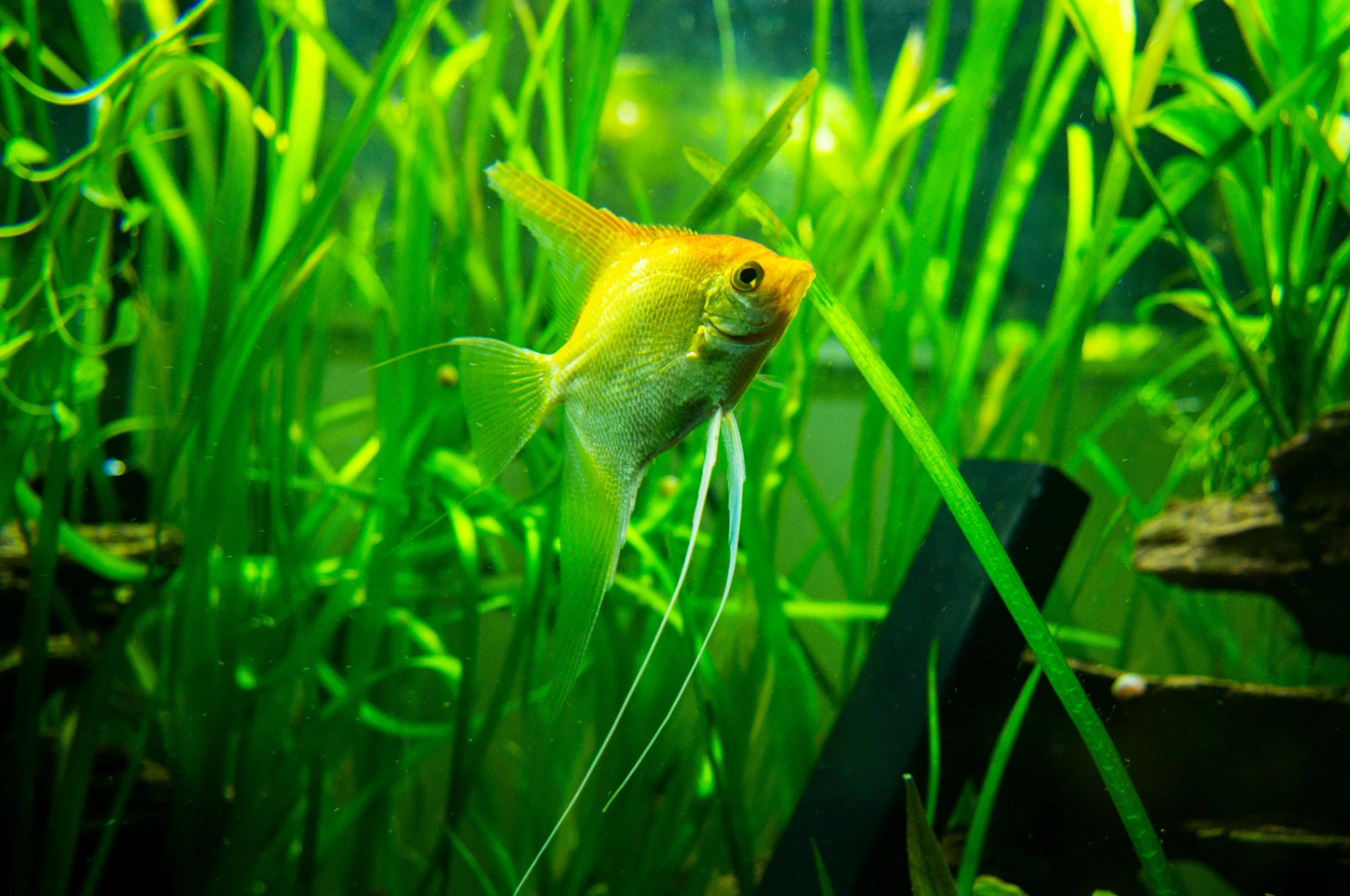
Pterophyllum scalare

Amphilophus hybrid

Altolamprologus calvus

Altolamprologus compressiceps

Thorichthys meeki

Aulonocara sp. 'OB'
Use our free stocking calculator to check compatibility, bioload, and get personalized recommendations.