

Care Requirements
Adult Size
5.9" (15cm)
Min Tank
55 gal
Temperature
75-82°F
pH Range
7.5-8.8
Lifespan
8-10 years
Min Group
Can be kept alone
Diet
Omnivore
Swim Level
Middle
Bioload
7/10
Hardness
10-25 dGH
About OB Peacock
The OB Peacock (Aulonocara sp. 'OB') is one of the most popular and visually striking cichlids in the hobby, featuring the orange-blotched (OB) gene that creates a dramatic pattern of orange, blue, and black splotches across the body. 'OB' stands for Orange Blotched — a genetic trait originally found in mbuna species like Pseudotropheus zebra, which was crossed into the Aulonocara (peacock) lineage through selective breeding. The result is a fish with the calmer peacock temperament combined with wild, unpredictable color patterns that make every individual unique. No two OB Peacocks look exactly alike, which is a major part of their appeal. While purists may note their hybrid origins, OB Peacocks have become firmly established in the hobby and are bred by some of the most respected cichlid farms worldwide. They combine the best traits of peacocks — relatively peaceful temperament, manageable size, and hardy constitution — with some of the most spectacular coloration in freshwater fishkeeping.
Natural Habitat & Origin
OB Peacocks are a captive-bred hybrid and do not exist in the wild. Their parent species, various Aulonocara peacock cichlids, are endemic to Lake Malawi in East Africa. Wild peacocks inhabit sandy substrates near rocky areas, where they hover just above the sand and use their specialized sensory pores to detect tiny invertebrates buried below. While OB Peacocks are man-made, they thrive in water conditions that replicate Lake Malawi — hard, alkaline, and well-oxygenated.
Native Region
Captive-bred hybrid — parent species from Lake Malawi, East Africa
Habitat Type
Bred in captivity; parent species inhabit sandy substrates near rocks in Lake Malawi
Wild Water Conditions
pH 7.5–8.8, very hard water (10–25 dGH), temperature 75–82°F (24–28°C)
Appearance & Varieties
The OB Peacock's defining feature is its orange-blotched pattern — a mosaic of orange, blue, black, and sometimes red patches across the body. Every individual has a unique pattern, like a fingerprint. Males typically display more intense blue undertones mixed with the orange blotching, while females tend toward more orange and brown tones. The pattern intensity varies dramatically between individuals — some are predominantly orange with sparse black spots, while others show roughly equal orange and black coverage with electric blue highlights. Adult males reach about 6 inches (15cm) with a robust, laterally compressed body typical of peacock cichlids. Fins often display beautiful blue edging or orange extensions of the body pattern.
Popular Varieties
| Variety | Description | Rarity |
|---|---|---|
| Classic OB | Orange and black blotches with blue undertones — the standard pattern | Common |
| Dragon Blood OB | Intense red-orange base with black marbling — highly sought after | Uncommon |
| Blue OB | Predominantly blue with orange blotching — more blue than typical OB | Uncommon |
| Marmalade Cat OB | Bright orange with bold black patches — named for calico cat resemblance | Common |
Tank Setup & Requirements
Quick Requirements Summary
Tank Size
Minimum Tank Size
55 gallons
Recommended Tank Size
75 gallons
OB Peacocks need a 55-gallon minimum for a small group, with 75+ gallons recommended for a mixed peacock community. They're less aggressive than mbuna and don't need the same level of rock cover, but they appreciate some structure. A sand substrate is ideal, as peacocks naturally sift sand while foraging — you'll see them take mouthfuls and filter it through their gills, a delightful behavior.
Water Parameters
pH 7.5–8.8, hardness 10–25 dGH. Buffer with crushed coral or aragonite. Temperature 75–82°F. Stable parameters are more important than hitting exact numbers.
Substrate
Fine sand is strongly preferred — peacocks are natural sand-sifters and this behavior is both entertaining and beneficial for their well-being. Aragonite sand buffers pH while providing a natural foraging substrate.
Plants & Decorations
Moderate rockwork to create territories and hiding spots, but less dense than mbuna tanks. Leave open sandy areas for sand-sifting behavior. Anubias and Java Fern can survive in Malawi water if desired.
Filtration & Water Flow
Good canister or HOB filtration rated for the tank volume. OB Peacocks produce moderate waste. Weekly 25-30% water changes maintain water quality.
Lighting
Standard to moderate lighting. Blue-accent LEDs can enhance the blue and orange tones of OB coloration beautifully.
Diet & Feeding Guide
Diet Type
omnivore
Feeding Frequency
Twice daily in smaller portions
Portion Size
What they consume in 1-2 minutes per feeding
OB Peacocks are omnivores with a lean toward carnivorous/insectivorous feeding in the wild (their peacock parent species eat tiny invertebrates sifted from sand). A balanced diet of quality cichlid pellets with regular protein supplementation keeps them healthy and colorful. They're not as bloat-prone as herbivorous mbuna, but moderation and quality are still important.
Best Foods for OB Peacock
- Quality omnivore cichlid pellets (NorthFin, Hikari) — Daily staple — balanced nutrition for peacock cichlids
- Frozen mysis shrimp — Excellent protein source, great for color — feed 2-3 times per week
- Frozen brine shrimp — Good variety food, eagerly accepted
- Color-enhancing pellets with astaxanthin — Intensifies the orange-blotched pattern beautifully
- Frozen bloodworms (sparingly) — Occasional treat only — once per week maximum to avoid digestive issues
Foods to Avoid
- Beef heart or mammalian proteins — Saturated fats cause organ damage — avoid entirely
- Low-quality flake foods — Insufficient nutrition for color development and long-term health
- Excessive bloodworms — Can cause digestive issues if overfed — treat only, not a staple
Feed twice daily in smaller portions rather than one large meal. Color-enhancing foods make a dramatic difference in OB Peacock coloration — astaxanthin and spirulina-enriched pellets bring out the orange and blue tones. Avoid overfeeding, as peacocks are enthusiastic eaters that will gorge if allowed.
Behavior & Temperament
OB Peacocks inherit the relatively mild temperament of their Aulonocara parent species — they're semi-aggressive, meaning they'll establish territories and spar during breeding but are far less combative than mbuna. Males display to females with flared fins and intensified coloration, shaking their bodies in a characteristic peacock courtship dance. They're active, personable fish that quickly learn to recognize their keepers and will come to the front of the tank at feeding time. Sand-sifting is a constant, entertaining behavior — they take mouthfuls of sand and filter it through their gills, searching for micro-organisms. Male-to-male aggression is moderate and primarily involves displaying and lip-locking rather than the vicious chasing seen in mbuna. Keeping 1 male to 3-4 females reduces aggression significantly.
Tank Mates: Compatibility Guide
Compatible Tank Mates
Excellent — other Aulonocara species are natural companions
One of the mildest mbuna — works well with peacocks in adequate space
Good color contrast and similar temperament level
Hardy catfish that complements Malawi peacock tanks perfectly
Adapts to hard, alkaline water and keeps algae in check
Tank Mates to Avoid
Aggressive mbuna
Most mbuna are too aggressive for peacocks — they'll stress and outcompete them
Auratus Cichlid
Far too aggressive — will dominate and stress peacocks
Small community fish
Tetras, rasboras, and small catfish are not compatible with African cichlid setups
Betta
Completely incompatible water parameters and temperament
Common Pairing Questions
Can OB Peacocks live with mbuna?
Only with the mildest mbuna species like Yellow Labs and Rusty Cichlids, in a large enough tank (75+ gallons). Most mbuna are too aggressive for peacocks and will bully them relentlessly. Avoid mixing with Auratus, Kenyi, or other highly aggressive mbuna.
Can I keep multiple OB Peacock males?
Yes, in a large enough tank (75+ gallons) with enough females to distribute attention. Keep 1 male per 3-4 females. Multiple males will display and spar but rarely cause serious injury, unlike mbuna. More females = less aggression.
OB Peacocks are maternal mouthbrooders and breed readily in captivity. Males display intensely — flaring fins, shaking, and showcasing their OB pattern at maximum intensity — near a chosen spawning site (usually a flat rock or pit in the sand). After the female lays eggs, she immediately collects them in her mouth. The male displays egg-spots on his anal fin to encourage the female to 'collect' more, during which fertilization occurs. The female broods the eggs for approximately 3 weeks, refusing all food. Clutch sizes range from 15-40 fry. Because OB Peacocks are hybrids, fry coloration is unpredictable and variable — this genetic lottery is part of the fun of breeding them, as you never know exactly what patterns will emerge.
Health Issues & Disease Prevention
OB Peacocks are generally hardy cichlids that adapt well to captivity. Their hybrid vigor may actually provide some health benefits. The main health concerns are water quality related — maintain clean, hard, alkaline water and they'll thrive. They're less prone to Malawi bloat than herbivorous mbuna, but poor diet can still cause issues.
Common Diseases
| Disease | Symptoms | Treatment |
|---|---|---|
| Ich (White Spot Disease) | White spots, flashing, scratching against objects | Raise temperature gradually to 86°F and treat with ich medication. Peacocks respond well to heat treatment. |
| Malawi Bloat (rare) | Swollen abdomen, loss of appetite, stringy white feces | Fast immediately, treat with metronidazole. Less common in omnivorous peacocks than herbivorous mbuna, but possible with poor diet. |
| Fin rot | Ragged, eroding fin edges, sometimes with white or red margins | Improve water quality — usually resolves with clean water and water changes. Antibiotics if severe. |
Signs of a Healthy OB Peacock
- Vivid, saturated OB coloration
- Active swimming and sand-sifting behavior
- Eager feeding response
- Clear eyes and intact fins
- Regular social interactions and displaying
Prevention Tips
- Weekly 25-30% water changes with properly buffered replacement water
- Balanced omnivore diet — don't rely on a single food type
- Maintain stable pH and hardness — fluctuations cause stress
- Proper male-to-female ratios to minimize aggression stress
- Quarantine new additions before adding to established tanks
Frequently Asked Questions
They're hybrids — the OB (Orange Blotched) gene was originally found in mbuna species and was crossed into the Aulonocara peacock lineage through selective breeding. While they don't exist in the wild, they've become one of the most popular and established cichlids in the hobby, bred by reputable farms worldwide.
The OB gene creates a random distribution of orange and black pigmentation, similar to calico cats. Each fish inherits a unique combination of base color, blotch pattern, and blue overtones. This individuality is a major part of their appeal — your OB Peacock truly is one-of-a-kind.
Yes — they're one of the best entry points into African cichlid keeping. Their moderate temperament (calmer than mbuna), hardy constitution, manageable 6-inch adult size, and stunning coloration make them ideal for intermediate keepers ready to try their first Malawi tank.
Not a traditional community tank with tetras and corydoras — they need hard, alkaline water and are too assertive for peaceful tropicals. But they thrive in an African cichlid community with other peacocks, mild haps, and gentle mbuna like Yellow Labs.
Quality diet with color-enhancing foods (astaxanthin, spirulina), stable water parameters, low stress, and proper social structure (1 male to 3-4 females). Blue-spectrum LED lighting also makes their colors pop. Dominant males display the most intense coloration.
Tips for Keeping OB Peacock
Pro Tips
- ✓Buy from reputable breeders who can show you the parent fish — this gives you the best indication of what the offspring will look like as adults.
- ✓Mix OB Peacocks with solid-color peacocks (Sunshine Peacock, Electric Blue) for a stunning color variety tank.
- ✓Blue-spectrum LED lighting makes OB coloration absolutely electric — the blue undertones and orange patches both intensify.
- ✓Don't judge juvenile coloration — OB Peacocks color up significantly as they mature. A plain-looking juvenile can become a showstopper at 4+ inches.
Common Mistakes to Avoid
- ✗Mixing with aggressive mbuna that bully and stress peacocks into hiding and losing color.
- ✗Too many males, not enough females — the ideal ratio is 1 male per 3-4 females.
- ✗Expecting identical fish — every OB Peacock is unique; embrace the variety rather than trying to match.
- ✗Keeping in soft, acidic water — they need Malawi conditions (hard, alkaline) to thrive.
- ✗Overfeeding bloodworms — an occasional treat is fine, but too much causes digestive issues.
Related Species You Might Like
View All Fish →
Odessa Barb
Pethia padamya

Peacock Cichlid
Aulonocara sp.

Sunshine Peacock
Aulonocara baenschi
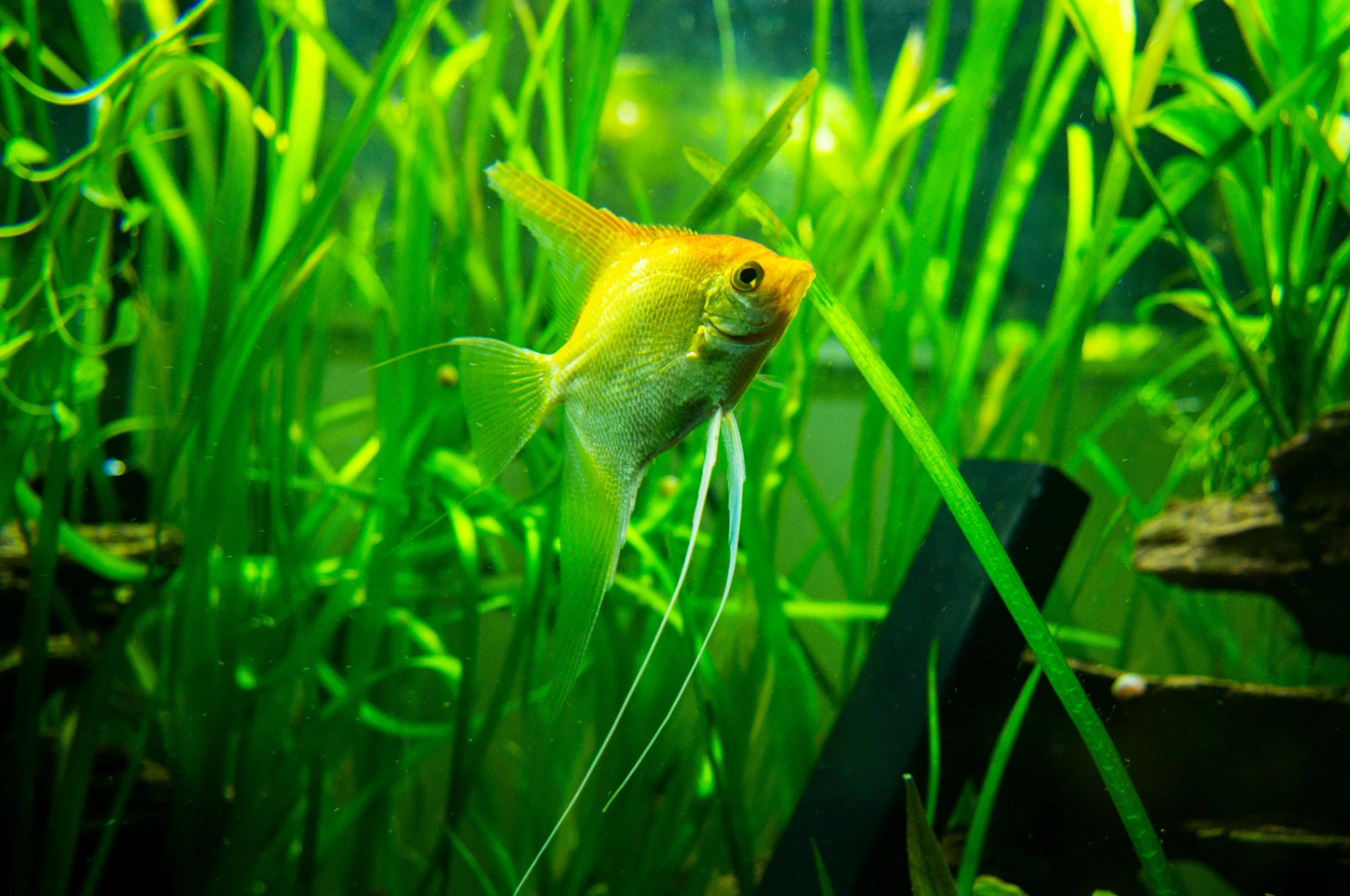
Angelfish
Pterophyllum scalare

Blood Parrot Cichlid
Amphilophus hybrid

Calvus
Altolamprologus calvus

Compressiceps
Altolamprologus compressiceps

Electric Blue Acara
Andinoacara pulcher hybrid
Ready to Add OB Peacock to Your Tank?
Use our free stocking calculator to check compatibility, bioload, and get personalized recommendations.