

Care Requirements
Adult Size
5.1" (13cm)
Min Tank
55 gal
Temperature
75-82°F
pH Range
7.5-8.8
Lifespan
8-10 years
Min Group
Can be kept alone
Diet
Omnivore
Swim Level
Middle
Bioload
6.5/10
Hardness
10-25 dGH
About Sunshine Peacock
The Sunshine Peacock (Aulonocara baenschi), also known as the Benga Peacock or New Yellow Regal, is widely considered one of the most beautiful peacock cichlids available in the aquarium hobby. Males develop an intense, saturated lemon-yellow body coloration contrasted by a brilliant metallic blue face and gill covers — a color combination that's genuinely stunning under aquarium lighting. This species originates from a limited area of Lake Malawi near Nkhomo Reef in Benga, Malawi, making it one of the more geographically restricted Aulonocara species. Like all peacock cichlids, the Sunshine Peacock is calmer than mbuna, making it an excellent choice for intermediate keepers who want spectacular color without the relentless aggression of mbuna species. Males reach about 5 inches and females are slightly smaller with subdued olive-brown coloration. The male's color transformation from a drab juvenile to a brilliant adult is one of the most rewarding experiences in African cichlid keeping.
Natural Habitat & Origin
Conservation status: Critically Endangered (CR)
Aulonocara baenschi is endemic to a small area of Lake Malawi near Nkhomo Reef, Benga, on the southwestern shore. In the wild, it inhabits the interface between rocky substrate and sandy bottoms at moderate depths. Like all Aulonocara, the Sunshine Peacock uses specialized sensory pores along its lower jaw to detect micro-invertebrates moving beneath the sand — hovering motionless above the substrate before striking with precision. Lake Malawi's water is characteristically hard, alkaline, and mineral-rich.
Native Region
Lake Malawi, East Africa — Nkhomo Reef near Benga, southwestern shore
Habitat Type
Rocky/sandy transition zones in large alkaline rift lake
Wild Water Conditions
pH 7.5–8.8, very hard water (10–25 dGH), temperature 75–82°F (24–28°C)
Appearance & Varieties
Male Sunshine Peacocks are among the most vibrantly colored freshwater fish available. The body is an intense, saturated lemon yellow that extends across the flanks, dorsal fin, and tail. The face and gill covers display a striking metallic blue that contrasts beautifully with the yellow body. Egg-spots on the anal fin are pronounced. Females are olive-brown with faint vertical barring — attractive but subdued compared to males. Juveniles of both sexes resemble females, with males beginning to show color at around 2-3 inches. The full yellow-and-blue adult coloration develops over 6-12 months and is heavily influenced by diet, water quality, and social status.
Popular Varieties
| Variety | Description | Rarity |
|---|---|---|
| Wild Type (Benga) | Intense lemon yellow body with blue face — the classic and most sought-after form | Common |
| Albino Sunshine | Yellow-white body with pink eyes and reduced blue pigment | Uncommon |
Tank Setup & Requirements
Quick Requirements Summary
Tank Size
Minimum Tank Size
55 gallons
Recommended Tank Size
75 gallons
A 55-gallon tank is the minimum for a small group of Sunshine Peacocks, with 75+ gallons preferred for a mixed peacock community. These fish appreciate a combination of rocky structures and open sandy areas. The sandy zones allow them to display their natural sand-sifting foraging behavior, which is entertaining and enriching.
Water Parameters
pH 7.5–8.8, hardness 10–25 dGH. Buffer with crushed coral or aragonite. Temperature 75–82°F. Stability is more important than hitting exact numbers — avoid fluctuations.
Substrate
Fine sand is strongly recommended — Sunshine Peacocks are natural sand-sifters and this behavior is both enriching and entertaining to watch. Aragonite sand buffers pH while providing a natural substrate.
Plants & Decorations
Moderate rockwork for territories and hiding spots. Leave open sandy areas for foraging. Less rock than a mbuna tank. Anubias and Java Fern tolerate Malawi water if desired for aesthetics.
Filtration & Water Flow
Quality canister or HOB filtration rated for the tank volume. Weekly 25-30% water changes. Peacocks are moderately messy — good filtration keeps water pristine.
Lighting
Standard aquarium lighting works well. Warm-spectrum LEDs enhance the yellow coloration, while blue-spectrum LEDs make the blue face pop. Experiment to find the most flattering angle.
Diet & Feeding Guide
Diet Type
omnivore
Feeding Frequency
Twice daily in moderate portions
Portion Size
What they consume in 1-2 minutes per feeding
Sunshine Peacocks are omnivores leaning carnivorous — in the wild they eat tiny invertebrates sifted from sand. In captivity, a balanced pellet diet supplemented with frozen foods keeps them healthy and maximizes their spectacular coloration. Color-enhancing foods make a significant difference in the intensity of their yellow and blue tones.
Best Foods for Sunshine Peacock
- Quality omnivore cichlid pellets — Daily staple — NorthFin or Hikari cichlid formulas work well
- Frozen mysis shrimp — Excellent protein source and color enhancer — 2-3 times per week
- Frozen brine shrimp — Good variety food, eagerly accepted by peacocks
- Color-enhancing pellets with astaxanthin — Dramatically intensifies yellow body and blue face coloration
- Frozen cyclops — Small, nutritious food excellent for maintaining condition
Foods to Avoid
- Beef heart or mammalian proteins — Saturated fats cause organ damage in fish — avoid entirely
- Cheap flake foods — Insufficient nutrition for color development and long-term health
- Excessive bloodworms — Treat only — can cause digestive issues if overfed
Color-enhancing foods containing astaxanthin and carotenoids make a dramatic difference in Sunshine Peacock coloration — the yellow becomes more intense and saturated. Feed twice daily in smaller portions. A well-fed Sunshine Peacock on quality food will outshine one on basic diet by a dramatic margin.
Behavior & Temperament
Sunshine Peacocks display the characteristic Aulonocara temperament — semi-aggressive with territorial behavior primarily during breeding, but far calmer than mbuna. Males establish display territories and perform courtship dances — shaking their body with fins fully extended to showcase their yellow-and-blue coloration. They're active sand-sifters, constantly hovering above the substrate and taking mouthfuls of sand to filter for micro-organisms. This behavior is fascinating to watch and is a sign of a healthy, comfortable fish. Male-to-male aggression is moderate — primarily display-based lip-locking rather than vicious chasing. Keep 1 male to 3-4 females for the best social dynamic. They quickly learn to recognize their keeper and will eagerly approach the glass at feeding time.
Tank Mates: Compatibility Guide
Compatible Tank Mates
Excellent pairing — yellow and OB patterns create stunning visual contrast
Other Aulonocara species are natural companions
Mild mbuna that coexists well with peacocks in adequate space
Beautiful blue contrast to the Sunshine's yellow
Hardy catfish perfect for Malawi peacock setups
Tank Mates to Avoid
Aggressive mbuna
Most mbuna are too aggressive — they'll outcompete and stress peacocks
Auratus Cichlid
Far too aggressive for peacocks
Small community fish
Tetras, rasboras, corydoras — incompatible water parameters and temperament
Betta
Completely incompatible in every way
Common Pairing Questions
Can I keep Sunshine Peacocks with other peacock species?
Yes — this is the ideal setup. Mix different Aulonocara species for a stunning multi-color peacock tank. Avoid keeping with very similar-looking yellow peacocks to prevent hybridization if breeding is a concern.
Can Sunshine Peacocks live with mbuna?
Only with the mildest species like Yellow Labs and Rusty Cichlids in a 75+ gallon tank. Most mbuna are too aggressive and will bully peacocks into hiding, causing stress and color loss.
Sunshine Peacocks are maternal mouthbrooders and breed readily in captivity. Males display intensely at their chosen spawning site, showcasing their full yellow-and-blue coloration with flared fins. After spawning, the female collects eggs in her mouth and broods them for approximately 3 weeks without eating. Clutch sizes range from 15-40 fry depending on the female's size. Fry are relatively easy to raise on baby brine shrimp and crushed pellet food. Male fry begin showing color at 2-3 inches, with full coloration developing over 6-12 months.
Health Issues & Disease Prevention
Sunshine Peacocks are hardy cichlids when maintained in proper Malawi conditions. They're less prone to bloat than herbivorous mbuna since they're naturally omnivorous/insectivorous. The main health concerns relate to water quality and stress from aggression.
Common Diseases
| Disease | Symptoms | Treatment |
|---|---|---|
| Ich (White Spot Disease) | White spots on body and fins, flashing, rapid breathing | Raise temperature gradually to 86°F and treat with ich medication. Peacocks tolerate heat treatment well. |
| Fin rot | Ragged, deteriorating fin edges | Usually caused by poor water quality or aggression injuries. Improve conditions; antibiotics if severe. |
| Malawi Bloat (uncommon) | Swollen abdomen, loss of appetite, white stringy feces | Fast immediately, treat with metronidazole. Less common in peacocks than mbuna. |
Signs of a Healthy Sunshine Peacock
- Vivid, saturated yellow body and blue face
- Active swimming and sand-sifting behavior
- Eager feeding response
- Clear eyes and intact, spread fins
- Regular social displaying
Prevention Tips
- Weekly 25-30% water changes with properly buffered replacement water
- Quality varied diet with color-enhancing foods
- Stable pH and hardness — avoid parameter swings
- Proper male-to-female ratios to minimize stress
- Quarantine new additions before adding to established tanks
Frequently Asked Questions
Several factors affect coloration: juvenile fish haven't colored up yet (males start showing color at 2-3 inches), poor diet lacks color-enhancing carotenoids, stress from aggression or poor water quality suppresses color, and subordinate males deliberately dull their color to avoid conflict. Address these factors and the yellow will intensify.
They're excellent for intermediate keepers ready for African cichlids, but not true beginners. You need to understand water hardness buffering, nitrogen cycling, and cichlid social dynamics. If you've kept a successful community tank for a year+, a Sunshine Peacock group is a great next step.
A group of 1 male and 3-4 females works well in a 55-gallon as a species-only setup. For a mixed peacock community, upgrade to 75+ gallons. Overstocking peacocks causes stress and color suppression.
Females are olive-brown with faint vertical barring — attractive but nothing like the males. This sexual dimorphism is normal for Aulonocara. The females' subdued coloration serves as camouflage for mouthbrooding.
With proper care — quality diet, stable water parameters, and appropriate social structure — they live 8-10 years in captivity. The most common causes of premature death are aggression stress and poor water quality.
Tips for Keeping Sunshine Peacock
Pro Tips
- ✓Pair with blue-colored peacocks or haps for the most striking color contrast — Sunshine yellow + Electric Blue is a classic combination.
- ✓Warm-spectrum LED lighting makes the yellow body absolutely glow, while blue LEDs enhance the metallic face.
- ✓Feed color-enhancing foods for at least 2 months before judging final coloration — the difference is dramatic.
- ✓Buy juveniles from a reputable breeder and raise them up — you'll get the best coloration from fish that have been well-fed from a young age.
Common Mistakes to Avoid
- ✗Mixing with aggressive mbuna that suppress color through stress and bullying.
- ✗Too many males competing — 1 male per 3-4 females is ideal for color display.
- ✗Poor diet lacking color enhancers — a basic pellet diet produces pale fish; quality food produces stunners.
- ✗Keeping in soft, acidic water — they need hard, alkaline Malawi conditions.
- ✗Judging color too early — juveniles look nothing like adult males; be patient.
Sources
- FishBase — Accepted scientific name, maximum size and native range for Sunshine Peacock.
- IUCN Red List — Critically Endangered conservation assessment for Aulonocara baenschi.
Related Species You Might Like
View All Fish →
Swordtail
Xiphophorus hellerii

OB Peacock
Aulonocara sp. 'OB'

Peacock Cichlid
Aulonocara sp.
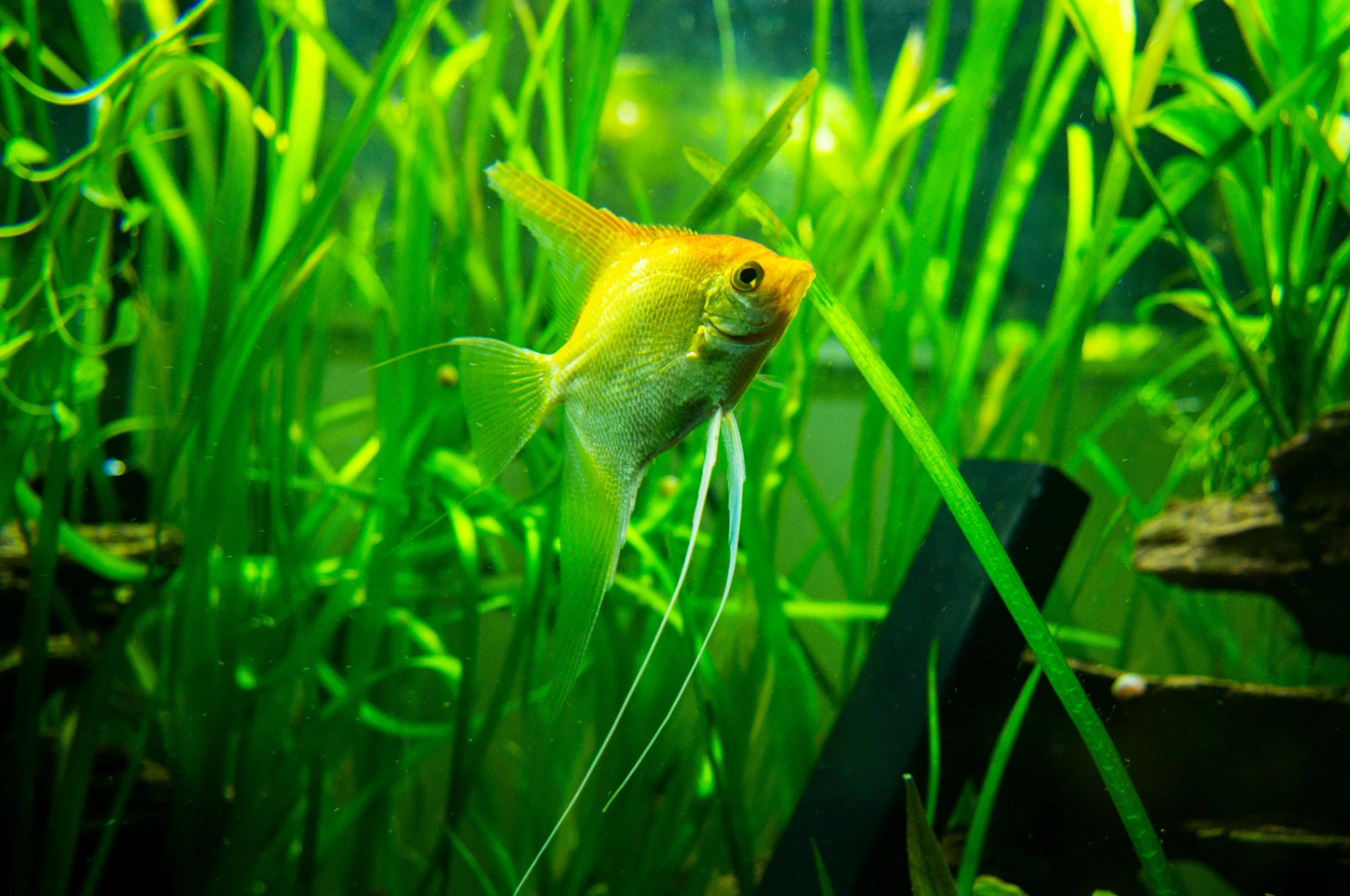
Angelfish
Pterophyllum scalare

Blood Parrot Cichlid
Amphilophus hybrid

Calvus
Altolamprologus calvus

Compressiceps
Altolamprologus compressiceps

Electric Blue Acara
Andinoacara pulcher hybrid
Ready to Add Sunshine Peacock to Your Tank?
Use our free stocking calculator to check compatibility, bioload, and get personalized recommendations.