Electric Blue Acara Tank Mates: 8 Compatible Species (and 7 to Avoid)
Here is the unusual part: an Electric Blue Acara is a 15 cm cichlid that can be trusted in a community tank. It holds a territory without patrolling one, tolerates neighbours at eye level, and spends most of its day cruising the lower half of the tank looking unbothered. That buys you a far longer shortlist than any other cichlid this size — but "mild" is not "harmless", and the limits that remain are about mouth size and about what happens when a pair decides to spawn.
Reviewed by the AquariumStocking team · Updated
The tank size that makes this work
Footprint is the deciding number rather than volume. This is a broad, deliberate fish that works a horizontal beat along the bottom, so length gives you far more than height does. Our database puts the electric blue acara minimum at 40 gallons.
40 gallons
The working minimum for one acara or a bonded pair, plus one mid-water shoal and a cleanup crew. A 40 breeder is the right shape — the extra width lets the acara have a defended corner and still leave a clear run of open floor. What does not fit at this size is a second bottom-dwelling cichlid; there is only one ground-level territory in a tank this length.
The size at which the community around the acara becomes the point rather than an afterthought. Two shoals, a pleco and a corydoras group all fit, and the extra length means a spawning pair claiming one end still leaves half the tank neutral. Break the sightline in the middle with wood or a plant mass and the tank effectively becomes two rooms.
Enough space to keep an acara pair alongside a second mild cichlid or genuinely large shoalers — rainbowfish, congo tetras, a full group of yoyo loaches. It is also the size where breeding stops being disruptive, because the fry-guarding radius is a fraction of the tank rather than most of it.
How to choose tank mates for an electric blue acara
The mouth still sets a floor, even on a calm fish
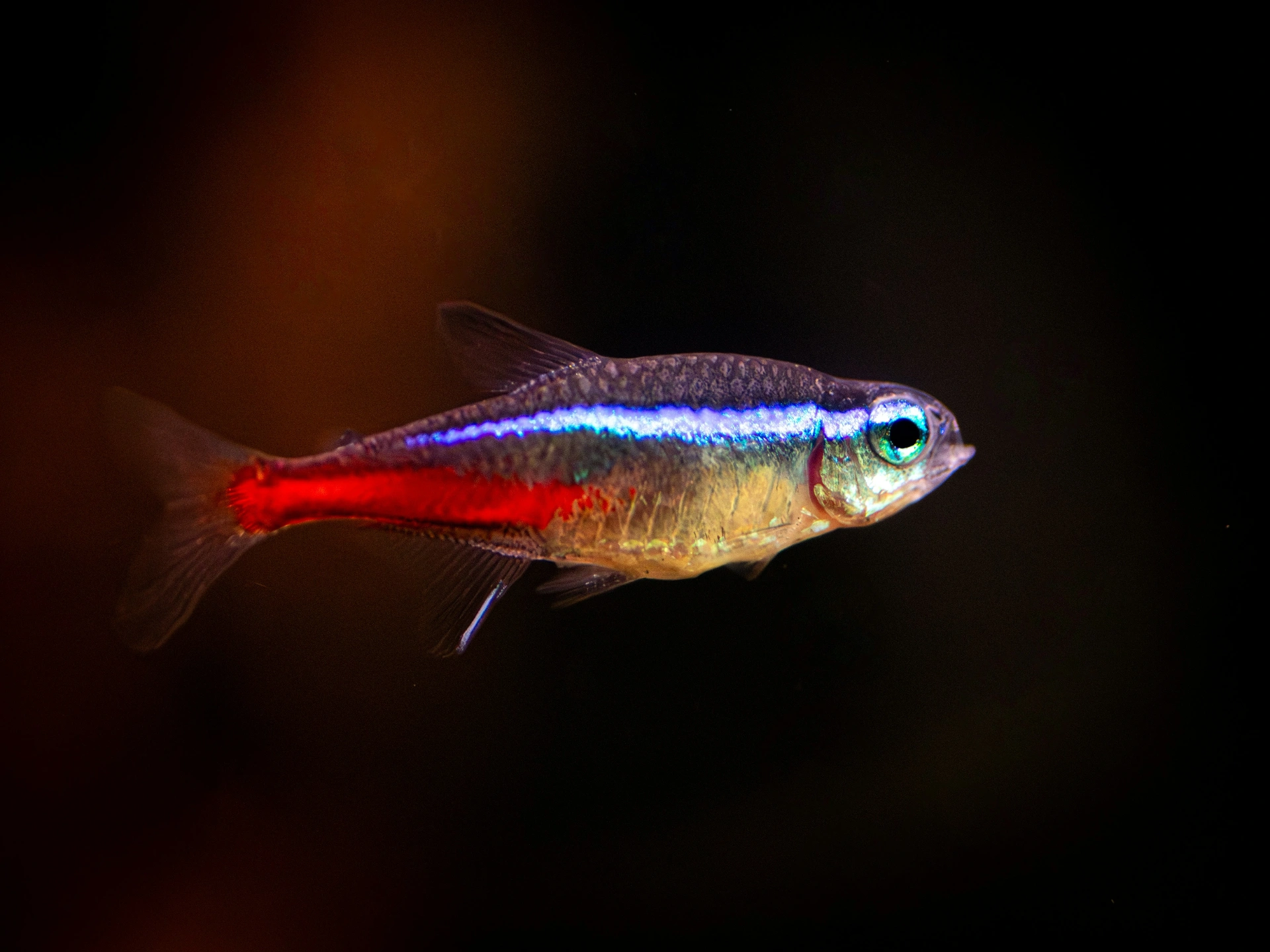
Temperament and appetite are separate things. A full-grown acara will take anything under roughly 3 cm that swims within reach, without any aggression being involved — neon tetras, ember tetras and chili rasboras are simply food. Aim for tank mates that reach 4 cm or more as adults and the single most common failure of this tank disappears.
What the mild temperament actually buys you
It buys mid-water. Most cichlids of this size force you to stock only fish that can stay out of the way; an acara lets you run proper shoals through the middle of the tank and keep them there. It also means you can plant heavily, because this is not a fish that rearranges the substrate for entertainment — it will dig a spawning pit and otherwise leave the layout alone.
Wide pH tolerance is the quiet advantage
At 6.5–8.0 this fish is comfortable in almost any tap water, which is why it pairs with species that would never share a tank otherwise: soft-water tetras at one end, harder-water livebearers and rainbowfish at the other. When you are choosing between candidates, temperature overlap will rule fish out here long before pH does.
The exception is other bottom-level cichlids
The acara is peaceful toward fish that do something else for a living. Put a second ground-claiming cichlid in with it — a convict, a jewel, a jack dempsey — and the calm disappears, because now two fish want the same cave. This is the one category where the species' easy reputation misleads people, and it is also why the avoid list below is mostly cichlids rather than small fish.
Spawning changes the tank for a few weeks at a time
A bonded pair will clear a flat stone, lay on it and defend a radius of maybe 30 cm with real conviction. Nothing gets killed in a tank with enough length, but a corydoras group that likes that corner will be pushed out of it. Plan two separate bottom zones and the breeding cycle passes without anyone needing to be moved.
Feeding is easy, which makes overfeeding easy too
Acaras eat anything and beg convincingly, so they are routinely fattened past what is good for them while slower tank mates go short. Feed to the shyest fish in the tank, use sinking food for the bottom group after lights out, and treat the acara's enthusiasm as noise rather than as a signal.
Compatible species, ranked by fit
Sorted by how little management each one needs once the acara is adult — the top of the list is genuinely set-and-forget.
Rummy Nose Tetra
Hemigrammus rhodostomus
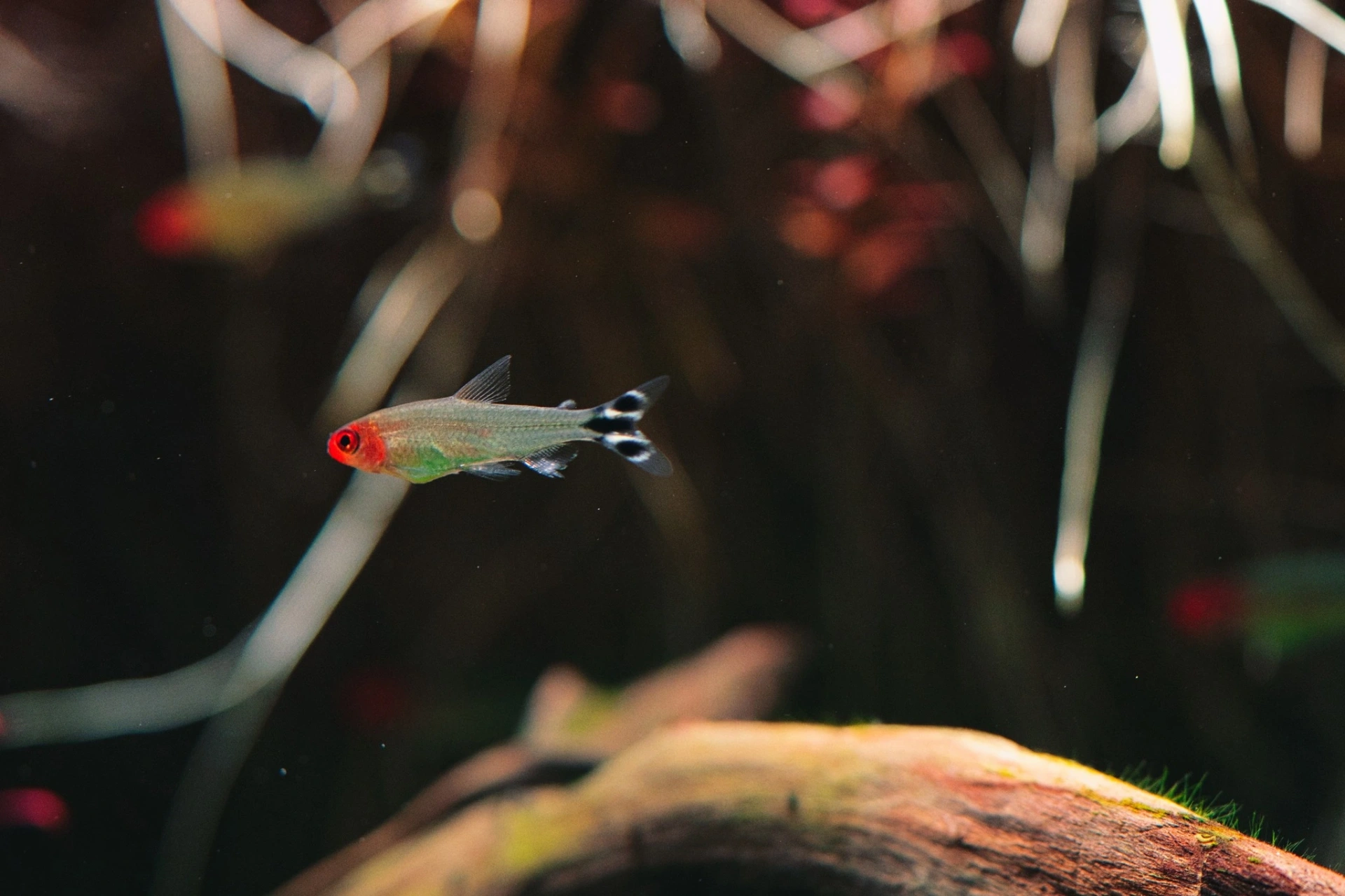
The most reliable mid-water shoal for this tank. At 5 cm and deep-bodied they clear the acara's mouth-size threshold, and they shoal tightly rather than scattering, which reads as confident rather than nervous to a cichlid below them. They want the same warm water. Their red faces also work as a water-quality gauge for the whole tank — the colour drains first when nitrate climbs, which is useful in a tank carrying a cichlid's waste.
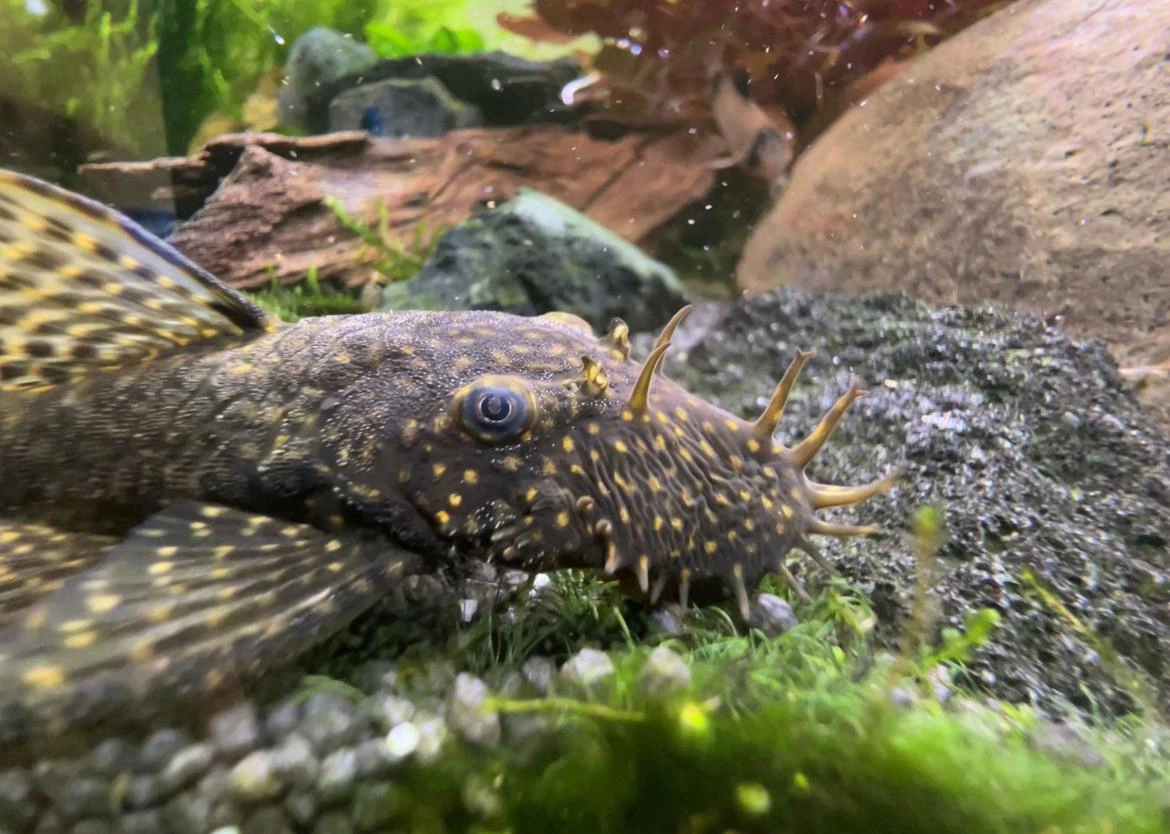
An armoured 12 cm algae eater that an acara has no leverage over and no reason to fight. It works at night, keeps the glass and driftwood clean and disappears into a cave during the day, so it never occupies the corner the acara wants. Give it real wood to rasp on, and account for its output — the bioload of a bristlenose plus a cichlid is more than a 40 gallon tank should carry alongside two shoals.
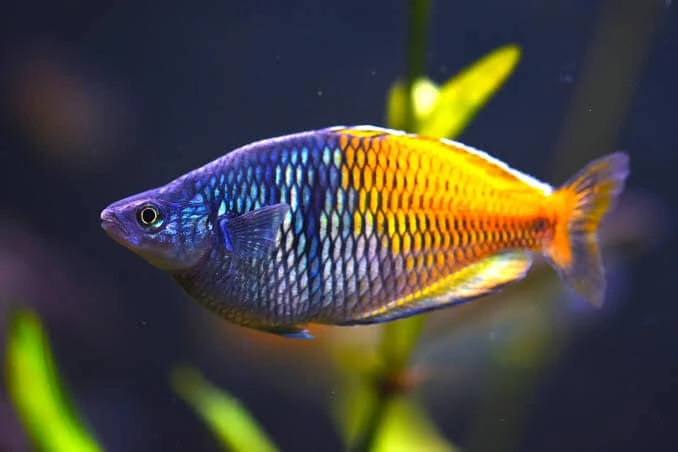
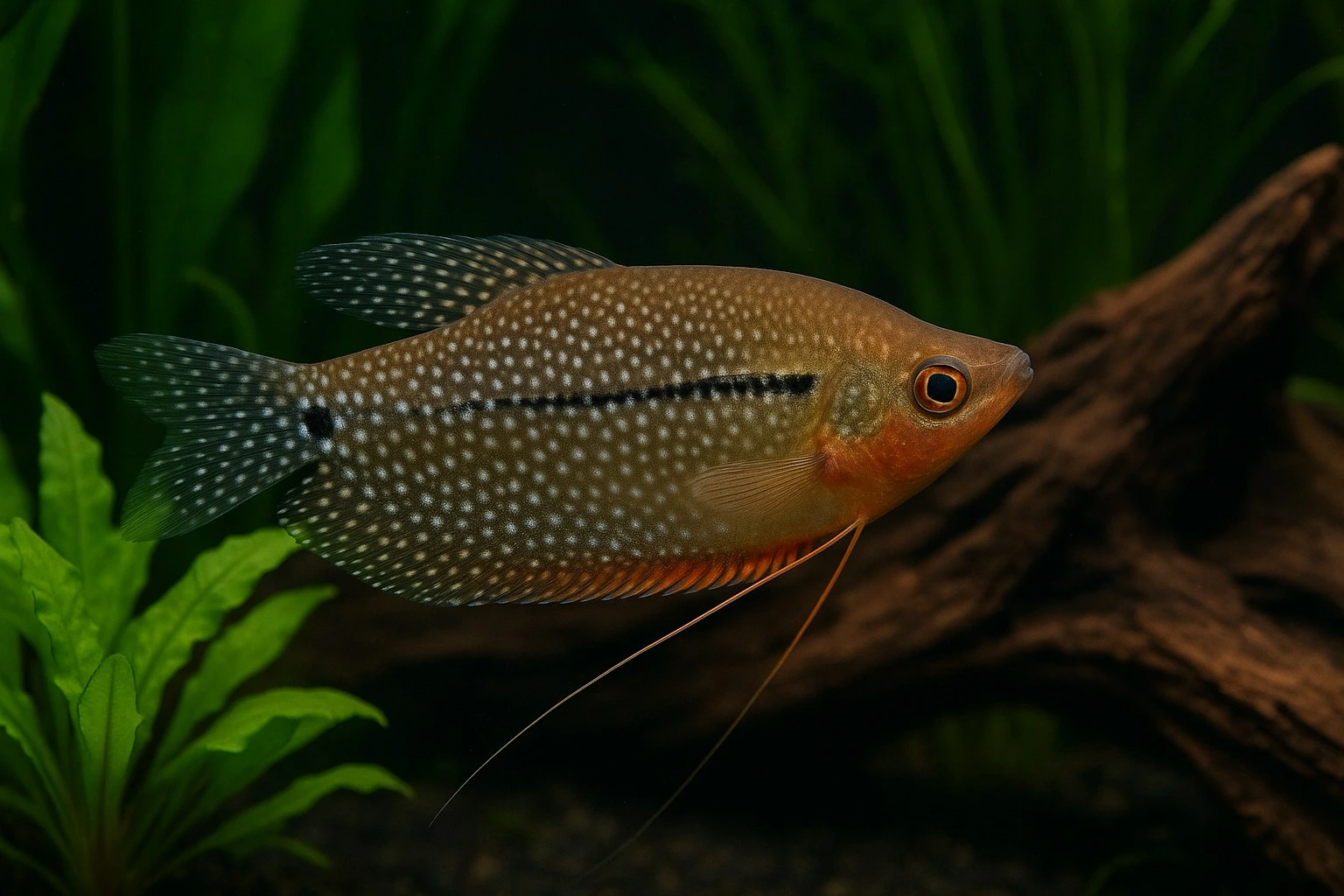
A large iridescent shoaler that fills the open middle of the tank without ever touching the floor the acara patrols. At 8 cm they are permanently out of predation range and confident enough not to be intimidated by a cichlid twice their length. They need six or more and a long tank to look right, and they are worth reserving for the 55-gallon plan upward — in a 40 they crowd the same water the acara uses when it comes up to feed.
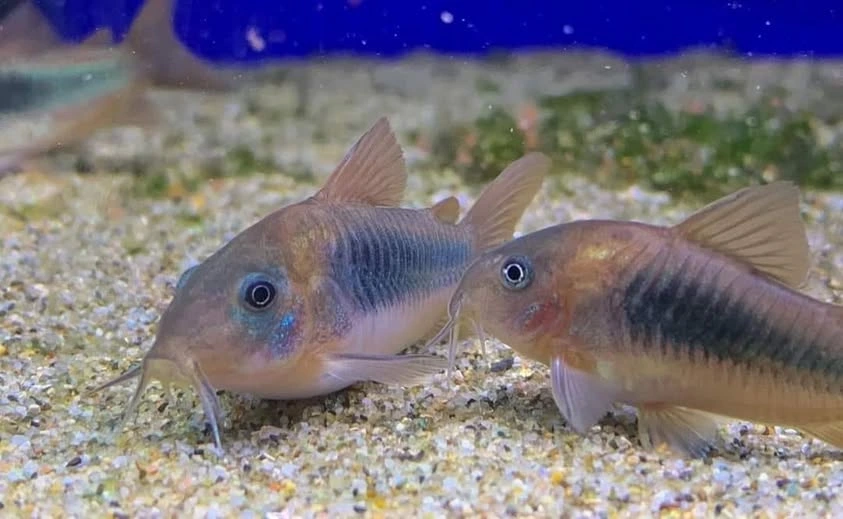
The default bottom crew here, and unusually safe given they share the acara's level. They are broad, armoured and constantly moving as a group, none of which invites attention, and their 22–26 °C range overlaps comfortably with the acara's. Keep six or more over sand rather than gravel, and give them a foraging area at the opposite end from whatever flat rock the acara has claimed.
A fast, high-colour mid-water shoal that suits the acara's harder-water tolerance better than most tetras do. At 11 cm nothing about them registers as prey, and their constant movement occupies the top half of the tank while the acara works the bottom — the cleanest possible division of space. They need length more than volume, so this is a 55-gallon-and-up choice, and a group of six minimum for the males to colour up.
A calm surface-oriented fish that uses the one part of the tank the acara essentially ignores. At 12 cm it is well clear of any size risk, and its slow drifting movement does not provoke anything below it. Two conditions: it needs still water at the surface, so aim the outflow low, and it needs floating cover to feel secure. Given both, this is one of the few gouramis that holds up long term alongside a cichlid.
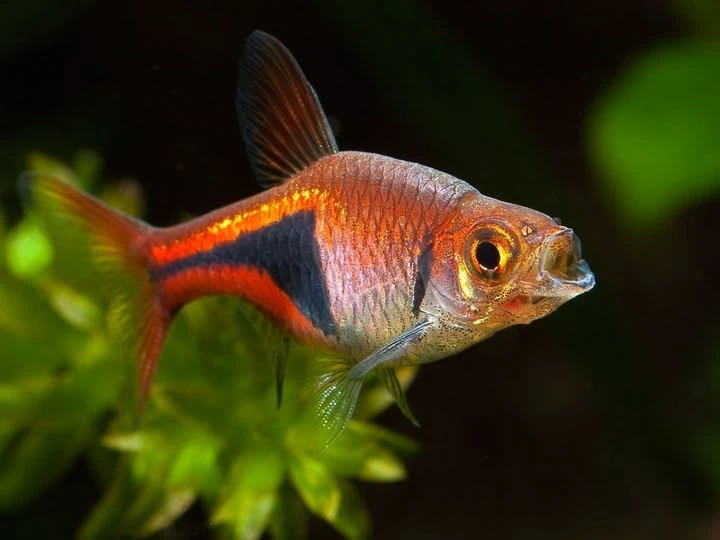
At 4 cm this is about the smallest fish that is sensible here, and it works because of body depth rather than length — a harlequin is a broad wedge, not a slim dart. They shoal steadily in mid-water and are unbothered by activity below them. Buy adult-sized fish rather than juveniles, keep ten or more, and keep them out of a tank with an unusually large female acara.
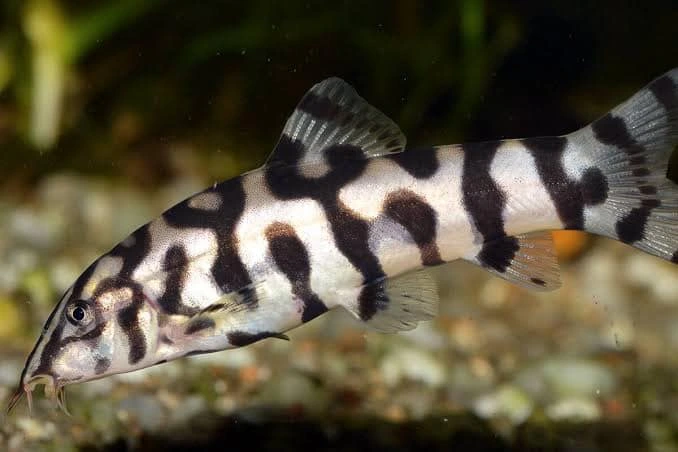
A busy 13 cm bottom fish that can share the acara's level without conceding it. Yoyos are pushy among themselves and largely indifferent to cichlids, and they will clear any snail population you did not ask for. They need a group of five or more or they take their energy out on tank mates, and they want a long tank with several caves — which conveniently also gives the acara somewhere separate to sit.
Three centimetres of slow-moving fish in front of a 15 cm cichlid. This is not an aggression problem and no amount of planting fixes it — the shoal simply gets smaller each month, usually overnight, until it is gone. If you want that look, rummy-nose or harlequins give you the same shoal at a size the acara cannot swallow.
The clearest demonstration of where the acara's mildness stops helping. Convicts want the same cave, the same substrate and the same spawning surface, and they escalate where an acara backs off — which means the acara loses a fight it never wanted. A breeding pair of convicts will hold half a 55-gallon tank against anything in it.
A bigger, harder cichlid occupying exactly the same layer of the tank. The size difference alone rules it out, but the behavioural gap matters more: a dempsey pursues, and an acara that is calm by nature has no strategy for being pursued. It stops eating and sits in a corner long before any visible damage appears.
Frequently suggested because the two look superficially similar and are both South American, which makes it a genuinely common mistake. A green terror is larger, faster to escalate and territorial year-round rather than only while breeding. There is no tank size at which it becomes a fair match — you are just giving the acara more room to be chased through.
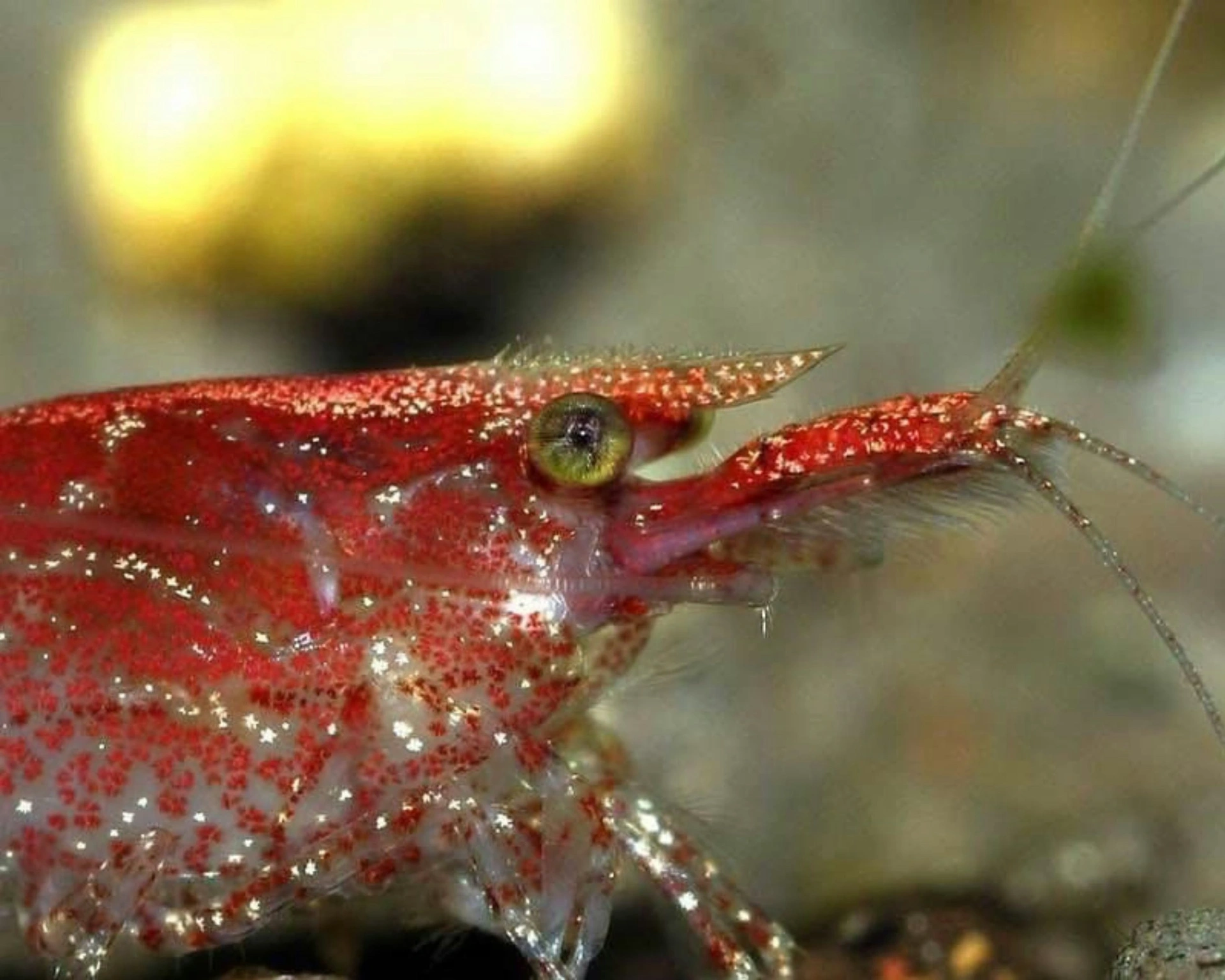
Acaras forage over the substrate by turning it over and sifting, which is precisely how you find shrimp. A mature colony in a heavily planted tank might sustain a trickle of survivors, but treat any shrimp added to this tank as expensive food. Nerite snails give you the cleanup without the losses.
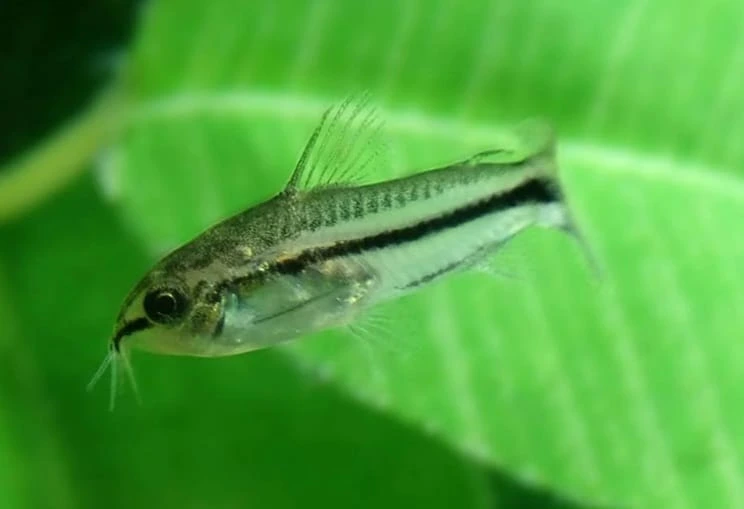
Unlike the full-size corydoras on the compatible list, pygmies hover in mid-water rather than staying on the floor, and at 2.5 cm they are exactly mouth-sized. Wrong size and wrong place at once. Bronze corydoras do the same job, look similar in a group and are far too broad to be swallowed.
It grows well past what it is sold as and develops a habit of latching onto the flanks of slow, broad-bodied fish to rasp at their slime coat. An acara cruising the lower tank is the ideal target. It also stops eating algae as it matures, so you keep all of the problem and lose the reason you bought it.
Two species that are borderline on size rather than on behaviour. What decides them is written on each card.
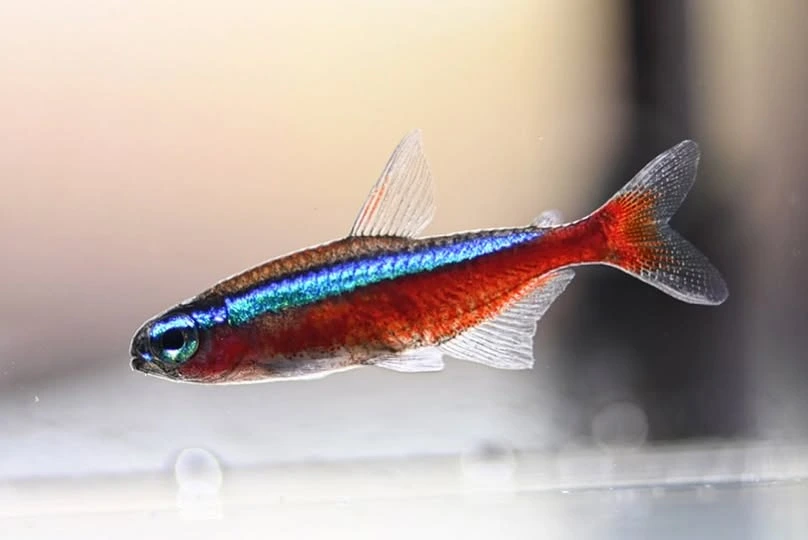
Cardinal Tetra
Paracheirodon axelrodi
Condition: Only as fully grown adults, in a heavily planted tank of 55 gallons or more
At 4 cm a cardinal sits right on the boundary of what an adult acara can swallow, and the outcome depends on the individual fish more than on the species. In a densely planted tank with a large shoal of full-size cardinals, keepers run this combination for years. In an open 40 gallon with a big adult acara it thins out slowly and quietly. Never add juvenile cardinals to an established acara tank.
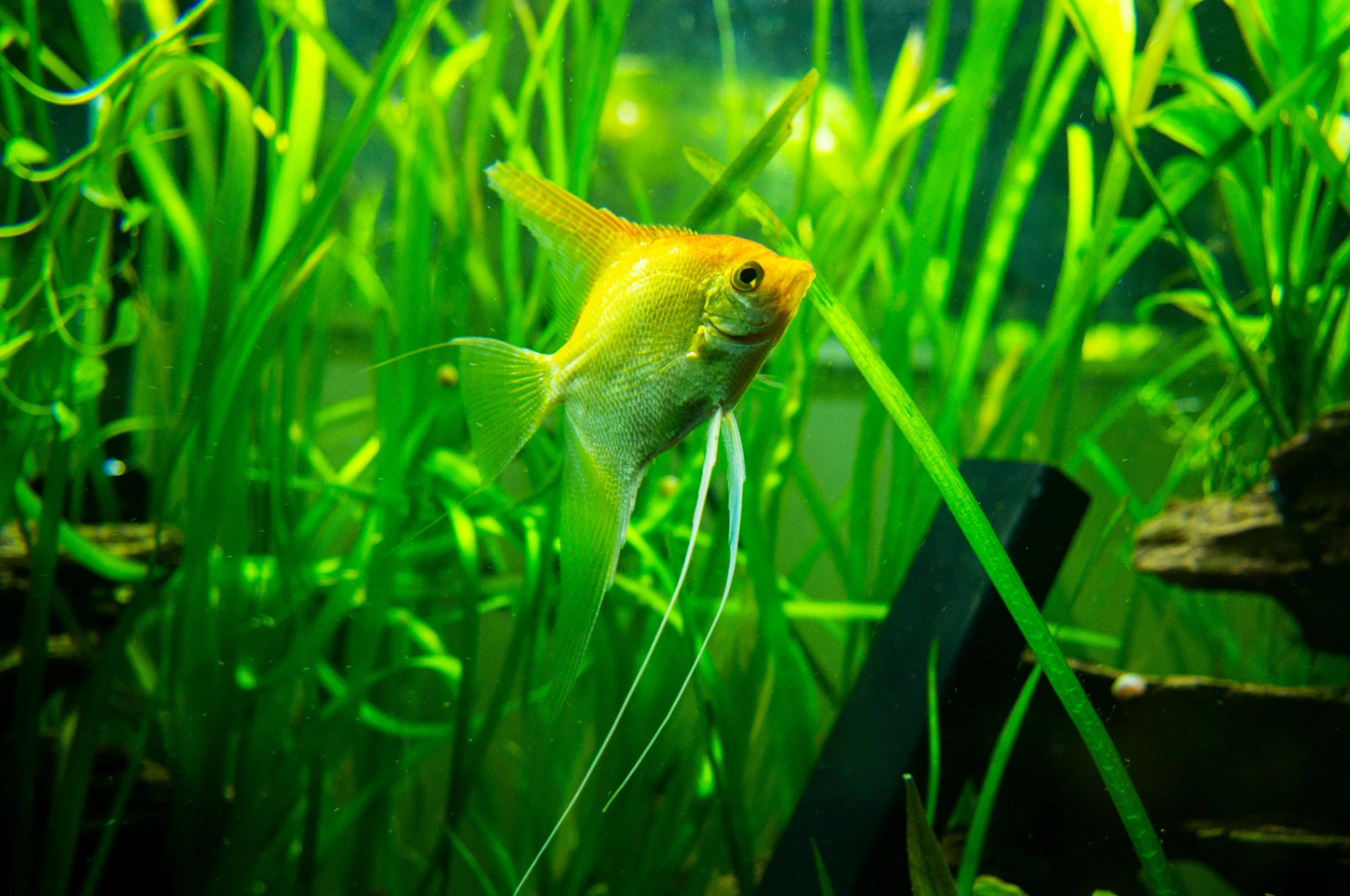
Condition: Only in 55 gallons or larger, and only if neither species has paired off
These two divide the tank neatly on paper — the angelfish takes the tall middle water, the acara the floor — and in a long tank that division holds. The risk is that both are cichlids that become territorial when they spawn, and if the two territories end up adjacent, the angelfish's trailing fins are what pays for it. Plant vertically, keep the tank long, and be ready to separate a pair.
Drop your tank size and shortlist into the stocking calculator to check bioload, swim-level balance and compatibility flags.
Frequently asked questions
Are electric blue acaras really peaceful enough for a community tank?
Yes, with one qualification. Toward fish that occupy different water — shoals in mid-water, surface fish, armoured bottom feeders — an acara is genuinely relaxed and stays that way. Toward other cichlids that want the same ground-level cave, it is not, and toward anything under about 3 cm it is a predator. Get those two categories right and the rest of the community looks after itself.
What is the minimum tank size for an electric blue acara with tank mates?
Our database puts the minimum at 150 litres, around 40 gallons, and that is a working floor for one acara or a pair plus a shoal and a bottom crew. Length matters more than volume, so a 40 breeder outperforms a taller tank of the same capacity. For two shoals and a pleco alongside, plan for 55 gallons.
Can electric blue acaras live with neon tetras?
No. A 3 cm tetra is prey for an adult acara regardless of how mild-mannered the cichlid is, and the shoal disappears gradually rather than dramatically. Harlequin rasboras and rummy-nose tetras give you the same mid-water movement at a size that is safe.
Can you keep two electric blue acaras together?
A bonded pair works well and is the most common way they are kept. Two unpaired adults in a 40 gallon can be a problem, because the loser has nowhere to be. If you are not sure you have a pair, either keep a single fish or give them a 55-gallon tank with two distinct territories at opposite ends.
Do electric blue acaras dig up plants?
Far less than most cichlids. They will excavate a shallow pit when preparing to spawn, but they do not strip the tank for the sake of it. Root your plants well, weight or pot anything delicate, and a planted acara tank stays looking like one.
Will an electric blue acara eat shrimp?
Yes. Sifting through the substrate is how it feeds, so shrimp are found rather than hunted, and a colony gets steadily eaten out. If you want invertebrate cleanup in this tank, use nerite or mystery snails, which are too hard-shelled to be worth the effort.
What water parameters do electric blue acaras need?
22–28 °C and pH 6.5–8.0 — an unusually wide range that fits most tap water without adjustment. That tolerance is what lets them share a tank with both soft-water tetras and harder-water rainbowfish. When you are shortlisting tank mates, check temperature overlap first; pH will rarely be the deciding factor here.
Can an electric blue acara live with an angelfish?
In 55 gallons or more, and while neither has paired off, yes — they split the tank between the floor and the tall middle water. The risk is spawning: two territorial cichlids with adjacent claims, and the angelfish's trailing fins are the vulnerable part. Give the tank length and vertical planting, and watch for a pair forming.