Angelfish Tank Mates: 8 Compatible Species (and 8 to Avoid)
An Angelfish is a cichlid, and every sensible tank mate decision follows from that rather than from how graceful it looks in the shop. It reaches 15 cm tall, becomes territorial as it matures, and will eat any fish narrow enough to fit in its mouth — which is most nano species sold as community fish. At the same time its own trailing fins make it a target for nippers, so it needs tank mates that are neither prey nor predator.
Reviewed by the AquariumStocking team · Updated
The tank size that makes this work
Angelfish are tall rather than long, so height and footprint both matter. The database puts the minimum at 150 litres, and the difference between that and the next size up is the difference between one pair and a real community. Our database puts the angelfish minimum at 40 gallons.
40 gallons
The realistic floor: one pair of angelfish plus a bottom crew and one small mid-water shoal. A 40 breeder gives the height they need and enough floor space to keep corydoras out of the argument. What does not fit here is a group of angelfish — juveniles sold in fours will pair off and the losers get pinned into a corner.
This is where an angelfish community stops being tight. There is room for a pair plus two proper shoals and a pleco, and enough length for a bullied fish to leave the territory during spawning. Tall plants and driftwood down the length of the tank do more here than extra volume would.
The size at which you can keep a group of angelfish rather than a pair, because aggression from a spawning couple can dissipate instead of concentrating on one victim. It also opens up larger tank mates — congo tetras, rainbowfish, bigger catfish — that are simply too big for a 40.
An adult angelfish eats neon tetras, ember tetras, chili rasboras and shrimp. Not "might" — this is the single most reported outcome for the species and the database flags it explicitly. The practical rule is that anything under about 4 cm as an adult is food once your angel is fully grown, even if the two coexist peacefully for the first year while the angelfish is small.
Trailing fins make it a target too
The same long ventral filaments that make angelfish attractive are irresistible to nipping species. Tiger barbs and serpae tetras will shred them, and a nipped angelfish sulks, hides and becomes prone to fungal infections at the damaged edges. Any species with a nipping reputation is excluded here regardless of how well the water parameters match.
Territory expands the moment they pair up
Two angelfish that pair off will claim a vertical surface — a plant leaf, a slate, the filter intake — and defend a wide radius around it for weeks at a time. A tank that was peaceful for a year turns hostile overnight. Plan the tank so a bullied fish can get out of sight, and expect that the "compatible" list narrows during spawning.
Warm water rules out the cool-water community
At 24–30 °C angelfish sit at the warm end of the tropical range. That is comfortable for corydoras sterbai, rummy-nose tetras and most South American species, and wrong for white cloud mountain minnows, goldfish and other cool-water fish. It also puts them close enough to discus temperatures that the two are often mixed — which works only in large, immaculately maintained tanks.
Swim level: fill the bottom, not the middle
Angelfish occupy the middle and upper water column and cruise it slowly. The easiest tank mates are therefore bottom-dwellers that never enter that space — corydoras, bristlenose plecos, kuhli loaches. Mid-water shoals work, but they need to be robust enough to hold their own and large enough not to be eaten, which is a narrow band.
Do not add another cichlid casually
Angelfish plus a second cichlid is the most common way an established tank falls apart. Anything that also claims a territory — a firemouth, a ram, an acara — is competing for the same resource, and in a 40 gallon there is only one territory to have. Keyhole cichlids and Bolivian rams are the mild exceptions, and both need somewhere of their own to retreat to.
Compatible species, ranked by fit
Ranked by how well each species holds up once the angelfish is fully grown and paired off, not while it is still a juvenile.
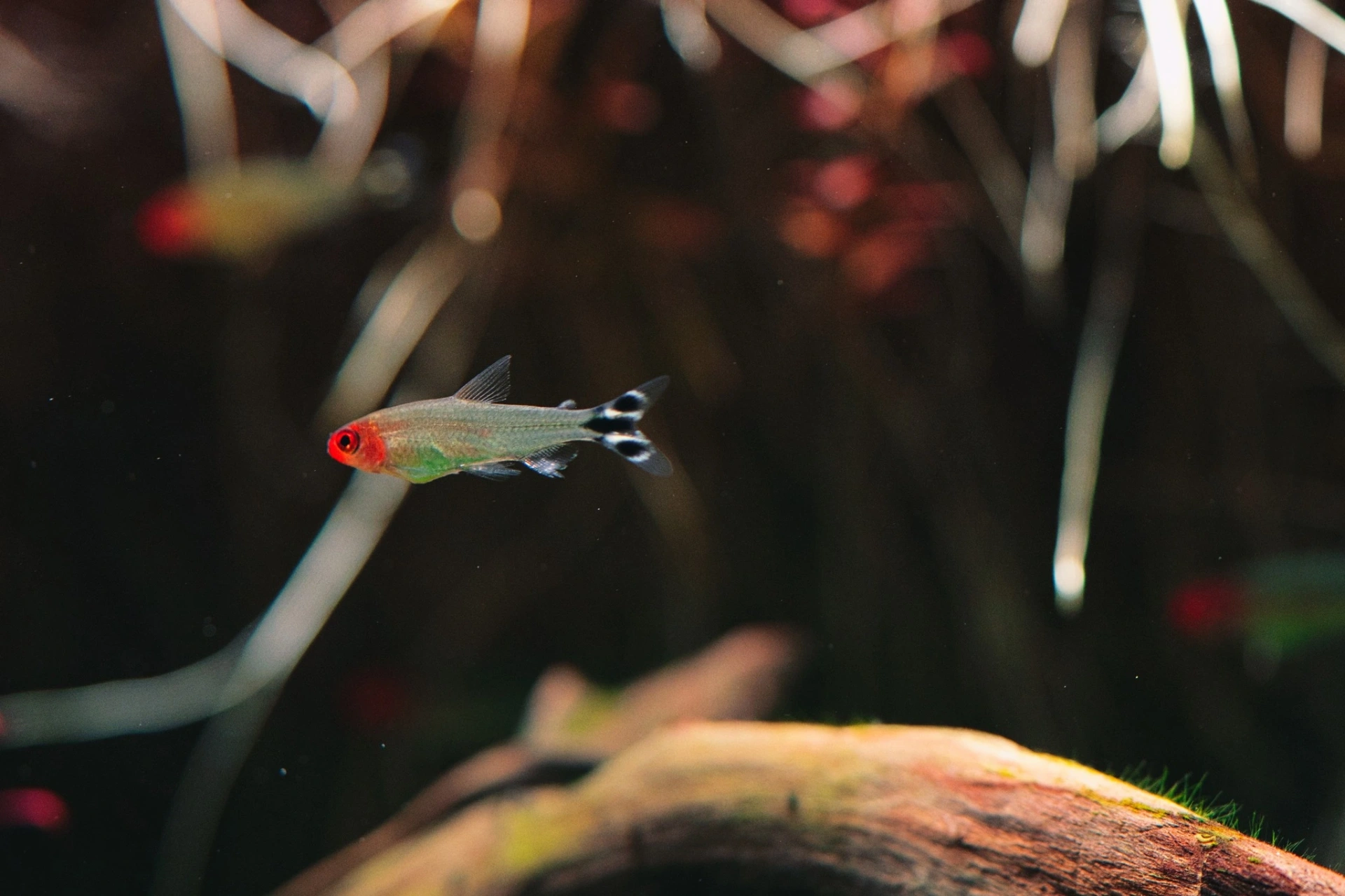
Rummy Nose Tetra
Hemigrammus rhodostomus
The best mid-water shoal for an angelfish tank. At 5 cm they are wide-bodied enough not to be swallowed, they shoal tightly rather than scattering, and their red-nosed grouping is a genuine visual counterpoint to a slow-moving angel. They want the same warm, soft, slightly acidic water. The one thing to watch is that they are sensitive to nitrate and unstable water — their red faces fade first, which makes them a useful early warning system for the whole tank.
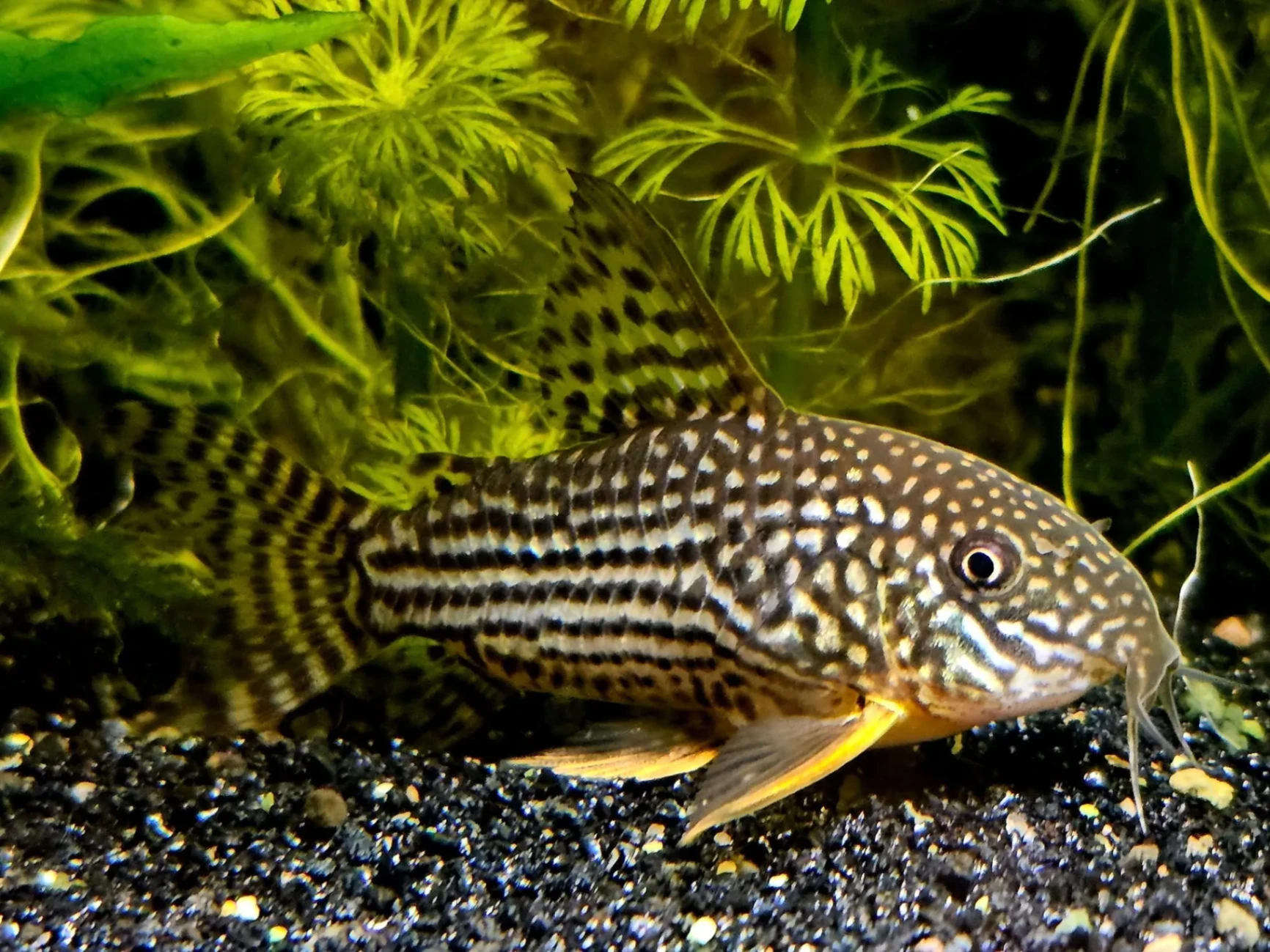
The cory to choose for this tank specifically, because it tolerates the 27–28 °C an angelfish enjoys where most corydoras start to struggle. They stay on the floor, ignore the angelfish entirely, and turn over the sand so waste does not sit under the plants. Keep six or more and feed sinking wafers after lights out, because a hungry angelfish takes most of what falls. Sand, not gravel — barbel damage is the usual cause of cory losses.
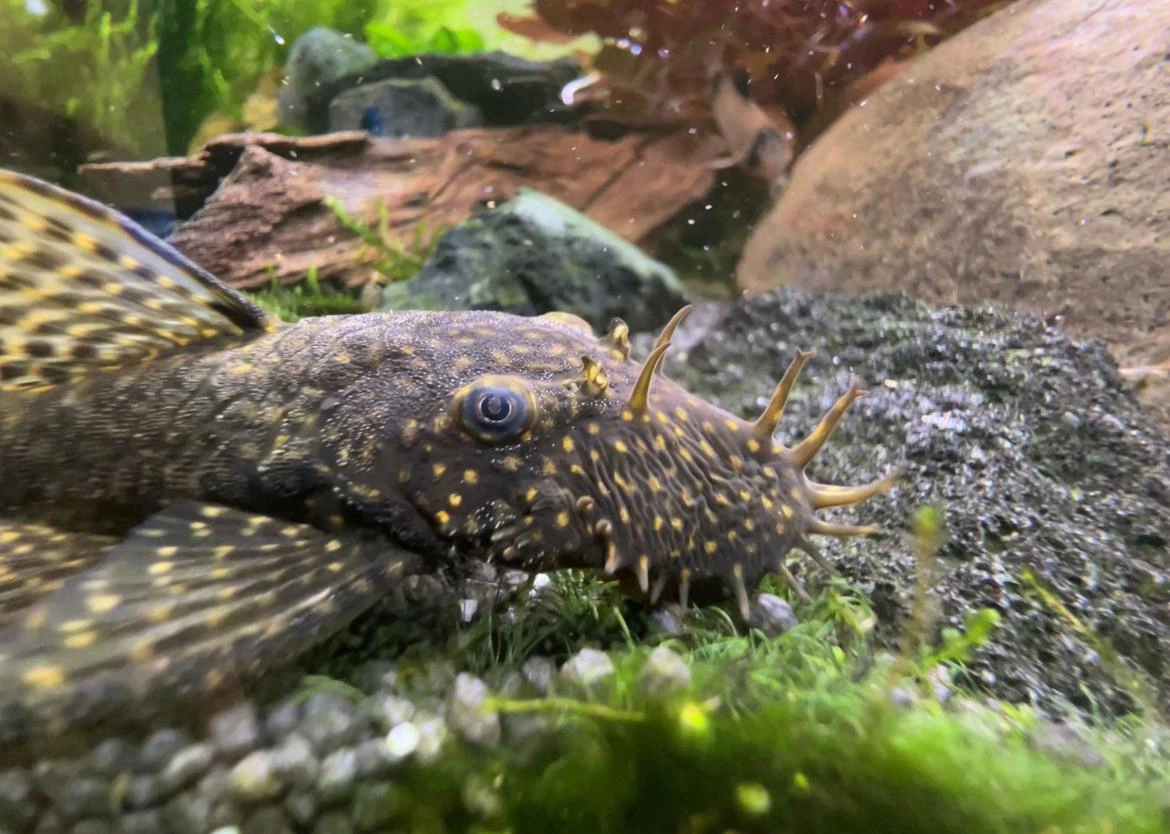
A 12 cm armoured algae eater that an angelfish cannot intimidate and does not compete with. It works nights, rasps algae off glass and driftwood, and hides in a cave during the day, which keeps it out of any spawning territory. Two things to plan for: it needs real driftwood to digest, and its bioload is heavier than its size suggests, so it belongs in the 55-gallon plan rather than crammed into a 40 with everything else.
A large, iridescent shoaling tetra that matches an angelfish for presence without competing for territory. At 8 cm they are far too big to be eaten and confident enough not to be intimidated, and they use the open mid-water an angelfish cruises slowly through. They need a group of six and a 30-gallon-plus footprint to look right, and the males' flowing fins can attract attention from a spawning angelfish, so give them length to move down.
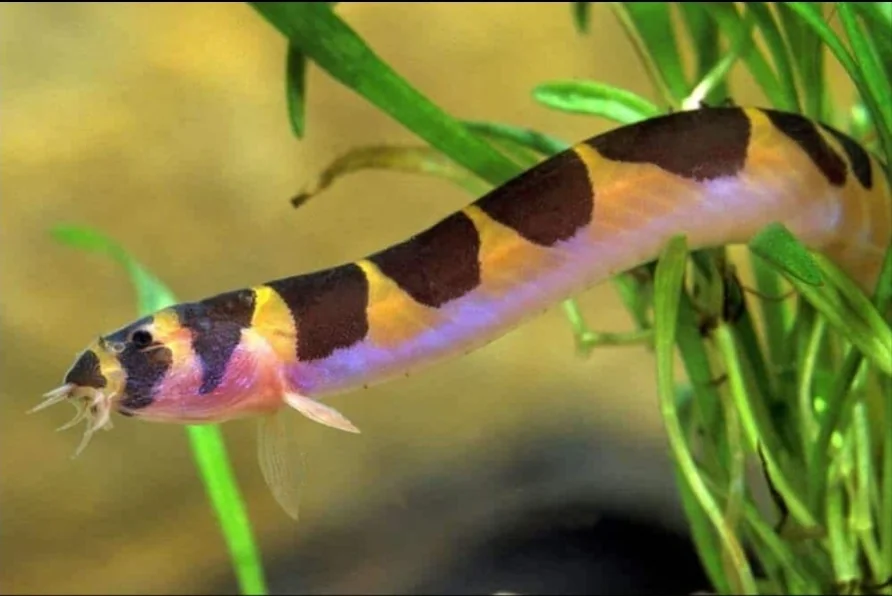
The rare second cichlid that genuinely works alongside angelfish. Keyholes are shy, slow, and famously non-confrontational — they retreat rather than escalate, which is exactly what you need in a tank where the angelfish sets the rules. They share the same warm, soft water preferences. Because they are so retiring, give them their own cave and driftwood at one end, and watch that they are actually getting food rather than waiting for the angel to finish.
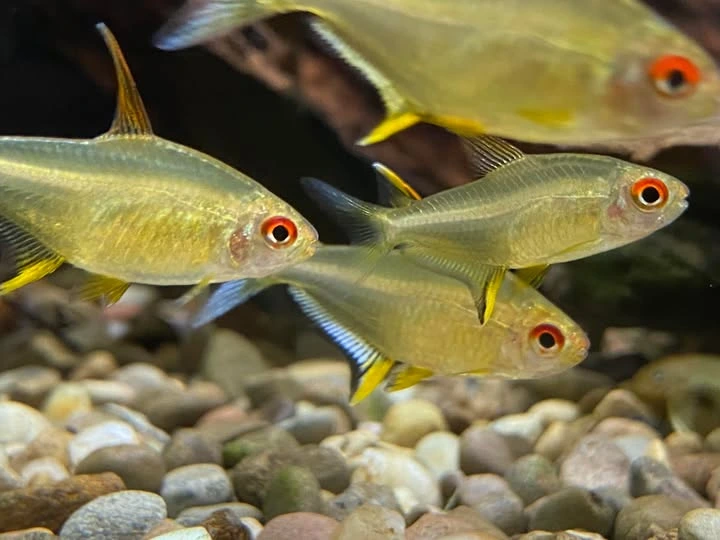
A calm, deep-bodied tetra at 4 cm — around the smallest that is sensible with a full-grown angelfish, and safe mainly because of its body shape rather than its length. It shoals steadily in the middle of the tank and its pale yellow does not provoke anything. Buy adult-sized fish rather than juveniles, keep eight or more, and accept that in a tank with a particularly large female angel this is the first species on the list that could go wrong.
A bottom-layer specialist that shares the angelfish's taste for warm, soft water and lives entirely below the conflict. They are nocturnal, so a tank with kuhlis and angels is busy at different hours, and neither one interferes with the other. Keep six or more over sand with plenty of driftwood tangles, and seal the lid — kuhli loaches escape through filter cut-outs more reliably than any other fish here.
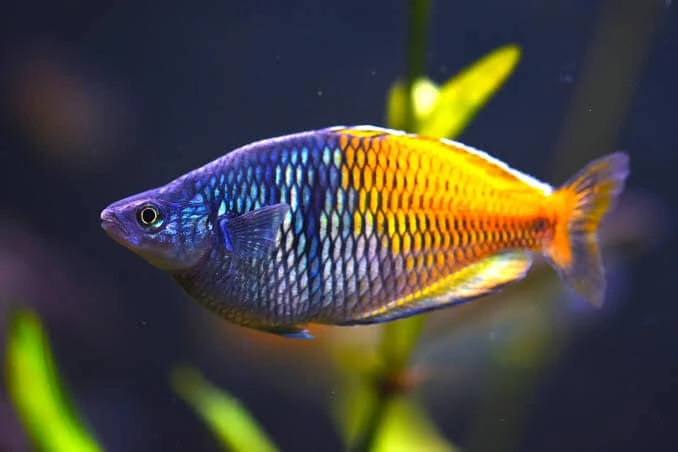
A big, fast, high-colour shoaler for the 75-gallon version of this tank. At 11 cm nothing about them is prey, they occupy the open middle water, and their constant movement balances the angelfish's stillness. Two caveats: they prefer harder, more alkaline water than an angelfish does, so you are meeting in the middle around neutral, and their pace can unsettle a shy angel in a short tank. Length matters more than volume for this pairing.
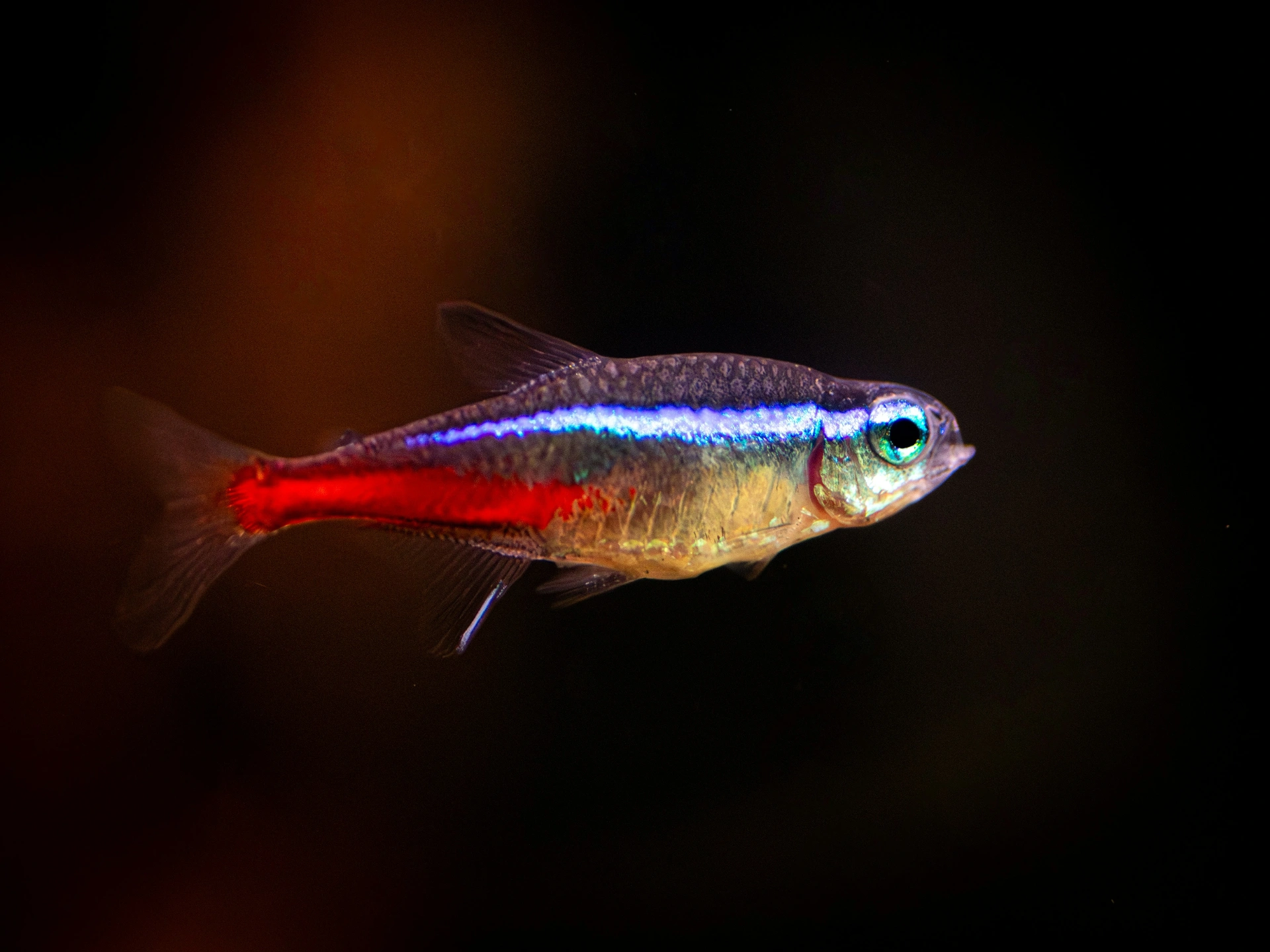
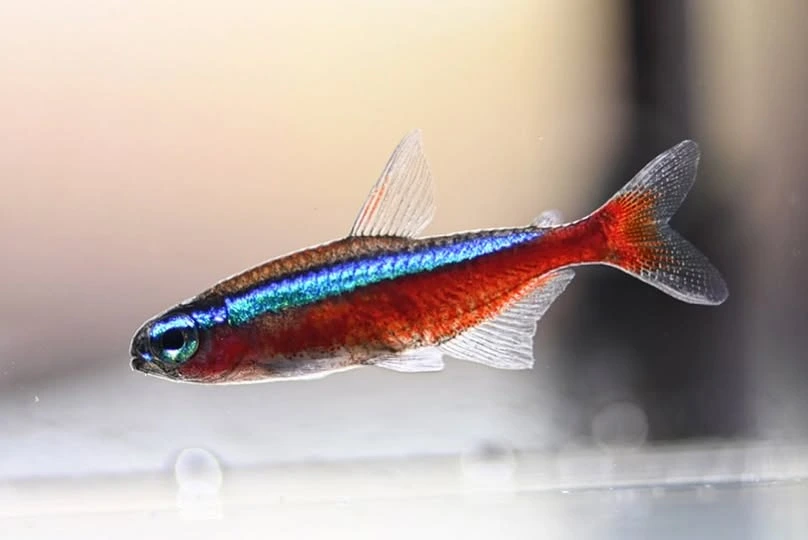
The classic pairing that works for a year and then stops. Neons are 3 cm, and a mature angelfish is a slow-cruising ambush feeder that picks them off one at a time, usually at night, until the shoal quietly disappears. This is not an aggression problem you can plan around with planting — it is a predator eating appropriately-sized prey. The species data flags the pairing directly.
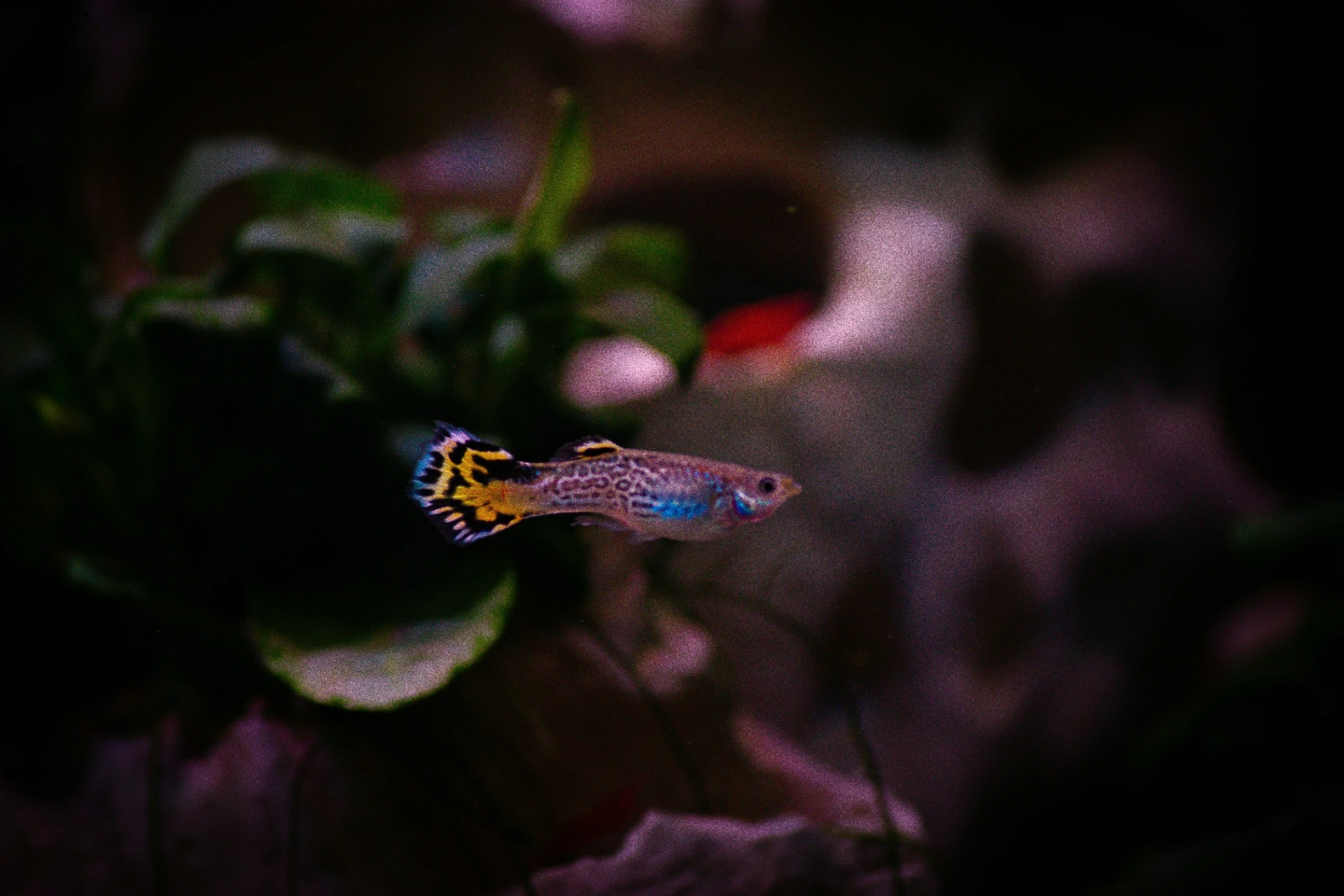
Small, slow, brightly coloured and trailing fins: an angelfish sees a meal and a target simultaneously. Male guppies get their tails torn even when they are too large to swallow, and fry never survive. Guppies also prefer harder, more alkaline water than an angelfish wants, so there is no parameter overlap worth compromising for.
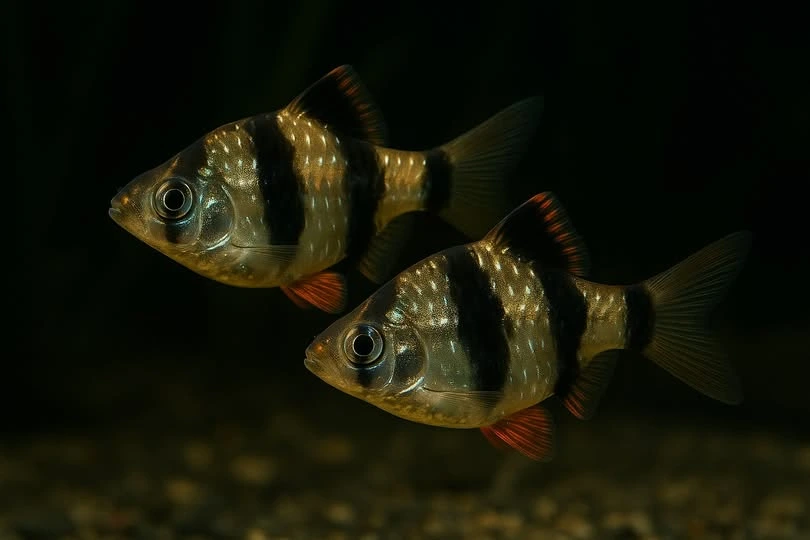
Flagged as a fin nipper in the database, and the ventral filaments of an angelfish are the most conspicuous target in any community tank. Tiger barbs nip as a group and will not stop once they start; the angelfish ends up with ragged, infection-prone fins and hides permanently. A larger barb group reduces nipping between themselves but does nothing to protect a long-finned tank mate.
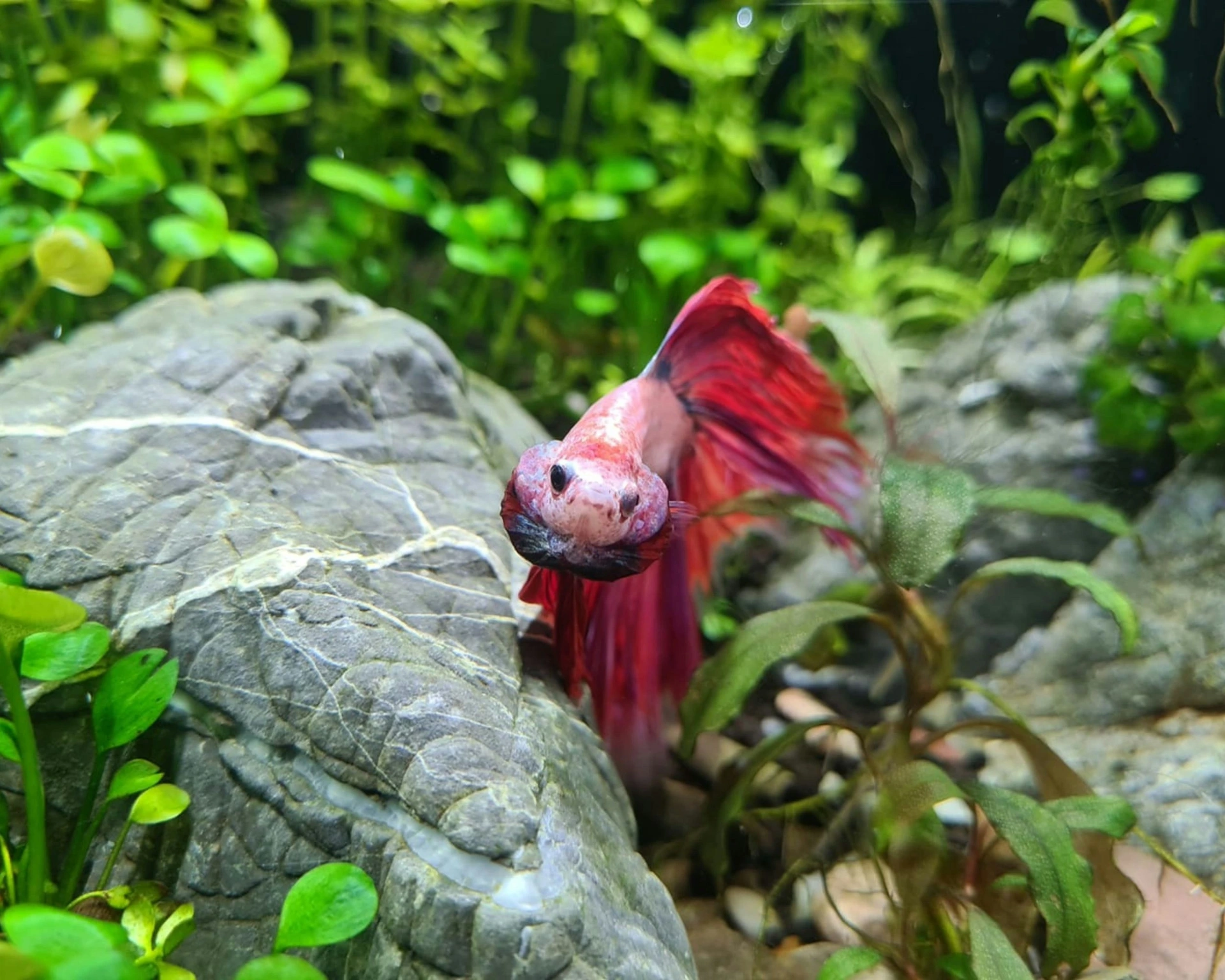
Two display-driven, long-finned fish that both claim the upper water. The betta is far too small to hold territory against a 15 cm cichlid and too slow to escape one, while its fins invite exactly the kind of investigative nipping angelfish do when spawning. There is also no tank size at which this improves, because the conflict is over the same vertical space.
A 35 cm aggressive cichlid with a bioload to match, and an angelfish is neither big enough to defend itself nor fast enough to stay clear. Oscars redecorate tanks, uproot plants and treat slower tank mates as food or furniture. Even in a very large tank the pairing puts a calm, tall-finned fish in with the most boisterous cichlid in the hobby.
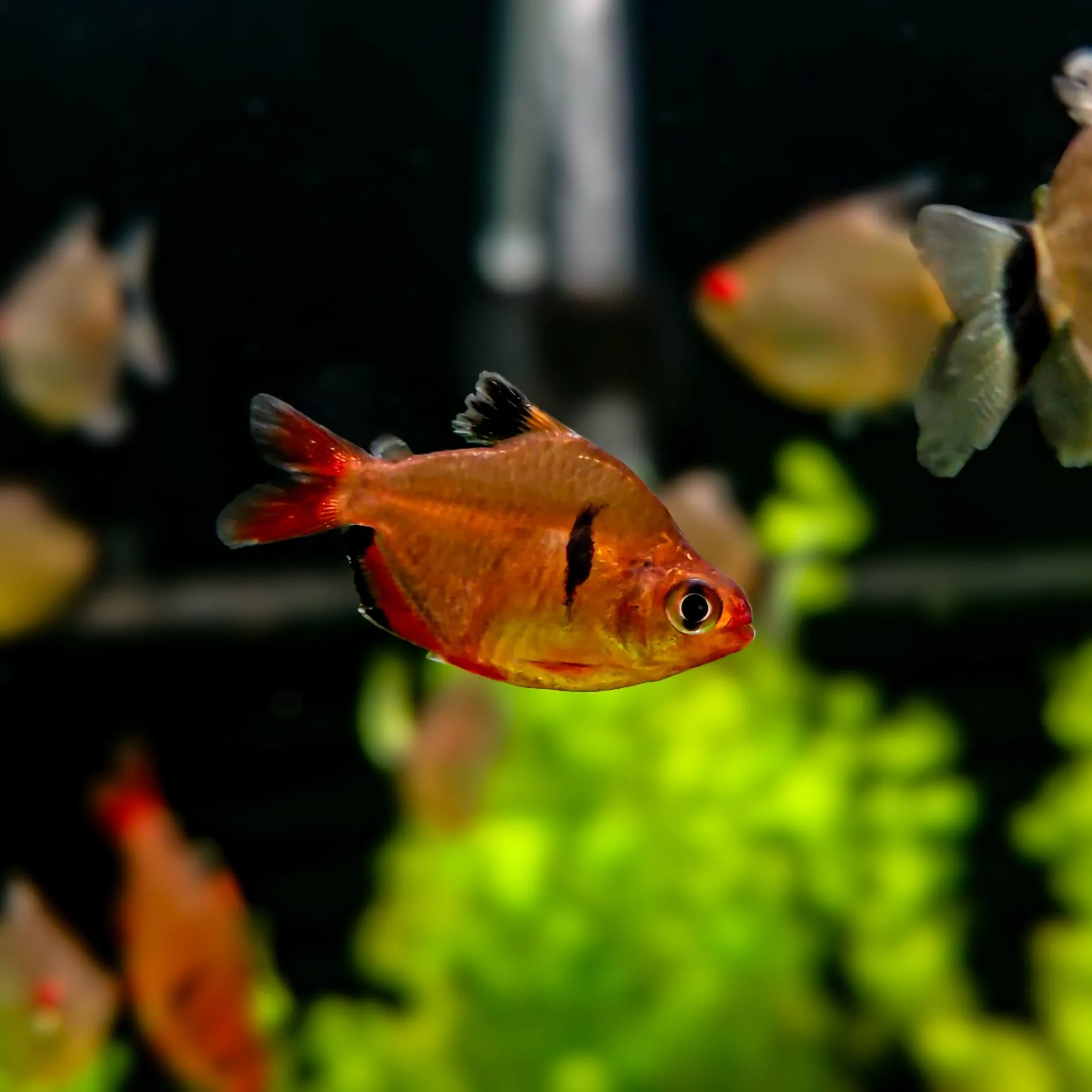
A persistent nipper with the added habit of harassing tank mates in short bursts rather than continuously, which makes the damage easy to miss until fins are already frayed. Serpaes stay in the same mid-water zone an angelfish cruises, so there is no separation by swim level to fall back on.
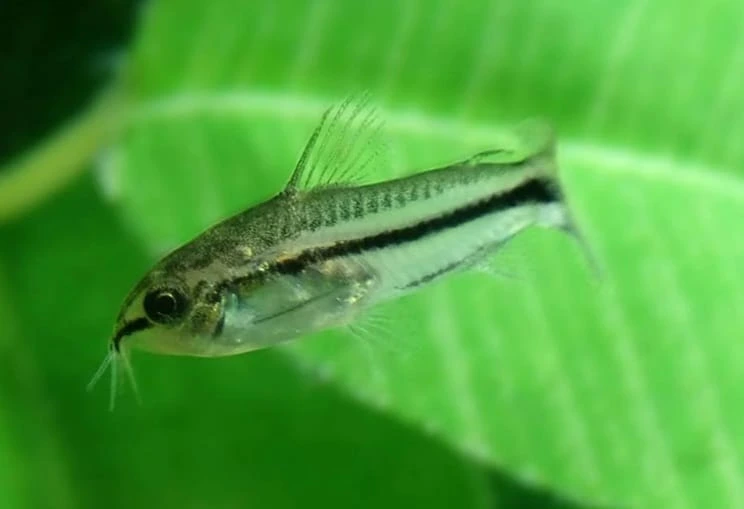
Unlike the larger corydoras on the compatible list, pygmies swim in mid-water rather than staying on the floor, and at 2.5 cm they are exactly mouth-sized. That combination puts them in the wrong place at the wrong size. Choose sterbai or another full-size cory instead — the cleanup benefit is the same and they are far too broad to be eaten.
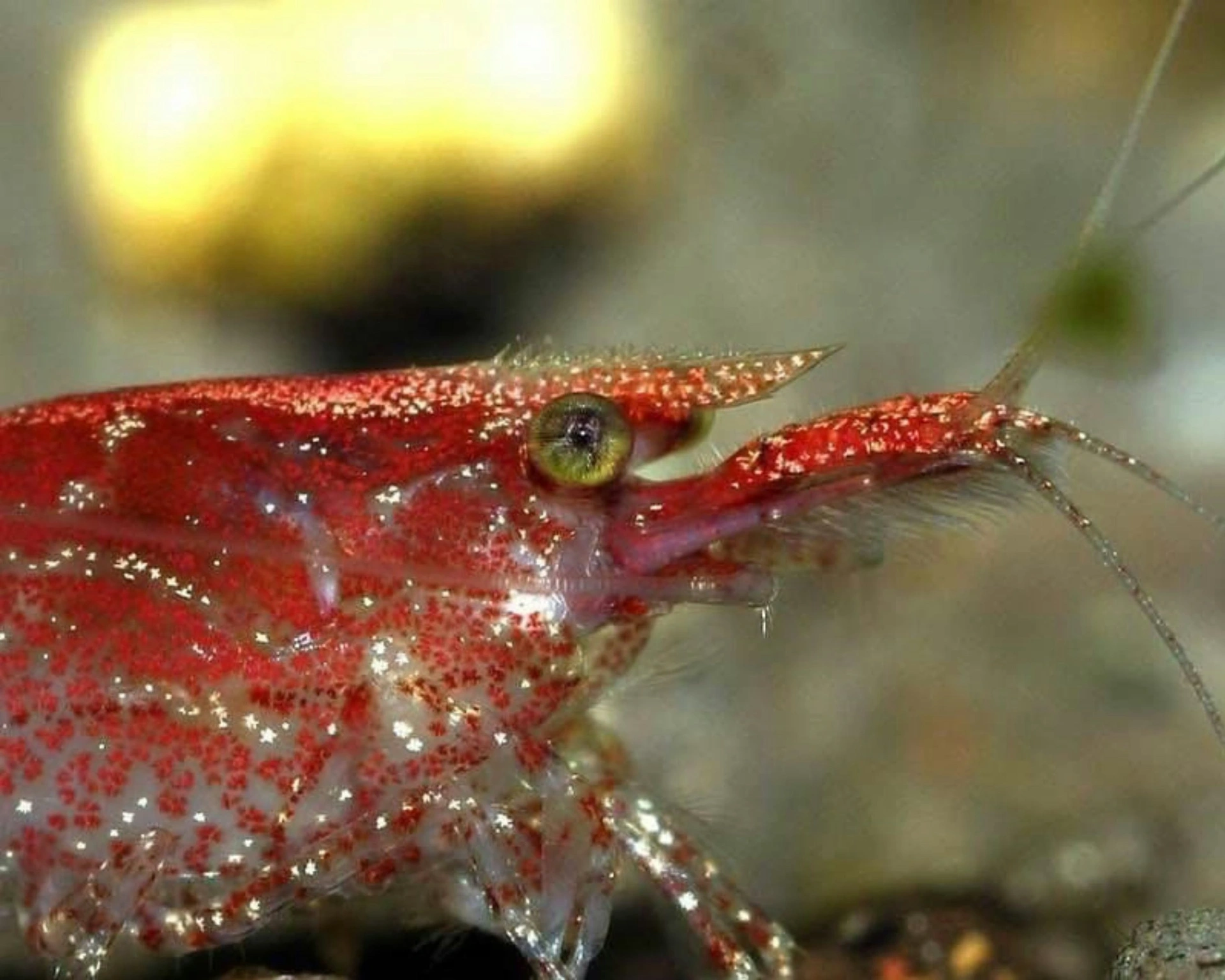
An angelfish will hunt shrimp deliberately, and unlike a betta it is tall enough to reach into planting and patient enough to wait. Even a mature colony in a heavily planted tank gets thinned to nothing over a few months. If you want invertebrate cleanup in an angelfish tank, use a large snail instead.
These come down to your tank length and whether your angelfish has spawned yet. The deciding condition is on each card.
Cardinal Tetra
Paracheirodon axelrodi
Condition: Only with angelfish raised alongside them, and only at full adult tetra size
Cardinals are the borderline case people ask about most. At 4 cm they are just past the size a young angelfish can swallow, and in wild-style blackwater tanks the two live together naturally. But a fully grown female angelfish can and does take them, particularly at night, and the risk climbs as the angel matures. If you try it, use fully grown cardinals, keep a large shoal so no individual is isolated, and accept that a spawning pair may change the arithmetic.
Condition: Only in a 55 gallon or larger with a separate, defensible bottom territory
Rams occupy the bottom of the tank rather than the middle, which is why the pairing is attempted so often, and in a long tank with distinct hardscape zones it holds. The problem is that rams are cichlids too: a spawning pair claims a flat stone and will defend it against a fish five times its size, and an angelfish that decides to contest it does real damage. Both species also want very warm water, so filtration and oxygenation need to be strong.
Drop your tank size and shortlist into the stocking calculator to check bioload, swim-level balance and compatibility flags.
Frequently asked questions
Can angelfish live with neon tetras?
Not long-term. A juvenile angelfish will ignore neons for months, but once it reaches adult size a 3 cm tetra is prey, and the shoal disappears one fish at a time — usually overnight. If you want a small red mid-water shoal in an angelfish tank, use rummy-nose tetras, which are wider-bodied and far harder to swallow.
How many angelfish should be kept together?
Either one, or a bonded pair, or six or more — never three or four. Angelfish sold as juveniles will pair off as they mature, and in a small group the unpaired fish get pinned into a corner by the couple. A group of six or more in a 75-gallon tank spreads that aggression enough for everyone to have somewhere to be.
What is the minimum tank size for angelfish with tank mates?
Our database puts the angelfish minimum at 150 litres, around 40 gallons, and that is a working floor for one pair plus a bottom crew and one small shoal. If you want a genuine community around them — two shoals, a pleco, room during spawning — plan for 55 gallons or more. Height matters as much as volume because of their body shape.
Can angelfish live with shrimp?
Practically, no. Angelfish actively hunt shrimp and are tall and patient enough to pick through planting, so even an established cherry shrimp colony gets eaten out over a few months. A nerite or mystery snail gives you cleanup without feeding the angelfish.
Can angelfish live with a betta?
No. Both are display-driven fish with trailing fins that claim the upper part of the tank, and the betta loses that contest by size alone. The angelfish will nip at the betta's fins, especially while spawning, and the betta cannot get out of the way. Keep them in separate tanks.
Will angelfish eat corydoras?
No — full-size corydoras are too broad and too armoured to be swallowed, and they live on the floor rather than in the angelfish's water column. Corydoras sterbai is the best choice because it handles the warm water angelfish prefer. Avoid pygmy corydoras, which are mouth-sized and swim in mid-water.
Why did my peaceful angelfish suddenly turn aggressive?
Almost always because a pair has formed and started spawning. Angelfish claim a vertical surface and defend a wide radius around it, and behaviour that was calm for a year changes within a day. Give the tank length and sightline breaks so other fish can leave the territory, and be ready to move a persistently harassed fish.
Can angelfish live with other cichlids?
Only with the retiring ones, and only with room. Keyhole cichlids are the safest match because they retreat rather than escalate, and Bolivian rams work in a 55 gallon with their own bottom territory. Firemouths, acaras, convicts and anything larger compete for the same space, and in a mid-size tank there is only one territory to win.